Forehead Botox in Tokyo: What to Expect and How Much It Costs
Horizontal lines across the forehead can make you look tired or worried even when you feel fine, and arranging a cosmetic treatment in another country, possibly in a second language, adds to the uncertainty.
This guide covers how forehead Botox works, what published studies report, what it currently costs at our clinic group in Tokyo, and how Japan’s rules on approval and insurance apply to you.
What you’ll learn in this article:
- How botulinum toxin softens forehead lines, and why the area between the brows is often treated at the same time
- What clinical studies report about results, how long they last and side effects
- Current published prices for forehead Botox at our clinic group, and why there are two product options
- How approval in Japan differs from approval in the US for forehead use
- Who is a good candidate, and who should avoid or postpone treatment
Have a question about this treatment?
Message us on LINE or WhatsApp — our English-speaking team usually replies the same day.
What Is Forehead Botox and How Does It Work?
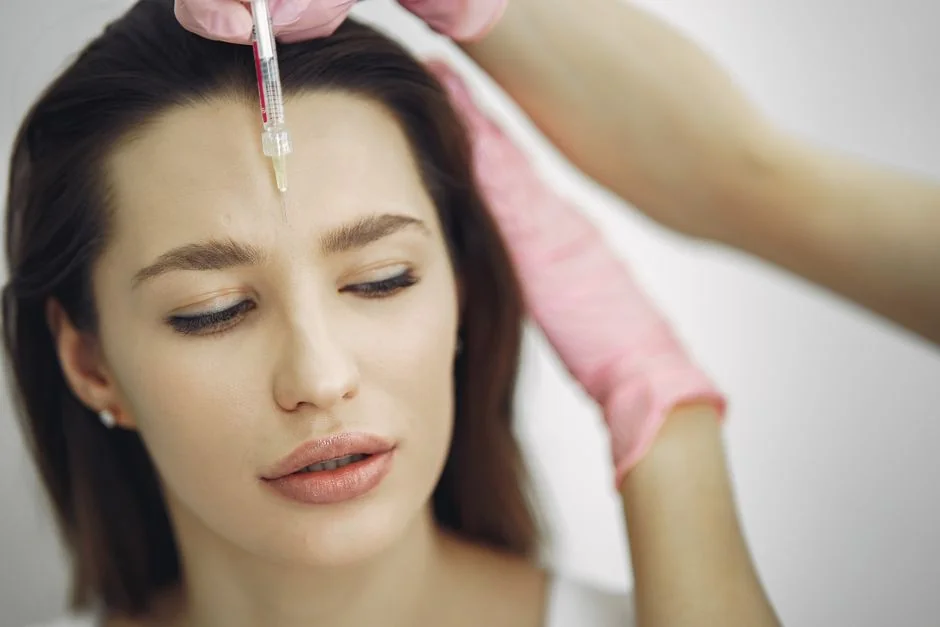
“Botox” is the common name for botulinum toxin type A, a purified protein that temporarily blocks the signal from a nerve to a muscle. When the muscle cannot contract as strongly, the skin above it creases less, so lines caused by facial expression soften.
Horizontal forehead lines come mainly from the frontalis, the broad muscle that lifts your eyebrows. A 2020 review in Plastic and Reconstructive Surgery Global Open explains that the frontalis raises the brow, while the muscles of the glabellar complex (the “frown” muscles between and around the brows) pull it down and inward.
The same review advises treating the frontalis and the opposing glabellar muscles together. Keeping the balance between these muscle groups helps maintain a natural brow position. In the pivotal clinical trials, the dose was 20 units in the frontalis plus 20 units in the glabellar complex, with or without additional crow’s feet treatment.
Approval status: Japan vs the United States
The US Food and Drug Administration (FDA) approved Botox Cosmetic for moderate to severe forehead lines in adults on 3 October 2017, its third cosmetic facial indication. That is a US approval and does not apply in Japan.
In Japan, the approved indications for Allergan’s cosmetic product, Botox Vista, cover glabellar (frown) lines and crow’s feet lines in adults under 65. Forehead lines are not among them. Using it on the forehead in Japan is therefore off-label, meaning outside the officially approved indications, and is done at the physician’s clinical discretion.
Expected Results and How Long They Last
According to Allergan’s 2017 announcement of the FDA approval, 61% of treated participants in the first pivotal trial met the main endpoint for reduced forehead line severity at day 30, compared with 0% on placebo. In the second trial, the figures were 46% vs 1%. These results show that the effect is real but that people do not all respond to the same degree.
The 2020 review reports that differences from placebo were measurable from day 7 through day 120. It also reports that 85.6% and 87.9% of participants in the two active-dose groups said they were mostly or very satisfied, compared with 2.4% on placebo. The clinic’s own patient information states that effects typically appear within 2–3 days and last about 4–6 months before gradually wearing off.
Results vary between individuals, and no outcome can be guaranteed. Lines that are etched into the skin even at rest may soften less than lines that appear only when you move your eyebrows.
Forehead Botox Cost in Tokyo
Cosmetic treatments in Japan are provided as self-pay care (jiyu shinryo), which is how Japan’s Ministry of Health, Labour and Welfare (MHLW) refers to cosmetic medicine. Forehead Botox for cosmetic purposes is therefore not covered by Japan’s national health insurance.
Our group’s published price table (effective 1 October 2023, as displayed at the time of writing) lists two product options for the forehead:
| Option | Forehead price (tax included) | Status in Japan | Points to consider |
|---|---|---|---|
| Allergan Botox | 22,000 yen | Approved by the MHLW (approved indications: glabellar and crow’s feet lines) | Forehead use is off-label in Japan; the product is supported by extensive international trial data |
| Korean-made botulinum toxin | 9,900 yen | Unapproved in Japan (approved by Korea’s drug regulator, according to the clinic’s disclosure) | The clinic notes that efficacy and side-effect risk may differ from approved products and that information is limited |
The same price table lists a first-visit or follow-up consultation fee of 3,300 yen. Treatment of the area between the brows is priced separately. Since guidance recommends treating it together with the forehead, ask whether your plan includes both areas.
Prices can change. Please see the clinic’s official price page or contact us for a current quote. For an accurate quote, please book a consultation.
Have a question about this treatment?
Message us on LINE or WhatsApp — our English-speaking team usually replies the same day.
What to Expect: Before, During and After
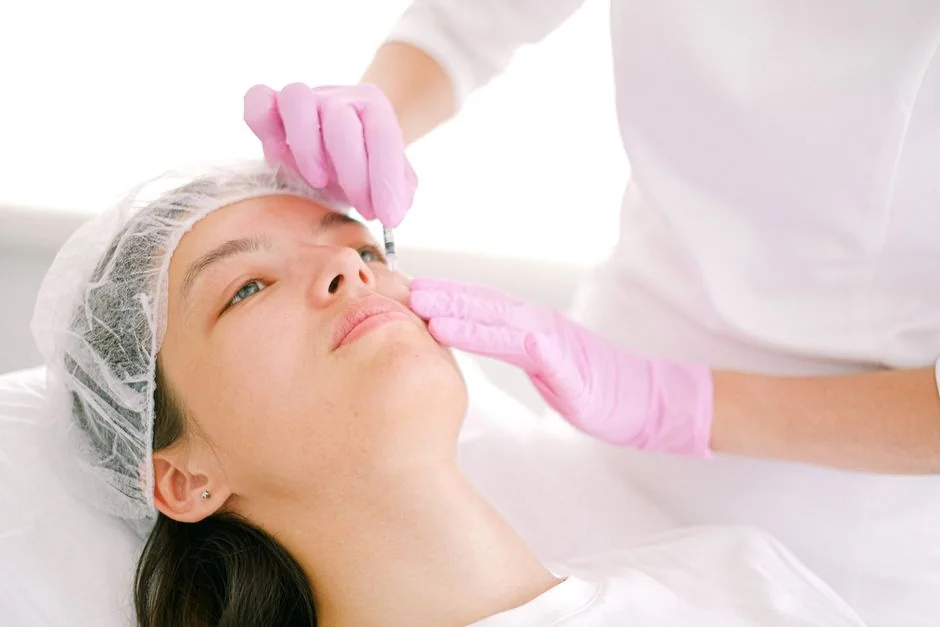
Before
The physician will look at how your forehead and brows move, check your eyelid and brow position, and ask about your medical history, medications and any plans for pregnancy. An MHLW notice issued in November 2024 stresses that treatment plans in cosmetic medicine must be decided with a physician’s proper involvement, not by counselling staff alone.
During
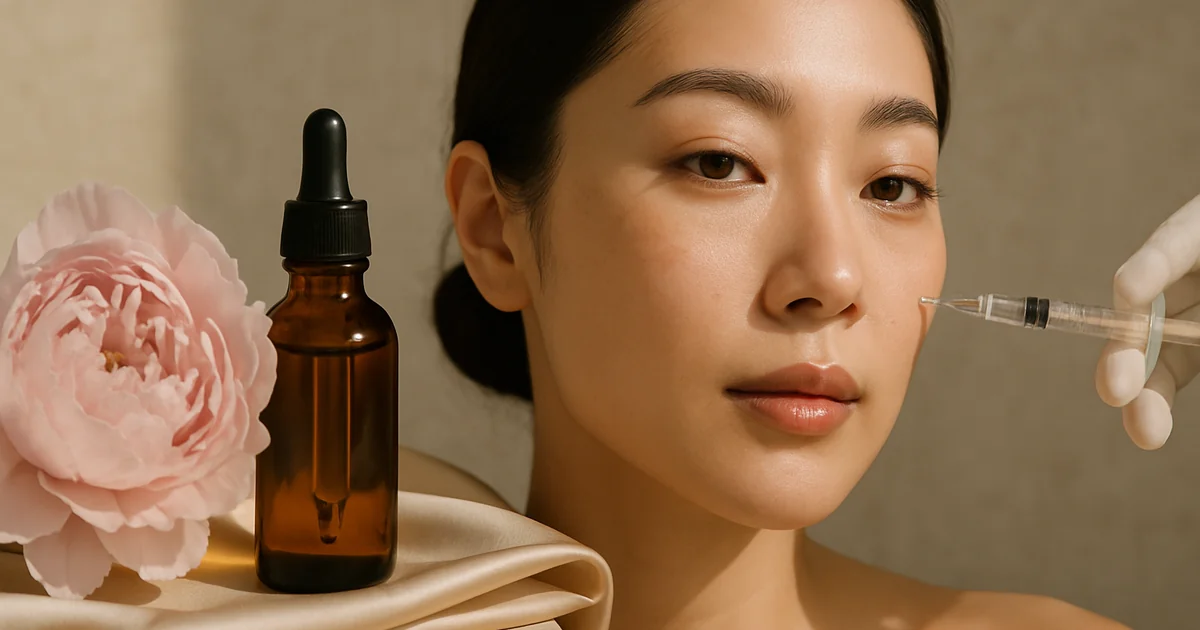
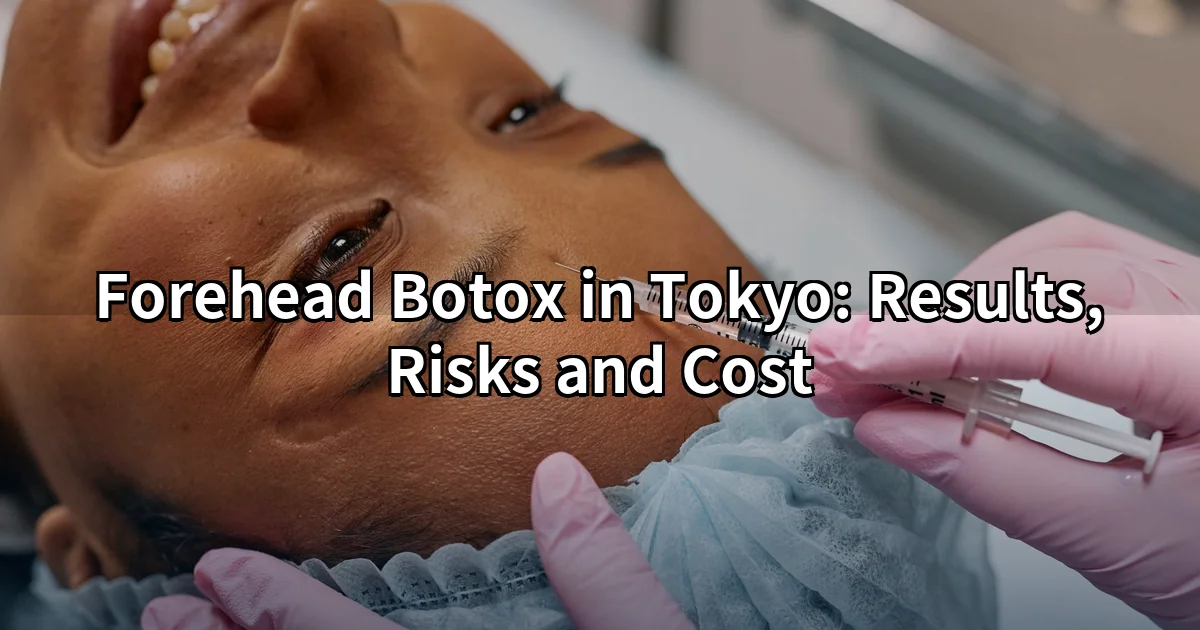
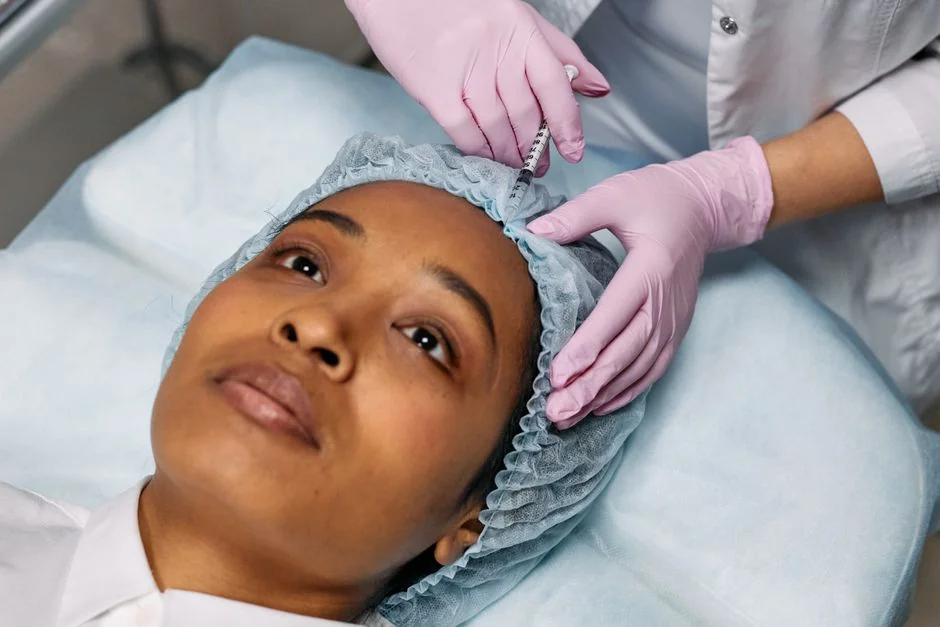
The toxin is injected with a fine needle at several points in the forehead and, usually, between the brows. The physician chooses the dose and injection points based on your muscle activity and brow position.
After
According to the clinic’s aftercare guidance, you can wash your face, bathe and wear make-up the same day. Avoid rubbing the treated area firmly, and for a short period avoid saunas, strenuous exercise, alcohol and massaging the injection sites.
Common short-term effects listed by the clinic include redness, swelling and bruising that settle within a few days, as well as mild pain or discomfort. Less common effects include asymmetry and allergic reactions. Japan’s Botox Vista package insert advises against repeat injections within 3 months.
What the safety data show
A 2023 meta-analysis in JAAD International pooled global registration studies covering 5,298 participants. In people treated for forehead and glabellar lines together, it reported:
- Eyelid drooping (ptosis): 2.1% with treatment vs 0.3% with placebo
- Brow drooping: 1.5% vs 0%
- Headache: 8.6% vs 5.4%
- Injection-site bruising: 5.1% vs 2.5%
A 2021 Cochrane review of 65 randomised trials likewise concluded that botulinum toxin reduces wrinkles within four weeks but probably increases the risk of ptosis. These figures are why dose and injection placement matter.
Who Is a Good Candidate?
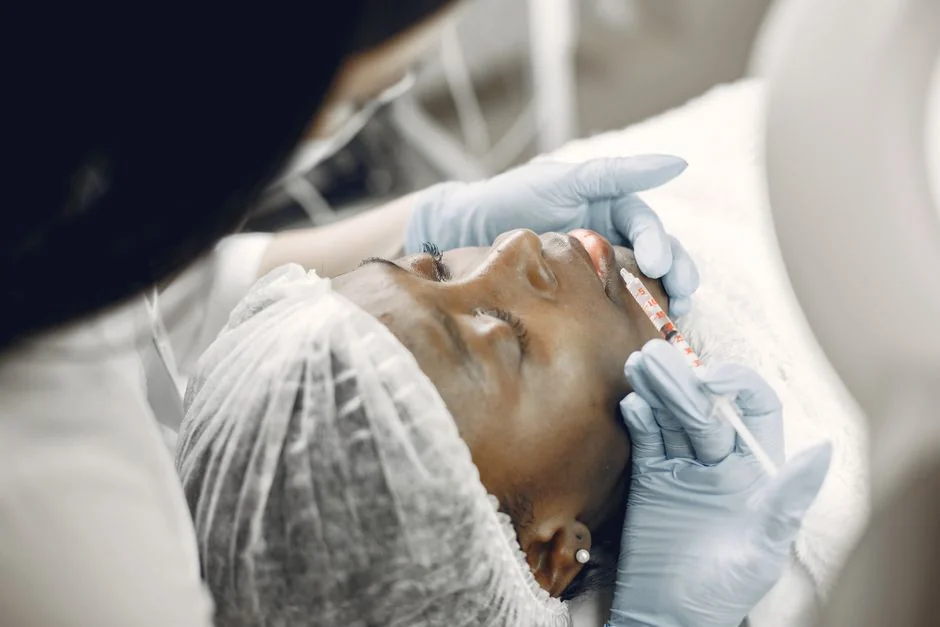
Forehead Botox is usually considered for adults whose horizontal forehead lines appear or deepen when they raise their eyebrows. It suits people who want a temporary, adjustable improvement without surgery and who can return for maintenance treatments.
Who should avoid it or take extra care
The Botox Vista package insert in Japan lists these contraindications:
- Pregnancy, possible pregnancy or breastfeeding
- Generalised neuromuscular junction disorders such as myasthenia gravis, Lambert-Eaton syndrome or amyotrophic lateral sclerosis (ALS)
- Known hypersensitivity to the product’s ingredients
- Current treatment with another botulinum toxin product
The pivotal forehead trials excluded people with drooping brows, marked excess eyelid skin, eyelid folds reaching the pupil, or a need to use the forehead muscle to lift the upper eyelid. The 2020 review also notes that people with shorter foreheads, and older people who raise their brows to widen their field of vision, may need dose adjustments. For them, weakening the frontalis could make the brows or eyelids feel heavy.
Common Misconceptions About Forehead Botox
“Forehead Botox means injecting only the forehead”
Because the frontalis lifts the brows and the glabellar muscles pull them down, published guidance recommends treating both together to keep the brows in a natural position. This is why a forehead treatment plan often includes the area between the brows.
“If Botox is approved, forehead Botox is an approved treatment in Japan”
The FDA approval for forehead lines applies to the US. In Japan, Botox Vista’s approved indications are glabellar and crow’s feet lines in adults under 65, so forehead use is off-label. Separately, the lower-cost Korean-made toxin offered by the clinic is not approved in Japan at all.
Frequently Asked Questions
- Q. Does forehead Botox hurt?
- The injections use a fine needle, and the clinic lists mild pain or discomfort as a common, temporary effect. Most short-term effects, such as redness or bruising, settle within a few days.
- Q. When will I see results, and how long do they last?
- The clinic’s patient information states that effects typically appear within 2–3 days and last about 4–6 months. In clinical trials, improvement compared with placebo was measurable from day 7.
- Q. Is forehead Botox covered by Japanese health insurance?
- No. Cosmetic treatments in Japan are self-pay care, so forehead Botox for appearance is paid in full by the patient, whether or not you are enrolled in Japanese national health insurance.
- Q. How often can I have it repeated?
- Japan’s Botox Vista package insert advises against repeat injections within 3 months. Your physician will plan the timing of maintenance treatments based on how your results wear off.
- Q. What is the difference between the 9,900 yen and 22,000 yen options?
- The 22,000 yen option uses Allergan’s botulinum toxin, which is approved in Japan (though not for the forehead). The 9,900 yen option uses a Korean-made toxin that is unapproved in Japan, for which the clinic notes that information is more limited.
Have a question about this treatment?
Message us on LINE or WhatsApp — our English-speaking team usually replies the same day.
Summary
Forehead Botox temporarily relaxes the muscle that creates horizontal forehead lines. Published guidance recommends treating the area between the brows at the same time to keep the brows in a natural position. Clinical studies report meaningful improvement and high satisfaction, with a low but real risk of eyelid or brow drooping.
In Japan, forehead use of Allergan’s botulinum toxin is off-label, the Korean-made alternative is unapproved, and all cosmetic Botox is self-pay. Our group currently lists the forehead at 22,000 yen (Allergan) or 9,900 yen (Korean-made), tax included. For an accurate quote, please book a consultation.
Within our clinic group, both BIOTOPE CLINIC (Shirokanedai, Minato-ku) and Kojimachi Dermatology & Plastic Surgery Clinic (Ichigaya, Chiyoda-ku) offer English-language consultation with Dr. Jun Karibe’s team. Forehead Botox is handled at BIOTOPE CLINIC in Shirokanedai. Bookings and enquiries in English: LINE or WhatsApp.
If you are also interested in improving skin texture and fine lines, the group’s menu includes micro Botox, a technique that places small amounts of botulinum toxin in the shallow layers of the skin rather than in the muscles. This treatment is available at BIOTOPE CLINIC in Shirokanedai; feel free to ask about it during a consultation with Dr. Karibe.
If you have questions about forehead Botox, both BIOTOPE CLINIC (Shirokanedai, Minato-ku) and Kojimachi Dermatology & Plastic Surgery Clinic (Ichigaya, Chiyoda-ku) offer English-language consultation with Dr. Karibe and his team. Forehead Botox is primarily handled at BIOTOPE CLINIC (Shirokanedai). English enquiries: LINE or WhatsApp.
24/7 Consultation & Booking
Book a Consultation or Treatment
Our English-speaking team responds via LINE or WhatsApp — usually the same day.
References
- De Boulle K, Carruthers A, Solish N, Carruthers J, Phillipp-Dormston WG, Fagien S, et al. OnabotulinumtoxinA Treatment for Moderate to Severe Forehead Lines: A Review. Plastic and Reconstructive Surgery Global Open. 2020;8(3):e2669.
- Brin MF, De Boulle K, Liew S, Carruthers A, Carruthers J, Rivkin A, et al. Safety and tolerability of onabotulinumtoxinA in the treatment of upper facial lines from global registration studies in 5298 participants: A meta-analysis. JAAD International. 2023;14.
- Camargo CP, Xia J, Costa CS, Gemperli R, Tatini MDC, Bulsara MK, Riera R. Botulinum toxin type A for facial wrinkles. Cochrane Database of Systematic Reviews. 2021.
- Allergan. FDA Approves BOTOX Cosmetic (onabotulinumtoxinA) for the Temporary Improvement in the Appearance of Moderate to Severe Forehead Lines Associated with Frontalis Muscle Activity in Adults. Press release. 2017.
- AbbVie GK. Botox Vista for Injection 50 Units (botulinum toxin type A), Japanese package insert, 3rd edition. 2025.
Related Articles
You may also find these articles useful.
- Botox in Tokyo: Areas, Pricing and What to Expect
- Botox for Crow’s Feet in Tokyo: Cost, Results & Safety
- Botox Effects and Duration Explained|How Long Does Botox Last and How to Make It Last Longer?
- Xeomin Results Timeline Tokyo: What to Expect
- Jawline Slimming Botox Tokyo: Masseter Results & Costs
SUPERVISED BY
Dr. Jun Karibe
MD
Director
Education & Career
Certifications
Awards
MEDICAL REVIEW