Artmake Aftercare Guide: Healing Timeline and What to Avoid
If you have recently had artmake — or are planning your first session — understanding the healing process is one of the most important steps toward a successful outcome.
The days and weeks following your procedure will largely determine how well the pigment settles, how natural the final result looks, and how long it lasts.
This guide covers everything you need to know: what artmake is, how the healing timeline unfolds day by day, which aftercare rules matter most, what risks to watch for, and how to find a qualified provider in Tokyo.
What you’ll learn in this article:
- What artmake is and how it differs from a conventional tattoo
- The typical healing timeline from day one through to the six-week mark
- Specific aftercare instructions — what to do and what to avoid
- Common misconceptions about artmake longevity and pain
- How to book a consultation with a qualified, English-friendly clinic in Tokyo
Have a question about this treatment?
Message us on LINE or WhatsApp — our English-speaking team usually replies the same day.
What Is Artmake?
Artmake (アートメイク) is a form of cosmetic semi-permanent pigmentation performed by trained medical professionals in Japan. A fine needle device is used to deposit medical-grade pigment into the uppermost layer of the dermis — the living skin just beneath the surface — to create the appearance of defined eyebrows, eyeliner, fuller lips, a more even hairline, or reconstructed areolas.
The term “artmake” is essentially the Japanese industry standard for what is internationally referred to as semi-permanent makeup or micropigmentation.
In Japan, the procedure is legally classified as a medical act and must be performed in a licensed medical facility under the supervision of a physician.
How artmake differs from a conventional tattoo
Both artmake and conventional tattooing introduce pigment beneath the skin using a needle, but the depth of penetration differs significantly. Traditional tattoos deposit ink deep into the dermis, which is why they are considered permanent.
targets only the superficial layers of the dermis, meaning the pigment gradually breaks down and fades over time — typically over one to five years depending on the area treated, skin type, and lifestyle factors.
The pigments used in artmake are also formulated differently from standard tattoo inks, generally containing smaller particle sizes and fewer heavy-metal-based colourants, which supports their eventual fading and reduces certain allergy risks.
Common Misconceptions About Artmake
Misconception 1: Artmake is permanent
One of the most widespread misunderstandings is that artmake lasts forever. Because a needle and pigment are involved, many people assume the result is equivalent to a tattoo. In practice, artmake pigment placed in the superficial dermis is subject to the natural skin cell turnover cycle, UV exposure, and immune activity, all of which cause gradual fading. Most patients find that touch-up sessions are needed every one to three years to maintain the desired appearance.
It is also worth noting that initial results — particularly in the first two to three weeks — will look darker and more defined than the settled colour. Expecting a degree of lightening and softening after healing is part of realistic outcome planning.
Misconception 2: The procedure is completely painless
Clinics typically apply a topical anaesthetic cream before beginning, which substantially reduces discomfort. However, describing artmake as painless for all patients would be inaccurate. Most people report a mild scratching or vibrating sensation during the procedure; areas such as the lip border and eyelid margin can be more sensitive than the eyebrow region. Individual pain tolerance varies, and patients should feel comfortable discussing their concerns with the practitioner before the session begins.
How Artmake Works: The Procedure

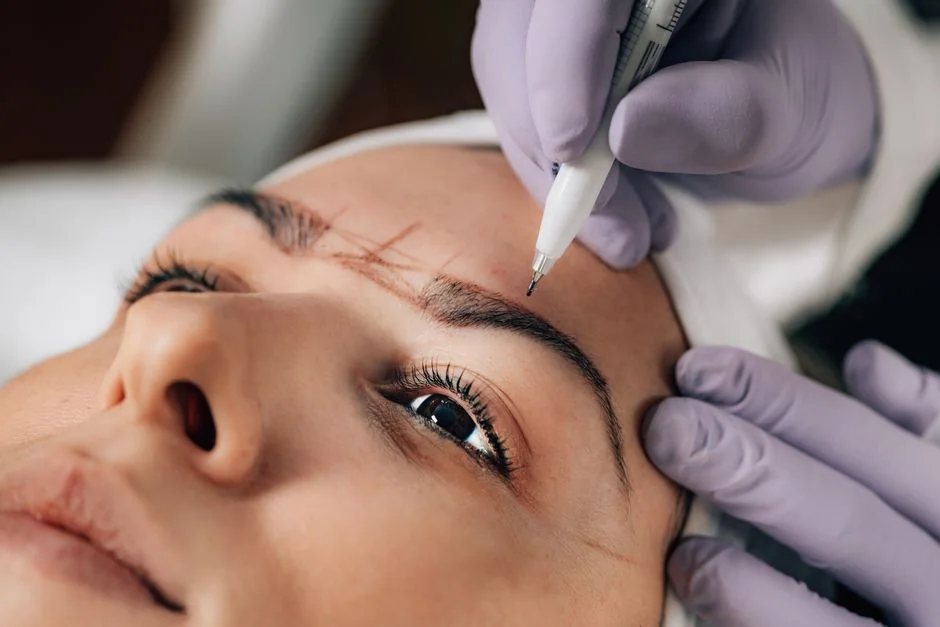
A typical artmake session begins with a consultation and design phase, during which the practitioner maps out the intended shape using a pencil or stencil and photographs the area for reference. A topical numbing cream is then applied and left for approximately 20 to 40 minutes.
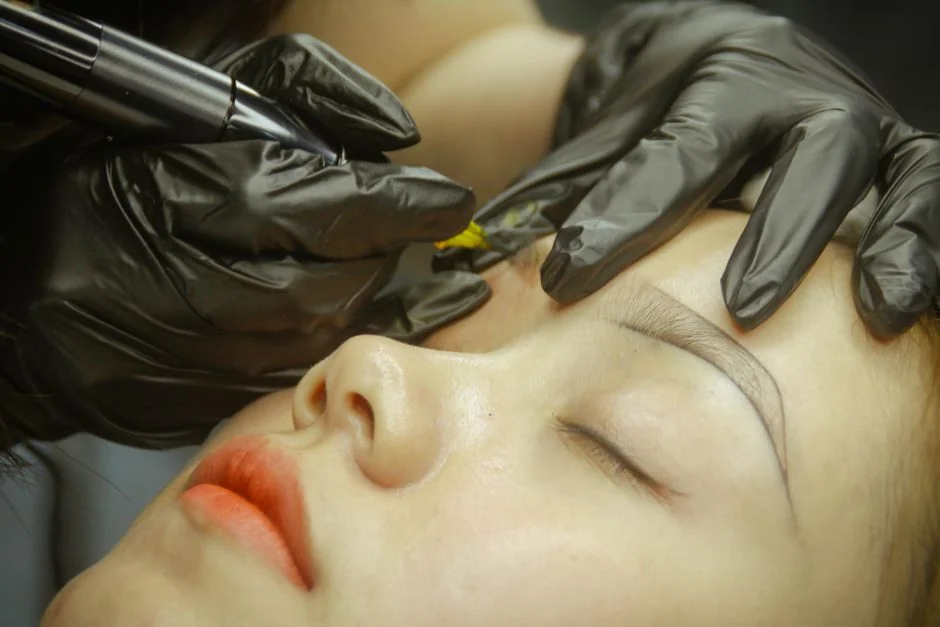
Once the skin is sufficiently anaesthetised, the practitioner uses a hand-held device — either a manual tool (similar to the technique used in what is internationally called microblading) or an electric needle device — to implant pigment in fine, controlled passes. Session length varies by area: eyebrows may take 60 to 90 minutes, while lip artmake can take up to two hours. At the end of the session, soothing ointment is applied and aftercare instructions are provided.
Artmake vs microblading vs conventional tattoo: a comparison
| Feature | Artmake (Japan) | Microblading (manual) | Conventional Tattoo |
|---|---|---|---|
| Needle depth | Superficial dermis | Superficial dermis | Deep dermis |
| Longevity | 1–5 years (area-dependent) | 1–3 years | Decades (effectively permanent) |
| Legal requirement in Japan | Medical facility / physician supervision | Legally unclear if outside clinic | Tattoo artist (non-medical) |
| Pigment type | Medical-grade, iron oxide-based | Varies by brand | Standard tattoo ink |
| Fading pattern | Gradual, even | Gradual; strokes may blur | Slow; colour shift over decades |
| Removal options | Laser or saline removal | Laser or saline removal | Laser (multiple sessions, more difficult) |
Cost of Artmake in Tokyo
Artmake pricing in Tokyo varies considerably depending on the area treated, the clinic’s location, the practitioner’s level of experience, and the technique used. The following ranges reflect the broader Tokyo market and are intended as a planning reference only.
- Eyebrow artmake: typically in the range of ¥60,000–¥150,000 per session (two sessions are generally recommended)
- Lip artmake (full lip): typically in the range of ¥80,000–¥180,000 per session
- Eyeliner artmake (upper only): typically in the range of ¥40,000–¥90,000 per session; upper and lower combined: ¥50,000–¥110,000
- Hairline artmake: typically in the range of ¥100,000–¥250,000 per session
- Areola artmake (medical reconstruction): typically in the range of ¥60,000–¥180,000 per session, often sought following mastectomy
- Artmake removal (laser or saline method): typically in the range of ¥30,000–¥80,000 per session; multiple sessions are usually required
Most providers recommend a follow-up (top-up) session four to eight weeks after the initial procedure, as some areas inevitably retain pigment less evenly than others during the first healing cycle. Budget for at least two sessions when planning eyebrow artmake in particular.
For an accurate quote, we recommend booking a consultation with BIOTOPE CLINIC via LINE or WhatsApp.
Have a question about this treatment?
Message us on LINE or WhatsApp — our English-speaking team usually replies the same day.
Healing Timeline and Aftercare: What to Expect Week by Week
Dr. Karibe’s Note
A common question from our international patients at BIOTOPE CLINIC is why their artmake looks so dark or uneven in the first week.
What many overseas visitors find surprising about artmake in Japan is that the initial result — sometimes called the “bold phase” — always appears significantly darker and more saturated than the healed outcome.
This is normal, not a sign of error. The pigment lightens and softens as the outermost skin layer regenerates, and the final colour typically stabilises at around four to six weeks post-procedure. I always encourage patients to withhold judgement about their results until at least that point.
Days 1–3: Redness, swelling, and initial intensity
Immediately after the session, the treated area will appear darker, slightly swollen, and possibly tender. Some redness around the pigmented zone is normal and generally subsides within 24 to 48 hours. Lip artmake patients in particular often experience more noticeable swelling, which usually resolves within two to three days.
During this period, keep the area clean and apply the aftercare ointment provided by your clinic as directed. Avoid touching the area with unwashed hands.
Days 4–7: Flaking and peeling begin
Towards the end of the first week, the treated skin begins to flake and peel as the outer layer (epidermis) regenerates. This is a natural part of healing.
The peeling skin may carry some pigment with it, which can make the colour appear patchy or uneven — this is entirely expected and not a sign of a poor outcome.
Do not pick or peel the skin manually. Premature removal of flaking skin can pull pigment out of the dermis, resulting in gaps or uneven colour retention.
Days 8–14: The “ghost phase”
After the initial peeling concludes, many patients notice that the colour appears very faint — sometimes almost invisible in areas. This phase, often called the “ghost phase” or “disappearance stage,” can be alarming but is a normal part of the artmake healing process. A fresh layer of skin has regenerated over the pigment, temporarily muting its appearance.
Continue applying aftercare ointment and avoid sun exposure. Do not schedule social events or photography sessions during this window with the expectation that your artmake will look its best.
Weeks 3–6: Colour stabilises
Over the third through sixth weeks, the pigment gradually becomes visible again as the new skin layer thins slightly and the colour settles into its long-term tone. By the six-week mark, most patients can see a clear, representative result.
This is also the appropriate point at which a follow-up (top-up) appointment should be scheduled if required.
Ongoing maintenance: months 1 through 12 and beyond
After full healing, the main factors that affect how long artmake retains its colour are UV exposure, skin oiliness, exfoliation habits, and the area treated. Lighter pigments (such as soft browns for eyebrows or nude shades for lips) tend to fade faster than darker tones. Annual or biennial colour refreshes are typical for patients who wish to maintain consistent results.
Key aftercare rules: what to avoid
- Avoid water on the treated area for the first 24 to 48 hours (or as directed by your clinic). This includes swimming, heavy rain exposure, and steam rooms.
- Avoid saunas, hot baths, and steam rooms for at least two weeks. Excessive heat and moisture accelerate pigment fading in the early healing phase.
- Avoid direct sun exposure to the treated area for a minimum of four weeks. UV radiation breaks down pigment and prolongs healing. Use sun protection (a physical block, not chemical sunscreen) once the skin has fully closed.
- Avoid makeup on the treated area during the peeling phase. Cosmetic products can introduce bacteria and interfere with pigment retention.
- Avoid picking, rubbing, or scratching the area at any point during healing.
- Avoid alcohol and blood-thinning medications or supplements (such as aspirin, ibuprofen, fish oil, and vitamin E) in the days surrounding your session unless medically essential — discuss with your physician.
- Avoid chemical exfoliants (AHAs, BHAs, retinoids) on the treated area for at least four weeks post-procedure, as these accelerate epidermal turnover and reduce pigment retention.
- Avoid intense exercise that causes heavy sweating for the first five to seven days.
Who Is a Good Candidate for Artmake?
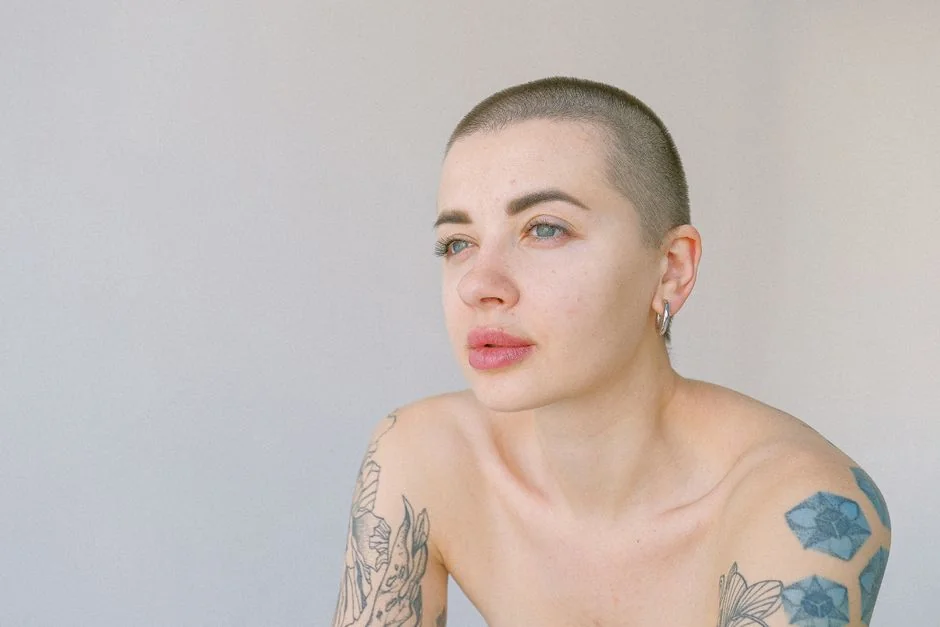
Artmake suits a wide range of people, but there are both ideal candidates and those for whom the procedure may carry additional considerations.
Good candidates generally include individuals who want to reduce the daily time spent on makeup application, those with sparse or asymmetrical eyebrows due to genetics or medical hair loss (such as alopecia or post-chemotherapy), patients seeking lip definition as lip pigmentation fades with age, and those undergoing post-mastectomy or post-breast-reconstruction areola restoration.
Artmake may require additional caution or may not be appropriate for individuals who are pregnant or breastfeeding, those with a history of keloid scarring, people with active skin conditions (such as eczema or psoriasis) in the treatment area, those undergoing immunosuppressive therapy, or individuals with certain pigment allergies.
A thorough consultation with a physician before booking is essential to assess suitability.
Where to Get Artmake in Tokyo: BIOTOPE CLINIC
Within our clinic group, artmake is performed at BIOTOPE CLINIC in Shirokanedai (Minato-ku, Tokyo), directed by Dr. Jun Karibe.
Our English-speaking team covers both clinics and handles all English enquiries.
Kojimachi Dermatology and Plastic Surgery Clinic, located in Ichigaya (Chiyoda-ku), is the main clinic of the group and offers a range of dermatological and plastic surgery services, but does not perform artmake. Patients who contact the Kojimachi Clinic with artmake enquiries are directed to BIOTOPE CLINIC, and the shared intake team ensures that English-speaking patients experience a smooth and consistent consultation process across both locations.
Dr. Karibe is a board-certified plastic surgeon, and artmake at BIOTOPE CLINIC is conducted within a fully licensed medical facility — an important consideration when selecting a provider, given Japan’s legal requirement that artmake be performed under physician supervision.
Frequently Asked Questions
- Q. How many artmake sessions will I need?
- Most providers recommend two sessions for a complete result — an initial session followed by a top-up four to eight weeks later. The first session establishes the design and base colour; the second session corrects any areas where pigment retention was uneven after healing. Some individuals with oilier skin types or lighter pigment choices may require a third session.
- Q. Will artmake affect an MRI scan?
- Some older or lower-quality artmake pigments contained metallic components that could cause mild discomfort or image distortion during MRI. Modern medical-grade pigments used in reputable clinics are generally considered MRI-compatible, but you should always inform your radiologist or treating physician about any cosmetic pigmentation before a scan so they can make an appropriate assessment.
- Q. Can artmake be removed if I dislike the result?
- Yes, artmake can be lightened or removed using laser treatments or a saline-solution removal technique. However, removal is a multi-session process that takes time and involves its own aftercare period. In the Tokyo market, removal sessions are typically priced in the range of ¥30,000–¥80,000 per session, with most cases requiring several sessions. This underscores the importance of choosing a qualified provider from the outset and ensuring the design and colour are thoroughly discussed before the procedure begins.
- Q. Is artmake safe for sensitive skin or skin prone to allergies?
- A patch test prior to the full procedure is advisable for anyone with a history of skin sensitivities or known pigment allergies. Discuss your full allergy and skin history with the clinic physician at consultation. In some cases, the practitioner may recommend a patch test at least 48 hours before proceeding to monitor for any adverse reaction.
- Q. How long does artmake last on the lips compared to the eyebrows?
- Lip artmake generally fades faster than eyebrow artmake — often lasting one to two years before a noticeable refresh is needed — because the lip area experiences more movement, moisture, and exposure to food and drink. Eyebrow artmake on drier skin types can retain good colour for two to four years. Sun exposure and the use of exfoliating skincare products are the most common reasons for accelerated fading in all areas.
Have a question about this treatment?
Message us on LINE or WhatsApp — our English-speaking team usually replies the same day.
Summary
Artmake is a safe and effective semi-permanent cosmetic procedure when performed by qualified medical professionals and followed by attentive aftercare. Understanding the healing timeline — including the initial darkening, the peeling phase, the temporary ghost phase, and the final colour stabilisation at four to six weeks — is essential for realistic expectations and a satisfying result.
The most important aftercare rules are to keep the area dry in the immediate post-procedure period, avoid heat and UV exposure during the healing phase, refrain from picking at peeling skin, and keep chemical exfoliants away from the treated area for at least four weeks. Two sessions are standard for most areas, and a physician-supervised clinic is both the legal requirement in Japan and the safest environment for the procedure.
For English-speaking patients in Tokyo, BIOTOPE CLINIC in Shirokanedai offers artmake within a fully licensed medical setting under the direction of Dr. Jun Karibe (board-certified plastic surgeon). Enquiries in English are welcome and can be directed through the shared intake team for Kojimachi Dermatology and Plastic Surgery Clinic and BIOTOPE CLINIC.
24/7 Consultation & Booking
Book a Consultation or Treatment
Our English-speaking team responds via LINE or WhatsApp — usually the same day.
References
- Karsai S, Krieger G, Raulin C. Tattoo removal using Q-switched laser: a systematic review of the literature and recommendations for treatment. Journal of the German Society of Dermatology. 2011.
- Serup J, Berthelsen G, Schwartz Lausten G. Tattoos: medical complications and clinically relevant dermatology. Clinics in Dermatology. 2015.
- Forte R, Cennamo G, Ciminelli A, Cennamo G. Permanent eyeliner and risk of ocular complications: review of the literature and case report. Acta Ophthalmologica. 2020.
- Bhatt N, Bhatt N. Semi-permanent cosmetic procedures: safety considerations and aftercare in dermatological practice. Journal of Cosmetic Dermatology. 2019.
- Japanese Society of Aesthetic Plastic Surgery. Guidelines on medical cosmetic procedures in Japan, including semi-permanent pigmentation. 2022.
Related Articles
You may also find these articles useful.
- Artmake Pain, Safety and Side Effects in Tokyo
- Artmake for Foreigners in Tokyo: English-Speaking Clinic Guide
- Eyebrow Artmake Tokyo: Cost, Procedure & Clinic Guide
- Eyeliner Artmake Tokyo: Safety, Technique & Results
SUPERVISED BY
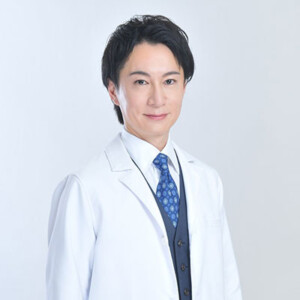
Dr. Jun Karibe
MD
Director
Education & Career
Certifications
Awards
MEDICAL REVIEW