Double eyelid surgery — technically upper blepharoplasty for the creation or enhancement of the supratarsal crease — is one of the most common procedures international patients travel to Japan for. It is popular for good reason: results are permanent (with incisional methods) or long-lasting (with buried sutures), the surgery itself is short, and the technique is well-refined in East Asia where the anatomy is best understood.
The question that comes up in every consultation is practical: “How long do I need to stay in Tokyo, and how visible is the recovery?” This guide walks through the realistic downtime for both major methods, when it is safe to fly, how much it actually hurts, and how many days we recommend planning for.
The Two Main Methods (and Why Downtime Differs)
Double eyelid surgery is performed in one of two broad approaches:
- Buried suture (embedded, non-incision): the crease is formed by placing 2 to 4 buried sutures through the eyelid. No incision, minimal tissue disruption. Preferred for younger patients with thinner eyelid tissue.
- Partial or full incision (open): a fine incision along the planned crease line, with removal of a strip of skin and often a small amount of orbicularis muscle or fat. Allows precise, permanent crease and correction of excess skin or asymmetry. Preferred for thicker eyelids, older patients, or when a definite permanent result is required.
Recovery differs meaningfully between the two:
- Buried suture: visible bruising and swelling 3 to 7 days, no stitches to remove, back to social activity in 5 to 7 days.
- Incisional: visible bruising and swelling 7 to 14 days, stitches removed at 5 to 7 days, back to social activity in 10 to 14 days.
How Painful Is Double Eyelid Surgery?
Both methods are performed under local anaesthesia — a fine 30-gauge injection into the upper eyelid skin. The injection itself is the most uncomfortable moment (roughly 3 to 4 out of 10 for 10 to 15 seconds); once numb, patients feel pressure only.
Post-operative pain:
- Buried suture: mild pressure and tightness for 24 to 48 hours, easily managed with paracetamol. Rated 2 to 3 out of 10.
- Incisional: mild-to-moderate soreness and tightness for 2 to 3 days, some patients need oral pain medication. Rated 3 to 4 out of 10.
The single most common complaint is a “gritty” or dry sensation for the first 5 to 7 days, which is easily treated with preservative-free artificial tears. Ice packs applied for 15 to 20 minutes every hour during the first 48 hours dramatically reduce both swelling and discomfort.
The Realistic Recovery Timeline
Buried Suture (Non-Incision) Method
Day 0: Anaesthesia wears off after 2 to 3 hours. Eyelids visibly swollen; mild bruising possible at suture entry points. Patients can walk out with sunglasses.
Day 1 to 2: Swelling peaks. Eyelids feel tight; opening the eyes fully is uncomfortable. Cold compresses recommended throughout.
Day 3 to 5: Swelling begins to soften. Bruising, if present, darkens then fades to yellow. Most patients begin to look presentable with light makeup and sunglasses.
Day 5 to 7: Comfortable in social settings. Crease looks visible, though slightly puffier than the final result.
Week 2 to 3: Fine detail settles; the crease depth and eyelid shape approach the final result.
Month 1 to 3: Final result stabilises. Any residual asymmetry from swelling resolves.
Incisional Method
Day 0: Anaesthesia wears off after 2 to 3 hours. Sutures visible along the crease. Eyelids visibly swollen; mild oozing possible for the first 4 to 6 hours.
Day 1 to 3: Swelling and bruising peak. Eyelids feel tight and heavy. Sleeping propped up on two pillows recommended.
Day 5 to 7: Suture removal at the clinic. Fine red incision line visible; swelling still noticeable.
Day 7 to 14: Bruising fades to yellow, then clears. Swelling reduces significantly. Comfortable in social settings from around day 10.
Week 2 to 4: Incision line fades from red to pink. Crease shape becomes more natural.
Month 3 to 6: Incision line matures to a fine white or skin-colour line, usually hidden within the crease itself. Final result visible.
Aftercare That Matters
First 48 hours (both methods):
- Ice compresses for 15 to 20 minutes every hour while awake.
- Sleep with two pillows to reduce facial swelling.
- No alcohol.
- Skip strenuous exercise, hot yoga, sauna, and onsen.
- Preservative-free artificial tears every 2 to 3 hours for eye comfort.
Day 3 to 7 (both methods):
- Ice compresses reduced to 3 to 4 times a day.
- Gentle cleansing of the eyelid area with saline or clinic-provided solution.
- Sunglasses outdoors for both UV protection and privacy.
- No eye makeup or contact lens use.
- No pulling or rubbing the eyelids.
Week 2 onwards:
- Light exercise from day 10; full workouts from day 14 (buried suture) or day 21 (incisional).
- Contact lenses from day 10 to 14.
- Light eye makeup from day 14 (buried) or day 21 (incisional).
- Sauna, onsen, hot yoga from day 14 (buried) or day 21 (incisional).
When Can You Fly After Double Eyelid Surgery?
Air travel is medically safe from the same day for both methods, but comfort and appearance are separate questions.
- Buried suture, short-haul: comfortable from day 3.
- Buried suture, long-haul: comfortable from day 5 to 7.
- Incisional, short-haul: possible from day 5 to 7, ideally after suture removal.
- Incisional, long-haul: we recommend day 7 to 10 minimum, after suture removal.
The reason to prefer waiting past suture removal for incisional surgery is straightforward: the suture-removal appointment is a mandatory clinic visit, and rescheduling it in your home country adds cost and risk. Cabin humidity also worsens the “dry eye” sensation for the first week.
Have a question about this treatment?
Message us on LINE or WhatsApp — our English-speaking team usually replies the same day.
How Many Days Should You Stay in Tokyo?
Recommended minimum stay by method:
- Buried suture: 5 to 7 nights. Enough time for peak swelling to settle and to catch any suture-related issue.
- Incisional (partial or full): 7 to 10 nights. Includes the day 5 to 7 suture removal appointment plus buffer for bruising resolution.
For patients travelling from countries with limited access to Japanese-speaking follow-up care, we recommend the longer end of each range. Both methods can develop minor asymmetry or a small suture-related bump in the first 2 weeks; if this occurs and you are already back home, remote assessment is possible but a same-day clinic visit is preferable.
Common Concerns From International Patients
“Will people notice I have had surgery when I fly home?”
After a buried suture at day 5 to 7: with sunglasses and a mask, no. Without them, an observant person may notice mild eyelid puffiness. After an incisional at day 10 to 14: fine pink incision line visible without makeup; not obvious with light eye makeup.
“Can I wear contact lenses on the plane?”
Not for the first 10 days after either method. Glasses only. Cabin humidity is too low for comfort even for patients with normal eyes; freshly operated eyelids suffer noticeably.
“When will I look like myself again?”
Buried suture: final crease shape is stable at week 2 to 4. Incisional: final crease shape is stable at week 4 to 8, with the incision line continuing to fade over 3 to 6 months.
“What if the result is asymmetric?”
Mild asymmetry in the first 2 weeks is expected — swelling rarely resolves evenly on both sides. If asymmetry persists beyond 8 weeks, a review appointment is standard. Buried suture is straightforward to adjust; incisional may require a small revision at 6 months.
Warning Signs
Contact the clinic promptly if you notice:
- Sudden increase in swelling or bleeding beyond the first 48 hours
- Spreading redness, warmth, pus, or fever (possible infection)
- Vision changes of any kind
- Severe pain not controlled by paracetamol
- An eyelid that appears to droop rather than lift (rare — usually resolves as swelling settles)
Serious complications are uncommon in the hands of experienced surgeons. Retrospective clinical reviews of upper blepharoplasty consistently report high safety with most complications being mild, manageable, and self-limiting.
Where to Get Double Eyelid Surgery in Tokyo
Within our clinic group, English-speaking blepharoplasty consultations and surgery are performed at BIOTOPE CLINIC in Shirokanedai (Minato-ku, Tokyo), directed by Dr. Jun Karibe, board-certified plastic surgeon and member of the Japan Society of Plastic and Reconstructive Surgery. Our sister clinic, Kojimachi Dermatology & Plastic Surgery Clinic in Ichigaya, focuses on Japanese-language insurance dermatology.
Consultation includes a candid discussion of buried suture versus incisional methods based on your eyelid anatomy, skin thickness, and goals. We do not publish fixed prices for double eyelid surgery on this English page because the choice of method and any concurrent adjustments (ptosis correction, epicanthoplasty, lateral canthoplasty) significantly change the total. Please contact us via LINE or WhatsApp with your goals and travel dates, and we will confirm a current quote before your trip.
Frequently Asked Questions
Which method is better — buried suture or incisional?
Neither is universally better. Buried suture is faster to heal and reversible; incisional is more permanent and precise. Anatomy and goals decide, not preference for shorter downtime.
Can I get double eyelid surgery and fly home in 5 days?
Buried suture — yes, comfortably. Incisional — not recommended; you would fly with sutures still in place.
Will the crease look natural?
Immediately after surgery: no — the crease sits higher than the final position due to swelling. By week 4 to 8: yes, if the surgeon designed the crease appropriately for your face.
Can I combine double eyelid with lateral canthoplasty or ptosis correction?
Yes, and many patients do. Combined surgery adds 2 to 4 days to the total recovery timeline and requires the same suture-removal appointment.
Is double eyelid surgery reversible?
Buried suture: mostly reversible if the sutures are removed within the first 6 months. Incisional: not reversible.
Is this covered by travel insurance?
No. Standard travel insurance does not cover elective cosmetic surgery or its complications. See our separate travel insurance guide.
Summary — The Realistic Plan
For buried suture double eyelid surgery, plan 5 to 7 nights in Tokyo, ideally with surgery on day 1 or 2 of the trip. For incisional surgery, plan 7 to 10 nights so the suture-removal appointment happens on schedule and residual bruising has cleared before you fly. Long-haul flights sooner than day 5 to 7 are medically permissible but noticeably uncomfortable. Judge your final result at week 4 (buried) or week 8 (incisional), not the day you fly home.
Our English-speaking team at BIOTOPE CLINIC in Shirokanedai plans blepharoplasty around international travel calendars every week. Message us on LINE or WhatsApp with your travel dates and goals, and we will confirm method suitability, surgery date, and current quote before you book flights.
24/7 Consultation & Booking
Book a Consultation or Treatment
Our English-speaking team responds via LINE or WhatsApp — usually the same day.
References
- Bhattacharjee K, Misra DK, Deori N. Updates on upper eyelid blepharoplasty. Indian J Ophthalmol. 2017;65(7):551-558. https://pubmed.ncbi.nlm.nih.gov/28724814/
- Chen WPD. Upper Eyelid Blepharoplasty: Evaluation, Treatment, and Complication Minimization. Aesthet Surg J. 2017;37(suppl_2):S27-S31. https://pubmed.ncbi.nlm.nih.gov/28255290/
- Kim EM, Bucky LP. Buried-suture double-eyelid blepharoplasty complications and management. Plast Reconstr Surg Glob Open. 2016;4(7):e806. https://pmc.ncbi.nlm.nih.gov/articles/PMC5010330/
- StatPearls (NIH). Upper Eyelid Blepharoplasty. https://www.ncbi.nlm.nih.gov/books/NBK537078/
SUPERVISED BY
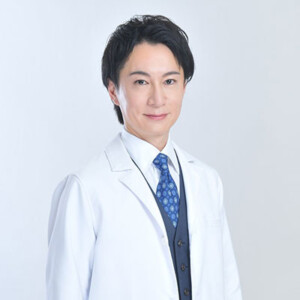
Dr. Jun Karibe
MD
Director
Education & Career
Certifications
Awards
MEDICAL REVIEW