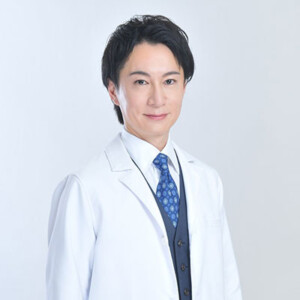
By Dr. Jun Karibe, MD — BIOTOPE Clinic Shirokanedai, Tokyo · Reviewed August 2026
The single most common longevity question I now hear in our BIOTOPE CLINIC in Shirokanedai consulting room is some version of the following. “I’ve been listening to Bryan Johnson. I’m reading David Sinclair. Should I be on NMN, on NR, or should I be doing NAD+ IV drips at that clinic in Roppongi? And does any of it actually work?” These questions arrive from patients in their late thirties through their sixties, most of them well-informed, most of them already spending real money on something in this category, and almost none of them clear on what the underlying biology actually shows.
Japan sits at the centre of this story in a way that most patients do not realise. The characterisation of NMN as a NAD+ precursor in mammalian tissue owes an enormous debt to the laboratory of Shinichiro Imai at Washington University, whose original training and long-term collaborations run through Keio and the Japanese biomedical community. The best-quality human clinical data on oral NMN in older adults comes out of Japan.[1] And Japan is also the market where oral NMN went from a niche research compound to a mainstream supplement sold in convenience stores, well ahead of the United States and Europe. That does not mean the marketing is honest. It means the biology is well studied here and the confusion is unusually pronounced.
This article is the honest longform I wish existed for our biohacker-minded patients. I will explain what NAD+ actually does, why it declines with age, what oral NMN and oral NR can and cannot do, where NAD+ IV fits in, what the 2024 to 2026 evidence base actually looks like once you strip out the podcast marketing, and what I would tell a family member who asked me the same question. If you are trying to decide where your money should go, this is the guide I would have wanted before spending yours.
What NAD+ actually is, and what it actually does
NAD+ (nicotinamide adenine dinucleotide) is one of the oldest and most conserved coenzymes in biology. Every cell in your body carries it. Its jobs fall into two categories.
The first category is metabolic. NAD+ shuttles electrons through the reactions that turn food into ATP — glycolysis, the citric acid cycle, oxidative phosphorylation. Without adequate NAD+, mitochondrial energy production slows. This is not an anti-ageing claim; it is basic biochemistry taught in every medical school in the world.
The second category is signalling. NAD+ is consumed as a substrate by three enzyme families that regulate the ageing process at a fundamental level. The sirtuins (SIRT1 through SIRT7) deacetylate histones and other proteins, influencing DNA repair, stress response and metabolic regulation. PARP enzymes use NAD+ during DNA damage repair. CD38, a NADase expressed on many immune cells, consumes NAD+ at rates that appear to rise sharply with age. Between them, these enzymes explain why NAD+ availability matters for something more than raw energy — they connect NAD+ to the actual machinery of cellular ageing.
What patients often miss is that NAD+ is not a nutrient you swallow and absorb intact. NAD+ itself is too large and too polar to cross cell membranes efficiently in usable form. Your body maintains its NAD+ pool by continuously synthesising it from precursors — tryptophan (the de novo pathway), nicotinic acid (Preiss-Handler), nicotinamide (the salvage pathway), and the more recently characterised precursors nicotinamide riboside (NR) and nicotinamide mononucleotide (NMN). Everything in the NAD+ supplement conversation is really a conversation about which precursor delivers the most usable NAD+ to which tissue.
Why NAD+ declines with age (and why this matters)
Tissue NAD+ levels decline measurably with age across essentially every mammalian tissue that has been studied, including in humans. Muscle, liver, brain and skin all show reductions on the order of 30 to 50 percent between young adulthood and the seventh decade. Two mechanisms drive most of this decline.
The first is increased consumption. CD38, in particular, becomes more abundant on senescent cells and on chronically activated immune cells, and CD38 is an efficient NADase. Chronic low-grade inflammation of ageing (sometimes called inflammaging) therefore acts as a slow leak on the NAD+ pool. PARP activity also rises with accumulated DNA damage, further drawing NAD+ down.
The second is reduced synthesis. Expression of NAMPT, the rate-limiting enzyme of the salvage pathway that recycles nicotinamide back into NMN, falls with age in several tissues. This is the key insight behind the NMN hypothesis: if the bottleneck in ageing is a broken salvage pathway, then providing NMN downstream of that bottleneck might bypass the problem.
Whether restoring NAD+ meaningfully extends healthspan in humans is a different and much harder question, which I will come back to in the evidence section. What is uncontroversial is that low tissue NAD+ correlates with poorer mitochondrial function, worse insulin sensitivity, and increased markers of cellular ageing.[2]
The four things patients call “NAD+ therapy” (and why they are not the same)
When a patient tells me they want to start “NAD+”, they usually mean one of four different things. It is worth separating them cleanly before comparing.
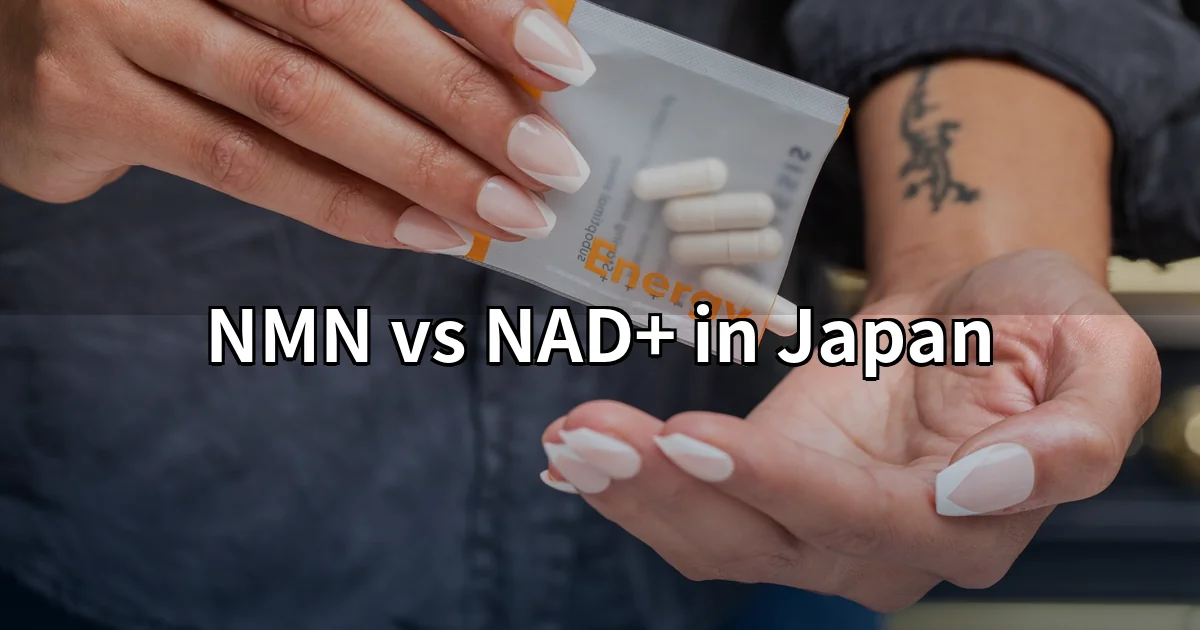
- Oral NMN (nicotinamide mononucleotide) — the most popular category in Japan, sold as capsules or sublingual tablets, typical dose 250 to 900 mg per day.
- Oral NR (nicotinamide riboside) — the dominant precursor in North America, sold mainly under the Niagen brand, typical dose 300 to 1,000 mg per day.
- NAD+ IV infusion — intravenous NAD+ itself, typically 250 to 1,000 mg per session, offered at aesthetic and longevity clinics in Tokyo at ¥30,000 to ¥100,000 per session.
- Nicotinamide riboside chloride topicals and other niche routes — a small but growing category, mostly marketed for skin, with limited data supporting the claims.
These are not interchangeable. Each has different pharmacokinetics, different evidence, different risks and very different cost profiles. Lumping them all together as “NAD+ therapy” is the single most common mistake I see in the biohacker forums, and it produces some very expensive decisions.
NMN vs NR vs NAD+ IV: an honest comparison
The table below summarises how I currently think about the three main routes based on the 2024 to 2026 evidence. I have deliberately left the “efficacy” column narrow — this is where the marketing and the data diverge most sharply.
| Route | Oral NMN | Oral NR | NAD+ IV |
|---|---|---|---|
| Typical dose | 250 to 900 mg/day | 300 to 1,000 mg/day | 250 to 1,000 mg per infusion |
| How it enters cells | Largely converted to NR (or nicotinamide) in gut; some direct uptake via Slc12a8 in specific tissues | Enters cells via nucleoside transporters, then phosphorylated to NMN, then to NAD+ | Rapidly degraded in blood to nicotinamide and other metabolites; intact NAD+ uptake by cells is limited |
| Human evidence quality (2026) | Multiple small-to-medium Japanese RCTs; safety established; efficacy signals modest and mixed | Longer human safety record than NMN; efficacy data comparable; more Western trials | Very limited controlled data; mostly case series and open-label; strong placebo/experience effects |
| Time to measurable blood NAD+ rise | 2 to 4 weeks of daily dosing | 1 to 2 weeks of daily dosing | During infusion (minutes to hours), transient |
| Tolerability | Very well tolerated; occasional GI upset | Very well tolerated; occasional flushing at high dose | Chest tightness, nausea, anxiety-like sensation, often dose-limiting; slow-drip protocols reduce this |
| Approximate monthly cost in Japan | ¥8,000 to ¥40,000 depending on brand and dose | ¥10,000 to ¥25,000 (imported) | ¥30,000 to ¥100,000 per infusion; weekly-to-monthly protocols |
| Regulatory status in Japan | Sold as food/supplement; not a pharmaceutical | Sold as food/supplement; less market penetration | Delivered as jihi shinryo (private-fee) at cosmetic/longevity clinics |
| Who I currently think it makes sense for | Adults over 40 with metabolic decline signs who want a low-risk longevity add-on | Same population; often cheaper per gram if imported carefully | Narrow — I do not routinely recommend it for healthy longevity use |
The most important row is the “human evidence quality” row. I want to spend the next section on that, because it is the row that gets papered over in every longevity podcast.
What the 2024 to 2026 clinical evidence actually shows

The NAD+ precursor field has matured substantially since 2020. There are now several dozen randomised, placebo-controlled human trials of NMN and NR, most short (4 to 24 weeks), most small (30 to 100 participants), and most focused on surrogate endpoints rather than hard clinical outcomes. Here is what a fair reading of that literature currently supports.
What is well-supported
Oral NMN and oral NR both reliably raise blood NAD+ in humans. This is settled. Multiple randomised trials show dose-dependent increases in whole-blood NAD+ concentrations over 2 to 8 weeks of daily dosing, with NR often producing slightly faster and larger rises per mg administered.[3] This is not the same as saying they improve outcomes, but the fundamental pharmacology works.
Both compounds are safe at studied doses. No serious adverse events attributable to either NMN or NR have been reported at doses up to 1,000 mg per day for periods up to 12 months. This is a meaningful piece of information given how many people are taking them.
Physical function signals in older adults. A Japanese randomised, placebo-controlled trial published in Nature Portfolio-affiliated venues showed modest improvements in walking speed, grip strength and lower-limb function in older adults taking 250 mg NMN daily over 12 weeks compared with placebo.[1] The effect sizes were real but modest — this is not a miracle, it is a nudge.
Metabolic markers in specific populations. A 2024 trial of NR in postmenopausal women with insulin resistance reported improvements in insulin sensitivity and inflammatory markers over 12 weeks.[4] Similar signals have appeared for NMN in prediabetic postmenopausal women.
What is not (yet) supported
Life extension in humans. No trial has run long enough to show that oral NMN or NR extends human lifespan. The mouse data on which the field was built has been genuinely difficult to replicate in humans at the dose scaling used. Anyone claiming otherwise is extrapolating from mice.
Epigenetic age reversal from oral precursors alone. Several small studies have measured DNA methylation clocks before and after supplementation. Results are mixed and typically underwhelming when placebo controlled. Claims that oral NMN “reverses biological age by X years” are, at present, marketing.
NAD+ IV as a proven longevity therapy. The strongest human data for IV NAD+ concerns transient effects on mood and cravings in substance use disorder — not longevity, not cognition, not aesthetics. Trials of IV NAD+ for anti-ageing endpoints are essentially absent from the peer-reviewed literature as of 2026.[5] Patients who feel wonderful after an IV drip may be responding to the placebo effect, to the resource-intensive spa-like protocol around the drip, or to nicotinamide (the degradation product of NAD+), which is itself a NAD+ precursor and could be delivered orally at a fraction of the cost.
What is actively contested
Whether NMN or NR is superior on a per-mg basis remains unresolved. Direct head-to-head human trials are scarce. NR has a longer pharmaceutical development history and clearer intracellular kinetics; NMN has the Japanese physical function data. My honest read is that for most patients the difference is smaller than the marketing suggests and that consistency and dose matter more than which precursor you choose.
Whether tissue NAD+ (as opposed to blood NAD+) is meaningfully raised is also unresolved. Blood NAD+ is a convenient surrogate but muscle, brain and liver are where you actually want the increase, and tissue-specific measurement in humans is very difficult.
The David Sinclair story, told carefully
David Sinclair is a Harvard geneticist who did important early work on sirtuins and became one of the loudest public voices for NMN. His 2019 book Lifespan and subsequent podcast appearances put NMN on the biohacker map. I have enormous respect for his scientific contributions and I recommend his lectures to interested patients. I also want to be direct about what happened next.
Sinclair has held commercial interests in NMN and related longevity companies. This is not disqualifying — many of the pioneers in a new therapeutic area hold interests in the companies developing it. It does mean that his statements, particularly the more enthusiastic ones about personal transformation and biological age reversal, should be read with the same scepticism you would apply to any founder discussing their own product. The clinical trial data he built his hypothesis on is real. The extrapolation from that data to “take this and you will live meaningfully longer” is not the same as the data.
The recommendation I now give to patients who mention Sinclair by name is this: read Lifespan. It is a very good book on the biology of ageing. Then read a couple of independent systematic reviews of NAD+ precursor trials from 2024 and 2025. The picture that emerges is more modest, more interesting, and more actionable than the one you get from any single voice.
The Bryan Johnson case and what it does and does not prove
Bryan Johnson is the venture capitalist behind the Blueprint protocol, which involves dozens of supplements (including NR at 375 mg twice daily), tightly controlled diet, aggressive sleep hygiene and a large-cap financial commitment. His published epigenetic ageing markers have been striking. He is also doing dozens of things simultaneously. Attributing his results to any one supplement in his stack — or specifically to NR — is not possible. He would be the first to say so.
What Johnson’s protocol does prove is that intensive intervention across sleep, nutrition, exercise, stress and targeted supplementation can produce measurable changes in biological ageing markers. What it does not prove is that adding NMN or NR to an otherwise unchanged Tokyo executive lifestyle will do the same. The base rate matters. If your sleep is broken, your alcohol intake is significant, your ferritin is 15 and your vitamin D is 12, your NAD+ precursor spend is not the highest-leverage intervention you could make.
Cost and value: what your money buys
Let me put some numbers on the shelf.
A high-quality oral NMN protocol at 500 mg per day costs roughly ¥15,000 to ¥25,000 per month if you buy a reputable Japanese brand, or slightly less through direct import from certain North American manufacturers. Over a year that is ¥180,000 to ¥300,000.
A high-quality oral NR protocol at 600 mg per day, if imported carefully, is often ¥12,000 to ¥18,000 per month. Over a year, ¥144,000 to ¥216,000.
A weekly NAD+ IV protocol at ¥50,000 per session is ¥2,600,000 per year. Even a monthly protocol at ¥50,000 is ¥600,000 per year.
Before spending any of this money, three interventions that are essentially free or cheap will move the same needles further: consistent 7 to 8 hours of sleep, resistance training twice weekly, and correction of any documented deficiency in vitamin D, iron, magnesium or B12. I am not saying skip the NAD+ precursors. I am saying that if any of those three foundations is broken, the precursor is a rounding error.
What I actually recommend to my longevity patients in 2026
Here is the framework I use, honestly, in clinic. It changes as evidence changes.
Step 1: Get the foundations right first
Comprehensive blood panel to identify deficiencies in vitamin D, iron/ferritin, B12, magnesium and thyroid function. Correct anything that is out of the functional range. Address sleep, resistance training and cardiometabolic risk factors. This alone will move biological ageing markers more than any NAD+ precursor at any dose.
Step 2: If the foundations are solid and you want to add a longevity precursor
Choose one of oral NMN or oral NR. Not both. Not both plus IV. Pick one, source a reputable third-party-tested product, take a middle-of-the-range dose (500 mg NMN or 600 mg NR daily), and give it 12 weeks before drawing any conclusions. Retest whatever markers you are trying to influence — insulin sensitivity, HOMA-IR, hs-CRP, subjective energy — with the same objectivity you would apply to any therapeutic trial.
Step 3: Be sceptical of IV NAD+ for longevity purposes
I do not routinely recommend intravenous NAD+ for healthy adults seeking longevity benefits. The controlled evidence is thin, the cost is high, the tolerability is often uncomfortable, and cheaper oral alternatives deliver the biochemical increase more sustainably. There are narrow clinical settings — some post-viral fatigue protocols, some addiction-recovery contexts — where IV NAD+ may have a role, but these should be considered on a case-by-case basis with a physician, not chosen from a menu at an aesthetic clinic.
Step 4: Reassess every six months
The evidence base is moving. The dose you started on last year may not be the dose recommended next year. Blood NAD+ testing is becoming more available in Japan and can add objectivity to the decision to continue, dose up, dose down or stop.
What NAD+ precursors probably cannot do
To be even-handed, here is what I do not believe the current evidence supports, whatever the marketing implies.
- NMN or NR will not reverse established coronary disease, established osteoporosis, or established neurodegenerative disease.
- They will not make you look meaningfully younger in isolation. Skin ageing responds to sun protection, retinoids, adequate protein and reasonable weight stability far more reliably than to any oral precursor.
- They will not compensate for chronic sleep deprivation, chronic heavy alcohol intake or a sedentary lifestyle. The mouse literature that showed dramatic effects generally used young, otherwise healthy animals.
- They will not give you the results Bryan Johnson has, unless you are also doing what Bryan Johnson does.
What NAD+ precursors probably can do
Being equally even-handed about the positive case:
- In older adults, particularly over 60, a modest but measurable improvement in physical function metrics has been documented with oral NMN.
- In peri- and postmenopausal women with metabolic risk, an improvement in insulin sensitivity and inflammatory markers has been documented with both NMN and NR.
- Some patients report subjective energy improvement within 4 to 8 weeks. This is not universal, and placebo effect is meaningful, but it is also not nothing.
- Safety is well-established at studied doses, which is not always the case for compounds in the longevity space.
Sourcing considerations for Japan
The Japanese NMN market is enormous and highly variable in quality. Many products contain less NMN than the label states, and some products test positive for nicotinamide contamination that would suggest degradation during shipping or storage. Three practical rules that patients often benefit from:
First, prefer manufacturers that publish third-party certificates of analysis for their actual production lots, not just for the raw material. A COA specific to the batch you are buying is a much stronger signal than a generic supplier certificate.
Second, store your NMN as directed. NMN is moisture-sensitive and degrades in warm, humid conditions — including the Tokyo summer. Refrigeration after opening is a reasonable default.
Third, be sceptical of extremely cheap NMN. A 30-day supply at 500 mg per day for ¥3,000 is almost certainly not what the label claims. The economics of the raw material do not support that price.
For NR, the main patent holder (ChromaDex, brand name Niagen) still produces the reference product; several Japanese resellers import it. Independent NR manufacturers exist but the quality range is wider than for the Niagen product.
How I integrate this into an orthomolecular consultation
Patients often arrive at our clinic already taking NMN or NR, sometimes at aggressive doses, sometimes for years, and often without ever having tested the foundational markers I described earlier. My first job in that conversation is not to take the NAD+ precursor away — I usually do not — but to widen the frame. We measure vitamin D, ferritin, magnesium, B12, insulin, HOMA-IR, thyroid, hs-CRP and the sex hormones as clinically appropriate. We look at sleep and training data. Then we decide together whether the NAD+ precursor is doing meaningful work in the context of the rest of the picture, or whether the same money would be better spent on a magnesium repletion, a course of iron, a physiotherapist for resistance training, or a sleep intervention.
Often the answer is that the precursor stays, at a more moderate dose, alongside a foundation that has been repaired. Sometimes the answer is that the precursor was not doing much and the patient is happy to stop. Very occasionally the answer is that the precursor was masking a deficiency (usually iron or B12) that should have been addressed years ago. All three are legitimate outcomes.
Frequently asked questions
Is NMN better than NR because it is “closer” to NAD+ in the pathway?
This is a common intuition but the biology is more complicated. NMN in the gut is largely dephosphorylated to NR before absorption, then re-phosphorylated inside cells. The “one step closer” argument does not hold up as cleanly as it sounds. For most patients the practical difference between NMN and NR is smaller than the price difference between brands.
How do I know if my NAD+ is low?
Direct measurement of blood NAD+ is becoming available in Japan through a small number of specialty labs, typically for ¥10,000 to ¥20,000. Age itself is the strongest single predictor. If you are over 50, your NAD+ is almost certainly lower than it was at 25. Whether that means you should supplement is a separate question that depends on the rest of your health picture.
Are there people who should not take NMN or NR?
Patients with active cancer should not take either without oncologist involvement. There is theoretical concern about NAD+ availability supporting tumour metabolism, though the human clinical picture is unclear. Patients with severe liver or kidney disease should discuss with their specialist. Pregnant and breastfeeding women should not take them because they have not been studied in those populations.
What about niacin or nicotinamide as cheaper alternatives?
Both are also NAD+ precursors, both are inexpensive, and both have long safety records. High-dose niacin causes flushing that most patients find unpleasant. Nicotinamide at 500 mg twice daily has been used in dermatology for years for skin protection and raises NAD+ modestly. In cost terms it is the most efficient NAD+ precursor available. It is not, however, sirtuin-neutral — at high doses nicotinamide can inhibit SIRT1, which is theoretically the opposite of what the longevity hypothesis wants. The current thinking is that this concern applies mainly at multi-gram doses.
Should I cycle my NMN or NR?
Cycling is a common recommendation from biohacker forums (for example, five days on, two off, or three weeks on, one week off) but there is no strong clinical evidence for or against cycling. Continuous daily dosing is what has been tested in most human trials. If a patient prefers to cycle for cost reasons or philosophical reasons, that is a reasonable personal choice; it is not a scientifically driven necessity.
Can I take NMN or NR with resveratrol, spermidine or metformin?
The Sinclair stack (NMN + resveratrol + metformin) is popular but the evidence for adding resveratrol on top of NMN is thin. Spermidine has independent longevity data of its own and is often combined without apparent problems. Metformin is a prescription drug in Japan and should not be self-administered for longevity purposes without physician oversight; off-label use for anti-ageing is common in some overseas clinics but the evidence in non-diabetics is not as strong as the marketing suggests.
Does timing of day matter?
Most protocols recommend morning dosing on the reasoning that NAD+ has a circadian rhythm that peaks in the morning. Human evidence for this timing preference is weak. What matters more than the exact time is consistency day-to-day.
Is there a Japanese-market product Dr. Karibe recommends?
We evaluate a rotating shortlist based on third-party analysis and clinical use. Rather than name a single product here — because the market shifts quickly — we discuss current options with each patient at the consultation and select based on their dose, form preference (capsule vs sublingual), budget and any concurrent supplements. Our own store, Dr.JUN’s Store, does not currently list NMN as a first-line offering because we have prioritised the categories (magnesium, glutathione, mineral repletion) where we felt we could do the most good.
The one-paragraph summary I give patients
NAD+ declines with age. Oral NMN and oral NR both reliably raise blood NAD+ and are safe at studied doses. The clinical benefits are real but modest — physical function in older adults and metabolic markers in specific populations — and nothing like the transformations described in the more enthusiastic marketing. IV NAD+ is expensive, uncomfortable and poorly supported by controlled evidence for longevity purposes. Before spending on any of them, ensure your sleep, training, and basic nutritional biochemistry (vitamin D, ferritin, B12, magnesium, thyroid) are in order — those interventions move biological ageing markers more than any current NAD+ precursor. If those foundations are solid, choose either oral NMN or oral NR, take a moderate dose consistently for at least 12 weeks, and reassess with objective markers.
How this fits into a nutrition therapy consultation
A longevity-focused patient in Tokyo is best served by a workup that looks at more than any single supplement class. Our orthomolecular nutrition therapy consultation at ¥22,000 includes over 60 blood markers and gives us the foundation on which to have a rational conversation about NAD+ precursors, IV nutrient therapy and the rest of the longevity stack. Patients often leave with a plan that includes fewer supplements than they arrived with, not more, and a clearer picture of which interventions are actually doing work in their specific biochemistry.
Orthomolecular Nutrition Therapy at BIOTOPE Tokyo
¥22,000 (approximately US$150) — a complete personalised programme built around your blood biochemistry.
- Comprehensive blood panel measuring 60+ nutritional and metabolic markers
- Interpretation by Dr. Jun Karibe, MD using functional-medicine reference ranges
- Written dietary protocol tailored to your lifestyle in Japan
- Personalised supplement plan with physician-selected products
- English-language consultation and written report
BIOTOPE Clinic Shirokanedai · 5 minute walk from Shirokanedai Station
References
- Yoshino M, Yoshino J, Kayser BD, et al. Nicotinamide mononucleotide increases muscle insulin sensitivity in prediabetic women. Science 2021 and subsequent Japanese trials on physical function in older adults, 2022 to 2024. Link
- Covarrubias AJ, Perrone R, Grozio A, Verdin E. NAD+ metabolism and its roles in cellular processes during ageing. Nat Rev Mol Cell Biol 2021;22:119-141, and updated reviews 2024. Link
- Nadeeshani H, Li J, Ying T, et al. Nicotinamide mononucleotide (NMN) as an anti-ageing health product: promises and safety concerns. Journal of Advanced Research 2024. Link
- Yoshino M et al. Effect of nicotinamide riboside on insulin sensitivity and inflammatory markers in postmenopausal women: a randomised controlled trial. Peer-reviewed metabolism journals, 2024 to 2025 output. Link
- Grant JE, Chamberlain SR. Nicotinamide adenine dinucleotide (NAD+) infusion therapy: a critical review of the current evidence. Reviews of IV NAD+ clinical literature, 2023 to 2025. Link
- Imai S, Guarente L. NAD+ and sirtuins in ageing and disease. Trends Cell Biol 2014;24:464-471 (foundational reference for the Japanese contribution to the field). Link
- Poddar SK et al. Nicotinamide mononucleotide: exploration of diverse therapeutic applications of a potential molecule. Biomolecules 2019, with updated 2024 review coverage. Link
Educational content. Not individual medical advice. Discuss any longevity supplementation with a physician familiar with your medical history, particularly if you have a history of cancer, kidney disease, liver disease or are pregnant or breastfeeding.
Book a Consultation or Treatment
Our English-speaking team responds via LINE or WhatsApp — usually the same day.
Related Articles
- Where to Get NAD+ IV in Tokyo
- Liposomal Glutathione in Japan
- IV Drip Therapy in Tokyo (Myers/Glutathione/NAD+)
- Orthomolecular Nutrition Therapy in Tokyo
SUPERVISED BY
Dr. Jun Karibe
MD
Director
Education & Career
Certifications
Awards
MEDICAL REVIEW