Under-Eye Filler in Tokyo: Risks, Benefits, and What to Expect

Dark hollows, shadows, and fine lines beneath the eyes are among the most common cosmetic concerns that bring patients to a clinic — and understandably so, since the under-eye area is often the first place tiredness or ageing becomes visible.
Hyaluronic acid filler in the tear trough (the groove between the lower eyelid and the cheek) can address these concerns without surgery, making it one of the most sought-after non-surgical treatments in Tokyo.
This article explains how the procedure works, what results are realistic, what risks exist, and how much it costs in Tokyo — so you can make an informed decision.
- What under-eye filler (tear trough filler) is and how it works
- The realistic benefits and the real risks you should know before proceeding
- How much under-eye filler costs in Tokyo
- Who is a good candidate — and who should consider an alternative
- What happens before, during, and after the procedure
Have a question about this treatment?
Message us on LINE or WhatsApp — our English-speaking team usually replies the same day.
What Is Under-Eye Filler?

Under-eye filler — medically referred to as tear trough filler — involves injecting a small amount of hyaluronic acid (HA) gel beneath the skin in the hollow that runs from the inner corner of the eye toward the cheek. Hyaluronic acid is a substance naturally produced by the body; when injected, it adds volume, lifts the overlying skin, and reduces the appearance of shadows or dark circles caused by loss of tissue.
It is a non-surgical procedure, typically completed in 15–30 minutes, with no general anaesthesia required. Because HA is reversible — it can be dissolved with an enzyme called hyaluronidase — it is considered one of the more forgiving filler treatments available.
Why the Tear Trough Is Technically Demanding
Despite being a non-surgical procedure, tear trough filler carries more complexity than fillers placed in the cheeks or lips.
The skin under the eye is exceptionally thin, the underlying anatomy includes important blood vessels, and the lymphatic drainage in this area is delicate. For these reasons, technique, product selection, and practitioner experience matter considerably more here than in other facial zones.
Benefits of Under-Eye Filler
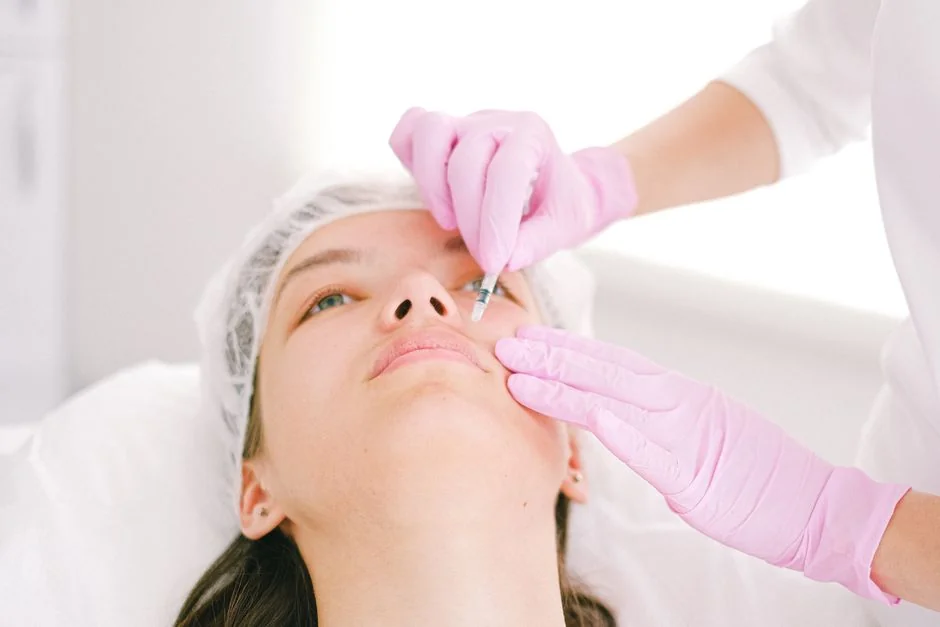
When performed correctly on an appropriate candidate, hyaluronic acid filler in the tear trough can produce noticeable improvements in a single short session. The main benefits reported by patients and documented in clinical literature include:
- Reduction in hollow shadows: Volume restoration directly addresses the hollow appearance that makes eyes look tired or sunken.
- Softening of dark circles caused by shadowing: When darkness results from structural hollowing rather than pigmentation, filler can significantly improve the appearance.
- Minimal downtime: Most patients return to normal activities the same day or the following day.
- Reversibility: Hyaluronidase can dissolve HA filler if results are unsatisfactory or if a complication arises.
- Gradual, natural-looking results: When placed conservatively, improvement appears subtle and refreshed rather than augmented.
Clinical reports indicate that patient satisfaction rates for tear trough filler are high when candidates are carefully selected — one systematic review published in the journal Aesthetic Surgery Journal noted satisfaction rates exceeding 80% among patients treated by experienced injectors using appropriate HA formulations.
Risks and Limitations of Under-Eye Filler
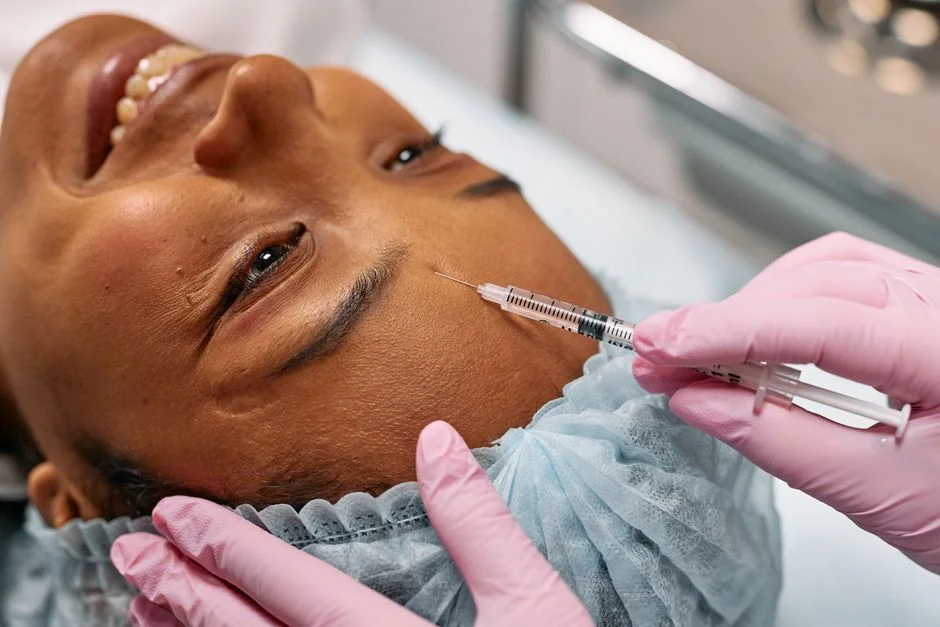
Transparency about risk is essential with any injectable treatment, and the tear trough area has a distinctive risk profile that every patient should understand before proceeding.
Common, Expected Side Effects
- Bruising and swelling: These are the most frequent side effects and typically resolve within 7–14 days.
- Temporary firmness or lumpiness: Can occur in the days immediately after injection, usually resolving on its own.
- Tyndall effect: A bluish discolouration that occurs if filler is placed too superficially; this is avoidable with correct injection depth and can be corrected with hyaluronidase.
Serious but Rare Risks
- Vascular occlusion: Filler entering or compressing a blood vessel is the most serious complication of any facial filler. In the periorbital area, this can — in extremely rare cases — affect vision. Studies suggest the rate of vision-threatening complications from facial filler overall is estimated at fewer than 1 in 100,000 procedures, but the risk is not zero, and the under-eye region requires particular caution.
- Prolonged oedema (swelling): The under-eye area has less predictable lymphatic drainage; some patients experience persistent mild swelling for weeks or longer.
- Overcorrection: Excess volume can worsen the appearance. Conservative, incremental treatment is preferable to a single large-volume session.
- Infection: Rare when sterile technique is followed, but theoretically possible with any injectable procedure.
Dr. Karibe’s Note
Many of our international patients arrive having researched tear trough filler online and are surprised to learn that their concern — dark circles — may not actually be caused by volume loss.
In my consultation at BIOTOPE CLINIC, I always assess whether the darkness stems from structural hollowing, skin pigmentation, or visible blood vessels, because each has a different optimal treatment.
Filler works well for the structural component, but if pigmentation is the primary cause, patients are likely to be disappointed with filler alone. An honest assessment before committing to a procedure saves time, money, and frustration.
What People Often Get Wrong About Under-Eye Filler
Misconception 1: Filler fixes all dark circles
This is probably the most common misunderstanding. Dark circles have multiple causes — volume loss, skin pigmentation, thin skin making underlying vessels visible, and allergic skin changes (allergic shiners).
Hyaluronic acid filler addresses volume loss and the resulting shadow. If your dark circles are primarily caused by melanin pigmentation or visible vasculature, filler is unlikely to produce the result you expect. A thorough consultation that distinguishes between these causes is essential.
Misconception 2: It is a low-risk procedure because it is “just an injection”
The non-surgical nature of tear trough filler can lead patients to underestimate its complexity. The periorbital anatomy — particularly the ophthalmic artery and its branches — makes this one of the highest-risk zones for filler injection. Technique, product choice (lower G-prime, more hydrophilic HA formulations are generally preferred in this area), and the injector’s ability to manage complications are critically important. Choosing a board-certified physician with plastic surgery or dermatology credentials is strongly advisable.
How Much Does Under-Eye Filler Cost in Tokyo?

At BIOTOPE CLINIC in Shirokanedai, hyaluronic acid filler is priced at ¥66,000–¥88,000 per syringe. The tear trough area typically requires one syringe or less per session for a conservative correction; some patients with more pronounced volume loss may require a second syringe, though this is generally addressed over multiple visits rather than in a single session.
If an initial consultation with Dr. Karibe is required prior to the procedure, the consultation fee is ¥3,300 (initial consultation) or ¥2,200 for a surgical consultation. Should filler dissolution ever be required — for correction or as a safety measure — hyaluronidase is available at ¥11,000–¥22,000.
| Item | Price Range (JPY, tax incl.) |
|---|---|
| Hyaluronic acid filler (per syringe) | ¥66,000 – ¥88,000 |
| Hyaluronidase (dissolution, if needed) | ¥11,000 – ¥22,000 |
| Initial consultation | ¥3,300 |
| Dr. Karibe surgical consultation | ¥2,200 |
| Transconjunctival blepharoplasty (surgical alternative) | ¥280,000 – ¥428,000 |
For patients where filler is not the most appropriate option — for example, those with significant fat prolapse beneath the lower eyelid — Dr. Karibe may discuss transconjunctival blepharoplasty, a surgical procedure to reposition or reduce under-eye fat. This is available at BIOTOPE CLINIC; feel free to ask about it during a consultation.
For an accurate quote, we recommend booking a consultation.
Have a question about this treatment?
Message us on LINE or WhatsApp — our English-speaking team usually replies the same day.
What to Expect: Before, During, and After

Before the Procedure
A thorough consultation should precede any filler treatment. During this appointment, the practitioner will assess your under-eye anatomy, skin quality, tear trough depth, and the primary cause of your concerns. Patients are generally advised to avoid blood-thinning medications (aspirin, ibuprofen, omega-3 supplements) for 5–7 days beforehand to reduce bruising risk, though this should be confirmed with the treating doctor, particularly if the medications are prescribed.
During the Procedure
Topical anaesthetic cream is applied to the skin 15–20 minutes before injection to improve comfort. The injector uses either a fine needle or a blunt-tipped cannula — the latter is often preferred in this area as it reduces the risk of vascular injury. The amount of product placed is deliberately conservative; the practitioner may ask you to sit upright during the session to assess the result in a natural position. Total chair time is typically 15–30 minutes.
After the Procedure
Mild swelling and possible bruising are expected for up to two weeks. Patients are advised to avoid strenuous exercise, saunas, and alcohol for 24–48 hours, and to sleep with their head slightly elevated for the first few nights. The final result is best assessed 2–4 weeks after injection, once all swelling has fully resolved. In Dr. Karibe’s clinical experience at BIOTOPE CLINIC, a follow-up appointment approximately two weeks post-treatment is useful to assess whether any further refinement is appropriate.
Who Is a Good Candidate?
Tear trough filler tends to produce the most satisfying results in patients who:
- Have a well-defined hollow or groove beneath the lower eyelid, caused by volume loss
- Have adequate skin thickness — very thin or crepey skin can make filler placement more technically challenging and may increase the risk of visible product
- Have realistic expectations about the degree of improvement
- Are in good general health with no active skin infection in the treatment area
- Are not pregnant or breastfeeding
Who Should Consider Alternatives
Patients with prominent under-eye fat pads, significant lower eyelid laxity, or whose primary concern is skin pigmentation rather than hollowing are likely to benefit more from a different approach. At BIOTOPE CLINIC in Shirokanedai, we frequently see patients who have been told elsewhere that filler will “fix” their dark circles, only to find the result disappointing — often because the underlying cause was pigmentation rather than volume loss. In those cases, a laser treatment such as the PicoWay pico laser may be a more suitable option, and Dr. Karibe can discuss whether this is appropriate during a consultation.
Frequently Asked Questions
- Q. How long does under-eye filler last?
- Results vary depending on the product used, the individual’s metabolism, and the volume placed, but most patients find that tear trough filler lasts between 9 and 18 months. The under-eye area tends to metabolise filler more slowly than higher-movement zones such as the lips, so longevity is generally on the longer end of the range for HA fillers.
- Q. Is the procedure painful?
- Most patients describe the sensation as mild to moderate discomfort rather than significant pain. Topical anaesthetic cream is applied beforehand, and some practitioners use filler products that contain lidocaine (a local anaesthetic) to improve comfort during injection. The area under the eye is sensitive, but the procedure is brief.
- Q. Can filler be removed if I am unhappy with the result?
- Yes. Hyaluronic acid filler can be dissolved using hyaluronidase, an enzyme injection that breaks down the HA relatively quickly — typically within 24–48 hours. This reversibility is one of the reasons HA filler is preferred over permanent volumisers in this delicate area. At BIOTOPE CLINIC, hyaluronidase is available at ¥11,000–¥22,000 if dissolution is required.
- Q. Can under-eye filler be combined with other treatments?
- Yes, although same-session combination with energy-based devices (such as HIFU or laser) in the same anatomical zone is generally avoided to reduce the risk of product displacement or exaggerated swelling. A practitioner can advise on sequencing — for example, completing filler first, waiting for full integration, and then considering complementary treatments in a separate session.
- Q. I am a foreigner visiting Tokyo. Can I have this done safely on a short trip?
- This is a practical and important question. A short-stay patient should allow at least 7–10 days in Tokyo after the procedure to monitor for any delayed swelling or bruising and to attend a follow-up appointment. Same-day-departure procedures are not advisable for tear trough filler given the two-week observation period recommended for this area. BIOTOPE CLINIC’s English-speaking team can help you plan your visit accordingly.
Have a question about this treatment?
Message us on LINE or WhatsApp — our English-speaking team usually replies the same day.
Where to Get Under-Eye Filler in Tokyo (English-Speaking Consultation)
Within our clinic group, English-speaking consultations are handled at BIOTOPE CLINIC in Shirokanedai (Minato-ku, Tokyo) by Dr. Jun Karibe, a board-certified plastic surgeon certified by the Japan Society of Plastic and Reconstructive Surgery. Our sister clinic, Kojimachi Dermatology and Plastic Surgery Clinic in Ichigaya (Chiyoda-ku, Tokyo), serves as the group’s main office for insurance-covered dermatology and operates in Japanese. English-speaking patients seeking tear trough filler, surgical consultation, or any other cosmetic treatment should direct their enquiries to BIOTOPE CLINIC. Bookings and enquiries in English are available via LINE or WhatsApp.
Summary
Under-eye filler (tear trough filler) using hyaluronic acid is a well-established non-surgical option for patients whose under-eye concerns stem primarily from volume loss and structural hollowing. When performed by an experienced, board-certified physician using appropriate technique and product selection, it can produce natural, refreshed results with minimal downtime.
The procedure is not without risk — the periorbital anatomy is demanding, and patient selection matters enormously. Dark circles caused by pigmentation, skin laxity, or prominent fat pads are better addressed by other means, and an honest consultation is the starting point for any responsible treatment plan.
If you have questions about under-eye filler or would like to discuss whether it is the right option for you, English-speaking consultations are handled at BIOTOPE CLINIC in Shirokanedai (Minato-ku, Tokyo) by Dr. Karibe. Our sister clinic, Kojimachi Dermatology and Plastic Surgery Clinic in Ichigaya (Chiyoda-ku), handles Japanese-language insurance dermatology. English enquiries: LINE or WhatsApp.
24/7 Consultation & Booking
Book a Consultation or Treatment
Our English-speaking team responds via LINE or WhatsApp — usually the same day.
References
- Goldberg RA, Fiaschetti D. Filling the periorbital hollows with hyaluronic acid gel: initial experience with 244 injections. Ophthalmic Plastic and Reconstructive Surgery. 2006.
- Scheuer JF 3rd, Sieber DA, Pezeshk RA, Gassman AA, Campbell CF, Rohrich RJ. Anatomy of the facial danger zones: maximizing safety during soft-tissue filler injections. Plastic and Reconstructive Surgery. 2017.
- Beleznay K, Carruthers JDA, Humphrey S, Jones D. Avoiding and treating blindness from fillers: a review of the world literature. Dermatologic Surgery. 2015.
- Berguiga M, Galatoire O. Tear trough rejuvenation: a safety evaluation of the treatment by a semi-linear threading technique with a 25-gauge cannula. Orbit. 2017.
- Sharad J. Dermal fillers for the treatment of tear trough deformity: a review of anatomy, treatment techniques, and their outcomes. Journal of Cutaneous and Aesthetic Surgery. 2012.
Related Articles
You may also find these articles useful.
- Under Eye Filler Tokyo: Risks, Benefits & Results
- Dermal Filler Tokyo Price and Clinic Guide: What to Know
SUPERVISED BY

Dr. Jun Karibe
MD
Director
Education & Career
Certifications
Awards
MEDICAL REVIEW