Botox for Crow’s Feet in Tokyo: What English-Speaking Patients Should Know
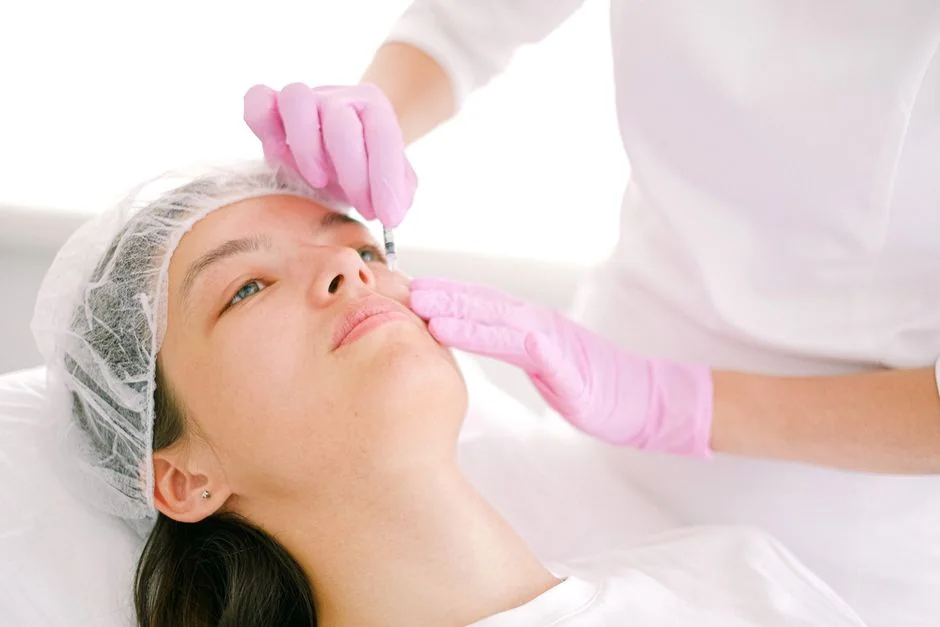
Those fine lines that fan out from the outer corners of the eyes when you smile are among the first changes many people notice in the mirror — and they can feel disproportionately ageing, because they appear precisely when you are happiest. If you are living in or visiting Tokyo and wondering whether botulinum toxin injection is a sensible option, the good news is that this is one of the better-studied treatments in aesthetic medicine, with a specific regulatory approval in Japan.
This article explains what the treatment involves, what the Japanese clinical evidence actually showed, what it costs, and who should think twice.
What you’ll learn in this article:
- What crow’s feet are and how botulinum toxin injection addresses them
- The Japanese approval status and the clinical trial results behind it
- Realistic cost information for the eye-corner area in Tokyo
- Onset, duration, downtime and the main risks
- Who is a good candidate — and who should avoid the treatment
Have a question about this treatment?
Message us on LINE or WhatsApp — our English-speaking team usually replies the same day.
What Is Botox for Crow’s Feet?

Crow’s feet — known medically as lateral canthal lines — are the creases that radiate outward from the outer corner of each eye. They are produced largely by repeated contraction of the orbicularis oculi, the ring-shaped muscle that encircles the eye and squeezes it shut when you smile or squint.
Botulinum toxin type A works by temporarily blocking the nerve signal that tells that muscle to contract. With the muscle relaxed, the overlying skin is creased less forcefully, and the lines soften.
It is important to be precise about terminology. “Botox” is a brand name, not a generic term. In Japan, the product carrying regulatory approval for facial expression lines is BOTOX VISTA (onabotulinumtoxinA), marketed by Allergan Aesthetics / AbbVie.
Approval status in Japan
BOTOX VISTA received Japanese approval for the glabellar (between-the-brows) indication first. The additional indication for lateral canthal lines was approved on 23 May 2016. The Japanese package insert lists the indication as facial expression lines of the glabella or lateral canthal area in adults under 65 years of age.
Separately, the U.S. Food and Drug Administration approved BOTOX Cosmetic for moderate to severe lateral canthal lines in September 2013. These are two independent regulatory decisions — an FDA approval is not a Japanese approval, and the two should never be treated as interchangeable.
How It Works and What the Evidence Shows
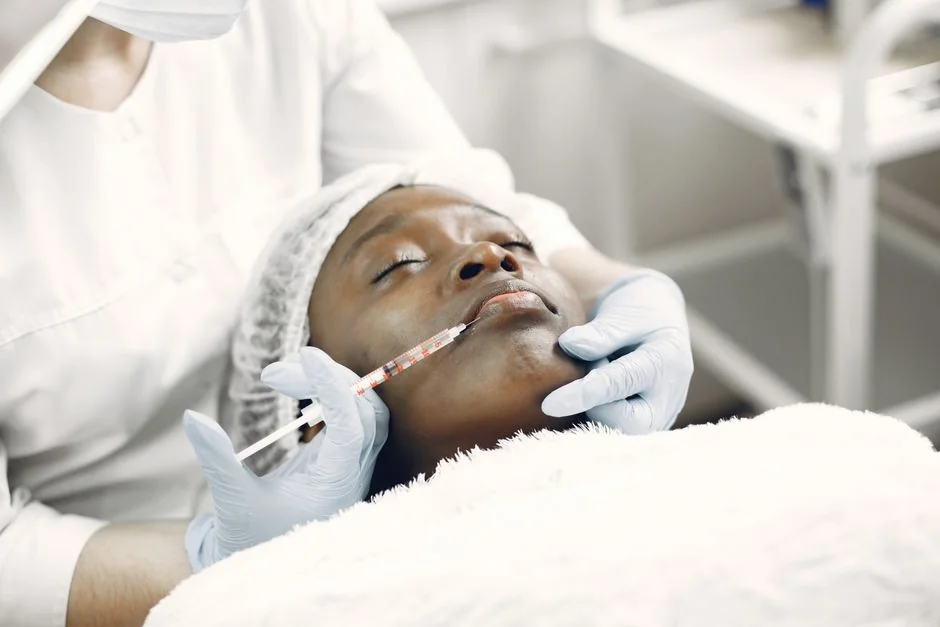
Under the Japanese approved dosing, a total of 12 to 24 units is divided evenly across three injection sites per side (six sites in total), placed into the lateral portion of the orbicularis oculi muscle. Re-injection is permitted at intervals of at least three months.
The pivotal Japanese phase III study was a multicentre, randomised, double-blind, placebo-controlled trial in Japanese patients with lateral canthal lines. The primary assessment was made 30 days after the first injection, and counted patients whose wrinkle severity at maximum muscle contraction improved to “none” or “mild”.
| Group | Improvement rate at day 30 | Adverse reaction incidence |
|---|---|---|
| 24 units | 68.3% (71/104) | 4.0% (6/151) |
| 12 units | 56.6% (56/99) | 2.8% (4/143) |
| Placebo | 8.2% (8/97) | Not applicable |
Reported adverse events in that trial included eyelid pain, eyelid ptosis (drooping), abnormal ocular sensation and eyelid swelling, each at low single-digit frequencies. An international review of the onabotulinumtoxinA crow’s feet programme similarly reported that eyelid oedema, at approximately 1%, was the only adverse event occurring in 1% or more of treated patients (Carruthers et al., Aesthetic Surgery Journal, 2016).
Studies of this kind measure a population average. They indicate that a majority of treated patients saw a meaningful change at one month, but they do not promise any specific outcome for an individual.
Onset and duration
According to our clinic group’s own treatment information, the effect typically becomes visible around two to three days after injection, and the duration is generally in the region of four to six months, with considerable individual variation. Muscle strength returns gradually rather than disappearing overnight, so the transition back is usually gentle.
Cost of Botox for Crow’s Feet in Tokyo
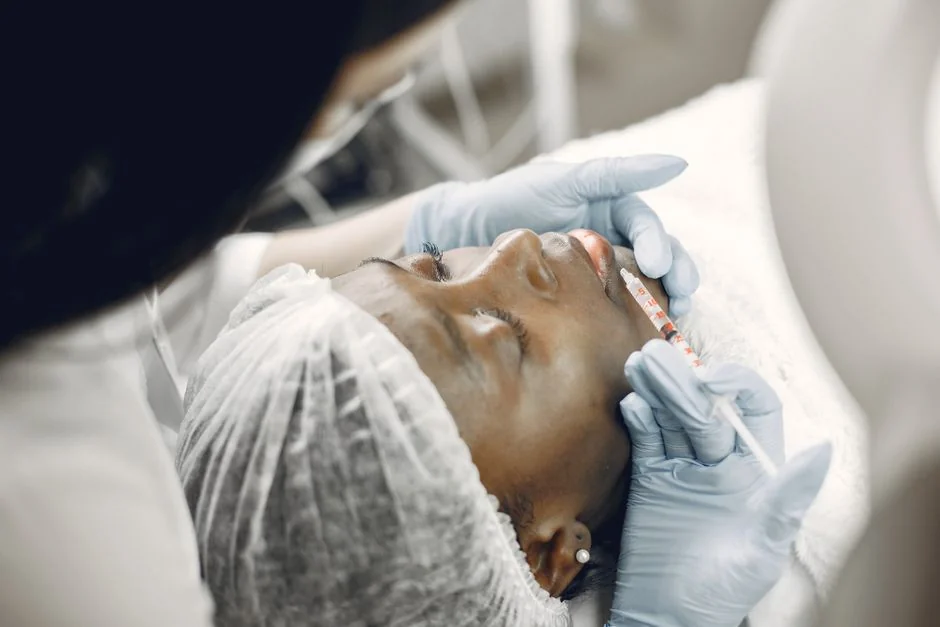
Botulinum toxin injection for wrinkles is self-pay (自由診療) in Japan. It is not covered by Japanese national health insurance, and it is not covered by most travel insurance policies either.
Pricing in Tokyo varies widely, largely because clinics use different botulinum toxin products. Our group’s published Japanese price list for the eye-corner area currently shows ¥15,500 per area for a Korean-manufactured botulinum toxin preparation and ¥22,000 per area for the Allergan-manufactured product. Prices are subject to change — please see the clinic’s official price page or contact us for a current quote.
Be cautious of headline prices quoted without specifying the product, the number of units, or how many “areas” are included. In Dr. Karibe’s clinical experience at BIOTOPE CLINIC, a great deal of patient confusion comes from comparing a per-area price at one clinic against a per-unit price at another.
For an accurate quote, please book a consultation.
Have a question about this treatment?
Message us on LINE or WhatsApp — our English-speaking team usually replies the same day.
What to Expect: Before, During and After
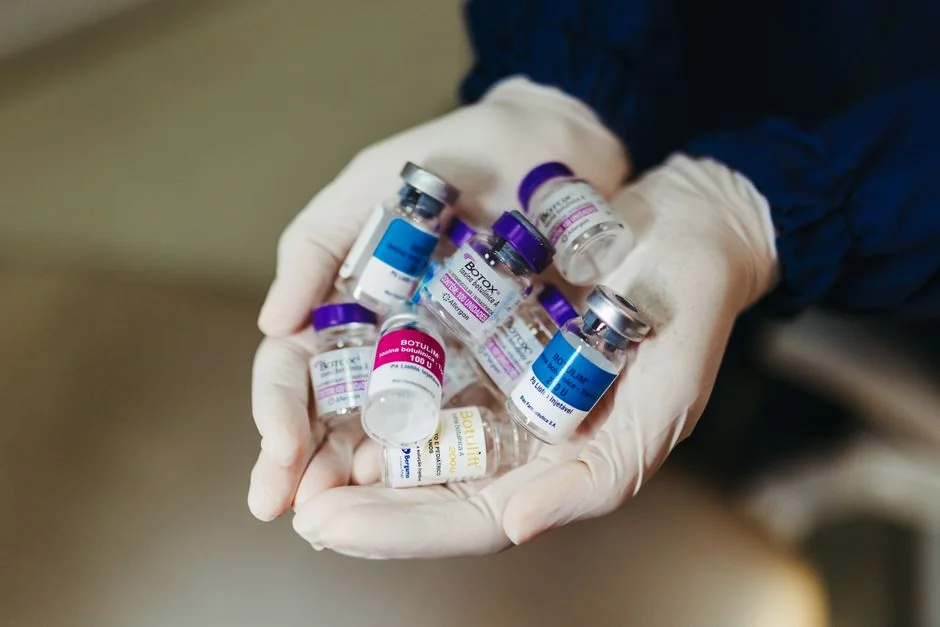
The appointment itself
A consultation comes first: the physician examines how your orbicularis oculi behaves when you smile and squint, reviews your medical history and medications, and agrees a dose with you. The injections themselves take only a few minutes — six small injections in total, using a fine needle.
Downtime
Most people return to normal activities the same day. Small red marks or pinpoint bruising at the injection sites are common and usually settle within a day or two; bruising around the eye can occasionally last longer because the skin there is thin.
Patients are generally advised not to rub the treated area, and to avoid heavy exercise, hot baths, saunas and alcohol on the day of treatment.
Who is a good candidate?
The strongest candidates are adults under 65 whose crow’s feet are clearly dynamic — that is, much more visible when smiling than at rest — and who are in good general health with realistic expectations.
Who should avoid it?
The Japanese package insert lists clear contraindications, including neuromuscular junction disorders such as myasthenia gravis, Lambert–Eaton syndrome and amyotrophic lateral sclerosis; pregnancy, possible pregnancy and breastfeeding; known hypersensitivity to any component of the product; and concurrent treatment with another botulinum toxin preparation. Tell your doctor about every medication and supplement you take, including blood thinners.
What People Often Get Wrong
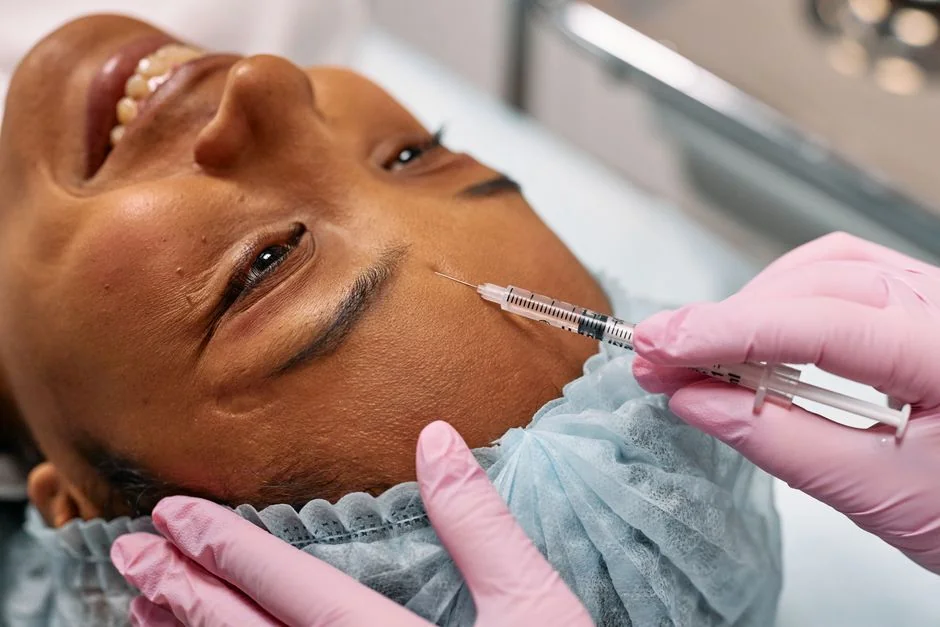
Misconception 1: “It will erase the lines even when my face is still”
The Japanese approval and the trial endpoint both concern expression lines assessed at maximum muscle contraction. Botulinum toxin addresses the muscular cause of dynamic creasing; it is not a treatment for deeply etched skin creases that remain fully visible with the face at rest, nor for sun-damaged skin texture. Long-standing static lines often need a different or additional approach — options such as hyaluronic acid filler, RF microneedling or fractional laser resurfacing are available at BIOTOPE CLINIC in Shirokanedai, and it is worth asking about them during a consultation with Dr. Karibe.
Misconception 2: “All botulinum toxin in Japan is the same product”
It is not. BOTOX VISTA is the botulinum toxin preparation holding Japanese approval for glabellar and lateral canthal expression lines. Other botulinum toxin products used in Japanese cosmetic clinics — including preparations manufactured overseas — do not necessarily hold that Japanese approval, and regulatory attention to the import and handling of these products has increased in recent years. This is not a reason to avoid treatment; it is a reason to ask your clinic, plainly, which product they are using and what its regulatory status in Japan is.
Where to Get Botox for Crow’s Feet in Tokyo
Within our clinic group, English-speaking consultations are handled at BIOTOPE CLINIC in Shirokanedai (Minato-ku, Tokyo) by Dr. Jun Karibe. Our sister clinic Kojimachi Dermatology & Plastic Surgery Clinic in Ichigaya handles Japanese-language insurance dermatology. Bookings and enquiries in English: LINE or WhatsApp.
Dr. Karibe is a plastic surgeon certified by the Japan Society of Plastic and Reconstructive Surgery. At BIOTOPE CLINIC in Shirokanedai, we frequently see patients who have had botulinum toxin abroad and want to understand how Japanese products, dosing conventions and pricing structures compare with what they are used to — that conversation is a normal part of the consultation.
Frequently Asked Questions
- Q. How soon will I see a difference?
- Our clinic information indicates that the effect generally becomes visible around two to three days after injection. The Japanese pivotal trial made its main assessment at 30 days, so it is reasonable to judge the full result at about one month.
- Q. How long does it last, and how often can I repeat it?
- Duration is commonly in the range of four to six months, but this varies considerably between individuals. The Japanese package insert permits re-injection at intervals of at least three months.
- Q. Will my smile look unnatural?
- The approved technique places six injections into the lateral part of the muscle specifically to soften creasing while preserving expression. Dose and placement matter a great deal, which is why an in-person assessment of how your muscle actually moves is essential.
- Q. Is it covered by Japanese health insurance?
- No. Botulinum toxin for facial expression lines is a self-pay cosmetic treatment in Japan. Insurance-covered dermatology is a separate service, handled in Japanese at our Kojimachi clinic.
- Q. Can I have it done as a visitor to Tokyo?
- Yes, though it is sensible to allow a few days before any major event in case of minor bruising. Consultation is required before treatment, and English-language consultation is available at BIOTOPE CLINIC.
Have a question about this treatment?
Message us on LINE or WhatsApp — our English-speaking team usually replies the same day.
Summary
Botulinum toxin injection for crow’s feet is a well-defined, evidence-backed treatment with a specific Japanese approval granted in May 2016 for adults under 65. In the Japanese pivotal trial, 68.3% of patients in the 24-unit group met the improvement criterion at day 30, compared with 8.2% on placebo — a substantial difference, though not a guarantee for any individual.
It works best on dynamic lines, lasts a matter of months rather than years, requires little downtime, and has a small but real set of risks and contraindications that a proper consultation exists to identify.
If you have questions about Botox for crow’s feet, English-speaking consultations are handled at BIOTOPE CLINIC in Shirokanedai (Minato-ku, Tokyo) by Dr. Karibe. Our sister clinic Kojimachi Dermatology & Plastic Surgery Clinic in Ichigaya (Chiyoda-ku) handles Japanese-language insurance dermatology. English enquiries: LINE or WhatsApp.
24/7 Consultation & Booking
Book a Consultation or Treatment
Our English-speaking team responds via LINE or WhatsApp — usually the same day.
References
- Carruthers A, Bruce S, Cox SE, Kane MAC, Lee E, Gallagher CJ. OnabotulinumtoxinA for Treatment of Moderate to Severe Crow’s Feet Lines: A Review. Aesthetic Surgery Journal. 2016;36(5):591–597.
- Allergan Japan K.K. Press release: BOTOX VISTA for Injection 50 Units obtains additional approval for the lateral canthal line indication. 23 May 2016.
- BOTOX VISTA for Injection 50 Units — Japanese package insert (添付文書), Allergan Aesthetics / AbbVie GK. Revised March 2025.
- Pharmaceuticals and Medical Devices Agency (PMDA), Japan. Review documents for BOTOX VISTA for Injection 50 Units, 2016. https://www.pmda.go.jp/
- U.S. Food and Drug Administration. Approval of BOTOX Cosmetic (onabotulinumtoxinA) for temporary improvement of moderate to severe lateral canthal lines in adults, September 2013. https://www.fda.gov/
Related Articles
You may also find these articles useful.
- Botox in Tokyo: Areas, Pricing and What to Expect
- Forehead Botox Tokyo: What to Expect and Cost
- Botox Effects and Duration Explained|How Long Does Botox Last and How to Make It Last Longer?
- Botox vs Dermal Fillers: Which Treatment Is Right for You?
- Neck Botox Tokyo: Nefertiti Lift Guide
SUPERVISED BY
Dr. Jun Karibe
MD
Director
Education & Career
Certifications
Awards
MEDICAL REVIEW