Melatonin dosage is where most travellers get it wrong. The instinct is to take a 5 mg or 10 mg tablet and hope for hard sleep, which is the opposite of what the science supports. This guide covers the doses that actually work for jet lag, when to take them for eastbound and westbound flights, common mistakes, and the small group of travellers who should avoid melatonin in Japan entirely.
What you’ll learn in this article

- The evidence-based dose range for melatonin as a jet-lag intervention (spoiler: lower than you think)
- The exact window to take it, relative to your target Tokyo bedtime
- How eastbound and westbound flights change the plan
- Contraindications, drug interactions, and who should skip melatonin
- How to source melatonin in Japan if you did not pack any
Need a physician to confirm your dose?
BIOTOPE CLINIC offers an English online consultation with hotel delivery.
The Evidence-Based Dose Range for Jet Lag
Sleep-medicine reviews of melatonin for jet lag consistently point to the same range: 0.5 mg to 5 mg.
The Cochrane review of melatonin for jet lag, the American Academy of Sleep Medicine clinical practice guideline for circadian sleep-wake disorders, and later meta-analyses all converge here. Doses above 5 mg have not been shown to improve outcomes and are more likely to cause next-morning grogginess.
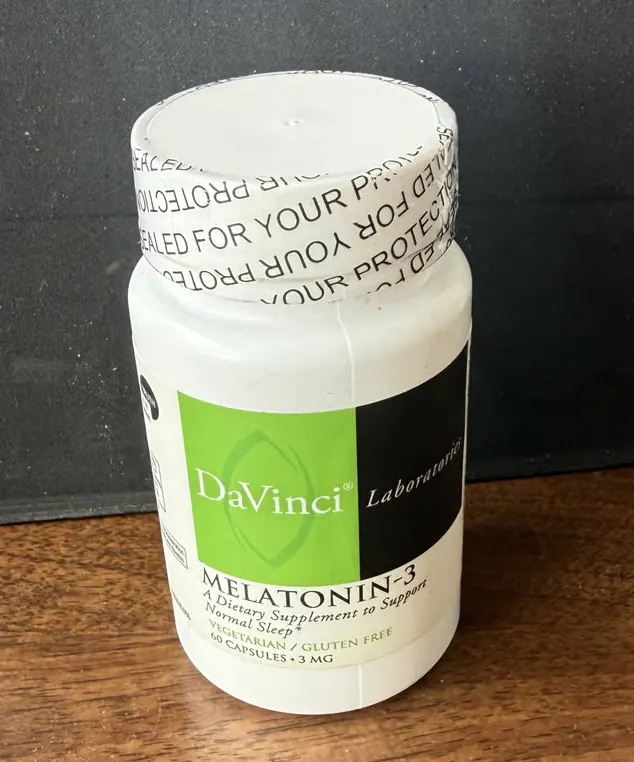
The most-cited practical range is 0.5 mg to 3 mg, which is what most experienced travellers use. A 3 mg capsule — the dose in DaVinci Laboratories Melatonin-3, which is the product supplied through the online consultation service for melatonin in Japan — is a reasonable starting point for most adults. Smaller-framed travellers, or people who have found even low doses leave them foggy, can split a capsule and start at 1.5 mg.
Why more is not better
Melatonin’s effect on the circadian clock is a signalling effect, not a sedation effect. Your body distinguishes “there is melatonin present” from “there is no melatonin present” — it does not scale the response linearly with dose. Once you cross the threshold, extra milligrams add side effects (vivid dreams, morning fog, occasional mood dips) without adding circadian effect.
When to Take It — The Timing That Matters
The correct answer is 30–60 minutes before your target Tokyo bedtime. Not “when you feel sleepy”. Not “when you get on the plane”. Not “the moment you land”. The purpose is to tell your body’s clock that night is starting on Tokyo time.
Eastbound (Europe → Tokyo, US East Coast → Tokyo)
- Take melatonin 30–60 minutes before your target Tokyo bedtime for three to five consecutive nights after arrival.
- Pair with morning daylight before 10 a.m. Tokyo local. Melatonin plus morning light is more effective than either alone.
- Do not take it during the day, even if you are exhausted. Daytime melatonin confuses the clock in the wrong direction.
Westbound (US West Coast → Tokyo, Auckland → Tokyo)
- Melatonin is optional. Many westbound travellers reset on light and meal timing alone within two to three nights.
- If you do use it, 0.5–1 mg 30–60 minutes before Tokyo bedtime is usually enough.
- Stop after Night 2 if you feel adjusted.
Short trips (48–72 hours)
For a very short business trip, most sleep clinicians recommend not trying to reset at all. Stay on your home time zone, and use a single evening dose only if you have an important morning meeting on Tokyo time. Chronic short-trip resetting is where jet lag becomes cumulative.
Common Dosage Mistakes
- Taking 5 mg or 10 mg because “more is stronger”. It is not; you get more side effects without more circadian effect.
- Taking it at 2 a.m. when you cannot sleep. This shifts the clock backward and lengthens jet lag. If you wake at 2 a.m., ride it out.
- Taking it in the taxi from the airport. Landing at 15:00 and dosing then will push your Tokyo bedtime to 17:30 — you will wake at 03:00.
- Combining with alcohol. Alcohol fragments sleep and blunts melatonin’s circadian signal. Skip Night 1 and 2 drinks.
- Continuing for two weeks. Three to five nights is the jet-lag window. Longer nightly use is a separate discussion with your regular physician.
Who Should Not Take Melatonin
Melatonin is well tolerated for most healthy adults on short-term jet-lag use, but the following groups should not take it without a specific clinical conversation.
- Pregnant or breastfeeding travellers. Safety data are limited; standard guidance is to avoid.
- Under 18 years old. Not appropriate for adult-jet-lag dosing patterns. Paediatric melatonin use is a separate clinical decision.
- People on anticoagulants (warfarin, DOACs). Case reports of altered bleeding risk mean this needs a physician conversation.
- People on immunosuppressants or corticosteroids. Potential interactions; discuss before use.
- People with autoimmune disease under active treatment. Melatonin has immunomodulatory effects.
- People with a mood disorder currently under treatment. Effects on mood are individual; check with your prescribing psychiatrist.
- People with epilepsy. Mixed evidence; specialist input required.
- People with chronic kidney disease. Manufacturer product information recommends caution.
- People planning to drive within a few hours of taking a dose. Even if you don’t feel sedated, reaction time can be affected.
Dosage Quick Reference Table
| Scenario | Dose | Timing | Duration |
|---|---|---|---|
| Eastbound to Tokyo, first-time user | 0.5–1 mg | 30–60 min before Tokyo bedtime | 3–5 nights |
| Eastbound to Tokyo, experienced user | 1–3 mg | 30–60 min before Tokyo bedtime | 3–5 nights |
| Westbound to Tokyo | 0.5–1 mg | 30–60 min before Tokyo bedtime | Optional; up to 2 nights |
| Short business trip (48–72 h) | Skip or 0.5 mg | Only before an important morning | 1 night max |
| Woke at 3 a.m. | Do not take a fresh dose | Wait for morning light | — |
Where to Get Melatonin in Japan If You Did Not Pack Any
Because melatonin in Japan is regulated as a pharmaceutical ingredient rather than a supplement, it cannot be bought at a drugstore or convenience store. If you did not bring your own supply, the practical route is a short online consultation with a Japanese physician. BIOTOPE CLINIC in Shirokanedai offers this in English, dispatches DaVinci Laboratories Melatonin-3 (3 mg) to your Tokyo hotel by domestic courier, and lets you collect at the clinic for free if you are staying nearby. Full workflow and pricing is covered in our companion guide: Melatonin in Japan for Jet Lag: Online Doctor Consultation & Hotel Delivery.
Frequently Asked Questions
- Q. Is 10 mg of melatonin ever the right dose?
- Rarely, and not for jet lag. The evidence base for jet-lag dosing sits in the 0.5–5 mg range. Higher doses tend to produce side effects without additional circadian benefit.
- Q. Can I split a 3 mg capsule?
- Yes. Opening a DaVinci Melatonin-3 capsule and splitting the powder is a common workaround for first-time users who want to start at 1.5 mg. If you are unsure, discuss it during the online consultation.
- Q. How soon does it work?
- Onset is 30–60 minutes for most people. If you take it and lie awake for two hours, next time move the dose earlier — do not increase the dose.
- Q. Can I take it every night for two weeks?
- For jet lag specifically, three to five nights is the standard course. If you find yourself using it every night for two weeks, the issue has stopped being jet lag and should be reviewed by your regular physician.
- Q. What if I already tried 5 mg last night and felt hung over?
- Drop to 1–3 mg tonight. The hangover is a sign the dose was too high, not that melatonin is wrong for you.
- Q. Do I need a doctor to buy melatonin in Japan?
- Yes. Melatonin in Japan is not sold over the counter. The physician consultation is what makes the supply pathway legally compliant.
Summary — Get the Dose Right
Melatonin for jet lag is 0.5–3 mg, taken 30–60 minutes before your target Tokyo bedtime, for three to five nights after arrival.
Higher is not better. Pair it with morning daylight and normal Tokyo meal times.
Skip it if you fall into a contraindication group, and confirm your specific dose with a physician if you have any current medical conditions or medications. And if you did not pack any, melatonin in Japan can be obtained through a short online consultation with hotel delivery — no drugstore search required.
Confirm Your Melatonin Dose with an English-Speaking Doctor
Book an Online Consultation with BIOTOPE CLINIC
Consultation and one bottle of DaVinci Laboratories Melatonin-3 (3 mg): ¥16,500 all-in. Domestic shipping from ¥1,100; free pickup at the Shirokanedai clinic. Typically dispatched within 2–3 business days.
References
- Herxheimer A, Petrie KJ. Melatonin for the prevention and treatment of jet lag. Cochrane Database of Systematic Reviews. 2002.
- Auger RR, Burgess HJ, Emens JS, et al. Clinical practice guideline for the treatment of intrinsic circadian rhythm sleep-wake disorders. Journal of Clinical Sleep Medicine. 2015.
- Sack RL. Jet lag. New England Journal of Medicine. 2010.
- Costello RB, Lentino CV, Boyd CC, et al. The effectiveness of melatonin for promoting healthy sleep: a rapid evidence assessment of the literature. Nutrition Journal. 2014.
- DaVinci Laboratories of Vermont. Melatonin-3 product information sheet.
SUPERVISED BY

Dr. Jun Karibe
MD
Director
Education & Career
Certifications
Awards
MEDICAL REVIEW