Dark Spot Removal Tokyo: The Complete Laser Treatment Guide for International Patients
Focus Keyphrase: Dark Spot Removal Tokyo
SEO URL
/dark-spot-removal-tokyo/
Meta Title
Dark Spot Removal Tokyo | Pico Laser, IPL & Pigmentation Treatment Guide (2026)
Meta Description
Looking for dark spot removal in Tokyo? Learn about Pico laser, IPL, laser toning, melasma treatment, costs, recovery, and English-speaking dermatologists offering advanced pigmentation treatment in Tokyo.
Dark Spot Removal Tokyo: A Complete Guide for Foreigners
Looking for Dark Spot Removal in Tokyo?
If you are searching for dark spot removal in Tokyo, you are certainly not alone. Every year, thousands of expatriates, international students, business travellers, and medical tourists visit dermatology clinics across Japan hoping to treat sunspots, melasma, freckles, and post-inflammatory hyperpigmentation.
Fortunately, Tokyo has become one of Asia’s leading destinations for advanced laser dermatology. Modern technologies such as PicoWay picosecond laser, laser toning, Stella M22 IPL, and fractional CO₂ laser now allow physicians to treat pigmentation more safely and effectively than ever before.
However, successful treatment depends on much more than simply choosing the newest laser. Different types of pigmentation respond differently to laser energy. Therefore, identifying the correct diagnosis is the first and most important step.
At Kojimachi Dermatology & Plastic Surgery Clinic, we regularly treat English-speaking patients from around the world. During every consultation, we carefully evaluate your skin type, pigmentation pattern, medical history, and lifestyle before recommending the most appropriate treatment plan.
In this guide, you will learn:
- What causes dark spots
- The different types of pigmentation
- How Pico lasers, IPL, laser toning, and CO₂ fractional laser work
- Which treatment is best for your skin type
- What results you can realistically expect
- Typical treatment costs in Tokyo
- Recovery and aftercare
- How to prevent pigmentation from returning
Whether you live in Japan or are visiting Tokyo, this guide will help you understand your options and choose the safest, most effective treatment for your skin.
What Are Dark Spots?
Dark spots, medically known as hyperpigmentation, develop when certain areas of the skin produce excessive amounts of melanin. Melanin is the natural pigment responsible for skin colour. When melanocytes become overactive, patches of skin appear darker than the surrounding tissue.
Although many people use the phrase “dark spots” to describe every type of pigmentation, several completely different conditions can produce a similar appearance.
Consequently, one laser does not treat every pigment disorder equally.
Accurate diagnosis is therefore essential before beginning treatment.
Why Do Dark Spots Develop?
Pigmentation develops through several biological mechanisms.
Understanding these causes helps physicians choose the safest and most effective treatment.
Chronic Sun Exposure
Ultraviolet (UV) radiation remains the leading cause of facial pigmentation.
Over time, repeated sun exposure stimulates melanocytes to produce excess melanin.
As a result, pigmentation gradually accumulates and eventually becomes visible as sunspots or age spots.
Even brief daily exposure contributes to this process.
Therefore, sunscreen remains one of the most important components of every pigmentation treatment plan.
Hormonal Changes
Hormones also influence pigmentation.
Pregnancy, oral contraceptives, and hormone replacement therapy can all trigger melasma, particularly in women.
Unlike ordinary sunspots, melasma often appears as symmetrical patches across the cheeks, forehead, and upper lip.
Because hormonal influences continue after treatment, melasma frequently requires ongoing maintenance therapy.
Skin Inflammation
Any skin injury may stimulate excess pigment production.
Common examples include:
- Acne
- Eczema
- Burns
- Cosmetic procedures
- Insect bites
- Allergic reactions
This condition is known as post-inflammatory hyperpigmentation (PIH).
Fortunately, modern picosecond laser technology often improves PIH while minimizing additional inflammation.
Genetics
Some individuals naturally produce more pigment than others.
For example, freckles often run in families.
Likewise, certain ethnic groups have a higher tendency toward post-inflammatory pigmentation following acne or skin injury.
Genetics cannot be changed.
However, proper treatment and daily sun protection can significantly reduce visible pigmentation.
The Most Common Types of Pigmentation
Although dark spots may appear similar, physicians classify them into several distinct conditions.
Each responds differently to laser treatment.
Solar Lentigines (Sunspots)
Solar lentigines are among the most common reasons patients seek dark spot removal in Tokyo.
These flat brown spots develop gradually after years of ultraviolet exposure.
They usually appear on:
- Face
- Hands
- Neck
- Chest
- Shoulders
Fortunately, sunspots generally respond extremely well to PicoWay laser treatment.
Many patients notice significant improvement after only one or two sessions.
Melasma
Melasma presents very differently from sunspots.
Instead of isolated spots, patients develop larger symmetrical patches.
Common locations include:
- Cheeks
- Upper lip
- Forehead
- Chin
Melasma is often more challenging to treat because inflammation and hormones both contribute to its development.
Consequently, dermatologists usually recommend a combination of:
- Laser toning
- Prescription brightening cream
- Strict SPF 50+ sunscreen
- Long-term maintenance
Rather than aiming for a permanent cure, treatment focuses on long-term control and gradual improvement.
Post-Inflammatory Hyperpigmentation (PIH)
PIH develops after inflammation has healed.
Unlike active acne or eczema, the skin appears healthy.
However, excess melanin remains.
Common causes include:
- Acne
- Dermatitis
- Cosmetic procedures
- Minor injuries
Because PIH affects many younger patients, early treatment often prevents pigmentation from becoming more persistent.
Freckles
Freckles differ from both melasma and sunspots.
They usually develop during childhood and become darker after sun exposure.
Although laser treatment can reduce freckles effectively, new freckles may appear over time if ultraviolet exposure continues.
Therefore, long-term sun protection remains essential even after successful treatment.
Why Accurate Diagnosis Matters
Many patients assume every brown spot should receive the same laser treatment.
Unfortunately, this is not true.
For example:
- Sunspots often improve dramatically after a single PicoWay session.
- Melasma may worsen if treated too aggressively.
- PIH requires careful adjustment of laser settings.
- Freckles usually respond quickly but often recur without sunscreen.
Because every pigmentation disorder behaves differently, selecting the correct diagnosis is just as important as selecting the correct laser.
At Kojimachi Dermatology & Plastic Surgery Clinic, every patient receives a detailed skin assessment before treatment begins. We evaluate the type of pigmentation, Fitzpatrick skin type, sun exposure history, previous treatments, and overall skin health to create a personalized treatment plan.
Dr. Karibe’s Clinical Perspective
One of the most common misconceptions I encounter is that all brown spots are the same. In reality, they are not. During consultations, many patients point to several areas of pigmentation on their face and expect each spot to respond identically. However, one area may be a sunspot, another may represent melasma, and a third may be post-inflammatory hyperpigmentation from previous acne.
Because these conditions behave differently, they also require different treatment strategies. In my experience, patients achieve the best results when we first identify the exact type of pigmentation and then combine the appropriate laser treatment with medical-grade skincare and strict daily sun protection. Taking this individualized approach not only improves results but also reduces the risk of recurrence and unwanted pigmentation changes.
How Laser Treatments Remove Dark Spots
One of the questions I hear most often is:
“How does laser treatment actually remove dark spots?”
The answer is surprisingly simple.
Modern laser systems target melanin, the pigment responsible for dark spots, without significantly damaging the surrounding skin.
This process is known as selective photothermolysis, one of the most important principles in laser dermatology.
Each laser emits a specific wavelength of light. Melanin absorbs this energy much more readily than the surrounding tissue. Consequently, the pigment breaks into tiny particles that your body’s immune system gradually removes over the following days and weeks.
As the pigment disappears, your skin becomes clearer and more even.
However, not all pigmentation behaves in the same way.
Therefore, selecting the correct laser is just as important as selecting an experienced physician.
Why Different Pigmentation Requires Different Lasers
Patients often believe one laser can treat every dark spot.
Unfortunately, that is not true.
For example:
- Sunspots respond extremely well to high-energy picosecond lasers.
- Melasma usually requires gentle laser toning combined with topical medication.
- PIH often improves with carefully adjusted picosecond settings.
- Freckles frequently respond after only one or two sessions.
Because every condition behaves differently, treatment should always be individualized.
At Kojimachi Dermatology & Plastic Surgery Clinic, every patient undergoes a detailed skin analysis before treatment begins.
PicoWay Picosecond Laser
Among today’s pigment lasers, PicoWay is considered one of the most advanced technologies available.
Unlike older Q-switched lasers that rely mainly on heat, PicoWay delivers ultra-short pulses measured in picoseconds (one trillionth of a second).
This incredibly short pulse creates a powerful photoacoustic effect.
Instead of burning pigment, the laser shatters melanin into microscopic particles while generating far less heat.
As a result, surrounding skin experiences less injury, recovery is faster, and the risk of post-inflammatory hyperpigmentation is lower.
These advantages are especially important for Asian skin.
What Can PicoWay Treat?
PicoWay is highly versatile.
It can effectively treat:
- Sunspots
- Age spots
- Freckles
- Post-inflammatory hyperpigmentation
- Mixed pigmentation
- Acne marks
- Tattoo removal
Furthermore, PicoWay stimulates collagen production.
Consequently, many patients notice brighter, smoother skin in addition to pigment reduction.
Scientific Evidence
Numerous clinical studies support picosecond laser technology.
A systematic review published in the Journal of the American Academy of Dermatology concluded that picosecond lasers provide excellent clearance of solar lentigines while reducing thermal injury compared with conventional nanosecond lasers.
Similarly, studies involving Asian patients have demonstrated:
- Higher patient satisfaction
- Faster recovery
- Lower risk of post-inflammatory pigmentation
- Excellent cosmetic outcomes
Why We Use PicoWay
At Kojimachi Dermatology & Plastic Surgery Clinic, we use the PicoWay laser platform because it allows highly customized treatment.
Available wavelengths include:
532 nm
Ideal for superficial pigmentation such as freckles and sunspots.
785 nm
Useful for mixed pigmentation and selected tattoos.
1064 nm
Suitable for deeper pigmentation and darker skin types.
Because different pigments absorb different wavelengths, selecting the correct setting significantly improves treatment safety and effectiveness.
Laser Toning
Unlike PicoWay, laser toning treats the entire face using very low-energy laser pulses.
Instead of aggressively targeting individual spots, laser toning gradually reduces pigment over multiple sessions.
This approach is particularly effective for:
- Melasma
- General skin dullness
- Mild post-inflammatory pigmentation
- Uneven skin tone
Because the energy remains gentle, laser toning minimizes inflammation while gradually improving pigmentation.
Why Laser Toning Is Ideal for Melasma
Melasma behaves very differently from ordinary sunspots.
Excessively aggressive laser treatment may actually worsen melasma.
Therefore, dermatologists typically recommend low-fluence Nd:YAG laser toning.
Clinical studies demonstrate gradual improvement when treatments are combined with:
- Daily SPF 50+ sunscreen
- Prescription brightening creams
- Trigger avoidance
- Maintenance sessions
Patients usually require 8–12 sessions, followed by occasional maintenance treatments.
Stella M22 IPL Photofacial
Although IPL (Intense Pulsed Light) is technically not a laser, it remains one of the most effective treatments for combined pigmentation and redness.
Unlike lasers that emit a single wavelength, IPL produces a broad spectrum of light.
Different filters allow physicians to target:
- Brown pigmentation
- Facial redness
- Broken capillaries
- Sun damage
- Uneven skin tone
Consequently, IPL is particularly useful for patients who have both pigmentation and rosacea.
Who Benefits Most from IPL?
IPL works especially well for patients with:
- Mild sunspots
- Early photoaging
- Facial redness
- Uneven skin tone
- Rosacea
However, darker skin types require careful parameter selection to reduce the risk of unwanted pigmentation changes.
CO₂ Fractional Laser
CO₂ fractional laser serves a different purpose.
Rather than targeting pigment directly, it resurfaces the skin.
During treatment, the laser creates thousands of microscopic treatment columns while leaving surrounding skin intact.
This process stimulates:
- New collagen production
- Skin renewal
- Improved texture
- Epidermal regeneration
As fresh skin replaces older damaged tissue, superficial pigmentation often improves as well.
Best Candidates
CO₂ fractional laser works particularly well for patients with:
- Acne scars
- Enlarged pores
- Rough skin
- Fine wrinkles
- Mild superficial pigmentation
- Photoaged skin
Because the treatment is ablative, recovery takes longer than PicoWay or IPL.
Nevertheless, many patients appreciate the dramatic improvement in overall skin quality.
Which Laser Is Best for Dark Spot Removal?
There is no single “best” laser for every patient.
Instead, the ideal treatment depends on several important factors.
Your dermatologist considers:
- The type of pigmentation
- Your Fitzpatrick skin type
- Previous treatments
- Medical history
- Lifestyle
- Recovery expectations
For example:
Sunspots
→ PicoWay often provides the fastest improvement.
Melasma
→ Laser toning combined with medical skincare usually produces better long-term control.
Pigmentation with acne scars
→ CO₂ fractional laser may improve both conditions simultaneously.
Pigmentation with redness
→ IPL often treats both concerns during the same session.
Therefore, personalized treatment planning always produces the safest and most natural-looking results.
Dr. Karibe’s Clinical Perspective
Many patients tell me they have already tried multiple over-the-counter brightening products before visiting our clinic. Unfortunately, creams alone rarely solve long-standing pigmentation, especially when the underlying diagnosis is incorrect.
One of the biggest differences between successful and unsuccessful treatment is identifying the exact cause of the pigmentation. A sunspot, melasma, and post-inflammatory hyperpigmentation may look similar at first glance, yet they respond very differently to laser energy. For this reason, I never recommend laser treatment without first performing a detailed skin assessment.
In my experience, the best outcomes come from combining the right laser with medical-grade skincare, daily sun protection, and realistic expectations. Rather than chasing a quick fix, we focus on achieving gradual, natural, and long-lasting improvement.
What Results Can You Expect?
One of the most important questions patients ask is:
“Will my dark spots disappear completely?”
The answer depends on the type of pigmentation being treated.
Some conditions respond extremely well after only one treatment. Others improve gradually over several months and require ongoing maintenance.
Therefore, realistic expectations are essential before beginning laser treatment.
Sunspots (Solar Lentigines)
Sunspots are among the easiest pigmentation disorders to treat.
Because the pigment is usually concentrated within the upper layers of the skin, PicoWay laser can often produce dramatic improvement.
Many patients notice the following timeline:
Immediately after treatment
The treated spot becomes darker.
This is completely normal and indicates that the pigment has absorbed the laser energy.
Within one week
A small crust may develop.
Patients should avoid picking at the area because premature removal may increase the risk of pigmentation changes.
After two to four weeks
The treated pigmentation gradually flakes away.
Most patients experience significant improvement after one session.
However, larger or darker lesions sometimes require a second treatment.
Melasma
Melasma behaves very differently.
Unlike sunspots, melasma develops because of a combination of:
- Hormones
- Genetics
- Ultraviolet exposure
- Inflammation
Consequently, laser treatment alone rarely provides a permanent solution.
Instead, dermatologists usually recommend combination therapy that includes:
- Laser toning
- Prescription topical medication
- Strict SPF 50+ sunscreen
- Maintenance treatment
- Lifestyle modification
Patients often notice gradual improvement over three to six months.
Although recurrence remains possible, appropriate maintenance dramatically reduces this risk.
Post-Inflammatory Hyperpigmentation
PIH generally responds well to modern picosecond lasers.
Nevertheless, treatment should begin only after the original inflammation has settled completely.
For example:
Active acne should first be controlled medically.
Similarly, eczema should be stabilized before laser treatment begins.
Once inflammation resolves, pigmentation often fades much more predictably.
How Many Sessions Will I Need?
Treatment frequency depends entirely on your diagnosis.
Typical treatment plans include:
|
Condition |
Typical Sessions |
|---|---|
|
Sunspots |
1–2 |
|
Freckles |
1–3 |
|
PIH |
2–5 |
|
Melasma |
8–12 |
|
IPL Rejuvenation |
3–5 |
|
CO₂ Fractional Laser |
1–3 |
Because every patient heals differently, these numbers serve only as general guidelines.
During your consultation, your dermatologist will develop an individualized treatment schedule.
Recovery After Laser Treatment
Recovery varies according to the device used.
Fortunately, most modern laser systems require minimal downtime.
PicoWay Recovery
Most patients experience:
- Mild redness
- Slight swelling
- Temporary darkening of pigment
These effects generally disappear within several days.
Patients usually return to work the following day.
Laser Toning Recovery
Laser toning involves virtually no downtime.
Most patients experience only mild redness for several hours.
Therefore, many people schedule treatment during their lunch break.
IPL Recovery
Following IPL treatment, patients often notice:
- Mild redness
- Temporary swelling
- Darkening of pigmented spots
Over the following week, treated pigmentation gradually flakes away.
Consequently, skin tone becomes noticeably brighter.
CO₂ Fractional Laser Recovery
CO₂ laser requires a longer recovery period.
Patients should expect:
- Redness
- Swelling
- Peeling
- Temporary crusting
Healing usually requires five to ten days.
However, collagen remodeling continues for several months after treatment.
How to Care for Your Skin After Laser Treatment
Proper aftercare significantly influences long-term results.
Immediately after treatment, we recommend:
✔ Apply moisturizer frequently.
✔ Avoid direct sunlight.
✔ Use SPF 50+ sunscreen every day.
✔ Avoid scratching treated areas.
✔ Follow your physician’s skincare instructions carefully.
✔ Avoid aggressive exfoliation.
✔ Delay retinoids until your dermatologist advises restarting them.
Patients who follow these recommendations generally heal faster while reducing the risk of post-inflammatory pigmentation.
Common Mistakes After Dark Spot Removal
Many patients unintentionally reduce their results through improper aftercare.
Fortunately, these mistakes are easy to avoid.
Skipping Sunscreen
Ultraviolet exposure remains the single biggest reason pigmentation returns.
Even cloudy days expose your skin to UVA radiation.
Therefore, sunscreen should become part of your daily routine.
Picking the Crust
Following Pico laser treatment, dark spots frequently form tiny crusts.
Although patients naturally want to remove them, picking interrupts normal healing.
Instead, allow the crust to fall away naturally.
Expecting Immediate Results
Laser treatment stimulates gradual biological healing.
Consequently, improvement develops over several weeks rather than overnight.
Patience almost always produces better cosmetic outcomes.
Choosing the Cheapest Clinic
Laser treatment depends heavily on physician experience.
Incorrect diagnosis or inappropriate laser settings increase the risk of:
- Burns
- PIH
- Incomplete clearance
- Scarring
Choosing an experienced physician often provides safer treatment and better long-term value.
Cost of Dark Spot Removal in Tokyo
Treatment costs vary according to:
- The laser system used
- Treatment area
- Number of lesions
- Number of sessions
Below are approximate prices at Kojimachi Dermatology & Plastic Surgery Clinic.
|
Treatment |
Approximate Cost |
|---|---|
|
PicoWay Laser |
¥11,000–¥98,000 |
|
Laser Toning |
¥15,000–¥135,000 |
|
Stella M22 IPL |
¥28,000–¥126,000 |
|
CO₂ Fractional Laser |
¥11,000–¥66,000 |
|
Initial Consultation |
¥3,300 |
Because every patient requires an individualized treatment plan, exact pricing is determined during your consultation.
Who Is a Good Candidate?
Laser pigmentation treatment is ideal for patients who:
- Have stable pigmentation
- Maintain realistic expectations
- Use sunscreen consistently
- Want gradual natural improvement
- Are in good general health
Patients with active skin infections, recent tanning, pregnancy, or uncontrolled inflammatory skin disease may need to postpone treatment.
A consultation allows your physician to determine the safest timing.
Dr. Karibe’s Clinical Perspective
Many patients arrive expecting laser treatment to erase every dark spot in a single visit. While this can happen with certain isolated sunspots, most pigmentation disorders require a more thoughtful approach.
One of the greatest predictors of success is consistency. Patients who combine laser treatment with diligent daily sun protection, medical-grade skincare, and regular follow-up almost always achieve better long-term outcomes than those who rely on laser alone. My goal is not simply to remove pigment—it is to help patients maintain healthier, brighter skin for years to come.
Common Misconceptions About Dark Spot Removal
Many patients arrive at their consultation with expectations shaped by social media or online advertisements. While modern laser technology can produce excellent results, understanding what laser treatment can—and cannot—do is essential.
Misconception 1: “One Laser Session Will Remove Every Dark Spot”
This is probably the most common misunderstanding.
Some isolated sunspots respond dramatically after a single PicoWay treatment.
However, not every pigment behaves the same way.
Melasma, for example, is a chronic condition influenced by hormones, genetics, ultraviolet exposure, and inflammation.
Therefore, most melasma patients require several laser toning sessions combined with prescription skincare and long-term maintenance.
Rather than expecting perfection after one visit, patients should focus on gradual, sustained improvement.
Misconception 2: “Laser Treatment Permanently Stops New Pigmentation”
Laser treatment removes existing pigment.
However, it cannot stop your skin from producing new melanin.
Consequently, new pigmentation may appear if ultraviolet exposure continues.
For this reason, we strongly recommend:
- Daily SPF 50+ sunscreen
- Hats when outdoors
- UV-protective sunglasses
- Regular skin maintenance
- Medical-grade skincare
These habits significantly prolong your results.
Misconception 3: “Laser Treatment Is Unsafe for Asian Skin”
Years ago, this concern had some validity.
Older laser systems generated more heat, increasing the risk of post-inflammatory hyperpigmentation.
Fortunately, modern technologies such as PicoWay have changed this considerably.
Because picosecond lasers rely more on photoacoustic energy than thermal energy, they generally produce less collateral skin damage.
Nevertheless, physician experience remains the most important factor.
Correct diagnosis and appropriate laser settings are far more important than the machine itself.
Misconception 4: “Over-the-Counter Whitening Creams Work Just as Well”
Many brightening creams temporarily improve pigmentation.
However, they cannot remove deeply established sunspots or significant dermal pigmentation.
Laser treatment directly targets the pigment itself.
Consequently, properly selected laser therapy often produces faster and more dramatic improvement than skincare alone.
That said, combining both approaches usually produces the best long-term results.
Frequently Asked Questions
How many laser treatments will I need?
The number of treatments depends on the diagnosis.
Typical treatment plans include:
- Sunspots: 1–2 sessions
- Freckles: 1–3 sessions
- PIH: 2–5 sessions
- Melasma: 8–12 sessions
- IPL Photofacial: 3–5 sessions
Your dermatologist will recommend a personalized treatment schedule after examining your skin.
Is PicoWay better than IPL?
Neither treatment is universally better.
Instead, each serves a different purpose.
PicoWay is usually preferred for:
- Sunspots
- Freckles
- Tattoo removal
- PIH
IPL is often better for:
- Mild pigmentation
- Facial redness
- Rosacea
- Early sun damage
Many patients benefit from combining both treatments over time.
Can tourists receive laser treatment in Tokyo?
Yes.
Many international visitors choose Tokyo for cosmetic dermatology because treatments are readily available and recovery is generally short.
However, if you plan to undergo CO₂ fractional laser, we recommend allowing at least one week before returning home.
This gives your skin enough time to heal comfortably.
Does laser treatment hurt?
Most patients describe treatment as mild to moderate discomfort.
Topical anaesthetic cream is applied before treatment to improve comfort.
Furthermore, cooling devices help protect the skin throughout the procedure.
Most sessions are well tolerated.
Is dark spot removal covered by Japanese health insurance?
Generally, no.
Laser treatment for pigmentation is considered a cosmetic procedure and is not covered by Japanese National Health Insurance.
However, if your dermatologist suspects that a pigmented lesion may represent a medical condition requiring biopsy or surgical removal, insurance coverage may apply.
Your physician will explain this during your consultation.
Why Choose BIOTOPE CLINIC・Dermatology & Plastic Surgery Clinic?
Choosing the right clinic is just as important as choosing the right laser.
At BIOTOPE Clinic, we combine medical dermatology with advanced cosmetic technology to provide individualized treatment for every patient.
Our clinic offers:
- English-speaking consultations
- Board-certified plastic surgery expertise
- Advanced laser systems, including PicoWay and Stella M22
- Personalized treatment plans
- Transparent pricing
- Comprehensive aftercare
- Convenient access from central Tokyo
Rather than recommending the same treatment for everyone, we carefully evaluate your skin type, pigmentation pattern, lifestyle, and long-term goals before developing a treatment strategy.
This individualized approach improves both safety and long-term satisfaction.
Dr. Karibe’s Final Advice
One of the most rewarding aspects of treating pigmentation is seeing patients regain confidence in their skin.
Many people spend years trying different whitening creams without understanding why the pigmentation keeps returning.
The answer is often simple: different types of pigmentation require different treatment strategies.
During every consultation, I encourage patients to think beyond simply removing one dark spot. Instead, we focus on improving overall skin health, preventing future pigmentation, protecting the skin barrier, and maintaining results over time.
With accurate diagnosis, appropriate laser selection, and consistent sun protection, most patients achieve remarkable improvement while maintaining natural-looking skin.
Summary
Dark spots are among the most common skin concerns affecting both residents and visitors in Japan.
Fortunately, dark spot removal in Tokyo has advanced significantly in recent years.
Modern technologies—including PicoWay picosecond laser, laser toning, IPL photofacial, and CO₂ fractional laser—allow dermatologists to treat many forms of pigmentation safely and effectively.
The key to successful treatment is selecting the right technology for the correct diagnosis.
Sunspots, melasma, freckles, and post-inflammatory hyperpigmentation each behave differently and therefore require individualized treatment plans.
Equally important, long-term success depends on daily sun protection, appropriate skincare, and regular follow-up.
At Kojimachi Dermatology & Plastic Surgery Clinic, we welcome international patients from around the world and provide consultations entirely in English.
Whether you are living in Japan or visiting Tokyo, our team is committed to helping you achieve brighter, healthier skin through evidence-based dermatological care.
If you are looking for Dark Spot Removal in Tokyo, we would be delighted to help you find the safest and most effective treatment for your skin.
- Pico Laser Tokyo
- Melasma Treatment Tokyo
- Rosacea Treatment Tokyo
- Acne Treatment Tokyo
- Mole Removal Tokyo
- Botox Tokyo
- HIFU Tokyo
- Non-Surgical Facelift Tokyo
- English-Speaking Dermatologist Tokyo
- Skin Rejuvenation Tokyo
References
- Wat H, Wu DC, Rao J, Goldman MP. Application of intense pulsed light in the treatment of dermatologic disease: a systematic review. Dermatol Surg. 2014;40(4):359–377. PubMed
- Levin MK, Ng E, Bae YS, Brauer JA, Geronemus RG. Treatment of pigmentary disorders in patients with skin of color with a novel 755 nm picosecond, Q-switched ruby, and Q-switched Nd:YAG nanosecond lasers: a retrospective photographic review. Lasers Surg Med. 2016;48(2):181–187. PubMed
- Goo BL, Kang JS. Combination of 1064-nm Q-switched Nd:YAG laser and glycolic acid peeling is more effective than laser alone in the treatment of melasma in Asian women. J Dermatolog Treat. 2018;29(3):278–283. PubMed Search
- Ee HL, Goh CL, Khoo LS, et al. Treatment of acquired bilateral nevus of Ota-like macules (Hori’s nevus) with a combination of the 532 nm Q-switched Nd:YAG laser followed by the 1064 nm Q-switched Nd:YAG is more effective than either laser alone. Dermatol Surg. 2006;32(1):34–40. PubMed
- Chalermchai T, Rummaneethorn P. Effects of a fractional picosecond 1,064 nm laser for the treatment of dermal and mixed type melasma. J Cosmet Laser Ther. 2018;20(3):134–139. PubMed
Topical Tranexamic Acid — a Complement to In-Clinic Treatment
For melasma, dullness, and post-inflammatory pigmentation, at-home care with a topical tranexamic acid serum can complement in-clinic treatments. Tranexamic acid is reported to inhibit melanin-triggering signaling (the plasmin pathway) and is used clinically for pigmentation care.
As an accessible daily-care option, we introduce Dr.J+ TA Serum, a topical tranexamic acid serum developed by Dr. Jun Karibe, MD, Director of BIOTOPE Clinic (Shirokanedai, Tokyo).
Born from the Aesthetic Dermatology Practice
Dr.J+ TA Serum (2% Tranexamic Acid Topical Serum)
More than a brightening serum. Designed to address pigmentation and inflammation together — a total concept from an aesthetic dermatology perspective.
High-Concentration Formula — 2% Tranexamic Acid
Formulated with concerns like the following at the core:
- Melasma
- Dark spots
- Dullness
- Uneven skin tone
Dipotassium Glycyrrhizate — High Concentration
Formulated with sensitivity and inflammation in mind, supporting a healthy skin environment.
- Rough skin
- Redness
- Sensitive / reactive skin
- Chronic inflammatory concerns
Curated Cosmetic Ingredients
- Placenta Extract
- Sodium Hyaluronate
- Sage Leaf Extract
- Roman Chamomile Extract
- Mandarin Orange Peel Extract
- Allantoin
Beyond active correction — a philosophy of nurturing while calming inflammation. Radiance, firmness, glow, hydration, and smoothness — all in one serum.
※ Cosmetic product. Individual results may vary.
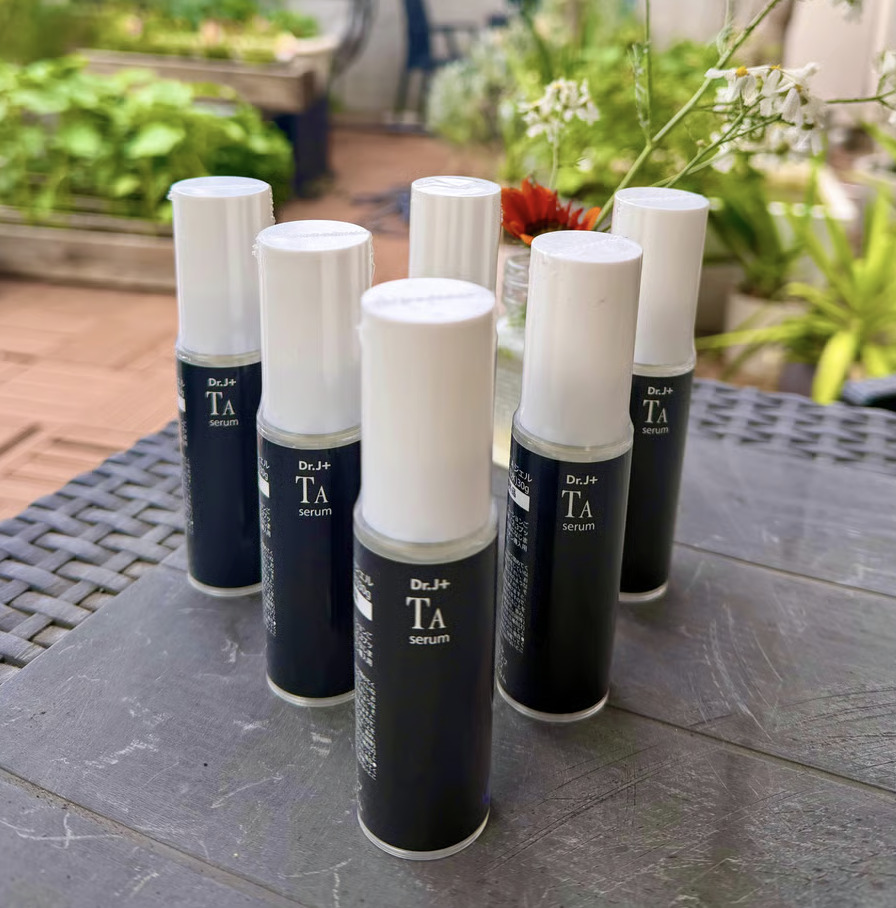
Developed by Dr. Jun Karibe, MD — Director, BIOTOPE Clinic
Dr.J+ TA Serum (Tranexamic Acid Topical Serum)
For those concerned with melasma, dullness, and post-inflammatory pigmentation.
A high-concentration topical serum easily incorporated into your morning and evening skincare.
※ Cosmetic product. Individual results may vary.
24/7 Consultation & Booking
Book a Consultation or Treatment
Our English-speaking team responds via LINE or WhatsApp — usually the same day.
SUPERVISED BY
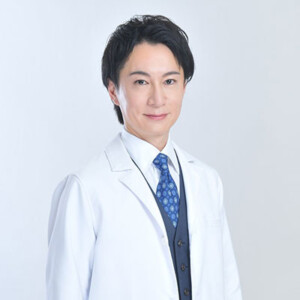
Dr. Jun Karibe
MD
Director
Education & Career
Certifications
Awards
This article is for general informational purposes only and does not constitute medical advice or a diagnosis. Please consult a qualified physician for any health concerns.
MEDICAL REVIEW