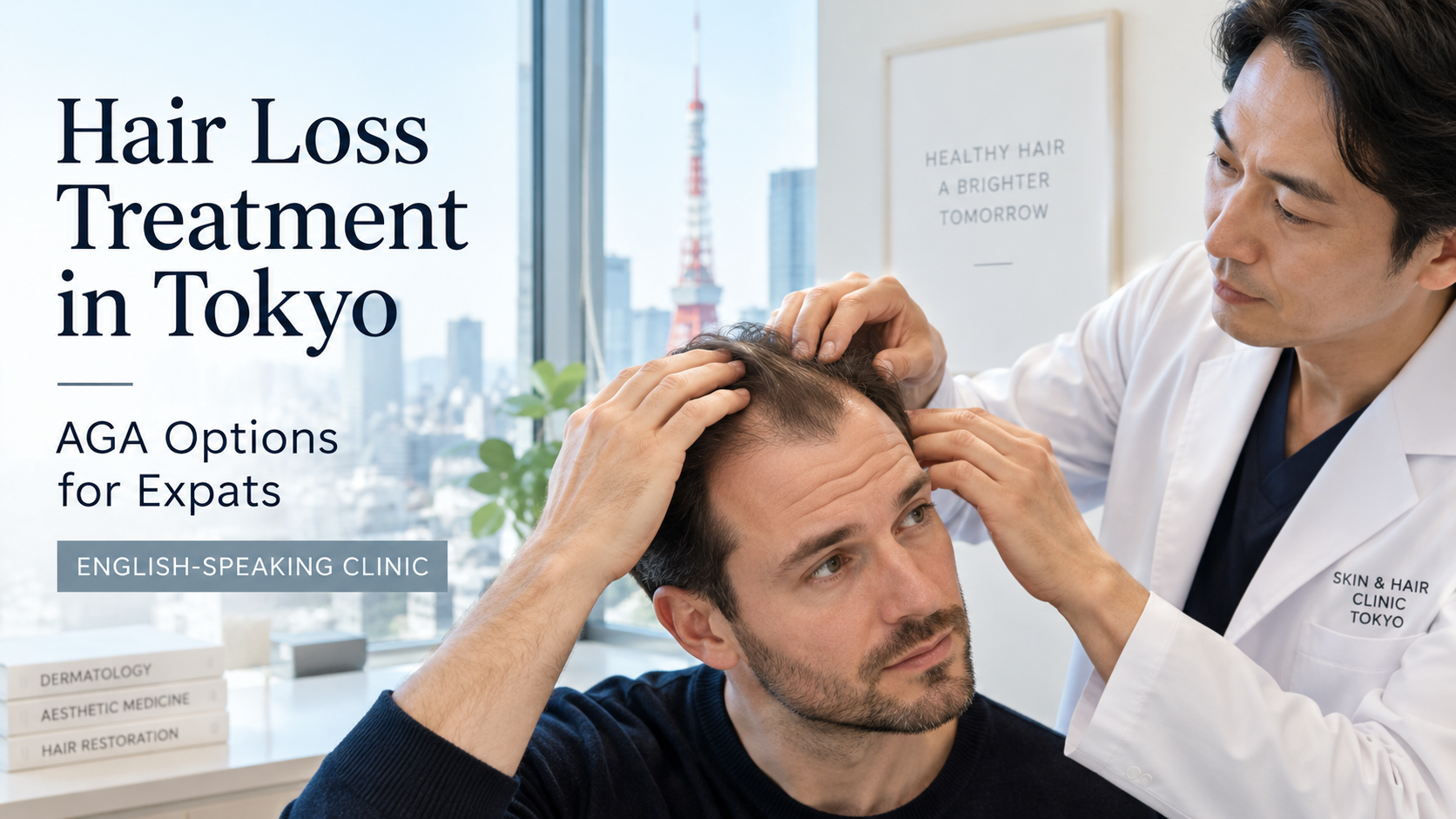
AGA Treatment in Tokyo: Hair Loss Options for English-Speaking Patients
Noticing your hair thinning or your hairline receding can be unsettling. When you are living abroad, navigating a foreign healthcare system to address hair loss adds another layer of stress.
Whether you have recently arrived in Japan, have lived here for years or are visiting Tokyo for medical care, understanding your options for androgenetic alopecia treatment in Tokyo is the first step toward taking action with confidence.
Noticing your hair thinning or your hairline receding can be unsettling — and when you are living abroad, navigating a foreign healthcare system to address it adds an extra layer of stress. Whether you have recently arrived in Japan or have been here for years, understanding your options for androgenetic alopecia (AGA) treatment in Tokyo is the first step toward taking action with confidence.
This article explains the most common evidence-based treatments for AGA available in Japan, what realistic results look like, approximate costs, and how to find appropriate medical care as an English-speaking patient in Tokyo.
- What androgenetic alopecia (AGA) is and how it is diagnosed
- The main treatment options available in Tokyo — oral medication, topical therapy, and procedural treatments
- Realistic expected outcomes and timelines
- Approximate cost ranges in Tokyo
- Who is a good candidate, and who should seek further assessment first
At BIOTOPE CLINIC , Dermatology & Plastic Surgery Clinic in Minato-ku, Tokyo, we offer English-speaking consultation support for patients concerned about hair thinning, receding hairline, scalp health and AGA treatment options.
Male-Pattern Hair Loss
In men, AGA typically appears as:
- Receding hairline
- Temple thinning
- Crown thinning
- Widening of the frontal area
- Gradual connection between frontal and crown hair loss
Doctors often classify male-pattern hair loss using the Norwood-Hamilton Scale, which ranges from early temple recession to advanced baldness.
Female-Pattern Hair Loss
In women, AGA often appears differently.
Common patterns include:
- Diffuse thinning over the top of the scalp
- Widening of the part line
- Reduced hair density
- Preserved frontal hairline in many cases
- Gradual volume loss rather than obvious bald spots
Female-pattern hair loss is often classified using the Ludwig Scale.
Women with hair loss require careful medical assessment because iron deficiency, thyroid disease, hormonal changes, pregnancy, menopause, stress and inflammatory scalp disease may also contribute.
Is AGA Common?
Yes. AGA is extremely common worldwide. A 2023 review in the Journal of the American Academy of Dermatologydescribes androgenetic alopecia as a common condition and reviews both medical and procedural treatment options, including topical minoxidil, oral 5-alpha-reductase inhibitors and emerging approaches.
Because it is common, many people underestimate it or delay care. However, earlier treatment usually gives better long-term preservation.
How Is AGA Diagnosed?
AGA is usually diagnosed through medical history and scalp examination.
A physician may assess:
- Pattern of thinning
- Family history
- Age of onset
- Rate of progression
- Shedding amount
- Scalp inflammation
- Hair shaft diameter variation
- Current medications
- Diet and weight changes
- Hormonal history
- Pregnancy or menopause status
- Stress, illness or surgery history
A dermatoscope may be used to examine the scalp more closely. This can show miniaturised hairs, variation in hair shaft diameter and follicular changes.
Blood tests may be recommended if the pattern is atypical or if another cause of hair loss is suspected.
Conditions That Can Mimic AGA
Not all hair loss is AGA.
Other conditions include:
- Telogen effluvium
- Alopecia areata
- Thyroid disease
- Iron deficiency
- Vitamin D deficiency
- Scalp psoriasis
- Seborrheic dermatitis
- Traction alopecia
- Medication-related hair loss
- Postpartum hair shedding
- Autoimmune or inflammatory scalp disease
This is why diagnosis matters. Starting AGA medication without confirming the cause may delay proper treatment.
What Is Androgenetic Alopecia (AGA)?
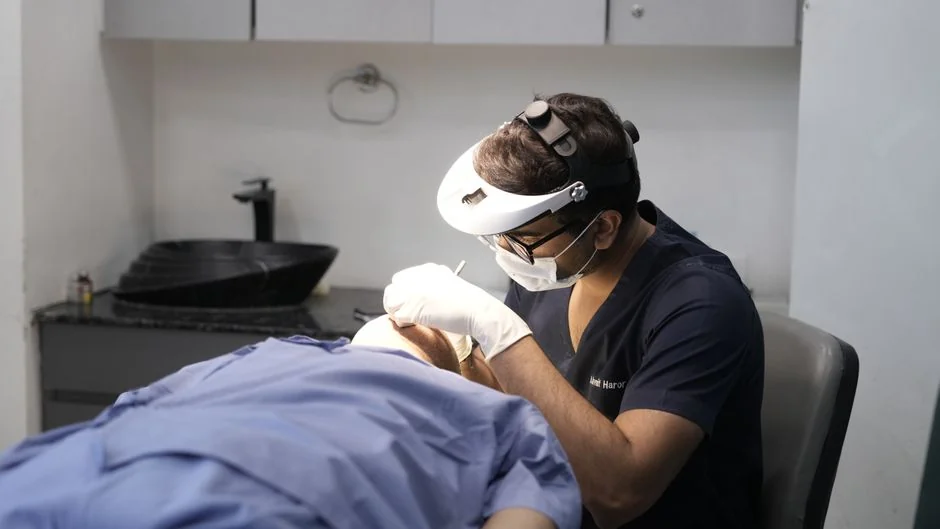
Androgenetic alopecia — commonly called male-pattern or female-pattern hair loss — is the most prevalent form of progressive hair thinning worldwide. It is driven by a combination of genetic predisposition and the hormone dihydrotestosterone (DHT), a derivative of testosterone that binds to receptors in scalp hair follicles and gradually miniaturises them over time.
In men, AGA typically presents as a receding hairline at the temples and thinning at the crown, often classified using the Norwood-Hamilton Scale (a standardised seven-stage grading system). In women, the pattern is generally a diffuse thinning over the top of the scalp while the frontal hairline remains relatively intact, graded on the Ludwig Scale.
AGA is a chronic, progressive condition — meaning it will continue without intervention. The good news is that several treatments with established clinical evidence are now widely available in Japan, including at specialist clinics in central Tokyo.
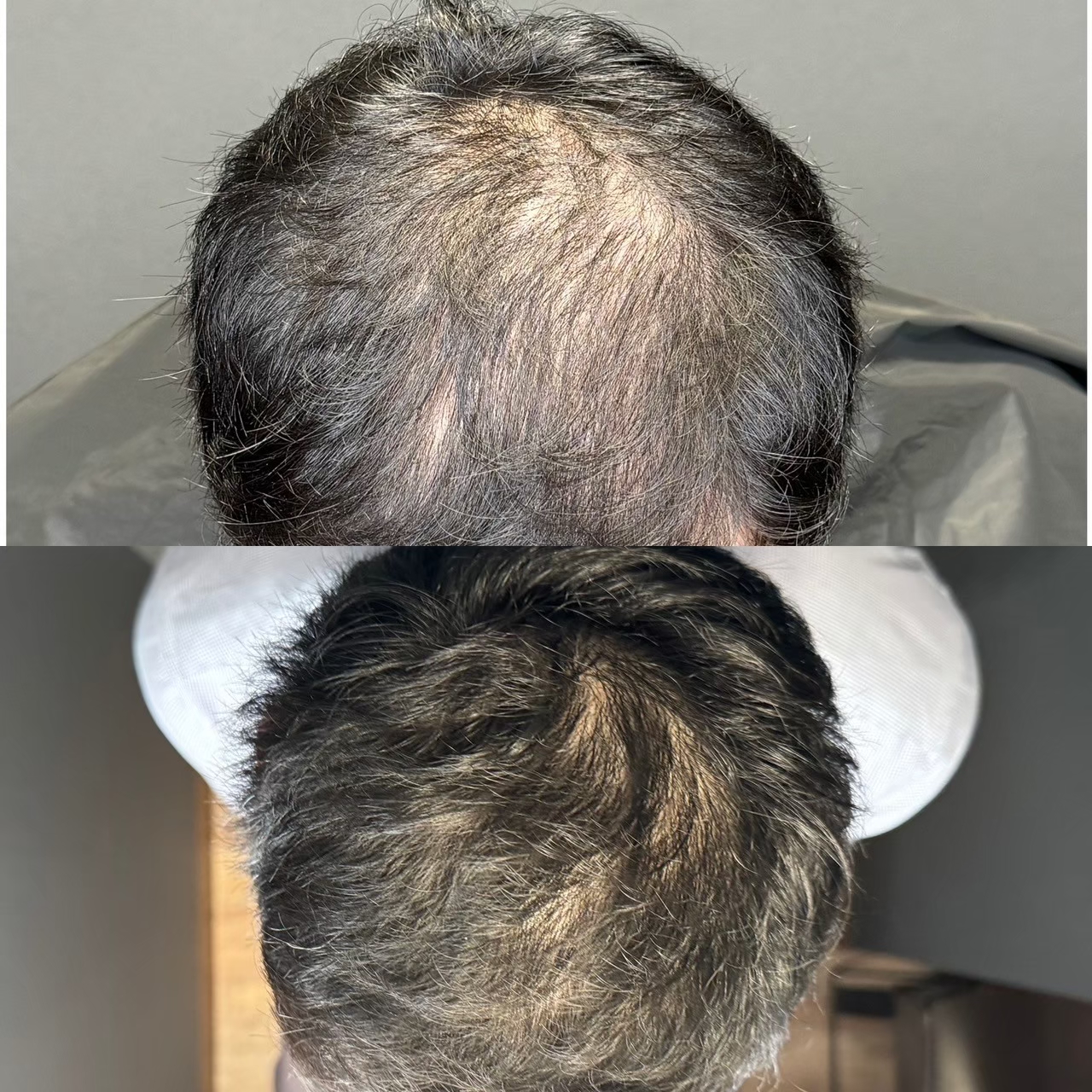
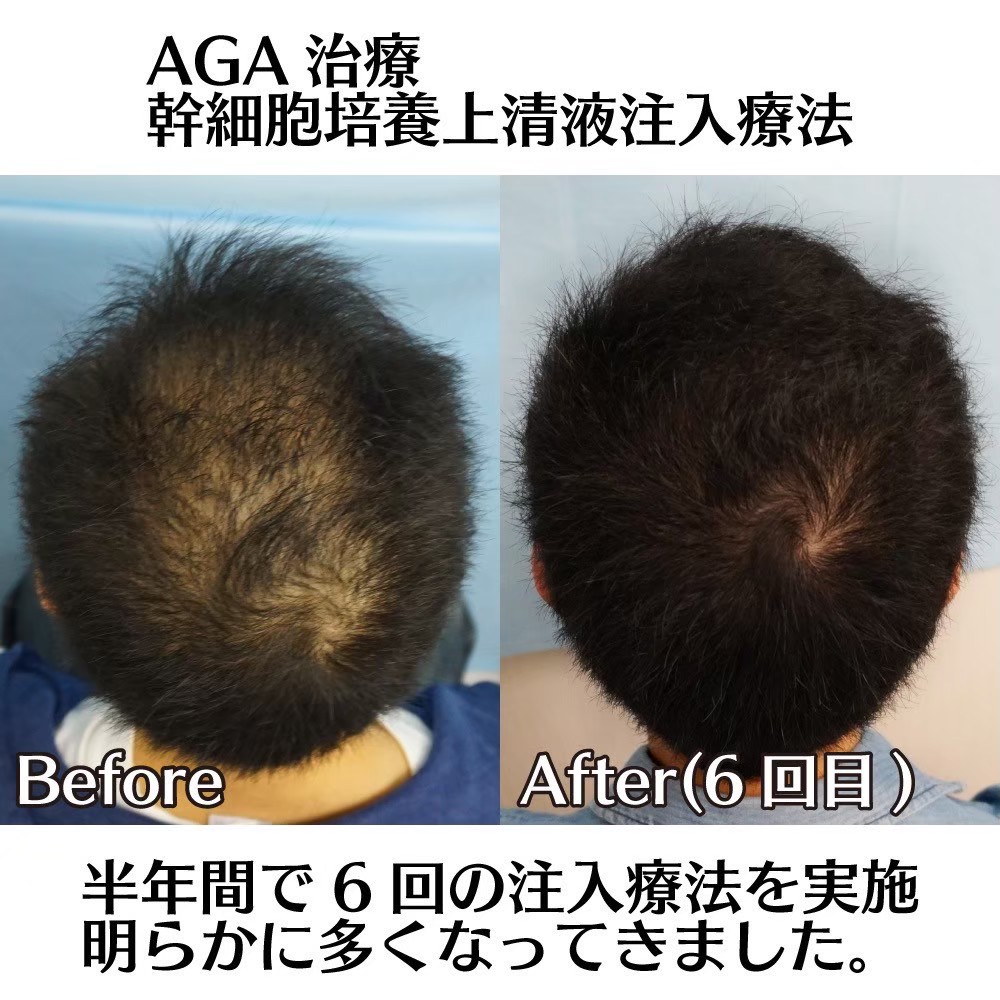
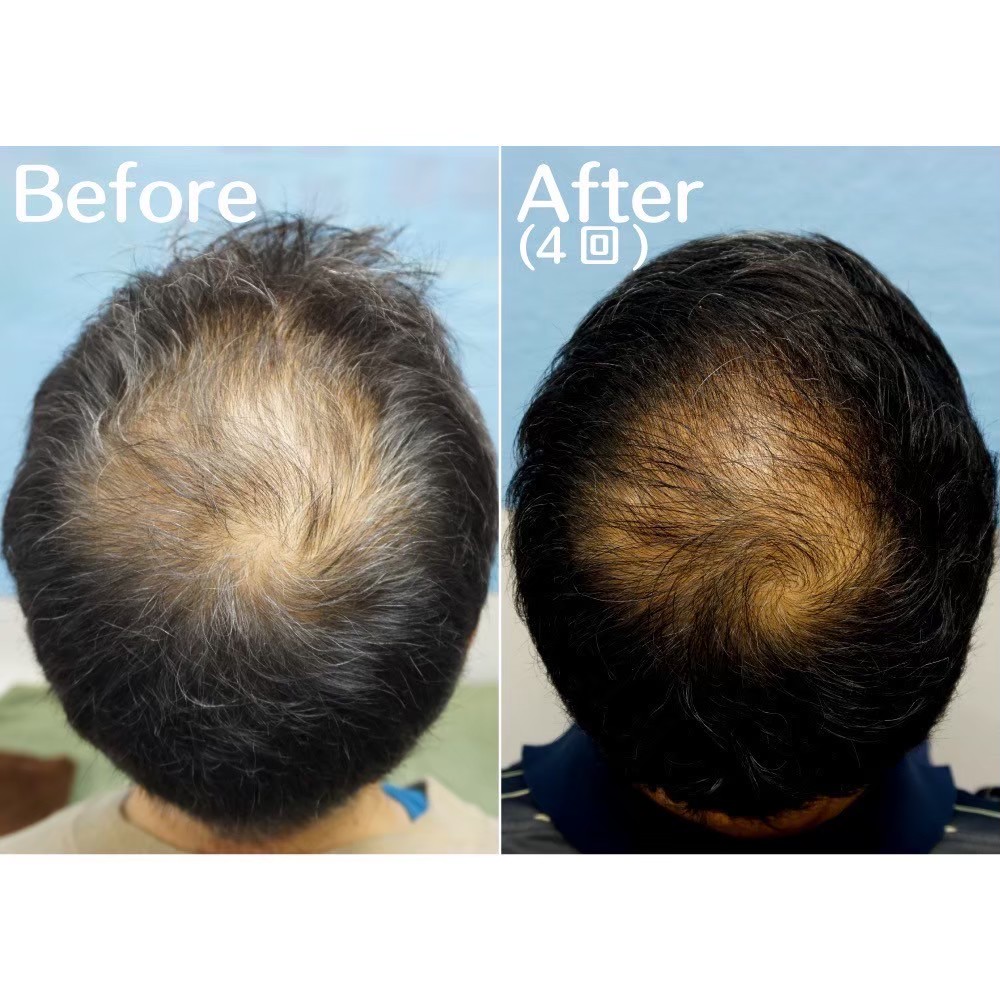
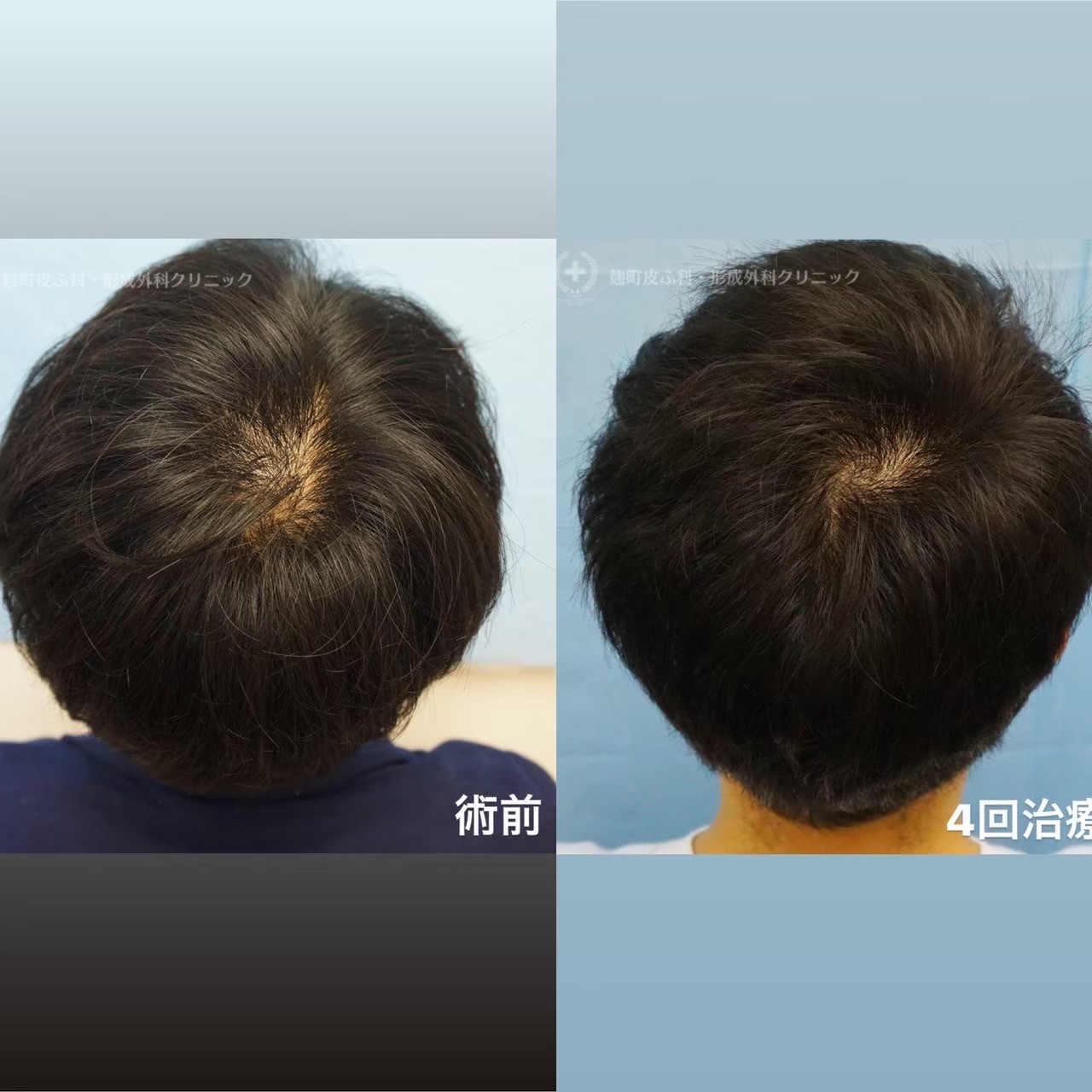
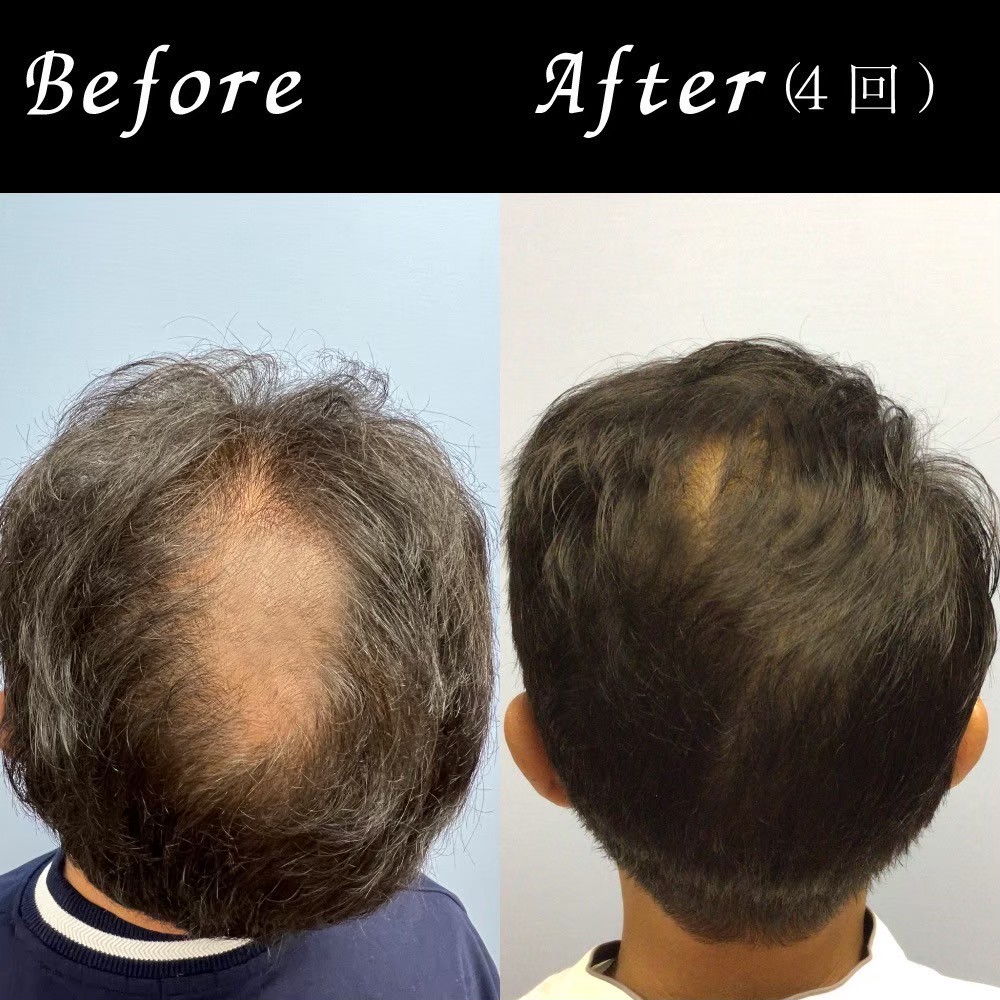
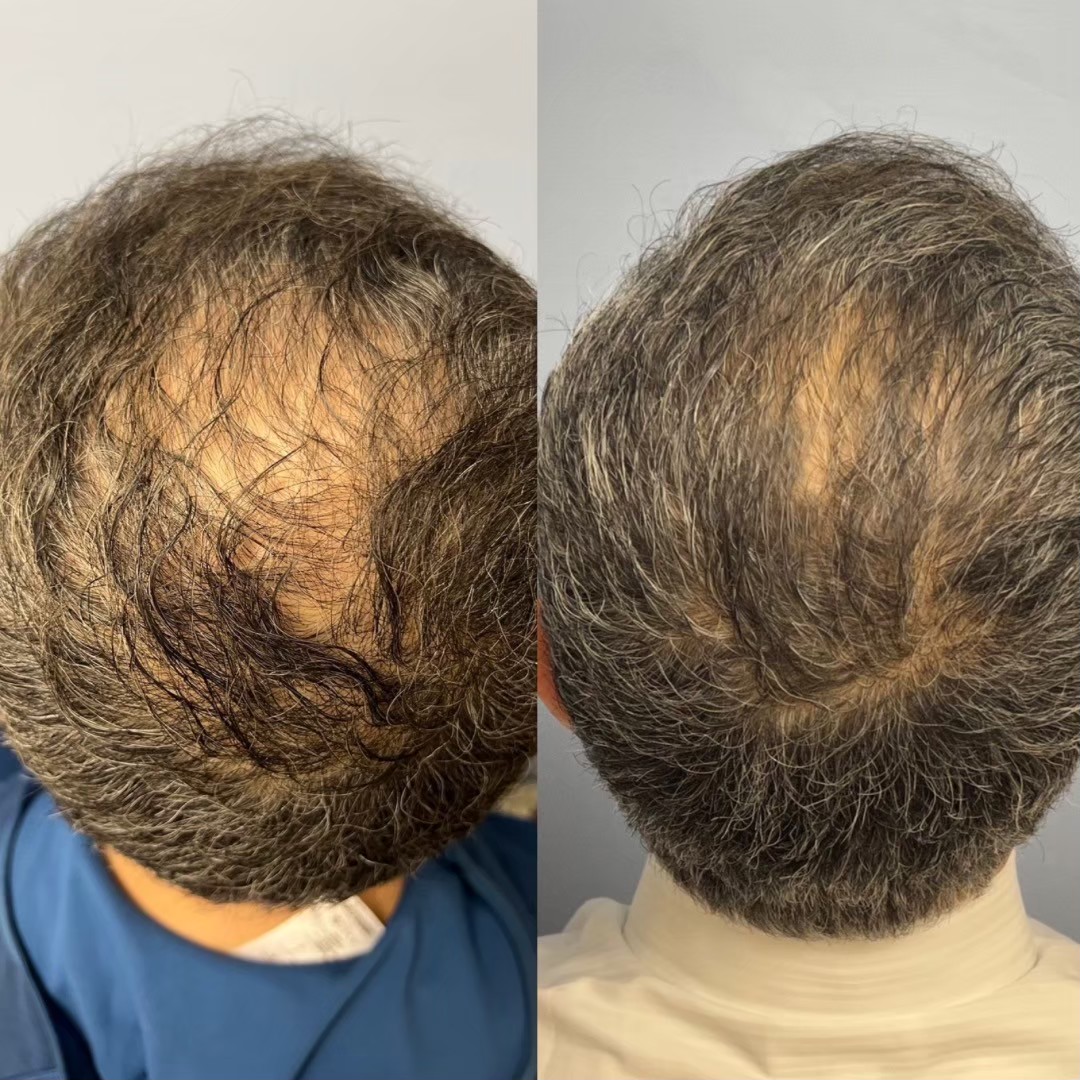
Real Patient AGA Treatment Results — Before & After
The following are actual AGA (androgenetic alopecia) treatment results from patients at Kojimachi Dermatology & Plastic Surgery Clinic and its sister clinic BIOTOPE CLINIC (Shirokanedai, Minato-ku, Tokyo), both directed by Dr. Jun Karibe. Photos are shared with patient permission. Individual results vary depending on age, hair loss stage, adherence to medication, and treatment plan. Tap each case to view the full treatment disclosure required by the Japanese Medical Advertising Guidelines.
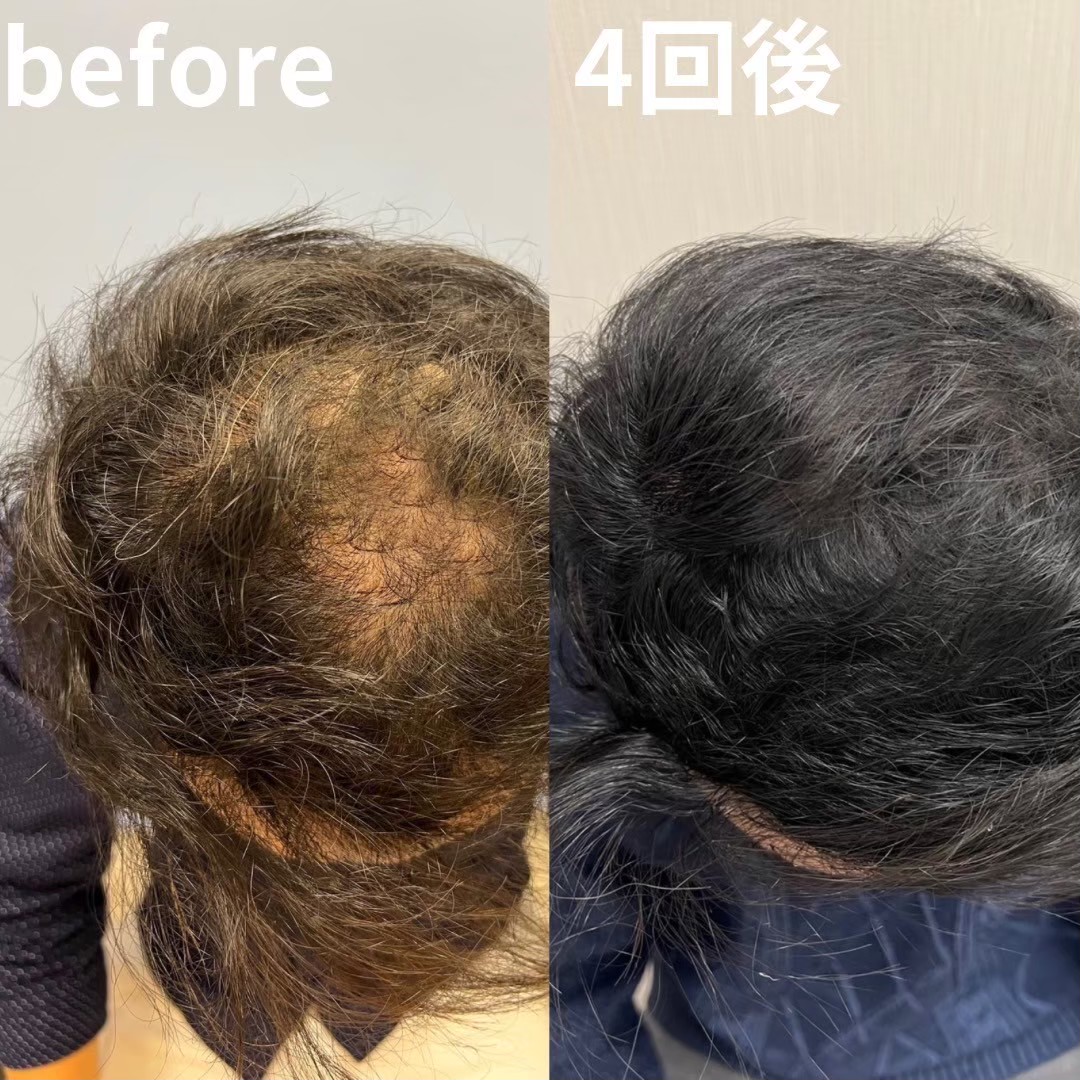
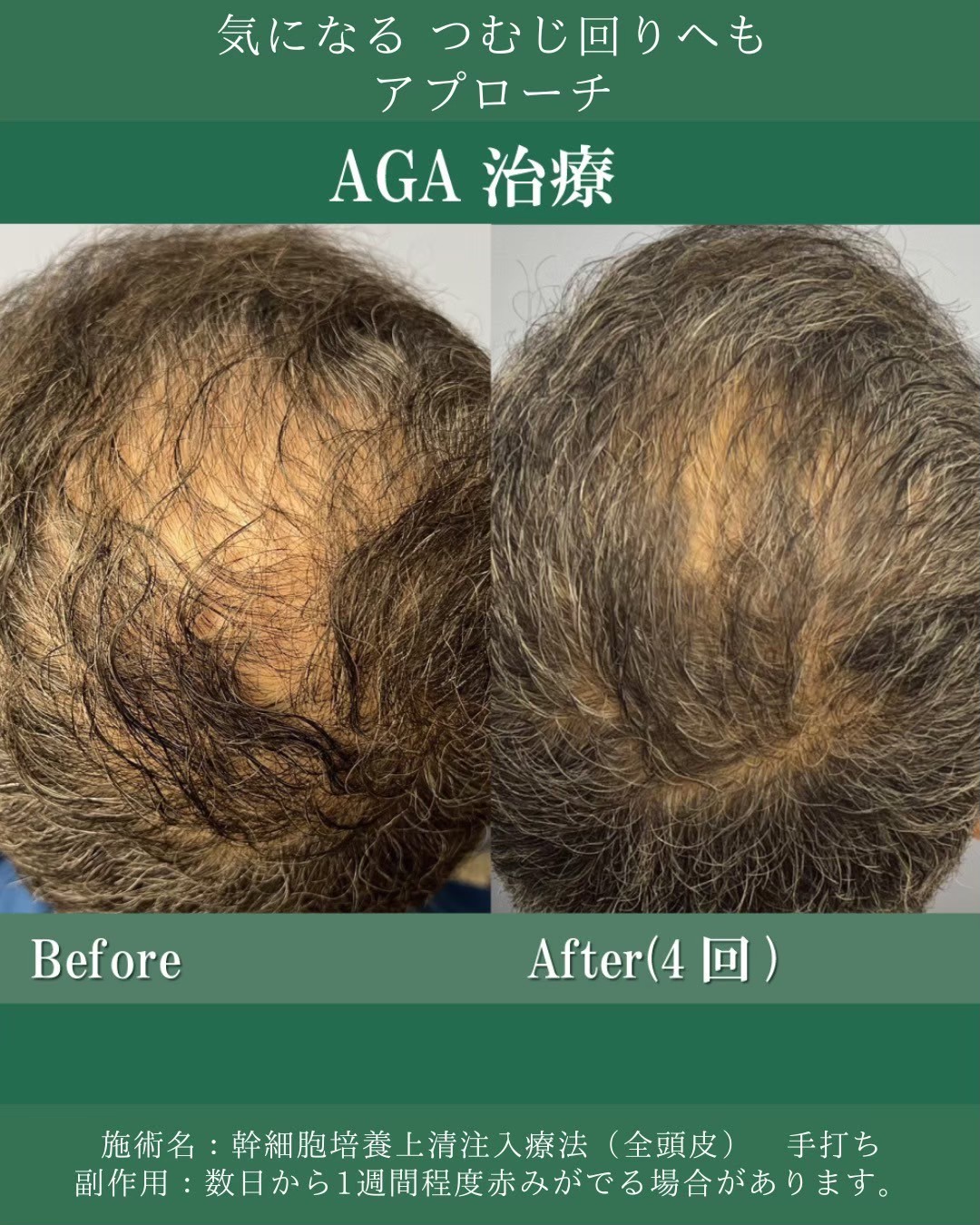
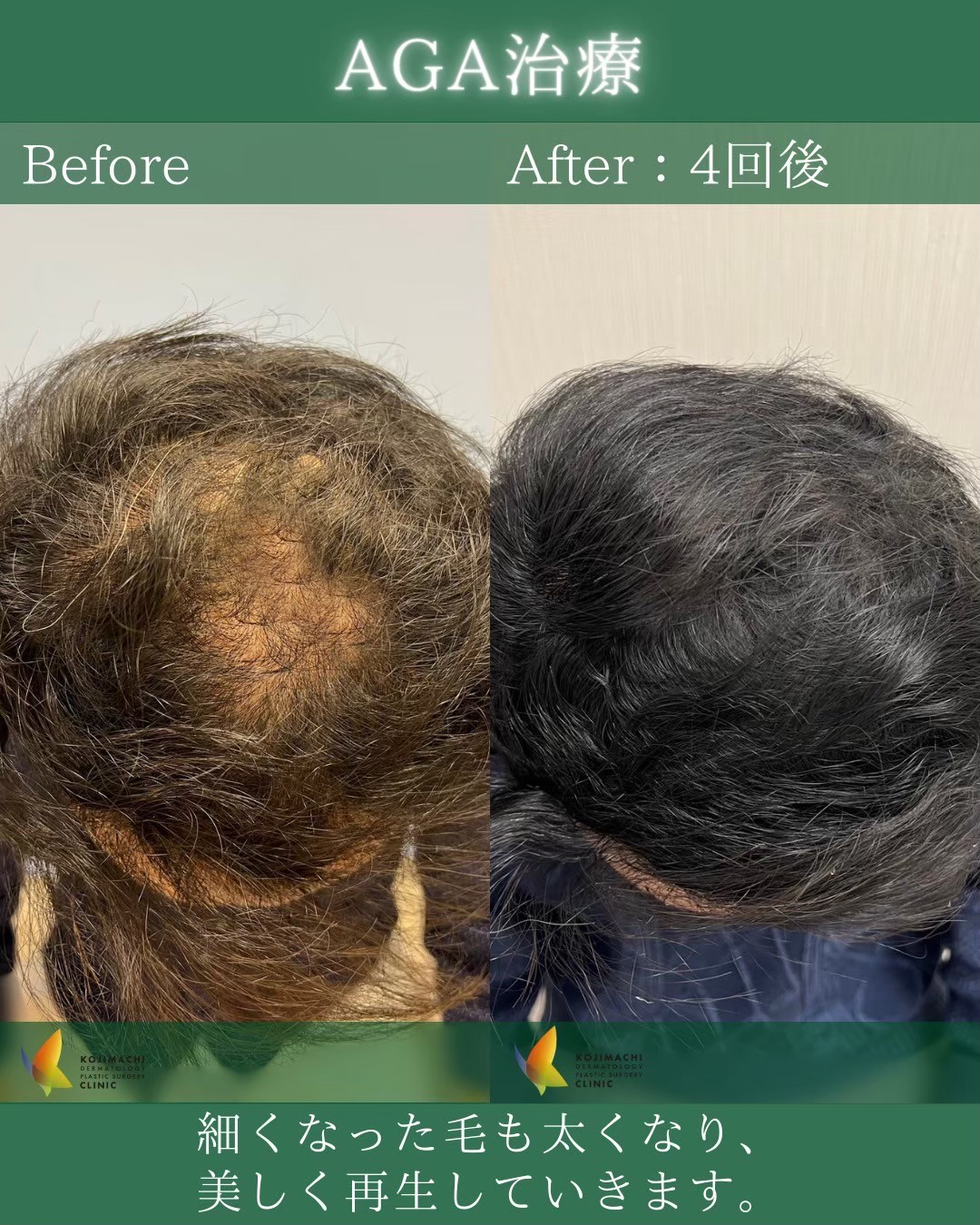
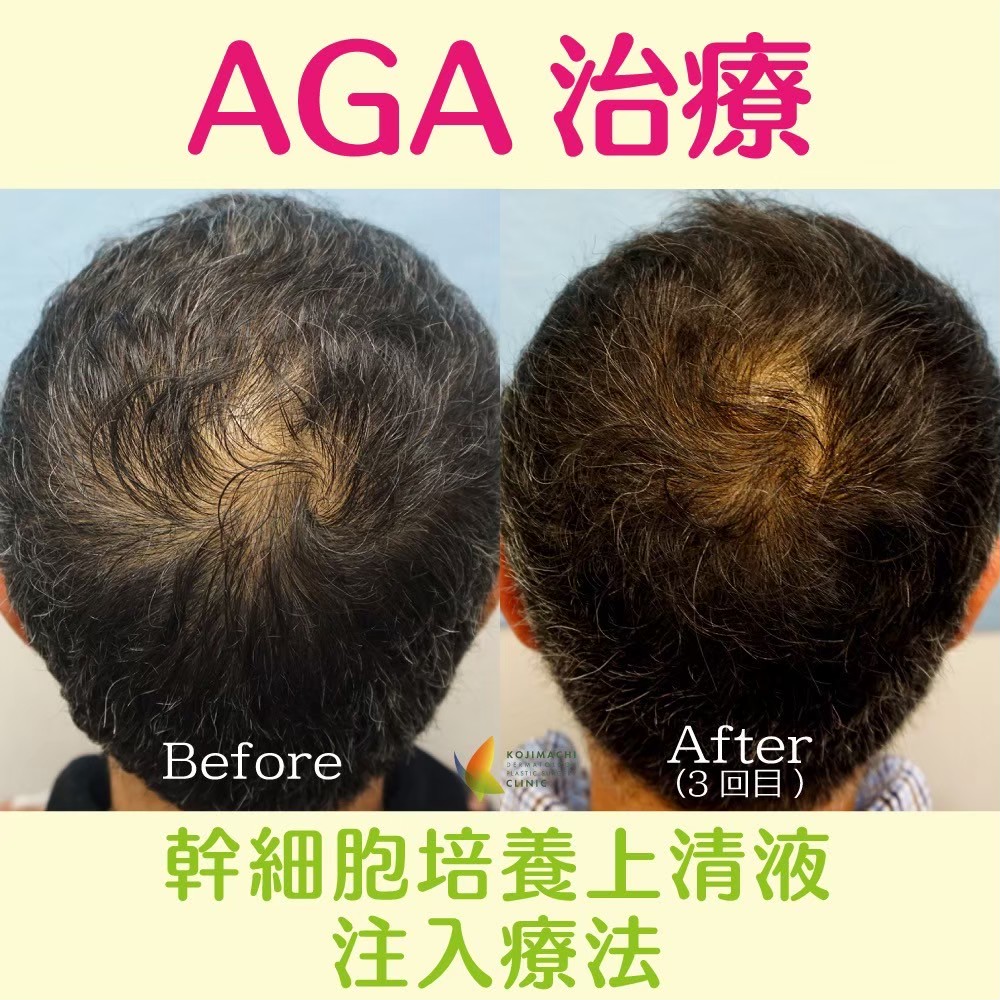
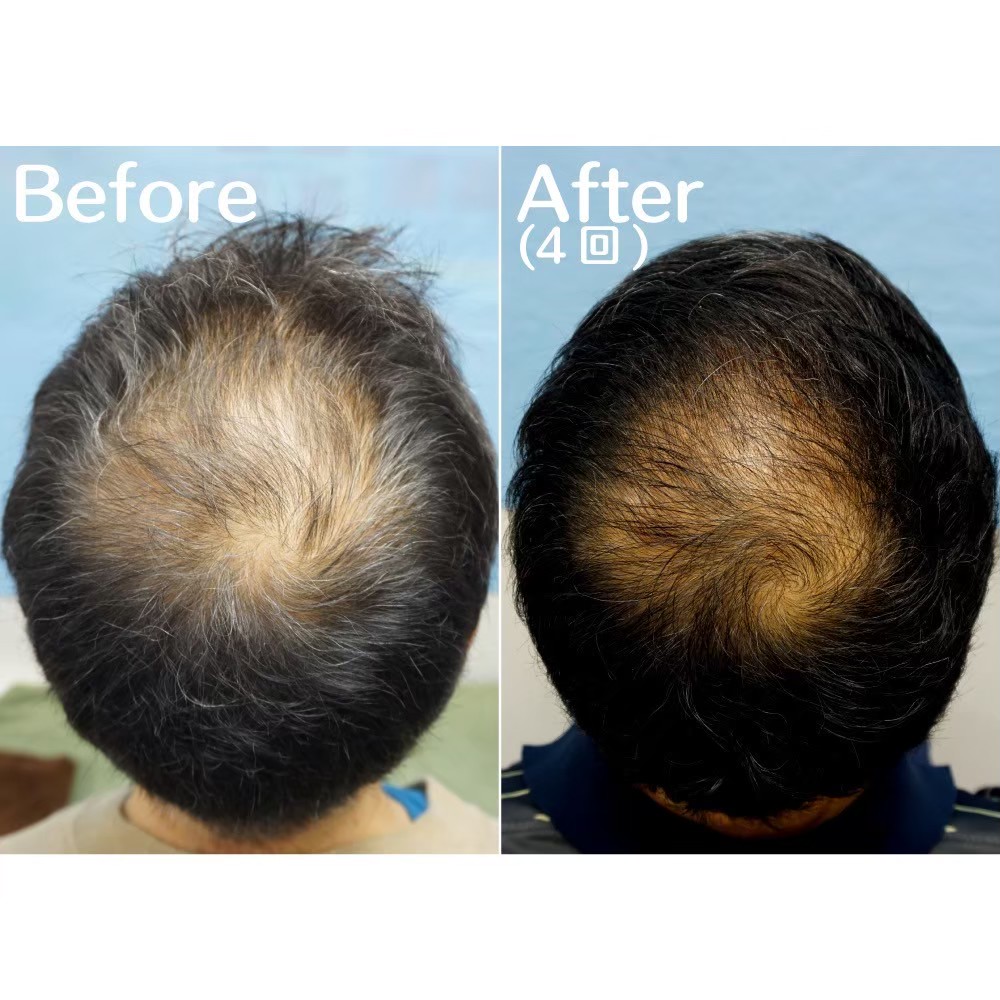
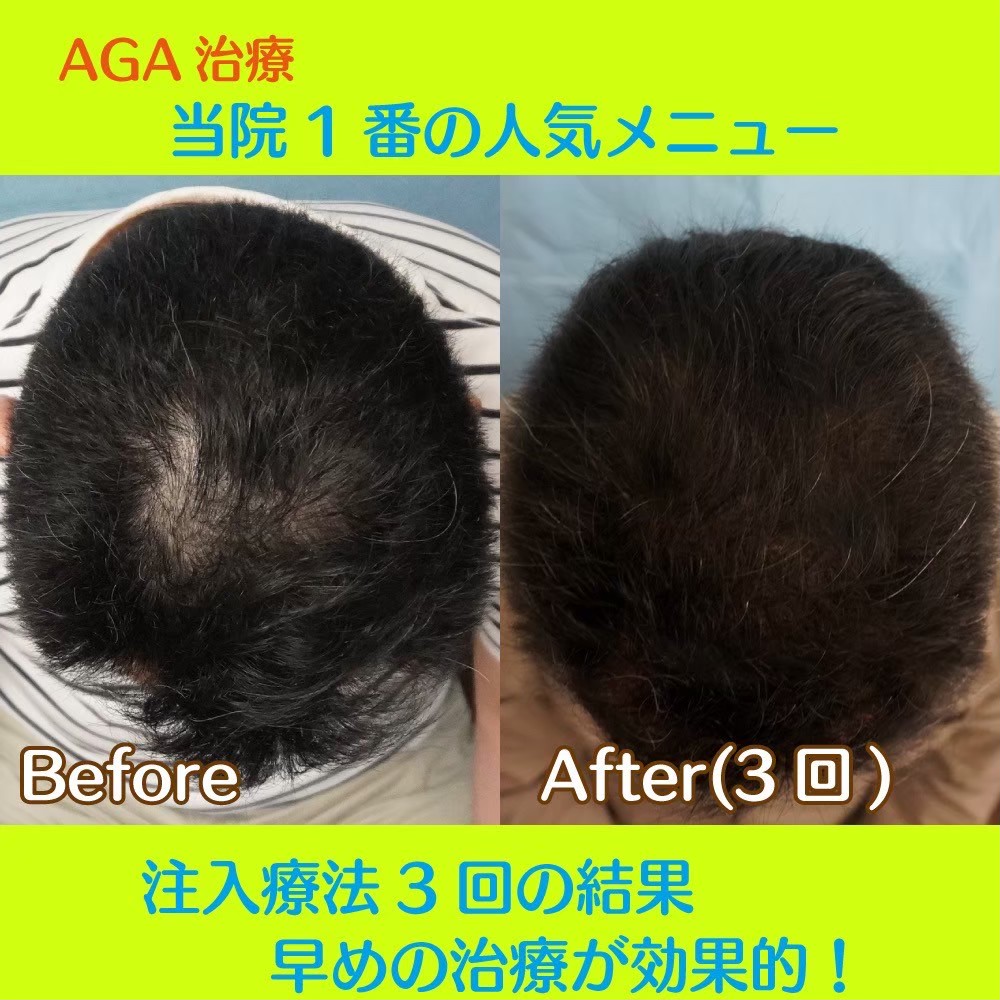
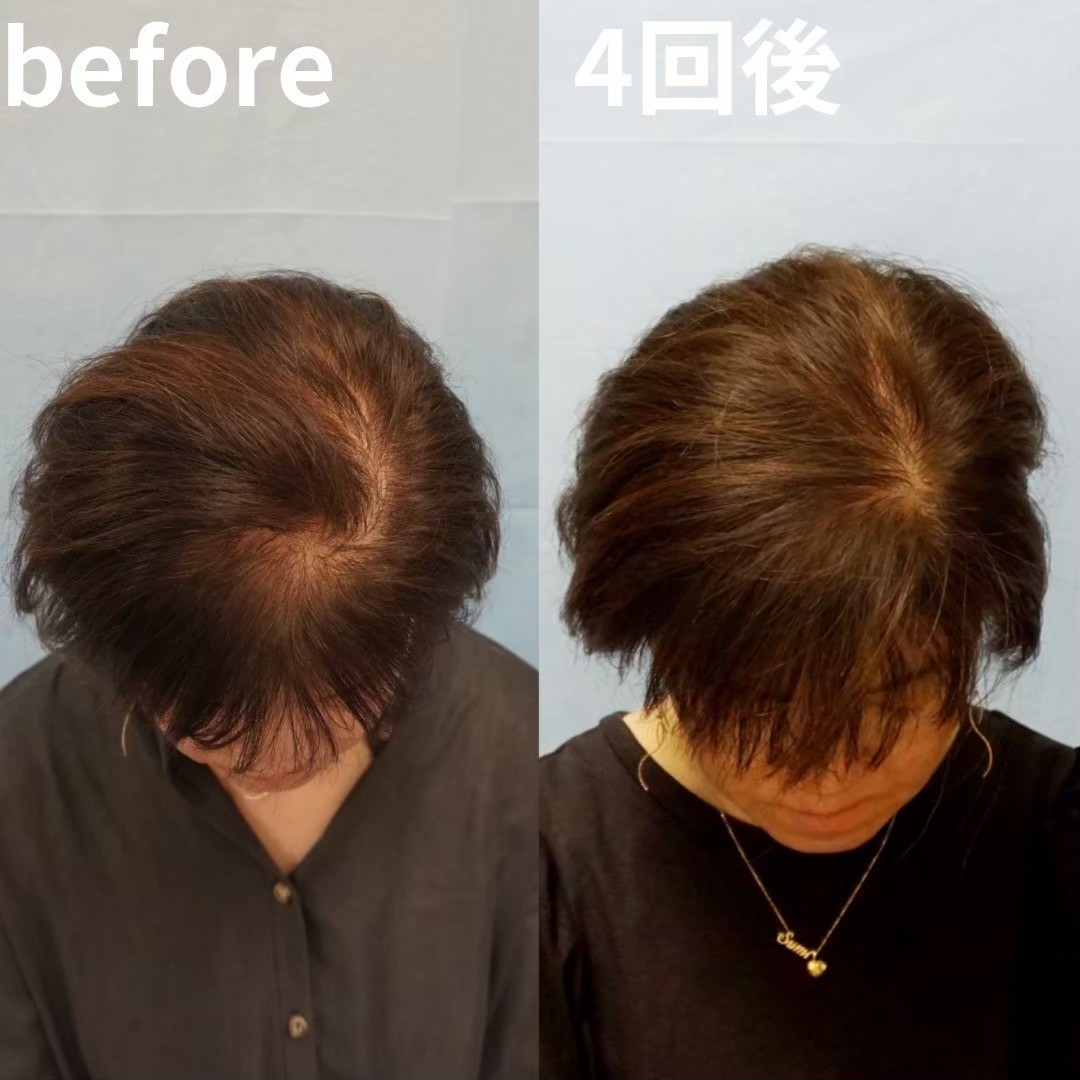
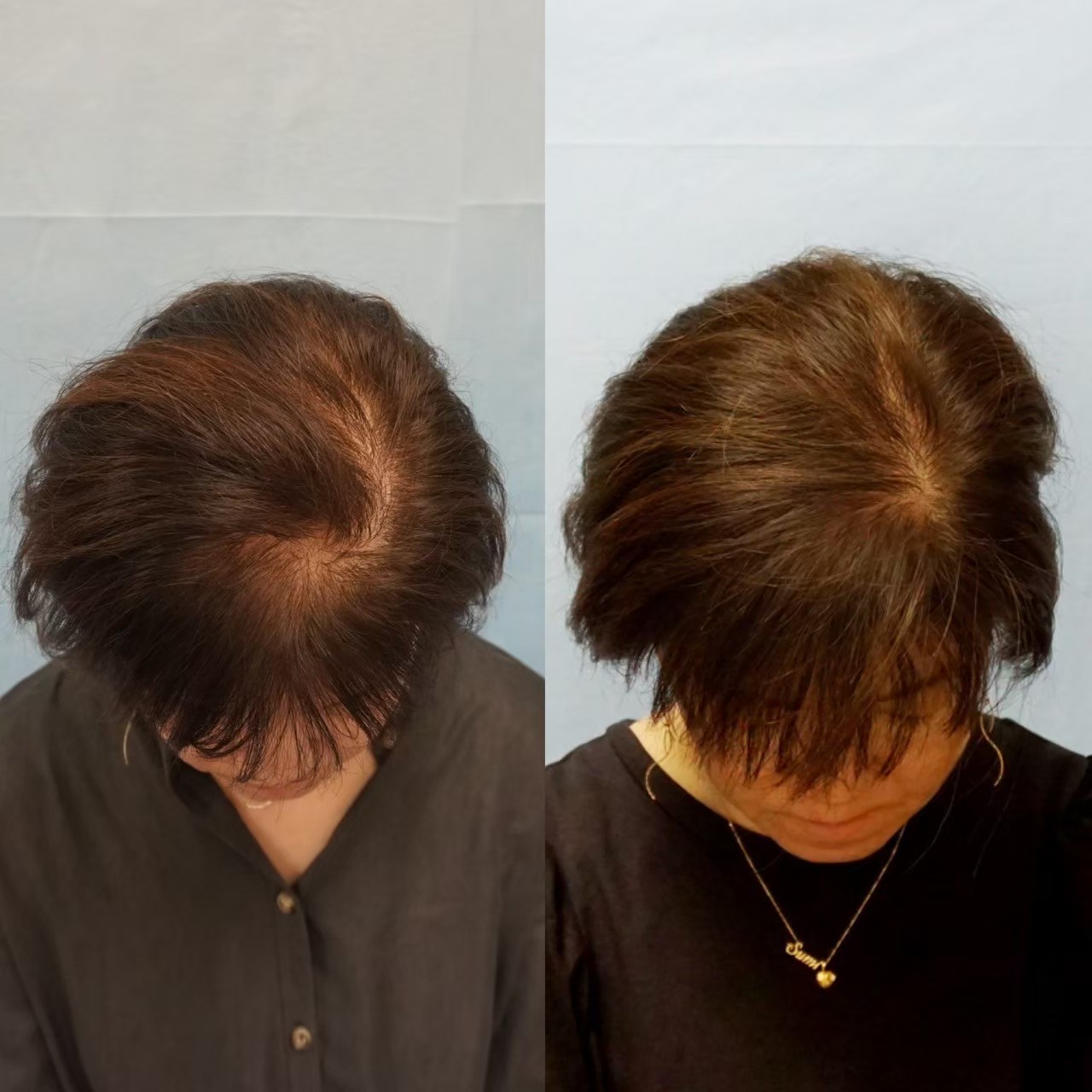
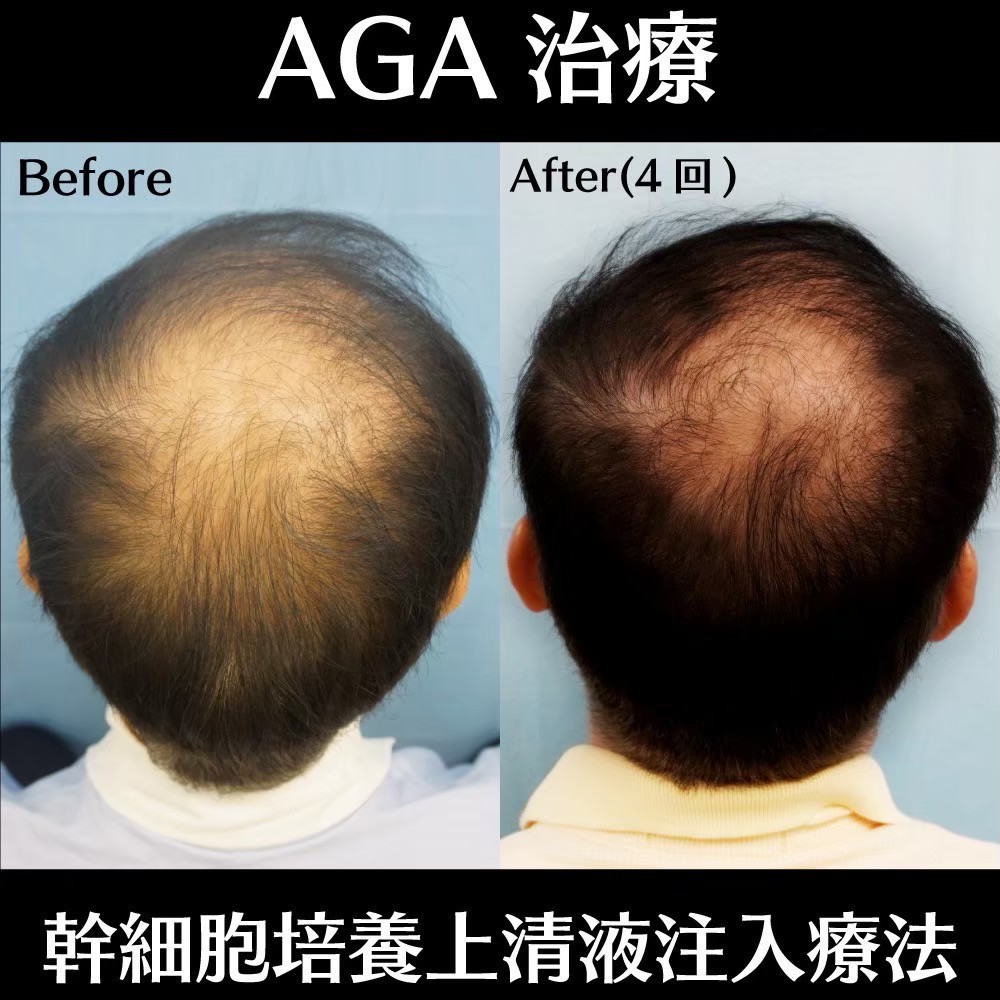
Case 1 — Treatment disclosure
Individual results vary. The information below is provided per the Japanese Medical Advertising Guidelines.
- Treatment category
- AGA (androgenetic alopecia) treatment — oral 5-alpha-reductase inhibitors (finasteride, dutasteride), topical or oral minoxidil, and optional regenerative scalp injection therapy.
- How it works
- Finasteride / dutasteride block DHT, the hormone that drives follicular miniaturization. Minoxidil prolongs the growth (anagen) phase and increases scalp blood flow. Stem-cell culture supernatant injections stimulate follicular regeneration. Visible improvement is typically observed after 3–6 months of continuous use.
- Number of sessions / duration
- Oral medications: daily use, results assessed at 3, 6, and 12 months.
Injection courses: typically 5 sessions.
Continued use is generally required to maintain results. - Main side effects
-
Finasteride / dutasteride: sexual dysfunction (decreased libido, erectile dysfunction, ejaculatory disorder), liver dysfunction, mood changes; dutasteride may also cause gastrointestinal symptoms.
Minoxidil: scalp irritation, itching, unwanted body hair; oral minoxidil may cause palpitations, dizziness, and lower-limb edema. Initial shedding may occur in the first 1–2 months.
Injection therapy: in rare cases, swelling, warmth, pain, or allergic reactions may occur; these typically subside over time. - Precautions & contraindications
- Finasteride and dutasteride must not be used by women — especially those pregnant, potentially pregnant, or breastfeeding — even physical contact with crushed or broken tablets should be avoided. Not for use in children. Patients with hepatic dysfunction, active prostate cancer, or a history of hypersensitivity should not use these medications. Oral minoxidil requires cardiovascular assessment before starting.
- Fees (Kojimachi Clinic / BIOTOPE CLINIC, tax included)
-
Oral medications (per box):
• Finasteride, 28 tablets: ¥4,800
• Zagallo (dutasteride), 30 capsules: ¥9,000
• Minoxidil (in-clinic formulation), 28 tablets: ¥8,800
Regenerative injection therapy (stem-cell culture supernatant, whole scalp):
• Single session: ¥80,000
• 5-session course: ¥300,000
Overall fee range: ¥80,000–¥300,000 for injection therapy. Oral medications add ¥4,800–¥9,000 per box. The exact plan and fee for each patient are confirmed at consultation. - Insurance
- Not covered by Japanese public health insurance. AGA treatment is an elective self-pay treatment. Prices may change — please confirm at consultation.
Case 2 — Treatment disclosure
Individual results vary. The information below is provided per the Japanese Medical Advertising Guidelines.
- Treatment category
- AGA (androgenetic alopecia) treatment — oral 5-alpha-reductase inhibitors (finasteride, dutasteride), topical or oral minoxidil, and optional regenerative scalp injection therapy.
- How it works
- Finasteride / dutasteride block DHT, the hormone that drives follicular miniaturization. Minoxidil prolongs the growth (anagen) phase and increases scalp blood flow. Stem-cell culture supernatant injections stimulate follicular regeneration. Visible improvement is typically observed after 3–6 months of continuous use.
- Number of sessions / duration
- Oral medications: daily use, results assessed at 3, 6, and 12 months.
Injection courses: typically 5 sessions.
Continued use is generally required to maintain results. - Main side effects
-
Finasteride / dutasteride: sexual dysfunction (decreased libido, erectile dysfunction, ejaculatory disorder), liver dysfunction, mood changes; dutasteride may also cause gastrointestinal symptoms.
Minoxidil: scalp irritation, itching, unwanted body hair; oral minoxidil may cause palpitations, dizziness, and lower-limb edema. Initial shedding may occur in the first 1–2 months.
Injection therapy: in rare cases, swelling, warmth, pain, or allergic reactions may occur; these typically subside over time. - Precautions & contraindications
- Finasteride and dutasteride must not be used by women — especially those pregnant, potentially pregnant, or breastfeeding — even physical contact with crushed or broken tablets should be avoided. Not for use in children. Patients with hepatic dysfunction, active prostate cancer, or a history of hypersensitivity should not use these medications. Oral minoxidil requires cardiovascular assessment before starting.
- Fees (Kojimachi Clinic / BIOTOPE CLINIC, tax included)
-
Oral medications (per box):
• Finasteride, 28 tablets: ¥4,800
• Zagallo (dutasteride), 30 capsules: ¥9,000
• Minoxidil (in-clinic formulation), 28 tablets: ¥8,800
Regenerative injection therapy (stem-cell culture supernatant, whole scalp):
• Single session: ¥80,000
• 5-session course: ¥300,000
Overall fee range: ¥80,000–¥300,000 for injection therapy. Oral medications add ¥4,800–¥9,000 per box. The exact plan and fee for each patient are confirmed at consultation. - Insurance
- Not covered by Japanese public health insurance. AGA treatment is an elective self-pay treatment. Prices may change — please confirm at consultation.
Case 3 — Treatment disclosure
Individual results vary. The information below is provided per the Japanese Medical Advertising Guidelines.
- Treatment category
- AGA (androgenetic alopecia) treatment — oral 5-alpha-reductase inhibitors (finasteride, dutasteride), topical or oral minoxidil, and optional regenerative scalp injection therapy.
- How it works
- Finasteride / dutasteride block DHT, the hormone that drives follicular miniaturization. Minoxidil prolongs the growth (anagen) phase and increases scalp blood flow. Stem-cell culture supernatant injections stimulate follicular regeneration. Visible improvement is typically observed after 3–6 months of continuous use.
- Number of sessions / duration
- Oral medications: daily use, results assessed at 3, 6, and 12 months.
Injection courses: typically 5 sessions.
Continued use is generally required to maintain results. - Main side effects
-
Finasteride / dutasteride: sexual dysfunction (decreased libido, erectile dysfunction, ejaculatory disorder), liver dysfunction, mood changes; dutasteride may also cause gastrointestinal symptoms.
Minoxidil: scalp irritation, itching, unwanted body hair; oral minoxidil may cause palpitations, dizziness, and lower-limb edema. Initial shedding may occur in the first 1–2 months.
Injection therapy: in rare cases, swelling, warmth, pain, or allergic reactions may occur; these typically subside over time. - Precautions & contraindications
- Finasteride and dutasteride must not be used by women — especially those pregnant, potentially pregnant, or breastfeeding — even physical contact with crushed or broken tablets should be avoided. Not for use in children. Patients with hepatic dysfunction, active prostate cancer, or a history of hypersensitivity should not use these medications. Oral minoxidil requires cardiovascular assessment before starting.
- Fees (Kojimachi Clinic / BIOTOPE CLINIC, tax included)
-
Oral medications (per box):
• Finasteride, 28 tablets: ¥4,800
• Zagallo (dutasteride), 30 capsules: ¥9,000
• Minoxidil (in-clinic formulation), 28 tablets: ¥8,800
Regenerative injection therapy (stem-cell culture supernatant, whole scalp):
• Single session: ¥80,000
• 5-session course: ¥300,000
Overall fee range: ¥80,000–¥300,000 for injection therapy. Oral medications add ¥4,800–¥9,000 per box. The exact plan and fee for each patient are confirmed at consultation. - Insurance
- Not covered by Japanese public health insurance. AGA treatment is an elective self-pay treatment. Prices may change — please confirm at consultation.
Case 4 — Treatment disclosure
Individual results vary. The information below is provided per the Japanese Medical Advertising Guidelines.
- Treatment category
- AGA (androgenetic alopecia) treatment — oral 5-alpha-reductase inhibitors (finasteride, dutasteride), topical or oral minoxidil, and optional regenerative scalp injection therapy.
- How it works
- Finasteride / dutasteride block DHT, the hormone that drives follicular miniaturization. Minoxidil prolongs the growth (anagen) phase and increases scalp blood flow. Stem-cell culture supernatant injections stimulate follicular regeneration. Visible improvement is typically observed after 3–6 months of continuous use.
- Number of sessions / duration
- Oral medications: daily use, results assessed at 3, 6, and 12 months.
Injection courses: typically 5 sessions.
Continued use is generally required to maintain results. - Main side effects
-
Finasteride / dutasteride: sexual dysfunction (decreased libido, erectile dysfunction, ejaculatory disorder), liver dysfunction, mood changes; dutasteride may also cause gastrointestinal symptoms.
Minoxidil: scalp irritation, itching, unwanted body hair; oral minoxidil may cause palpitations, dizziness, and lower-limb edema. Initial shedding may occur in the first 1–2 months.
Injection therapy: in rare cases, swelling, warmth, pain, or allergic reactions may occur; these typically subside over time. - Precautions & contraindications
- Finasteride and dutasteride must not be used by women — especially those pregnant, potentially pregnant, or breastfeeding — even physical contact with crushed or broken tablets should be avoided. Not for use in children. Patients with hepatic dysfunction, active prostate cancer, or a history of hypersensitivity should not use these medications. Oral minoxidil requires cardiovascular assessment before starting.
- Fees (Kojimachi Clinic / BIOTOPE CLINIC, tax included)
-
Oral medications (per box):
• Finasteride, 28 tablets: ¥4,800
• Zagallo (dutasteride), 30 capsules: ¥9,000
• Minoxidil (in-clinic formulation), 28 tablets: ¥8,800
Regenerative injection therapy (stem-cell culture supernatant, whole scalp):
• Single session: ¥80,000
• 5-session course: ¥300,000
Overall fee range: ¥80,000–¥300,000 for injection therapy. Oral medications add ¥4,800–¥9,000 per box. The exact plan and fee for each patient are confirmed at consultation. - Insurance
- Not covered by Japanese public health insurance. AGA treatment is an elective self-pay treatment. Prices may change — please confirm at consultation.
Case 5 — Treatment disclosure
Individual results vary. The information below is provided per the Japanese Medical Advertising Guidelines.
- Treatment category
- AGA (androgenetic alopecia) treatment — oral 5-alpha-reductase inhibitors (finasteride, dutasteride), topical or oral minoxidil, and optional regenerative scalp injection therapy.
- How it works
- Finasteride / dutasteride block DHT, the hormone that drives follicular miniaturization. Minoxidil prolongs the growth (anagen) phase and increases scalp blood flow. Stem-cell culture supernatant injections stimulate follicular regeneration. Visible improvement is typically observed after 3–6 months of continuous use.
- Number of sessions / duration
- Oral medications: daily use, results assessed at 3, 6, and 12 months.
Injection courses: typically 5 sessions.
Continued use is generally required to maintain results. - Main side effects
-
Finasteride / dutasteride: sexual dysfunction (decreased libido, erectile dysfunction, ejaculatory disorder), liver dysfunction, mood changes; dutasteride may also cause gastrointestinal symptoms.
Minoxidil: scalp irritation, itching, unwanted body hair; oral minoxidil may cause palpitations, dizziness, and lower-limb edema. Initial shedding may occur in the first 1–2 months.
Injection therapy: in rare cases, swelling, warmth, pain, or allergic reactions may occur; these typically subside over time. - Precautions & contraindications
- Finasteride and dutasteride must not be used by women — especially those pregnant, potentially pregnant, or breastfeeding — even physical contact with crushed or broken tablets should be avoided. Not for use in children. Patients with hepatic dysfunction, active prostate cancer, or a history of hypersensitivity should not use these medications. Oral minoxidil requires cardiovascular assessment before starting.
- Fees (Kojimachi Clinic / BIOTOPE CLINIC, tax included)
-
Oral medications (per box):
• Finasteride, 28 tablets: ¥4,800
• Zagallo (dutasteride), 30 capsules: ¥9,000
• Minoxidil (in-clinic formulation), 28 tablets: ¥8,800
Regenerative injection therapy (stem-cell culture supernatant, whole scalp):
• Single session: ¥80,000
• 5-session course: ¥300,000
Overall fee range: ¥80,000–¥300,000 for injection therapy. Oral medications add ¥4,800–¥9,000 per box. The exact plan and fee for each patient are confirmed at consultation. - Insurance
- Not covered by Japanese public health insurance. AGA treatment is an elective self-pay treatment. Prices may change — please confirm at consultation.
Case 6 — Treatment disclosure
Individual results vary. The information below is provided per the Japanese Medical Advertising Guidelines.
- Treatment category
- AGA (androgenetic alopecia) treatment — oral 5-alpha-reductase inhibitors (finasteride, dutasteride), topical or oral minoxidil, and optional regenerative scalp injection therapy.
- How it works
- Finasteride / dutasteride block DHT, the hormone that drives follicular miniaturization. Minoxidil prolongs the growth (anagen) phase and increases scalp blood flow. Stem-cell culture supernatant injections stimulate follicular regeneration. Visible improvement is typically observed after 3–6 months of continuous use.
- Number of sessions / duration
- Oral medications: daily use, results assessed at 3, 6, and 12 months.
Injection courses: typically 5 sessions.
Continued use is generally required to maintain results. - Main side effects
-
Finasteride / dutasteride: sexual dysfunction (decreased libido, erectile dysfunction, ejaculatory disorder), liver dysfunction, mood changes; dutasteride may also cause gastrointestinal symptoms.
Minoxidil: scalp irritation, itching, unwanted body hair; oral minoxidil may cause palpitations, dizziness, and lower-limb edema. Initial shedding may occur in the first 1–2 months.
Injection therapy: in rare cases, swelling, warmth, pain, or allergic reactions may occur; these typically subside over time. - Precautions & contraindications
- Finasteride and dutasteride must not be used by women — especially those pregnant, potentially pregnant, or breastfeeding — even physical contact with crushed or broken tablets should be avoided. Not for use in children. Patients with hepatic dysfunction, active prostate cancer, or a history of hypersensitivity should not use these medications. Oral minoxidil requires cardiovascular assessment before starting.
- Fees (Kojimachi Clinic / BIOTOPE CLINIC, tax included)
-
Oral medications (per box):
• Finasteride, 28 tablets: ¥4,800
• Zagallo (dutasteride), 30 capsules: ¥9,000
• Minoxidil (in-clinic formulation), 28 tablets: ¥8,800
Regenerative injection therapy (stem-cell culture supernatant, whole scalp):
• Single session: ¥80,000
• 5-session course: ¥300,000
Overall fee range: ¥80,000–¥300,000 for injection therapy. Oral medications add ¥4,800–¥9,000 per box. The exact plan and fee for each patient are confirmed at consultation. - Insurance
- Not covered by Japanese public health insurance. AGA treatment is an elective self-pay treatment. Prices may change — please confirm at consultation.
Case 7 — Treatment disclosure
Individual results vary. The information below is provided per the Japanese Medical Advertising Guidelines.
- Treatment category
- AGA (androgenetic alopecia) treatment — oral 5-alpha-reductase inhibitors (finasteride, dutasteride), topical or oral minoxidil, and optional regenerative scalp injection therapy.
- How it works
- Finasteride / dutasteride block DHT, the hormone that drives follicular miniaturization. Minoxidil prolongs the growth (anagen) phase and increases scalp blood flow. Stem-cell culture supernatant injections stimulate follicular regeneration. Visible improvement is typically observed after 3–6 months of continuous use.
- Number of sessions / duration
- Oral medications: daily use, results assessed at 3, 6, and 12 months.
Injection courses: typically 5 sessions.
Continued use is generally required to maintain results. - Main side effects
-
Finasteride / dutasteride: sexual dysfunction (decreased libido, erectile dysfunction, ejaculatory disorder), liver dysfunction, mood changes; dutasteride may also cause gastrointestinal symptoms.
Minoxidil: scalp irritation, itching, unwanted body hair; oral minoxidil may cause palpitations, dizziness, and lower-limb edema. Initial shedding may occur in the first 1–2 months.
Injection therapy: in rare cases, swelling, warmth, pain, or allergic reactions may occur; these typically subside over time. - Precautions & contraindications
- Finasteride and dutasteride must not be used by women — especially those pregnant, potentially pregnant, or breastfeeding — even physical contact with crushed or broken tablets should be avoided. Not for use in children. Patients with hepatic dysfunction, active prostate cancer, or a history of hypersensitivity should not use these medications. Oral minoxidil requires cardiovascular assessment before starting.
- Fees (Kojimachi Clinic / BIOTOPE CLINIC, tax included)
-
Oral medications (per box):
• Finasteride, 28 tablets: ¥4,800
• Zagallo (dutasteride), 30 capsules: ¥9,000
• Minoxidil (in-clinic formulation), 28 tablets: ¥8,800
Regenerative injection therapy (stem-cell culture supernatant, whole scalp):
• Single session: ¥80,000
• 5-session course: ¥300,000
Overall fee range: ¥80,000–¥300,000 for injection therapy. Oral medications add ¥4,800–¥9,000 per box. The exact plan and fee for each patient are confirmed at consultation. - Insurance
- Not covered by Japanese public health insurance. AGA treatment is an elective self-pay treatment. Prices may change — please confirm at consultation.
Case 8 — Treatment disclosure
Individual results vary. The information below is provided per the Japanese Medical Advertising Guidelines.
- Treatment category
- AGA (androgenetic alopecia) treatment — oral 5-alpha-reductase inhibitors (finasteride, dutasteride), topical or oral minoxidil, and optional regenerative scalp injection therapy.
- How it works
- Finasteride / dutasteride block DHT, the hormone that drives follicular miniaturization. Minoxidil prolongs the growth (anagen) phase and increases scalp blood flow. Stem-cell culture supernatant injections stimulate follicular regeneration. Visible improvement is typically observed after 3–6 months of continuous use.
- Number of sessions / duration
- Oral medications: daily use, results assessed at 3, 6, and 12 months.
Injection courses: typically 5 sessions.
Continued use is generally required to maintain results. - Main side effects
-
Finasteride / dutasteride: sexual dysfunction (decreased libido, erectile dysfunction, ejaculatory disorder), liver dysfunction, mood changes; dutasteride may also cause gastrointestinal symptoms.
Minoxidil: scalp irritation, itching, unwanted body hair; oral minoxidil may cause palpitations, dizziness, and lower-limb edema. Initial shedding may occur in the first 1–2 months.
Injection therapy: in rare cases, swelling, warmth, pain, or allergic reactions may occur; these typically subside over time. - Precautions & contraindications
- Finasteride and dutasteride must not be used by women — especially those pregnant, potentially pregnant, or breastfeeding — even physical contact with crushed or broken tablets should be avoided. Not for use in children. Patients with hepatic dysfunction, active prostate cancer, or a history of hypersensitivity should not use these medications. Oral minoxidil requires cardiovascular assessment before starting.
- Fees (Kojimachi Clinic / BIOTOPE CLINIC, tax included)
-
Oral medications (per box):
• Finasteride, 28 tablets: ¥4,800
• Zagallo (dutasteride), 30 capsules: ¥9,000
• Minoxidil (in-clinic formulation), 28 tablets: ¥8,800
Regenerative injection therapy (stem-cell culture supernatant, whole scalp):
• Single session: ¥80,000
• 5-session course: ¥300,000
Overall fee range: ¥80,000–¥300,000 for injection therapy. Oral medications add ¥4,800–¥9,000 per box. The exact plan and fee for each patient are confirmed at consultation. - Insurance
- Not covered by Japanese public health insurance. AGA treatment is an elective self-pay treatment. Prices may change — please confirm at consultation.
Case 9 — Treatment disclosure
Individual results vary. The information below is provided per the Japanese Medical Advertising Guidelines.
- Treatment category
- AGA (androgenetic alopecia) treatment — oral 5-alpha-reductase inhibitors (finasteride, dutasteride), topical or oral minoxidil, and optional regenerative scalp injection therapy.
- How it works
- Finasteride / dutasteride block DHT, the hormone that drives follicular miniaturization. Minoxidil prolongs the growth (anagen) phase and increases scalp blood flow. Stem-cell culture supernatant injections stimulate follicular regeneration. Visible improvement is typically observed after 3–6 months of continuous use.
- Number of sessions / duration
- Oral medications: daily use, results assessed at 3, 6, and 12 months.
Injection courses: typically 5 sessions.
Continued use is generally required to maintain results. - Main side effects
-
Finasteride / dutasteride: sexual dysfunction (decreased libido, erectile dysfunction, ejaculatory disorder), liver dysfunction, mood changes; dutasteride may also cause gastrointestinal symptoms.
Minoxidil: scalp irritation, itching, unwanted body hair; oral minoxidil may cause palpitations, dizziness, and lower-limb edema. Initial shedding may occur in the first 1–2 months.
Injection therapy: in rare cases, swelling, warmth, pain, or allergic reactions may occur; these typically subside over time. - Precautions & contraindications
- Finasteride and dutasteride must not be used by women — especially those pregnant, potentially pregnant, or breastfeeding — even physical contact with crushed or broken tablets should be avoided. Not for use in children. Patients with hepatic dysfunction, active prostate cancer, or a history of hypersensitivity should not use these medications. Oral minoxidil requires cardiovascular assessment before starting.
- Fees (Kojimachi Clinic / BIOTOPE CLINIC, tax included)
-
Oral medications (per box):
• Finasteride, 28 tablets: ¥4,800
• Zagallo (dutasteride), 30 capsules: ¥9,000
• Minoxidil (in-clinic formulation), 28 tablets: ¥8,800
Regenerative injection therapy (stem-cell culture supernatant, whole scalp):
• Single session: ¥80,000
• 5-session course: ¥300,000
Overall fee range: ¥80,000–¥300,000 for injection therapy. Oral medications add ¥4,800–¥9,000 per box. The exact plan and fee for each patient are confirmed at consultation. - Insurance
- Not covered by Japanese public health insurance. AGA treatment is an elective self-pay treatment. Prices may change — please confirm at consultation.
Case 10 — Treatment disclosure
Individual results vary. The information below is provided per the Japanese Medical Advertising Guidelines.
- Treatment category
- AGA (androgenetic alopecia) treatment — oral 5-alpha-reductase inhibitors (finasteride, dutasteride), topical or oral minoxidil, and optional regenerative scalp injection therapy.
- How it works
- Finasteride / dutasteride block DHT, the hormone that drives follicular miniaturization. Minoxidil prolongs the growth (anagen) phase and increases scalp blood flow. Stem-cell culture supernatant injections stimulate follicular regeneration. Visible improvement is typically observed after 3–6 months of continuous use.
- Number of sessions / duration
- Oral medications: daily use, results assessed at 3, 6, and 12 months.
Injection courses: typically 5 sessions.
Continued use is generally required to maintain results. - Main side effects
-
Finasteride / dutasteride: sexual dysfunction (decreased libido, erectile dysfunction, ejaculatory disorder), liver dysfunction, mood changes; dutasteride may also cause gastrointestinal symptoms.
Minoxidil: scalp irritation, itching, unwanted body hair; oral minoxidil may cause palpitations, dizziness, and lower-limb edema. Initial shedding may occur in the first 1–2 months.
Injection therapy: in rare cases, swelling, warmth, pain, or allergic reactions may occur; these typically subside over time. - Precautions & contraindications
- Finasteride and dutasteride must not be used by women — especially those pregnant, potentially pregnant, or breastfeeding — even physical contact with crushed or broken tablets should be avoided. Not for use in children. Patients with hepatic dysfunction, active prostate cancer, or a history of hypersensitivity should not use these medications. Oral minoxidil requires cardiovascular assessment before starting.
- Fees (Kojimachi Clinic / BIOTOPE CLINIC, tax included)
-
Oral medications (per box):
• Finasteride, 28 tablets: ¥4,800
• Zagallo (dutasteride), 30 capsules: ¥9,000
• Minoxidil (in-clinic formulation), 28 tablets: ¥8,800
Regenerative injection therapy (stem-cell culture supernatant, whole scalp):
• Single session: ¥80,000
• 5-session course: ¥300,000
Overall fee range: ¥80,000–¥300,000 for injection therapy. Oral medications add ¥4,800–¥9,000 per box. The exact plan and fee for each patient are confirmed at consultation. - Insurance
- Not covered by Japanese public health insurance. AGA treatment is an elective self-pay treatment. Prices may change — please confirm at consultation.
Case 11 — Treatment disclosure
Individual results vary. The information below is provided per the Japanese Medical Advertising Guidelines.
- Treatment category
- AGA (androgenetic alopecia) treatment — oral 5-alpha-reductase inhibitors (finasteride, dutasteride), topical or oral minoxidil, and optional regenerative scalp injection therapy.
- How it works
- Finasteride / dutasteride block DHT, the hormone that drives follicular miniaturization. Minoxidil prolongs the growth (anagen) phase and increases scalp blood flow. Stem-cell culture supernatant injections stimulate follicular regeneration. Visible improvement is typically observed after 3–6 months of continuous use.
- Number of sessions / duration
- Oral medications: daily use, results assessed at 3, 6, and 12 months.
Injection courses: typically 5 sessions.
Continued use is generally required to maintain results. - Main side effects
-
Finasteride / dutasteride: sexual dysfunction (decreased libido, erectile dysfunction, ejaculatory disorder), liver dysfunction, mood changes; dutasteride may also cause gastrointestinal symptoms.
Minoxidil: scalp irritation, itching, unwanted body hair; oral minoxidil may cause palpitations, dizziness, and lower-limb edema. Initial shedding may occur in the first 1–2 months.
Injection therapy: in rare cases, swelling, warmth, pain, or allergic reactions may occur; these typically subside over time. - Precautions & contraindications
- Finasteride and dutasteride must not be used by women — especially those pregnant, potentially pregnant, or breastfeeding — even physical contact with crushed or broken tablets should be avoided. Not for use in children. Patients with hepatic dysfunction, active prostate cancer, or a history of hypersensitivity should not use these medications. Oral minoxidil requires cardiovascular assessment before starting.
- Fees (Kojimachi Clinic / BIOTOPE CLINIC, tax included)
-
Oral medications (per box):
• Finasteride, 28 tablets: ¥4,800
• Zagallo (dutasteride), 30 capsules: ¥9,000
• Minoxidil (in-clinic formulation), 28 tablets: ¥8,800
Regenerative injection therapy (stem-cell culture supernatant, whole scalp):
• Single session: ¥80,000
• 5-session course: ¥300,000
Overall fee range: ¥80,000–¥300,000 for injection therapy. Oral medications add ¥4,800–¥9,000 per box. The exact plan and fee for each patient are confirmed at consultation. - Insurance
- Not covered by Japanese public health insurance. AGA treatment is an elective self-pay treatment. Prices may change — please confirm at consultation.
Case 12 — Treatment disclosure
Individual results vary. The information below is provided per the Japanese Medical Advertising Guidelines.
- Treatment category
- AGA (androgenetic alopecia) treatment — oral 5-alpha-reductase inhibitors (finasteride, dutasteride), topical or oral minoxidil, and optional regenerative scalp injection therapy.
- How it works
- Finasteride / dutasteride block DHT, the hormone that drives follicular miniaturization. Minoxidil prolongs the growth (anagen) phase and increases scalp blood flow. Stem-cell culture supernatant injections stimulate follicular regeneration. Visible improvement is typically observed after 3–6 months of continuous use.
- Number of sessions / duration
- Oral medications: daily use, results assessed at 3, 6, and 12 months.
Injection courses: typically 5 sessions.
Continued use is generally required to maintain results. - Main side effects
-
Finasteride / dutasteride: sexual dysfunction (decreased libido, erectile dysfunction, ejaculatory disorder), liver dysfunction, mood changes; dutasteride may also cause gastrointestinal symptoms.
Minoxidil: scalp irritation, itching, unwanted body hair; oral minoxidil may cause palpitations, dizziness, and lower-limb edema. Initial shedding may occur in the first 1–2 months.
Injection therapy: in rare cases, swelling, warmth, pain, or allergic reactions may occur; these typically subside over time. - Precautions & contraindications
- Finasteride and dutasteride must not be used by women — especially those pregnant, potentially pregnant, or breastfeeding — even physical contact with crushed or broken tablets should be avoided. Not for use in children. Patients with hepatic dysfunction, active prostate cancer, or a history of hypersensitivity should not use these medications. Oral minoxidil requires cardiovascular assessment before starting.
- Fees (Kojimachi Clinic / BIOTOPE CLINIC, tax included)
-
Oral medications (per box):
• Finasteride, 28 tablets: ¥4,800
• Zagallo (dutasteride), 30 capsules: ¥9,000
• Minoxidil (in-clinic formulation), 28 tablets: ¥8,800
Regenerative injection therapy (stem-cell culture supernatant, whole scalp):
• Single session: ¥80,000
• 5-session course: ¥300,000
Overall fee range: ¥80,000–¥300,000 for injection therapy. Oral medications add ¥4,800–¥9,000 per box. The exact plan and fee for each patient are confirmed at consultation. - Insurance
- Not covered by Japanese public health insurance. AGA treatment is an elective self-pay treatment. Prices may change — please confirm at consultation.
Case 13 — Treatment disclosure
Individual results vary. The information below is provided per the Japanese Medical Advertising Guidelines.
- Treatment category
- AGA (androgenetic alopecia) treatment — oral 5-alpha-reductase inhibitors (finasteride, dutasteride), topical or oral minoxidil, and optional regenerative scalp injection therapy.
- How it works
- Finasteride / dutasteride block DHT, the hormone that drives follicular miniaturization. Minoxidil prolongs the growth (anagen) phase and increases scalp blood flow. Stem-cell culture supernatant injections stimulate follicular regeneration. Visible improvement is typically observed after 3–6 months of continuous use.
- Number of sessions / duration
- Oral medications: daily use, results assessed at 3, 6, and 12 months.
Injection courses: typically 5 sessions.
Continued use is generally required to maintain results. - Main side effects
-
Finasteride / dutasteride: sexual dysfunction (decreased libido, erectile dysfunction, ejaculatory disorder), liver dysfunction, mood changes; dutasteride may also cause gastrointestinal symptoms.
Minoxidil: scalp irritation, itching, unwanted body hair; oral minoxidil may cause palpitations, dizziness, and lower-limb edema. Initial shedding may occur in the first 1–2 months.
Injection therapy: in rare cases, swelling, warmth, pain, or allergic reactions may occur; these typically subside over time. - Precautions & contraindications
- Finasteride and dutasteride must not be used by women — especially those pregnant, potentially pregnant, or breastfeeding — even physical contact with crushed or broken tablets should be avoided. Not for use in children. Patients with hepatic dysfunction, active prostate cancer, or a history of hypersensitivity should not use these medications. Oral minoxidil requires cardiovascular assessment before starting.
- Fees (Kojimachi Clinic / BIOTOPE CLINIC, tax included)
-
Oral medications (per box):
• Finasteride, 28 tablets: ¥4,800
• Zagallo (dutasteride), 30 capsules: ¥9,000
• Minoxidil (in-clinic formulation), 28 tablets: ¥8,800
Regenerative injection therapy (stem-cell culture supernatant, whole scalp):
• Single session: ¥80,000
• 5-session course: ¥300,000
Overall fee range: ¥80,000–¥300,000 for injection therapy. Oral medications add ¥4,800–¥9,000 per box. The exact plan and fee for each patient are confirmed at consultation. - Insurance
- Not covered by Japanese public health insurance. AGA treatment is an elective self-pay treatment. Prices may change — please confirm at consultation.
Case 14 — Treatment disclosure
Individual results vary. The information below is provided per the Japanese Medical Advertising Guidelines.
- Treatment category
- AGA (androgenetic alopecia) treatment — oral 5-alpha-reductase inhibitors (finasteride, dutasteride), topical or oral minoxidil, and optional regenerative scalp injection therapy.
- How it works
- Finasteride / dutasteride block DHT, the hormone that drives follicular miniaturization. Minoxidil prolongs the growth (anagen) phase and increases scalp blood flow. Stem-cell culture supernatant injections stimulate follicular regeneration. Visible improvement is typically observed after 3–6 months of continuous use.
- Number of sessions / duration
- Oral medications: daily use, results assessed at 3, 6, and 12 months.
Injection courses: typically 5 sessions.
Continued use is generally required to maintain results. - Main side effects
-
Finasteride / dutasteride: sexual dysfunction (decreased libido, erectile dysfunction, ejaculatory disorder), liver dysfunction, mood changes; dutasteride may also cause gastrointestinal symptoms.
Minoxidil: scalp irritation, itching, unwanted body hair; oral minoxidil may cause palpitations, dizziness, and lower-limb edema. Initial shedding may occur in the first 1–2 months.
Injection therapy: in rare cases, swelling, warmth, pain, or allergic reactions may occur; these typically subside over time. - Precautions & contraindications
- Finasteride and dutasteride must not be used by women — especially those pregnant, potentially pregnant, or breastfeeding — even physical contact with crushed or broken tablets should be avoided. Not for use in children. Patients with hepatic dysfunction, active prostate cancer, or a history of hypersensitivity should not use these medications. Oral minoxidil requires cardiovascular assessment before starting.
- Fees (Kojimachi Clinic / BIOTOPE CLINIC, tax included)
-
Oral medications (per box):
• Finasteride, 28 tablets: ¥4,800
• Zagallo (dutasteride), 30 capsules: ¥9,000
• Minoxidil (in-clinic formulation), 28 tablets: ¥8,800
Regenerative injection therapy (stem-cell culture supernatant, whole scalp):
• Single session: ¥80,000
• 5-session course: ¥300,000
Overall fee range: ¥80,000–¥300,000 for injection therapy. Oral medications add ¥4,800–¥9,000 per box. The exact plan and fee for each patient are confirmed at consultation. - Insurance
- Not covered by Japanese public health insurance. AGA treatment is an elective self-pay treatment. Prices may change — please confirm at consultation.
Case 15 — Treatment disclosure
Individual results vary. The information below is provided per the Japanese Medical Advertising Guidelines.
- Treatment category
- AGA (androgenetic alopecia) treatment — oral 5-alpha-reductase inhibitors (finasteride, dutasteride), topical or oral minoxidil, and optional regenerative scalp injection therapy.
- How it works
- Finasteride / dutasteride block DHT, the hormone that drives follicular miniaturization. Minoxidil prolongs the growth (anagen) phase and increases scalp blood flow. Stem-cell culture supernatant injections stimulate follicular regeneration. Visible improvement is typically observed after 3–6 months of continuous use.
- Number of sessions / duration
- Oral medications: daily use, results assessed at 3, 6, and 12 months.
Injection courses: typically 5 sessions.
Continued use is generally required to maintain results. - Main side effects
-
Finasteride / dutasteride: sexual dysfunction (decreased libido, erectile dysfunction, ejaculatory disorder), liver dysfunction, mood changes; dutasteride may also cause gastrointestinal symptoms.
Minoxidil: scalp irritation, itching, unwanted body hair; oral minoxidil may cause palpitations, dizziness, and lower-limb edema. Initial shedding may occur in the first 1–2 months.
Injection therapy: in rare cases, swelling, warmth, pain, or allergic reactions may occur; these typically subside over time. - Precautions & contraindications
- Finasteride and dutasteride must not be used by women — especially those pregnant, potentially pregnant, or breastfeeding — even physical contact with crushed or broken tablets should be avoided. Not for use in children. Patients with hepatic dysfunction, active prostate cancer, or a history of hypersensitivity should not use these medications. Oral minoxidil requires cardiovascular assessment before starting.
- Fees (Kojimachi Clinic / BIOTOPE CLINIC, tax included)
-
Oral medications (per box):
• Finasteride, 28 tablets: ¥4,800
• Zagallo (dutasteride), 30 capsules: ¥9,000
• Minoxidil (in-clinic formulation), 28 tablets: ¥8,800
Regenerative injection therapy (stem-cell culture supernatant, whole scalp):
• Single session: ¥80,000
• 5-session course: ¥300,000
Overall fee range: ¥80,000–¥300,000 for injection therapy. Oral medications add ¥4,800–¥9,000 per box. The exact plan and fee for each patient are confirmed at consultation. - Insurance
- Not covered by Japanese public health insurance. AGA treatment is an elective self-pay treatment. Prices may change — please confirm at consultation.
See Yourself in These Results?
Book an English AGA Consultation
Dr. Jun Karibe reviews your case at BIOTOPE Clinic (Shirokanedai, Tokyo). The English-speaking team replies via LINE or WhatsApp — usually the same day.
How AGA Treatments Work
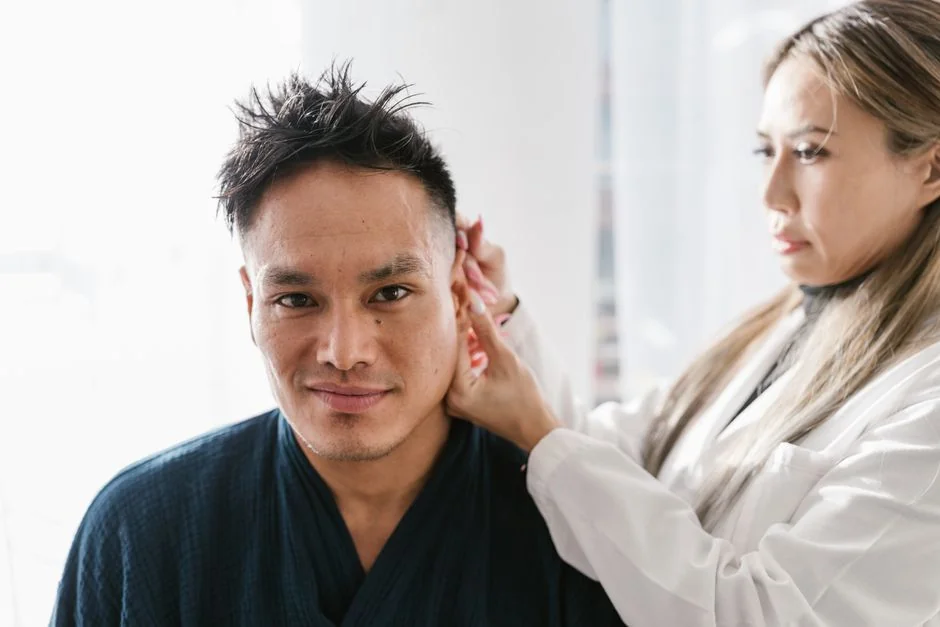
AGA treatments generally work through one of two mechanisms: reducing DHT levels in the scalp (pharmacological approaches) or stimulating dormant follicles to return to an active growth phase (procedural and topical approaches). Most specialists recommend a combination strategy for the best outcomes.
Oral Finasteride (5α-Reductase Inhibitor)
Finasteride is an oral prescription medication that inhibits the enzyme 5α-reductase, which converts testosterone into DHT. By lowering scalp DHT concentrations, it slows follicle miniaturisation and, in many patients, promotes partial regrowth. Clinical reports indicate that approximately 83–87% of men taking finasteride 1 mg daily experienced no further hair loss over a two-year period, with around 65% demonstrating measurable regrowth, according to landmark trials published in the Journal of the American Academy of Dermatology. Finasteride is approved for men only in Japan; it is not indicated for premenopausal women due to teratogenic risk.
Oral Dutasteride
Dutasteride inhibits both type I and type II isoforms of 5α-reductase (whereas finasteride targets only type II), resulting in a greater reduction of scalp DHT. Studies suggest that dutasteride 0.5 mg may produce superior hair count improvements compared to finasteride in some patients, although it carries a similar side-effect profile and is also contraindicated in women of childbearing age. In Japan, dutasteride has received regulatory approval for AGA, making it more accessible here than in several other countries.
Topical Minoxidil
Minoxidil is applied directly to the scalp as a solution or foam and works by prolonging the anagen (active growth) phase of the hair cycle and increasing blood flow to follicles. It is available for both men and women. Topical minoxidil is available over the counter in Japan, though higher concentrations and oral formulations require a prescription. Consistent, long-term use is essential — discontinuation typically results in a return of hair loss within several months.
Low-Level Laser Therapy (LLLT)
Devices using low-level laser or light-emitting diode (LED) technology are used in-clinic and at home to stimulate cellular energy production in follicles. Evidence for LLLT is more limited than for pharmacological treatments, but some clinical studies have demonstrated modest improvement in hair density with regular use as an adjunct therapy.
Platelet-Rich Plasma (PRP) Therapy
PRP involves drawing a small amount of the patient's own blood, centrifuging it to concentrate the platelet-rich fraction, and injecting this into the scalp. Platelets contain growth factors (including VEGF and PDGF) that may stimulate follicular activity. Studies suggest PRP can improve hair density and thickness as part of a multi-modal AGA programme, though results vary and typically require an initial course of three to four sessions followed by periodic maintenance.
Nutritional Support and Preventive Medicine
Hair growth depends on adequate micronutrient availability — including biotin, zinc, iron, vitamin D, and amino acids. At our Ichigaya clinic, orthomolecular (nutritional) therapy and IV drip therapy are available as supportive measures for patients in whom nutritional deficiency may be contributing to hair loss. These are not standalone AGA treatments but can complement other approaches, particularly in patients who are nutritionally depleted due to restrictive diets or high physiological stress. This is a treatment available at our Ichigaya clinic — feel free to ask about it during a consultation.
Expected Results and Realistic Timelines
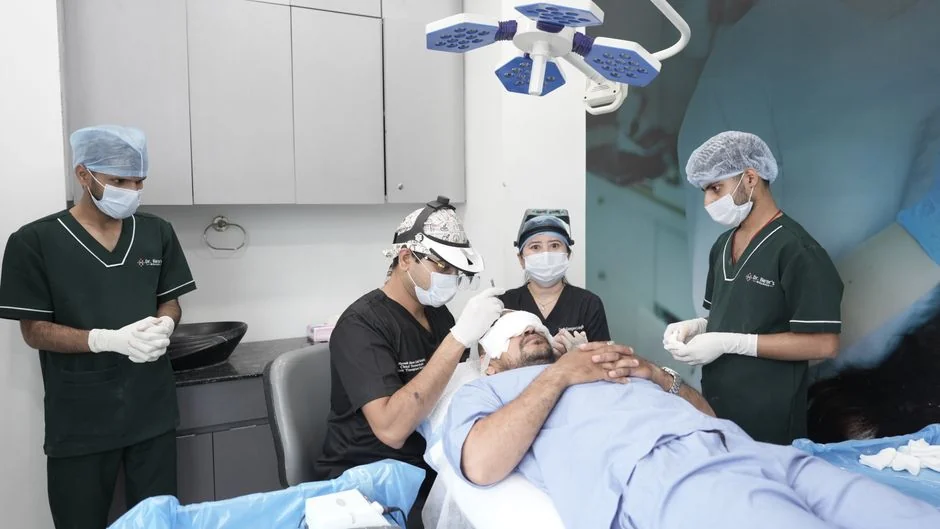
AGA treatment requires patience. Unlike a skin procedure where results may be visible within weeks, hair regrowth is a slow biological process. Most patients using finasteride or dutasteride will not see meaningful improvement until three to six months of consistent use, with optimal outcomes typically assessed at the twelve-month mark.
Topical minoxidil can produce visible results within three to four months in responsive patients, though a temporary increase in shedding (telogen effluvium) is common during the first four to eight weeks — a normal part of the follicular transition that should not be mistaken for worsening hair loss.
No treatment for AGA offers guaranteed results, and individual response varies considerably depending on genetics, disease stage, age of onset, and adherence. Treatments are most effective when initiated early, before significant follicle miniaturisation has occurred. Regular review consultations allow the treating physician to adjust the approach based on progress.
Dr. Karibe's Note
Many of our international patients are surprised to find that dutasteride is prescribed as a first-line AGA treatment in Japan, whereas in their home countries it may only be available off-label or not at all. Japan's regulatory approval of dutasteride for AGA means that patients here have access to a broader pharmacological toolkit than in some Western countries. A thorough consultation is important to determine which medication — or combination — is appropriate for your individual situation, taking into account your medical history and any medications you are currently taking.
Comparing AGA Treatment Options in Tokyo

| Treatment | Mechanism | Who It Is For | Onset of Visible Effect | Ongoing Maintenance Required |
|---|---|---|---|---|
| Finasteride (oral) | DHT reduction (type II) | Men | 3–6 months | Yes — continuous |
| Dutasteride (oral) | DHT reduction (type I & II) | Men | 3–6 months | Yes — continuous |
| Topical Minoxidil | Follicle stimulation | Men & Women | 3–4 months | Yes — continuous |
| PRP injections | Growth factor delivery | Men & Women | 2–4 months (course) | Yes — periodic |
| LLLT (laser/LED) | Cellular energy stimulation | Men & Women | 3–6 months | Yes — ongoing sessions |
| Nutritional IV therapy | Micronutrient support | Men & Women (adjunct) | Variable | As advised by physician |
Cost of AGA Treatment in Tokyo
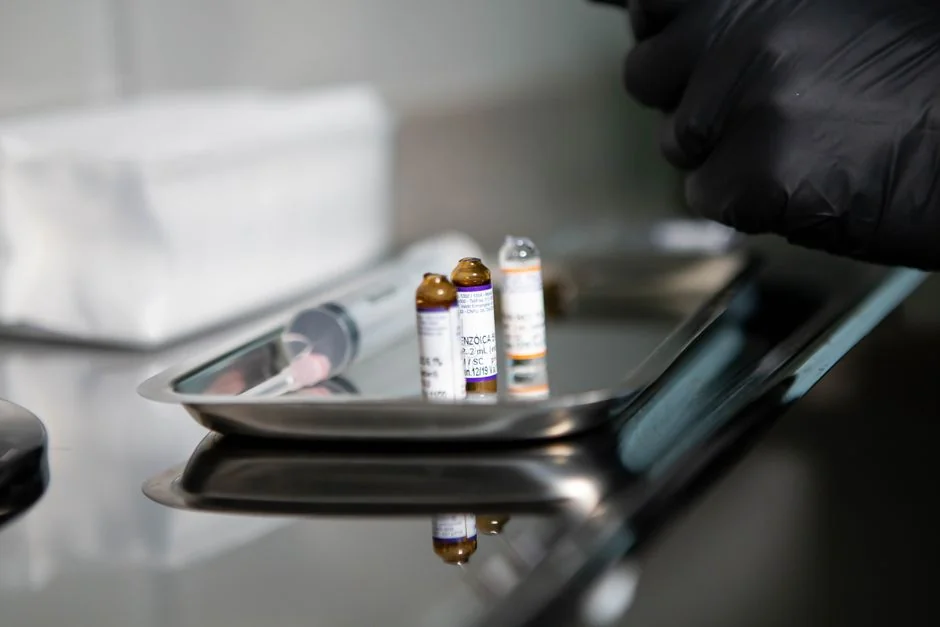
AGA treatment in Japan is largely classified as cosmetic and is therefore not covered by national health insurance (NHI) in most cases. Costs vary depending on the treatment modality, the clinic, and the duration of the programme. The following figures reflect approximate ranges at reputable specialist clinics in Tokyo.
Consultation Fees
An initial consultation at Kojimachi Dermatology & Plastic Surgery Clinic is priced at ¥3,300. A surgical or specialist consultation with Dr. Karibe is available at ¥2,200. During the consultation, a physician will assess your hair loss pattern, review your medical history, and discuss which treatment options are most appropriate.
Pharmacological Treatment Costs
Oral finasteride and dutasteride in Japan are typically priced at approximately ¥3,000–¥8,000 per month, depending on the formulation and dispensing clinic. Generic formulations tend to be more affordable. Topical minoxidil products are widely available at pharmacies and online, ranging from roughly ¥1,500–¥4,000 per month for standard concentrations.
Procedural Treatment Costs
PRP scalp therapy at clinics in Tokyo typically ranges from approximately ¥30,000–¥80,000 per session, with an initial course of three to four sessions commonly recommended. Supportive IV drip therapy at our Ichigaya clinic (including nutritional formulations relevant to hair health) is available as part of our broader preventive medicine programme — costs vary according to the specific formulation selected.
For an accurate quote tailored to your individual presentation and treatment goals, we recommend booking a consultation.
Have a question about this treatment?
Message us on LINE or WhatsApp — our English-speaking team usually replies the same day.
What to Expect: Before, During, and After Treatment
Before Treatment
A thorough assessment is the foundation of any effective AGA programme. Your physician will take a detailed history, examine the scalp (sometimes using a dermatoscope — a magnifying device that allows close inspection of follicles), and may request blood tests to rule out other causes of hair loss such as thyroid dysfunction, iron deficiency anaemia, or hormonal imbalance. At our clinic in Ichigaya, Tokyo, we frequently see patients who have been experiencing hair loss for some time but have never had an underlying cause properly excluded — this step matters.
During Treatment
Oral medications require no clinic visits once prescribed, though regular follow-up appointments (typically every three to six months) are recommended to monitor progress and any side effects. PRP sessions involve a blood draw, centrifugation, and scalp injections performed under local anaesthetic; the procedure typically takes 30–45 minutes with minimal discomfort. IV drip therapy sessions are administered in a clinical setting and generally take 30–60 minutes.
After Treatment and Downtime
Pharmacological treatments have no downtime whatsoever. After PRP scalp injections, mild tenderness, redness, or swelling at the injection sites may occur for 24–48 hours; patients can generally return to work the same day. Patients on finasteride or dutasteride should be aware that sexual side effects (reduced libido, erectile dysfunction) are reported in a minority of users — typically less than 2–4% in clinical trials — and usually resolve upon discontinuation. A candid discussion of potential side effects should form part of every pre-treatment consultation.
Who Is a Good Candidate for AGA Treatment?
AGA treatment is appropriate for men and women who are experiencing progressive, pattern-consistent hair loss that has been assessed by a qualified physician. Ideal candidates are those who begin treatment in the early-to-moderate stages of hair loss (Norwood I–IV in men; Ludwig I–II in women), as follicles that have been dormant for many years are less likely to respond to stimulation.
In our clinical experience at Kojimachi Dermatology & Plastic Surgery Clinic, patients who achieve the most consistent results are those who commit to long-term adherence, attend regular review appointments, and maintain realistic expectations about the pace and degree of improvement.
Who Should Seek Further Assessment First
Patients experiencing sudden, patchy hair loss (which may suggest alopecia areata — an autoimmune condition), diffuse shedding with a recent identifiable trigger (such as illness, surgery, or childbirth), or significant scalp inflammation should be evaluated for alternative diagnoses before initiating AGA-specific treatment. Women who are pregnant, breastfeeding, or planning pregnancy should not take finasteride or dutasteride. Patients with significant cardiovascular disease should discuss minoxidil use with their physician, as oral formulations in particular have systemic vasodilatory effects.
Common Misconceptions About AGA Treatment
Misconception 1: "If I stop treatment, my hair will be worse than before I started."
This is a frequently cited concern, and it stems from a misunderstanding of what these treatments actually do. Finasteride, dutasteride, and minoxidil maintain or partially reverse hair loss by sustaining follicular activity — they do not create artificial hair that then falls out dramatically upon discontinuation. When treatment is stopped, the hair loss that was being suppressed will gradually resume over several months, returning the patient approximately to where they would have been had they never treated — not to a worse state. The perception of dramatic shedding after stopping minoxidil is largely the result of losing hairs that the medication had retained, which can appear sudden but is not a new or accelerated loss.
Misconception 2: "Shampoos and supplements from the pharmacy are enough to treat AGA."
The cosmetic hair-loss market in Japan — as elsewhere — is large, and many products make implied or explicit claims about promoting hair growth. Ketoconazole shampoo has some evidence as an adjunct (primarily by reducing scalp inflammation), but cosmetic shampoos, caffeine sprays, and many supplement blends have not demonstrated the same level of clinical evidence as prescription pharmacological treatments. While nutritional support plays a legitimate supportive role in overall hair health, it cannot replicate the DHT-reduction mechanism that is central to slowing AGA progression.
Frequently Asked Questions
- Q. Can I receive AGA treatment at a Tokyo clinic if I am on medications prescribed in my home country?
- Yes, but a complete medication review is essential before starting any new treatment. Some medications interact with finasteride, dutasteride, or minoxidil. Bring a list of all current medications — including supplements — to your consultation, and inform your physician of any conditions you are being treated for abroad.
- Q. Is it possible to get an English-language consultation for hair loss in Tokyo?
- English-language medical consultations for AGA are available at select clinics in central Tokyo, including at Kojimachi Dermatology & Plastic Surgery Clinic in Ichigaya. International patients should confirm English availability when booking. Bilingual staff can assist with documentation, treatment explanations, and follow-up communication.
- Q. How long do I need to stay in Tokyo if I am a medical tourist seeking AGA treatment?
- For pharmacological treatments (finasteride, dutasteride, topical minoxidil), a single consultation is sufficient to obtain a prescription, which can sometimes be continued remotely or through a local physician at home. For procedural treatments such as PRP, an initial course of three to four sessions spaced four to six weeks apart is typical, which may require a more extended stay or multiple visits. This is best discussed during an initial consultation to plan appropriately.
- Q. Are there any hair loss treatments covered by Japanese national health insurance?
- AGA treatment is generally classified as cosmetic in Japan and is not covered by national health insurance. However, if hair loss is linked to an underlying medical condition — such as thyroid disease, anaemia, or an autoimmune disorder — diagnosis and management of that condition may be covered. A proper medical evaluation helps clarify whether any insurance-eligible treatment is relevant to your situation.
- Q. What is the difference between finasteride and dutasteride, and which is more commonly prescribed in Japan?
- Both medications reduce DHT production, but dutasteride inhibits a broader range of the responsible enzyme and typically achieves a greater reduction in scalp DHT. Both are approved for AGA in Japan. The choice between them depends on your hair loss severity, medical history, and physician assessment — dutasteride is not automatically the preferred option for every patient despite its broader mechanism.
Why Choose Biotope Clinic?
Biotope clinic or Kojimachi Dermatology & Plastic Surgery Clinic is located in Ichigaya, Tokyo, and provides dermatology, plastic surgery and preventive medicine services for Japanese and international patients.
For hair loss and AGA concerns, we offer:
- English-speaking consultation support
- Physician-led hair loss assessment
- Diagnosis of AGA and other hair loss causes
- Discussion of finasteride, dutasteride and minoxidil
- PRP and procedural options when appropriate
- Nutritional and orthomolecular support
- IV therapy options for selected patients
- Follow-up and long-term treatment planning
- Realistic explanation of costs, benefits and limitations
Our approach is medical, personalised and long-term. The goal is not to sell a package, but to identify the cause of hair loss and choose the most appropriate evidence-based plan.
Summary
AGA treatment in Tokyo is available for English-speaking patients who want medical guidance for thinning hair, receding hairline or progressive hair loss.
Androgenetic alopecia is a chronic condition caused by genetic sensitivity to DHT and gradual follicle miniaturisation. The most established treatments include finasteride, dutasteride and topical minoxidil. PRP, LLLT and nutritional support may also be useful as adjunctive options for selected patients.
Treatment requires patience. Most patients need 3 to 6 months to notice early changes and 6 to 12 months to evaluate meaningful improvement.
At Kojimachi Dermatology & Plastic Surgery Clinic in Ichigaya, Tokyo, our English-speaking team can help international patients understand their diagnosis, compare treatment options and create a realistic long-term plan.
If you are concerned about hair loss, AGA or thinning hair in Tokyo, our team would be happy to help you take the next step with confidence.
24/7 Consultation & Booking
Book a Consultation or Treatment
Our English-speaking team responds via LINE or WhatsApp — usually the same day.
References
- Kaufman KD, Olsen EA, Whiting D, et al. Finasteride in the treatment of men with androgenetic alopecia. Journal of the American Academy of Dermatology. 1998;39(4):578–589.
- Gubelin Harcha W, Barboza Martínez J, Tsai TF, et al. A randomized, active- and placebo-controlled study of the efficacy and safety of different doses of dutasteride versus placebo and finasteride in the treatment of male subjects with androgenetic alopecia. Journal of the American Academy of Dermatology. 2014;70(3):489–498.
- Gentile P, Garcovich S, Bielli A, et al. The effect of platelet-rich plasma in hair regrowth: a randomized placebo-controlled trial. Stem Cells Translational Medicine. 2015;4(11):1317–1323.
- Adil A, Godwin M. The effectiveness of treatments for androgenetic alopecia: a systematic review and meta-analysis. Journal of the American Academy of Dermatology. 2017;77(1):136–141.
- Ramos PM, Miot HA. Female pattern hair loss: a clinical and pathophysiological review. Anais Brasileiros de Dermatologia. 2015;90(4):529–543.
Related Articles
You may also find these articles useful.
- English Speaking Dermatologist Tokyo: Complete Guide
- English Speaking Plastic Surgeon Tokyo: Complete Guide
- English Speaking Plastic Surgeon Tokyo: Full Guide
- Skin Clinic Tokyo for Foreigners: How to Find One
- Beauty Clinic Tokyo English Consultation Guide for Foreigners
SUPERVISED BY
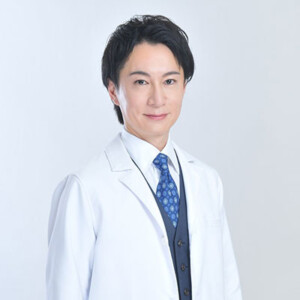
Dr. Jun Karibe
MD
Director
Education & Career
Certifications
Awards
MEDICAL REVIEW