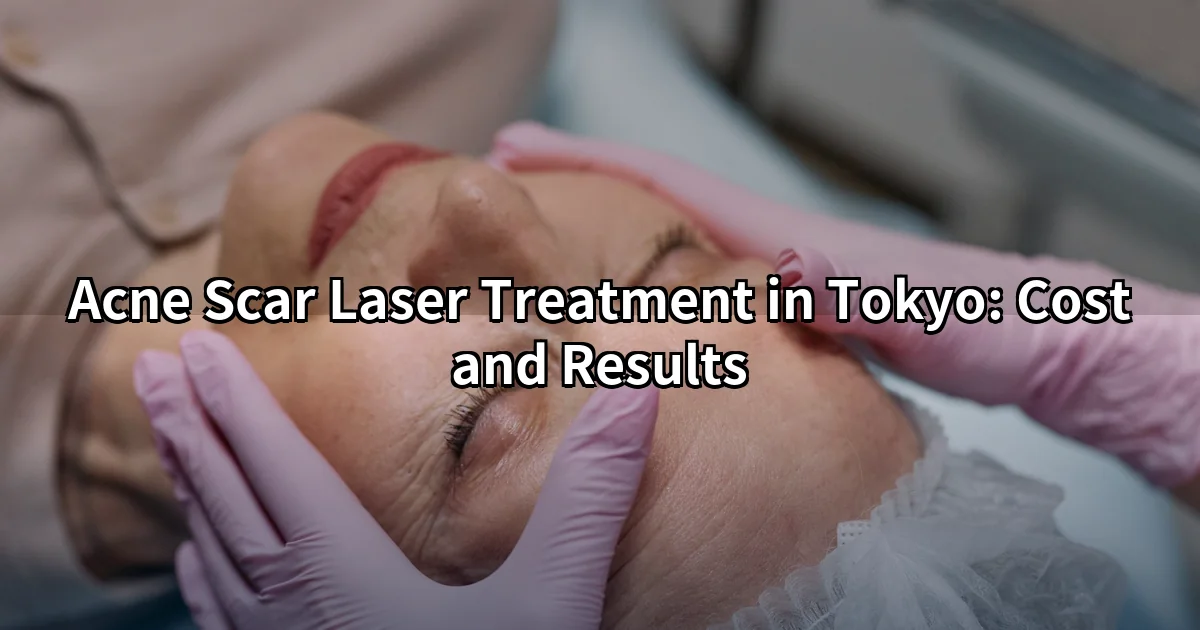
Acne Scar Laser Treatment in Tokyo: Costs, Results, and What to Expect
Living with acne scars — whether shallow discolouration, textured pitting, or deep rolling scars — can affect confidence in ways that go far beyond skin-deep. If you are an expat, visitor, or medical tourist searching for acne scar laser treatment in Tokyo, you have likely already discovered that Japan offers a wide range of clinics and technologies, which can make choosing the right option feel overwhelming.
This article is designed to cut through the noise: it explains how laser treatments for acne scars work, what results you can realistically expect, what they cost in Tokyo, and how to decide whether you are a suitable candidate.
- What types of laser treatments address acne scars and how each one works
- Realistic results and recovery timelines based on scar type and skin tone
- Acne scar laser treatment costs in Tokyo, including approximate prices at a Chiyoda-ku clinic
- Who is — and who is not — a good candidate for laser resurfacing in Japan
- Common misconceptions and frequently asked questions from international patients
Understanding Acne Scars: Not All Scars Are the Same
Before discussing laser options, it is important to understand that “acne scars” is an umbrella term covering several distinct conditions. Atrophic scars — the depressed, pitted type — are the most common and include ice pick scars (narrow and deep), boxcar scars (broad with sharp edges), and rolling scars (broad with a wave-like surface). Hypertrophic or keloid scars, which are raised, require a different treatment approach entirely.
Post-inflammatory hyperpigmentation (PIH) — the flat, dark marks left after a breakout
— is technically not a true scar; it is pigmentation damage and is treated differently from structural scar tissue.
In our clinical experience at BIOTOPE Clinic, a significant proportion of international patients arrive believing they have severe scarring when they primarily have PIH, which generally responds well to laser toning and topical brightening agents rather than ablative resurfacing.
Correctly identifying your scar type is the essential first step, which is why a consultation with a qualified dermatologist or plastic surgeon is so important before choosing a treatment.
How Laser Treatments for Acne Scars Work
Laser treatments improve acne scars through two primary mechanisms: ablation (controlled removal of the top layers of damaged skin) and collagen remodelling (stimulating the deeper dermis to produce new collagen, which fills and smooths depressed scars).
Depending on the device used, these mechanisms work independently or in combination.
CO2 Fractional Laser
The CO2 (carbon dioxide) fractional laser is widely regarded as one of the most effective modalities for atrophic acne scars.
The device delivers thousands of microscopic columns of laser energy into the skin
— a technique called fractional photothermolysis —
while leaving surrounding tissue intact. This triggers a wound-healing response that produces fresh collagen and elastin over the following weeks and months.
Clinical studies support its efficacy: a study published in Dermatologic Surgery reported that fractional CO2 laser treatment produced a mean improvement of approximately 50–70% in atrophic acne scar severity after two to three sessions, with improvements continuing for up to six months post-treatment. Results vary depending on scar depth, skin type, and individual healing capacity.
At Our Clinic, CO2 fractional laser is one of the core treatments available for acne scars and enlarged pores. If you are curious whether this option suits your skin, you are welcome to raise the question during a consultation at our clinic.
Pico Laser (PicoWay)
Picosecond lasers, such as PicoWay, deliver ultra-short bursts of energy measured in trillionths of a second. At lower fluence settings, pico lasers are highly effective for post-inflammatory hyperpigmentation and superficial pigmented marks.
Certain pico laser modes — particularly diffractive lens array (DLA) handpieces — also stimulate collagen remodelling in the dermis, making them useful for mild-to-moderate textured scarring without the downtime associated with ablative CO2 treatment.
Laser Toning
Laser toning uses a low-fluence, multiple-pass technique (typically with a Q-switched Nd:YAG laser) to gradually reduce pigmentation and improve overall skin tone. It is well suited to patients with post-inflammatory hyperpigmentation or melasma on darker skin tones, where more aggressive ablative treatments carry a higher risk of adverse pigmentation changes.
Comparing Acne Scar Laser Options at a Glance
| Treatment | Best For | Downtime | Sessions Typically Needed | Approx. Cost at Kojimachi Clinic |
|---|---|---|---|---|
| CO2 Fractional Laser | Atrophic scars (ice pick, boxcar, rolling), enlarged pores | 5–7 days (redness, peeling) | 2–4 sessions (4–6 weeks apart) | ¥11,000–¥66,000 per session |
| Pico Laser (PicoWay) | PIH, mild textured scarring, pigmentation | Minimal (1–2 days) | 3–6 sessions | ¥11,000–¥98,000 per session |
| Laser Toning | PIH, uneven skin tone, melasma on darker skin | Minimal (none to 1 day) | 5–10 sessions | ¥15,000–¥135,000 |
| Dermapen (RF Microneedling) | Rolling scars, skin texture, mild atrophic scars | 2–3 days | 3–5 sessions | ¥9,800–¥220,000 |
Prices shown are approximate ranges; the final cost depends on the treatment area, the number of passes, and individual clinical assessment. For an accurate quote, we recommend booking a consultation.
Acne Scar Laser Treatment Cost in Tokyo
Laser treatment costs in Tokyo vary considerably depending on the device used, the area treated, the number of passes performed, and the clinic’s fee structure. Below is a transparent overview of the relevant prices at Kojimachi Dermatology & Plastic Surgery Clinic in Ichigaya.
Laser Treatment Price Ranges
- CO2 Fractional Laser: ¥11,000–¥66,000 per session (depending on the area — spot treatment vs. full face)
- Pico Laser (pigmentation and scar treatment): ¥11,000–¥98,000 per session
- Laser Toning: ¥15,000–¥135,000
- Dermapen (a complementary microneedling option): ¥9,800–¥220,000
- Initial consultation fee: ¥3,300
Many patients require a combination approach — for example, CO2 fractional laser for structural scarring alongside pico laser for residual pigmentation — which affects the overall investment.
Most acne scar laser treatments are not covered by Japan’s public health insurance (NHI), as they are classified as cosmetic procedures.
It is also worth budgeting for post-treatment skincare products, which support and prolong results.
For an accurate quote tailored to your skin concerns and scar type, we recommend booking a consultation.
Expected Results: What Laser Treatment Can and Cannot Do
It is important to approach laser treatment for acne scars with realistic expectations. No laser — regardless of how sophisticated — can fully erase deep structural scars in a single session, or guarantee complete resolution.
What laser treatments can realistically achieve is a meaningful, often visible improvement in scar texture, depth, and skin tone over a course of sessions.
A 2019 systematic review published in the Journal of the American Academy of Dermatology found that fractional laser resurfacing (both ablative and non-ablative types) consistently produced clinically significant improvements in acne scar severity across multiple skin phototypes, with patient satisfaction rates generally ranging from 70% to 90%.
However, the authors noted that results are highly dependent on the treating physician’s protocol, the number of sessions completed, and patient compliance with post-treatment care.
Results continue to develop for three to six months after a CO2 fractional session, as collagen remodelling is a gradual biological process. Patients with rolling and boxcar scars tend to see greater visible improvement than those with deep ice pick scars, which may benefit more from a combined approach that includes subcision (a minor surgical technique to release tethered scar tissue) or punch excision alongside laser therapy.
Dr. Karibe’s Note
A common question I receive from international patients is whether one CO2 fractional session will be enough to see a significant difference. In most cases, I recommend planning for at least two to three sessions spaced four to six weeks apart, particularly for moderate-to-severe atrophic scarring. Many of our patients from overseas are visiting Tokyo for a limited period, so during the initial consultation, we discuss a realistic treatment schedule that considers both their timeline and their skin’s recovery capacity. Combining laser with a high-quality post-care regimen — such as the Zo Skin Health range available at our clinic — also helps consolidate and extend the results.
What to Expect: Before, During, and After Treatment
Before Your Session
A thorough consultation is essential before any laser procedure. The treating physician will assess your scar types and skin tone (often using the Fitzpatrick scale), review your medical history, and check for any contraindications such as active acne breakouts, recent isotretinoin use, or a history of keloid scarring. Patients are usually advised to avoid sun exposure, tanning, and certain skincare actives (retinoids, AHAs) for one to two weeks before treatment.
During the Procedure
For CO2 fractional laser, a topical anaesthetic cream is applied approximately 30–60 minutes beforehand to minimise discomfort. The procedure itself typically takes 20–45 minutes depending on the area. Most patients describe a warming or prickling sensation. Pico laser and laser toning sessions are generally shorter and less intense in terms of discomfort.
After Treatment and Recovery
Following CO2 fractional laser, the skin will appear red, swollen, and may feel similar to mild sunburn for the first 48–72 hours. Micro-crusting and peeling typically occur over days three through seven. Sun protection with a high-SPF sunscreen is non-negotiable during recovery and for several weeks after, as treated skin is more vulnerable to UV-induced pigmentation changes — a point of particular importance for patients with Fitzpatrick types III–V (common among Asian, Middle Eastern, and Latin American skin tones).
Pico laser and laser toning carry considerably less downtime: most patients resume normal activities the following day, with only mild redness or subtle flaking, if anything at all.
Who Is a Good Candidate?
Laser treatment for acne scars is suitable for a broad range of patients, but candidacy depends on several factors. Good candidates generally include those who:
- Have stable acne (not actively inflamed) with residual atrophic or pigmented scarring
- Are not currently taking isotretinoin (Accutane) and have not done so in the past six to twelve months
- Have realistic expectations about gradual improvement over multiple sessions
- Are committed to strict sun avoidance and post-treatment skincare
- Have Fitzpatrick skin types I–V (darker skin types can be treated but require specific protocols and devices)
Who Should Proceed with Caution or Avoid Treatment
- Patients with active acne breakouts in the treatment area (active lesions should be managed before laser)
- Those with a confirmed history of keloid or hypertrophic scarring (laser can worsen these)
- Pregnant or breastfeeding individuals
- Patients who have taken oral isotretinoin within the past six to twelve months (impaired wound healing risk)
- Those with photosensitive conditions or who are on photosensitising medications
Common Misconceptions About Acne Scar Laser Treatment
Misconception 1: “One session will get rid of my scars completely.”
This is perhaps the most widespread misunderstanding the team at our Ichigaya clinic encounters among international patients. Acne scars — especially deep atrophic scars — represent structural changes in the collagen architecture of the dermis. Laser treatment initiates a healing and remodelling process, but significant improvement typically requires a series of sessions, and full results may not be visible for three to six months after each treatment. Patients who expect dramatic overnight results often feel discouraged prematurely.
Misconception 2: “Laser treatment is not safe for Asian or darker skin tones.”
While it is true that ablative lasers such as CO2 fractional laser carry a higher risk of post-inflammatory hyperpigmentation in darker skin tones (Fitzpatrick types IV–VI) if used aggressively, they are not categorically contraindicated. A qualified physician experienced with diverse skin types will adjust energy settings conservatively, use appropriate wavelengths (such as pico laser or non-ablative options for darker skin), and prescribe pre- and post-treatment brightening protocols to mitigate risk. The key is choosing a practitioner with demonstrable experience treating Asian skin — which is the predominant patient profile at most Tokyo clinics.
Frequently Asked Questions
- Q. How many laser sessions will I need for acne scars?
- The number of sessions depends on scar severity, scar type, and the laser modality used. For CO2 fractional laser, most patients undergo two to four sessions spaced four to six weeks apart. Pico laser and laser toning may require more sessions — typically five or more — due to their gentler, lower-downtime nature. Your treating physician will recommend a personalised plan after assessing your skin at consultation.
- Q. Is acne scar laser treatment in Tokyo covered by Japanese health insurance?
- In the vast majority of cases, cosmetic laser treatments for acne scars are not covered by Japan’s National Health Insurance (NHI) and are paid entirely out of pocket. Exceptions may exist in rare cases where scarring is severe and functionally impairing, but this is uncommon. Patients should budget for the full private cost as outlined in the pricing section above.
- Q. Can I combine laser treatment with other acne scar procedures?
- Yes, combination approaches often yield better outcomes than laser alone, particularly for complex or severe scarring. Options that complement laser treatment include Dermapen (microneedling), hyaluronic acid filler for depressed scars, and subcision for tethered rolling scars. Your physician will advise on the safest and most effective combination based on your individual assessment. At Kojimachi Dermatology & Plastic Surgery Clinic, several of these complementary treatments are available — feel free to ask during your consultation.
Summary
Laser treatment is one of the most evidence-supported options available for improving acne scars, offering meaningful results for atrophic scarring and post-inflammatory pigmentation when performed correctly and with appropriate expectations. In Tokyo, patients have access to a range of well-established laser technologies — including CO2 fractional laser, pico laser, and laser toning — at various price points, from approximately ¥11,000 for targeted spot treatments to ¥98,000 or more for comprehensive full-face sessions.
Choosing the right laser depends on your scar type, skin tone, available downtime, and treatment goals. A consultation with a qualified dermatologist or plastic surgeon remains the single most important step before beginning any laser regimen. Results are gradual, require multiple sessions, and are best supported by a disciplined post-treatment skincare routine and diligent sun protection.
If you have any questions about acne scar laser treatment in Tokyo, our team at BIOTOPE CLINIC, Tokyo would be happy to help. We offer consultations in English.
BIOTOPE Clinic
Shirokanedai , Minato ku Tokyo
(Accessible from Meguro,Shirokenedai stations)
Directed by Dr. Jun Karibe, Board-Certified Plastic Surgeon
References
- Chapas AM, et al. Successful treatment of acneiform scarring with CO2 ablative fractional resurfacing. Lasers in Surgery and Medicine. PubMed Search
- Hession MT, Graber EM. Atrophic acne scarring: a review of treatment options. Journal of Clinical and Aesthetic Dermatology. 2015;8(1):50–58. PubMed
- Fife DJ, et al. Treating acne scars: evaluation and treatment options. Journal of Drugs in Dermatology. PubMed Search
- Zaleski-Larsen LA, et al. Acne scar treatment: a multimodal approach tailored to scar type. Dermatologic Surgery. PubMed Search
- Manuskiatti W, et al. Fractional carbon dioxide laser resurfacing for atrophic acne scars in Asian patients with skin phototypes III and IV. Journal of the American Academy of Dermatology. PubMed Search
24/7 Consultation & Booking
Book a Consultation or Treatment
Our English-speaking team responds via LINE or WhatsApp — usually the same day.
SUPERVISED BY
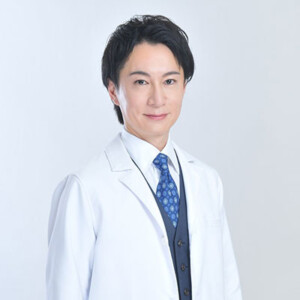
Dr. Jun Karibe
MD
Director
Education & Career
Certifications
Awards
This article is for general informational purposes only and does not constitute medical advice or a diagnosis. Please consult a qualified physician for any health concerns.
MEDICAL REVIEW