FaceTite vs Surgical Facelift in Tokyo: Is a Minimally Invasive Alternative Right for You?
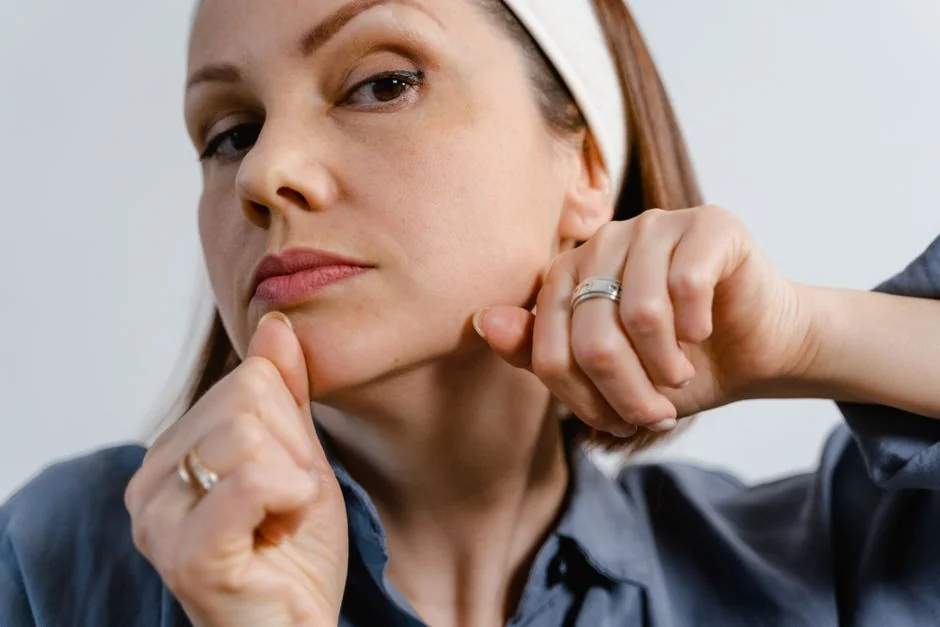
FaceTite vs Surgical Facelift in Tokyo: Is a Minimally Invasive Alternative Right for You?
Considering a facelift but feeling uncertain about surgery, general anaesthesia, scarring or significant downtime? You are not alone.
Many people in Tokyo — including expatriates, international residents and visitors seeking high-quality aesthetic care in Japan — are now exploring whether minimally invasive technologies such as FaceTite ,Embrace RF can deliver meaningful facial rejuvenation without the commitment of a traditional surgical facelift.
The honest answer is that FaceTite and surgical facelift are not interchangeable treatments. They sit at different points on the facial rejuvenation spectrum. FaceTite may be appropriate for mild to moderate skin laxity, early jowling and jawline softening. A surgical facelift is usually more appropriate when there is significant sagging, deeper tissue descent and excess skin.
At BIOPE CLINIC ,Dermatology & Plastic Surgery Clinic in Minatoku, Tokyo, our team offers English-speaking consultation support for patients considering non-surgical, minimally invasive and surgical facial rejuvenation options.
In this article, we explain:
- What FaceTite is
- How FaceTite differs from a surgical facelift
- How each procedure works
- What results are realistic
- Recovery, downtime and risks
- Approximate costs in Tokyo
- Who is a good candidate for FaceTite
- Who should consider surgical facelift instead
- Non-surgical alternatives such as HIFU, Morpheus8 and thread lifts
- How to choose the right clinic in Tokyo
What Is FaceTite?
FaceTite is a minimally invasive skin-tightening and contouring treatment that uses radiofrequency-assisted lipolysis, often abbreviated as RFAL.
The FaceTite handpiece delivers radiofrequency energy between a small internal probe placed beneath the skin and an external electrode placed on the skin surface. This creates controlled heating of the subdermal tissue and dermis.
The goal is to:
- Tighten loose skin
- Improve jawline definition
- Reduce mild jowling
- Improve submental fullness under the chin
- Stimulate collagen remodelling
- Contour the lower face and neck
FaceTite is part of InMode’s RF technology platform. InMode describes FaceTite,Embrace RF as a minimally invasive technology used for small-area contouring and soft-tissue contraction.
Unlike a traditional facelift, FaceTite does not require long incisions around the ears or hairline. Instead, it uses very small entry points for the internal probe. It is usually performed under local anaesthesia, sometimes with light sedation depending on the patient and treatment area.
How Does FaceTite Work?
FaceTite uses controlled radiofrequency heat to affect the tissue beneath the skin.
The internal probe delivers RF energy from below the skin, while the external electrode monitors and receives the energy from above. This allows the tissue between the two electrodes to be heated in a controlled way.
This controlled heating may lead to:
- Immediate collagen contraction
- Gradual collagen remodelling
- Tissue tightening over several months
- Improvement in mild fat fullness when combined with lipolysis or suction
- Better contour in the jawline and neck
Results are not instant. Swelling may improve within weeks, but the final tightening effect usually develops gradually over 3 to 6 months
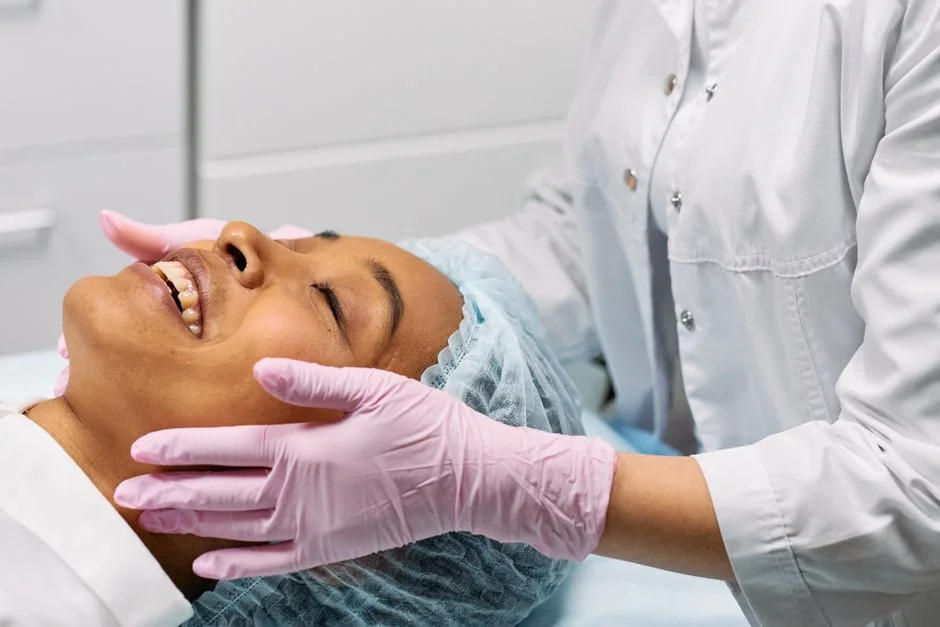
What Is a Surgical Facelift?
A surgical facelift, also called rhytidectomy, is an operation designed to improve visible signs of ageing in the face and neck. The American Society of Plastic Surgeons describes facelift surgery as a procedure used to improve visible signs of ageing in the face and neck. During a surgical facelift, a plastic surgeon usually makes incisions around the hairline, around the ears and sometimes under the chin. The surgeon then lifts and repositions deeper facial tissues, often including the SMAS layer — the superficial musculoaponeurotic system.
Depending on the patient, the procedure may include:
- Lifting of the SMAS layer
- Repositioning of descended tissue
- Removal or redistribution of fat
- Tightening of loose neck tissue
- Removal of excess skin
- Careful closure of incisions around the ear and hairline
A surgical facelift can create a more powerful and longer-lasting correction than device-based treatments. However, it also involves surgery, anaesthesia, scars and a longer recovery period.
FaceTite vs Surgical Facelift: Key Differences
FaceTite and surgical facelift both aim to improve facial ageing, but they work very differently.
|
Factor |
FaceTite |
Surgical Facelift |
|---|---|---|
|
Type of treatment |
Minimally invasive RF tightening |
Surgical tissue repositioning |
|
Anaesthesia |
Local anaesthesia ± light sedation |
General anaesthesia or deep sedation |
|
Incisions |
Tiny entry points |
Longer incisions around ears and hairline |
|
Main target |
Skin laxity and mild contour issues |
Deeper tissue descent and excess skin |
|
Best for |
Mild to moderate laxity |
Moderate to severe laxity |
|
Downtime |
Usually several days to 1 week |
Often 2–4 weeks for social recovery |
|
Scarring |
Minimal entry marks |
Concealed surgical scars |
|
Result timeline |
Gradual over 3–6 months |
More immediate structural change after swelling improves |
|
Longevity |
Often 1–3 years, variable |
Often 5–10 years, variable |
|
Degree of correction |
Subtle to moderate |
Moderate to dramatic |
|
Cost in Tokyo |
Generally lower than facelift |
Generally higher |
The most important distinction is this: FaceTite tightens tissue; a facelift repositions tissue.
If ageing is mild and mainly related to skin laxity or early jowling, FaceTite may be enough. If ageing involves significant tissue descent, heavy jowls or loose neck skin, surgery may be more appropriate.
FaceTite vs Facelift: Which Gives Better Results?
The better treatment depends on the patient.
FaceTite may be better for patients who:
- Have early jowling
- Have mild to moderate skin laxity
- Want jawline refinement
- Want less downtime than surgery
- Prefer local anaesthesia
- Do not yet need a full facelift
- Accept gradual and moderate improvement
Surgical facelift may be better for patients who:
- Have significant sagging
- Have deep jowls
- Have heavy neck laxity
- Have substantial excess skin
- Want longer-lasting correction
- Are ready for surgery and recovery
- Need SMAS repositioning
FaceTite can be a meaningful treatment for the right patient. However, it should not be marketed as a complete replacement for facelift surgery.
What Results Can FaceTite Realistically Achieve?
FaceTite may improve:
- Mild jowling
- Soft jawline definition
- Early neck laxity
- Submental fullness
- Lower-face contour
- Mild skin looseness
- Skin firmness over time
Clinical experience and published reports suggest that radiofrequency-assisted lipolysis can improve contour and skin tightening in selected patients. A study on RFAL for neck and face contouring reported use of radiofrequency-assisted liposuction for neck and facial contour improvement, including assessment of technique, complications and patient satisfaction. (PMC)
However, FaceTite has limitations.
It cannot:
- Remove large amounts of excess skin
- Reposition the SMAS like surgery
- Correct severe jowling
- Fully lift a heavy neck
- Replace a deep-plane or SMAS facelift
- Stop the ageing process
The best FaceTite results are usually seen in patients with enough skin elasticity to contract after controlled heating
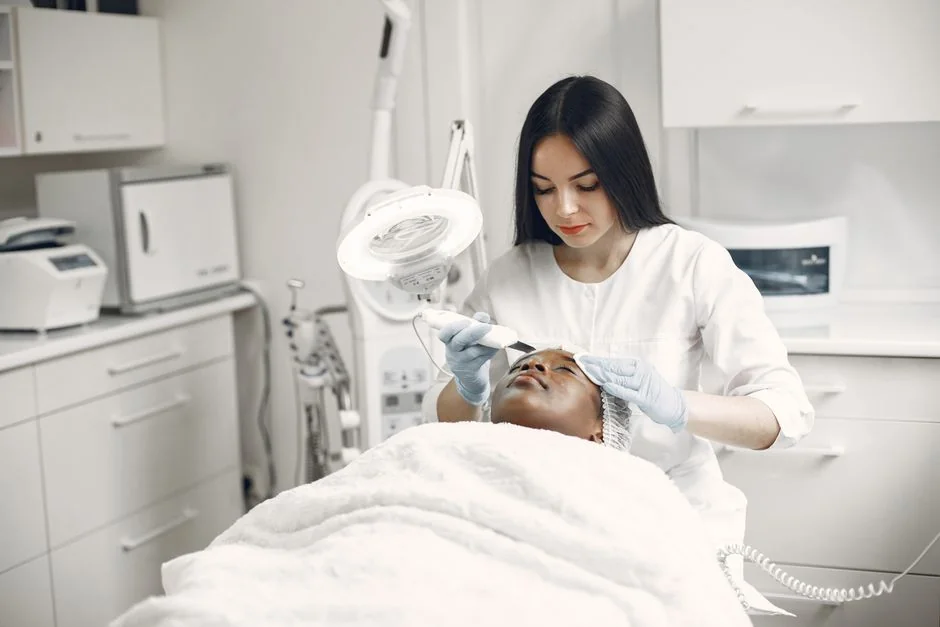
What Results Can a Surgical Facelift Achieve?
A surgical facelift can address deeper structural ageing.
It may improve:
- Moderate to severe jowls
- Significant skin laxity
- Loose neck skin
- Lower-face sagging
- Deep tissue descent
- Jawline blunting
- Neck contour problems
Because surgery repositions deeper tissues and removes excess skin, the result is generally more powerful than FaceTite.
However, facelift surgery also carries more significant recovery and surgical risk. This is why the decision should be based on anatomy, not just preference.
Dr. Karibe’s Note
Many international patients ask whether they should choose FaceTite, HIFU, thread lift or surgical facelift.
The correct answer is not based only on age or downtime. It is based on the degree of tissue laxity, the quality of the skin, the amount of fat, the position of the SMAS layer and the patient’s long-term goals.
For some patients, a device-based or minimally invasive approach provides excellent value. For others, attempting to treat significant sagging with a device only delays the result they truly want.
An honest consultation should not simply sell one treatment. It should explain what each option can and cannot do.
The best facial rejuvenation plan is the one that matches the patient’s anatomy, expectations and lifestyle.
FaceTite Cost in Tokyo
FaceTite pricing in Tokyo varies depending on:
- Treatment area
- Whether the face, neck or both are treated
- Whether liposuction is included
- Whether Morpheus8 or other treatments are combined
- Anaesthesia requirements
- Clinic and physician experience
As a general Tokyo market estimate, FaceTite or similar minimally invasive RF contouring procedures may range from approximately:
|
Treatment |
Approximate Tokyo Market Range |
|---|---|
|
Lower-face FaceTite / RF tightening |
¥300,000–¥600,000+ |
|
Face and neck RF tightening |
¥500,000–¥900,000+ |
|
Combination FaceTite + Morpheus8 |
Varies by clinic and area |
These are general estimates. Patients should confirm whether the quoted price includes anaesthesia, compression garment, medications, follow-up and any combination treatment.
Surgical Facelift Cost in Tokyo
Surgical facelift pricing in Tokyo varies widely depending on surgical technique, surgeon experience, anaesthesia and procedure extent.
A general Tokyo market estimate is:
|
Procedure |
Approximate Tokyo Market Range |
|---|---|
|
Mini facelift |
¥600,000–¥1,200,000+ |
|
Standard facelift |
¥800,000–¥2,000,000+ |
|
Face and neck lift |
¥1,200,000–¥2,500,000+ |
|
Deep-plane or complex revision facelift |
Higher, case-dependent |
One Tokyo clinic’s English price page lists facelift pricing from ¥600,000 for a mini lift and up, illustrating the lower end of Tokyo surgical facelift pricing.
These figures are reference ranges only. A personal surgical consultation is necessary for an accurate estimate.
Relevant Treatment Prices at Kojimachi Dermatology & Plastic Surgery Clinic
At BIOTOPE CLINIC, Dermatology & Plastic Surgery Clinic in Minato-ku, Tokyo, a range of non-surgical, minimally invasive and surgical facial rejuvenation options may be discussed depending on the patient’s concerns.
Approximate clinic pricing includes:
|
Treatment |
Approximate Price |
|---|---|
|
Initial consultation |
¥3,300 |
|
Surgical / aesthetic consultation with Dr. Karibe |
¥2,200 |
|
HIFU |
¥25,000–¥110,000 |
|
Allergan Botox |
¥22,000–¥148,000 |
|
Hyaluronic acid filler |
¥66,000–¥88,000 per syringe |
|
Thread lift / Tesslift |
¥48,000 per thread |
|
Cheek or jawline liposuction |
From ¥280,000 per area |
|
Anaesthesia |
¥2,200–¥77,000 |
|
Pre-operative blood test |
¥11,000 |
For an accurate quote, a consultation is recommended. Pricing depends on anatomy, treatment area, anaesthesia, combination procedures and the final treatment plan.
FaceTite vs HIFU
Many patients compare FaceTite with HIFU because both are used for lifting and tightening.
HIFU, or high-intensity focused ultrasound, is non-invasive. It delivers focused ultrasound energy beneath the skin without entry points, needles or cannulas.
FaceTite is more invasive than HIFU because it uses a probe under the skin, but it may produce stronger contraction in selected patients.
|
Factor |
FaceTite |
HIFU |
|---|---|---|
|
Skin entry |
Yes, tiny entry points |
No |
|
Anaesthesia |
Local anaesthesia |
Usually none or topical |
|
Downtime |
Several days to 1 week |
Minimal |
|
Effect strength |
Stronger for selected laxity |
Mild to moderate |
|
Best for |
Early jowls, mild to moderate laxity |
Early laxity, maintenance |
|
Cost |
Higher |
Lower |
|
Result timeline |
3–6 months |
2–6 months |
HIFU can be a good first step for patients with early laxity or those who want no downtime. FaceTite may be considered when laxity is more noticeable but surgery is not yet desired.
FaceTite vs Morpheus8
Morpheus8 is an RF microneedling treatment that delivers radiofrequency energy through small needles into the skin and subdermal tissue.
It is often used for:
- Skin texture
- Fine lines
- Acne scars
- Pores
- Mild laxity
- Skin firmness
FaceTite works deeper and is more focused on tissue tightening and contouring. Morpheus8 can complement FaceTite by improving the skin surface and dermal quality.
In some patients, combining deeper RF tightening with RF microneedling may create a more complete rejuvenation plan.
FaceTite vs Thread Lift
Thread lifts use absorbable threads to mechanically lift and support tissue.
They may be useful for:
- Mild sagging
- Early jowls
- Facial contour support
- Patients wanting immediate lift
FaceTite relies more on heat-based contraction and collagen remodelling. Thread lifts provide mechanical support but may not improve skin quality in the same way.
Some patients benefit from a combination approach, but timing and suitability should be assessed carefully.
What to Expect Before FaceTite
A thorough consultation is essential.
The physician will assess:
- Skin laxity
- Fat distribution
- Jawline definition
- Neck laxity
- Skin thickness
- Scarring tendency
- Medical history
- Current medications
- Smoking status
- Previous cosmetic treatments
- Whether surgery would be more appropriate
Patients are usually asked to avoid blood-thinning medications or supplements before the procedure when medically safe. This may include aspirin, ibuprofen, fish oil, vitamin E and certain herbal supplements.
Do not stop prescribed medication without approval from your prescribing doctor.
Pre-treatment photographs are usually taken to compare results over time.
What Happens During FaceTite?
FaceTite is typically performed under local anaesthesia, sometimes with light sedation.
The procedure generally involves:
- Cleansing and marking
- Local anaesthetic injection
- Small entry points
- Placement of the internal RF probe beneath the skin
- External electrode contact on the skin surface
- Controlled heating of target tissue
- Optional fat reduction if indicated
- Dressing and compression garment
Treatment time for the lower face and neck is often around 1 to 2 hours, depending on the area and complexity.
Recovery After FaceTite
FaceTite recovery is shorter than surgical facelift recovery, but it is not zero-downtime.
Common temporary effects include:
- Swelling
- Bruising
- Tenderness
- Numbness
- Firmness
- Mild discomfort
- Temporary asymmetry
- Small entry-point marks
Most patients return to light daily activities within several days. Social downtime is often around 3 to 7 days, although swelling and firmness can last longer.
A compression garment may be recommended for 1 to 2 weeks or according to the clinic’s protocol.
Final tightening usually develops over 3 to 6 months.
Surgical Facelift Recovery
Surgical facelift recovery is more involved.
Patients may experience:
- Swelling
- Bruising
- Tightness
- Temporary numbness
- Drainage in some cases
- Sutures
- Scalp or hairline sensitivity
- Temporary facial stiffness
- Social downtime of several weeks
Most patients need approximately 2 to 4 weeks before returning to many social activities, although healing continues for months.
The American Society of Plastic Surgeons notes that facelift recovery involves bandages after surgery and that swelling and bruising are expected during the healing process.
Risks of FaceTite
FaceTite is minimally invasive, but it is still a medical procedure.
Possible risks include:
- Swelling
- Bruising
- Tenderness
- Burns
- Numbness
- Infection
- Irregular contour
- Asymmetry
- Skin surface changes
- Prolonged firmness
- Unsatisfactory tightening
- Need for additional treatment
Risk is reduced by correct patient selection, appropriate temperature control and experienced technique.
Risks of Surgical Facelift
Surgical facelift has greater correction potential, but also greater risk.
Possible risks include:
- Bleeding or haematoma
- Infection
- Scarring
- Poor wound healing
- Skin necrosis
- Hairline changes
- Nerve injury
- Facial weakness
- Asymmetry
- Prolonged swelling
- Anaesthesia-related risks
- Need for revision surgery
These risks should be discussed in detail during surgical consultation.
Who Is a Good Candidate for FaceTite?
Good candidates for FaceTite often include patients who:
- Have mild to moderate skin laxity
- Have early jowling
- Have mild neck looseness
- Have submental fullness
- Want jawline refinement
- Prefer local anaesthesia
- Want less downtime than surgery
- Have realistic expectations
- Have enough skin elasticity for contraction
- Are medically suitable for a minimally invasive procedure
FaceTite is often considered by patients in their late 30s to 60s, but age alone does not determine suitability.
Who Should Consider Surgical Facelift Instead?
A surgical facelift may be more appropriate for patients who have:
- Significant skin excess
- Heavy jowls
- Advanced neck laxity
- Deep tissue descent
- Poor skin elasticity
- Prior insufficient response to devices
- Desire for longer-lasting correction
- Willingness to accept surgery and downtime
If surgery is clearly needed, repeated device treatments may become less cost-effective than a properly planned surgical procedure.
Who Should Avoid or Postpone FaceTite?
FaceTite may not be suitable for patients who are:
- Pregnant or breastfeeding
- Experiencing active skin infection
- Experiencing active inflammation in the treatment area
- Poorly controlled diabetic
- Unable to heal normally
- Heavy smokers unwilling to stop
- Prone to keloid or abnormal scarring
- Using certain implanted electronic devices near the treatment area
- Unable to follow aftercare
- Expecting a surgical-level facelift result
Patients with complex medical histories should be assessed individually.
Can FaceTite Be Combined With Other Treatments?
Yes. FaceTite may be combined or sequenced with other treatments depending on the patient’s anatomy.
Possible combination treatments include:
- Morpheus8 for skin texture and dermal tightening
- HIFU for maintenance
- Botox for dynamic wrinkles
- Hyaluronic acid filler for volume loss
- Thread lift for mechanical support
- Liposuction for excess fat
- Laser treatment for pigmentation or texture
- Skin boosters for skin quality
The key is correct sequencing. Some treatments should not be performed too close together. A physician should design the plan.
Common Misconceptions About FaceTite
Misconception 1: FaceTite Has No Downtime
FaceTite is minimally invasive, not non-invasive. Swelling, bruising and tenderness are expected.
Most patients need several days before they feel comfortable socially.
Misconception 2: FaceTite Is the Same as a Facelift
FaceTite can tighten and contour, but it cannot surgically reposition the SMAS or remove large amounts of excess skin.
Misconception 3: FaceTite Is Only for Older Patients
FaceTite may be useful for younger patients with early jowling, loose skin after weight loss or mild neck laxity. Suitability depends on anatomy, not age alone.
Misconception 4: Surgery Is Always Better
Surgery is more powerful, but it is not necessary for every patient. For mild laxity, surgery may be excessive.
Misconception 5: Devices Are Always Safer Than Surgery
Devices avoid many surgical risks, but they still require proper technique. Heat-based treatments can cause burns, contour irregularity or nerve irritation if poorly performed.
How to Choose a Clinic in Tokyo
When choosing a clinic for FaceTite, facelift or facial rejuvenation, look for:
- Physician-led assessment
- Experience with both surgical and non-surgical options
- Honest explanation of limitations
- Clear English communication
- Transparent pricing
- Ability to manage complications
- Understanding of Asian and international facial anatomy
- Conservative aesthetic judgment
- Follow-up care
- No pressure to choose one specific treatment
A clinic that offers only one device may naturally recommend that device. A clinic that can discuss multiple options is better positioned to provide an objective recommendation.
Questions to Ask During Consultation
Before deciding on treatment, ask:
- Is my laxity mild, moderate or severe?
- Is my main issue skin, fat, muscle, SMAS descent or bone structure?
- Am I a better candidate for FaceTite, HIFU, thread lift or facelift?
- What result is realistic?
- How long will recovery take?
- What are the risks in my case?
- Will I need a compression garment?
- How many follow-up visits are needed?
- What is included in the quoted price?
- If FaceTite is not enough, what would be the next step?
A good consultation should leave you with a realistic plan, not just a procedure name.
Frequently Asked Questions About FaceTite vs Facelift in Tokyo
Is FaceTite available in Tokyo?
Yes, FaceTite and similar minimally invasive RF tightening treatments are available in Tokyo. Device availability varies by clinic, so patients should confirm directly and ask whether the treatment is appropriate for their anatomy.
Is FaceTite available atBIOTOPE CLINIC, Dermatology & Plastic Surgery Clinic?
BIOTOPE CLINIC, Dermatology & Plastic Surgery Clinic offers a range of facial rejuvenation options, including HIFU, Morpheus8 RF microneedling, thread lifts, injectables and surgical procedures. For specific device availability and the most appropriate treatment pathway, a personal consultation is recommended.
Is FaceTite better than HIFU?
FaceTite may produce stronger tightening than HIFU in selected patients because it delivers energy beneath the skin through a minimally invasive probe. HIFU is completely non-invasive and has minimal downtime. The better option depends on the degree of laxity.
Is FaceTite better than a facelift?
FaceTite is not better or worse than a facelift. It is different. FaceTite is better for mild to moderate laxity and shorter downtime. Facelift surgery is better for significant sagging and longer-lasting structural correction.
How long do FaceTite results last?
Results vary, but many patients may see improvement for approximately 1 to 3 years depending on age, skin quality, lifestyle and ongoing ageing.
How long do facelift results last?
Surgical facelift results often last 5 to 10 years or longer, although ageing continues. Longevity depends on technique, skin quality, lifestyle and anatomy.
Does FaceTite hurt?
FaceTite is usually performed under local anaesthesia. Patients may feel pressure, warmth or mild discomfort, but significant pain should be controlled during the procedure.
How much downtime does FaceTite require?
Many patients need 3 to 7 days of social downtime, although swelling and firmness may continue longer.
How much downtime does a facelift require?
Most patients require around 2 to 4 weeks before returning to many social activities, although final healing takes longer.
Can tourists get FaceTite in Tokyo?
Possibly, but planning is important. Patients should allow time for consultation, treatment, early recovery and follow-up. It is not ideal to fly immediately after a procedure without medical advice.
Can FaceTite be combined with Morpheus8?
Yes, in selected patients. FaceTite can address deeper laxity, while Morpheus8 can improve dermal quality and texture. Timing should be planned by the physician.
Can FaceTite replace a neck lift?
For mild neck laxity, FaceTite may help. For significant loose neck skin or platysmal banding, surgical neck lift may be more appropriate.
Why Choose BIOTOPE CLINIC,Dermatology & Plastic Surgery Clinic?
BIOTOPE CLINIC,Dermatology & Plastic Surgery Clinic is located in Ichigaya, Tokyo, and provides dermatology, plastic surgery and cosmetic treatments for Japanese and international patients.
For facial rejuvenation, our clinic offers English-speaking consultation support and a broad range of treatment options, including:
- HIFU
- Morpheus8 RF microneedling
- Botox
- Hyaluronic acid filler
- Thread lift
- Cheek and jawline liposuction
- Surgical facial rejuvenation consultation
- Skin quality treatments
- Combination treatment planning
Our approach is anatomical, conservative and honest. We do not believe every patient needs surgery. We also do not believe every patient can be treated adequately with a device.
The goal is to recommend the treatment that fits the patient’s actual tissue condition, not simply the trend of the moment.
Summary
FaceTite vs surgical facelift in Tokyo is not a question of which treatment is universally better. It is a question of which treatment fits your anatomy, expectations, recovery tolerance and long-term goals.
FaceTite is a minimally invasive RF-assisted tightening treatment that may improve mild to moderate jowling, early neck laxity and jawline definition. It usually involves local anaesthesia, small entry points and several days of social downtime. Results develop gradually over 3 to 6 months.
A surgical facelift is a more powerful procedure that repositions deeper tissues and removes excess skin. It is better suited for moderate to severe sagging, but it involves surgery, scars, anaesthesia and a longer recovery period.
For some patients, HIFU, Morpheus8, thread lifts, filler or Botox may be more appropriate than either FaceTite or facelift. For others, a surgical consultation is the most efficient and honest first step.
If you are considering FaceTite, minimally invasive facial tightening or surgical facelift in Tokyo, our English-speaking team at Kojimachi Dermatology & Plastic Surgery Clinic in Ichigaya would be happy to help you understand your options and choose the safest, most effective path.
| Factor | FaceTite | Surgical Facelift |
|---|---|---|
| Anaesthesia | Local (± light sedation) | General or deep sedation |
| Incisions | Tiny entry points (1–2 mm) | Longer incisions around ears/hairline |
| Downtime | Typically 3–7 days of social downtime | 2–4 weeks before most social activities |
| Visible scarring | Minimal to none | Concealed scars, may take months to fade |
| Degree of correction | Mild to moderate laxity | Moderate to severe laxity |
| Collagen remodelling | Progressive over 3–6 months | Structural repositioning; some remodelling |
| Longevity of results | Studies suggest 1–3 years (variable) | Typically 5–10 years |
| Suitable for | Early to moderate skin laxity; jawline, jowls, neck | Significant laxity; patients seeking longer-lasting correction |
| Approximate Tokyo cost range | ¥300,000–¥600,000+ (varies by area treated) | ¥800,000–¥2,000,000+ (varies by extent) |
Cost figures above are general Tokyo market estimates. Individual pricing depends on the areas treated, complexity, anaesthesia requirements, and clinic. See the cost section below for clinic-specific pricing at BIOTOPE CLINIC,Dermatology & Plastic Surgery Clinic.
Expected Results: What the Evidence Suggests
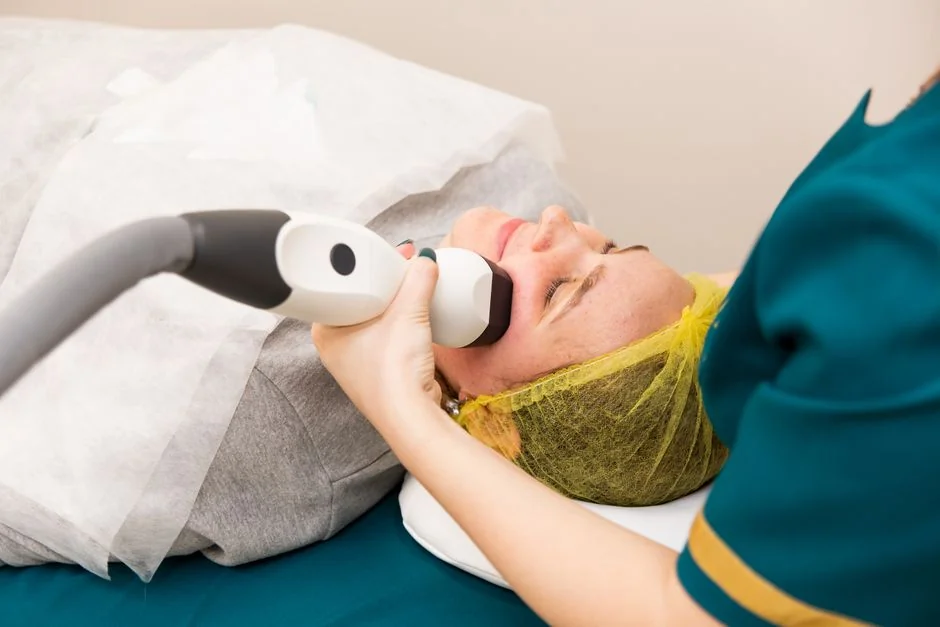
Clinical studies evaluating RFAL technology report meaningful improvements in skin laxity and contour. A peer-reviewed study published in the Journal of Cosmetic and Laser Therapy found that radiofrequency-assisted lipolysis produced measurable skin contraction and patient-reported satisfaction rates above 85% in treated areas, with results continuing to develop for up to six months post-procedure. A separate clinical report indicated that combined RFAL and RF microneedling protocols produced greater surface texture improvement than either modality alone — findings relevant to the growing popularity of FaceTite-plus-Morpheus8 combination sessions.
It is important to apply realistic expectations. FaceTite can meaningfully tighten mild to moderate jowling, improve jawline definition, and reduce submental (under-chin) laxity — areas that concern many patients in their 40s and 50s. However, it cannot replicate the structural repositioning achievable with surgery when laxity is pronounced. Results also vary based on skin quality, age, and individual healing response. No technology can guarantee a specific outcome.
Dr. Karibe’s Note
Many of our international patients are surprised to find that the decision between a minimally invasive approach and surgery is not simply about the level of bravery or tolerance for downtime — it is fundamentally about the degree of tissue laxity present. During a consultation, I assess the skin, the underlying SMAS layer, and the fat compartments to determine which modality is genuinely appropriate. For some patients, a device-based treatment will deliver excellent value; for others, attempting to treat with a device when surgery is truly needed only delays the result they want. An honest assessment at the outset saves both time and money.
Non-Surgical Alternatives Available in Tokyo
For patients who are not yet candidates for FaceTite, or who prefer entirely non-invasive options, several effective device-based treatments can improve skin firmness and contour. HIFU (High-Intensity Focused Ultrasound) is one of the most established non-invasive lifting modalities, delivering focused ultrasound energy to the SMAS layer without any skin entry point. At Kojimachi Dermatology & Plastic Surgery Clinic, HIFU is available from ¥25,000 to ¥110,000 depending on the area and number of shots — making it a practical entry point for patients exploring lifting technology. This is a treatment available at our Ichigaya clinic; feel free to ask about it during a consultation.
Morpheus8, an RF microneedling device, is another complementary option for patients with moderate skin texture concerns, mild laxity, and early jowling. It can also be used to maintain or enhance the results of a FaceTite procedure. Thread lifts — such as the Tesslift threads offered at the clinic from ¥48,000 per thread — represent a further minimally invasive option for patients seeking structural support without conventional surgery. A thorough consultation will help determine the most appropriate combination for each individual’s anatomy and goals.
Have a question about this treatment?
Message us on LINE or WhatsApp — our English-speaking team usually replies the same day.
What to Expect: Before, During, and After FaceTite
Before the Procedure
A thorough consultation is essential to assess skin laxity, fat distribution, and overall candidacy. Patients are typically advised to avoid blood-thinning medications and supplements (such as aspirin, ibuprofen, fish oil, and vitamin E) for a period before treatment, as these can increase bruising. Pre-treatment photographs are taken to enable objective comparison after the procedure. Patients with certain medical conditions — including active skin infections, uncontrolled diabetes, or implanted electronic devices near the treatment area — may not be suitable candidates.
During the Procedure
FaceTite is typically performed under local anaesthesia, sometimes combined with oral sedation for comfort. A small cannula (thin tube) carrying the internal RF electrode is inserted through millimetre-scale entry points beneath the skin, while the handpiece’s external electrode simultaneously contacts the skin surface. The device’s real-time temperature monitoring system helps the operator maintain tissue temperatures within a safe and effective range. The procedure for the face and neck usually takes one to two hours.
After the Procedure
Swelling, mild bruising, and tenderness are expected for several days following treatment. Most patients return to light daily activity within three to five days, though social downtime of up to one week is commonly recommended. A compression garment may be worn around the face and neck for one to two weeks to support the tissue as it heals and contracts. Full collagen remodelling — and therefore the final result — typically becomes apparent over three to six months.
Who Is a Good Candidate for FaceTite?
- Adults typically in their late 30s to 60s with mild to moderate facial and neck laxity
- Patients with early jowling, loss of jawline definition, or submental fullness
- Those seeking improvement without general anaesthesia or significant downtime
- Individuals with realistic expectations about the degree of change achievable
- Patients who are medically fit, non-smokers (or willing to stop smoking before and after), and in stable general health
Who Should Approach with Caution or Seek Surgical Assessment Instead
- Patients with significant, pronounced skin laxity who are likely to need SMAS repositioning for satisfactory results
- Those with a history of keloid scarring, as the tissue response to RF heat may be unpredictable
- Individuals with pacemakers or implanted electronic devices in or near the treatment area
- Pregnant or breastfeeding women
- Patients with active skin conditions, infections, or uncontrolled systemic conditions in the treatment area
In our clinical experience at Kojimachi Dermatology & Plastic Surgery Clinic, patients who achieve the most satisfying outcomes from device-based treatments are those who are assessed honestly at the outset — including being informed clearly when a surgical approach would better serve their goals.
Common Misconceptions About FaceTite and Minimally Invasive Facelifts
Misconception 1: “Minimally Invasive” Means No Recovery
One of the most frequent misunderstandings is that a minimally invasive procedure involves no downtime at all. FaceTite does require small skin entry points, local anaesthesia, and a healing phase. While recovery is significantly shorter than with surgery — most patients resume light social activity within a week — visible swelling and bruising are common during the first few days, and wearing a compression garment may be necessary for one to two weeks. Patients travelling to Tokyo for the procedure should factor this into their schedule accordingly.
Misconception 2: FaceTite Is Simply a “Non-Surgical Facelift” and Delivers the Same Results
Marketing language sometimes implies that FaceTite produces results equivalent to surgery, which is not an accurate characterisation. FaceTite is a genuinely useful treatment for the right candidate, but it cannot replicate the degree of tissue repositioning achievable through a surgical facelift when laxity is significant. The two approaches are complementary tools within a spectrum of care, not interchangeable alternatives. A board-certified plastic surgeon is well-placed to assess objectively which approach — or which combination — is most appropriate.
Frequently Asked Questions
- Q. Is FaceTite available at Kojimachi Dermatology & Plastic Surgery Clinic?
- The clinic offers a range of minimally invasive and surgical facial rejuvenation options, including HIFU, Morpheus8 RF microneedling, thread lifts, injectables, and surgical procedures performed by Dr. Karibe. For specific device availability and the most appropriate treatment pathway for your concerns, a personal consultation is recommended. The clinic’s team can assist English-speaking patients throughout the process.
- Q. How does FaceTite compare to HIFU for skin lifting?
- HIFU is entirely non-invasive, requires no skin entry points, and involves no anaesthesia, making it a suitable first step for patients with early laxity or those who prefer a truly non-invasive option. FaceTite involves small entry points and local anaesthesia, but delivers energy directly to the subdermal layer, which may produce greater contraction for patients with more established laxity. A consultation can help determine which modality — or combination — is appropriate for your specific anatomy.
- Q. How long do FaceTite results last?
- Published clinical data suggest that results from RF-assisted lipolysis are typically visible for one to three years, though this varies considerably based on the individual’s age, skin quality, lifestyle, and sun exposure habits. Ageing continues after any procedure, so maintenance treatments — such as HIFU, Morpheus8, or further injectables — may be used to prolong the effect. No treatment permanently halts the ageing process.
- Q. Can FaceTite be combined with injectables or other treatments?
- Yes. FaceTite addresses tissue laxity and contour, while injectables such as hyaluronic acid filler and Botox address volume loss and dynamic lines respectively — concerns that are distinct from structural laxity. Many patients benefit from a combined approach tailored to their individual facial anatomy. Your treating physician should assess the appropriate timing and sequencing of treatments to ensure safety and optimal results.
- Q. I am visiting Tokyo for a limited time. Is that sufficient for a FaceTite procedure?
- If you are visiting for a week or more, a FaceTite consultation and treatment may be feasible, as social downtime is typically three to seven days. However, it is important to attend a pre-procedure consultation, allow sufficient recovery time before flying, and arrange appropriate follow-up — ideally with a physician in your home country who can monitor healing. We recommend contacting the clinic in advance to plan a schedule that accommodates your stay safely.
Summary
FaceTite represents a meaningful development in the spectrum of facial rejuvenation options, offering a level of tissue tightening that sits between purely non-invasive devices such as HIFU and the more comprehensive correction achievable with a surgical facelift. For patients with mild to moderate jowling, early neck laxity, or loss of jawline definition who prefer to avoid general anaesthesia and extended downtime, studies suggest it can deliver visible and lasting improvement. For patients with more advanced laxity, a surgical consultation remains the most appropriate first step.
The most reliable outcomes in facial rejuvenation consistently follow from an honest, thorough assessment by a qualified practitioner — one who is able to offer both device-based and surgical options, and who prioritises the patient’s long-term result over any single modality. At our clinic in Ichigaya, Tokyo, we frequently see patients who have done considerable research before their first consultation and are well-prepared to discuss their options; this kind of informed engagement leads to better outcomes and greater satisfaction.
If you have questions about FaceTite vs surgical facelift options in Tokyo, our team at Kojimachi Dermatology & Plastic Surgery Clinic in Ichigaya, Tokyo would be happy to help. We offer consultations in English.
24/7 Consultation & Booking
Book a Consultation or Treatment
Our English-speaking team responds via LINE or WhatsApp — usually the same day.
References
- Theodorou S, Rajab J, Chia C, Chapas A. Radiofrequency-assisted lipolysis for neck and lower face laxity: clinical outcomes study. Journal of Cosmetic and Laser Therapy. 2018.
- Paul MD. Radiofrequency assisted lipolysis (RFAL) for facial contouring and skin tightening: a multi-centre study. Aesthetic Surgery Journal. 2013.
- Mulholland RS. Combining radiofrequency-assisted lipolysis with fractional radiofrequency microneedling: safety and efficacy outcomes. Lasers in Surgery and Medicine. 2020.
- Dayan E, Burns AJ, Rohrich RJ, Theodorou S. The use of radiofrequency in aesthetic surgery. Plastic and Reconstructive Surgery Global Open. 2020.
- Sulamanidze M, Salti G. Thread lifts and minimally invasive facial rejuvenation: evidence review and patient selection. Journal of Drugs in Dermatology. 2019.
Related Articles
You may also find these articles useful.
- Skin Tightening Treatment Tokyo: Options and Cost
- How to Treat Facial Sagging: HIFU, RF Microneedling, Fillers, and Facelift Options Explained
- HIFU in Tokyo: Non-Surgical Skin Tightening Explained
SUPERVISED BY
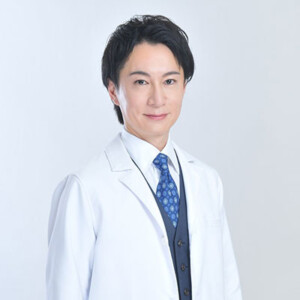
Dr. Jun Karibe
MD
Director
Education & Career
Certifications
Awards
MEDICAL REVIEW