IV Vitamin Drip in Tokyo: A Wellness Guide for Expats and Visitors

Living abroad brings its own set of physical demands — irregular schedules, frequent long-haul flights, unfamiliar food, and the low-grade stress of navigating daily life in a new country.
If you have been feeling persistently fatigued, run-down, or simply not your best, you are far from alone. This guide explains what IV vitamin drip therapy is, how it works, what results are realistic, and what to expect at a clinic in Tokyo.
What you’ll learn in this article:
- What IV vitamin drip therapy is and how it differs from oral supplements
- Which formulas are commonly available in Tokyo (vitamin C, glutathione, and others)
- Realistic expected results and the evidence behind them
- Typical costs in Tokyo and what affects the price
- Who is a good candidate — and who should seek medical advice before proceeding
Have a question about this treatment?
Message us on LINE or WhatsApp — our English-speaking team usually replies the same day.
What Is IV Vitamin Drip Therapy?

Intravenous (IV) vitamin drip therapy — sometimes called IV nutrient therapy or orthomolecular infusion therapy — delivers vitamins, minerals, antioxidants, and amino acids directly into the bloodstream through a small cannula placed in a vein, usually in the arm.
Because the nutrients bypass the digestive system entirely, they reach cells at concentrations that are simply not achievable through oral supplementation alone.
The concept was popularised in the 1970s by the American physician John Myers, whose “Myers’ Cocktail” combined magnesium, calcium, B vitamins, and vitamin C. Modern formulations have since evolved considerably, and clinics in Tokyo now offer targeted drips designed for specific goals — immune support, skin brightening, energy recovery, antioxidant loading, and more.
How It Differs from Oral Supplements
When you take a vitamin C tablet, only a fraction of the dose is absorbed; at doses above roughly 200 mg, intestinal absorption becomes saturated and the rest is excreted. Intravenous delivery sidesteps this limitation entirely. Studies suggest that plasma vitamin C concentrations achieved via intravenous infusion can be 30 to 70 times higher than those reached through the same oral dose — a difference that is clinically meaningful for antioxidant and tissue-repair applications.
This pharmacokinetic advantage does not mean IV drips are a substitute for a balanced lifestyle, but it does explain why many patients notice effects that oral vitamins never produced for them.
Common IV Drip Formulas Available in Tokyo
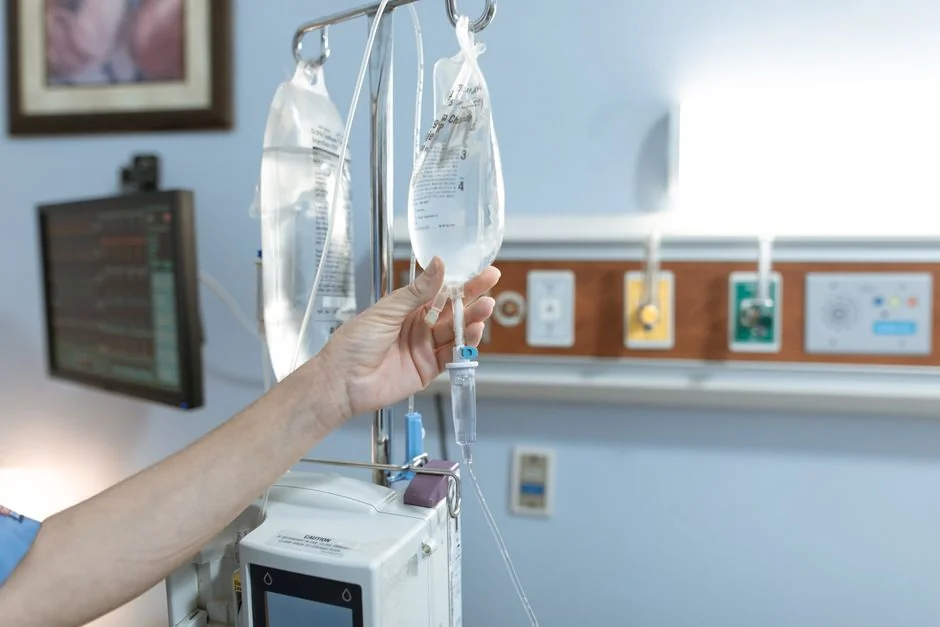
Clinics in Tokyo typically offer a menu of formulations, sometimes called “cocktails,” each combining nutrients for a specific purpose. The following table gives an overview of the most frequently requested options.
| Formula | Key Ingredients | Primary Goals | Session Duration (approx.) |
|---|---|---|---|
| High-dose Vitamin C | Ascorbic acid (12.5 g – 25 g+) | Antioxidant loading, immune support, collagen synthesis | 45 – 90 min |
| Glutathione | Reduced glutathione | Skin brightening, liver support, detoxification | 20 – 40 min |
| Myers’ Cocktail | Magnesium, B vitamins, vitamin C, calcium | Fatigue, immune function, mild inflammatory conditions | 30 – 60 min |
| B-complex / Energy | B1, B2, B3, B5, B6, B12 | Energy metabolism, jet-lag recovery, neurological support | 20 – 45 min |
| Amino Acid / Recovery | Essential and branched-chain amino acids | Muscle recovery, metabolic support | 45 – 60 min |
| NAD+ | Nicotinamide adenine dinucleotide | Cellular energy, anti-ageing metabolism | 60 – 120 min |
At BIOTOPE CLINIC or Kojimachi Dermatology & Plastic Surgery Clinic, IV drip therapy — including vitamin C and glutathione infusions — is offered as part of a broader preventive medicine and orthomolecular (nutritional) therapy programme. This is a treatment available at our clinic — feel free to ask about it during a consultation.
Expected Results: What the Evidence Says
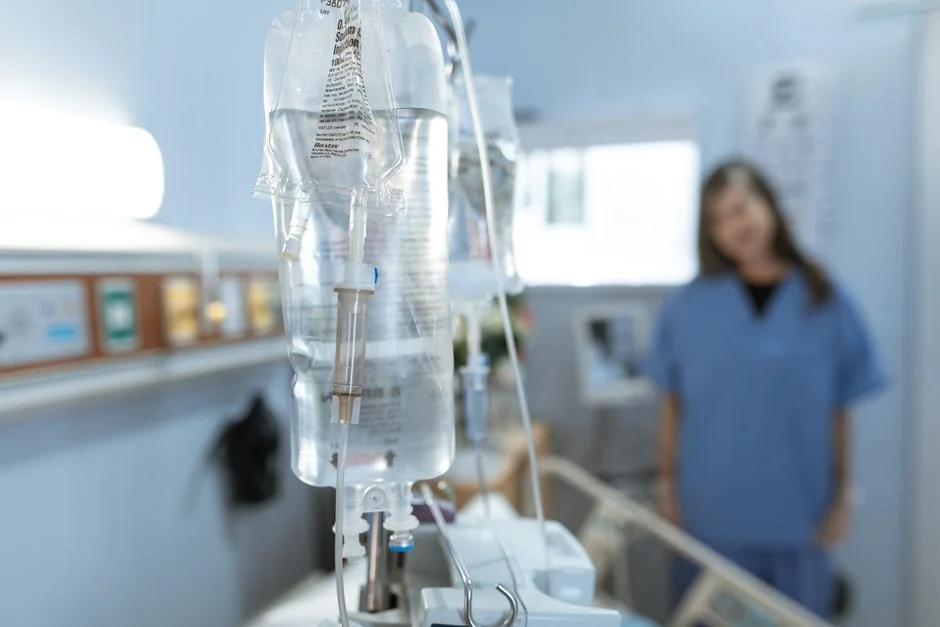
Clinical reports indicate that patients receiving regular high-dose intravenous vitamin C infusions often report measurable improvements in subjective fatigue scores and overall sense of wellbeing.
A 2012 study published in In Vivo reported that 45 cancer patients receiving IV vitamin C therapy noted significant reductions in fatigue, nausea, and pain compared with baseline — though it is important to note this was a specific patient population and results in otherwise healthy individuals may differ.
For glutathione, studies suggest a brightening effect on skin tone with repeated sessions, attributed to its inhibition of the enzyme tyrosinase, which plays a central role in melanin production.
However, results vary between individuals and are generally gradual — typically visible after a course of four to eight sessions rather than a single infusion.
What Patients Commonly Notice
- Improved energy levels and reduced mental fatigue within 24 – 48 hours of a session
- Better sleep quality, particularly after B-vitamin or magnesium-based infusions
- A clearer, more even skin tone with repeated glutathione sessions
- Faster recovery from jet lag or periods of intense work or travel
- Strengthened sense of immune resilience during seasonal changes
It must be emphasised that IV nutrient therapy is a wellness support measure, not a treatment for diagnosed illness. Individual responses vary considerably based on baseline nutritional status, lifestyle, and the specific formula used.
Dr. Karibe’s Note
Many of our international patients are surprised to find that IV vitamin therapy in Japan is administered in a medical clinic setting, with a doctor-led consultation beforehand.
This is a meaningful difference from the “drip bars” seen in some countries.
At our clinic, we review each patient’s health history before recommending a formula — because the right infusion for one person may not be appropriate for another, particularly where kidney function or glucose metabolism is a consideration.
IV Drip Therapy Cost in Tokyo
Pricing for IV drip therapy in Tokyo varies depending on the formula, concentration, and volume of nutrients used. As a general guide, entry-level Myers’ Cocktail or B-vitamin drips typically begin in the range of ¥5,000 – ¥15,000 per session at many Tokyo clinics. High-dose vitamin C infusions (25g and above) or NAD+ drips, which require longer infusion times and higher-grade preparation, tend to range from ¥20,000 to ¥50,000 or more per session.
Glutathione infusions in Tokyo commonly fall in the ¥8,000 – ¥25,000 range per session, depending on dosage. Many patients opt for a course of sessions (typically four to eight) at a package rate, which often represents better overall value than single-session pricing.
An initial consultation at BIOTOPE CLINIC or Kojimachi Dermatology & Plastic Surgery Clinic is ¥3,300. For an accurate quote, we recommend booking a consultation so that the appropriate formula and course length can be assessed for your individual needs.
Have a question about this treatment?
Message us on LINE or WhatsApp — our English-speaking team usually replies the same day.
What to Expect: Before, During, and After Your Session

Before Your Session
A medical consultation is conducted prior to your first infusion. This typically involves a review of your health history, current medications, and any known allergies or sensitivities.
For high-dose vitamin C therapy, a glucose-6-phosphate dehydrogenase (G6PD) screening may be recommended, as individuals with this enzyme deficiency are at risk of red blood cell complications at very high ascorbic acid doses.
You will be advised to eat a light meal and stay well hydrated before arriving. Arriving fasted is generally not recommended.
During the Infusion
You will be seated comfortably in a clinical chair. A small, fine-gauge cannula is inserted into a vein in the forearm or the back of the hand. The infusion is delivered via gravity or a controlled-rate pump, depending on the formula. Most patients find the experience relaxing; it is common to read, listen to music, or rest during the session.
Mild warmth or a slight metallic taste may occasionally be noticed, particularly with high-dose vitamin C or magnesium-containing drips — this is normal and temporary.
After Your Session
There is no downtime. Most patients return to normal activities immediately. A small bruise at the cannula site occasionally develops but typically resolves within a few days. Staying well hydrated for the remainder of the day is generally advised. Some patients feel an immediate lift in energy; for others, the effect builds over the following 24 – 48 hours.
Common Misconceptions About IV Vitamin Drips
Misconception 1: “More is always better”
It is tempting to assume that a higher dose automatically produces a better outcome. In practice, nutrient therapy should be calibrated to individual need. Exceeding safe thresholds for certain nutrients — particularly fat-soluble vitamins and minerals such as zinc — can cause adverse effects. A medically supervised approach, where the formula is based on your health profile rather than a standard menu, is meaningfully safer and more effective.
Misconception 2: “IV drips are a quick fix for poor nutrition or chronic illness”
IV vitamin therapy works best as part of a broader wellness strategy that includes diet, sleep, and stress management. Clinical reports indicate it is most effective when used to address specific, identifiable gaps — such as post-illness recovery, chronic fatigue with documented nutritional deficiency, or the cumulative demands of frequent international travel — rather than as a substitute for foundational lifestyle habits. It is also not a treatment for diagnosed medical conditions and should not replace appropriate medical care.
Who Is a Good Candidate?
In our clinical experience at BIOTOPE CLINIC or Kojimachi Dermatology & Plastic Surgery Clinic, the patients who tend to benefit most from IV nutrient therapy are those experiencing one or more of the following:
- Persistent fatigue not explained by a diagnosed condition
- Recovery from illness, surgery, or a period of intense physical or mental stress
- Frequent long-haul travel or significant time-zone changes
- Difficulty maintaining a balanced diet due to a demanding work schedule
- Interest in skin brightening or antioxidant support as part of a broader aesthetic wellness programme
- Those wishing to complement existing preventive medicine approaches, such as NMN supplementation or gut microbiome management
Who Should Seek Medical Advice Before Proceeding
IV drip therapy is not appropriate for everyone without prior medical review. The following groups should discuss their suitability with a doctor before booking a session:
- Individuals with kidney disease or a history of kidney stones (high-dose vitamin C increases oxalate load)
- Those with G6PD deficiency (see above)
- Patients with congestive heart failure or fluid-retention conditions (IV fluids increase circulating volume)
- Pregnant or breastfeeding individuals
- Those currently taking medications with known nutrient interactions (e.g. certain chemotherapy agents)
- Anyone with a known allergy to any component of the planned infusion
Frequently Asked Questions
- Q. How many sessions are typically needed to see results?
- For energy and immune support, some patients notice an effect after a single session. For aesthetic goals such as skin brightening with glutathione, a course of four to eight sessions is generally recommended, with maintenance sessions thereafter. The optimal number varies by individual and is best discussed during a consultation.
- Q. Is IV vitamin drip therapy painful?
- The insertion of the cannula involves a brief, mild sting comparable to a standard blood draw. Once in place, the infusion itself is generally painless. Patients occasionally notice a mild warmth or pressure sensation with certain formulas, which is temporary and harmless.
- Q. Can I combine IV drip therapy with other clinic treatments on the same day?
- In many cases, yes — IV nutrient therapy pairs well with a range of wellness and cosmetic treatments. However, the suitability of combining treatments on the same visit depends on the specific procedures involved and your individual health status. Please raise this question at your consultation so the team can advise appropriately.
- Q. Is the treatment available in English at your clinic?
- Yes. BIOTOPE CLINIC or Kojimachi Dermatology & Plastic Surgery Clinic offers consultations in English, and the team is experienced in supporting international patients. All pre-treatment instructions and aftercare guidance can be provided in English.
- Q. How does IV vitamin C relate to skin health?
- Vitamin C (ascorbic acid) is a co-factor in collagen synthesis, meaning it plays a direct role in the structural integrity of the skin. High circulating levels also support the neutralisation of free radicals generated by UV exposure and environmental pollution. For patients interested in combining IV therapy with topical skin care, the clinic also offers Zo Skin Health products — feel free to ask about this during a consultation.
Have a question about this treatment?
Message us on LINE or WhatsApp — our English-speaking team usually replies the same day.
Summary
IV vitamin drip therapy offers a clinically grounded approach to wellness support for expats, frequent travellers, and anyone seeking to address specific nutritional gaps that oral supplementation may not fully meet. The evidence base supports its use for fatigue recovery, antioxidant loading, and — with repeated sessions — skin brightening, though individual results vary and the therapy is best understood as a complement to, not a replacement for, a healthy lifestyle.
In Tokyo, the treatment is widely available and, when administered in a medical clinic by trained staff under physician supervision, carries a strong safety profile for the majority of healthy adults. Pricing is broadly accessible, and the absence of any downtime makes it a practical option even for those with demanding schedules.
If you have questions about IV vitamin drip therapy in Tokyo, our team at Kojimachi Dermatology & Plastic Surgery Clinic in Ichigaya, Tokyo would be happy to help. We offer consultations in English.
24/7 Consultation & Booking
Book a Consultation or Treatment
Our English-speaking team responds via LINE or WhatsApp — usually the same day.
References
- Padayatty SJ, Sun H, Wang Y, et al. Vitamin C pharmacokinetics: implications for oral and intravenous use. Annals of Internal Medicine. 2004;140(7):533–537.
- Takahashi H, Mizuno H, Yanagisawa A. High-dose intravenous vitamin C improves quality of life in cancer patients. Personalized Medicine Universe. 2012;1(1):49–53.
- Sonthalia S, Daulatabad D, Sarkar R. Glutathione as a skin whitening agent: facts, myths, evidence and controversies. Indian Journal of Dermatology, Venereology and Leprology. 2016;82(3):262–272.
- Riordan HD, Hunninghake RB, Riordan NH, et al. Intravenous ascorbic acid: protocol for its application and use. Puerto Rico Health Sciences Journal. 2003;22(3):287–290.
- Gaby AR. Intravenous nutrient therapy: the “Myers’ cocktail.” Alternative Medicine Review. 2002;7(5):389–403.
SUPERVISED BY
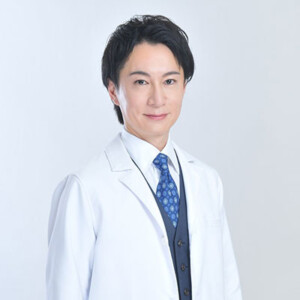
Dr. Jun Karibe
MD
Director
Education & Career
Certifications
Awards
MEDICAL REVIEW