Persistent facial redness, flushing that will not settle, and acne-like bumps that do not respond to acne products can be genuinely wearing — especially when you are living in or visiting Japan and unsure how the medical system here handles it. Rosacea is a recognised, treatable chronic skin condition, and Japan has had an officially approved prescription treatment for it since 2022.
This guide explains what rosacea is, which treatments Japanese dermatology guidelines actually recommend, what they cost in Tokyo, and how to access care in English.
What you’ll learn in this article:
- The four clinical patterns of rosacea and why treatment differs for each
- Which treatments the Japanese Dermatological Association’s 2023 guideline recommends, and how strongly
- What rosacea care realistically costs in Tokyo, and which parts fall outside insurance
- Two widespread misunderstandings that lead people to the wrong treatment
- Where to arrange an English-speaking consultation in Tokyo
Have a question about this treatment?
Message us on LINE or WhatsApp — our English-speaking team usually replies the same day.
What Is Rosacea?
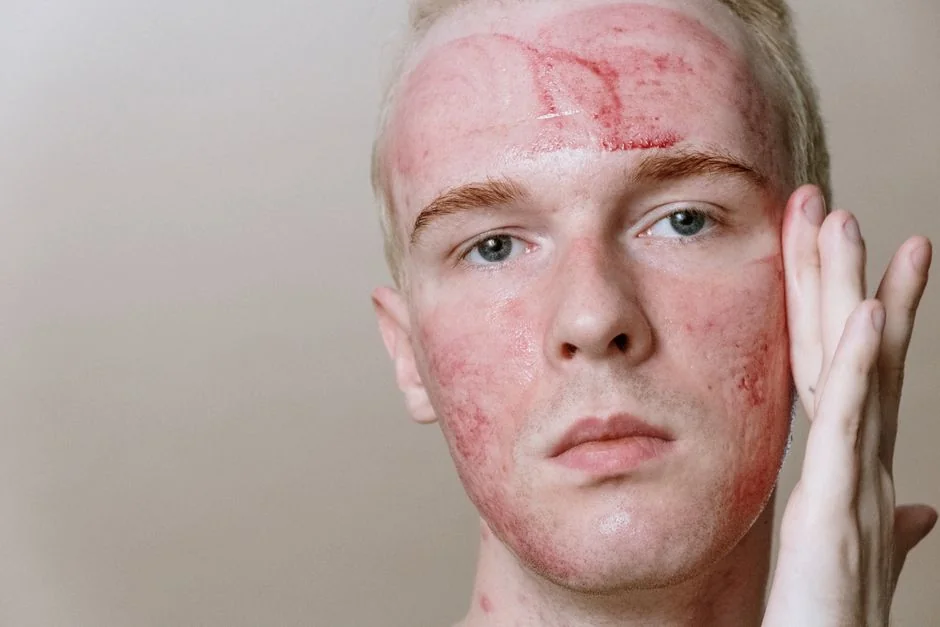
Rosacea (Japanese: 酒皶 / shusa) is described in the Japanese Dermatological Association’s guideline as a chronic inflammatory disease of unknown cause, arising mainly on the face of middle-aged and older adults. Its central features are redness (erythema), visible dilated capillaries, and a sensation of flushing or heat.
It is common. A systematic review and meta-analysis pooling 32 studies covering more than 26 million people estimated rosacea in 5.46% of the general adult population (95% CI 4.91–6.04), with a higher figure in women (5.41%) than men (3.90%), and a peak between roughly 45 and 60 years of age.
The four patterns
Japanese guidelines follow the international symptom-based classification introduced in 2002, and describe four patterns that may occur alone or in combination:
- Erythematotelangiectatic (stage 1): persistent redness and visible small blood vessels, with flushing as the dominant complaint.
- Papulopustular (stage 2): acne-like papules and pustules — but, importantly, without comedones (blackheads and whiteheads).
- Phymatous / rhinophyma (stage 3): thickened, nodular skin, most characteristically on the nose.
- Ocular rosacea: redness or inflammation of the eyelids and conjunctiva. The guideline states plainly that there is currently no consensus treatment for the ocular form, which is why an ophthalmology referral matters.
Recognised aggravating factors listed in the guideline include ultraviolet exposure, abrupt changes in ambient temperature, spicy foods and alcohol intake — all of which are relevant to Tokyo’s humid summers and heated winter interiors.
How Rosacea Is Treated in Japan
Japan’s reference document is the Acne Vulgaris and Rosacea Treatment Guideline 2023, published by the Japanese Dermatological Association in its official journal. It grades each option: A means strongly recommended, C1 means reasonable as one option among several, and C2 means it may be performed but is not recommended as a general rule.
Topical treatment
The clear first-line agent for papulopustular rosacea is 0.75% metronidazole gel, the only option carrying a grade A recommendation. Metronidazole received approval from Japan’s Ministry of Health, Labour and Welfare for the rosacea indication on 26 May 2022, following a domestic development request; it is a prescription drug handled within insured dermatology care.
The Japanese registration study behind that approval was a 12-week randomised, vehicle-controlled phase 3 trial in 130 patients aged 18 and over with papulopustular rosacea. Twice-daily 0.75% metronidazole gel produced either a greater-than-50% reduction in inflammatory lesion count or improvement in erythema severity in 72.3% of cases, a significant difference versus vehicle, with the effect maintained across the 12 weeks. Reported adverse events were confined to local skin reactions; no systemic or serious adverse events were observed.
Two caveats the guideline is explicit about: safety in patients under 18 has not been established, and there are no data showing efficacy against the erythematotelangiectatic or phymatous forms.
Oral treatment
Oral tetracyclines — doxycycline, minocycline and tetracycline — are graded C1 for papulopustular rosacea, meaning they can be offered as one option. The guideline notes candidly that good-quality Japanese evidence is lacking, and that the 40 mg modified-release doxycycline approved for rosacea overseas is not the same product as the 50 mg tablets available domestically.
Light and laser treatment
For the redness-and-visible-vessels pattern, the guideline gives a C1 recommendation to pulsed dye laser (595 nm), long-pulsed Nd:YAG laser (1,064 nm) and intense pulsed light (IPL) as one option. A systematic review cited in the guideline reported that IPL significantly reduced both telangiectasia and erythema, with effects comparable to pulsed dye laser.
The guideline is equally clear about the limits: protocols are not standardised, devices differ in wavelength and energy density, long-term follow-up data are limited, and these treatments are not covered by insurance for rosacea-related telangiectasia in Japan. It advises thorough informed consent covering individual variation in response and the possibility of recurrence.
Comparison of the main options
| Option | Mainly targets | JDA 2023 grade | Status in Japan |
|---|---|---|---|
| 0.75% metronidazole gel (topical) | Papules and pustules | A — strongly recommended | Approved for rosacea 26 May 2022; prescription, insured care |
| Azelaic acid (topical) | Papules and pustules | C1 — one option | Sold in Japan as a cosmetic, not approved as a drug for rosacea |
| Sulfur–camphor lotion (topical) | Papules and pustules | C2 — not recommended as a rule | Long-standing insurance coverage, but no evidence meeting current standards |
| Oral doxycycline / minocycline / tetracycline | Papules and pustules | C1 — one option | Domestic evidence in rosacea is limited |
| Pulsed dye laser, long-pulsed Nd:YAG, IPL | Redness, visible vessels | C1 — one option | Self-pay; not insured for rosacea telangiectasia |
| Surgery, CO2 laser, Nd:YAG for rhinophyma | Thickened nasal skin | C2 — not recommended as a rule | Considered case by case |
| Sun protection, low-irritant cleanser, moisturiser | All patterns | C1 — one option | Advised alongside any medical treatment |
Cost of Rosacea Treatment in Tokyo
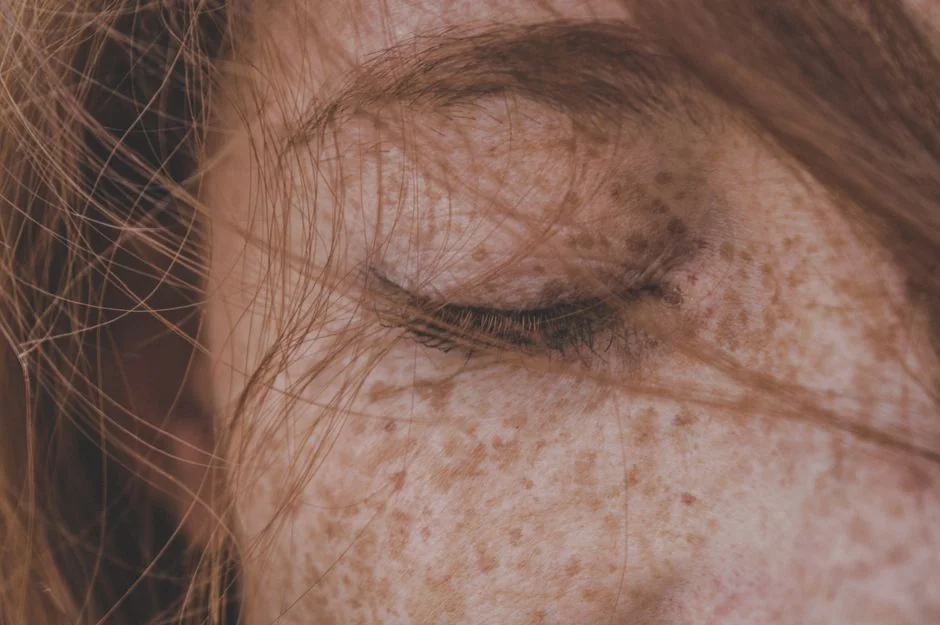
Costs split into two very different categories. Prescription treatment for the papulopustular form — the metronidazole gel route — is delivered through insured dermatology, so the patient pays only the statutory co-payment on the consultation and the medicine.
Light-based treatment for redness and visible vessels sits outside insurance and is billed privately. On our group’s current official price page, the photofacial (IPL, M22 platform) is listed at 28,000 yen per full-face session, or 126,000 yen for a five-session course, tax included. Initial and follow-up consultation is listed at 3,300 yen, and a cosmetic surgery counselling session with Dr. Karibe at 2,200 yen.
Prices are revised from time to time, and the number of sessions any individual needs varies. Please see the clinic’s official price page or contact us for a current quote. For an accurate quote, please book a consultation.
Have a question about this treatment?
Message us on LINE or WhatsApp — our English-speaking team usually replies the same day.
What People Often Get Wrong About Rosacea
“It’s just adult acne, so acne products should fix it.”
The Japanese guideline treats acne and rosacea as separate conditions with separate clinical questions and separate first-line drugs. The distinguishing feature described in the guideline is that papulopustular rosacea produces acne-like papules and pustules without comedones. Acne’s first-line topicals — adapalene and benzoyl peroxide — are not the recommended answer for rosacea, where 0.75% metronidazole gel carries the grade A recommendation. Continuing to self-treat with acne products, or with facial topical steroids, can prolong the problem rather than settle it.
“That cream is FDA-approved, so I can get it here.”
US and Japanese approvals are separate systems. Ivermectin 1% cream (Soolantra) was approved by the US Food and Drug Administration on 23 December 2014 for the inflammatory lesions of rosacea. In Japan, the picture is different: the 2023 guideline discusses ivermectin only as an oral option graded C2, stating that as of January 2022 there was no good-quality evidence to recommend it, and the PMDA’s list of newly approved drugs for April 2025 to March 2026 contains no topical ivermectin product and no new product approved for rosacea. If a clinic offers an overseas product, ask the prescribing doctor directly about its regulatory and reimbursement status before starting.
Who Is a Good Candidate — and Who Should Be Cautious

Prescription topical treatment suits adults with the papulopustular pattern, where the trial evidence is strongest. Light-based treatment is aimed at a different problem: fixed redness and visible vessels that topicals do not clear.
Be cautious, or seek a fuller assessment first, if you are under 18 (metronidazole gel safety in this group is not established), pregnant or breastfeeding, taking oral tetracyclines while pregnant or in childhood, have eye involvement requiring ophthalmology input, or have rhinophyma, where the guideline recommends individualised rather than routine treatment. Facial redness also has other causes — seborrhoeic dermatitis, lupus, contact dermatitis, and rosacea-like dermatitis — so a diagnosis before treatment matters.
At BIOTOPE CLINIC in Shirokanedai, an English-speaking consultation with Dr. Karibe starts by establishing which of the four patterns is dominant, because the guideline’s recommendations diverge sharply between them. Light-based options such as the photofacial (IPL) listed on our official price page are available at BIOTOPE — feel free to ask about them during a consultation with Dr. Karibe.
Where to Get Rosacea Treatment in Tokyo
Within our clinic group, English-speaking consultations are handled at BIOTOPE CLINIC in Shirokanedai (Minato-ku, Tokyo) by Dr. Jun Karibe. Our sister clinic Kojimachi Dermatology & Plastic Surgery Clinic in Ichigaya handles Japanese-language insurance dermatology. Bookings and enquiries in English: LINE or WhatsApp.
Bring a note of what you have already tried — including any over-the-counter or overseas products — and any photographs of flare-ups, since rosacea often looks calmer in a clinic room than it does at home.
Frequently Asked Questions
- Q. Is rosacea contagious?
- No. Rosacea is not caused by bacteria or a virus that can spread person-to-person. It is a chronic inflammatory skin condition influenced by genetic predisposition, vascular reactivity, and environmental triggers.
- Q. How long before I see results from metronidazole gel or ivermectin cream?
- Most patients see visible improvement in inflammatory papules and pustules within 4 to 8 weeks of consistent daily use. The Miyachi 2022 phase 3 study measured its primary endpoint at 12 weeks. Long-term maintenance typically continues for months.
- Q. Can I wear makeup during rosacea treatment?
- Yes, in most cases. Choose fragrance-free, non-comedogenic products and apply them after the prescribed topical medication has fully absorbed. Avoid alcohol-based toners and physical scrubs that can trigger flushing.
- Q. Does Japanese health insurance cover rosacea treatment?
- Insurance covers metronidazole gel (Rozex) since its rosacea indication was added on 26 May 2022, and covers consultations with a dermatologist for diagnosis. Photofacial (IPL) for background redness and telangiectasia is considered cosmetic and is self-pay.
- Q. Do I need to stop my current skincare routine before the consultation?
- No. Bring your current products or a list of them to the appointment. The dermatologist will identify potential triggers (retinoids, exfoliating acids, high-concentration vitamin C) and adjust your routine rather than asking you to stop everything at once.
Summary
Rosacea affects an estimated 5.46% of adults worldwide and is a recognised, treatable condition rather than something to manage alone. In Japan, 0.75% metronidazole gel is the only topical with a grade A recommendation for the papulopustular form and has held an approved rosacea indication since May 2022; laser and IPL are reasonable self-pay options for fixed redness and visible vessels, with realistic expectations about variation and recurrence.
The most useful first step is a diagnosis that identifies which pattern is driving your symptoms, since that determines whether the answer is a prescription, a light-based treatment, or both.
If you have questions about rosacea treatment, English-speaking consultations are handled at BIOTOPE CLINIC in Shirokanedai (Minato-ku, Tokyo) by Dr. Karibe. Our sister clinic Kojimachi Dermatology & Plastic Surgery Clinic in Ichigaya (Chiyoda-ku) handles Japanese-language insurance dermatology. English enquiries: LINE or WhatsApp.
24/7 Consultation & Booking
Book a Consultation or Treatment
Our English-speaking team responds via LINE or WhatsApp — usually the same day.
References
- 尋常性痤瘡・酒皶治療ガイドライン策定委員会. 尋常性痤瘡・酒皶治療ガイドライン2023. 日本皮膚科学会雑誌. 2023; 133(3): 407–450. https://www.dermatol.or.jp/
- Miyachi Y, Yamasaki K, Fujita Y, Fujii C. Metronidazole gel (0.75%) in Japanese patients with rosacea: a randomized, vehicle-controlled, phase 3 study. Journal of Dermatology. 2022; 49: 330–340. Journal of Dermatology
- Gether L, Overgaard LK, Egeberg A, Thyssen JP. Incidence and prevalence of rosacea: a systematic review and meta-analysis. British Journal of Dermatology. 2018; 179(2): 282–289. British Journal of Dermatology
- Japanese Dermatological Association. Addition of the “rosacea” indication for metronidazole (Rozex Gel 0.75%). Association announcement. 2022. https://www.dermatol.or.jp/
- U.S. Food and Drug Administration. Soolantra (ivermectin) Cream, 1%: approval for the topical treatment of inflammatory lesions of rosacea, December 2014. https://www.fda.gov/
Related Articles
You may also find these articles useful.
- English-Speaking Dermatologist Tokyo for Rosacea
- Rosacea Treatment Tokyo Clinic Guide: Costs & Options
- Adult Acne and Rosacea in Tokyo: The Gut-Skin Connection
- Sensitive Skin Care Tokyo: English-Speaking Dermatologist
- English Speaking Dermatologist Tokyo: Complete Guide
SUPERVISED BY
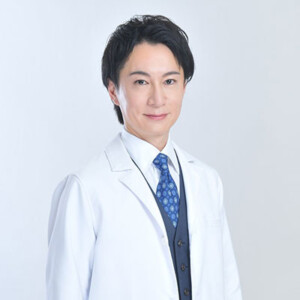
Dr. Jun Karibe
MD
Director
Education & Career
Certifications
Awards
MEDICAL REVIEW