What Acne Scars Are — and What Laser Treatment Can Realistically Change
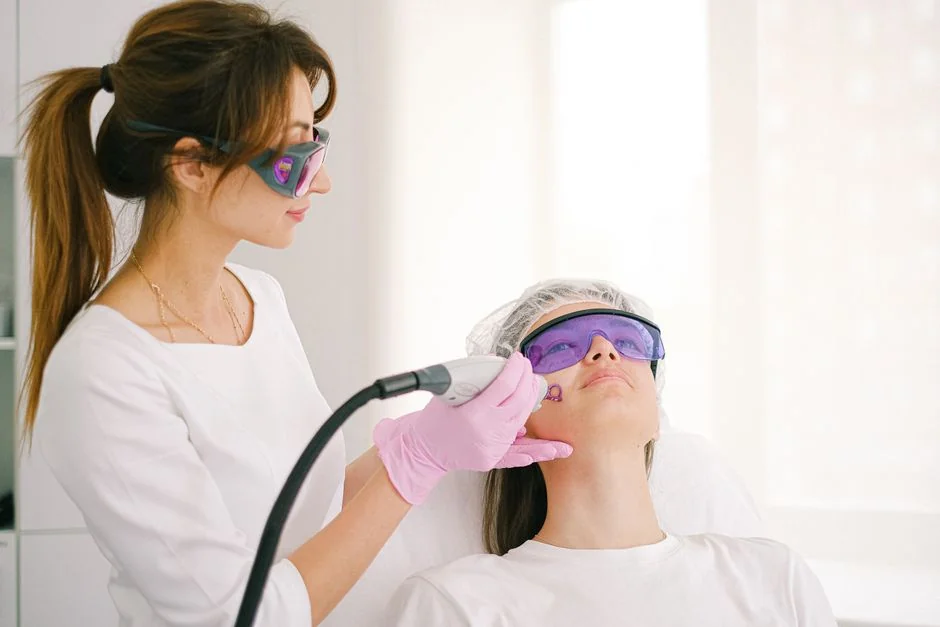
Living with acne scars can be exhausting in a way that is hard to explain to people who have never had them: the acne itself cleared years ago, yet the texture it left behind still catches the light in every mirror and every photograph. If you are in Tokyo and trying to work out whether laser treatment is worth the cost, this article sets out what the published evidence actually shows, what the treatment costs at our clinic group, and how long recovery realistically takes.
What you’ll learn in this article:
- The difference between true atrophic acne scars and flat post-acne discolouration — and why it changes the treatment plan
- How ablative fractional CO2 laser, picosecond fractional laser and RF microneedling differ in mechanism, downtime and pigmentation risk
- What clinical studies report for improvement rates, session numbers and side effects
- Published costs at our Tokyo clinic group, and why acne scar laser treatment is not covered by Japanese health insurance
- Who is a good candidate, and who should postpone treatment
Have a question about this treatment?
Message us on LINE or WhatsApp — our English-speaking team usually replies the same day.
According to the American Academy of Dermatology, a flat spot of colour left behind after a breakout is usually not a scar — it is post-inflammatory pigmentation or erythema, and it typically fades on its own. A true scar is a change in the skin’s collagen architecture: a depression where too little collagen formed, or a raised lesion where too much did.
Depressed (atrophic) acne scars are conventionally grouped into three shapes: ice pick scars, which are narrow but reach deep into the skin; boxcar scars, which form round or oval depressions with defined edges; and rolling scars, which are wide and shallow and give the skin a wavy surface. Laser treatment addresses the depressed types; flat brown or red marks are usually managed differently.
Scarring is also more common than many people assume. A 2023 systematic review and meta-analysis pooling 37 studies and 24,649 acne patients reported an overall acne scar prevalence of 47 per cent, with higher odds among men, those with a family history, and those with moderate or severe acne.
How Acne Scar Laser Treatment Works
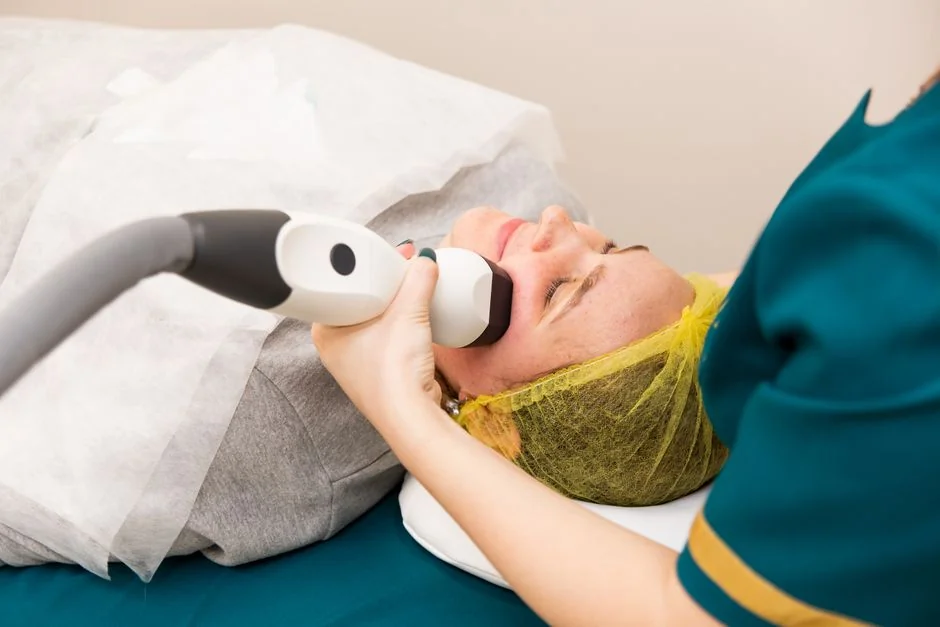
All of the device-based options work on the same broad principle: create thousands of tiny, controlled zones of injury in the dermis, leaving untreated skin in between so healing is faster. That controlled injury triggers collagen remodelling, which gradually lifts the floor of a depressed scar.
Ablative fractional CO2 laser
An ablative laser vaporises microscopic columns of tissue. This is the most tissue-disruptive of the three approaches, which is why it is often selected for deeper boxcar and rolling scars — and also why it carries the longest recovery. CO2 fractional laser is available at BIOTOPE CLINIC in Shirokanedai; it is worth asking about it directly during a consultation with Dr. Karibe.
Picosecond fractional laser
A picosecond laser delivers energy in extremely short pulses through a fractionated lens, creating injury within the dermis while largely sparing the surface. Downtime is shorter, but the Japanese Dermatological Association’s 2023 guideline notes that ablative fractional lasers have tended to show a greater degree of improvement than non-ablative devices in comparative work.
RF microneedling
Radiofrequency microneedling passes fine needles into the dermis and delivers heat from their tips, so the epidermis takes much less of the energy. The 2023 Japanese guideline cites a randomised split-face comparison in which fractional RF was effective and not significantly different from non-ablative fractional laser for atrophic scars.
| Approach | Mechanism | Typical course reported in studies | Downtime reported | Pigmentation risk in skin types III–IV |
|---|---|---|---|---|
| Ablative fractional CO2 laser | Vaporises microcolumns of tissue; strongest collagen remodelling stimulus | Around 3–4 sessions at 4–6 week intervals | Approximately 5 days in one comparative study | Post-inflammatory hyperpigmentation reported in 12.5% of the CO2 group in a 32-patient study |
| Picosecond / non-ablative fractional laser | Dermal injury with the skin surface largely intact | Multiple sessions; effect assessed at 1–6 months | Shorter; surface largely preserved | Generally lower than ablative, but not zero |
| RF microneedling | Heat delivered from needle tips into the dermis | Around 3–4 sessions | Return to work the next day in one comparative study | No cases in the RF group of that same 32-patient study |
Expected Results, Sessions and Downtime
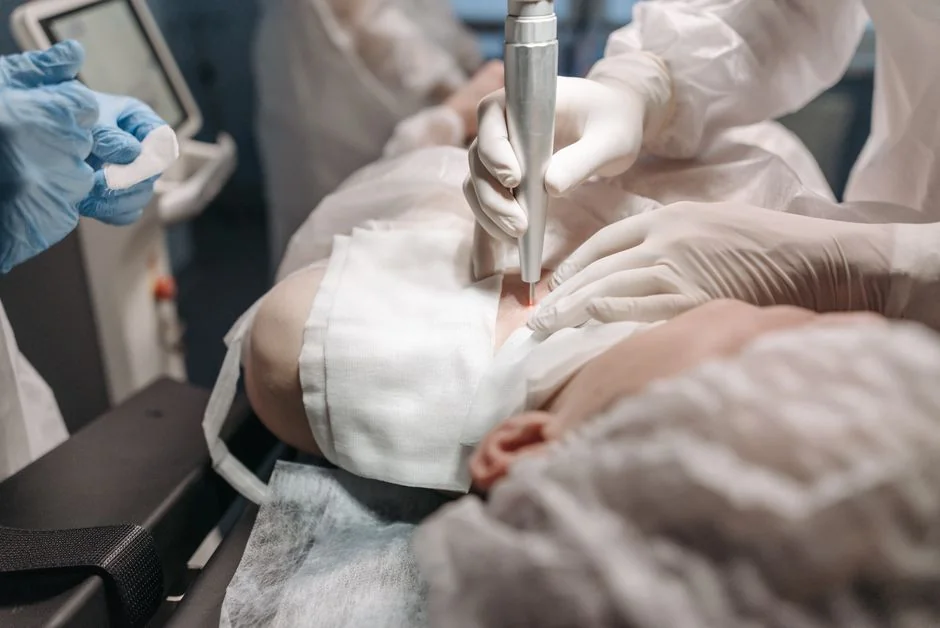
Realistic expectations matter more here than device choice. A 2025 retrospective cohort of 397 patients treated with fractional laser or fractional radiofrequency reported mean improvement at six months of 47.53 per cent for fractional laser and 54.89 per cent for fractional radiofrequency — meaningful change, but not erasure.
In that same cohort, 71.9 per cent of fractional laser patients and 88.1 per cent of fractional RF patients reached at least 25 per cent improvement at six months, after an average of roughly three to three-and-a-half sessions. Post-inflammatory hyperpigmentation occurred in about 5 per cent of patients in each group.
Scar shape also predicts response. A 2024 retrospective comparison of 32 patients with grade 3–4 atrophic scars found that rolling and boxcar scars responded better than ice pick scars with both fractional CO2 laser and RF microneedling — which is why deep ice pick scars are often better managed with a combined approach rather than a laser alone.
Downtime differs sharply between modalities. In that 2024 study, the CO2 laser group required roughly five days of recovery, whereas RF microneedling patients were generally able to return to work the following day. Results also build slowly: collagen remodelling continues for months, so the six-month assessment point used in these studies reflects the timeline you should plan for.
Acne Scar Laser Treatment Cost in Tokyo
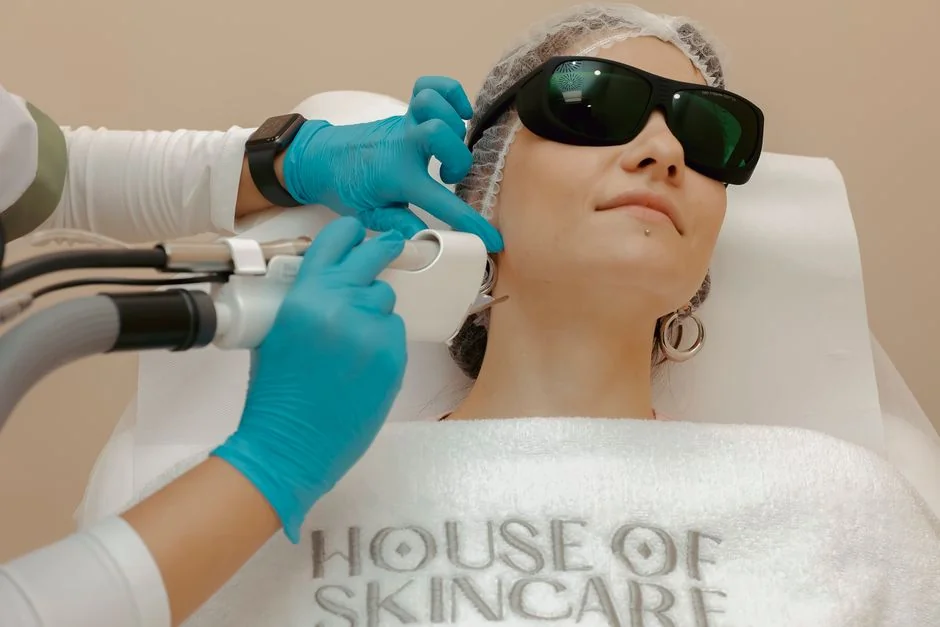
Acne scar laser treatment in Japan is self-pay (自由診療). The Japanese Dermatological Association’s Acne and Rosacea Guideline 2023 addresses this directly in its clinical question on laser treatment for acne and acne scars: it assigns a C2 recommendation grade, stating that laser treatment may be performed by clinicians who understand the characteristics of each device, but is not recommended as standard care because domestic evidence is limited and there is no insurance coverage.
Practically, that means the full cost is out of pocket, and it should be planned as a course rather than a single visit. The following figures are taken from our clinic group’s published Japanese-language price list; please confirm current pricing on the official price page, as menus and fees are revised periodically.
- Consultation fee (initial or follow-up): ¥3,300
- Fractional CO2 laser — nose: ¥16,500 per session; five sessions ¥66,000
- Fractional CO2 laser — cheeks: ¥33,000 per session; five sessions ¥132,000
- Fractional CO2 laser — full face: ¥49,500 per session; five sessions ¥198,000
- Picosecond fractional — full face: ¥33,000 per session
- Dermapen (microneedling) — full face: ¥19,000 per session; five sessions ¥85,500 (trial ¥9,800)
- Salicylic acid macrogol peel — full face: ¥11,000 per session
RF microneedling and combination protocols are quoted individually, since the appropriate device and number of areas depend on scar type and depth. For an accurate quote, please book a consultation.
Have a question about this treatment?
Message us on LINE or WhatsApp — our English-speaking team usually replies the same day.
Who Is a Good Candidate — and Who Should Wait
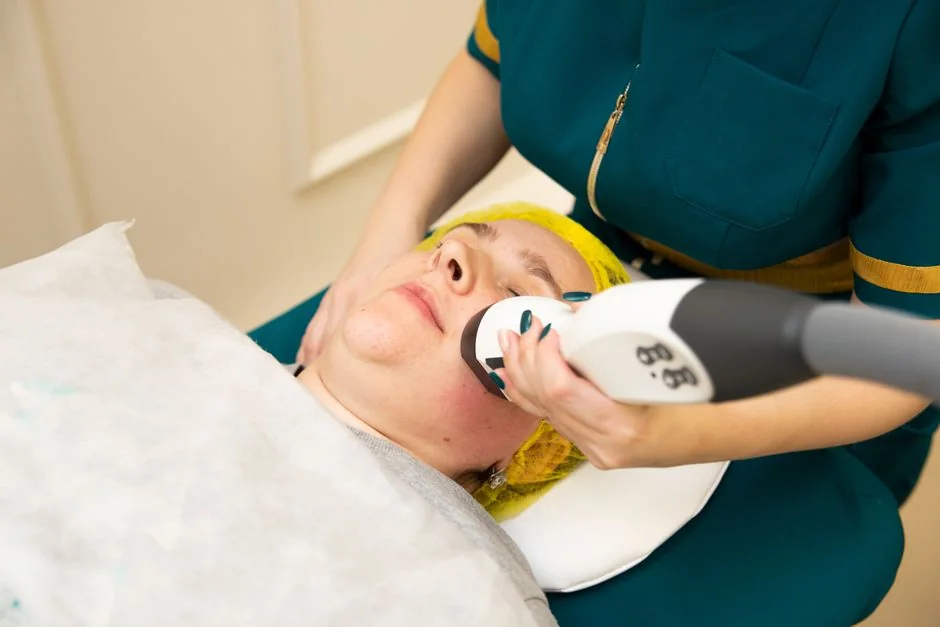
The strongest candidates are people whose active acne is under control and whose main concern is textural: rolling or boxcar depressions on the cheeks or temples. Because remodelling takes months, candidates should also be willing to commit to a course and to strict sun protection between sessions.
Treatment is generally postponed for patients with active inflammatory acne, recent isotretinoin use, an active skin infection such as herpes simplex in the treatment area, a history of keloid or hypertrophic scarring, or pregnancy. Deeper skin tones are not excluded, but device selection matters more, given the pigmentation figures cited above.
What People Often Get Wrong About Acne Scar Lasers
Misconception 1: “One laser session will remove my scars.” The published data do not support this. Studies report roughly 45–55 per cent mean improvement after a course of about three to four sessions assessed at six months — substantial softening of the scar, not removal. At BIOTOPE CLINIC in Shirokanedai, we frequently see patients who arrive expecting a single-visit fix and are relieved, rather than disappointed, once a realistic staged plan is explained.
Misconception 2: “The brown marks left by my acne are scars.” The American Academy of Dermatology is explicit that these flat spots are usually not scars and generally fade over time, whereas a true scar persists. Treating pigmentation with an aggressive resurfacing laser is the wrong tool, and in Asian skin can itself provoke post-inflammatory hyperpigmentation.
Frequently Asked Questions
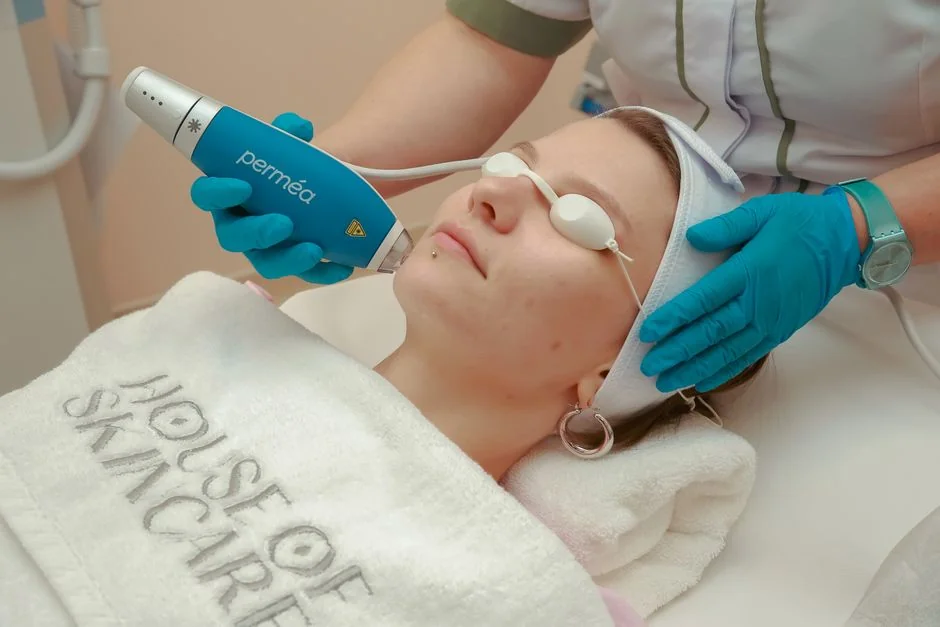
- Q. Is acne scar laser treatment covered by Japanese health insurance?
- No. The Japanese Dermatological Association’s 2023 guideline states plainly that laser treatment for acne and acne scars has no insurance coverage in Japan, so it is provided as self-pay treatment. Active acne itself, however, is treated under insurance at dermatology clinics.
- Q. How much downtime should I plan for?
- It depends on the device. In one comparative study, fractional CO2 laser required around five days of recovery, while RF microneedling patients were generally able to return to work the next day. Discuss your schedule at consultation so the device can be matched to it.
- Q. Does laser work on ice pick scars?
- Less predictably. Clinical reports indicate that rolling and boxcar scars respond better than ice pick scars to both fractional CO2 laser and RF microneedling, so narrow deep scars are often addressed with additional techniques alongside laser.
- Q. Can I have treatment as a visitor to Tokyo?
- A single session is possible, but results in the published literature reflect courses of roughly three to four sessions spaced four to six weeks apart. Short-stay visitors should discuss realistic goals before committing.
Have a question about this treatment?
Message us on LINE or WhatsApp — our English-speaking team usually replies the same day.
Summary: Where to Get Acne Scar Laser Treatment in Tokyo
Acne scar laser treatment is a course-based, self-pay procedure in Japan that clinical studies associate with roughly 45–55 per cent mean improvement at six months, not complete removal. Device choice should follow scar shape, skin tone and how much downtime you can absorb — and the first step is an accurate diagnosis of whether you are treating scars, pigmentation, or both.
Within our clinic group, English-speaking consultations are handled at BIOTOPE CLINIC in Shirokanedai (Minato-ku, Tokyo) by Dr. Jun Karibe. Our sister clinic Kojimachi Dermatology & Plastic Surgery Clinic in Ichigaya handles Japanese-language insurance dermatology. Bookings and enquiries in English: LINE or WhatsApp.
If you have questions about acne scar laser treatment cost and results in Tokyo, English-speaking consultations are handled at BIOTOPE CLINIC in Shirokanedai (Minato-ku, Tokyo) by Dr. Karibe. Our sister clinic Kojimachi Dermatology & Plastic Surgery Clinic in Ichigaya (Chiyoda-ku) handles Japanese-language insurance dermatology. English enquiries: LINE or WhatsApp.
24/7 Consultation & Booking
Book a Consultation or Treatment
Our English-speaking team responds via LINE or WhatsApp — usually the same day.
References
- Japanese Dermatological Association, Guideline Development Committee for Acne Vulgaris and Rosacea. Japanese Dermatological Association Guidelines: Acne Vulgaris and Rosacea Treatment Guideline 2023. The Japanese Journal of Dermatology. 2023;133(3):407–450.
- Yan C, Phinyo P, Yogya Y, Chuamanochan M, Wanitphakdeedecha R. Comparative Effectiveness and Safety of Fractional Laser and Fractional Radiofrequency for Atrophic Acne Scars: A Retrospective Propensity Score Analysis. Life (Basel). 2025.
- Sriram R, Chandrashekar BS, Madura C, Gowda HH. Comparative study in treatment of acne scars: fractional carbon dioxide laser versus microneedling fractional radiofrequency — a retrospective study. Journal of Cutaneous and Aesthetic Surgery. 2024.
- Liu L, Xue Y, Chen Y, Chen T, Zhong J, Shao X, Chen J. Prevalence and risk factors of acne scars in patients with acne vulgaris. Skin Research and Technology. 2023.
- American Academy of Dermatology. Acne scars: signs and symptoms. https://www.aad.org/
Related Articles
You may also find these articles useful.
- Acne Scar Laser Treatment Tokyo: Cost & Results
- Acne Scar Laser Treatment Tokyo: Cost & Results
- Morpheus8 RF Microneedling Tokyo: Review and Cost
- Dermapen Treatment Tokyo: What to Expect
- Laser Skin Treatment Tokyo: English-Speaking Clinic Guide
SUPERVISED BY
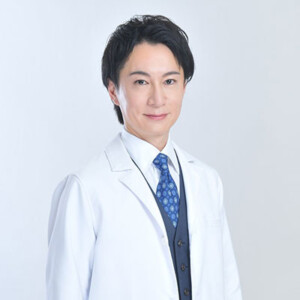
Dr. Jun Karibe
MD
Director
Education & Career
Certifications
Awards
MEDICAL REVIEW