The Core Distinction: Can Non-Surgical Treatment Actually Reduce Nose Size?

This is the most important question to answer before anything else: non-surgical rhinoplasty does not reduce the physical size of the nose.
I have a lot of patients from abroad asking these questions.
Injectable filler adds volume. It works by optical contrast — filling the area just above and below a dorsal hump, for example, makes the bump look less prominent by creating a smoother profile line.
A well-placed injection at the columella (the column of tissue separating the nostrils) can gently lift a drooping tip. The nose looks more refined, but its underlying dimensions are unchanged.
True Nose reduction — removing tissue, reshaping cartilage, or narrowing the alar base — requires surgery. Understanding this distinction before choosing a treatment prevents disappointment and unnecessary procedures.
Surgical Rhinoplasty — What It Can Change Permanently
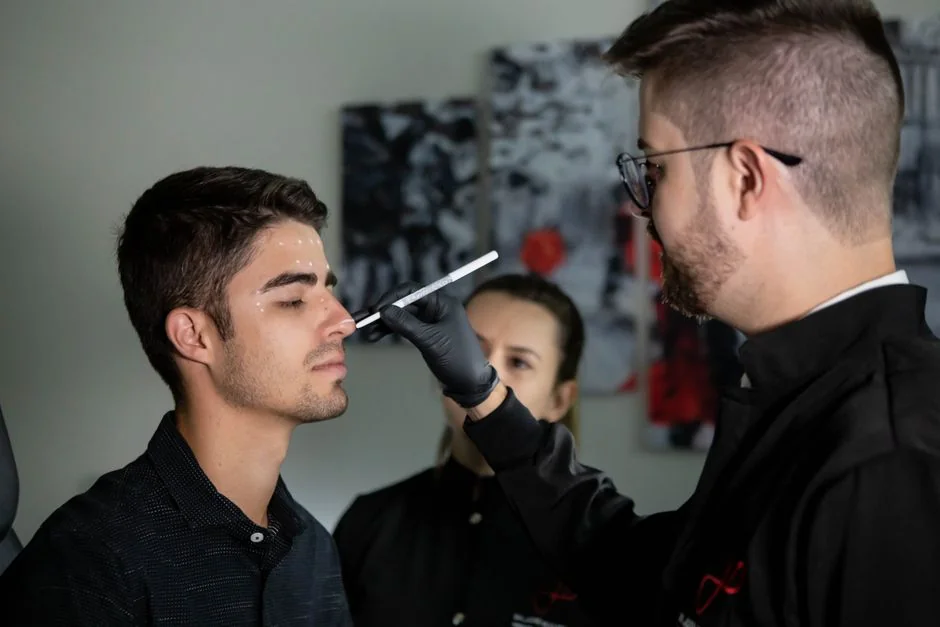
Surgical rhinoplasty is performed under general or sedation anaesthesia and permanently alters the structure of the nose. Several distinct procedures are commonly performed, often in combination.
Dorsal Hump Reduction
The surgeon removes or precisely reshapes the excess bone and cartilage forming the dorsal hump, then refines the bridge contour. A technique gaining significant traction in current practice — preservation rhinoplasty — rearranges rather than removes dorsal tissue, which may reduce the risk of postoperative surface irregularities.
Alar and Nostril Reduction (Alarplasty)
Wide or flared nostrils are addressed by removing a small wedge of tissue at the nostril base. Scars placed within the natural nasal crease typically become inconspicuous within several months. This is the only reliable method for reducing nostril width.
Tip Refinement
A broad, round, or drooping nasal tip is reshaped by restructuring the lower lateral cartilages. This is technically demanding and frequently forms the centrepiece of the overall surgical plan. It is often combined with other reduction procedures in the same operation.
Regarding outcomes: a 2024 systematic review and meta-analysis published in the Journal of Clinical Medicine (Rot et al.) assessed patient satisfaction across multiple rhinoplasty techniques using the validated Rhinoplasty Outcome Evaluation (ROE) questionnaire. The mean pre-operative ROE score was 33.50; by six months post-operatively it had risen to 69.60, and by twelve months to 80.25 — a consistent, clinically significant improvement across aesthetic, functional, and psychosocial dimensions.
Initial bruising and swelling resolve in roughly two to three weeks. Office work is typically manageable within ten to fourteen days. The final refined result emerges gradually over twelve months as residual swelling fully subsides.
Non-Surgical Rhinoplasty — Reshaping With Hyaluronic Acid Filler
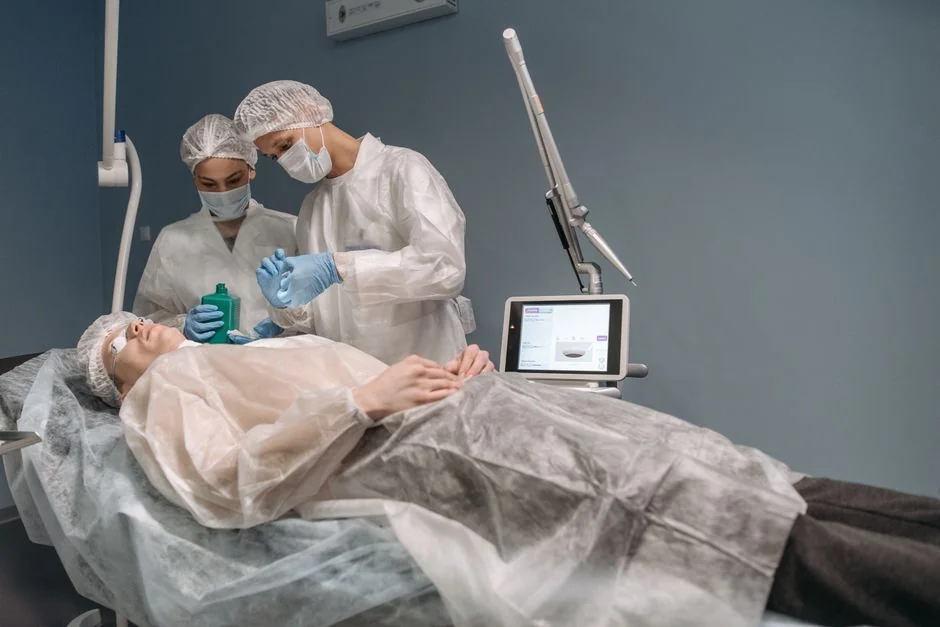
Non-surgical rhinoplasty uses small amounts of injectable hyaluronic acid gel to alter nasal contour without incisions or general anaesthesia. A session takes fifteen to thirty minutes with topical numbing cream only. It is well suited to smoothing a dorsal hump in profile view, correcting mild asymmetry, or refining a drooping tip. It cannot narrow nostrils, reduce overall nasal volume, or replicate the structural precision of surgery.
How Long Do Results Last?
Results are temporary. A prospective clinical trial published in Plastic Surgery (Nikolis et al., 2023) followed 33 participants for eight months; all subjects reported aesthetic improvement at one month, and 78.57 per cent maintained satisfaction at the eight-month follow-up. In clinical practice, effects typically persist from several months to approximately one to two years, depending on the product used and the individual’s tissue metabolism.
Risks Specific to the Nose
The nose carries a higher vascular risk than most other facial filler sites because of its direct anatomical connections to the eye and brain circulation. A systematic review of 8,604 patients published in the World Journal of Otorhinolaryngology – Head and Neck Surgery (Hall and Kontis, 2023) reported an overall complication rate of 2.52% for non-surgical rhinoplasty. The majority were minor — bruising, brief swelling, temporary redness, all resolving within days. However, more serious complications including skin necrosis and, in rare cases, vision impairment are possible when filler enters or compresses adjacent vessels; the nasal region was involved in 56.3% of facial filler placements associated with vision changes in that meta-analysis. These risks are substantially mitigated by injecting small volumes slowly, in the correct anatomical plane, using an experienced practitioner. One practical safety advantage of hyaluronic acid over permanent products: it can be dissolved with hyaluronidase enzyme if the result is unsatisfactory or a vascular event occurs.
At BIOTOPE CLINIC in Shirokanedai, patients frequently come in asking whether filler can adequately address their concerns before committing to surgery — it is one of the most common discussion points during initial consultations, and the answer depends entirely on the degree of change sought and the individual’s anatomy.
Surgical vs Non-Surgical at a Glance

| Feature | Surgical Rhinoplasty | Non-Surgical Rhinoplasty (HA Filler) |
|---|---|---|
| Can reduce nose size? | Yes | No — creates optical illusion only |
| Procedure type | Operation under anaesthesia | Injectable; topical numbing only |
| Duration of result | Permanent | Temporary (months to ~2 years) |
| Downtime | 2–3 weeks visible; full result at 12 months | Minimal — 1–3 days mild swelling |
| Reversibility | Not reversible | Dissolvable with hyaluronidase |
| Risk profile | Surgical risks: bleeding, anaesthesia, revision rate ~5–15% | Low overall; rare but serious vascular events possible |
| Relative cost | Higher | Lower per session; repeat sessions required |
| Best suited for | Structural change, permanent reduction | Subtle profile contouring, symmetry improvement |
Cost of Nose Reshaping in Tokyo

Both cosmetic rhinoplasty and non-surgical filler rhinoplasty are self-pay procedures in Japan — Japan’s public health insurance (Shakai Hoken / Kokumin Kenko Hoken) does not cover either when performed for aesthetic reasons. Costs in Tokyo vary considerably depending on the specific procedures combined, surgeon experience, anaesthesia method, and clinic setting. Surgical rhinoplasty generally requires a higher investment than injectable treatment; filler treatment, while lower per session, may require repeat appointments over the years to sustain results.
Please see the clinic’s official price page or contact us for a current quote. For a personalised and accurate estimate, a consultation is the essential first step.
Have a question about this treatment?
Message us on LINE or WhatsApp — our English-speaking team usually replies the same day.
Who Is a Good Candidate?

Surgical Rhinoplasty
Ideal candidates are adults whose nasal growth is complete (typically from age 18 onwards), in good general health, non-smokers or those able to stop well before and after surgery, and who hold realistic, clearly defined goals. Patients seeking correction of a previous rhinoplasty — revision surgery — face a more complex procedure, as scar tissue and altered anatomy increase technical demands. Published data suggest revision rates of approximately 5–15%, frequently related to discrepancies between patient expectations and achieved outcomes.
Non-Surgical Rhinoplasty
Filler rhinoplasty suits adults seeking subtle contouring without surgery or significant downtime: smoothing a mild hump in profile, refining a drooping tip, or improving facial balance. It also appeals to those who want a preliminary indication of what a surgical result might look like before committing. It is not appropriate for patients with existing silicone nasal implants, very thin nasal skin, or any requirement for genuine tissue reduction. Both approaches are contraindicated during pregnancy, and a thorough in-person assessment is necessary before either treatment.
Common Misconceptions About Making Your Nose Smaller
Misconception: “Filler will make my nose smaller.”
As anatomy and clinical evidence consistently demonstrate — including the Hall and Kontis (2023) review of over 8,000 patients — dermal filler adds volume. Any visible improvement comes from altering proportional relationships through optical contrast, not from removing tissue. Patients whose primary goal is genuine size reduction should discuss surgical options with their practitioner.
Misconception: “Non-surgical rhinoplasty is risk-free because there are no cuts.”
Injecting in and around the nose is technically demanding because the nasal vasculature connects directly to the eye and brain circulation. Serious complications are uncommon when performed by an experienced injector using small volumes and correct anatomical placement, but they are not absent — which is why training and technique matter significantly, not simply the availability of a low price point.
Frequently Asked Questions
- Q. Can nose filler fix wide nostrils?
- No. Nostril width is determined by the underlying alar soft tissue, which filler cannot narrow. Alarplasty — a brief surgical procedure — is the correct treatment for reducing nostril width. A consultation will clarify whether your specific concern is addressable non-surgically or requires surgery.
- Q. Is rhinoplasty painful?
- During surgery, patients are under general or sedation anaesthesia and feel nothing. Post-operatively, most describe pressure and nasal congestion rather than sharp pain; oral analgesics prescribed by the surgeon typically manage discomfort well for the first few days. Non-surgical filler treatment performed under topical anaesthetic is generally well tolerated, with only mild discomfort at the moment of injection.
- Q. How long before I see the final result after surgical rhinoplasty?
- Most visible swelling resolves within two to three weeks, but the nose continues to soften and refine for up to twelve months. Subtle contour changes occur throughout this period, which is why surgeons typically assess the definitive outcome at the one-year mark rather than earlier.
- Q. Can filler rhinoplasty be reversed if I am unhappy with the result?
- Hyaluronic acid filler can be partially or fully dissolved using hyaluronidase enzyme — one of its key practical advantages over permanent options. Reversal should always be performed by a qualified medical professional. Hyaluronidase also serves as an emergency measure in the rare event of vascular compromise, making it a clinically important safety tool.
Have a question about this treatment?
Message us on LINE or WhatsApp — our English-speaking team usually replies the same day.
Where to Get Nose Treatment in Tokyo
Within our clinic group, both BIOTOPE CLINIC (Shirokanedai, Minato-ku) and Kojimachi Dermatology & Plastic Surgery Clinic (Ichigaya, Chiyoda-ku) offer English-language consultation with Dr. Jun Karibe’s team. Surgical rhinoplasty and non-surgical nose reshaping with hyaluronic acid filler are handled at BIOTOPE CLINIC in Shirokanedai, which is the group’s dedicated cosmetic surgery and cosmetic dermatology branch. Hyaluronic acid filler rhinoplasty is available as a consultation item here — feel free to ask about it during an appointment with Dr. Karibe’s team. Bookings and English-language enquiries: LINE or WhatsApp.
Kojimachi Dermatology & Plastic Surgery Clinic in Ichigaya is the group’s main office, providing insurance-covered dermatology for conditions such as eczema, acne, rashes, and mole removal, as well as a range of general and aesthetic plastic surgery procedures — both with full English-language support.
Summary
Surgery and non-surgical filler rhinoplasty serve fundamentally different purposes. Surgery permanently changes the structure of the nose and is the only approach that can genuinely reduce size — narrowing nostrils, reducing a hump, or reshaping cartilage with lasting effect. Non-surgical treatment uses hyaluronic acid filler to create the appearance of a more refined nose without incisions, with minimal downtime and temporary results; it carries specific vascular risks that make practitioner experience a meaningful factor. The right choice depends on the degree of change desired, tolerance for recovery time, and individual anatomy — all of which a thorough consultation will clarify.
If you have questions about nose reshaping, both BIOTOPE CLINIC (Shirokanedai, Minato-ku) and Kojimachi Dermatology & Plastic Surgery Clinic (Ichigaya, Chiyoda-ku) offer English-language consultation with Dr. Karibe and his team. Surgical rhinoplasty and non-surgical rhinoplasty are primarily handled at BIOTOPE CLINIC (Shirokanedai). English enquiries: LINE or WhatsApp.
24/7 Consultation & Booking
Book a Consultation or Treatment
Our English-speaking team responds via LINE or WhatsApp — usually the same day.
References
- Rot P, Krzywdzińska S, Grab P, Jurkiewicz D, Chloupek A, Sobol M. The Rhinoplasty Outcome Evaluation (ROE) Questionnaire in Rhinoplasty: A Systematic Review and Meta-Analysis. Journal of Clinical Medicine. 2024.
- Nikolis A, et al. A Prospective Clinical Trial Evaluating the Efficacy and Safety of Non-Animal Stabilized Hyaluronic Acid Injections for Non-Surgical Rhinoplasty. Plastic Surgery. 2023.
- Hall SS, Kontis TC. Nonsurgical Rhinoplasty. World Journal of Otorhinolaryngology – Head and Neck Surgery. 2023.
Related Articles
You may also find these articles useful.
- How Long Should You Stay in Tokyo for Rhinoplasty? Downtime, Pain & Flying Guide
- Finding an English-Speaking Plastic Surgeon in Tokyo
- Dermal Filler Tokyo: Price Guide & Clinic Selection Tips
- How Long Should You Stay in Tokyo for Facial Contouring / V-Line Surgery? Downtime, Pain & Flying Guide
- Filler for Jawline and Cheeks Tokyo
SUPERVISED BY

Dr. Jun Karibe
MD
Director
Education & Career
Certifications
Awards
MEDICAL REVIEW