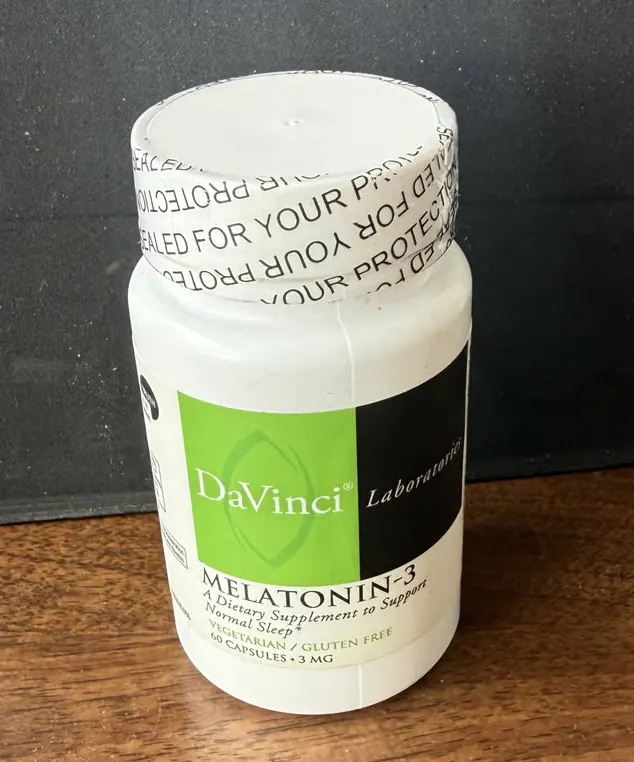
Tokyo is one of the more punishing arrivals for jet lag. Most inbound travellers cross seven to fourteen time zones, land at Haneda or Narita in the afternoon, and try to be functional for a business meeting, a family reunion, or an evening ramen crawl within hours.
This is a practical recovery plan tuned to Tokyo arrivals — the light windows, meal patterns, nap rules, and where a bottle of melatonin in Japan fits into the picture.
What you’ll learn in this article
- A day-by-day recovery timeline for eastbound and westbound arrivals into Tokyo
- The two settings that actually reset your body clock — bright light and meal timing
- Where a supply of melatonin in Japan fits into the plan (and where it doesn’t)
- How to use short daytime naps without wrecking your first night’s sleep
- What to eat, when to drink coffee, and when to skip the evening beer
Need melatonin now?
Online consultation with BIOTOPE CLINIC — product delivered to your hotel or picked up in Shirokanedai.
How Jet Lag Actually Works

Your circadian clock lives in a small cluster of neurons in the hypothalamus called the suprachiasmatic nucleus. Left alone, it holds a rhythm slightly longer than 24 hours. Two signals reset it each day: the light hitting your retina, and the food entering your gut.
Jet lag is what happens when you drop those two signals into a different time zone and the clock has to catch up. Sleep medicine research indicates the clock shifts by roughly one hour per day westbound and slightly less eastbound.
The consequences are physical, not just cognitive. Cortisol, melatonin, body temperature, and appetite hormones all cycle on the old time zone until the clock catches up. That is why the third-night crash is often worse than night one: the initial adrenaline of travel wears off and the mismatch shows.
Eastbound Arrivals to Tokyo (from Europe and the East Coast US)
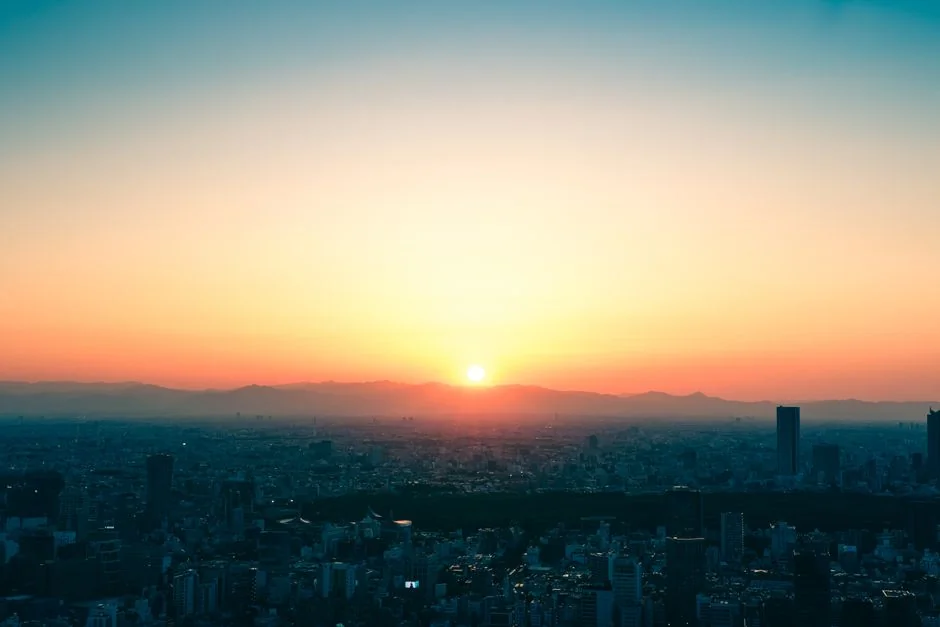
Eastbound flights compress your day — you skip a night’s sleep and land expecting to wear the local schedule. This is the harder direction for most travellers. The recovery plan is aggressive.
Day of arrival
- Land, get to the hotel, shower.
- Get outside into daylight for 20–30 minutes between 3 p.m. and 5 p.m. Tokyo time. Sunglasses off. This is your strongest zeitgeber.
- Eat dinner at a normal Tokyo hour (18:00–20:00), not on your home schedule.
- Take melatonin 30–60 minutes before your target Tokyo bedtime. For most eastbound travellers, 0.5–3 mg is enough — higher doses are not more effective and are more likely to cause morning grogginess.
- Aim for lights-out by 22:30–23:00. Even if you can only sleep four hours, keep the wake time on Tokyo local.
Days 2–4
- Get outside within the first hour of waking. Daylight before 10 a.m. is what pulls your clock forward.
- Eat breakfast within an hour of waking; a protein-heavy meal signals “morning” to the peripheral clocks in your gut and liver.
- Continue melatonin 30–60 minutes before Tokyo bedtime for three to five nights.
- If you must nap, cap it at 20 minutes and finish before 15:00.
Westbound Arrivals to Tokyo (from the West Coast US, Vancouver, Auckland)

Westbound is the easier direction because you are extending your day rather than compressing it. Most travellers manage the shift within two to three nights.
Day of arrival
- Push through until at least 21:00 local. The temptation to sleep at 15:00 is the trap — a long afternoon nap will guarantee a 3 a.m. wake-up.
- Get outside in the late afternoon; sunset light is fine.
- Melatonin at Tokyo bedtime is optional for westbound; many travellers do not need it. If you do, 0.5–1 mg is often enough.
Days 2–3
- Normal Tokyo schedule for meals and light exposure.
- Most travellers feel adjusted by the end of Day 3.
Where Melatonin in Japan Fits into the Plan
Melatonin is a circadian signal, not a sleeping pill. Its job is to tell your body that night has arrived, not to knock you out. For jet lag specifically, its evidence base is strong: taken at the destination bedtime for three to five nights, it advances the clock in the direction you want.
The awkward part for travellers is availability. Melatonin in Japan is regulated as a pharmaceutical ingredient, not a supplement, so it is not on drugstore or convenience-store shelves. If you brought a personal supply from home, use it. If you did not, an online consultation with a Japanese physician plus hotel delivery is the shortest legal path — details are in our companion guide: Melatonin in Japan for Jet Lag: Online Doctor Consultation & Hotel Delivery.
Meal Timing: The Underrated Second Signal
Food acts on the peripheral circadian clocks in your liver, pancreas, and gut. Eating at your destination’s normal meal times accelerates adjustment; eating at home-country times slows it down. For Tokyo arrivals, this means committing to Japanese meal times from Day 1, even if you are not hungry.
- Breakfast: within one hour of waking, 07:00–09:00 Tokyo time. Something protein-heavy — grilled fish, eggs, natto — beats a pastry.
- Lunch: 12:00–13:30. Full meal, not just coffee.
- Dinner: 18:00–20:00. Finish at least two hours before your target bedtime.
- Late-night snacks: avoid on Days 1–3. They keep gut clocks confused.
Caffeine, Alcohol, and Naps
Caffeine
A morning espresso helps you push through the fog. A 15:00 espresso will keep you awake at 02:00. As a rule for Tokyo arrivals, no caffeine after 14:00 for the first three days.
Alcohol
Skip the arrival-night beer, even the tempting Sapporo at the airport. Alcohol shortens the first sleep cycle and fragments the rest of the night, which is exactly what you cannot afford on Day 1. From Day 3 onwards, moderate evening drinks are fine.
Naps
Short daytime naps are the traveller’s friend if used correctly. Cap at 20 minutes, set an alarm, and finish before 15:00. A 90-minute nap at 16:00 will destroy your first night.
A Simple 5-Day Tokyo Reset Checklist
| Day | Morning | Afternoon | Evening |
|---|---|---|---|
| Arrival | Land, hotel, shower | 20–30 min daylight walk | Dinner 19:00; melatonin 30–60 min before Tokyo bedtime |
| Day 2 | Morning daylight before 10:00 | Nap ≤20 min, before 15:00 | Melatonin at Tokyo bedtime |
| Day 3 | Normal breakfast, morning light | Regular schedule | Melatonin at Tokyo bedtime |
| Day 4 | Normal schedule | Regular schedule | Melatonin optional |
| Day 5 | Adjusted for most travellers | Full schedule | Stop melatonin |
Frequently Asked Questions
- Q. I already brought melatonin from home. Do I still need to consult a doctor?
- No. Bringing a personal-use supply of melatonin into Japan is generally permitted within the quantity limits set by Japan’s Ministry of Health, Labour and Welfare (typically up to a one-month supply for prescription-type products; longer stays or larger amounts require a Yunyu Kakunin-sho, formerly yakkan shomei). The online consultation is only for travellers who did not pack any, ran out, or want to extend for a longer trip.
- Q. Can I use melatonin every night indefinitely?
- For jet lag, three to five nights is the standard. Longer-term use should be discussed with your regular physician back home rather than treated as a nightly supplement.
- Q. What if I can’t fall asleep even with melatonin?
- Melatonin sets the timing signal; it does not force sleep. Combine it with a dark, cool room, no screens for the last 30 minutes, and no caffeine after 14:00. If it still fails, the issue is usually light exposure earlier in the day.
- Q. Are Japanese OTC sleep aids a good substitute for melatonin?
- Not really. Drugstore products like Drewell, Neoday, and Riposmin contain diphenhydramine, an antihistamine. They sedate but do not shift your circadian clock, and they often leave next-morning grogginess.
- Q. How long before my first meeting should I try to reset?
- Give yourself at least two full nights before an important eastbound meeting. If your schedule cannot allow that, the online consultation service can dispatch melatonin to your hotel before you arrive.
Summary — Getting the Jet Lag Reset Right
Tokyo jet lag is manageable with a plan: morning daylight, normal-time meals, short controlled naps, no late caffeine, no arrival-night alcohol, and a short course of melatonin at destination bedtime.
Because melatonin in Japan is not sold over the counter, plan ahead — either bring a personal supply from home, or book a short online consultation with a Japanese physician for hotel delivery or clinic pickup.
Melatonin for Your Tokyo Arrival
Book an English Online Consultation with BIOTOPE CLINIC
Consultation and one bottle of DaVinci Laboratories Melatonin-3 (3 mg): ¥16,500 all-in. Shipping from ¥1,100 to your Tokyo hotel; free pickup at the clinic in Shirokanedai. Book before you fly for a same-day-of-arrival delivery.
References
- Herxheimer A, Petrie KJ. Melatonin for the prevention and treatment of jet lag. Cochrane Database of Systematic Reviews. 2002.
- Auger RR, Burgess HJ, Emens JS, et al. Clinical practice guideline for the treatment of intrinsic circadian rhythm sleep-wake disorders. Journal of Clinical Sleep Medicine. 2015.
- Sack RL. Jet lag. New England Journal of Medicine. 2010.
- Roenneberg T, Merrow M. The circadian clock and human health. Current Biology. 2016.
- Ministry of Health, Labour and Welfare (Japan). Regulatory classification of melatonin.
SUPERVISED BY
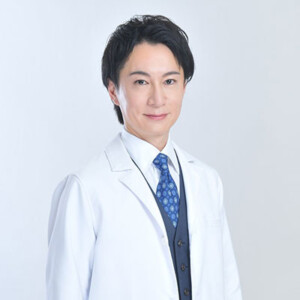
Dr. Jun Karibe
MD
Director
Education & Career
Certifications
Awards
MEDICAL REVIEW