What Is Melasma, and How Is It Treated in Tokyo?
Brown or grey-brown patches on the cheeks, forehead, and upper lip are among the most common skin concerns for women living in Tokyo — yet melasma is one of the most frequently mismanaged conditions in cosmetic dermatology.
Many patients spend months using pharmacy-grade brightening creams with little result, unaware that this condition responds best to a combination of targeted clinical treatments and consistent sun protection.
This article explains the causes of melasma, the treatments supported by published evidence, and how to access English-language care in Tokyo.
What you’ll learn in this article:
- The primary triggers of melasma, including UV light, hormonal changes, and visible light
- Evidence-backed treatment options available in Tokyo — from topical prescriptions to picosecond laser
- Why combination therapy consistently outperforms single-treatment approaches
- Realistic expectations for improvement and why maintenance matters
- How to access English-language melasma consultation in Tokyo
Have a question about this treatment?
Message us on LINE or WhatsApp — our English-speaking team usually replies the same day.
What Is Melasma?
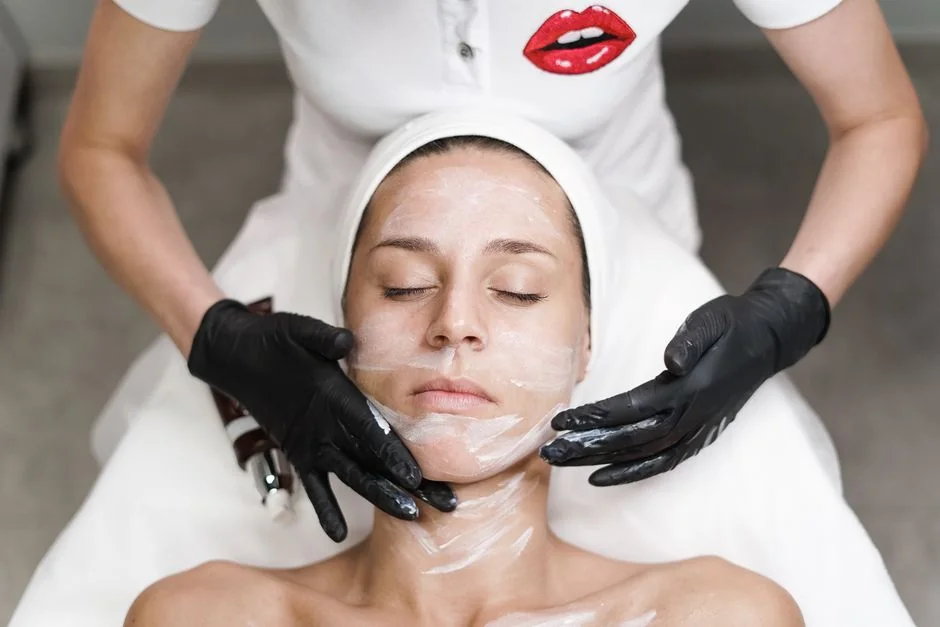
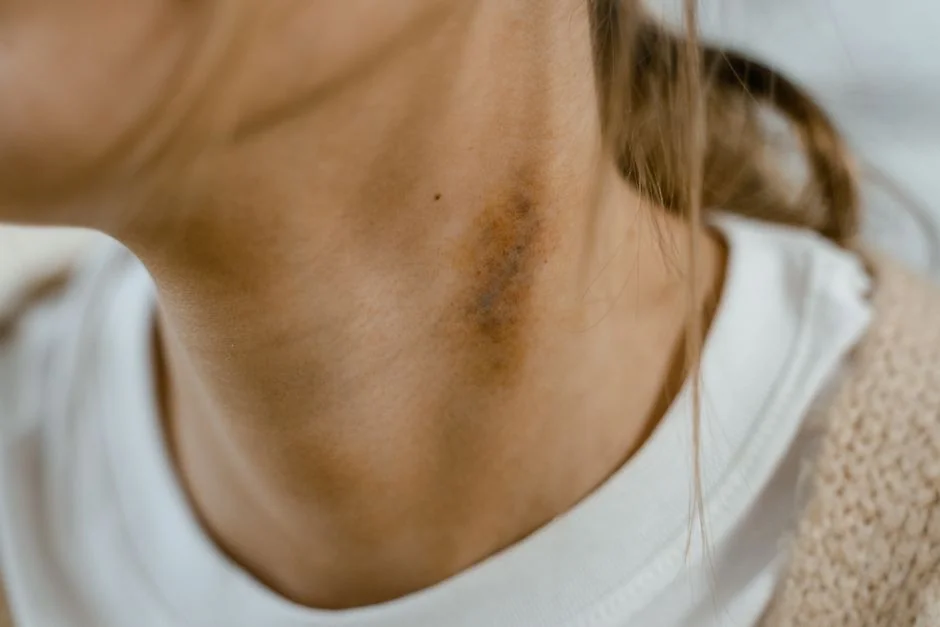
Melasma is a chronic acquired hyperpigmentation disorder characterised by symmetrical, irregularly shaped brown or grey-brown patches on sun-exposed facial skin. The cheeks, forehead, nose bridge, and upper lip are the sites most commonly affected. It is also known as chloasma, or colloquially as the “mask of pregnancy,” because hormonal changes during gestation are a frequent trigger.
Melasma is overwhelmingly a condition of women, who account for over 90 percent of cases in clinical data. It is particularly prevalent among individuals with Fitzpatrick skin types III to V — skin tones common throughout East Asia and Southeast Asia — and among many residents and expatriates living in Tokyo. In terms of facial distribution, centrofacial involvement accounts for roughly 42 percent of cases and malar (cheek-centred) patterns for approximately 39 percent, according to large multicentric clinical data. Mean age of onset is typically the late twenties.
Melasma is not medically dangerous, but because it appears on visible areas of the face, it frequently causes significant psychological distress. It is also notably persistent: without structured management, patches tend to recur, especially in individuals with darker skin tones and those living in high-UV environments.
What Causes Melasma?
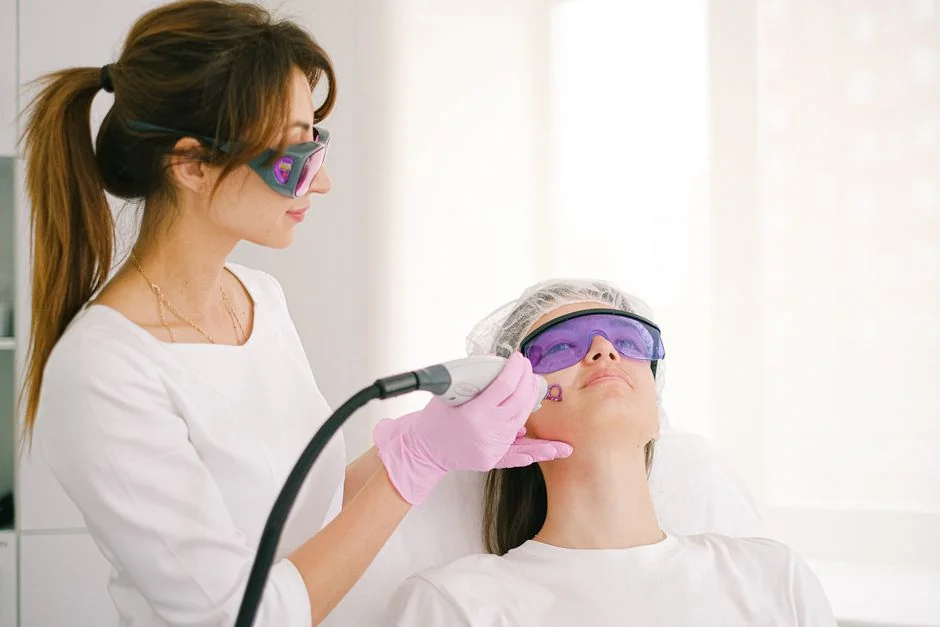
Melasma results from the overactivation of melanocytes — the pigment-producing cells in the skin’s basal layer. Several factors can trigger or sustain this process.
Ultraviolet light
UV exposure is consistently identified as the primary driver. Published clinical consensus guidelines describe it as “the most critical factor associated with the development of melasma,” and surveys find sun exposure cited as the leading precipitating trigger in up to 96 percent of affected patients. Tokyo’s UV index regularly reaches “Very High” levels (index 8–9) during spring and summer, making year-round broad-spectrum photoprotection essential for anyone managing this condition.
Hormonal influences
Oestrogen and progesterone stimulate melanocyte activity, which is why melasma often appears during pregnancy, while taking oral contraceptives, or during hormonal replacement therapy. Prevalence among pregnant women has been reported at 50 to 80 percent in some populations. This hormonal link explains why patches can persist after delivery or worsen with each subsequent pregnancy.
Genetic predisposition
A positive family history increases individual susceptibility. One large multicentric clinical study found that approximately 31 percent of melasma patients reported a first-degree relative with the condition. Individuals with constitutively darker skin have higher baseline melanocyte activity, increasing their risk.
Visible light
High-energy visible (HEV) light — including blue light from digital screens — can independently stimulate melanocytes. Unlike UV, HEV penetrates many standard mineral sunscreens, contributing to pigmentation even indoors. This is a clinically relevant factor for office workers and frequent screen users.
Treatment Options for Melasma in Tokyo
Melasma management is multi-pronged. Because the condition is chronic rather than curable, treatment is designed to reduce existing pigmentation, prevent new pigment formation, and maintain results long term. The following modalities are supported by published clinical evidence.
Photoprotection
Broad-spectrum SPF 50+ sunscreen — ideally with a physical (mineral) filter containing zinc oxide or titanium dioxide — forms the non-negotiable foundation of every melasma protocol. Without consistent sun and visible-light protection, the results of any clinical treatment will be significantly shortened. Daily reapplication is standard.
Topical and oral depigmenting agents
Tranexamic acid has become one of the most widely used active ingredients for melasma in East Asia. Originally developed by the Japanese pharmacologist Utako Okamoto, it was later found to inhibit the signalling pathway between keratinocytes and melanocytes that drives excess pigment production. In a randomised clinical trial (n=50), oral tranexamic acid at 250 mg twice daily reduced pigmentation by approximately 59 percent at 12 weeks, while a 5 percent topical formulation achieved around 51 percent improvement over the same period. Niacinamide, vitamin C derivatives, and arbutin are widely used as supporting agents.
Picosecond laser
Picosecond lasers deliver energy pulses in the trillionths of a second, fragmenting melanin granules through a photoacoustic (pressure-wave) mechanism that generates significantly less heat than older Q-switched devices. This makes them particularly suitable for Fitzpatrick skin types III–V, which carry a higher risk of post-inflammatory hyperpigmentation (PIH) with more thermally aggressive treatments.
In a randomised controlled trial comparing picosecond Nd:YAG laser (1,064 nm) against picosecond alexandrite laser (755 nm) and topical 2% hydroquinone in 59 patients with Fitzpatrick skin types III–IV, the picosecond Nd:YAG group achieved a 35.9 percent improvement in MASI (Melasma Area and Severity Index) scores at 24 weeks, compared with 24 percent for hydroquinone alone — a statistically significant difference (p=0.018). No cases of hypopigmentation were recorded in the laser arms. The PicoWay picosecond laser, which operates at 1,064 nm and is FDA-indicated for melasma, is available at BIOTOPE CLINIC in Shirokanedai — feel free to ask about it during a consultation with Dr. Karibe’s team.
Combination protocols
Evidence consistently favours multimodal approaches. A 2025 network meta-analysis examining 15 treatment modalities across 14 randomised controlled trials involving 738 women concluded that “a multimodal approach should be considered for the treatment of melasma, as monotherapy approaches often have limited long-term efficacy.” Combining picosecond or Q-switched laser with oral tranexamic acid, topical maintenance, and strict photoprotection substantially reduces the rate of relapse compared with laser alone.
| Treatment | Mechanism | Suitable for darker skin? | Typical sessions |
|---|---|---|---|
| Broad-spectrum SPF 50+ | Blocks UV and HEV triggering | Yes | Daily (ongoing) |
| Topical tranexamic acid | Inhibits keratinocyte–melanocyte signalling | Yes | Daily (ongoing) |
| Oral tranexamic acid | Systemic melanogenesis inhibition | Yes | Daily (prescription) |
| Picosecond Nd:YAG laser (1,064 nm) | Photoacoustic pigment fragmentation | Yes (Fitzpatrick III–V) | 3–6 sessions |
| Q-switched Nd:YAG laser | Photothermal pigment fragmentation | With care | 6–10 sessions |
| Chemical peel | Accelerated epidermal cell turnover | With care | 3–6 sessions |
Cost of Melasma Treatment in Tokyo
Treatment costs in Tokyo vary by modality and the number of sessions required. Picosecond laser treatments are priced per session, and most clinicians recommend a course of three to six sessions for meaningful MASI improvement, typically combined with prescription topical agents used at home between sessions. Ongoing home-care formulations — tranexamic acid serums, medical-grade SPF, and vitamin C preparations — represent a continuing cost to maintain results.
Cosmetic melasma treatments are not covered by Japanese national health insurance. Specific fee schedules are reviewed periodically and are not published on this page. For a current, personalised quote, please book a consultation or contact the clinic directly.
Have a question about this treatment?
Message us on LINE or WhatsApp — our English-speaking team usually replies the same day.
What People Often Get Wrong About Melasma
Misconception: a single laser session will permanently clear melasma
Melasma is a chronic condition, not a discrete lesion. While picosecond laser and combination therapies can produce meaningful reductions in MASI scores, current clinical guidelines are explicit that relapses are common without ongoing maintenance. Patients who complete a laser course but fail to address underlying triggers — unprotected UV exposure, hormonal factors — typically see pigmentation return within weeks to months. Published consensus recommendations emphasise that maintenance photoprotection and topical therapy must continue after procedural treatment ends.
Misconception: sunscreen alone is sufficient to manage established melasma
Photoprotection is necessary but rarely sufficient on its own. Visible light can stimulate melanocytes even when UV exposure is blocked, and hormonal triggers operate through internal mechanisms that no sunscreen can address. Clinical trials consistently show that multimodal therapy — combining photoprotection with topical depigmenting agents and, where indicated, laser treatment — outperforms sunscreen monotherapy for established pigmentation.
What to Expect: Before, During, and After Treatment
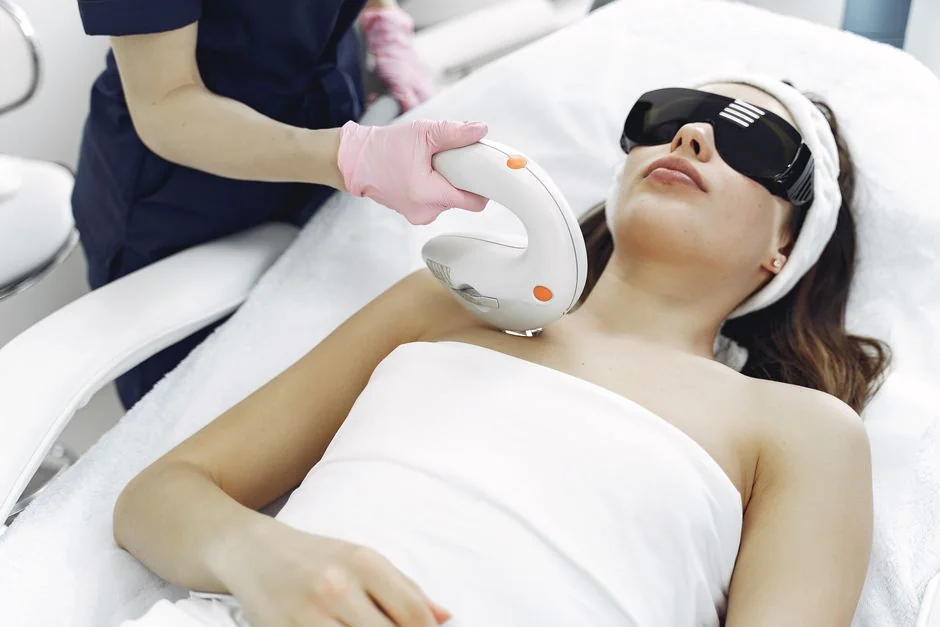
Before starting laser treatment, a consultation assesses skin type, pigmentation depth (epidermal, dermal, or mixed — examined with Wood’s lamp or dermoscopy), current medications, and hormonal factors. Patients who are currently pregnant, breastfeeding, or on hormonal therapy may be advised to defer laser procedures until those factors are stabilised.
During a picosecond laser session, the treatment area is cleansed and a topical anaesthetic cream applied if needed. Most patients describe the sensation as mild snapping or warmth. Sessions typically last 20 to 40 minutes. Transient redness resolves within a few hours; over the following five to seven days, treated areas may darken slightly before flaking as fragmented melanin is shed.
After treatment, strict sun avoidance and daily SPF 50+ use are non-negotiable. A prescription home-care regimen — typically including tranexamic acid and a vitamin C formulation — consolidates the laser’s effects. A follow-up assessment is usually scheduled four to six weeks after each session to review response and adjust the protocol.
Who Is a Good Candidate?
Most adults with stable, non-inflamed melasma are suitable candidates for picosecond laser treatment. Ideal candidates are not currently pregnant or breastfeeding, can commit to consistent sun protection, and have no active skin infection in the treatment zone. Fitzpatrick skin types I through VI can all be treated, with device settings and cooling adjusted to each individual’s skin type.
Those with predominantly dermal (deep) melasma may see slower improvement than those with epidermal or mixed-type pigmentation, and a realistic timeline should be discussed before beginning treatment. At BIOTOPE CLINIC in Shirokanedai, the team regularly sees patients who have tried over-the-counter brightening products for months without meaningful improvement and are looking for a medically supervised, evidence-based plan. A thorough first consultation — including assessment of pigmentation depth — establishes whether laser, topical, or combination treatment is the most appropriate starting point.
Where to Get Melasma Treatment in Tokyo
Within our clinic group, both BIOTOPE CLINIC (Shirokanedai, Minato-ku) and Kojimachi Dermatology & Plastic Surgery Clinic (Ichigaya, Chiyoda-ku) offer English-language consultation with Dr. Jun Karibe’s team. Melasma treatment — including picosecond laser protocols, combination topical prescriptions, and cosmetic pigmentation procedures — is handled at BIOTOPE CLINIC in Shirokanedai. Patients seeking insurance-covered dermatological consultations are seen at Kojimachi Dermatology & Plastic Surgery Clinic in Ichigaya. Bookings and enquiries in English: LINE or WhatsApp.
Frequently Asked Questions
- Q. How many laser sessions will I need for melasma?
- Most clinical protocols recommend three to six picosecond laser sessions spaced four to six weeks apart for meaningful improvement. The exact number depends on pigmentation depth, skin type, and whether prescription topical agents are used concurrently. Epidermal (superficial) melasma tends to respond faster than dermal or mixed-type patterns.
- Q. Can melasma be treated safely on darker skin (Fitzpatrick III–V)?
- Yes. Picosecond lasers operating at 1,064 nm are specifically suited to darker Fitzpatrick skin types because their photoacoustic mechanism minimises heat transfer and reduces the risk of post-inflammatory hyperpigmentation compared with older Q-switched devices. Device settings and cooling protocols are adjusted to each patient’s skin type at every session.
- Q. Will my melasma come back after laser treatment?
- Melasma is a chronic condition and relapse is common without ongoing maintenance. Daily broad-spectrum SPF 50+ and a topical maintenance regimen — typically tranexamic acid or niacinamide — are essential after completing a laser course. Hormonal changes such as pregnancy or starting oral contraceptives can also trigger recurrence regardless of prior treatment success.
- Q. Is oral tranexamic acid safe?
- Oral tranexamic acid at the low doses used for melasma (typically 250–500 mg per day) has a generally favourable safety record in published clinical trials across East and Southeast Asia. It must be taken only under physician supervision. Contraindications include a personal or family history of thromboembolic conditions; your prescribing doctor will review your medical history before recommending this option.
Have a question about this treatment?
Message us on LINE or WhatsApp — our English-speaking team usually replies the same day.
Summary
Melasma is a chronic pigmentation condition driven primarily by UV light and hormonal influences, and it disproportionately affects women with Fitzpatrick skin types III–V — a profile highly relevant to residents and visitors in Tokyo.
Effective management requires combining consistent broad-spectrum photoprotection with topical depigmenting agents (particularly tranexamic acid) and, where appropriate, picosecond laser treatment. Clinical studies suggest that picosecond Nd:YAG laser at 1,064 nm can achieve MASI score improvements of around 35.9 percent at six months — statistically superior to topical hydroquinone alone — and a 2025 network meta-analysis of 738 patients across 14 randomised trials confirms that multimodal therapy consistently outperforms any single treatment. Maintenance and ongoing photoprotection are central to sustaining results.
If you have questions about melasma treatment, both BIOTOPE CLINIC (Shirokanedai, Minato-ku) and Kojimachi Dermatology & Plastic Surgery Clinic (Ichigaya, Chiyoda-ku) offer English-language consultation with Dr. Karibe and his team. Picosecond laser and combination melasma protocols are primarily handled at BIOTOPE CLINIC in Shirokanedai. English enquiries: LINE or WhatsApp.
24/7 Consultation & Booking
Book a Consultation or Treatment
Our English-speaking team responds via LINE or WhatsApp — usually the same day.
References
- Leung JH, Leung HWC, Wang SY, Jang YC, Chan ALF. Efficacy and safety of different treatments for melasma: network meta-analysis of updated data. Diseases. 2025.
- Latin American consensus on the treatment of melasma. 2025. (PMC11840225)
- Treatment of melasma with Q-switched laser in combination with tranexamic acid: a systematic review of randomised controlled trials. 2025. (PMC11870766)
- Comparison of the efficacy and safety of picosecond Nd:YAG laser (1,064 nm), picosecond alexandrite laser (755 nm) and 2% hydroquinone cream in the treatment of melasma: a randomised, controlled, assessor-blinded trial. 2023. (PMC10086227)
- Multicentric clinico-epidemiological study of melasma. 2014. (PMC4065278)
Related Articles
You may also find these articles useful.
- Tranexamic Acid Serum: How It Differs from Oral Tranexamic Acid and Its Role in Melasma Treatment
- English-Speaking Dermatologist Tokyo: Melasma & Pigmentation
- Dark Spot Removal Tokyo: Laser Treatment Options
- PicoWay Laser Tokyo: Pigmentation and Tattoo Removal
- Skincare Routine for Tokyo Weather: Humidity & Pollution
SUPERVISED BY
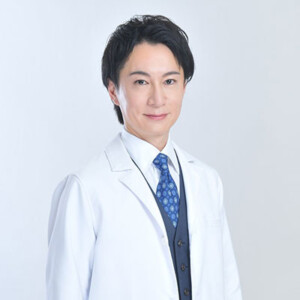
Dr. Jun Karibe
MD
Director
Education & Career
Certifications
Awards
MEDICAL REVIEW