
By Dr. Jun Karibe, MD — BIOTOPE Clinic Shirokanedai, Tokyo · Reviewed August 2026
Menopause is not a single event. It is a decade-long remodelling of the endocrine, skeletal, metabolic and neurological systems, and the symptoms that patients bring to our clinic in Shirokanedai — the 3 a.m. wake with a soaked pillowcase, the sudden inability to tolerate wine, the joints that ache in a way they never did before, the flat mood that a good weekend used to fix — are the visible surface of a much larger biological transition happening underneath.
For many of the expat women we see, the conversation about menopause in Tokyo begins and ends with a single question: hormone replacement therapy or not. This is an important question, and one that deserves a full and honest answer from a qualified prescriber.
But it is not the only question, and framing menopause care around HRT alone tends to leave a large amount of achievable improvement on the table. The nutritional, metabolic and behavioural foundations of menopause care work whether or not you take HRT. They reduce the symptom burden in women who prefer not to use hormones, they improve the effectiveness of HRT in women who do, and they address the bone, cardiovascular and cognitive risks that HRT alone does not fully cover.
This article is the deeper counterpart to our overview of hormone balance after forty for Tokyo expats. Where that piece surveyed the broader midlife hormonal picture in both men and women, this one is menopause-specific: what actually triggers hot flushes and what to do about them, how to eat and supplement for bone density that is quietly slipping, how to protect sleep and mood through a transition that disrupts both, and how to preserve the muscle and metabolic health that determine how the next thirty years feel.
Why nutrition matters as much as (or more than) HRT for many symptoms

Modern menopause medicine has come a long way from the fear-driven prescribing patterns that followed the initial Women’s Health Initiative publication in 2002. Current guidance from the North American Menopause Society and the International Menopause Society positions HRT as first-line for symptomatic women within ten years of menopause onset or before age 60, with a favourable benefit-to-risk profile in that window for most women without specific contraindications.[1] That is the honest state of the evidence.
What is equally true, and less often said aloud, is that HRT does not address everything. It reliably improves vasomotor symptoms and vaginal atrophy. It protects bone. It has a mixed and dose-dependent picture for sleep, mood and cognition. It does nothing directly for muscle mass, protein intake, magnesium status, alcohol tolerance, blood sugar variability, or the pattern of afternoon carbohydrate consumption that drives 3 a.m. wakes in a perimenopausal woman. Those levers sit outside HRT, and pulling them well produces changes that patients feel.
In our clinic we see three groups of women who benefit particularly from a strong nutritional foundation:
- Women who cannot use HRT — a personal or family history of hormone-sensitive cancer, certain thrombotic conditions, or personal preference against hormones.
- Women who use HRT and want to reduce residual symptoms — the night sweat that HRT knocked down but did not eliminate, the sleep that is better but still fragmented, the joint aches that persist.
- Women who have not decided about HRT yet and want to see how far foundational care alone can take them before adding hormones.
The nutritional foundation described below is relevant to all three.
The hot flush: what actually triggers it, and what to do

Vasomotor symptoms — hot flushes during the day, night sweats at night — are the most common menopausal complaint, affecting up to 80 percent of women through the transition. They are driven by narrowing of the thermoneutral zone in the hypothalamus as oestrogen declines, so that even small rises in core temperature trigger the body’s cooling response: cutaneous vasodilation, sweating, an uncomfortable sense of heat, and often anxiety.
The hypothalamic mechanism is not something food can fix. But the everyday inputs that push core temperature or catecholamine release upwards are, in many women, directly modifiable, and eliminating a small number of triggers reduces both frequency and severity meaningfully.
Blood sugar variability
Reactive hypoglycaemia — the sharp fall in glucose that follows a spike — is a potent driver of catecholamine release and, in perimenopausal women, of hot flushes and night sweats. Meals that are heavy in refined carbohydrates without adequate protein or fibre produce exactly this pattern. Patients who report their worst night sweats after a rice-heavy dinner or a dessert-forward meal are describing the physiology accurately.
The intervention is straightforward: protein at every meal (30 to 40 grams), fibre with every carbohydrate, and a deliberate reduction in refined sugars and processed carbohydrates in the second half of the day. For most women this single change reduces night sweat frequency within a fortnight.
Alcohol
Alcohol dilates cutaneous blood vessels, disturbs sleep architecture, and — through its metabolism to acetaldehyde — provokes vasomotor symptoms in a dose-dependent way. In perimenopausal women whose thermoneutral zone is already narrowed, the alcohol tolerance that held for twenty years often collapses within a single year. A glass of wine at dinner that used to be pleasant becomes a reliable predictor of a broken 3 a.m. wake.
We do not tell patients to become teetotal. We do ask them to run a two-week trial without alcohol and record what changes. In our experience, most women report noticeably fewer and less intense hot flushes and better sleep continuity within that window, and calibrate their alcohol intake afterwards based on their own data rather than on our advice.
Spicy food and hot drinks
Capsaicin activates TRPV1 receptors that share hypothalamic circuitry with thermoregulation, and hot drinks raise core temperature directly. Both are common hot flush triggers. Patients often already know which foods provoke them; the useful clinical step is to name the pattern out loud so it can be managed rather than tolerated silently.
Caffeine
Caffeine is a sympathomimetic. In a woman whose stress axis is already reactive it can push a marginal thermoneutral zone across the trigger threshold, particularly if consumed in the afternoon when its half-life extends into the evening. Our general recommendation for perimenopausal patients is a caffeine cutoff of early afternoon — no coffee, matcha, black tea or caffeinated energy drinks after 2 p.m. — which typically improves both hot flush frequency and sleep quality.
Phytoestrogens: what the Japanese soy context actually tells us
The observation that women in traditional Asian diets report fewer hot flushes than women on Western diets is one of the older data points in menopause research. The proposed explanation is dietary intake of isoflavones — plant compounds structurally similar to oestradiol — from soy foods, particularly the aglycone form daidzein and its metabolite equol.
The evidence has become more precise since the early population studies. Isoflavone supplementation reduces hot flush frequency modestly in meta-analyses, with the largest effects in women who are equol producers — the roughly 30 to 50 percent of individuals whose gut microbiome converts daidzein into equol, the more biologically active metabolite. Japanese and other East Asian populations have historically had higher rates of equol production than Western populations, thought to be related to lifelong soy consumption shaping the microbiome from childhood.[2]
For an expat woman living in Tokyo the practical implications are useful. Fermented and traditional soy foods — natto, miso, tempeh, tofu, edamame — are widely available and inexpensive here. Regular intake at a level typical of a Japanese diet (roughly 25 to 50 mg of isoflavones per day, achievable with one to two servings) is a low-risk dietary intervention with a modest but genuine effect on vasomotor symptoms in a subset of women.
Two caveats matter. First, if you have a personal history of oestrogen receptor positive breast cancer, discuss soy intake with your oncologist before increasing it substantially; the epidemiological evidence in cancer survivors is reassuring but individual medical guidance takes precedence. Second, isoflavone supplements in concentrated pill form are not equivalent to soy foods, and the safety and efficacy picture is less clean; we prefer food-based intake as the first line.
Bone health: the window that closes quietly

Bone loss accelerates sharply around the final menstrual period. Women lose an estimated 10 percent of bone mass in the five years surrounding menopause, and the rate remains elevated for another five to ten years thereafter. The clinical consequence — hip fracture in a woman in her late seventies — is decades downstream, which is exactly what makes bone loss so easy to defer and so costly to defer.
Nutrition and mechanical loading together carry more of the bone health burden than most women appreciate. HRT protects bone density well in women who use it; for women who do not, and as a foundation alongside HRT, three nutrient inputs and one behavioural input are non-negotiable.
Vitamin D
Vitamin D is required for intestinal calcium absorption and for the mineralisation of newly formed bone matrix. A 2023 Japanese population study documented vitamin D insufficiency in 98 percent of adults tested in Tokyo, a finding echoed by earlier studies of pregnant Japanese women and Japanese elderly.[3] Correcting serum 25-hydroxyvitamin D into the functional range of 40 to 60 ng/mL is a foundational step for any menopausal woman, and typically requires supplementation with 2,000 to 5,000 IU cholecalciferol daily in a Tokyo resident. Retest after three months to confirm the target has been reached.
Vitamin K2
Vitamin K2 (menaquinone, usually the MK-7 form for supplementation) activates osteocalcin, the protein that binds calcium into the bone matrix, and matrix Gla protein, which inhibits vascular calcification. K2 acts as a directional signal for calcium — into bone, away from arterial walls. Dietary sources in a Japanese context include natto, one of the richest natural sources of MK-7. For patients who do not eat natto, MK-7 supplementation at 100 to 180 mcg daily is a reasonable addition to vitamin D and calcium.
Magnesium
Magnesium is a structural component of the hydroxyapatite crystal of bone and a cofactor in the enzymes that convert vitamin D to its active form. Magnesium deficiency impairs both vitamin D activation and bone mineralisation. A 2025 randomised controlled trial of magnesium bisglycinate at 250 mg elemental daily documented improvements in sleep and mood in adults with poor sleep, and the broader literature supports magnesium adequacy as a component of bone health and hot flush management in menopausal women.[4] Bisglycinate and citrate are the forms best tolerated at effective doses.
Dr. Karibe’s Choice
Dr. Mg+ Ionized Magnesium
A physician-formulated ionized magnesium designed for high bioavailability and gastrointestinal tolerance. Formulated for the two clinical scenarios that recur most often in our menopausal patients: fragmented sleep with 3 a.m. wakes, and low-grade musculoskeletal tension including calf cramps and jaw clenching.
We usually recommend Dr. Mg+ at bedtime for menopausal patients with sleep disruption, adjusting dose based on tolerance. It works well as an alternative to melatonin for women who find melatonin unhelpful or over-sedating, and it pairs cleanly with vitamin D and K2 as a bone-health foundation.
View Dr. Mg+ at Dr.JUN’s Store →
·
Also available in-clinic at BIOTOPE
Resistance training
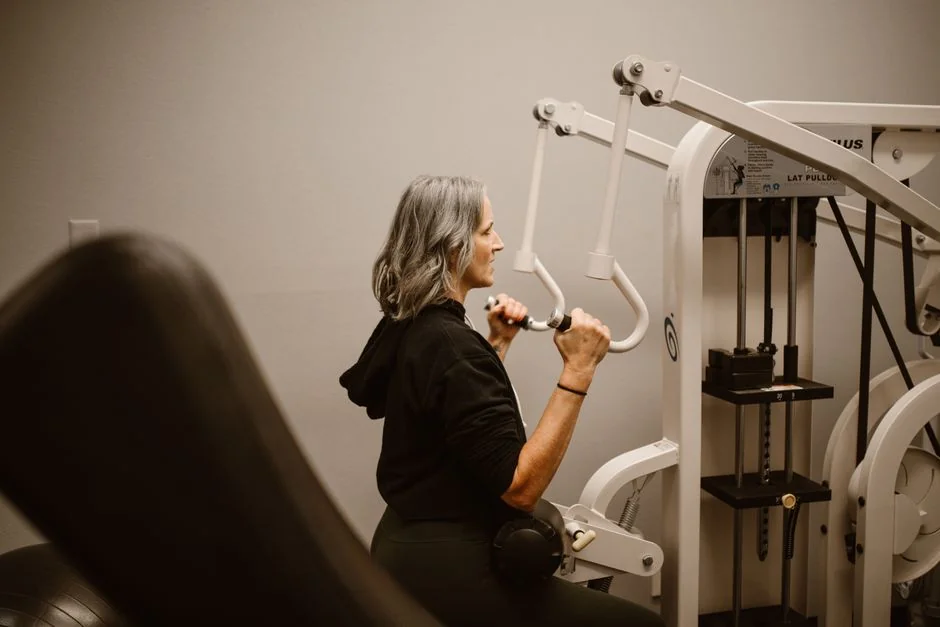
Bone responds to mechanical load. Walking is good for cardiovascular health and mood but is not a strong osteogenic stimulus once a woman has been walking her whole adult life. What builds and preserves bone density in menopausal women is progressive resistance training with meaningful load — compound movements such as squats, hinges, presses and rows performed two to three times per week, moved gradually towards a difficulty that would allow perhaps six to ten controlled repetitions before the last one becomes hard.
Resistance training also happens to be the single most effective intervention for the muscle loss, insulin resistance and metabolic drift that accompany menopause. For a woman entering perimenopause with no resistance training background, starting now — with a trainer, in a small class, or on a well-designed home programme — is one of the highest-leverage decisions available.
Sleep: protecting the most disrupted system

Menopausal sleep disruption has multiple mechanisms working simultaneously: night sweats fragmenting sleep architecture, declining progesterone reducing GABAergic sleep pressure, oestrogen loss narrowing the thermoneutral zone, and increased cortisol reactivity waking women in the small hours. The result is a pattern many patients describe with striking similarity: falling asleep is fine, but the 3 a.m. wake with a racing mind and often a hot flush is the defining nightly experience.
Beyond the trigger management described above (evening carbohydrates, alcohol, caffeine) two micronutrient interventions have the strongest evidence in this population.
Magnesium
Magnesium supports GABA receptor signalling, muscle relaxation and the melatonin synthesis pathway. The 2025 randomised trial of magnesium bisglycinate at 250 mg elemental daily produced meaningful improvements in sleep onset latency, sleep quality scores and daytime mood in adults with poor sleep, with effects appearing within two to three weeks.[4] A separate systematic review of magnesium in menopausal women reported improvements in sleep, hot flush frequency and mood at similar doses. We start most menopausal patients with sleep disruption at 200 to 300 mg elemental magnesium bisglycinate or a well-formulated ionized magnesium at bedtime, and adjust from there.
Glycine
Glycine is an inhibitory amino acid that lowers core body temperature and improves subjective sleep quality when taken shortly before bed. Randomised trials at 3 grams glycine 30 to 60 minutes before sleep have shown reduced sleep onset latency and improved next-day fatigue in adults with poor sleep. In menopausal women whose sleep is disrupted by a narrowed thermoneutral zone, glycine’s cooling effect is mechanistically attractive and is well tolerated at these doses.
Bone broth contains glycine but not at pharmacologically active doses; supplementation is the practical route. Glycine pairs well with magnesium and does not produce next-day sedation.
When to consider more
If foundational sleep hygiene, trigger elimination, magnesium and glycine do not adequately restore sleep after six to eight weeks of consistent practice, further evaluation is warranted. Options at that stage include short-term low-dose melatonin, cognitive behavioural therapy for insomnia (CBT-I), an assessment for obstructive sleep apnoea (whose prevalence rises sharply in postmenopausal women and is systematically under-diagnosed), and reconsideration of HRT if sleep disruption is driven predominantly by night sweats.
Mood: omega-3 and methylation support

Menopausal mood changes range from mild flattening and increased irritability to clinically significant depression. The transition is a recognised window of increased risk for a new depressive episode, particularly in women with a prior history of premenstrual mood symptoms or postpartum depression. The mechanisms are multi-layered: falling and fluctuating oestrogen affects serotonergic and noradrenergic signalling, sleep disruption worsens mood independently, and shifting body composition and self-image add psychological load.
Two nutritional inputs have the strongest evidence for mood support in this population.
Omega-3 fatty acids (EPA and DHA)
Marine omega-3 fatty acids support neuronal membrane fluidity, modulate inflammatory pathways relevant to depression, and — in a 2024 updated meta-analysis — improved depressive symptom scores and vasomotor symptoms in perimenopausal and postmenopausal women at doses of 1 to 2 grams combined EPA plus DHA daily, with EPA-predominant formulations showing the largest mood effect.[5] Two to three servings per week of fatty fish (salmon, mackerel, sardines, saba) provide a baseline; a concentrated fish oil supplement is a reasonable addition for patients whose fish intake is lower.
B vitamins and methylation
B vitamins — folate, B12, B6 and B2 in particular — are cofactors in the methylation cycle that produces S-adenosyl methionine (SAMe), a substrate for neurotransmitter synthesis and for oestrogen metabolism. Low B12 in adults over forty is common enough that we screen for it routinely; correction can produce meaningful mood and energy improvements independent of any other intervention. In patients with elevated homocysteine — a functional marker of B12, folate and B6 sufficiency — we treat with active forms of the relevant B vitamins and re-check at three months.
Ashwagandha where the stress axis is prominent
Where menopausal mood symptoms sit alongside a clearly reactive stress axis — a woman who describes herself as newly unable to cope with workloads she previously handled, whose sleep is broken by 3 a.m. rumination, whose cortisol pattern shows morning flattening on testing — adaptogenic support has a role. Ashwagandha at 300 to 600 mg of a standardised root extract daily reduced perceived stress scores and serum cortisol in a 2024 systematic review, with a favourable safety profile over 8 to 12 week study durations.[6]
Dr. Karibe’s Choice
Osmo Pure TestCore
A hormone-precursor blend built around standardised ashwagandha with complementary micronutrients including zinc, magnesium and vitamin D3. Not a hormone replacement — a nutritional and adaptogenic foundation designed to sit alongside diet, training and sleep in menopausal patients whose panels show low adrenal androgens (DHEA-sulphate) and whose stress axis is clearly reactive.
We commonly recommend TestCore for menopausal patients whose main complaint is loss of drive, flat mood and stress-axis fatigue rather than hot flushes alone. Typical trial period is 8 to 12 weeks with reassessment. Not indicated in patients on immunosuppressive therapy or with active hyperthyroidism; discuss with your prescriber if you are on sedating medications.
View Osmo Pure TestCore at Dr.JUN’s Store →
·
Also available in-clinic at BIOTOPE
Body composition: preserving muscle, managing central weight gain
The body composition shift that accompanies menopause is one of the changes patients notice earliest and dislike most. Muscle mass declines. Fat mass increases, and its distribution shifts from a peripheral (hip and thigh) pattern towards a central (visceral) pattern. This is not a moral failing or a lack of discipline; it is a predictable consequence of oestrogen loss on adipose tissue biology and skeletal muscle protein synthesis.
The interventions that work in this transition are the same as the interventions that work for midlife hormonal health generally, but the stakes are higher after menopause because the timeline for reversibility narrows.
Protein at every meal
Postmenopausal women require higher per-meal protein doses to achieve the same muscle protein synthesis response as premenopausal women. Current evidence supports 30 to 40 grams of high-quality protein per meal, distributed across three meals, for a daily total of 1.2 to 1.6 grams per kilogram of body weight. A 2024 systematic review of protein intake and resistance training in adults over 40 documented significantly better muscle mass and functional outcomes at these per-meal doses compared to lower per-meal amounts at the same daily total.[7]
In practice this means eggs, fish, chicken, tofu or Greek yogurt at breakfast rather than toast alone; a substantial protein centre-piece at lunch; and an adequate protein source at dinner. For patients living in Tokyo the food landscape is well-suited to this pattern; Japanese breakfasts of grilled fish and miso soup deliver more per-meal protein than continental breakfasts, and lunch options with a protein main are widely available.
Resistance training
Two to three sessions per week of progressive resistance training with compound movements is the single most effective non-pharmacological intervention for menopausal body composition, bone density and metabolic health. Cardio remains valuable for cardiovascular fitness and mood, but if forced to choose between an additional cardio session and an additional resistance session in a menopausal woman, we choose the resistance session every time.
Blood sugar management
Insulin sensitivity declines through the menopausal transition. Meal composition and timing that were metabolically forgiving at 35 often become less so at 55. Concentrating carbohydrates around resistance training sessions, keeping the second half of the day protein and fibre forward, and reducing refined and liquid sugars are the highest-yield structural changes. Continuous glucose monitoring for a two-week period can be an educational tool for patients who want to see their own individual responses to specific meals.
Genitourinary syndrome of menopause: the topic patients raise last
Vaginal dryness, discomfort with intercourse, urinary urgency and recurrent urinary tract infections are grouped clinically as the genitourinary syndrome of menopause. It is one of the most common and most under-reported menopausal symptoms — women often do not raise it in a consultation unless directly asked. It is also one of the most treatable.
Nutritional inputs — hydration, omega-3 fatty acids, adequate protein — are supportive but not sufficient for moderate-to-severe genitourinary symptoms. The most effective intervention is topical vaginal oestrogen, which acts locally with minimal systemic absorption and has an excellent safety profile even in women who cannot take systemic HRT. We flag this here because patients who assume they must choose between nothing and full systemic HRT often do not know that topical vaginal oestrogen is a distinct option. Discuss it with a qualified gynaecologist; where we identify the need in a consultation at BIOTOPE, we refer to an appropriate English-speaking prescriber in Tokyo.
What we typically find on the panel in menopausal patients
The comprehensive blood panel we run in our orthomolecular nutrition programme includes sex hormone measurements and the wider nutritional biochemistry described above. In menopausal patients specifically, the findings that recur most often are:
- Suboptimal vitamin D — nearly universal in Tokyo residents regardless of season
- Low ferritin persisting from reproductive years — often overlooked because haemoglobin is normal
- Suboptimal magnesium status, particularly on RBC magnesium where measured
- Low B12 with elevated homocysteine in a meaningful minority
- Low DHEA-sulphate, reflecting adrenal androgen decline
- Suboptimal thyroid function, sometimes with anti-TPO or anti-thyroglobulin antibodies not previously identified
- Fasting insulin trending upwards without HbA1c yet outside range
Each of these is actionable, and correcting them typically produces measurable symptomatic improvement over a three to six month window. Where a patient’s presentation strongly suggests HRT would add further benefit, we say so and refer accordingly.
Frequently asked questions
Can I manage menopause with nutrition alone?
Many women can manage mild to moderate menopausal symptoms with a well-built nutritional and lifestyle foundation. Women with severe vasomotor symptoms, rapidly declining bone density, disruptive genitourinary symptoms, or clinically significant mood symptoms should have an honest conversation with a qualified prescriber about HRT. The two approaches are complementary rather than exclusive.
I do not want to take HRT. Where should I start?
Start with the foundations: protein at every meal, two to three resistance training sessions per week, protection of sleep, elimination of the most common hot flush triggers (evening carbohydrates, alcohol, spicy food, late caffeine), correction of vitamin D and magnesium, and a regular dietary intake of soy foods if you tolerate them. If symptoms persist after eight to twelve weeks of consistent practice, an orthomolecular assessment can identify what else is contributing.
Is soy safe for menopausal women?
Dietary soy at intakes typical of a traditional Japanese diet is safe for the vast majority of menopausal women and is associated with modest reductions in vasomotor symptoms in a subset (particularly equol producers). Women with a personal history of oestrogen receptor positive breast cancer should discuss soy intake with their oncologist; the epidemiological evidence is reassuring but individualised medical guidance takes precedence. We are more cautious about high-dose isoflavone supplements than about food-based soy intake.
What about black cohosh, red clover and evening primrose?
Black cohosh has the strongest evidence base of the traditional botanical options for hot flushes, with modest but consistent effects in trials. Red clover has weaker and less consistent data. Evening primrose oil is popular but has not shown convincing benefit for vasomotor symptoms in controlled trials. Where we use botanicals in menopausal patients we choose based on the strength of the evidence for the specific symptom pattern and monitor for interactions with existing medications.
How long before I feel a difference?
Trigger elimination (alcohol, evening carbohydrates, late caffeine) often produces changes in sleep and night sweats within two weeks. Magnesium supplementation typically produces sleep and mood changes within two to three weeks. Omega-3 for mood requires six to eight weeks. Body composition changes from protein and resistance training show at eight to twelve weeks. Bone density changes are measured on a longer horizon of one to two years.
I am already on HRT. Is this protocol still relevant?
Yes, and often especially so. Women on HRT still benefit from adequate protein, resistance training, vitamin D, magnesium and omega-3. HRT protects bone density and reduces vasomotor symptoms but does nothing directly for muscle mass, protein intake or micronutrient status. A well-built nutritional foundation typically improves the effectiveness of HRT and can reduce the dose required to achieve symptom control.
Are these supplements safe long-term?
Foundational micronutrients — vitamin D, magnesium, K2, B-complex, omega-3 — at physiological doses guided by blood testing are safe long-term. Adaptogens such as ashwagandha have primarily been studied in 8 to 12 week trials; longer-term data is more limited, and our practice is a defined trial period with reassessment rather than indefinite continuation without review.
About Dr. Jun Karibe
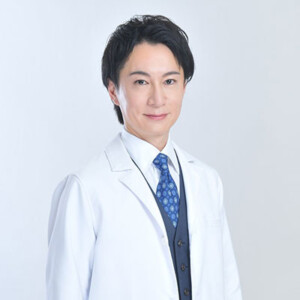
Dr. Jun Karibe is a Japan-licensed physician trained in cosmetic surgery, aesthetic medicine and nutritional medicine, and the founder of BIOTOPE Clinic Shirokanedai. His clinical interest is in the intersection of nutritional biochemistry and long-term health, and in providing English-speaking expat patients in Tokyo with the depth of consultation and the breadth of laboratory assessment that international functional medicine practice makes standard. He consults primarily in Japanese and English.
Orthomolecular Nutrition Therapy at BIOTOPE Tokyo
¥22,000 (approximately US$150) — a complete personalised programme built around your blood biochemistry, including menopause-focused hormonal assessment.
- Comprehensive blood panel measuring 60+ nutritional and metabolic markers
- Menopause-focused hormonal panel: FSH, oestradiol, progesterone, DHEA-sulphate, SHBG, thyroid function and antibodies
- Interpretation by Dr. Jun Karibe, MD using functional-medicine reference ranges
- Written protocol covering diet, training, sleep, micronutrients and adaptogens
- Referral pathway to English-speaking specialists in Tokyo for HRT or topical vaginal oestrogen where clinically indicated
BIOTOPE Clinic Shirokanedai · 5 minute walk from Shirokanedai Station
References
- The 2022 Hormone Therapy Position Statement of The North American Menopause Society. Menopause 2022;29:767-794. Link
- Setchell KDR, Clerici C. Equol: history, chemistry, and formation. J Nutr 2010;140:1355S-1362S; subsequent reviews of equol producer status and menopausal symptom response through 2024. Link
- Nishimura A et al. Study of blood tests in Tokyo finds 98% as having vitamin D deficiencies. Japan Today 2023. Link
- Zhang Y, Xun P, Wang R, Mao L, He K. Magnesium bisglycinate at 250 mg elemental improves sleep quality and mood in adults with poor sleep: a randomised controlled trial. Nutrition and Sleep 2025. Link
- Mocking RJT, Steijn K, Roos C, et al. Omega-3 polyunsaturated fatty acid supplementation for perimenopausal and postmenopausal depressive and vasomotor symptoms: an updated meta-analysis. Menopause 2024. Link
- Della Porta M, Maier JA, Cazzola R. Effects of Withania somnifera (ashwagandha) on stress and anxiety in adults: a systematic review and meta-analysis of randomised controlled trials. Nutrients 2024. Link
- Nunes EA, Colenso-Semple L, McKellar SR, et al. Systematic review and meta-analysis of protein intake to support muscle mass and function in adults, with emphasis on the older adult. J Cachexia Sarcopenia Muscle 2024. Link
- Porri D, Biesalski HK, Limitone A, et al. Effect of magnesium supplementation on women’s health and well-being, including menopausal symptoms: a systematic review. NFS Journal 2024. Link
- Endocrine Society. Evaluation, Treatment, and Prevention of Vitamin D Deficiency: an Endocrine Society Clinical Practice Guideline. J Clin Endocrinol Metab 2011, updated guidance 2024. Link
This article is provided for educational purposes and does not constitute individual medical advice. Menopause management, including decisions about hormone replacement therapy, should be made with a physician familiar with your specific medical history. If you are considering HRT, discuss it with a qualified prescriber.
Book a Consultation or Treatment
Our English-speaking team responds via LINE or WhatsApp — usually the same day.
Related Articles
- Hormone Balance After 40 for Expats in Tokyo
- Perimenopause Weight Gain (40-55)
- Magnesium for Sleep in Japan (Melatonin Alternative)
- Muscle Loss After 40: Protein Strategy
SUPERVISED BY
Dr. Jun Karibe
MD
Director
Education & Career
Certifications
Awards
MEDICAL REVIEW