What Is Alopecia Areata?
Alopecia areata (AA) is an autoimmune condition in which the body’s own T-cells mistakenly attack hair follicles, typically producing one or more round, smooth patches of hair loss on the scalp.
In more extensive cases it can affect the entire scalp (alopecia totalis) or the whole body (alopecia universalis).
It is distinct from androgenetic alopecia (common male or female pattern hair thinning), which has a different, hormone-related cause.
Alopecia areata is more common than many people assume. Clinical reports indicate a lifetime incidence of around 2% worldwide, meaning roughly 1 in 50 people will experience an episode at some point in their life (1).
Many mild, patchy cases resolve on their own — studies suggest spontaneous regrowth occurs in about 80% of patients with limited patchy disease within the first year — though the course can be unpredictable, and some patients experience recurrence or more extensive involvement (1).
How Alopecia Areata Treatment Works
Treatment choice in Japan depends largely on how much scalp is affected, how long the patches have been present, and whether hair loss is progressing. There is no single treatment that works for everyone, and response can vary considerably between patients.
Topical and Insurance-Covered Dermatological Treatments
For most patchy cases, first-line care in Japan involves topical corticosteroids, corticosteroid injections into the affected patches, or topical immunosuppressant preparations, all of which aim to calm the local autoimmune reaction around the follicle. These treatments are part of standard, insurance-covered dermatological care.
Narrowband UVB Phototherapy
Narrowband UVB phototherapy uses targeted ultraviolet light to modulate immune activity in the skin and is sometimes used for alopecia areata, particularly when topical treatment alone has been insufficient. In one retrospective cohort study of targeted narrowband UVB, a complete response was recorded in just over half of patients whose treatment course was completed, though results varied by disease extent (4).
Systemic Treatment for Severe, Long-Standing Cases
For patients with severe, extensive alopecia areata that has not responded to other measures, oral Janus kinase (JAK) inhibitors are now part of the treatment landscape in Japan. Baricitinib became the first JAK inhibitor approved in Japan for alopecia areata in June 2022, for patients aged 15 and over with roughly 50% or more scalp hair loss and no spontaneous regrowth over approximately six months (2).
The Japanese Dermatological Association’s 2024 clinical practice guideline for alopecia areata highlights this as one of the most significant updates since the previous 2017 edition, reflecting the fact that oral JAK inhibitors are now covered by national health insurance for eligible severe cases (3). A Japanese real-world study following 17 patients on baricitinib found that 58.9% achieved substantial scalp regrowth (a SALT20 response) by week 48 and 64.7% by week 60 — outcomes that were somewhat higher than the roughly 37–41% response seen in the original international trials at a comparable time point (2).
| Treatment | How It Works | Typically Used For | Insurance Status in Japan |
|---|---|---|---|
| Topical/injected corticosteroids | Reduces local autoimmune inflammation around the follicle | Mild to moderate patchy AA | Insurance-covered |
| Narrowband UVB phototherapy | Modulates local immune activity with targeted UV light | Patchy AA not responding to topical treatment | Insurance-covered |
| Oral JAK inhibitors (e.g. baricitinib) | Blocks signalling pathways that drive the autoimmune attack | Severe, extensive, long-standing AA meeting specific criteria | Insurance-covered for eligible severe cases since 2022 |
Where to Get Alopecia Areata Treatment in Tokyo
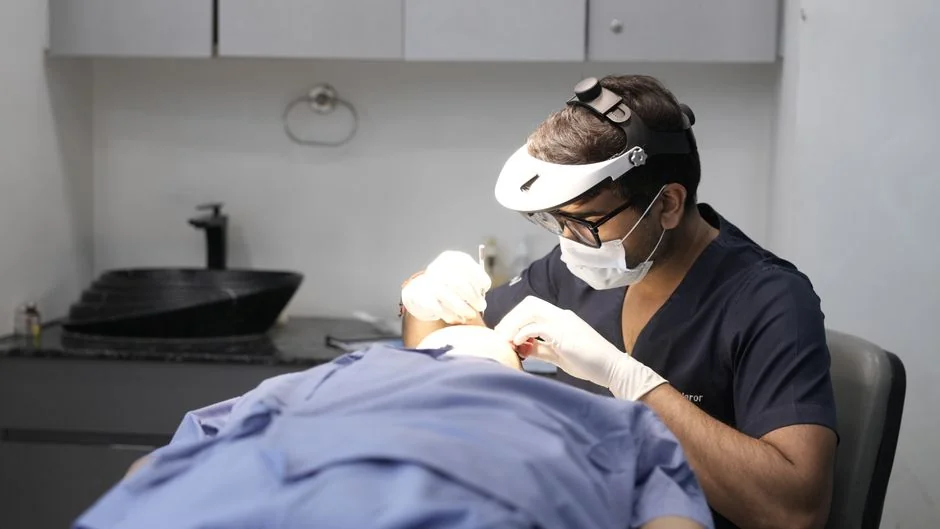
Within our clinic group, both BIOTOPE CLINIC (Shirokanedai, Minato-ku) and Kojimachi Dermatology & Plastic Surgery Clinic (Ichigaya, Chiyoda-ku) offer English-language consultation with Dr. Jun Karibe’s team. Insurance-covered dermatological care for alopecia areata — including topical treatment, corticosteroid injections, and phototherapy — is handled at Kojimachi Dermatology & Plastic Surgery Clinic, our main office for general and insurance-based dermatology. Bookings and enquiries in English: LINE or WhatsApp.
In Dr. Karibe’s clinical experience at BIOTOPE CLINIC, many patients who come in for a general hair or scalp consultation are initially unsure whether they are dealing with alopecia areata or androgenetic (pattern) hair thinning — a distinction that matters because the two are managed very differently. If your concern turns out to be hormone-related pattern hair loss rather than autoimmune alopecia areata, that conversation, along with cosmetic and men’s health services, is handled at BIOTOPE CLINIC.
Cost of Alopecia Areata Treatment in Tokyo
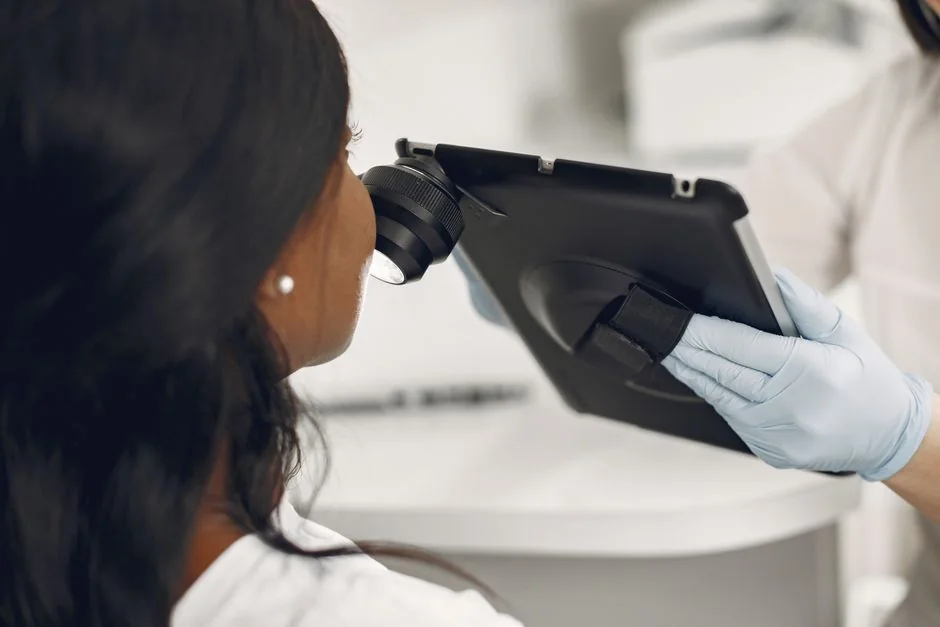
Costs vary depending on which treatment is appropriate for your case. Insurance-covered treatments such as topical or injected corticosteroids and narrowband UVB phototherapy are billed under Japan’s national health insurance system at the standard patient co-payment rate for those enrolled.
Oral JAK inhibitor therapy for eligible severe cases is also insurance-covered, though the criteria are specific and the medication itself carries an ongoing monthly cost. Please see the clinic’s official price page or contact us for a current quote, since exact fees depend on your diagnosis, insurance status, and treatment plan. For an accurate quote, please book a consultation.
Have a question about this treatment?
Message us on LINE or WhatsApp — our English-speaking team usually replies the same day.
What to Expect: Before, During and After Treatment
Who Is a Good Candidate for Early Treatment?
Anyone noticing a new round or oval patch of hair loss, unusual shedding, or pitted/ridged fingernails (a recognised associated sign) is a reasonable candidate for an early dermatology consultation. Earlier evaluation matters: an earlier age of onset and a longer duration without regrowth are both associated with a higher likelihood of more extensive disease, so prompt assessment can help guide treatment decisions (1).
Who Should Be Cautious or Seek Further Discussion
Patients considering oral JAK inhibitor therapy should be aware that this is a systemic medication with a specific eligibility threshold and monitoring requirements, and it is not the first step for mild or newly-appeared patches. Pregnant or breastfeeding patients, and those with certain infection or clotting risk factors, will need a detailed discussion with their physician before systemic treatment is considered.
During and After Treatment
Topical treatments and phototherapy typically require regular visits over several weeks to months, with gradual regrowth assessed at follow-up appointments. Oral JAK inhibitor therapy generally shows initial improvement within three to four months, with fuller regrowth sometimes taking nine to twelve months of continuous treatment (2). Because relapse after stopping JAK inhibitor therapy is well documented in the clinical literature, patients who respond well are usually kept on a maintenance dose rather than stopping abruptly.
Common Misconceptions About Alopecia Areata
“It’s just stress-related hair loss, so it will go away if I relax.”
Alopecia areata is a genuine autoimmune condition: the immune system’s normally protected relationship with the hair follicle breaks down, and CD8+ T-cells attack the follicle directly. Stress may act as a trigger or aggravating factor in some patients, but research has not established it as a proven primary cause, and relying on stress reduction alone can delay effective treatment.
“A JAK inhibitor is a one-time cure.”
Oral JAK inhibitors can produce meaningful regrowth in appropriately selected patients, but clinical studies show that a substantial proportion of patients experience relapse within a few months of stopping the medication. For this reason, JAK inhibitor therapy is generally approached as an ongoing, monitored treatment rather than a single course that permanently resolves the condition.
Frequently Asked Questions
- Q. Is alopecia areata the same as male or female pattern baldness?
- No. Alopecia areata is an autoimmune condition causing patchy or diffuse hair loss, while pattern baldness (androgenetic alopecia) is a separate, hormone-related process. They require different evaluation and treatment approaches.
- Q. Will my hair definitely grow back?
- Many people with limited patchy alopecia areata see spontaneous regrowth, but the course is unpredictable and varies by individual, disease extent, and duration. A dermatologist can give you a more personalised sense of prognosis after an examination.
- Q. Can I get treated in English in Tokyo?
- Yes. Both BIOTOPE CLINIC in Shirokanedai and Kojimachi Dermatology & Plastic Surgery Clinic in Ichigaya offer English-language consultation with Dr. Karibe’s team, with insurance-covered dermatological care for alopecia areata based at Kojimachi Clinic.
- Q. Is oral JAK inhibitor treatment available for everyone with alopecia areata?
- No. In Japan, insurance-covered oral JAK inhibitor therapy is reserved for patients aged 15 or older with roughly 50% or more scalp involvement and no spontaneous regrowth for about six months. Milder cases are usually managed with topical treatment or phototherapy first.
Have a question about this treatment?
Message us on LINE or WhatsApp — our English-speaking team usually replies the same day.
Summary
Alopecia areata is a common, well-researched autoimmune condition, not simply a stress reaction, and Japan’s treatment options range from topical corticosteroids and phototherapy through to insurance-covered oral JAK inhibitor therapy for eligible severe cases.
Early evaluation helps clarify which route is right for you. If you have questions about alopecia areata treatment, both BIOTOPE CLINIC (Shirokanedai, Minato-ku) and Kojimachi Dermatology & Plastic Surgery Clinic (Ichigaya, Chiyoda-ku) offer English-language consultation with Dr. Karibe and his team. Insurance-covered alopecia areata treatment is primarily handled at Kojimachi Dermatology & Plastic Surgery Clinic. English enquiries: LINE or WhatsApp.
24/7 Consultation & Booking
Book a Consultation or Treatment
Our English-speaking team responds via LINE or WhatsApp — usually the same day.
References
- Villasante Fricke AC, Miteva M. Epidemiology and burden of alopecia areata: a systematic review. Clinical, Cosmetic and Investigational Dermatology. 2015;8:397-403.
- Uchiyama A, Araki T, Kosaka K, Motegi SI. Real-life effectiveness and safety of baricitinib in 17 Japanese patients with alopecia areata: a 60-week single center study. Journal of Cutaneous Immunology and Allergy. 2025.
- Alopecia Areata Clinical Practice Guidelines Committee (Oyama M, et al.). Alopecia Areata Clinical Practice Guidelines 2024. Journal of the Japanese Dermatological Association. 2024;134(10):2491-2526.
- Esen Salman K, Kivanç Altunay İ, Salman A. The efficacy and safety of targeted narrowband UVB therapy: a retrospective cohort study. Turkish Journal of Medical Sciences. 2019;49(2):595-603.
Related Articles
You may also find these articles useful.
- Postpartum Hair Loss in Tokyo: When to Worry & Recovery
- English-Speaking Dermatologist Tokyo: Hair Loss & AGA
- Hair Loss in Women in Japan: The Iron, Thyroid and Nutrition Angle
- FAGA Treatment Tokyo: Regenerative Hair Loss Solutions
- Hair Mesotherapy Tokyo: Manual vs Hydro-Injector AGA
SUPERVISED BY
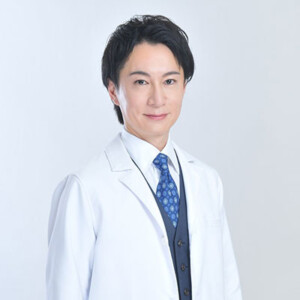
Dr. Jun Karibe
MD
Director
Education & Career
Certifications
Awards
MEDICAL REVIEW