Volnewmer vs Thermage vs HIFU: How Monopolar RF Compares to Each Technology
Choosing between skin-tightening treatments can feel overwhelming, particularly when clinics use technical terms such as monopolar radiofrequency, focused ultrasound, volumetric heating, SMAS treatment and collagen remodelling.
Volnewmer, Thermage FLX and HIFU are all non-surgical treatments designed to improve skin laxity. However, they do not use the same type of energy or treat tissue in exactly the same way.
Volnewmer and Thermage FLX use monopolar radiofrequency, commonly abbreviated as RF. They generate relatively broad heating within collagen-rich tissue through electrical resistance.
HIFU uses high-intensity focused ultrasound. Instead of heating a broad volume, it produces small thermal-coagulation zones at predetermined depths beneath the skin.
These differences affect:
- Which tissue layers are treated
- The type of tightening that may occur
- Treatment comfort
- Downtime
- Potential complications
- The time required for results to develop
- Which facial anatomy is most likely to benefit
None of these treatments is universally superior.
The most appropriate option depends on whether your primary concern is diffuse skin laxity, early jowling, reduced jawline definition, deeper tissue descent, facial fullness, volume loss or significant excess skin.
This guide provides a realistic comparison of Volnewmer vs Thermage vs HIFU, including how each technology works, what results you can reasonably expect, approximate costs in Tokyo and who may be a suitable candidate.
What You Will Learn in This Article
- How monopolar radiofrequency differs from HIFU
- How Volnewmer compares with Thermage FLX
- Which tissue layers each technology affects
- What results are realistically achievable
- How painful each treatment may be
- How much downtime to expect
- How long results may last
- Approximate costs in Tokyo
- Whether RF and HIFU can be combined
- Who should consider another treatment or surgery
Have a question about these treatments?
Message us on LINE or WhatsApp. Our English-speaking team usually replies on the same day.
between skin-tightening treatments can feel overwhelming, particularly when clinics use technical terminology that is difficult to parse. If you are exploring non-surgical lifting options in Tokyo and wondering how Volnewmer, Thermage, and HIFU differ — and which might suit you best — this article is designed to give you a clear, honest answer.
Below, you will find a thorough breakdown of how each technology works, what results are realistic, what they cost in Tokyo, and how to determine which approach suits your skin concerns and lifestyle.
- What Volnewmer, Thermage, and HIFU are, and the science behind each
- How monopolar radiofrequency (RF) compares to HIFU in terms of mechanism and depth of action
- What results to expect — and how long they last
- Realistic cost ranges in Tokyo for each treatment
- Who is best suited to each technology, and who should consider alternatives
Have a question about this treatment?
Message us on LINE or WhatsApp — our English-speaking team usually replies the same day.
Understanding the Core Technologies: RF vs HIFU
Understanding the Core Technologies: RF vs HIFU
Before comparing individual devices, it is important to understand the two main energy platforms involved.
Volnewmer and Thermage use radiofrequency energy.
HIFU uses focused ultrasound.
Both technologies create controlled heat beneath the skin, but the way that heat is generated and distributed is fundamentally different.
What Is Radiofrequency Energy?
Radiofrequency is a form of electromagnetic energy.
When radiofrequency current passes through tissue, the tissue’s electrical resistance converts part of that energy into heat. This is known as resistive or impedance-based heating.
Controlled thermal exposure can produce several biological effects:
- Contraction of existing collagen fibres
- Changes in collagen-fibre organisation
- Activation of a tissue-repair response
- Fibroblast activity
- Gradual collagen remodelling
- Progressive improvement in skin firmness
Clinical and histological literature supports the use of monopolar and bipolar RF for improving facial and body skin laxity. Most reported complications are mild and temporary when treatment is performed appropriately, although stronger monopolar systems still require careful technique. (PubMed)
What Does “Monopolar” Mean?
In a monopolar RF system, current travels from an active treatment electrode through the patient’s tissue toward a return electrode or grounding pad positioned elsewhere on the body.
This differs from bipolar RF, in which energy travels between two nearby electrodes in the treatment handpiece.
Monopolar RF can create broad heating within the dermis and underlying soft tissue.
However, it does not have one fixed treatment depth.
The distribution of heat depends on:
- Treatment-tip design
- Pulse duration
- Tissue impedance
- Energy level
- Surface cooling
- Contact pressure
- Treatment speed
- Number of passes
- Pulse overlap
- Local tissue thickness
It is therefore more accurate to describe monopolar RF as creating volumetric or broad tissue heating rather than targeting one precise millimetre depth.
What Is HIFU?
HIFU stands for high-intensity focused ultrasound.
It uses acoustic energy that converges at small focal points beneath the surface of the skin.
At each focal point, ultrasound energy is converted into heat, producing a small thermal-coagulation zone. Tissue between these focal points is largely spared.
Depending on the device and cartridge, facial HIFU may target nominal depths such as:
- Approximately 1.5mm
- Approximately 2.0mm
- Approximately 3.0mm
- Approximately 4.5mm
The actual anatomical layer reached depends on:
- Facial region
- Tissue thickness
- Skin compression
- Cartridge design
- Transducer positioning
- Individual anatomy
A 4.5mm cartridge is often described as targeting tissue in or around the superficial musculoaponeurotic system, known as the SMAS, in suitable areas.
However, the SMAS does not sit at exactly the same depth throughout the face. A cartridge labelled 4.5mm does not guarantee that every pulse will be deposited within the SMAS in every patient.
Systematic reviews generally find that HIFU can produce meaningful but moderate improvements in facial and neck laxity, particularly in the lower face, neck and periorbital areas. Study protocols and outcome measures vary substantially, so results cannot be guaranteed. (PubMed)
Does HIFU Work Like a Surgical Facelift?
No.
HIFU may deliver energy to depths associated with the SMAS in selected areas, but it does not surgically expose, release or reposition that tissue.
A surgical facelift may involve:
- Incisions
- Tissue dissection
- Ligament release
- Direct SMAS manipulation
- Repositioning of soft tissue
- Removal of excess skin
- Fat repositioning
- Internal suturing
HIFU does none of these things.
It produces small thermal zones that encourage contraction and tissue remodelling.
The phrase “targets the same layer as a facelift” should therefore not be interpreted as meaning that HIFU provides the same result as facelift surgery.
The improvement is usually subtler and less predictable than surgical lifting.
What Is Volnewmer?
Volnewmer is a non-invasive monopolar radiofrequency device developed by CLASSYS in South Korea.
It uses 6.78MHz monopolar RF energy and is designed to heat collagen-rich tissues while protecting the surface of the skin.
According to the manufacturer, the principal technical features include:
- 6.78MHz monopolar radiofrequency
- Impedance checking before energy delivery
- Continuous water cooling
- Multiple treatment-tip options
- Treatment of the papillary and reticular dermis
- Epidermal protection through contact cooling
The manufacturer does not describe the system as directly measuring the exact temperature of deep tissue in real time. It is more accurate to describe Volnewmer as combining impedance assessment, controlled energy delivery and continuous surface cooling. (クラッシス)
How Does Volnewmer Deliver Heat?
The treatment tip is placed directly against the skin.
Radiofrequency current travels through the tissue toward a return pad. The electrical resistance of the tissue converts this energy into heat.
At the same time, the treatment tip cools the epidermis.
This is intended to allow therapeutic heating beneath the surface while reducing excessive surface discomfort and thermal injury.
What Can Volnewmer Treat?
Volnewmer may be considered for:
- Mild to moderate facial laxity
- Early jowling
- Loss of skin firmness
- Reduced jawline definition
- Fine wrinkles
- Crepey skin
- Mild submental laxity
- Neck laxity
- Selected body areas
Volnewmer is primarily a tightening and collagen-remodelling treatment.
It does not:
- Replace lost facial volume
- Remove large amounts of fat
- Remove excess skin
- Surgically reposition descended tissue
- Produce the same result as a facelift
Is Radiofrequency (RF) Energy?
Radiofrequency energy is a form of electromagnetic energy that generates heat within tissue by causing charged particles (ions) to oscillate. When applied to the skin, this resistive heating raises the temperature of the dermis — the deeper structural layer of skin — and the subcutaneous tissue beneath it.
The key biological effect is collagen remodelling. Heat in the range of approximately 60–70°C causes existing collagen fibres to contract immediately, and then triggers a wound-healing cascade over the following weeks and months, during which new collagen and elastin are synthesised. The result is gradual but progressive skin tightening.
RF devices are categorised by how energy is delivered: monopolar (energy travels from one electrode through the body to a grounding pad), bipolar (energy passes between two closely spaced electrodes), and multipolar variants. Monopolar RF penetrates more deeply than bipolar RF, making it more relevant for laxity rather than superficial texture alone.
What Is HIFU?
High-intensity focused ultrasound uses precisely focused sound waves to create discrete thermal coagulation points — called HIFU lesions or focal points — at specific depths within the skin. The energy bypasses the surface epidermis and deposits heat at a targeted coordinate, typically reaching the superficial musculoaponeurotic system (SMAS), the fibromuscular layer that surgical face-lifts also address.
Because HIFU targets the SMAS layer — which sits at approximately 4.5 mm depth below the surface — it can produce a lifting effect that is architecturally similar to what a surgeon achieves mechanically. However, the degree of lift achievable non-surgically is always more modest than surgical intervention.
What Is Volnewmer? The New Monopolar RF Contender
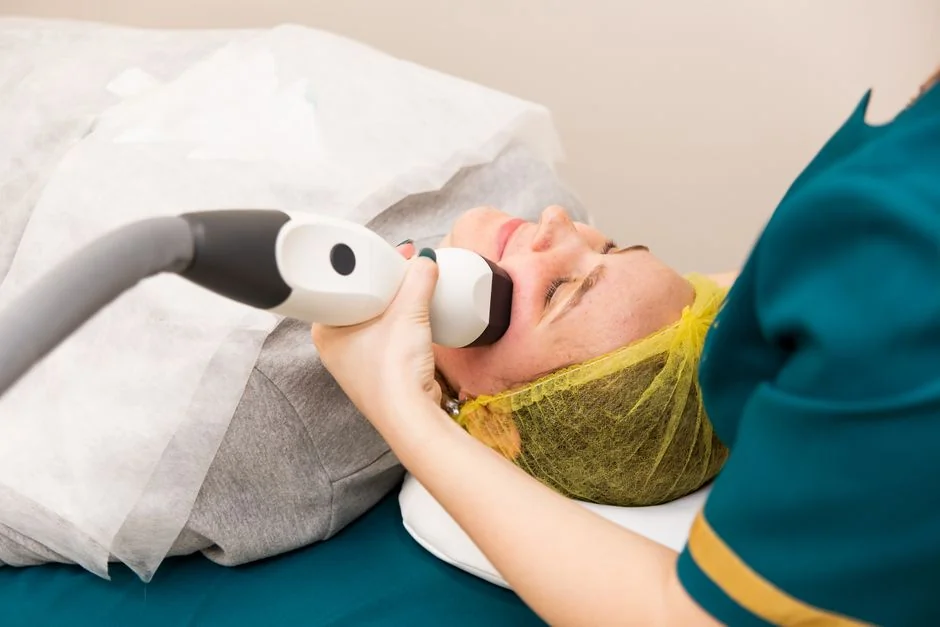
Volnewmer is a monopolar radiofrequency device that delivers controlled thermal energy to the deep dermis and subcutaneous fat layer. It is distinguished from older monopolar RF platforms by its use of temperature-controlled real-time feedback, which allows the device to maintain a precise target tissue temperature throughout the treatment, rather than simply delivering a fixed energy output.
This real-time temperature control is clinically significant. Older monopolar RF devices required operators to make manual judgements about energy settings, which introduced variability. Volnewmer’s feedback system aims to ensure that the therapeutic temperature window — warm enough to stimulate collagen but not so hot as to cause uncontrolled thermal injury — is consistently achieved across the entire treatment area.
Volnewmer is used primarily for facial and body skin laxity, with particular applications in the lower face, jowls, neck, abdomen, and arms. Because it works in the deep dermis and subdermal layer, it targets structural laxity rather than pigmentation or surface texture alone.
This is a treatment available at our Ichigaya clinic — feel free to ask about it during a consultation.
What Is Thermage? The Established Monopolar RF Standard
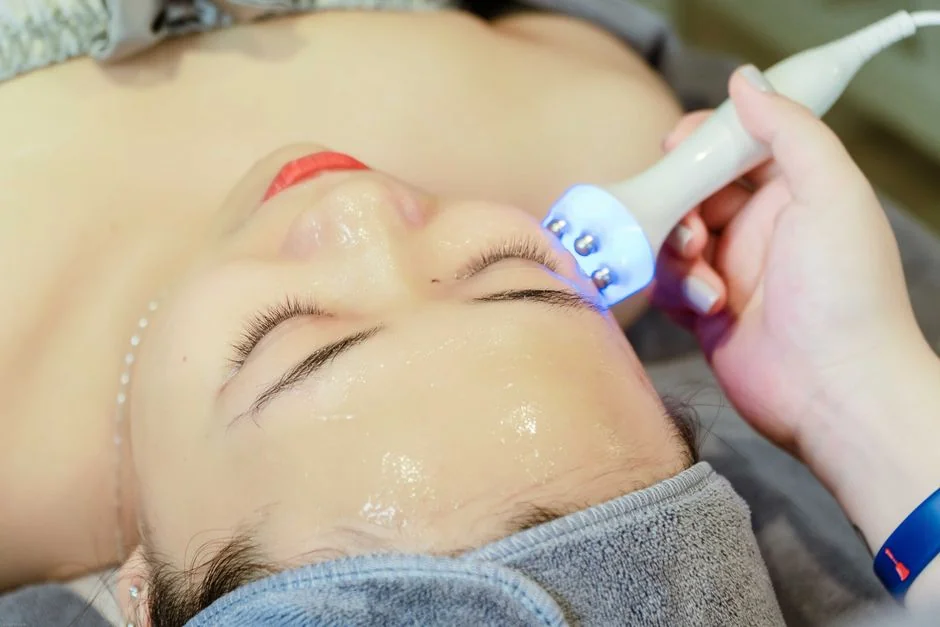
Thermage (Thermage FLX being the current generation) is one of the most widely recognised monopolar RF platforms globally. It has been in clinical use since the mid-2000s and has an extensive body of published literature supporting its efficacy for skin tightening.
Thermage delivers monopolar RF energy through a vibrating handpiece tip, with cooling applied simultaneously to the skin surface. This cryogen cooling protects the epidermis while allowing deeper dermal heating — a design principle shared broadly across monopolar RF devices. The vibration also serves to reduce discomfort during treatment.
Clinical reports indicate that a single Thermage session can produce measurable collagen contraction and gradual neocollagenesis (new collagen formation) over three to six months. Studies published in peer-reviewed dermatology literature suggest that patient satisfaction rates with monopolar RF for facial laxity typically range between 60 and 80%, with results lasting approximately one to two years depending on age, skin quality, and lifestyle factors.
Thermage FLX introduced AccuREP technology, which attempts to calibrate energy delivery based on tissue impedance — a step toward the kind of tissue-sensing approach that Volnewmer has taken further with full real-time temperature monitoring.
Volnewmer vs Thermage vs HIFU: Side-by-Side Comparison
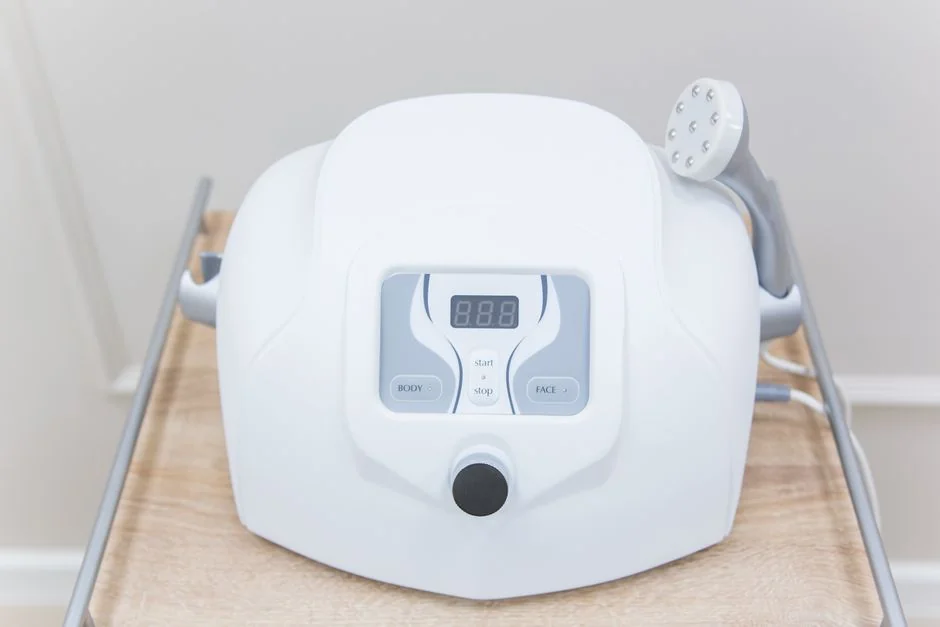
Volnewmer vs Thermage: What Is the Main Difference?
Volnewmer and Thermage belong to the same broad category.
Both are surface-applied monopolar RF devices designed to heat collagen-rich tissue while protecting the epidermis.
The main differences involve:
- Treatment-tip design
- Cooling technology
- Pulse design
- Energy-delivery algorithm
- Impedance assessment
- Treatment protocols
- Device history
- Published evidence
- Consumable costs
- Practitioner familiarity
Cooling Technology
Volnewmer uses continuous water cooling through its treatment tip.
Thermage FLX uses integrated cooling together with vibration intended to improve comfort.
Both technologies aim to protect the surface of the skin while heat develops in deeper tissues, but their engineering is not identical.
Tissue Impedance
Both systems incorporate tissue impedance into energy delivery.
Thermage FLX uses AccuREP to tune individual pulses.
Volnewmer checks impedance before energy delivery and combines this with continuous cooling.
It is inaccurate to say that Volnewmer uniquely performs full real-time deep-tissue temperature monitoring.
Evidence Base
Thermage has:
- A longer history of international use
- More published clinical studies
- More extensive post-market experience
- More established treatment protocols
Volnewmer is newer.
Clinical research on 6.78MHz continuous-water-cooled monopolar RF supports improvements in skin laxity and fine wrinkles, but the independent long-term evidence base remains smaller. (PubMed)
Treatment Cost
Thermage treatment tips are relatively expensive single-use consumables. This contributes to the higher treatment price at many clinics.
Volnewmer may offer a more accessible monopolar RF option, depending on the number of pulses, treatment area and clinic pricing.
Is One Device Stronger?
“Stronger” is not a medically useful comparison.
The result depends on:
- Actual energy delivered
- Pulse duration
- Treatment coverage
- Contact pressure
- Cooling
- Number of passes
- Tissue thickness
- Patient tolerance
- Practitioner technique
A higher displayed energy level does not automatically produce better tissue heating or a better clinical result.
Volnewmer vs HIFU: What Is the Main Difference?
Volnewmer produces broad radiofrequency heating.
HIFU creates small, focused thermal-coagulation zones at selected depths.
This difference influences their most appropriate clinical use.
Volnewmer May Be Better Suited to:
- General loss of skin firmness
- Crepey skin
- Mild diffuse laxity
- Fine wrinkles
- Broad lower-face tightening
- Mild neck laxity
- Patients who prefer volumetric heating
- Patients who find focal HIFU pulses difficult to tolerate
HIFU May Be Better Suited to:
- Selected deeper tissue laxity
- Early brow descent
- Mild lower-face descent
- Mild submental laxity
- Patients who may benefit from depth-specific treatment
- Patients with adequate tissue thickness over the target areas
These categories are not absolute.
Many patients have both dermal laxity and deeper soft-tissue descent. One device may not correct every component.
| Feature | Volnewmer | Thermage FLX | HIFU |
|---|---|---|---|
| Energy type | Monopolar RF | Monopolar RF | Focused ultrasound |
| Primary mechanism | Resistive heating — dermis & subcutaneous tissue | Resistive heating — dermis & subcutaneous tissue | Focal thermal coagulation points |
| Target depth | Deep dermis to subcutaneous fat (~2–6 mm) | Deep dermis to subcutaneous fat (~2–6 mm) | Dermis, SMAS (~1.5–4.5 mm) |
| Temperature control | Real-time closed-loop feedback | Impedance-based calibration (AccuREP) | Not applicable (point-based) |
| Sessions typically needed | 1–3 sessions | 1 session (maintenance yearly) | 1–2 sessions (maintenance yearly) |
| Onset of visible results | Gradual over 2–6 months | Gradual over 3–6 months | Gradual over 2–3 months |
| Duration of results | Approximately 1–2 years | Approximately 1–2 years | Approximately 1–1.5 years |
| Downtime | Minimal (mild redness 24–48 hours) | Minimal (mild redness, occasional swelling) | Minimal to mild (redness, swelling, tingling) |
| Comfort level | Moderate heat sensation; generally well tolerated | Moderate; vibration reduces discomfort | Variable; can be more uncomfortable at SMAS depth |
| Primary concern addressed | Skin laxity, body contouring support | Skin laxity, facial and body tightening | Lifting, SMAS tightening, jowl and brow lift |
| Cost at our clinic (approx.) | ¥66,000–¥165,000 | Not currently offered (see note) | ¥25,000–¥110,000 |
Note: Thermage is not currently part of our device menu. The comparison is included here for educational purposes to help patients evaluate their options. If you are considering Thermage specifically, our team can discuss whether Volnewmer or another treatment may address your concerns similarly.
Cost of These Treatments in Tokyo
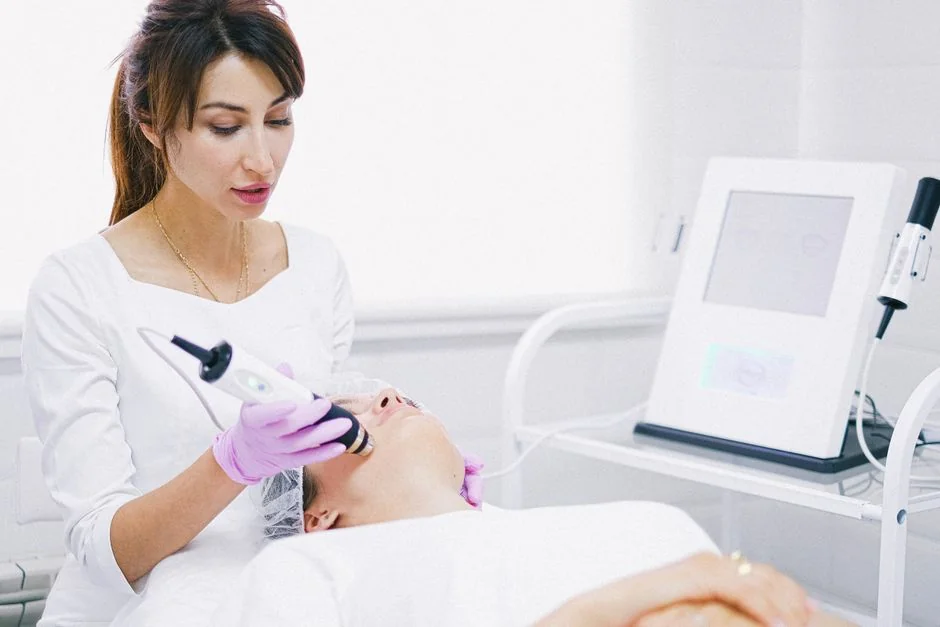
Treatment costs in Tokyo vary depending on the device, the area treated, the number of passes or sessions, and the clinic’s pricing structure. Below are realistic ranges based on the Tokyo cosmetic dermatology market.
Volnewmer at BIOTOPE CLINIC or Kojimachi Dermatology & Plastic Surgery Clinic is priced at ¥66,000–¥165,000 per session, depending on the treatment area and protocol. Face-only sessions tend to fall in the lower portion of this range; combined face and neck, or body area treatments, typically fall higher.
HIFU at our clinic is priced at ¥25,000–¥110,000, again varying by area treated and number of shots delivered. Entry-level sessions covering a smaller zone (e.g. the eye area or lower face only) are available at the lower end; full-face-and-neck sessions with a high shot count fall toward the upper end.
Market pricing for Thermage in Tokyo typically ranges from approximately ¥100,000 to ¥300,000 or more for a full-face session, reflecting the higher consumable cost of Thermage tips. This is a well-known factor in the Tokyo cosmetic market and is worth accounting for when comparing value.
An initial consultation at our clinic costs ¥3,300, and a surgical consultation with Dr. Karibe is ¥2,200. For an accurate quote, we recommend booking a consultation.
Have a question about this treatment?
Message us on LINE or WhatsApp — our English-speaking team usually replies the same day.
What to Expect: Before, During, and After Treatment
Before Your Session
A thorough consultation is essential before any energy-based treatment. Your practitioner will assess skin laxity, tissue thickness, prior treatments, and your overall health history. Patients with active skin infections, open wounds, or certain implanted devices (such as pacemakers or metal implants in the treatment area) are not suitable candidates for RF treatments.
For HIFU, a similar assessment applies, with additional consideration of bone proximity, as focused ultrasound near bony landmarks requires careful positioning of the transducer. Patients on blood thinners may be advised to discontinue them prior to treatment, depending on the protocol.
Topical anaesthetic cream is sometimes applied 30–45 minutes before treatment to improve comfort, particularly for HIFU at deeper transducer depths and for higher-energy Volnewmer protocols.
During the Procedure
Volnewmer and Thermage treatments involve a sliding or stamping handpiece motion across the skin, with a warm to hot sensation that most patients describe as tolerable. The real-time temperature feedback in Volnewmer means the device adjusts energy in response to your tissue, which many patients find makes the experience feel more consistent compared to older RF devices.
HIFU delivers energy in discrete pulses, each of which produces a brief, sharp heat sensation at the focal point. Many patients find HIFU more uncomfortable than RF, particularly at the 4.5 mm SMAS depth. A full HIFU face-and-neck session typically takes 60–90 minutes; Volnewmer sessions range similarly depending on the area.
After Treatment and Recovery
All three technologies have minimal downtime compared with surgical alternatives. Redness and mild swelling are the most common post-treatment findings, typically resolving within 24–72 hours. Some patients experience a slight tingling or tenderness in the treated area for a few days after HIFU, particularly over bony areas.
Collagen remodelling is a biological process that takes time. Initial firmness may be noticeable within days due to immediate collagen contraction, but the fuller result — new collagen synthesis — typically unfolds over two to six months. Patients are advised to protect the skin from UV exposure during the recovery period and maintain a good skincare routine.
Real Patient Results — Before & After
The following are actual Volnewmer treatment results from patients at BIOTOPE CLINIC (Shirokanedai, Minato-ku, Tokyo), where Dr. Jun Karibe personally performs the procedure. Photos are shared with patient permission. Individual results vary depending on skin condition, age, and treatment plan. Tap each case to view the full treatment disclosure required by the Japanese Medical Advertising Guidelines.
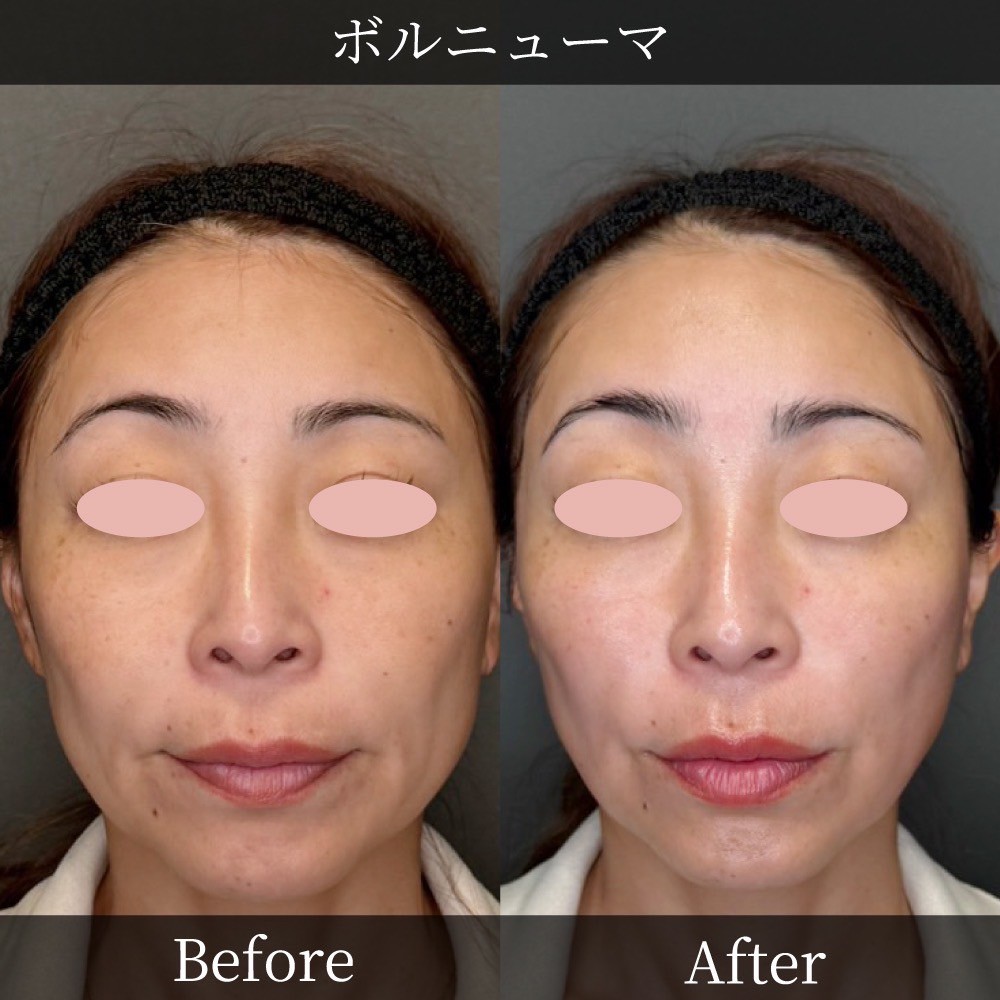
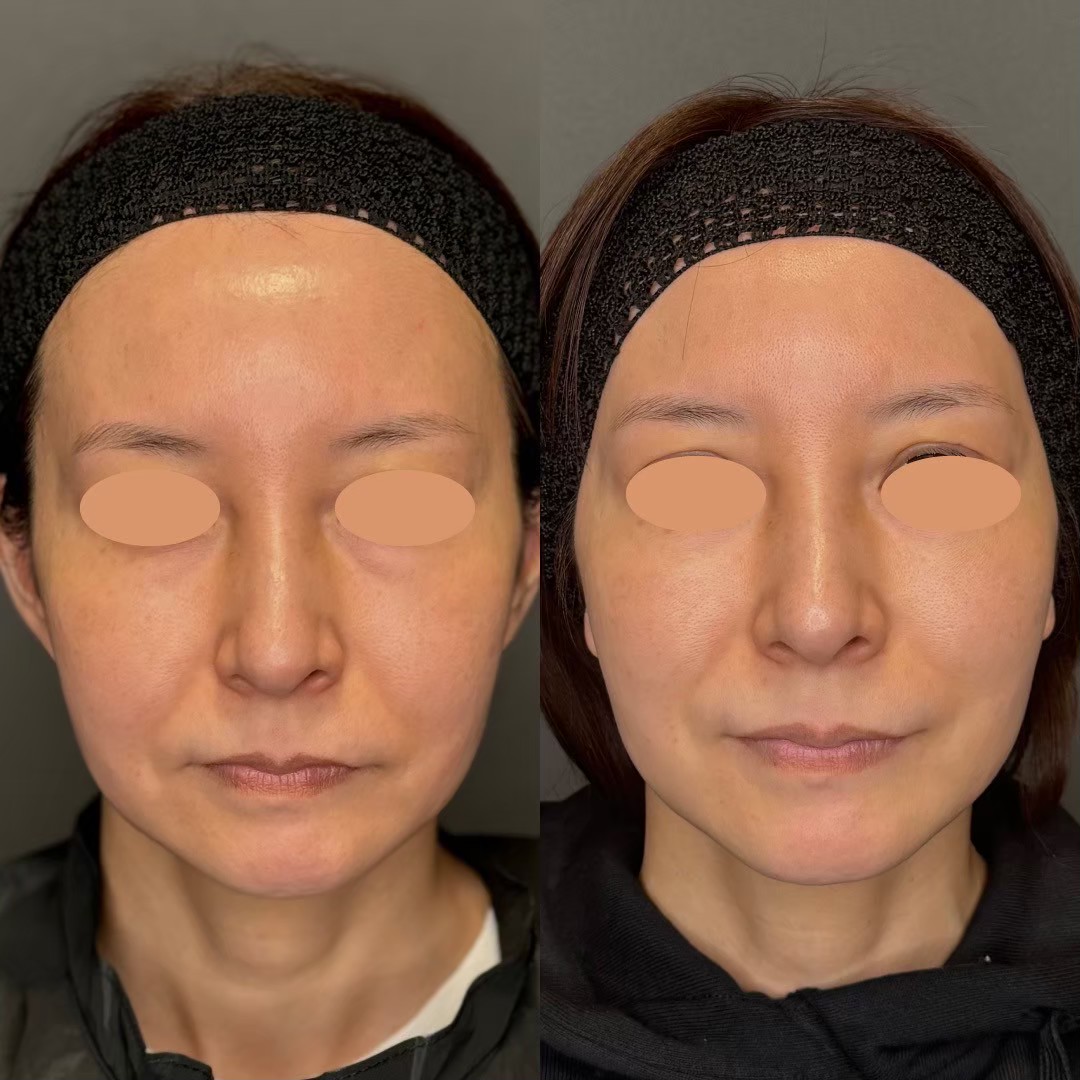
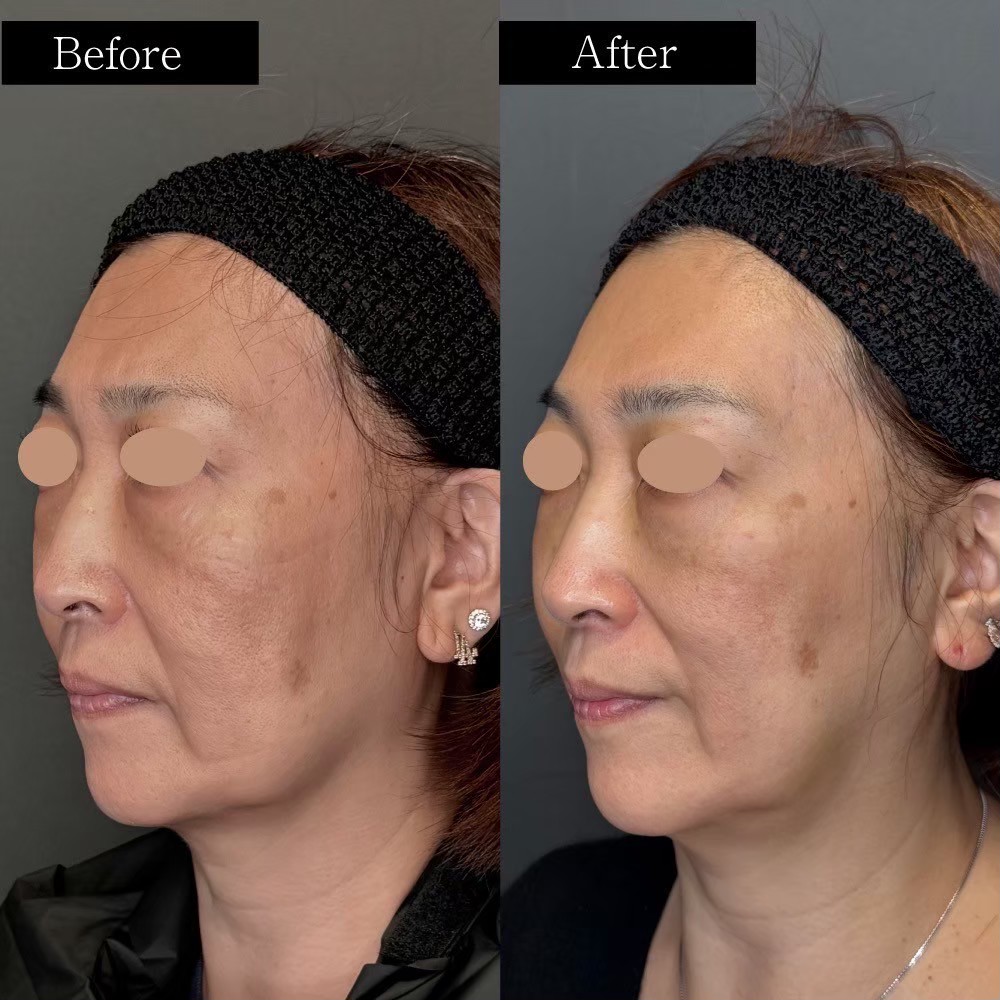
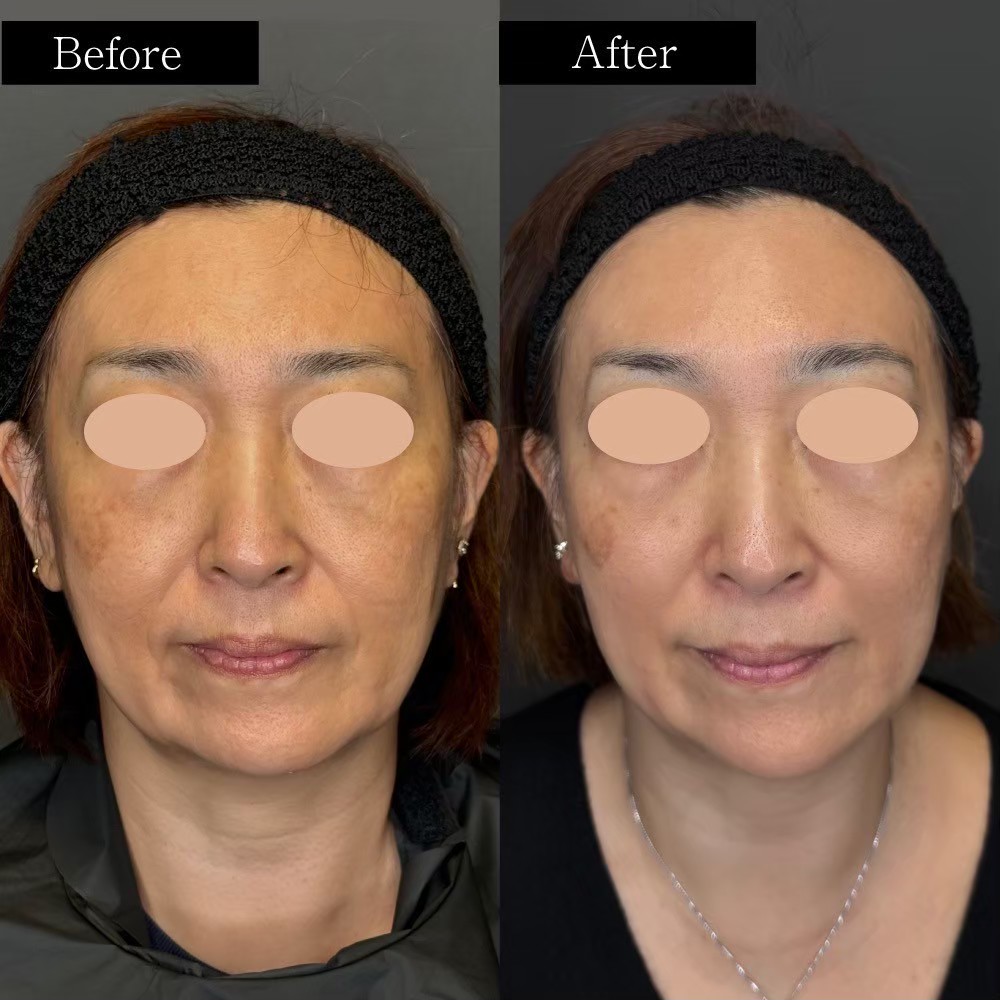
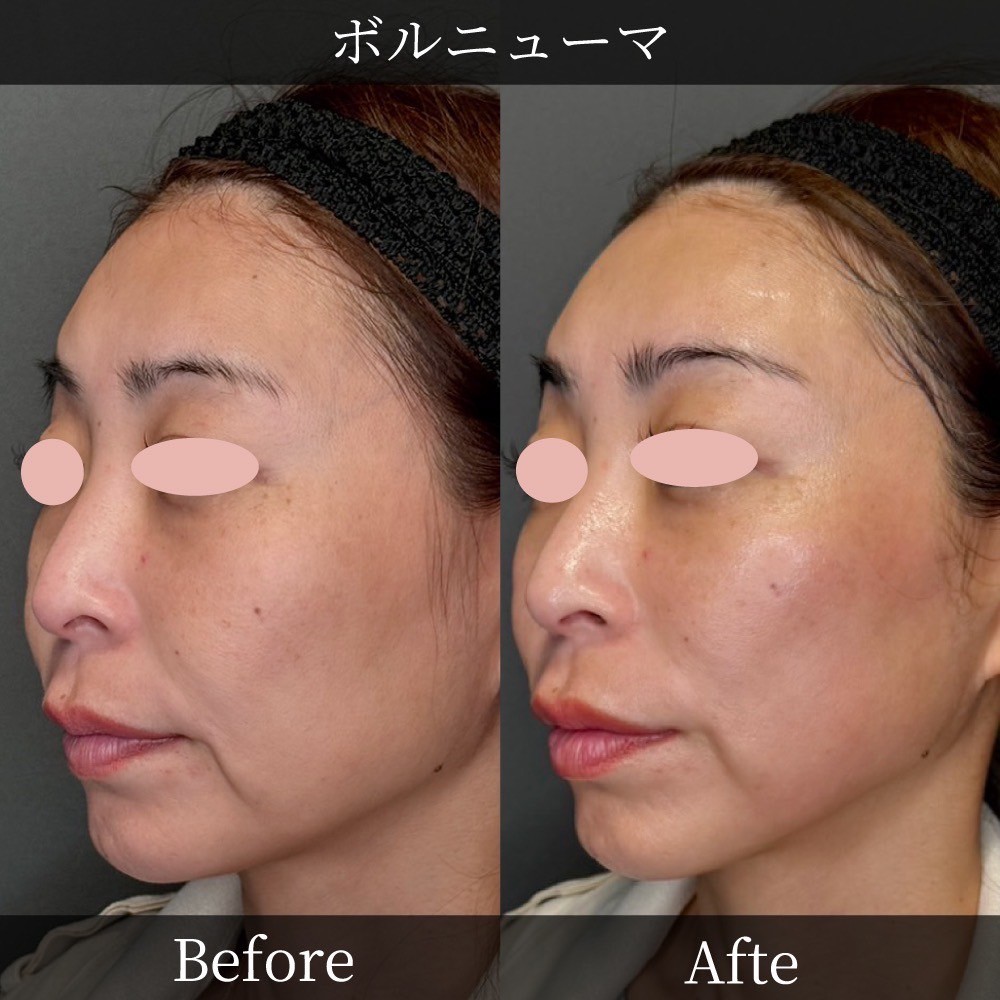
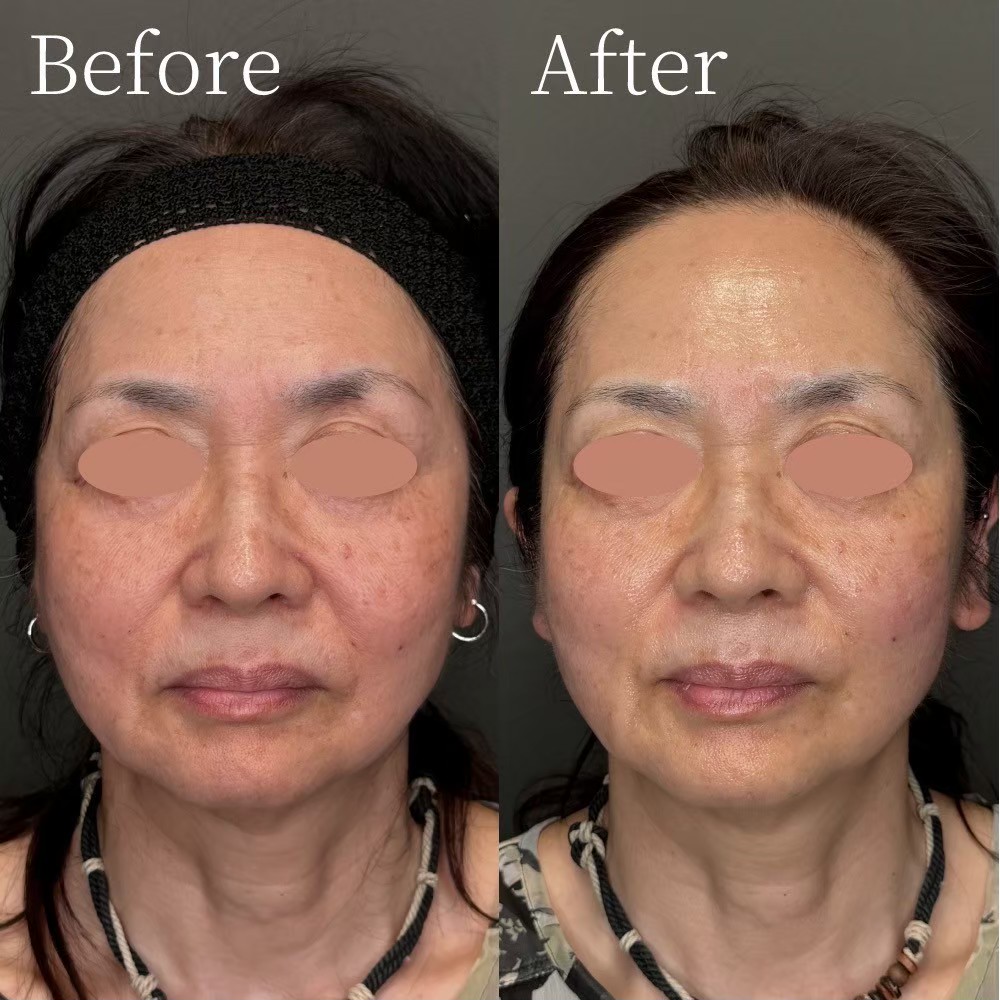
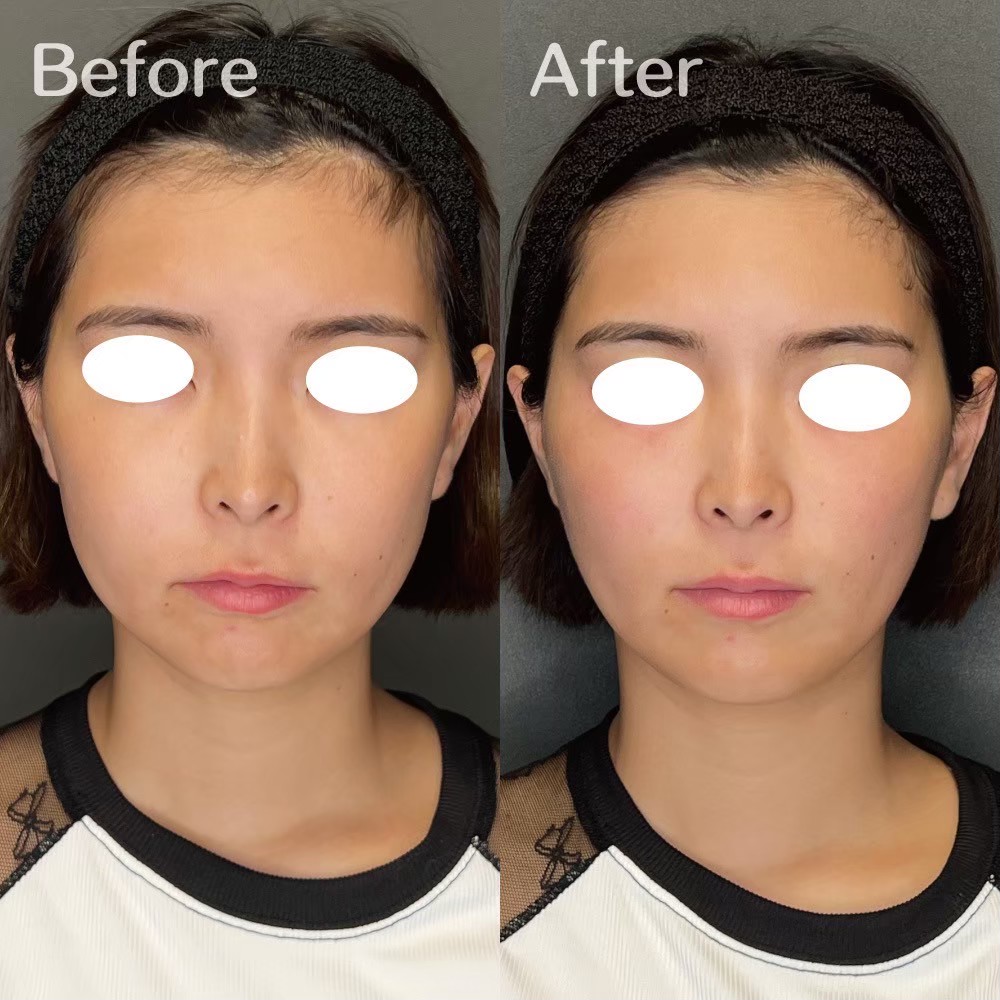
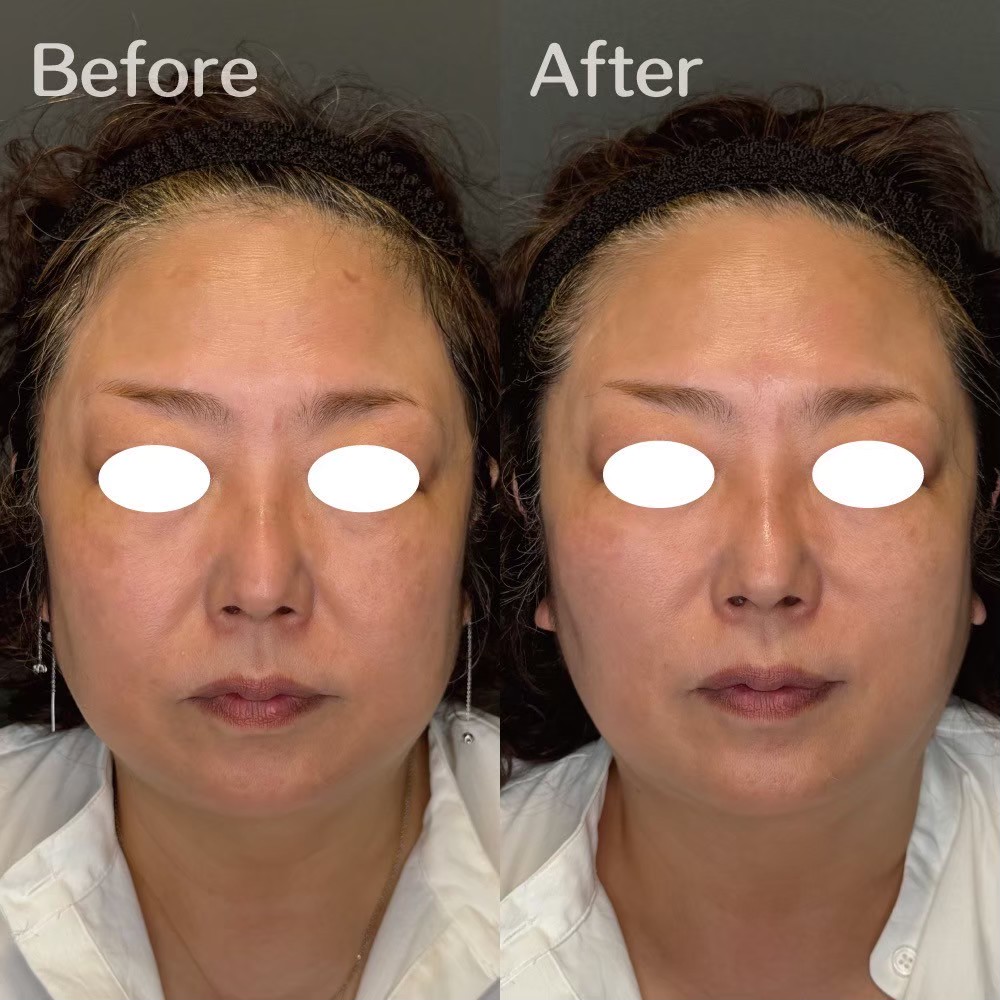
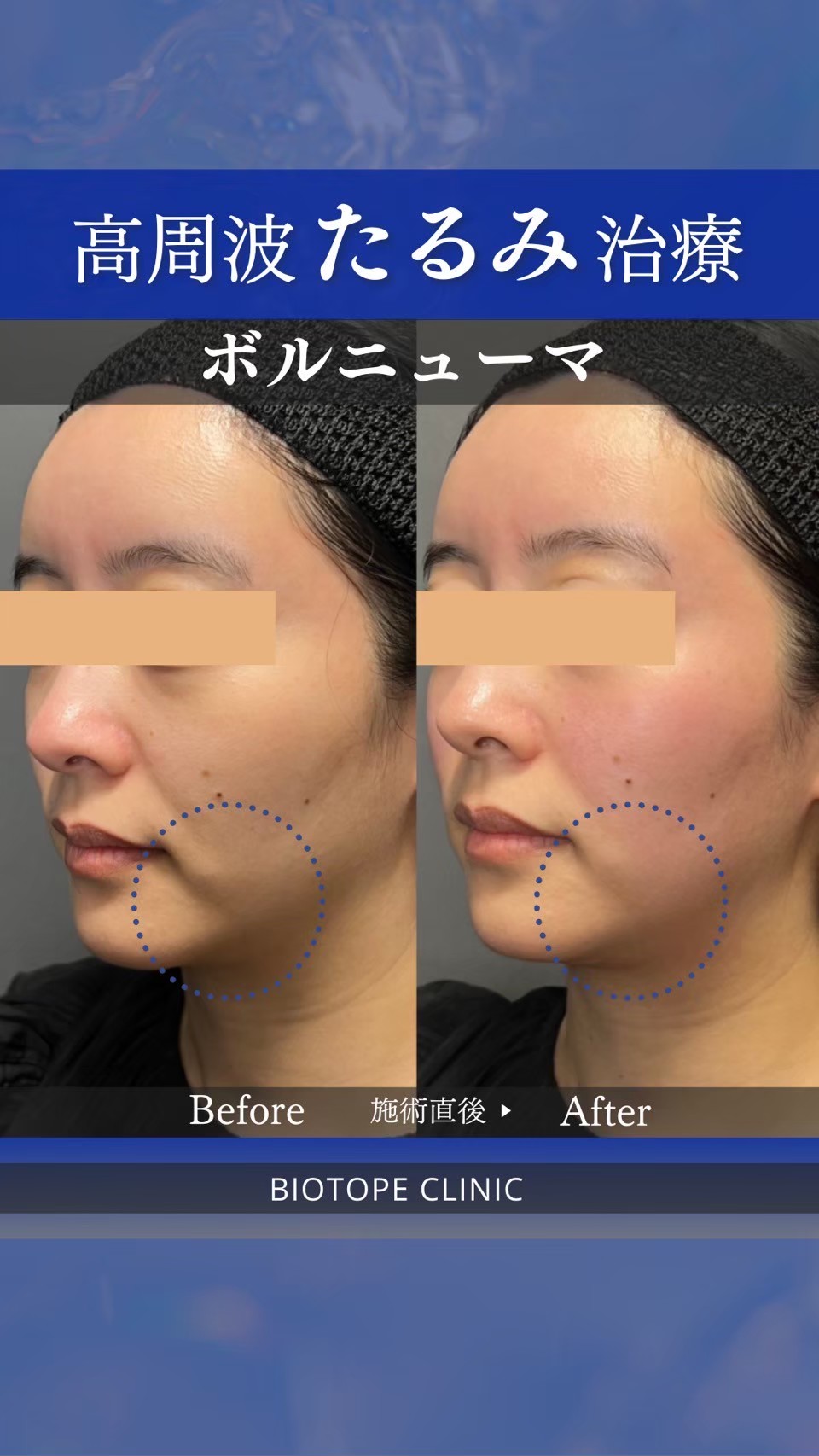
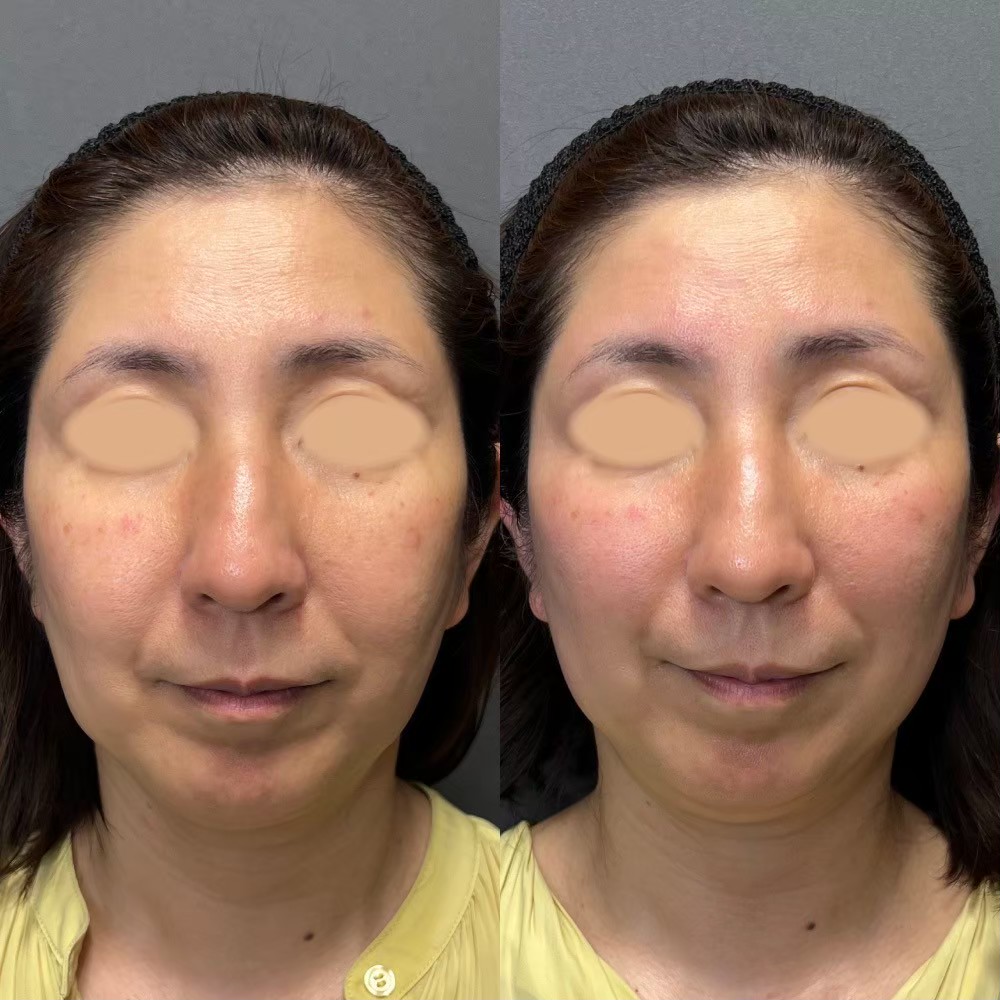
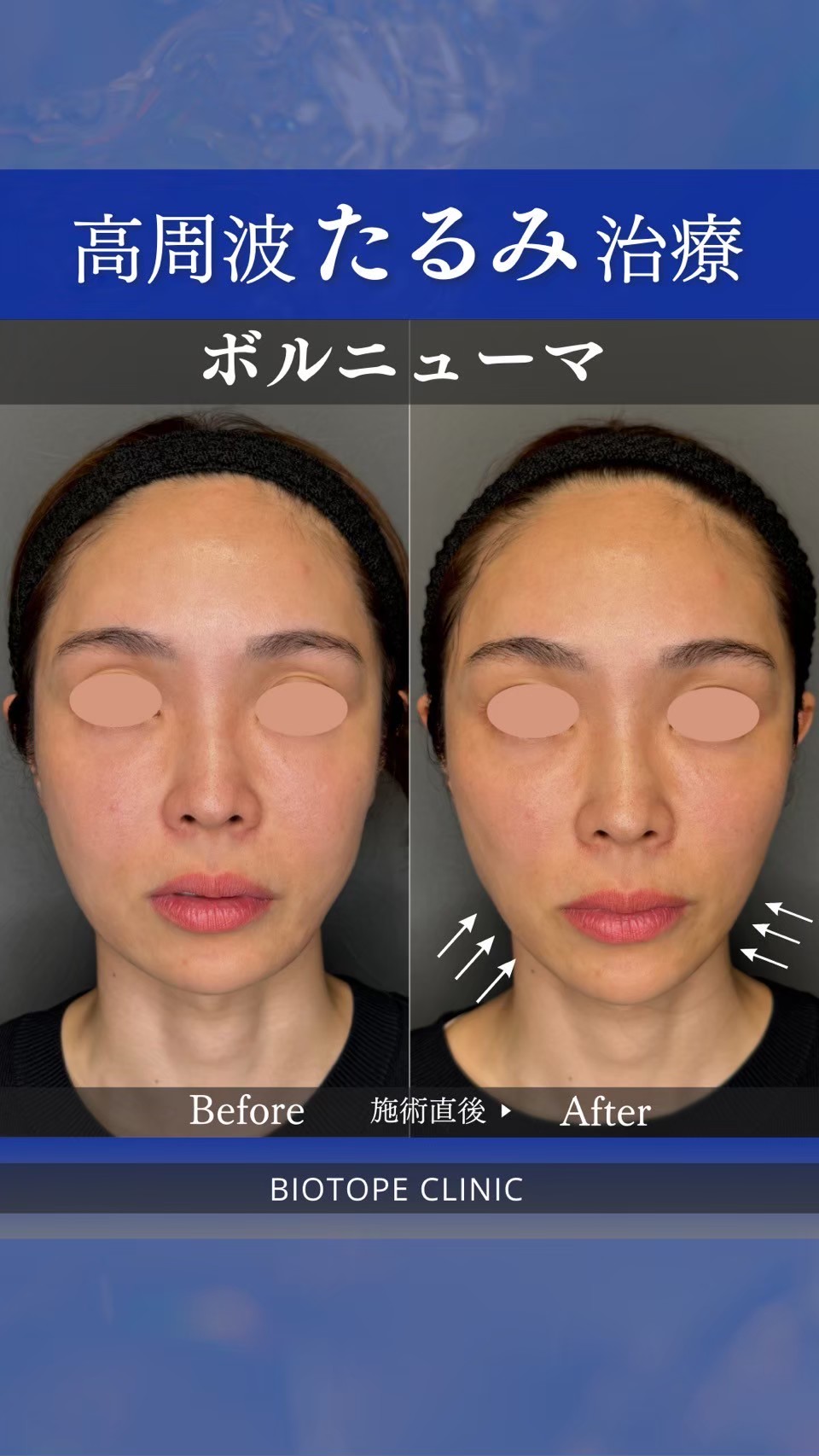
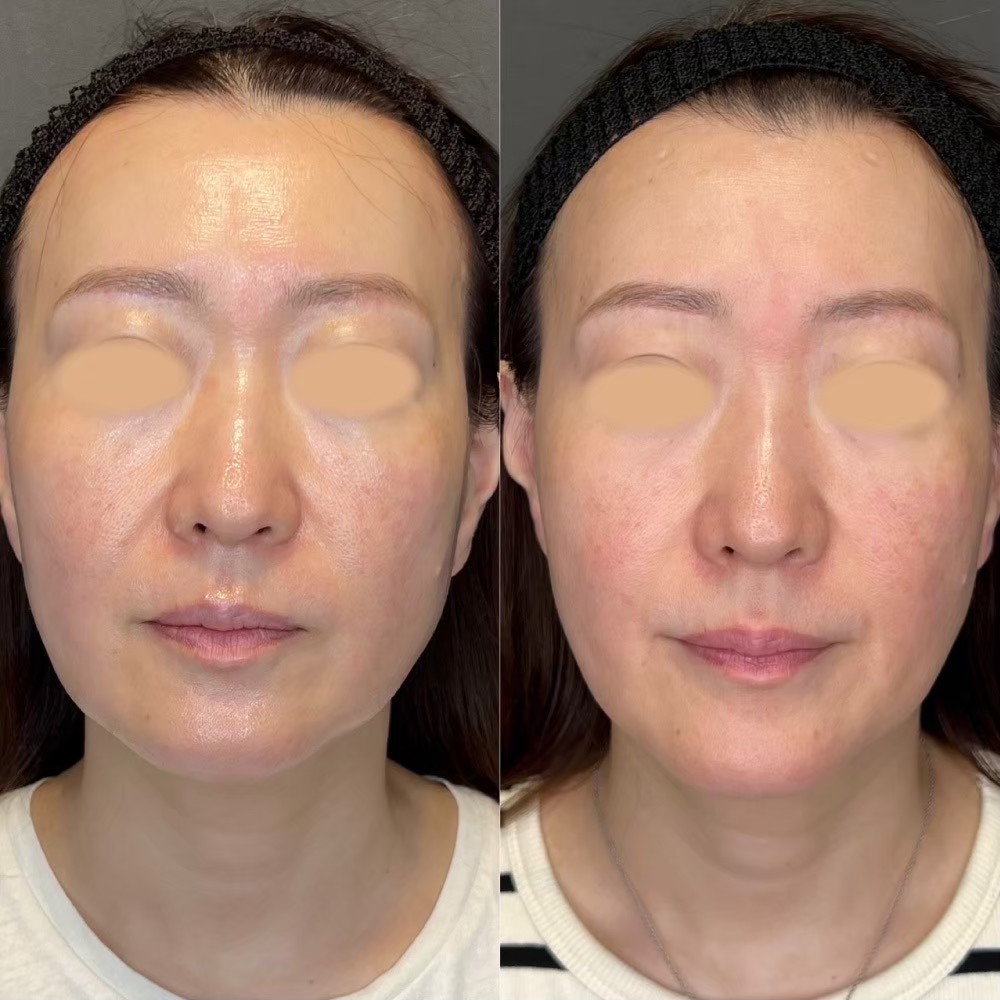
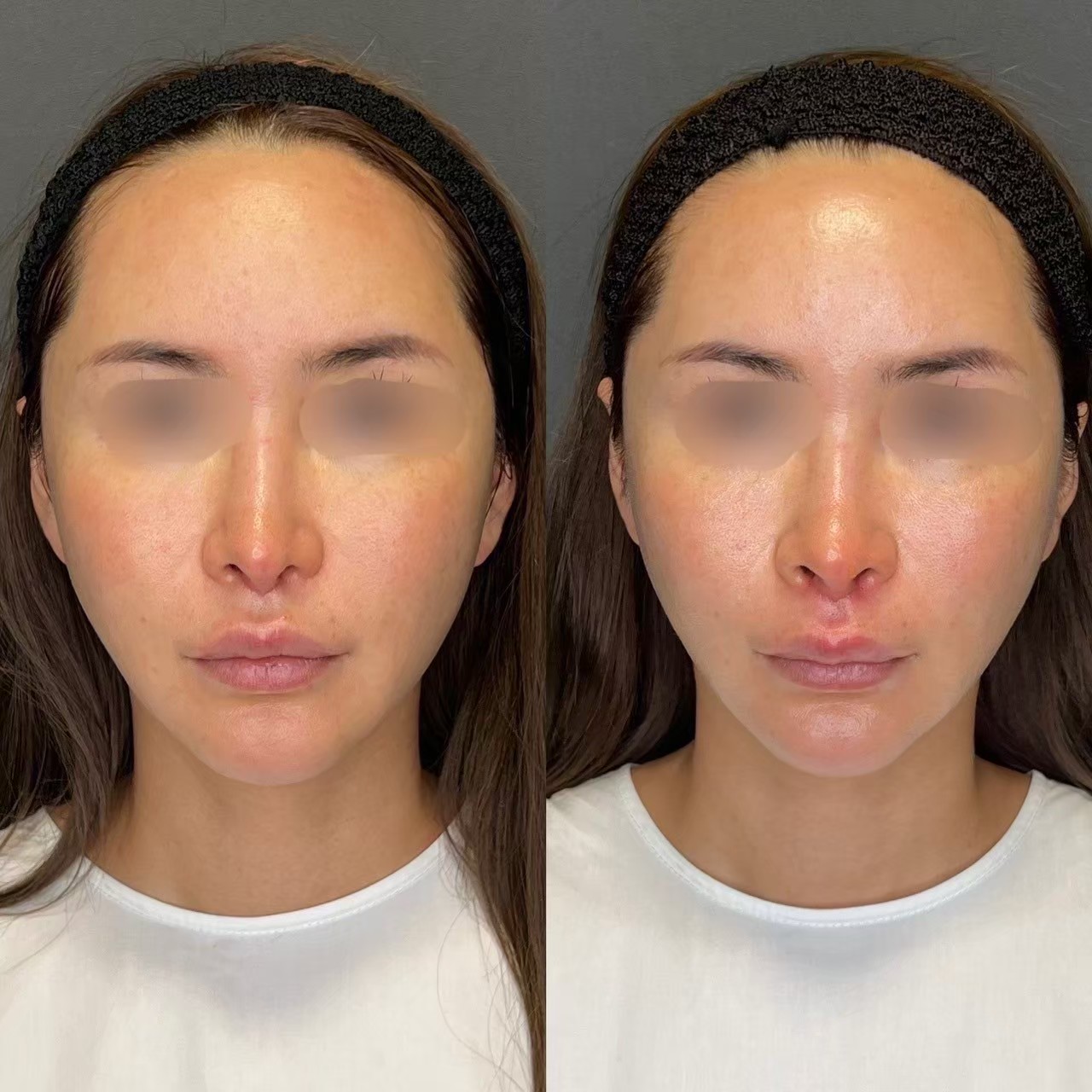
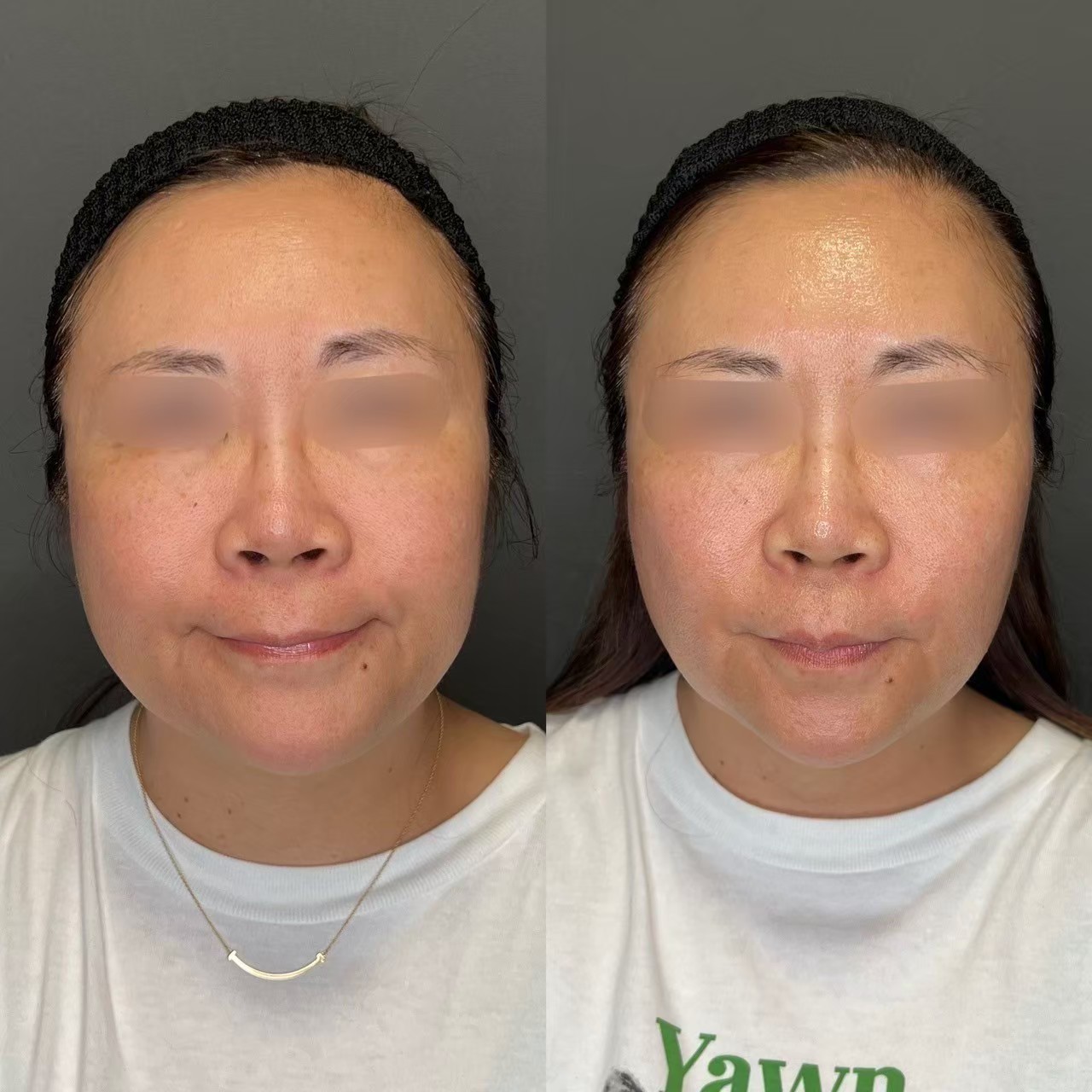
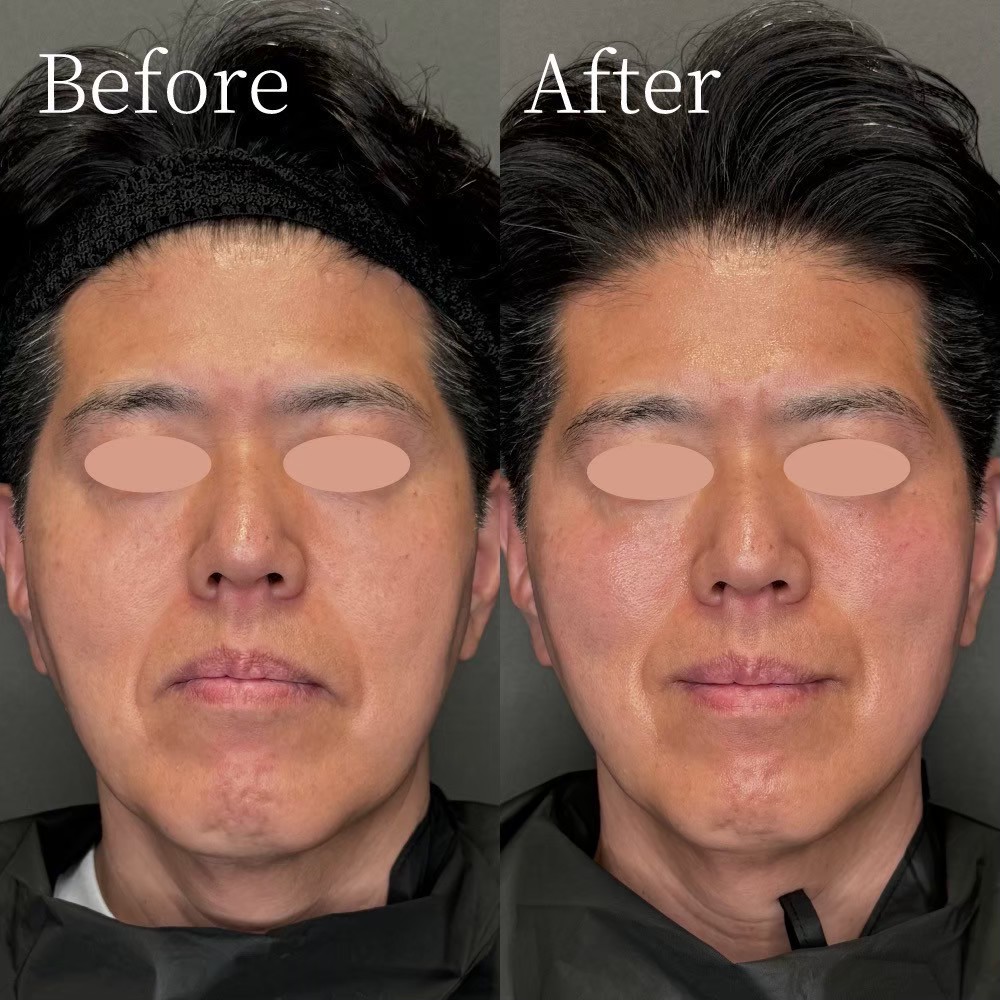
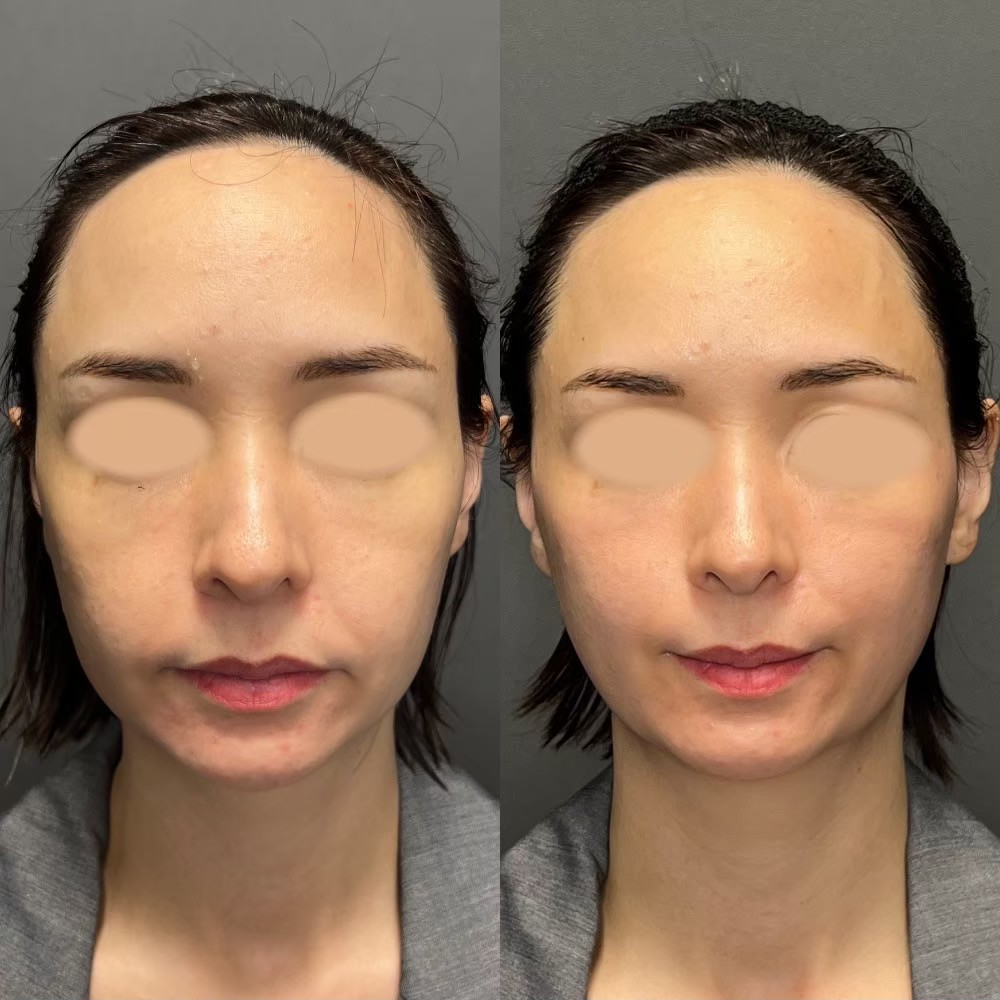
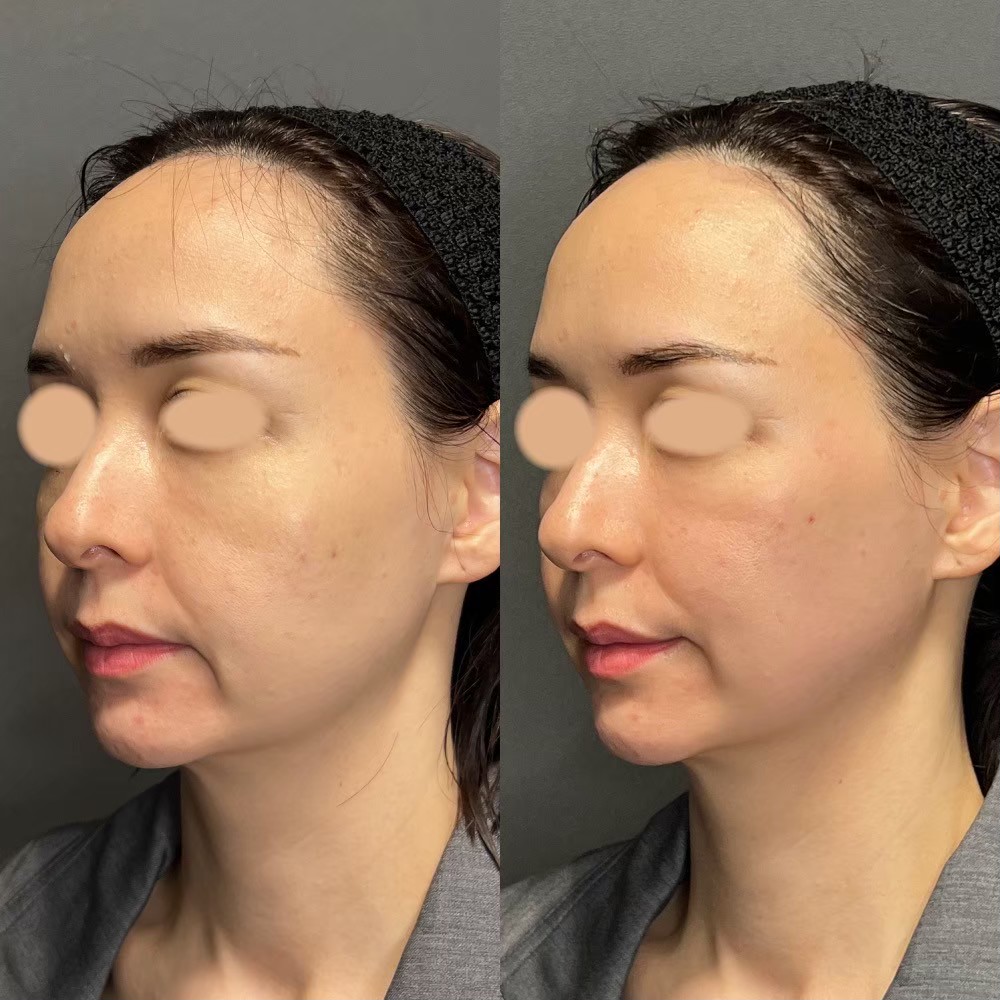
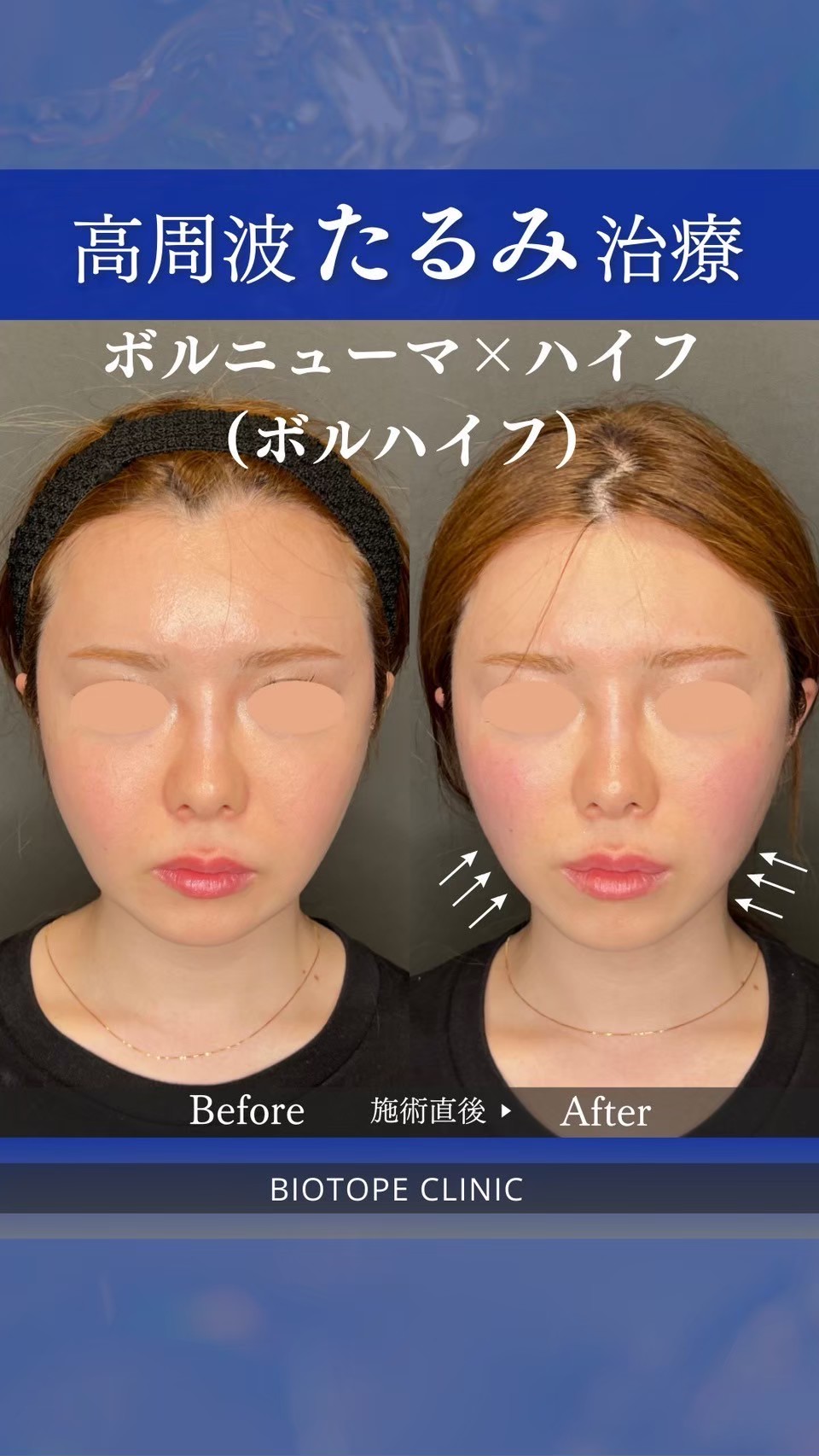
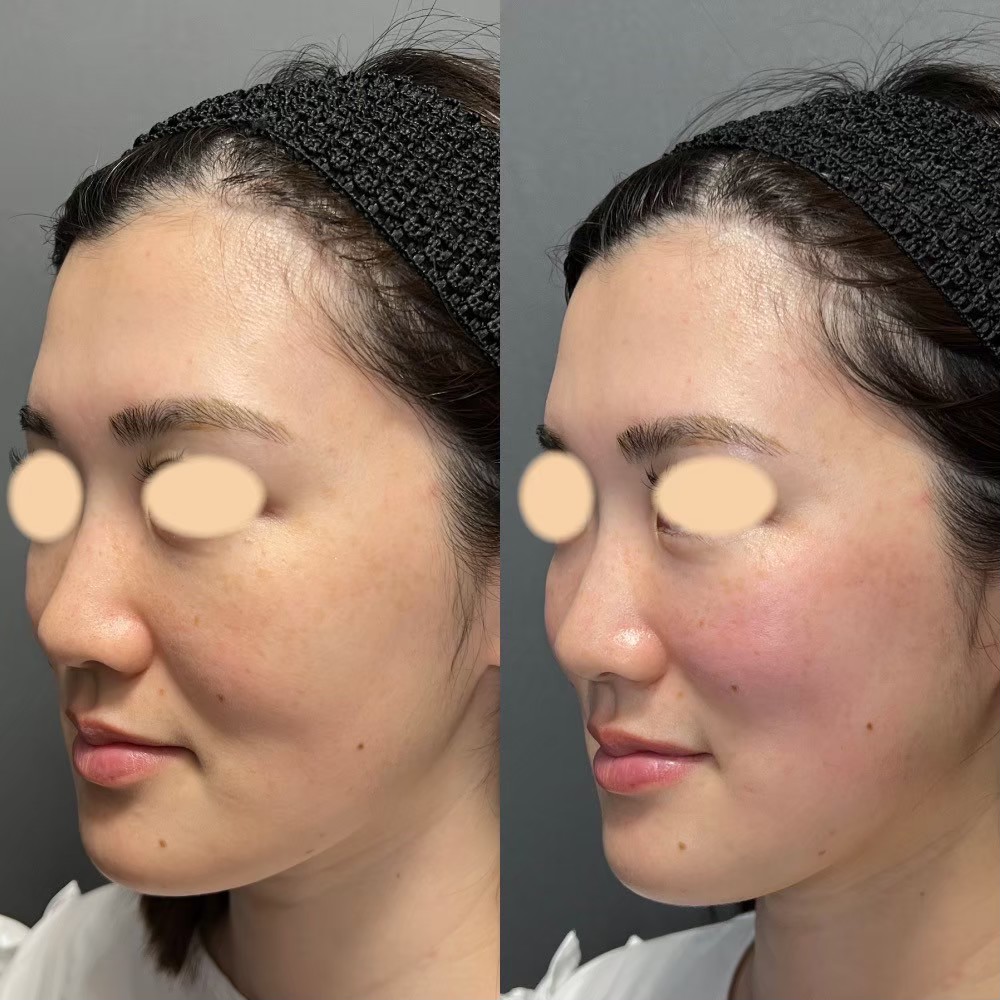
Case 1 — Treatment disclosure
Individual results vary. The information below is provided per the Japanese Medical Advertising Guidelines.
- Treatment name
- Volnewmer (monopolar radiofrequency skin tightening)
- Session length
- 20–60 minutes
- Downtime
- Pain / swelling: usually resolves within a few hours.
Other: temporary warmth (hot flushing) and rare burn risk. If redness or pain persists, contact the clinic promptly. - Post-treatment care
- Washing face / makeup: permitted the same day.
Bathing / hair washing / showering: permitted the same day. - Precautions & contraindications
- Pregnancy or breastfeeding; keloid tendency; active skin disease at the treatment site; implanted electronic devices such as pacemakers; heart disease; severe diabetes; presence of gold threads, silicone, or titanium plates in the treatment area.
- Fees (BIOTOPE CLINIC, tax included)
- ¥66,000–¥165,000 per session, depending on shot count and treatment area (200 / 300 / 500 shots). A Volnewmer × HIFU combination is ¥148,000 per session. The exact plan and fee are confirmed at consultation.
- Insurance
- Not covered by Japanese public health insurance. Prices may change — please confirm at consultation.
Case 2 — Treatment disclosure
Individual results vary. The information below is provided per the Japanese Medical Advertising Guidelines.
- Treatment name
- Volnewmer (monopolar radiofrequency skin tightening)
- Session length
- 20–60 minutes
- Downtime
- Pain / swelling: usually resolves within a few hours.
Other: temporary warmth (hot flushing) and rare burn risk. If redness or pain persists, contact the clinic promptly. - Post-treatment care
- Washing face / makeup: permitted the same day.
Bathing / hair washing / showering: permitted the same day. - Precautions & contraindications
- Pregnancy or breastfeeding; keloid tendency; active skin disease at the treatment site; implanted electronic devices such as pacemakers; heart disease; severe diabetes; presence of gold threads, silicone, or titanium plates in the treatment area.
- Fees (BIOTOPE CLINIC, tax included)
- ¥66,000–¥165,000 per session, depending on shot count and treatment area (200 / 300 / 500 shots). A Volnewmer × HIFU combination is ¥148,000 per session. The exact plan and fee are confirmed at consultation.
- Insurance
- Not covered by Japanese public health insurance. Prices may change — please confirm at consultation.
Case 3 — Treatment disclosure
Individual results vary. The information below is provided per the Japanese Medical Advertising Guidelines.
- Treatment name
- Volnewmer (monopolar radiofrequency skin tightening)
- Session length
- 20–60 minutes
- Downtime
- Pain / swelling: usually resolves within a few hours.
Other: temporary warmth (hot flushing) and rare burn risk. If redness or pain persists, contact the clinic promptly. - Post-treatment care
- Washing face / makeup: permitted the same day.
Bathing / hair washing / showering: permitted the same day. - Precautions & contraindications
- Pregnancy or breastfeeding; keloid tendency; active skin disease at the treatment site; implanted electronic devices such as pacemakers; heart disease; severe diabetes; presence of gold threads, silicone, or titanium plates in the treatment area.
- Fees (BIOTOPE CLINIC, tax included)
- ¥66,000–¥165,000 per session, depending on shot count and treatment area (200 / 300 / 500 shots). A Volnewmer × HIFU combination is ¥148,000 per session. The exact plan and fee are confirmed at consultation.
- Insurance
- Not covered by Japanese public health insurance. Prices may change — please confirm at consultation.
Case 4 — Treatment disclosure
Individual results vary. The information below is provided per the Japanese Medical Advertising Guidelines.
- Treatment name
- Volnewmer (monopolar radiofrequency skin tightening)
- Session length
- 20–60 minutes
- Downtime
- Pain / swelling: usually resolves within a few hours.
Other: temporary warmth (hot flushing) and rare burn risk. If redness or pain persists, contact the clinic promptly. - Post-treatment care
- Washing face / makeup: permitted the same day.
Bathing / hair washing / showering: permitted the same day. - Precautions & contraindications
- Pregnancy or breastfeeding; keloid tendency; active skin disease at the treatment site; implanted electronic devices such as pacemakers; heart disease; severe diabetes; presence of gold threads, silicone, or titanium plates in the treatment area.
- Fees (BIOTOPE CLINIC, tax included)
- ¥66,000–¥165,000 per session, depending on shot count and treatment area (200 / 300 / 500 shots). A Volnewmer × HIFU combination is ¥148,000 per session. The exact plan and fee are confirmed at consultation.
- Insurance
- Not covered by Japanese public health insurance. Prices may change — please confirm at consultation.
Case 5 — Treatment disclosure
Individual results vary. The information below is provided per the Japanese Medical Advertising Guidelines.
- Treatment name
- Volnewmer (monopolar radiofrequency skin tightening)
- Session length
- 20–60 minutes
- Downtime
- Pain / swelling: usually resolves within a few hours.
Other: temporary warmth (hot flushing) and rare burn risk. If redness or pain persists, contact the clinic promptly. - Post-treatment care
- Washing face / makeup: permitted the same day.
Bathing / hair washing / showering: permitted the same day. - Precautions & contraindications
- Pregnancy or breastfeeding; keloid tendency; active skin disease at the treatment site; implanted electronic devices such as pacemakers; heart disease; severe diabetes; presence of gold threads, silicone, or titanium plates in the treatment area.
- Fees (BIOTOPE CLINIC, tax included)
- ¥66,000–¥165,000 per session, depending on shot count and treatment area (200 / 300 / 500 shots). A Volnewmer × HIFU combination is ¥148,000 per session. The exact plan and fee are confirmed at consultation.
- Insurance
- Not covered by Japanese public health insurance. Prices may change — please confirm at consultation.
Case 6 — Treatment disclosure
Individual results vary. The information below is provided per the Japanese Medical Advertising Guidelines.
- Treatment name
- Volnewmer (monopolar radiofrequency skin tightening)
- Session length
- 20–60 minutes
- Downtime
- Pain / swelling: usually resolves within a few hours.
Other: temporary warmth (hot flushing) and rare burn risk. If redness or pain persists, contact the clinic promptly. - Post-treatment care
- Washing face / makeup: permitted the same day.
Bathing / hair washing / showering: permitted the same day. - Precautions & contraindications
- Pregnancy or breastfeeding; keloid tendency; active skin disease at the treatment site; implanted electronic devices such as pacemakers; heart disease; severe diabetes; presence of gold threads, silicone, or titanium plates in the treatment area.
- Fees (BIOTOPE CLINIC, tax included)
- ¥66,000–¥165,000 per session, depending on shot count and treatment area (200 / 300 / 500 shots). A Volnewmer × HIFU combination is ¥148,000 per session. The exact plan and fee are confirmed at consultation.
- Insurance
- Not covered by Japanese public health insurance. Prices may change — please confirm at consultation.
Case 7 — Treatment disclosure
Individual results vary. The information below is provided per the Japanese Medical Advertising Guidelines.
- Treatment name
- Volnewmer (monopolar radiofrequency skin tightening)
- Session length
- 20–60 minutes
- Downtime
- Pain / swelling: usually resolves within a few hours.
Other: temporary warmth (hot flushing) and rare burn risk. If redness or pain persists, contact the clinic promptly. - Post-treatment care
- Washing face / makeup: permitted the same day.
Bathing / hair washing / showering: permitted the same day. - Precautions & contraindications
- Pregnancy or breastfeeding; keloid tendency; active skin disease at the treatment site; implanted electronic devices such as pacemakers; heart disease; severe diabetes; presence of gold threads, silicone, or titanium plates in the treatment area.
- Fees (BIOTOPE CLINIC, tax included)
- ¥66,000–¥165,000 per session, depending on shot count and treatment area (200 / 300 / 500 shots). A Volnewmer × HIFU combination is ¥148,000 per session. The exact plan and fee are confirmed at consultation.
- Insurance
- Not covered by Japanese public health insurance. Prices may change — please confirm at consultation.
Case 8 — Treatment disclosure
Individual results vary. The information below is provided per the Japanese Medical Advertising Guidelines.
- Treatment name
- Volnewmer (monopolar radiofrequency skin tightening)
- Session length
- 20–60 minutes
- Downtime
- Pain / swelling: usually resolves within a few hours.
Other: temporary warmth (hot flushing) and rare burn risk. If redness or pain persists, contact the clinic promptly. - Post-treatment care
- Washing face / makeup: permitted the same day.
Bathing / hair washing / showering: permitted the same day. - Precautions & contraindications
- Pregnancy or breastfeeding; keloid tendency; active skin disease at the treatment site; implanted electronic devices such as pacemakers; heart disease; severe diabetes; presence of gold threads, silicone, or titanium plates in the treatment area.
- Fees (BIOTOPE CLINIC, tax included)
- ¥66,000–¥165,000 per session, depending on shot count and treatment area (200 / 300 / 500 shots). A Volnewmer × HIFU combination is ¥148,000 per session. The exact plan and fee are confirmed at consultation.
- Insurance
- Not covered by Japanese public health insurance. Prices may change — please confirm at consultation.
Case 9 — Treatment disclosure
Individual results vary. The information below is provided per the Japanese Medical Advertising Guidelines.
- Treatment name
- Volnewmer (monopolar radiofrequency skin tightening)
- Session length
- 20–60 minutes
- Downtime
- Pain / swelling: usually resolves within a few hours.
Other: temporary warmth (hot flushing) and rare burn risk. If redness or pain persists, contact the clinic promptly. - Post-treatment care
- Washing face / makeup: permitted the same day.
Bathing / hair washing / showering: permitted the same day. - Precautions & contraindications
- Pregnancy or breastfeeding; keloid tendency; active skin disease at the treatment site; implanted electronic devices such as pacemakers; heart disease; severe diabetes; presence of gold threads, silicone, or titanium plates in the treatment area.
- Fees (BIOTOPE CLINIC, tax included)
- ¥66,000–¥165,000 per session, depending on shot count and treatment area (200 / 300 / 500 shots). A Volnewmer × HIFU combination is ¥148,000 per session. The exact plan and fee are confirmed at consultation.
- Insurance
- Not covered by Japanese public health insurance. Prices may change — please confirm at consultation.
Case 10 — Treatment disclosure
Individual results vary. The information below is provided per the Japanese Medical Advertising Guidelines.
- Treatment name
- Volnewmer (monopolar radiofrequency skin tightening)
- Session length
- 20–60 minutes
- Downtime
- Pain / swelling: usually resolves within a few hours.
Other: temporary warmth (hot flushing) and rare burn risk. If redness or pain persists, contact the clinic promptly. - Post-treatment care
- Washing face / makeup: permitted the same day.
Bathing / hair washing / showering: permitted the same day. - Precautions & contraindications
- Pregnancy or breastfeeding; keloid tendency; active skin disease at the treatment site; implanted electronic devices such as pacemakers; heart disease; severe diabetes; presence of gold threads, silicone, or titanium plates in the treatment area.
- Fees (BIOTOPE CLINIC, tax included)
- ¥66,000–¥165,000 per session, depending on shot count and treatment area (200 / 300 / 500 shots). A Volnewmer × HIFU combination is ¥148,000 per session. The exact plan and fee are confirmed at consultation.
- Insurance
- Not covered by Japanese public health insurance. Prices may change — please confirm at consultation.
Case 11 — Treatment disclosure
Individual results vary. The information below is provided per the Japanese Medical Advertising Guidelines.
- Treatment name
- Volnewmer (monopolar radiofrequency skin tightening)
- Session length
- 20–60 minutes
- Downtime
- Pain / swelling: usually resolves within a few hours.
Other: temporary warmth (hot flushing) and rare burn risk. If redness or pain persists, contact the clinic promptly. - Post-treatment care
- Washing face / makeup: permitted the same day.
Bathing / hair washing / showering: permitted the same day. - Precautions & contraindications
- Pregnancy or breastfeeding; keloid tendency; active skin disease at the treatment site; implanted electronic devices such as pacemakers; heart disease; severe diabetes; presence of gold threads, silicone, or titanium plates in the treatment area.
- Fees (BIOTOPE CLINIC, tax included)
- ¥66,000–¥165,000 per session, depending on shot count and treatment area (200 / 300 / 500 shots). A Volnewmer × HIFU combination is ¥148,000 per session. The exact plan and fee are confirmed at consultation.
- Insurance
- Not covered by Japanese public health insurance. Prices may change — please confirm at consultation.
Case 12 — Treatment disclosure
Individual results vary. The information below is provided per the Japanese Medical Advertising Guidelines.
- Treatment name
- Volnewmer (monopolar radiofrequency skin tightening)
- Session length
- 20–60 minutes
- Downtime
- Pain / swelling: usually resolves within a few hours.
Other: temporary warmth (hot flushing) and rare burn risk. If redness or pain persists, contact the clinic promptly. - Post-treatment care
- Washing face / makeup: permitted the same day.
Bathing / hair washing / showering: permitted the same day. - Precautions & contraindications
- Pregnancy or breastfeeding; keloid tendency; active skin disease at the treatment site; implanted electronic devices such as pacemakers; heart disease; severe diabetes; presence of gold threads, silicone, or titanium plates in the treatment area.
- Fees (BIOTOPE CLINIC, tax included)
- ¥66,000–¥165,000 per session, depending on shot count and treatment area (200 / 300 / 500 shots). A Volnewmer × HIFU combination is ¥148,000 per session. The exact plan and fee are confirmed at consultation.
- Insurance
- Not covered by Japanese public health insurance. Prices may change — please confirm at consultation.
Case 13 — Treatment disclosure
Individual results vary. The information below is provided per the Japanese Medical Advertising Guidelines.
- Treatment name
- Volnewmer (monopolar radiofrequency skin tightening)
- Session length
- 20–60 minutes
- Downtime
- Pain / swelling: usually resolves within a few hours.
Other: temporary warmth (hot flushing) and rare burn risk. If redness or pain persists, contact the clinic promptly. - Post-treatment care
- Washing face / makeup: permitted the same day.
Bathing / hair washing / showering: permitted the same day. - Precautions & contraindications
- Pregnancy or breastfeeding; keloid tendency; active skin disease at the treatment site; implanted electronic devices such as pacemakers; heart disease; severe diabetes; presence of gold threads, silicone, or titanium plates in the treatment area.
- Fees (BIOTOPE CLINIC, tax included)
- ¥66,000–¥165,000 per session, depending on shot count and treatment area (200 / 300 / 500 shots). A Volnewmer × HIFU combination is ¥148,000 per session. The exact plan and fee are confirmed at consultation.
- Insurance
- Not covered by Japanese public health insurance. Prices may change — please confirm at consultation.
Case 14 — Treatment disclosure
Individual results vary. The information below is provided per the Japanese Medical Advertising Guidelines.
- Treatment name
- Volnewmer (monopolar radiofrequency skin tightening)
- Session length
- 20–60 minutes
- Downtime
- Pain / swelling: usually resolves within a few hours.
Other: temporary warmth (hot flushing) and rare burn risk. If redness or pain persists, contact the clinic promptly. - Post-treatment care
- Washing face / makeup: permitted the same day.
Bathing / hair washing / showering: permitted the same day. - Precautions & contraindications
- Pregnancy or breastfeeding; keloid tendency; active skin disease at the treatment site; implanted electronic devices such as pacemakers; heart disease; severe diabetes; presence of gold threads, silicone, or titanium plates in the treatment area.
- Fees (BIOTOPE CLINIC, tax included)
- ¥66,000–¥165,000 per session, depending on shot count and treatment area (200 / 300 / 500 shots). A Volnewmer × HIFU combination is ¥148,000 per session. The exact plan and fee are confirmed at consultation.
- Insurance
- Not covered by Japanese public health insurance. Prices may change — please confirm at consultation.
Case 15 — Treatment disclosure
Individual results vary. The information below is provided per the Japanese Medical Advertising Guidelines.
- Treatment name
- Volnewmer (monopolar radiofrequency skin tightening)
- Session length
- 20–60 minutes
- Downtime
- Pain / swelling: usually resolves within a few hours.
Other: temporary warmth (hot flushing) and rare burn risk. If redness or pain persists, contact the clinic promptly. - Post-treatment care
- Washing face / makeup: permitted the same day.
Bathing / hair washing / showering: permitted the same day. - Precautions & contraindications
- Pregnancy or breastfeeding; keloid tendency; active skin disease at the treatment site; implanted electronic devices such as pacemakers; heart disease; severe diabetes; presence of gold threads, silicone, or titanium plates in the treatment area.
- Fees (BIOTOPE CLINIC, tax included)
- ¥66,000–¥165,000 per session, depending on shot count and treatment area (200 / 300 / 500 shots). A Volnewmer × HIFU combination is ¥148,000 per session. The exact plan and fee are confirmed at consultation.
- Insurance
- Not covered by Japanese public health insurance. Prices may change — please confirm at consultation.
Case 16 — Treatment disclosure
Individual results vary. The information below is provided per the Japanese Medical Advertising Guidelines.
- Treatment name
- Volnewmer (monopolar radiofrequency skin tightening)
- Session length
- 20–60 minutes
- Downtime
- Pain / swelling: usually resolves within a few hours.
Other: temporary warmth (hot flushing) and rare burn risk. If redness or pain persists, contact the clinic promptly. - Post-treatment care
- Washing face / makeup: permitted the same day.
Bathing / hair washing / showering: permitted the same day. - Precautions & contraindications
- Pregnancy or breastfeeding; keloid tendency; active skin disease at the treatment site; implanted electronic devices such as pacemakers; heart disease; severe diabetes; presence of gold threads, silicone, or titanium plates in the treatment area.
- Fees (BIOTOPE CLINIC, tax included)
- ¥66,000–¥165,000 per session, depending on shot count and treatment area (200 / 300 / 500 shots). A Volnewmer × HIFU combination is ¥148,000 per session. The exact plan and fee are confirmed at consultation.
- Insurance
- Not covered by Japanese public health insurance. Prices may change — please confirm at consultation.
Case 17 — Treatment disclosure
Individual results vary. The information below is provided per the Japanese Medical Advertising Guidelines.
- Treatment name
- Volnewmer (monopolar radiofrequency skin tightening)
- Session length
- 20–60 minutes
- Downtime
- Pain / swelling: usually resolves within a few hours.
Other: temporary warmth (hot flushing) and rare burn risk. If redness or pain persists, contact the clinic promptly. - Post-treatment care
- Washing face / makeup: permitted the same day.
Bathing / hair washing / showering: permitted the same day. - Precautions & contraindications
- Pregnancy or breastfeeding; keloid tendency; active skin disease at the treatment site; implanted electronic devices such as pacemakers; heart disease; severe diabetes; presence of gold threads, silicone, or titanium plates in the treatment area.
- Fees (BIOTOPE CLINIC, tax included)
- ¥66,000–¥165,000 per session, depending on shot count and treatment area (200 / 300 / 500 shots). A Volnewmer × HIFU combination is ¥148,000 per session. The exact plan and fee are confirmed at consultation.
- Insurance
- Not covered by Japanese public health insurance. Prices may change — please confirm at consultation.
Case 18 — Treatment disclosure
Individual results vary. The information below is provided per the Japanese Medical Advertising Guidelines.
- Treatment name
- Volnewmer (monopolar radiofrequency skin tightening)
- Session length
- 20–60 minutes
- Downtime
- Pain / swelling: usually resolves within a few hours.
Other: temporary warmth (hot flushing) and rare burn risk. If redness or pain persists, contact the clinic promptly. - Post-treatment care
- Washing face / makeup: permitted the same day.
Bathing / hair washing / showering: permitted the same day. - Precautions & contraindications
- Pregnancy or breastfeeding; keloid tendency; active skin disease at the treatment site; implanted electronic devices such as pacemakers; heart disease; severe diabetes; presence of gold threads, silicone, or titanium plates in the treatment area.
- Fees (BIOTOPE CLINIC, tax included)
- ¥66,000–¥165,000 per session, depending on shot count and treatment area (200 / 300 / 500 shots). A Volnewmer × HIFU combination is ¥148,000 per session. The exact plan and fee are confirmed at consultation.
- Insurance
- Not covered by Japanese public health insurance. Prices may change — please confirm at consultation.
Case 19 — Treatment disclosure
Individual results vary. The information below is provided per the Japanese Medical Advertising Guidelines.
- Treatment name
- Volnewmer (monopolar radiofrequency skin tightening)
- Session length
- 20–60 minutes
- Downtime
- Pain / swelling: usually resolves within a few hours.
Other: temporary warmth (hot flushing) and rare burn risk. If redness or pain persists, contact the clinic promptly. - Post-treatment care
- Washing face / makeup: permitted the same day.
Bathing / hair washing / showering: permitted the same day. - Precautions & contraindications
- Pregnancy or breastfeeding; keloid tendency; active skin disease at the treatment site; implanted electronic devices such as pacemakers; heart disease; severe diabetes; presence of gold threads, silicone, or titanium plates in the treatment area.
- Fees (BIOTOPE CLINIC, tax included)
- ¥66,000–¥165,000 per session, depending on shot count and treatment area (200 / 300 / 500 shots). A Volnewmer × HIFU combination is ¥148,000 per session. The exact plan and fee are confirmed at consultation.
- Insurance
- Not covered by Japanese public health insurance. Prices may change — please confirm at consultation.
Case 20 — Treatment disclosure
Individual results vary. The information below is provided per the Japanese Medical Advertising Guidelines.
- Treatment name
- Volnewmer (monopolar radiofrequency skin tightening)
- Session length
- 20–60 minutes
- Downtime
- Pain / swelling: usually resolves within a few hours.
Other: temporary warmth (hot flushing) and rare burn risk. If redness or pain persists, contact the clinic promptly. - Post-treatment care
- Washing face / makeup: permitted the same day.
Bathing / hair washing / showering: permitted the same day. - Precautions & contraindications
- Pregnancy or breastfeeding; keloid tendency; active skin disease at the treatment site; implanted electronic devices such as pacemakers; heart disease; severe diabetes; presence of gold threads, silicone, or titanium plates in the treatment area.
- Fees (BIOTOPE CLINIC, tax included)
- ¥66,000–¥165,000 per session, depending on shot count and treatment area (200 / 300 / 500 shots). A Volnewmer × HIFU combination is ¥148,000 per session. The exact plan and fee are confirmed at consultation.
- Insurance
- Not covered by Japanese public health insurance. Prices may change — please confirm at consultation.
Case 21 — Treatment disclosure
Individual results vary. The information below is provided per the Japanese Medical Advertising Guidelines.
- Treatment name
- Volnewmer (monopolar radiofrequency skin tightening)
- Session length
- 20–60 minutes
- Downtime
- Pain / swelling: usually resolves within a few hours.
Other: temporary warmth (hot flushing) and rare burn risk. If redness or pain persists, contact the clinic promptly. - Post-treatment care
- Washing face / makeup: permitted the same day.
Bathing / hair washing / showering: permitted the same day. - Precautions & contraindications
- Pregnancy or breastfeeding; keloid tendency; active skin disease at the treatment site; implanted electronic devices such as pacemakers; heart disease; severe diabetes; presence of gold threads, silicone, or titanium plates in the treatment area.
- Fees (BIOTOPE CLINIC, tax included)
- ¥66,000–¥165,000 per session, depending on shot count and treatment area (200 / 300 / 500 shots). A Volnewmer × HIFU combination is ¥148,000 per session. The exact plan and fee are confirmed at consultation.
- Insurance
- Not covered by Japanese public health insurance. Prices may change — please confirm at consultation.
Who Is a Good Candidate — and Who Should Consider Alternatives?
Non-surgical skin tightening technologies are best suited to patients with mild to moderate skin laxity. They are not a replacement for surgical intervention in cases of significant tissue excess or deep structural ptosis (drooping).
Ideal candidates for Volnewmer or monopolar RF generally:
- Adults in their late 30s to early 60s with early to moderate jowling, neck laxity, or skin looseness
- Patients who want gradual, natural-looking improvement without surgery or downtime
- Those who have maintained generally good skin health and moderate tissue thickness
- Patients seeking body-area tightening (abdomen, arms, thighs) in addition to the face
Ideal candidates for HIFU:
- Adults who want an additional element of structural lifting, particularly of the brow, midface, or jowl, via SMAS-level treatment
- Patients in their 30s to 50s with moderate laxity who are not yet surgical candidates
- Those comfortable with a slightly more intense sensation during treatment in exchange for SMAS-depth effect
Patients who may be better served by surgical options:
- Those with significant skin excess, particularly in the lower face and neck
- Patients who have already undergone multiple energy-based treatments without achieving satisfying results
- Anyone requiring precise repositioning of soft tissue or fat compartments
At our BIOTOPE Clinic in Ichigaya, Tokyo, we frequently see patients who come in expecting one technology and, after a consultation with Dr. Karibe, discover that a combination approach — for example, HIFU for lifting and Volnewmer for overall tightening — or a transition to a surgical option such as thread lift (Tesslift) or blepharoplasty may better address their specific anatomy. Thread lifts using Tesslift are available at the clinic from ¥48,000 per thread.
Dr. Karibe's Note
A common question I receive from international patients is whether Volnewmer or HIFU will give them a result comparable to surgery. My honest answer is: these technologies can produce meaningful, natural-looking improvement for the right candidate, but they work with tissue biology — not against gravity in the way surgery does. Many of our patients are surprised that combining two modalities, or pairing an energy device with injectable treatments, often gives a more satisfying result than any single device alone. The consultation is where we map this out together, rather than applying a one-size approach.
Have a question about this treatment?
Message us on LINE or WhatsApp — our English-speaking team usually replies the same day.
Which Treatment Produces More Lifting?
HIFU may be more appropriate when the goal is to create thermal effects at specific deeper tissue levels.
Monopolar RF may be more appropriate when the goal is broader tightening through a larger volume of collagen-rich tissue.
However, the word “lifting” is often used too broadly.
A visible improvement may result from:
- Skin contraction
- Reduced dermal laxity
- Collagen remodelling
- Improved jawline definition
- Mild contraction of deeper soft tissue
- Temporary swelling
- Improved skin texture
- Subtle brow elevation
These are not identical effects.
A patient with thin, crepey lower-face skin may benefit more from monopolar RF.
A patient with good skin quality but mild deeper descent may benefit more from HIFU.
A patient with substantial excess skin may obtain an inadequate result from either treatment.
Which Treatment Is Better for the Jawline?
The correct choice depends on why the jawline lacks definition.
Diffuse Skin Laxity
Volnewmer or Thermage may be suitable when the main concern is broad loss of firmness.
Mild Deeper Tissue Descent
HIFU may be considered when depth-specific tissue contraction is desired.
Excess Facial or Submental Fat
Neither monopolar RF nor standard HIFU necessarily removes enough fat to create a dramatically sharper jawline.
Other options may include:
- Fat-dissolving treatment
- Liposuction
- Weight management
- Selected fat-targeting device protocols
Weak Chin or Bone Structure
Chin or jawline filler may be more effective when the problem is limited skeletal projection.
Significant Jowling
Thread lifting or facelift surgery may provide a more meaningful change.
A poorly defined jawline may involve skin, fat, muscle, bone or several of these factors simultaneously.
The diagnosis should come before the device choice.
Which Treatment Is Better for the Neck?
Monopolar RF may help mild diffuse neck laxity or crepey skin.
HIFU may help selected deeper laxity beneath the chin or along the upper neck.
Neither treatment can reliably correct:
- Severe excess neck skin
- Marked platysmal bands
- Major submental fat accumulation
- Advanced neck ageing
These concerns may require:
- Botulinum toxin
- Liposuction
- Platysma treatment
- Neck-lift surgery
- Combination treatment
Sensitive structures, including the thyroid region, nerves and major blood vessels, must be considered during treatment planning.
Which Treatment Is Better Around the Eyes?
Both monopolar RF and selected ultrasound treatments may be used around the eyes, but specialised equipment and anatomical knowledge are essential.
Thermage FLX has recognised applications for wrinkles around the upper and lower eyelids. (Thermage)
Volnewmer has different treatment tips, but settings must be selected cautiously around thin periorbital skin.
HIFU may be used for selected brow or lateral-eye concerns, but it should not be applied indiscriminately near the orbit.
Patients with the following concerns may require surgery rather than energy treatment:
- Significant upper-eyelid skin excess
- Large lower-eyelid fat bags
- Marked festoons
- Severe brow descent
- Herniated orbital fat
Possible alternatives include blepharoplasty or brow-lifting procedures.
Which Treatment Is More Painful?
Comfort varies significantly.
It depends on:
- Energy setting
- Treatment area
- Tissue thickness
- Number of pulses
- Proximity to bone
- Patient sensitivity
- Cooling
- Practitioner technique
- Anaesthesia strategy
Volnewmer Sensation
Patients may feel:
- Deep warmth
- Repeated heat
- Pressure
- Brief pinching
- Hot spots in sensitive areas
Continuous cooling is intended to reduce surface discomfort.
Thermage Sensation
Thermage produces repeated deep heating.
Cooling and vibration improve comfort, although individual pulses can still feel intense around the jawline, forehead or areas with limited soft tissue.
HIFU Sensation
HIFU may feel:
- Sharp
- Deep
- Electric
- Tingling
- Aching
- Sensitive near bone or teeth
Some patients find HIFU more uncomfortable because the energy is concentrated at discrete points.
However, pain tolerance varies, and HIFU is not always more painful than monopolar RF.
Severe or unexpected pain should never be accepted merely as evidence that the treatment is working.
Is Topical Anaesthetic Necessary?
Not always.
Some clinics use topical anaesthetic before HIFU or monopolar RF. Others avoid it or use it selectively.
Important considerations include:
- Topical anaesthetic reduces surface sensation more than deep sensation
- It may not eliminate deep HIFU or RF discomfort
- Excessive anaesthesia may reduce useful patient feedback
- Anaesthetic dose and absorption must be considered
- Treatment area influences safety
Anaesthetic injections are not routinely required for non-invasive RF or HIFU.
The practitioner should select the safest comfort strategy for the individual patient.
Treatment Time
Approximate treatment times are:
- Volnewmer: 30–60 minutes
- Thermage FLX: 45–90 minutes
- HIFU: 30–90 minutes
The duration depends on:
- Treatment area
- Number of pulses or shots
- Face-only or face-and-neck treatment
- Device and treatment tip
- Cartridge selection
- Treatment intensity
- Anaesthetic preparation
A longer treatment is not automatically better, and a shorter treatment is not necessarily less effective.
Downtime and Recovery
All three treatments generally have minimal downtime because they do not routinely puncture or remove the skin.
Volnewmer Downtime
Temporary reactions may include:
- Redness
- Warmth
- Mild swelling
- Tenderness
- Tightness
- Temporary sensitivity
These reactions usually settle within several hours to a few days.
Thermage Downtime
Possible reactions include:
- Mild redness
- Temporary swelling
- Tenderness
- Tingling
- Temporary skin sensitivity
Most patients return to normal activities immediately.
HIFU Downtime
Possible reactions include:
- Redness
- Swelling
- Tenderness
- Tingling
- Temporary numbness
- Sensitivity over bone
- Mild aching during movement
Most reactions are mild and transient. Less commonly, nerve-related symptoms, burns or unwanted contour changes may occur. (PubMed)
Possible Risks
“Non-invasive” does not mean risk-free.
Monopolar RF Risks
Potential complications include:
- Excessive pain
- Burns
- Blistering
- Crusting
- Persistent redness
- Pigment changes
- Prolonged tenderness
- Altered sensation
- Contour irregularity
- Unwanted changes in facial volume
- Scarring
HIFU Risks
Potential complications include:
- Burns
- Swelling
- Bruising
- Persistent pain
- Numbness
- Tingling
- Temporary nerve irritation
- Temporary weakness
- Unwanted facial fat reduction
- Contour irregularity
- Pigment changes
- Scarring
Most complications reported in the literature are mild and temporary, but treatment near nerves, thin tissues and bone requires particular care. (PubMed)
Can These Treatments Cause Facial Fat Loss?
This is particularly important for patients with thin or hollow faces.
Monopolar RF
Volnewmer and Thermage are primarily intended to tighten collagen-rich tissues rather than dissolve facial fat.
However, the thermal effect depends on:
- Energy level
- Tip design
- Tissue thickness
- Number of passes
- Pulse overlap
- Treatment location
- Practitioner technique
Aggressive treatment over naturally hollow areas may be undesirable.
HIFU
Certain HIFU depths and energy settings may affect subcutaneous fat.
This may be helpful beneath the chin in selected patients, but undesirable in patients with:
- Hollow cheeks
- Low facial fat
- Age-related volume loss
- Previous buccal fat removal
- Repeated aggressive energy treatments
The face should be mapped into areas where volume should be preserved and areas where reduction may be acceptable.
The same high-energy protocol should not be applied uniformly across every facial region.
How Soon Will Results Appear?
All three treatments rely partly on biological tissue remodelling.
Volnewmer
A temporary feeling of firmness may be noticed shortly after treatment.
More meaningful changes generally develop over approximately one to three months and may continue for several months.
Thermage
Some patients notice an early tightening effect.
Continued improvement may develop for up to approximately six months, according to official Thermage information. (Thermage)
HIFU
Early contraction may occur, but most visible improvement generally develops over approximately two to three months.
The result may continue to mature for several months.
The final result should not be judged during the first few days.
How Long Do Results Last?
No exact duration can be guaranteed.
Results depend on:
- Age
- Baseline skin quality
- Degree of laxity
- Treatment protocol
- Energy level
- Device
- Smoking
- UV exposure
- Weight changes
- Hormonal status
- Facial anatomy
- Ongoing ageing
- Maintenance treatment
A practical expectation is that improvement may remain visible for several months to more than one year in an appropriate candidate.
Claims that results always last exactly one or two years should be interpreted cautiously.
How Many Sessions Are Needed?
Volnewmer
Some patients undergo one comprehensive treatment and reassess after collagen remodelling.
Additional treatment may be considered if:
- The initial result is limited
- A conservative protocol was used
- Multiple areas require treatment
- Maintenance is desired
Thermage
Thermage is commonly performed as a single comprehensive treatment followed by reassessment or future maintenance.
This does not guarantee that one session will satisfy every patient.
HIFU
Many patients begin with one treatment and assess the result after approximately three months.
An additional session may be considered according to:
- Device
- Initial protocol
- Degree of laxity
- Clinical response
Repeating high-energy treatment too soon may increase cumulative thermal exposure before the first treatment has fully matured.
Can Volnewmer and HIFU Be Combined?
Yes, but combination treatment should have a clear anatomical purpose.
The rationale is that:
- HIFU creates focal thermal zones at selected depths
- Volnewmer produces broader monopolar RF heating
A combination may be considered when a patient has:
- Mild deeper tissue descent
- Diffuse dermal laxity
- Early jowling
- Loss of general firmness
- Adequate facial volume
However, high-intensity treatment with both technologies over the same area may increase:
- Pain
- Swelling
- Inflammation
- Tenderness
- Cumulative heat exposure
- Risk of unwanted volume loss
- Difficulty identifying the cause of a complication
Possible strategies include:
- Treating different anatomical areas
- Using conservative same-day settings
- Staging the procedures
- Performing one treatment first and reassessing
Combination treatment is not automatically better than a carefully selected single technology.
Can Volnewmer Be Combined With Filler or Botox?
Yes.
Volnewmer and Filler
Volnewmer targets tissue firmness.
Filler restores volume and structural support.
This combination may be helpful when a patient has both laxity and:
- Weak chin projection
- Cheek-volume loss
- Poor mandibular support
- Age-related structural deficiency
The treatment order depends on:
- Filler type
- Injection depth
- Injection location
- Time since treatment
- Planned RF settings
The doctor should know the exact location and date of all previous filler treatments.
Volnewmer and Botox
Botulinum toxin acts on muscle rather than collagen.
Possible combinations include:
- Volnewmer for skin firmness
- Masseter Botox for muscular jaw width
- Upper-face Botox for expression lines
- Platysma Botox for selected lower-face concerns
Each treatment should address a clearly identified anatomical cause.
Cost of Volnewmer, Thermage and HIFU in Tokyo
Treatment costs vary according to:
- Clinic
- Device generation
- Treatment area
- Number of pulses or shots
- Tip or cartridge
- Practitioner
- Combination treatment
- Promotional pricing
Volnewmer Cost
At BIOTOPE CLINIC and Kojimachi Dermatology & Plastic Surgery Clinic:
¥66,000–¥165,000 per treatment
The final price depends on the treatment area and protocol.
HIFU Cost
HIFU at our clinics is priced from:
¥25,000–¥110,000 per treatment
Smaller areas and lower shot counts are usually priced toward the lower end. Comprehensive facial or face-and-neck treatments generally cost more.
Thermage Cost
Thermage is not currently part of our treatment menu.
Prices at other Tokyo clinics can vary substantially according to:
- Thermage generation
- Authentic treatment-tip use
- Number of shots
- Eye or facial tip
- Face-only or body treatment
- Promotional campaigns
Patients considering Thermage should confirm:
- That an authentic Thermage system is being used
- Which device generation is available
- The type of treatment tip
- The number of shots
- Whether consumable costs are included
- Who will perform the treatment
Consultation Fees
At our clinics:
- Initial consultation: ¥3,300
- Specialist surgical consultation with Dr. Karibe: ¥2,200
An accurate quotation can be provided after examination.
Have a question about treatment costs?
Message us on LINE or WhatsApp. Our English-speaking team usually replies on the same day.
Book via LINE
Message us on WhatsApp
Who Is a Good Candidate for Volnewmer?
Volnewmer may suit patients with:
- Mild to moderate diffuse laxity
- Early jowling
- Loss of skin firmness
- Crepey lower-face skin
- Mild neck laxity
- Fine wrinkles
- Adequate facial volume
- A preference for minimal downtime
- Realistic expectations
It may be particularly useful when the main concern is broad tissue firmness rather than one isolated deep treatment point.
Who Is a Good Candidate for Thermage?
Thermage may suit patients who:
- Prefer an established monopolar RF platform
- Have mild to moderate laxity
- Want a comprehensive single-session treatment
- Are considering treatment around the eyes
- Accept a potentially higher treatment cost
- Prefer a device with a longer clinical history
Appropriate treatment planning remains more important than device reputation alone.
Who Is a Good Candidate for HIFU?
HIFU may suit patients with:
- Mild deeper tissue laxity
- Early jowling
- Mild brow descent
- Mild submental laxity
- Adequate tissue thickness
- A desire for depth-specific treatment
- Realistic expectations
Patients with thin faces, hollow cheeks or marked volume loss may require more conservative settings or another treatment.
Who Should Consider Surgery Instead?
Energy-based treatments are not substitutes for surgery when there is:
- Significant excess skin
- Heavy jowling
- Advanced neck laxity
- Marked soft-tissue descent
- Prominent platysmal banding
- A need for precise tissue repositioning
- Repeated failure of non-surgical treatments
Possible surgical options include:
- Facelift
- Neck lift
- Liposuction
- Blepharoplasty
- Brow lift
- Fat repositioning
- Combined facial rejuvenation surgery
A surgical consultation does not obligate the patient to have surgery. It allows a realistic comparison of the likely result, durability, risks and recovery.
Dr. Karibe’s Note
A common question from international patients is whether Volnewmer, Thermage or HIFU can provide a result comparable to surgery.
The honest answer is no—not when substantial tissue repositioning or removal of excess skin is required.
These technologies can produce meaningful, natural-looking improvements in appropriately selected patients. However, they rely on collagen contraction and gradual biological remodelling. They do not surgically release or reposition facial tissues.
Another common mistake is choosing a device before identifying the anatomical cause of the concern.
A poorly defined jawline may result from:
- Skin laxity
- Excess fat
- Large masseter muscles
- Weak chin projection
- Skeletal structure
- Tissue descent
- A combination of these factors
Applying the same device to every patient will not produce consistently good results.
The anatomy should be diagnosed first. The technology comes second.
Common Misconceptions About Monopolar RF and HIFU
Misconception 1: HIFU Is Always Stronger Because It Goes Deeper
Depth alone does not determine the outcome.
HIFU produces focal treatment zones. Monopolar RF heats a broader tissue volume.
The more appropriate option depends on the anatomical problem.
Misconception 2: Volnewmer Measures the Exact Temperature Inside the Skin
Volnewmer uses impedance checking, controlled RF delivery and continuous water cooling.
It should not be described as directly measuring the exact temperature of every deep tissue layer in real time.
Misconception 3: Volnewmer and Thermage Are Exactly the Same
They belong to the same monopolar RF category, but their treatment tips, cooling systems, algorithms, consumables and clinical evidence differ.
Misconception 4: More Shots Always Produce Better Results
Shot count alone does not describe:
- Energy level
- Pulse duration
- Treatment coverage
- Pulse overlap
- Anatomical targeting
- Tissue response
More shots may simply increase cumulative thermal exposure.
Misconception 5: More Heat Means More Collagen
Excessive heating increases the risk of pain, burns and unwanted tissue effects.
The goal is controlled therapeutic heating—not the highest tolerable temperature.
Misconception 6: No Downtime Means No Risk
Minimal downtime does not mean that the treatment produces no tissue response or complications.
Misconception 7: One Treatment Works Equally Well for Every Face
Results depend on:
- Skin thickness
- Facial fat
- Skin elasticity
- Bone structure
- Age
- Previous treatment
- Degree of laxity
- Hormonal and lifestyle factors
Treatment must be individualised.
Misconception 8: Combining RF and HIFU Is Always Better
Combination treatment can be useful, but unnecessary thermal stacking may increase inflammation and complications.
There should be a clear reason for combining the technologies.
Frequently Asked Questions
Is Volnewmer Better Than Thermage?
Not universally.
Both are monopolar RF treatments.
Thermage has a longer clinical history and a larger evidence base. Volnewmer uses different treatment tips and continuous water cooling and may be available at a lower price.
The result depends greatly on patient selection and treatment technique.
Is Volnewmer Better Than HIFU?
They treat tissue differently.
Volnewmer provides broad RF heating, while HIFU produces focal thermal zones at selected depths.
Volnewmer may be more appropriate for diffuse firmness. HIFU may be more appropriate for selected depth-specific contraction.
Is Thermage Better Than HIFU?
Neither is always better.
Thermage is a broad monopolar RF treatment. HIFU is a focused ultrasound treatment.
The choice depends on facial anatomy and the cause of the laxity.
Can Volnewmer and HIFU Be Performed on the Same Day?
Sometimes.
However, treatment areas, tissue volume, energy settings and cumulative thermal exposure must be considered.
Same-day combination treatment is not required for every patient.
Which Treatment Is Best for Jowls?
Mild early jowling may improve with Volnewmer, Thermage, HIFU or an appropriately planned combination.
Moderate or advanced jowling may require:
- Prejowl filler
- Fat reduction
- Thread lifting
- Facelift surgery
Which Treatment Is Best for a Double Chin?
When fat is the primary concern, fat reduction may be more effective than tightening alone.
Options may include liposuction, fat-dissolving treatment or selected device-based procedures.
Which Treatment Is Best for Thin Faces?
Thin faces require caution.
Conservative RF may help skin firmness, while aggressive deep HIFU over hollow areas may produce unwanted volume reduction.
Treatment areas should be carefully mapped.
Which Treatment Is Best for Heavy Faces?
Patients with thicker tissue may benefit from RF, HIFU, fat reduction or a combination, depending on whether the problem is laxity, fat or both.
Which Treatment Has the Least Downtime?
All three usually have minimal downtime.
Most patients return to work immediately or the following day.
Which Is the Least Painful?
Comfort varies.
Volnewmer and Thermage typically create repeated deep warmth. HIFU may feel sharper or more electric, particularly near bone.
Can I Wear Makeup After Treatment?
Makeup can usually be applied once the skin has cooled and feels comfortable.
When Can I Exercise?
Avoid strenuous exercise for approximately 24 hours or until warmth, redness and swelling have resolved.
When Can I Use a Sauna?
Avoid saunas, steam rooms and hot springs for at least 48 to 72 hours.
When Can I Restart Retinol?
Retinol can usually be restarted after approximately three to seven days once the skin no longer feels irritated.
Are These Treatments Suitable for Darker Skin?
RF and ultrasound do not primarily depend on melanin absorption.
They may therefore be used across a broad range of skin tones. However, burns and post-inflammatory pigmentation remain possible if treatment is inappropriate.
How Many Volnewmer Sessions Will I Need?
Some patients undergo one treatment and reassess after one to three months.
Additional treatment should be based on the response rather than an automatic fixed series.
How Many Thermage Sessions Are Needed?
Thermage is commonly performed as one comprehensive session, followed by maintenance when appropriate.
How Many HIFU Sessions Are Needed?
Many patients begin with one treatment and reassess after approximately three months.
Will I See Results Immediately?
A subtle initial tightening sensation may occur.
More meaningful improvement develops gradually over several weeks or months.
How Long Do the Results Last?
Results may remain visible for several months to more than one year.
Individual variation is considerable.
Can These Treatments Replace a Facelift?
No.
They may improve mild to moderate laxity but cannot remove excess skin or precisely reposition deeper facial tissues.
Can RF or HIFU Dissolve Existing Filler?
These treatments should not be used as predictable methods of dissolving filler.
Unwanted hyaluronic acid filler should be assessed for possible hyaluronidase treatment.
Can I Have RF or HIFU After Filler?
Possibly.
The practitioner needs to know:
- Which filler was used
- Where it was placed
- Injection depth
- Amount injected
- Date of treatment
The treatment interval and energy settings may need to be modified.
Can I Repeat Volnewmer or HIFU Every Month?
Intensive monopolar RF and HIFU should not be treated like monthly facials.
Collagen remodelling takes time. Repeating high-energy treatment too frequently may add thermal exposure without producing a proportional benefit.
Summary: Volnewmer vs Thermage vs HIFU
Volnewmer, Thermage FLX and HIFU are non-surgical skin-tightening treatments, but they use different patterns of energy delivery.
Volnewmer and Thermage FLX are monopolar radiofrequency systems.
They produce relatively broad heating within collagen-rich tissue through electrical resistance.
Volnewmer uses:
- 6.78MHz monopolar RF
- Impedance checking
- Continuous water cooling
- Multiple treatment-tip options
Thermage FLX uses:
- Monopolar RF
- AccuREP impedance-based pulse tuning
- Integrated cooling
- Vibration to improve comfort
- A longer-established clinical platform
HIFU uses focused ultrasound.
It creates small thermal-coagulation zones at predetermined depths and may affect tissue around the SMAS in appropriate anatomical regions.
In practical terms:
- Volnewmer may suit broad loss of firmness and mild diffuse laxity
- Thermage may suit patients seeking an established monopolar RF platform
- HIFU may suit patients requiring selected depth-specific treatment
- Combination treatment may help patients with both dermal laxity and mild deeper tissue descent
- Surgery is more effective for significant excess skin and advanced jowling
None of these treatments guarantees a dramatic facelift result.
Outcomes are generally subtle, progressive and dependent on patient anatomy, treatment design and practitioner experience.
At BIOTOPE CLINIC and Kojimachi Dermatology & Plastic Surgery Clinic:
- Volnewmer: approximately ¥66,000–¥165,000
- HIFU: approximately ¥25,000–¥110,000
- Thermage: not currently offered
A medical consultation is the most reliable way to determine whether monopolar RF, HIFU, filler, botulinum toxin, fat reduction, thread lifting or surgery is the most appropriate treatment.
Our clinics in Tokyo provide consultations in English for international patients.
Have a question about Volnewmer vs Thermage vs HIFU?
Message us on LINE or WhatsApp. Our English-speaking team usually replies on the same day.
If you have questions about Volnewmer vs Thermage vs HIFU, our team at BIOTOPE CLINIC or Kojimachi Dermatology & Plastic Surgery Clinic in Tokyo would be happy to help. We offer consultations in English.
24/7 Consultation & Booking
Book a Consultation or Treatment
Our English-speaking team responds via LINE or WhatsApp — usually the same day.
References
- Suh DH, Oh YJ, Lee SJ, et al. A intense-focused ultrasound tightening for the treatment of infraorbital laxity. Journal of Cosmetic and Laser Therapy. 2012.
- Weiss R, Weiss M, Beasley K, et al. Operator independent focused high frequency ISM band for fat reduction: porcine model. Lasers in Surgery and Medicine. 2013.
- Zelickson BD, Kist D, Bernstein E, et al. Histological and ultrastructural evaluation of the effects of a radiofrequency-based nonablative dermal remodeling device. Archives of Dermatology. 2004.
- Fabi SG. Noninvasive skin tightening: focus on new ultrasound techniques. Clinical, Cosmetic and Investigational Dermatology. 2015.
- Rohrich RJ, Arbique GM, Wong C, et al. The anatomy of suborbicularis fat: implications for periorbital rejuvenation. Plastic and Reconstructive Surgery. 2009.
Related Articles
You may also find these articles useful.
- Facial Sagging Treatment: HIFU vs RF Microneedling
- HIFU in Tokyo: Non-Surgical Skin Tightening Explained
- How to Treat Facial Sagging: HIFU, RF Microneedling, Fillers, and Facelift Options Explained
- Popular Non-Surgical Skin Tightening Treatments in Tokyo for International Patients
SUPERVISED BY

Dr. Jun Karibe
MD
Director
Education & Career
Certifications
Awards
MEDICAL REVIEW