Deep vein thrombosis (DVT) is one of the small number of medical risks that combines two of the situations a Tokyo medical tourist commonly encounters: recent surgery and a long-haul flight. On their own, each carries a modest DVT risk.
Combined, they multiply. This guide covers what DVT actually is, why medical tourists face elevated risk, and the practical steps that reduce it — including specific timing rules for flying after common cosmetic procedures.
What DVT Is (and Why It Matters)
Deep vein thrombosis is a blood clot that forms in a deep vein, most commonly in the calf or thigh. Its danger is not local — a leg clot itself is painful but rarely disabling. The danger is that a fragment of the clot can break free, travel through the venous system to the lungs, and cause a pulmonary embolism (PE). PE is a medical emergency with meaningful mortality, particularly when it happens far from prompt medical care such as mid-flight.
Classic warning signs of DVT:
- Calf pain, tenderness, or cramp-like sensation on one side
- Swelling of the affected leg, usually below the knee
- Warmth or redness over the affected area
- Discomfort when flexing the ankle
Warning signs of pulmonary embolism (medical emergency — call 119 in Japan):
- Sudden shortness of breath
- Sharp chest pain, often worse with deep breathing
- Rapid heart rate
- Coughing up blood
- Sudden dizziness or fainting
Why Long-Haul Flights Elevate DVT Risk
Three factors combine in cabin conditions:
- Immobility: Sitting still for many hours slows venous return from the legs. Blood pools in the calf veins.
- Reduced cabin pressure: Cabins pressurise to roughly 2,400 metres altitude, which mildly reduces available oxygen and can subtly promote coagulation.
- Dehydration: Low cabin humidity (typically 10 to 20%) accelerates dehydration, thickening the blood.
Published data from the World Health Organization and travel medicine bodies estimate a baseline DVT risk of roughly 1 in 4,000 to 1 in 6,000 for a healthy adult on a flight over 4 hours. Risk climbs sharply with flight duration — flights over 8 hours may carry two to four times the baseline risk.
Why Surgery Elevates DVT Risk
Any surgery — cosmetic included — triggers a temporary “hypercoagulable” state as the body prepares to seal wounds. The magnitude depends on:
- Type of surgery: Larger, longer operations create more inflammation and higher risk. Facial contouring and rhinoplasty carry more risk than injectables or minor procedures.
- Duration under general anaesthesia: Longer procedures with immobilisation extend the hypercoagulable window.
- Post-operative mobility: Patients who move less in the first 48 hours (bed rest, compression bandaging, pain limiting walking) sit at higher risk.
- Post-operative swelling: Systemic inflammatory response persists for days to weeks and modestly elevates baseline risk.
The window of elevated post-surgical DVT risk is generally 2 to 6 weeks, with the highest risk in the first 7 to 14 days.
The Combined Risk: Surgery Plus Long-Haul Flight
The interaction is what makes medical tourism specifically worth planning around. A rhinoplasty patient flying long-haul at day 5 is layering elevated surgical DVT risk on top of elevated aviation DVT risk.
Neither factor alone is prohibitive, but the combination is why cosmetic surgery clinics that see international patients issue conservative flight-timing guidance.
Risk multipliers to be aware of:
- Personal or family history of DVT or PE
- Known clotting disorder (Factor V Leiden, prothrombin mutation, others)
- Current use of oral contraceptives or hormone replacement therapy
- Recent childbirth (within 6 weeks)
- Active cancer or cancer treatment
- Age over 60
- Obesity (BMI > 30)
- Smoking
- Recent leg injury or cast
Any two or more of these compounding factors warrants a pre-trip discussion with the operating surgeon and, ideally, a primary-care physician in your home country.
Practical DVT Prevention on the Ground
Before you fly to Japan
- Disclose your full medical history to the surgeon at pre-operative consultation, including any clotting risk factors.
- If you take oral contraceptives or hormone therapy and are undergoing a major procedure, ask about pausing them before surgery.
- Do not begin new medications (particularly aspirin or other anti-platelet agents) without medical guidance in the pre-op window.
In the days after surgery
- Walk gently every 1 to 2 hours during waking hours — even short hallway walks matter.
- Perform calf pumps (repeated ankle flexion and extension) every 30 to 60 minutes while awake and seated.
- Elevate legs when resting.
- Stay well-hydrated. Aim for pale yellow urine as a rough guide.
- Avoid alcohol until the surgeon clears it (usually 48 to 72 hours minimum).
- Wear compression stockings if the surgeon prescribes them, particularly for the first 7 to 14 days.
Have a question about this treatment?
Message us on LINE or WhatsApp — our English-speaking team usually replies the same day.
Flying Home Safely — Practical Rules by Procedure
The following are conservative guidelines used by our clinical team for common procedures. Individual variation applies, and your surgeon’s specific instructions override general guidance.
| Procedure | Recommended earliest long-haul flight |
| Botox, HA filler | 24 to 48 hours |
| Thread lift | 5 to 7 days |
| Blepharoplasty (double eyelid — buried) | 5 to 7 days |
| Blepharoplasty (double eyelid — incisional) | 7 to 10 days |
| Rhinoplasty | 10 to 14 days |
| Facial contouring / V-line | 21 to 28 days |
| Liposuction (any area) | 10 to 14 days |
| Breast augmentation | 10 to 14 days |
For any patient with additional DVT risk factors (see risk multipliers above), extend the minimum by 3 to 7 days.
What to Do on the Flight Itself
Seat selection
Aisle seat, so leg movement is not blocked by other passengers.
Movement schedule
- Walk the aisle every 90 to 120 minutes, even for one lap.
- Perform seated calf pumps every 30 to 45 minutes.
- Rotate ankles in circles for 30 seconds each direction, every hour.
- Point and flex toes 20 times, every hour.
Compression stockings
Graduated-compression knee-high stockings (15 to 20 mmHg for most people, 20 to 30 mmHg for higher-risk patients) reduce DVT risk substantially on long flights. Wear them from the time you leave your hotel until you arrive at your destination hotel. Higher-compression medical-grade stockings should be fitted with a physician’s guidance.
Hydration
- Water every hour, roughly 200 to 300 mL.
- Avoid alcohol and minimise caffeine — both are mildly dehydrating.
- Herbal tea and clear soups are net-positive.
Avoid
- Sleeping pills that keep you immobile for extended periods.
- Crossing legs at the knee for long periods.
- Prolonged position without any leg movement.
When to Consider Pharmacological Prevention
For patients at meaningfully elevated risk, a physician may recommend prophylactic anticoagulation — typically low-molecular-weight heparin (LMWH) injections timed around the flight. This is not a routine measure; it is reserved for patients with:
- Personal or family history of DVT/PE
- Known thrombophilia
- Multiple risk factors combining
- Very long-duration surgery combined with long-haul flight in the first 2 weeks post-op
The decision is made in consultation with the surgeon and, ideally, a haematologist or your home-country primary-care physician. Do not self-medicate with aspirin or heparin without medical guidance — dosing errors carry their own risks.
Warning Signs During or After Your Flight
If any of the following develop during or within 4 weeks of a long-haul flight after surgery, seek medical evaluation without delay:
- Unilateral calf pain, tenderness, or cramp that persists at rest
- Unilateral leg swelling, especially with warmth or redness
- Unusual shortness of breath at rest or with mild activity
- Sharp chest pain, particularly with deep breathing
- Coughing up blood
- Sudden dizziness or fainting
In flight, notify the cabin crew of any of the above symptoms. Most long-haul aircraft carry basic emergency medications and can request ground medical consultation.
After landing in your home country, do not dismiss calf pain or unusual breathlessness as “post-flight fatigue” — err on the side of an ER visit for evaluation. DVT and PE are highly treatable when caught early and become dangerous when ignored.
Special Considerations for Older Travellers
Travellers over 60 have a baseline elevation of DVT risk, and this compounds with any surgical procedure. Additional practical steps for older medical tourists:
- Consider adding 3 to 5 days beyond the standard flight-timing recommendations for your procedure.
- Discuss compression stocking use with the surgeon at the pre-operative consultation.
- Book aisle seats and plan movement schedule in advance.
- Bring a copy of the operative summary and discharge instructions in a carry-on, in case you need to present them at a hospital during transit.
What BIOTOPE Provides for International Patients
For visitors to BIOTOPE CLINIC in Shirokanedai (Minato-ku, Tokyo), directed by Dr. Jun Karibe, board-certified plastic surgeon, DVT-relevant care includes:
- Pre-operative screening for personal and family clotting history
- Post-operative mobility guidance specific to your procedure and flight timing
- Written flight-timing recommendation as part of the discharge instructions
- Compression stocking recommendation for higher-risk procedures
- English-language operative summary and discharge documents for onward medical care if needed
Our English-speaking team is reachable by LINE and WhatsApp before, during, and after your trip, including remote assessment of any post-flight concerns.
Frequently Asked Questions
Should I take aspirin before a long flight after surgery?
Only under medical guidance. Aspirin can also increase bruising and bleeding, so the risk/benefit balance is procedure-specific.
How likely is DVT after cosmetic surgery in Tokyo?
For low-risk patients following flight-timing recommendations, DVT is uncommon. For higher-risk patients or those flying early, risk is meaningfully higher and warrants prevention discussion.
Are compression stockings really necessary?
For flights over 6 hours within 2 weeks of any surgery involving general anaesthesia — yes, strongly recommended. For injectables or minor procedures — optional.
Can I take my compression stockings off during the flight to sleep?
Only for short periods. They are most protective when worn continuously.
Does Japanese travel insurance cover DVT emergency care?
As unrelated emergency medical care, yes — but any DVT causally linked to the elective procedure may fall under the cosmetic exclusion. Verify with your insurer before travel.
Summary — The Realistic Plan
DVT is a small but meaningful risk when medical tourism combines surgery with long-haul flight. Prevention is straightforward: honest disclosure of risk factors at pre-op consultation, adherence to procedure-specific flight-timing rules, aisle seat with movement every 90 minutes, compression stockings for higher-risk cases, and full hydration. For the great majority of patients following these steps, DVT does not occur. For the small number who develop warning symptoms, early evaluation matters more than the flight itself.
Our English-speaking team at BIOTOPE CLINIC in Shirokanedai plans post-operative recovery and flight timing around individual risk profiles. Message us on LINE or WhatsApp before your trip with any relevant history (personal or family DVT/PE, thrombophilia, hormone therapy), and we will build the recommendations into the pre-op plan.
24/7 Consultation & Booking
Book a Consultation or Treatment
Our English-speaking team responds via LINE or WhatsApp — usually the same day.
References
- World Health Organization. Travel and Health — WHO Research Into Global Hazards of Travel (WRIGHT) project. https://www.who.int/publications/i/item/9789241547574
- Centers for Disease Control and Prevention (CDC). Deep Vein Thrombosis and Pulmonary Embolism in Travelers. https://wwwnc.cdc.gov/travel/yellowbook/2024/preparing/deep-vein-thrombosis-pulmonary-embolism
- Watson HG, Baglin TP. Guidelines on travel-related venous thrombosis. Br J Haematol. 2011;152(1):31-34. https://pubmed.ncbi.nlm.nih.gov/21083651/
- Cesarone MR, Belcaro G, Nicolaides AN, et al. Venous thrombosis from air travel: the LONFLIT3 study — prevention with aspirin vs low-molecular-weight heparin (LMWH) in high-risk subjects. Angiology. 2002;53(1):1-6. https://pubmed.ncbi.nlm.nih.gov/11863301/
- National Heart, Lung, and Blood Institute (NIH). Venous Thromboembolism. https://www.nhlbi.nih.gov/health/venous-thromboembolism
SUPERVISED BY
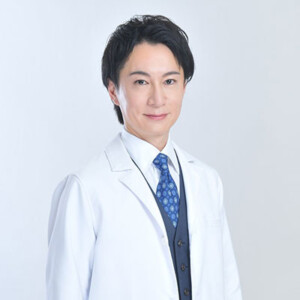
Dr. Jun Karibe
MD
Director
Education & Career
Certifications
Awards
MEDICAL REVIEW