Re-Injection After Hyaluronidase: How Long to Wait and What to Know About Safety
Having filler dissolved is often an emotional decision, and the question that follows almost immediately is “when can I have filler again?” Many patients are told to wait two weeks, others are told six hours, and the conflicting advice is understandably confusing.
This guide explains what the published evidence actually shows about how long hyaluronidase stays active, why the practical waiting period is usually longer than the biological one, and what safety issues matter before re-injecting.
What you’ll learn in this article:
- How long hyaluronidase remains enzymatically active in the skin, according to published pharmacokinetic and animal data
- Why most clinical guidelines recommend around two weeks before re-injecting filler, even though the enzyme is gone much sooner
- Realistic costs for hyaluronidase and re-injection in Tokyo
- Allergy risk, contraindications, and who should delay re-injection
- Two widely repeated misconceptions about “dissolving” filler
Have a question about this treatment?
Message us on LINE or WhatsApp — our English-speaking team usually replies the same day.
What Hyaluronidase Actually Does to Filler

Hyaluronidase is an enzyme that breaks down hyaluronic acid by splitting the chemical bonds that hold the sugar chains together. Because hyaluronic acid fillers are made of cross-linked hyaluronic acid, an injection of the enzyme reduces the volume and firmness of the filler in the treated area.
It is worth understanding the regulatory position clearly, because it is frequently misrepresented.
In the United States, hyaluronidase products such as HYLENEX recombinant are FDA-approved only as an adjuvant in subcutaneous fluid administration, to increase the dispersion and absorption of other injected drugs, and in subcutaneous urography — dissolving dermal filler is not a labelled indication.
Using it to reverse filler is therefore an off-label use worldwide, and it is regarded in the aesthetic literature as the standard approach to managing filler-related complications despite that off-label status.
In Japan, there is no domestically approved hyaluronidase product indicated for dissolving cosmetic filler, so preparations are obtained under a physician’s responsibility as unapproved drugs — a point that must be explained to you as part of informed consent, and which means Japan’s national adverse drug reaction relief system does not apply. Approval in another country is not the same as approval in Japan, and neither implies insurance coverage.
How Long Hyaluronidase Stays Active in the Skin

This is the part most patients are never told. Pharmacokinetic data summarised in a 2025 review in the Journal of Cosmetic Dermatology indicate a half-life of roughly 30 minutes in subcutaneous tissue and about 2 minutes in the bloodstream, with enzymatic activity diminishing significantly within 30 minutes of injection.
The most directly relevant experiment remains a 2018 rat study published in the Journal of Cosmetic and Laser Therapy. Filler was injected, treated with hyaluronidase a week later, and then re-injected at intervals ranging from 30 minutes to 14 days.
The authors reported that by three hours after re-injection the filler regained its shape and volume, and by six hours it had “restored almost its original volume” with no significant difference from controls. Their conclusion was that hyaluronidase loses its effect in the dermis and subcutaneous tissue within three to six hours, and that successful engraftment of re-injected filler can be achieved six hours after the enzyme.
Two caveats matter. This was an animal study with a small sample, and clinical guidance still commonly describes hyaluronidase as having a duration of action measured in tens of hours rather than minutes — so the biological window is best treated as short, not as zero.
How Long to Wait Before Re-Injecting Filler
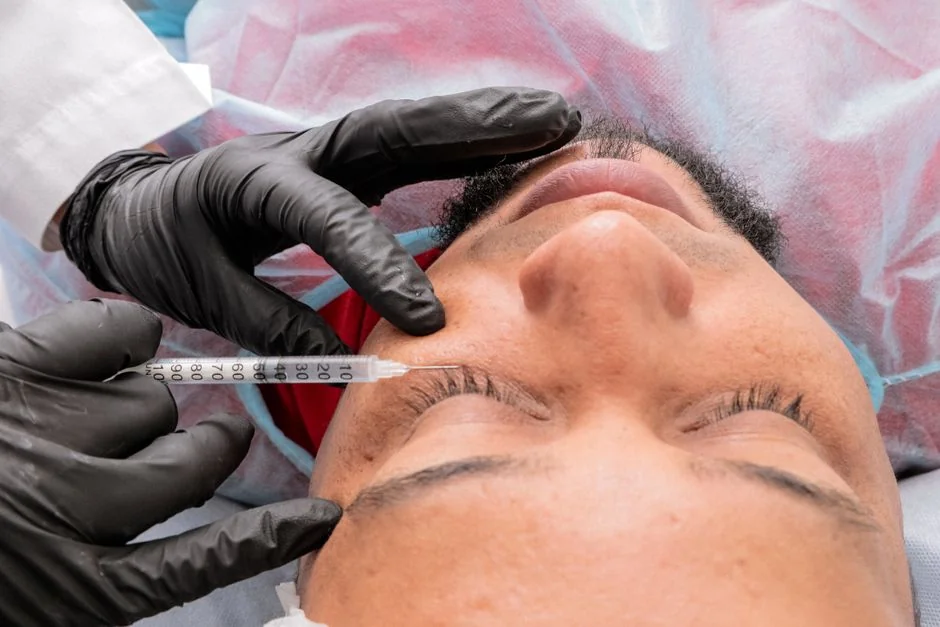
If residual enzyme were the only concern, waiting a day would be more than sufficient. In practice, the reason to wait longer has almost nothing to do with the enzyme and everything to do with being able to see what you are treating.
After hyaluronidase, the area is typically swollen, and both the filler and some surrounding tissue hyaluronic acid have been affected. Injecting into a swollen, unsettled face is how over-correction and asymmetry happen.
A 2021 guideline in the Journal of Clinical and Aesthetic Dermatology from the Complications in Medical Aesthetics Collaborative recommends waiting a minimum of two weeks after elective dissolution, until swelling has settled, before re-injecting. Earlier guidance from the same group also notes that the final result of hyaluronidase itself can take up to two weeks to become apparent.
| Interval after hyaluronidase | What the evidence or guidance says | When this is used | Main limitation |
|---|---|---|---|
| Around 6 hours | Animal data suggest re-injected filler retains its shape and volume by this point | Rarely chosen electively; occasionally relevant when a small correction cannot wait | Swelling makes accurate assessment of volume unreliable |
| 24–48 hours | Enzyme half-life is short, but duration of action is often described clinically as 24–48 hours | Sometimes used when a visible defect must be addressed quickly | Tissue is still oedematous and the endpoint of dissolution is not yet clear |
| Approximately 2 weeks | Guideline recommendation: minimum two weeks until swelling settles | The usual choice for elective re-injection | Requires patience during a period when the area may look flat |
| 4 weeks or longer | No fixed interval is established in the literature; based on clinical judgement | After high-dose or repeated hyaluronidase, or after inflammatory nodules or infection | Longer interval means longer time without volume |
Repeat hyaluronidase sessions follow a different rhythm.
A 2025 review in Plastic and Reconstructive Surgery Global Open suggests waiting at least a few days to a week before a further elective dose, while in suspected vascular occlusion the enzyme is given repeatedly within the same visit — an emergency protocol described in guidelines as a total of roughly 450–1,500 units infiltrated over the affected area, which has nothing in common with elective dissolution.
At BIOTOPE CLINIC in Shirokanedai, we frequently see patients who arrive having had filler dissolved elsewhere and want it replaced the same week. In most of those cases the sensible plan is to review the area once swelling has settled, because the amount required is often considerably less than expected.
Cost in Tokyo
Both dissolution and re-injection are self-pay (cosmetic) treatments in Japan and are not covered by national health insurance. Prices are commonly quoted per unit volume of enzyme rather than per session, so the total depends on how much filler is present and how many sites are treated.
According to the clinic group’s published price list, hyaluronidase is priced from ¥22,000 per 0.1 mL where the original filler was placed at our own clinic, and ¥22,000 per 0.1 mL where the filler was placed elsewhere. The higher figure for outside filler reflects the additional assessment required when the product, volume, and injection depth are not documented.
For subsequent re-injection, hyaluronic acid filler on the same published list ranges from ¥66,000 to ¥88,000 per syringe depending on the product selected. Please see the clinic’s official price page or contact us for a current quote, as pricing is subject to revision.
For an accurate quote, please book a consultation.
Have a question about this treatment?
Message us on LINE or WhatsApp — our English-speaking team usually replies the same day.
Safety Considerations Before You Re-Inject
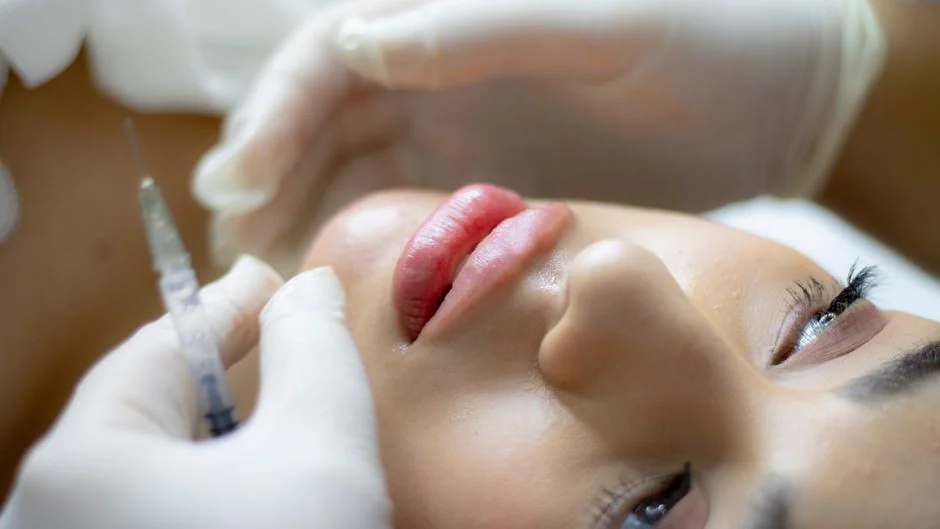
Hyaluronidase has a long clinical track record, but it is not risk-free, and the safety conversation should happen before the enzyme is given rather than afterwards.
Allergy and hypersensitivity
Published guideline data indicate local allergic reactions at a rate of approximately 0.05 to 0.69 percent, with urticaria and angioedema reported in fewer than 0.1 percent of cases. Clinical reports indicate that most reactions are localised and delayed rather than immediate.
A history of bee or wasp sting allergy is treated as a significant concern because of cross-reactivity, since hyaluronidase is a component of insect venom. Guidance recommends a test patch — around 20 units intradermally in the forearm, observed at 30 minutes — except where the indication is vascular compromise and delay could cause harm.
Effect on your own tissue
Hyaluronidase does not distinguish perfectly between filler and the hyaluronic acid naturally present in your skin, and guidelines note it may act on native, non-cross-linked hyaluronic acid preferentially. This is why some patients feel the treated area looks flatter or laxer than before their filler journey began — an effect that is usually temporary but can be unsettling.
Who is a good candidate for re-injection
Generally suitable: patients whose swelling has fully settled, who have a clear record of what was dissolved and why, who are in good general health, and whose original concern was over-correction, migration, or product placement rather than an inflammatory reaction.
Reasons to delay or avoid: ongoing inflammation, infection, or unresolved nodules in the area; recent or unexplained facial swelling; known hyaluronidase hypersensitivity or a significant insect venom allergy; pregnancy or breastfeeding; and any situation where the cause of the original problem has not been identified. Repeatedly filling and dissolving the same area is rarely a good strategy and should prompt a wider discussion about the treatment plan.
What People Often Get Wrong
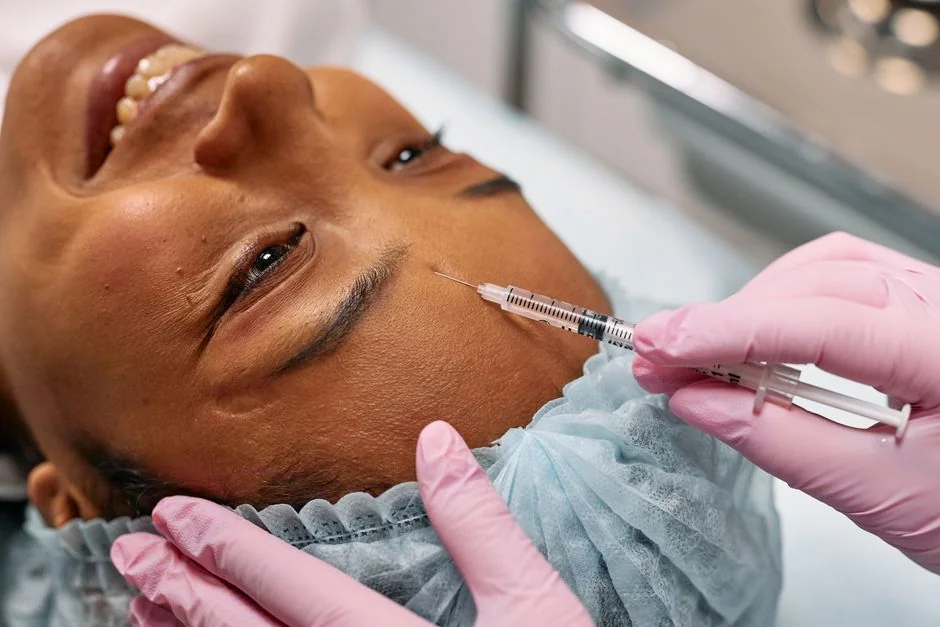
Misconception 1: “Hyaluronidase stays in my skin for weeks and will destroy any new filler.” The pharmacokinetic data do not support this. With a subcutaneous half-life of roughly 30 minutes and animal data suggesting the effect on dermal and subcutaneous tissue is lost within three to six hours, residual enzyme is not the reason for a two-week wait. The wait exists so that swelling resolves and the true volume deficit can be judged accurately.
Misconception 2: “Hyaluronidase completely dissolves everything.” A 2026 article in the Aesthetic Surgery Journal argues that the word “dissolving” is scientifically imprecise, noting that imaging frequently demonstrates residual filler on ultrasound or MRI despite clear clinical improvement, and that no consensus imaging criteria exist for “complete resolution.” A more accurate framing is that hyaluronidase modifies filler rather than erasing it — which is also why a second session is sometimes needed.
Frequently Asked Questions
- Q. Can I have filler re-injected on the same day as hyaluronidase?
- Animal data suggest re-injected filler can integrate from around six hours after the enzyme, so it is not biologically impossible. However, most clinicians advise against it electively, because swelling at that point makes it very difficult to judge how much filler is genuinely needed.
- Q. Will hyaluronidase permanently damage my own natural hyaluronic acid?
- Native hyaluronic acid in the skin turns over continuously, with a reported half-life of around 24 hours, so the tissue is not left permanently depleted. That said, published commentary notes this turnover is not accelerated to compensate for acute loss, so the area may look flatter for a period before it settles.
- Q. Do I need an allergy test before hyaluronidase?
- Guidance recommends a test patch before elective dissolution, typically around 20 units intradermally with review at 30 minutes, and this is skipped only in emergencies such as suspected vascular occlusion. A history of bee or wasp sting allergy should always be disclosed at consultation.
- Q. How much filler will I need after dissolution?
- Frequently less than the original amount, because tissue that has been stretched by filler often retracts once swelling settles. This is one of the practical reasons to reassess at the two-week point rather than booking re-injection in advance.
Have a question about this treatment?
Message us on LINE or WhatsApp — our English-speaking team usually replies the same day.
Summary and Where to Have This Treated in Tokyo
The biological window is short — evidence suggests hyaluronidase loses its effect on dermal and subcutaneous tissue within about three to six hours. The clinical window is longer, with guidelines recommending a minimum of around two weeks so that swelling settles and volume can be assessed accurately.
Safety planning matters as much as timing: allergy history, the reason the filler was dissolved in the first place, and whether any inflammation has fully resolved should all be settled before a needle goes back in. Individual results vary, and no timeline can be promised in advance.
Within our clinic group, both BIOTOPE CLINIC (Shirokanedai, Minato-ku) and Kojimachi Dermatology & Plastic Surgery Clinic (Ichigaya, Chiyoda-ku) offer English-language consultation with Dr. Jun Karibe’s team.
Hyaluronidase dissolution and hyaluronic acid filler re-injection are handled at BIOTOPE CLINIC in Shirokanedai, where Dr. Karibe personally consults; insurance-covered general dermatology is handled at the Kojimachi clinic. Bookings and enquiries in English: LINE or WhatsApp.
If the underlying goal is firmer, better-supported tissue rather than more volume, treatments such as HIFU for skin lifting and tightening or Morpheus8 radiofrequency microneedling are also available at BIOTOPE CLINIC in Shirokanedai — feel free to ask about them during a consultation with Dr. Karibe.
If you have questions about re-injection after hyaluronidase, both BIOTOPE CLINIC (Shirokanedai, Minato-ku) and Kojimachi Dermatology & Plastic Surgery Clinic (Ichigaya, Chiyoda-ku) offer English-language consultation with Dr. Karibe and his team. Hyaluronidase and filler re-injection are primarily handled at BIOTOPE CLINIC. English enquiries: LINE or WhatsApp.
24/7 Consultation & Booking
Book a Consultation or Treatment
Our English-speaking team responds via LINE or WhatsApp — usually the same day.
References
- Kim HJ, Kwon SB, Whang KU, Lee JS, Park YL, Lee SY. The duration of hyaluronidase and optimal timing of hyaluronic acid (HA) filler reinjection after hyaluronidase injection. Journal of Cosmetic and Laser Therapy. 2018;20(1):52–57.
- Murray G, Convery C, Walker L, Davies E. Guideline for the Safe Use of Hyaluronidase in Aesthetic Medicine, Including Modified High-dose Protocol. Journal of Clinical and Aesthetic Dermatology. 2021;14(8):E69–E75.
- King M, Convery C, Davies E. This Month’s Guideline: The Use of Hyaluronidase in Aesthetic Practice (v2.4). Journal of Clinical and Aesthetic Dermatology. 2018;11(6):E61–E68.
- Hong GW, Hu H, Wan J, et al. How Should We Use Hyaluronidase for Dissolving Hyaluronic Acid Fillers? Journal of Cosmetic Dermatology. 2025;24(1):e16783.
- Yi KH, Wan J, Yoon SE. Considerations for Proper Use of Hyaluronidase in the Management of Hyaluronic Acid Fillers. Plastic and Reconstructive Surgery Global Open. 2025;13(3):e6566.
- Harris S, Weiner S. Reframing Hyaluronidase in Aesthetic Medicine: From “Dissolving Filler” to “Modifying Filler”. Aesthetic Surgery Journal. 2026;46(6):NP51–NP54.
- U.S. Food and Drug Administration. HYLENEX recombinant (hyaluronidase human injection) prescribing information. https://www.fda.gov/
Related Articles
You may also find these articles useful.
- Dermal Filler Tokyo: Price Guide & Clinic Selection Tips
- Under Eye Filler Tokyo: Risks, Benefits & Costs
- How Long Should You Stay in Tokyo for HA Filler? Downtime, Bruising & Flying Guide
- Lip Filler Tokyo: Cost, Treatment & Clinic Guide
- Dermal Filler Tokyo: Prices & English-Speaking Clinics
SUPERVISED BY

Dr. Jun Karibe
MD
Director
Education & Career
Certifications
Awards
MEDICAL REVIEW