Botox/Xeomin Maintenance in Tokyo: Your 6-Month Repeat Schedule and Touch-Up Guide

If you have already had your first Botox/ Xeomin (incobotulinumtoxinA) treatment and are wondering how to maintain your results — or if you are new to the treatment and want to plan responsibly before committing — this guide is written with you in mind. Managing a neuromodulator schedule in a new country, with a different language and an unfamiliar healthcare system, can feel daunting, and it is a concern the team at BIOTOPE CLINIC or Kojimachi Dermatology & Plastic Surgery Clinic hears from international patients regularly.
This article explains how Xeomin works, what a realistic 6-month maintenance cycle looks like, when and whether a touch-up is appropriate, and what you can expect in terms of cost and candidacy in Tokyo.
What you’ll learn in this article:
- What Xeomin is and how it differs from other botulinum toxin products
- How a 6-month repeat schedule is typically structured for ongoing results
- When a touch-up appointment is clinically justified — and when it is not
- Realistic cost ranges for Xeomin maintenance in Tokyo
- Who makes a good candidate for a long-term Xeomin programme
Have a question about this treatment?
Message us on LINE or WhatsApp — our English-speaking team usually replies the same day.
What Is Xeomin?
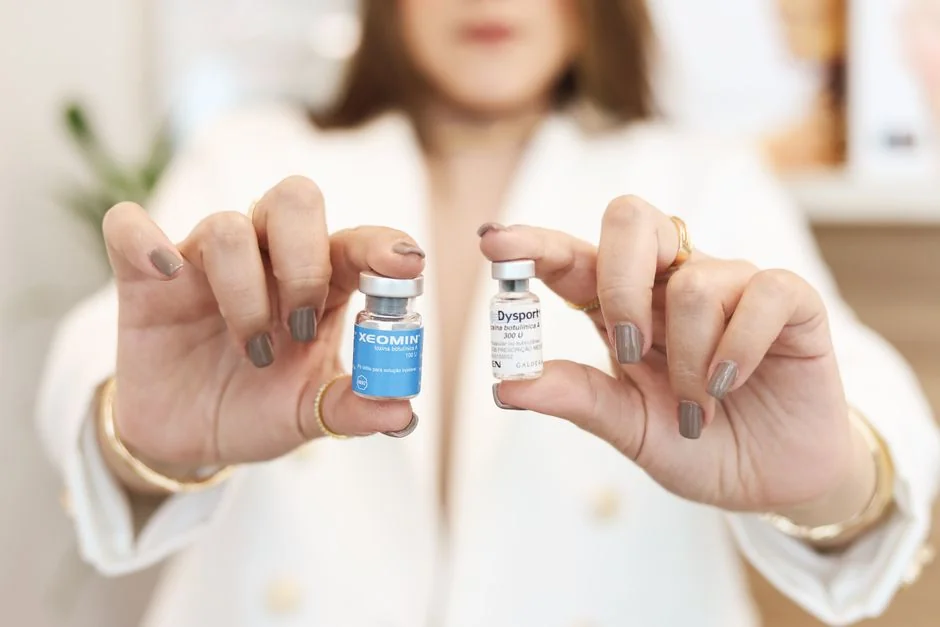
Xeomin is a prescription-only botulinum toxin type A product manufactured by Merz Pharmaceuticals.
It is licensed for aesthetic use in several countries and is used clinically to temporarily relax overactive facial muscles, softening dynamic wrinkles — lines created by repeated facial movement such as squinting, frowning, and raising the eyebrows.
What distinguishes Xeomin from other botulinum toxin products is its so-called “naked” formulation.
Unlike some competitor products, Xeomin contains only the active neurotoxin component without complexing accessory proteins.
Studies suggest this may reduce the likelihood of the immune system producing neutralising antibodies over repeated treatments, potentially making it a more suitable choice for patients receiving neuromodulator therapy long-term. A 2011 phase III clinical trial published in the Journal of Cosmetic Dermatology reported that incobotulinumtoxinA produced statistically significant improvement in glabellar (frown) lines compared with placebo, with a favourable tolerability profile across multiple treatment cycles.
It is worth noting that Xeomin is classified under the broader category of botulinum toxin (commonly referred to in Japan as “Botox,” though that is technically a brand name for a different product). The principles of how it is administered, where it is injected, and how long it lasts are broadly similar across licensed neuromodulator products.
How Xeomin Works: The Science in Plain Language
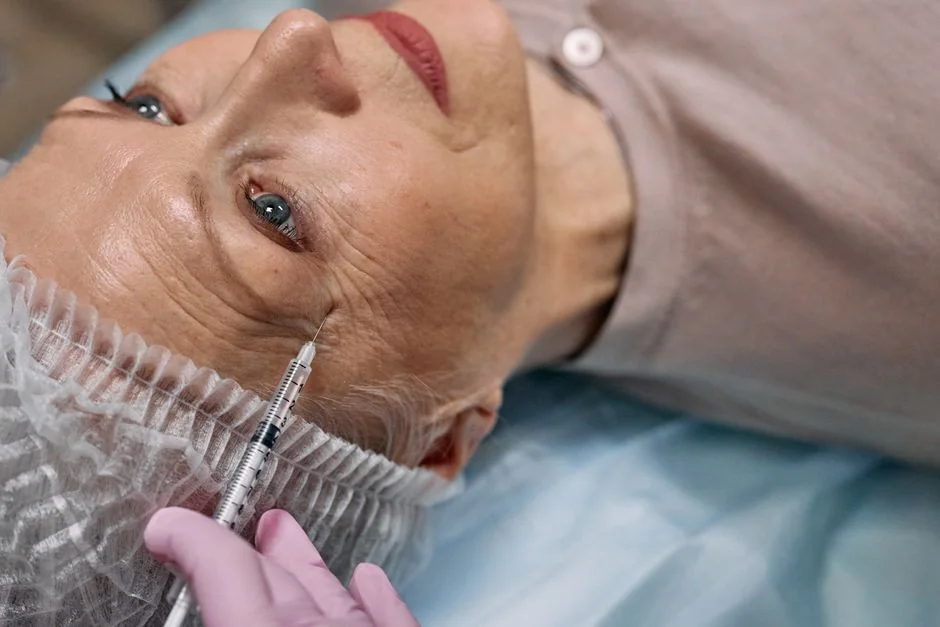
Botulinum toxin type A works by blocking the release of acetylcholine, a chemical messenger that tells muscles to contract. When a very small, purified dose is injected into a specific facial muscle, the signal from the nerve to that muscle is interrupted, causing a temporary and controlled reduction in muscle activity.
This relaxation allows overlying skin to smooth out. Because the muscle is not being repeatedly creased, existing dynamic lines become less visible, and new line formation is slowed. The effect is not permanent — over approximately three to six months, the nerve terminals regenerate and normal muscle function gradually returns.
The “naked molecule” aspect of Xeomin is relevant here because complexing proteins in some other botulinum toxin products may, over time, trigger an immune response that reduces clinical effectiveness. By removing these proteins, Xeomin aims to preserve reliable outcomes across repeated treatment cycles — an important consideration for patients planning a long-term maintenance programme.
The 6-Month Repeat Schedule: How Maintenance Works in Practice

Many patients assume that a 6-month schedule simply means booking an appointment every six months regardless of how they feel. In clinical practice, an appropriate maintenance schedule is more nuanced than that.
Standard Treatment Intervals
For most patients, the visible effects of Xeomin last between three and four months after the initial treatment. With consistent repeat treatments over time, some patients report that their results appear to last slightly longer — closer to four to six months — as the targeted muscles gradually become less hypertrophied (enlarged from repeated use) and the skin retains some of the smoothing benefit.
A general framework for a 6-month maintenance cycle might look like the following:
- Month 0: Full initial treatment session targeting agreed areas (e.g., glabellar lines, forehead, crow’s feet)
- Months 1–2: Results at or near peak; no intervention required
- Month 3: Movement gradually returns; patient begins to notice muscle activity — this is the typical touch-up window if needed
- Month 4–5: For most patients, this is the optimal time for a repeat full treatment to maintain continuity of results without allowing full muscle reconditioning
- Month 6: Full muscle function typically restored in patients who have not yet had a repeat treatment; re-treatment at this point is still appropriate and safe
It is important to understand that “6-month maintenance” does not necessarily mean a single session every six months produces the same results as treating every three to four months. For some patients, a 6-month interval is sufficient; for others — particularly those with strong facial musculature or higher metabolic rates — a shorter interval may be clinically appropriate.
What Is a Touch-Up, and When Is One Needed?
A touch-up is a small additional injection performed within the primary treatment cycle — typically two to four weeks after the initial session — to address areas where the original dose did not produce the desired level of relaxation. It is not a replacement for a full repeat session and should not be confused with one.
Touch-ups are most commonly requested when:
- One area relaxed less than expected due to individual variation in muscle density or injection depth
- Mild asymmetry is present that was not apparent immediately after treatment
- A conservative initial dose was used intentionally for a first-time patient, and a slight increase is warranted
Touch-ups are generally not appropriate if movement has simply returned after two to three months — that indicates the treatment has worn off naturally and a full repeat session is needed, not a top-up. Requesting a touch-up too late in the cycle is a common misunderstanding that the next section addresses directly.
Dr. Karibe’s Note
Many of our international patients arrive having already received several rounds of botulinum toxin treatment abroad and are unsure how to translate their previous schedule to a new provider. A common question I receive is: “My treatment used to last four months — why does it only seem to last three now?” In most cases this is not a sign of resistance or a product issue; it reflects factors such as a change in the injected dose, the treated areas, or simply natural variation in how the body processes the toxin over time.
My recommendation is always to bring your previous treatment records — even a photograph of your prescription or a note from your former physician — so we can calibrate your dose and schedule properly from the first consultation.
Common Misconceptions About Xeomin Maintenance
There are several widely held beliefs about repeat botulinum toxin treatment that are worth addressing clearly, as they may affect how patients plan their schedule or interpret their results.
Misconception 1: “Xeomin lasts exactly 6 months, so I only need to come in twice a year.”
Duration of effect varies considerably between individuals. Clinical studies indicate that for most patients, results from a single treatment of incobotulinumtoxinA last approximately 3 to 4 months. A 6-month interval may lead to a noticeable lapse in results — and crucially, allows the targeted muscles to fully recover their tone, which may require a slightly higher dose to achieve the same effect at the next session.
If the goal is continuous maintenance, treating at 3- to 4-month intervals is generally more effective.
Misconception 2: “If I stop getting treatments, my wrinkles will be worse than before.”
This is not supported by evidence. When treatment is stopped, the muscle simply returns to its pre-treatment level of activity over time. The skin may eventually return to its previous appearance, but it will not deteriorate beyond what would have occurred naturally with ageing.
In fact, some studies suggest that consistent long-term neuromodulator use may slow the formation of static lines (lines visible at rest) by reducing cumulative muscle-induced skin creasing over years.
Expected Results: What Maintenance Looks Like Over Time
Patients who commit to a consistent Xeomin maintenance programme — typically three to four sessions per year — often report that the quality of their results improves over the first one to two years.
This is partly because the practitioner refines the dose and placement with each visit, and partly because the targeted muscles gradually weaken slightly with repeated relaxation.
Clinical reports indicate that after two or more years of regular botulinum toxin treatment, some patients can maintain satisfactory results with doses lower than those used initially. This suggests that an individualised, consistent programme may offer both aesthetic and economic advantages over time.
It is important to hold realistic expectations: Xeomin addresses dynamic lines (those caused by muscle movement) effectively. It has a limited effect on static lines (present at rest), volume loss, or skin laxity. For patients whose concerns include sagging skin or deeper folds, complementary treatments may be more appropriate. At our BIOTOPE CLINIC, Tokyo, we frequently see patients who benefit from combining a neuromodulator programme with a skin-tightening treatment such as HIFU (high-intensity focused ultrasound), which addresses skin laxity at a structural level — a treatment also available at Kojimachi Dermatology & Plastic Surgery Clinic. This combination is worth discussing during your consultation if you have multiple concerns.
Xeomin vs. Other Neuromodulators: A Comparison
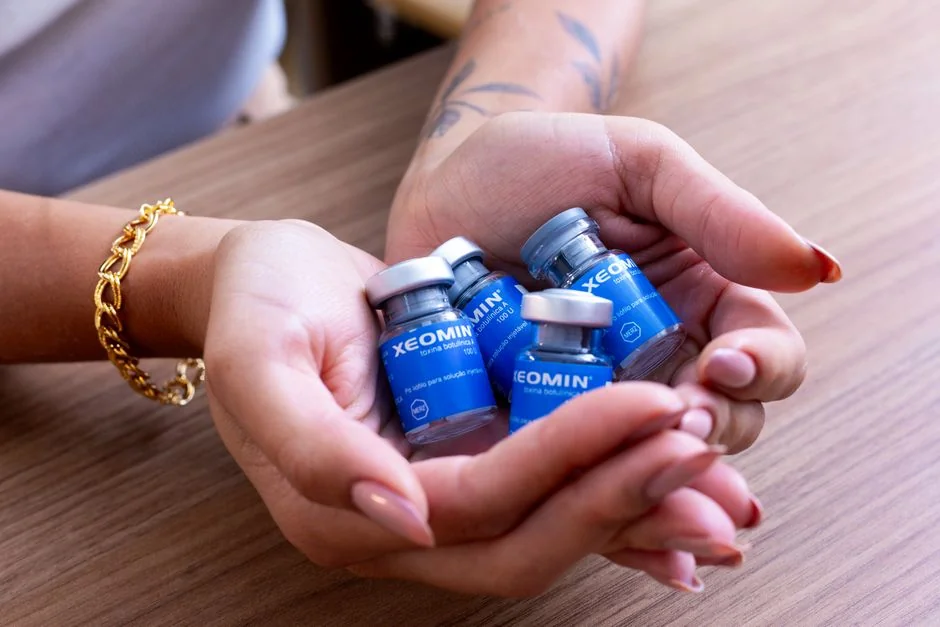
The table below provides a general overview of how Xeomin compares with other commonly available botulinum toxin type A products. These are general characteristics based on published data and clinical convention; individual results vary.
| Feature | Xeomin (incobotulinumtoxinA) | Botox (onabotulinumtoxinA) | Dysport (abobotulinumtoxinA) |
|---|---|---|---|
| Manufacturer | Merz Pharmaceuticals | Allergan (AbbVie) | Ipsen |
| Complexing proteins | None (“naked” molecule) | Present | Present |
| Potential for antibody formation | Studies suggest lower risk | Possible with repeated use | Possible with repeated use |
| Storage requirement | Room temperature (before reconstitution) | Refrigeration required | Refrigeration required |
| Onset of action | Approximately 3–7 days | Approximately 3–5 days | Approximately 2–5 days |
| Typical duration | 3–4 months | 3–4 months | 3–4 months |
| Unit equivalence | Broadly equivalent to Botox units | Reference standard | Approximately 2.5–3x Botox units |
| Long-term maintenance suitability | May be advantageous due to lower antigenicity | Widely established record | Established record; faster spread |
Note: Unit equivalence is a general guide. Dosing is always determined by the individual clinician based on the patient’s anatomy and treatment goals.
Cost of Xeomin Maintenance in Tokyo
In Japan, botulinum toxin products are classified as cosmetic treatments and are not covered by national health insurance (shakai hoken). Costs vary based on the area treated, the number of units required, and the product used.
At Kojimachi Dermatology & Plastic Surgery Clinic, botulinum toxin treatments are priced as follows:
- Botox (Allergan brand): ¥22,000–¥148,000 depending on the number of units and areas treated
- Botox (Korean brand): ¥9,900–¥45,000
- Micro-Botox (intradermal, for pore refinement and skin texture): ¥22,000–¥33,000
An initial consultation costs ¥3,300, and a Dr. Karibe surgical/injectable consultation is ¥2,200. For patients planning a 6-month maintenance programme — typically two to three sessions per year — the annual cost across two full treatment sessions might range from approximately ¥44,000 to ¥296,000 depending on the product, dose, and areas. Patients requiring touch-ups should factor that into their annual planning as well.
For an accurate quote, we recommend booking a consultation.
Have a question about this treatment?
Message us on LINE or WhatsApp — our English-speaking team usually replies the same day.
What to Expect: Before, During, and After Treatment
Before Your Appointment
Patients are generally advised to avoid blood-thinning medications and supplements (such as aspirin, ibuprofen, fish oil, and vitamin E) for approximately one week before treatment where medically safe to do so, as these can increase the likelihood of bruising. Alcohol should be avoided for 24 hours prior. No anaesthetic is required — most patients find the injections well tolerated with fine-gauge needles.
For a maintenance visit, it is helpful to bring notes or photographs from previous treatments, particularly if you are switching providers. Communicating your previous dose, the areas treated, and how long the results lasted gives your practitioner valuable information for optimising your current session.
During the Treatment Session
A maintenance Xeomin session typically takes 15 to 30 minutes. The practitioner will assess facial muscle activity, mark injection points, and administer small doses using a very fine needle. Patients may feel a mild stinging sensation at each injection site. There is no sedation or prolonged recovery period required.
After Treatment and Recovery
Patients are advised to remain upright for four hours after treatment and avoid strenuous physical activity, saunas, and facial massage for 24 hours. Bruising or mild swelling at injection sites is possible but typically resolves within a few days. Most patients return to normal activities immediately.
Results typically begin to appear within three to seven days, with full effect visible by approximately two weeks — which is why touch-up assessments, if needed, are generally scheduled at the two-week mark rather than immediately after treatment.
Who Is a Good Candidate for a Xeomin Maintenance Programme?
Xeomin maintenance is generally well suited to adults in good general health who have dynamic facial lines they wish to manage over the medium to long term, and who understand that ongoing treatment is required to sustain results.
Patients who tend to respond well include:
- Those with moderate to severe glabellar lines, forehead lines, or crow’s feet that are primarily movement-related
- Patients who have previously responded well to botulinum toxin treatment and are looking for a consistent long-term provider
- Those interested in a “preventive” approach — treating lines before they become static — particularly in their late 20s to 40s
- Patients who have experienced reduced efficacy with other botulinum toxin brands, who may benefit from Xeomin’s lower antigenicity profile
Xeomin treatment is not appropriate for:
- Pregnant or breastfeeding individuals
- Patients with neuromuscular conditions such as myasthenia gravis or Lambert-Eaton syndrome
- Those with known hypersensitivity to botulinum toxin or any component of the formulation
- Individuals with active infection or inflammation at the planned injection site
- Patients with predominantly static lines or significant volume loss, for whom fillers or other modalities may be more appropriate
In our clinical experience at Kojimachi Dermatology & Plastic Surgery Clinic, we also see patients who benefit from complementary treatment such as hyaluronic acid filler (¥66,000–¥88,000 per syringe) to address areas where volume loss is contributing to the appearance of ageing alongside dynamic lines — a combination approach that can be discussed thoroughly during a consultation with Dr. Karibe.
Frequently Asked Questions
- Q. Is Xeomin available in Japan, and is it the same product I received abroad?
- Xeomin (incobotulinumtoxinA) is available in Japan through licensed aesthetic clinics. The active molecule is identical to that used internationally, though as with any prescription product, the formulation and regulatory approval status may have nuances from market to market. If you are unsure whether the product you received previously was Xeomin specifically, your previous provider’s documentation will help your new practitioner confirm this.
- Q. How do I know if I need a touch-up or a full repeat treatment?
- A touch-up — a small supplementary injection — is generally appropriate within the first two to four weeks if a specific area did not respond adequately to the original dose. If your results have worn off after two or more months, this indicates the treatment cycle has ended naturally, and a full repeat session is needed. Your practitioner can help you assess which applies at your follow-up appointment.
- Q. Will my results diminish if I have repeated Xeomin treatments over many years?
- Most evidence suggests that consistent long-term treatment does not lead to reduced effectiveness in the majority of patients. In fact, studies suggest that well-maintained muscles may respond reliably over time, and some patients find they need slightly lower doses after several years of treatment. Antibody-mediated resistance is possible with any botulinum toxin product but is considered less likely with Xeomin due to the absence of complexing proteins.
- Q. Can I combine Xeomin with other treatments at the same visit?
- In many cases, yes — combining Xeomin with treatments such as hyaluronic acid fillers or skin-care procedures is clinically common and can address multiple concerns in a single appointment. However, the suitability of combining treatments on the same day depends on the specific procedures involved and should be discussed with your practitioner at the time of consultation.
- Q. How should I plan my Xeomin schedule if I travel frequently?
- Patients who travel often should aim to schedule their repeat sessions around their time in Tokyo rather than waiting until results have fully worn off. Booking an appointment for approximately three to four months after your previous treatment — even if you are not yet noticing movement returning — tends to produce more consistent outcomes than reacting after results have lapsed. The clinic team can help you plan ahead around your travel calendar.
Have a question about this treatment?
Message us on LINE or WhatsApp — our English-speaking team usually replies the same day.
Summary
Xeomin is a well-studied botulinum toxin type A product whose “naked molecule” formulation may offer advantages for patients undergoing repeated long-term treatment. A structured maintenance programme — typically two to three sessions per year, spaced approximately three to four months apart — tends to produce more consistent results than infrequent, reactive appointments.
Touch-up injections are appropriate within the first two to four weeks of a primary session if specific areas underperformed; they are not a substitute for a full repeat treatment once results have naturally worn off. Understanding this distinction helps patients plan their schedule and budget realistically.
In Tokyo, Xeomin maintenance is offered at BIOTOPE CLINIC or Kojimachi Dermatology & Plastic Surgery Clinic under the supervision of Dr. Jun Karibe, a board-certified plastic surgeon. Consultation is available in English, and the team is experienced in working with international patients navigating cosmetic care in Japan.
If you have questions about Xeomin maintenance in Tokyo, our team at Kojimachi Dermatology & Plastic Surgery Clinic in Ichigaya, Tokyo would be happy to help. We offer consultations in English.
24/7 Consultation & Booking
Book a Consultation or Treatment
Our English-speaking team responds via LINE or WhatsApp — usually the same day.
References
- Carruthers J, Carruthers A, Coleman WP, et al. Multicenter, randomized, phase III study of a single dose of incobotulinumtoxinA, free from complexing proteins, in the treatment of glabellar frown lines. Journal of the American Academy of Dermatology. 2011.
- Dressler D, Hallett M. Immunological aspects of Botox, Dysport and Myobloc/NeuroBloc. European Journal of Neurology. 2006.
- Sattler G, Callander MJ, Grablowitz D, et al. Noninferiority of incobotulinumtoxinA, free from complexing proteins, compared with another botulinum toxin type A in the treatment of glabellar frown lines. Dermatologic Surgery. 2010.
- Prager W, Huber-Vorländer J, Taufig AZ, et al. Botulinum toxin type A treatment to the upper face: movement analysis and patient satisfaction. Aesthetic Plastic Surgery. 2010.
- Rzany B, Dill-Müller D, Grablowitz D, et al. Repeated botulinum toxin A injections for the treatment of lines in the upper face: a retrospective study of 4,103 treatments in 945 patients. Dermatologic Surgery. 2007.
Related Articles
You may also find these articles useful.
SUPERVISED BY

Dr. Jun Karibe
MD
Director
Education & Career
Certifications
Awards
MEDICAL REVIEW