Eyebrow Artmake in Tokyo: Cost, Procedure and Clinic Guide
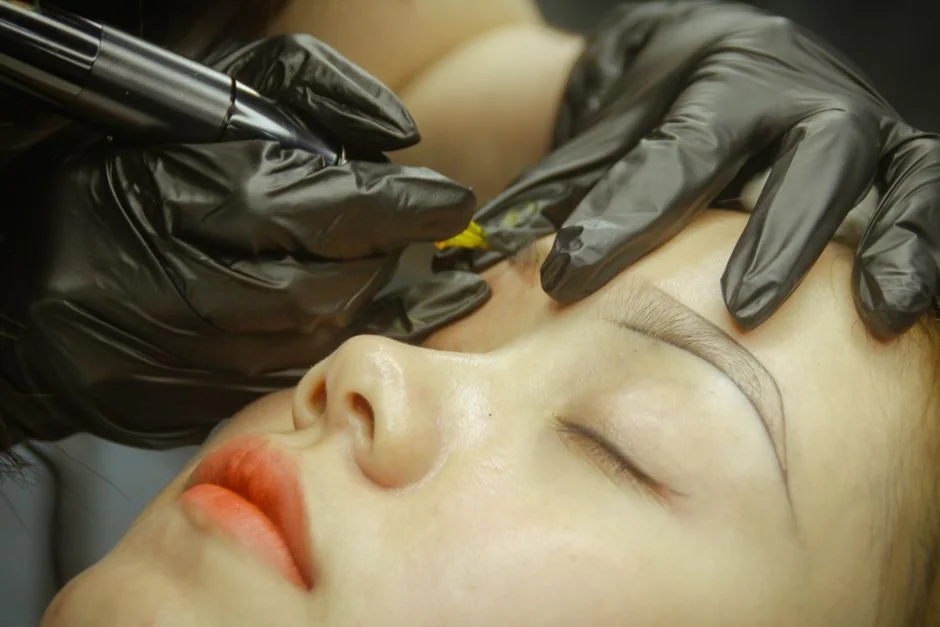
Sparse brows, over-plucked arches from years ago, or simply the daily fatigue of drawing eyebrows before every commute — these are the reasons most people start researching artmake. If you are living in or visiting Tokyo and searching in English, the picture can be confusing: the terminology differs from what is used overseas, the legal framework in Japan is stricter than in many countries, and published pricing is not always easy to find.
This guide explains what eyebrow artmake actually is, how the procedure is performed, what it costs in Tokyo, and what recovery realistically involves — so you can decide whether it suits you before booking a consultation.
What you’ll learn in this article:
- What artmake is, and why in Japan it is legally classified as a medical procedure
- How eyebrow artmake is performed, and how many sessions are typically needed
- Realistic cost expectations in Tokyo, based on published clinic pricing
- Healing, aftercare and the risks documented in the medical literature
- Who is a suitable candidate — and where our clinic group performs artmake
Have a question about this treatment?
Message us on LINE or WhatsApp — our English-speaking team usually replies the same day.
What Is Artmake?
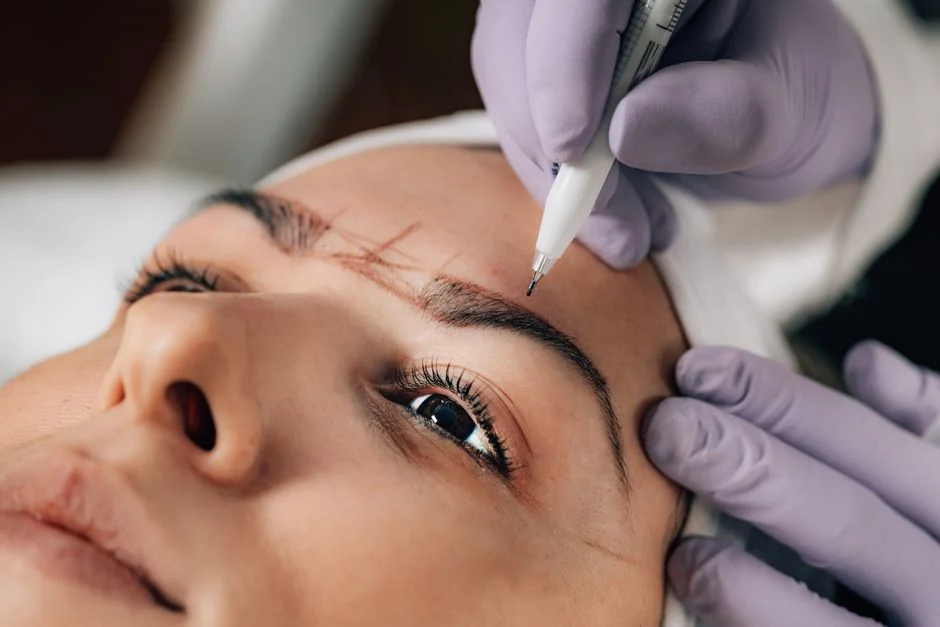
Artmake (アートメイク), known internationally as permanent makeup or PMU, is a cosmetic tattooing technique in which fine needles deposit pigment into the upper layers of the skin to define the shape and density of the eyebrows. The aim is a soft, makeup-like result rather than the saturated appearance of a decorative tattoo.
The term “permanent makeup” is somewhat misleading. Research comparing PMU colorants with conventional tattoo inks has found that PMU pigments are formulated with larger particles and are placed more superficially, which is why they fade with skin turnover and generally require reapplication to maintain colour density and shape (Andreou et al., Cosmetics, 2024). Artmake should therefore be understood as long-lasting but not lifelong.
Artmake Is a Medical Procedure Under Japanese Law
This is the single most important point for anyone considering artmake in Japan, and it differs sharply from the situation in the United States, the United Kingdom or Australia, where brow technicians often work in beauty studios.
Japan’s Ministry of Health, Labour and Welfare (MHLW) issued a notice on 3 July 2023 (医政医発0703第4号) confirming that artmake constitutes a medical act (医行為), and that performing it as a business without a physician’s licence violates Article 17 of the Medical Practitioners Act. A subsequent MHLW notice on aesthetic medical care dated 15 August 2025 (医政発0815第21号) restated this, specifying that inserting pigment into the skin to draw structures that naturally exist on the body — eyebrows, hair, the areola — or to create makeup-substituting decoration such as eyeliner or lip colour, falls within the definition of a medical act.
In practice, this means artmake in Japan must be carried out inside a licensed medical institution, by a physician or by a nurse working under a physician’s direction. Local government health departments in Japan have issued repeated public warnings about skin damage, infection and corneal injury arising from procedures performed by unlicensed operators in salon settings. If a Tokyo provider is not a registered clinic, that is a reason to walk away.
How Eyebrow Artmake Works
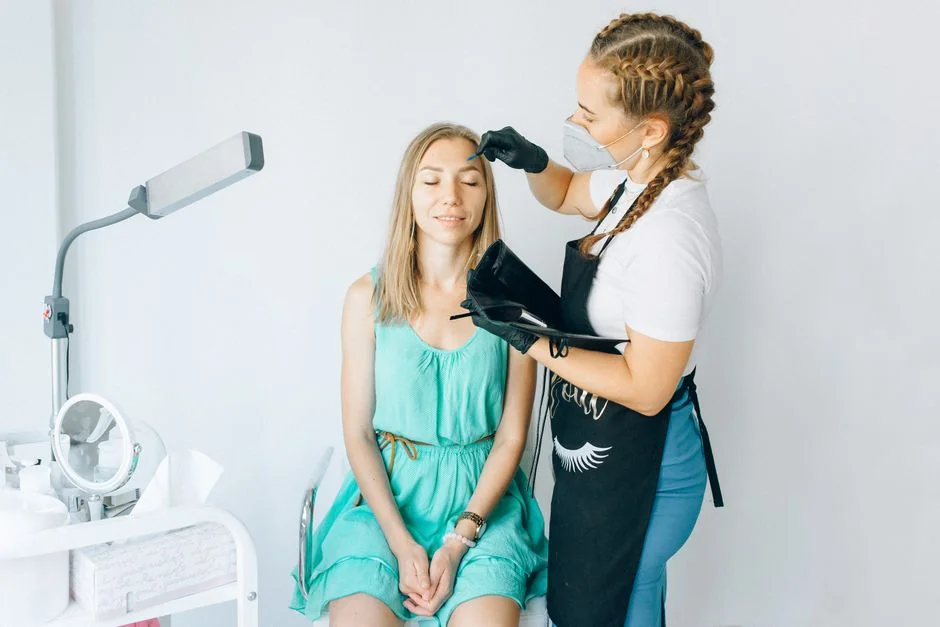
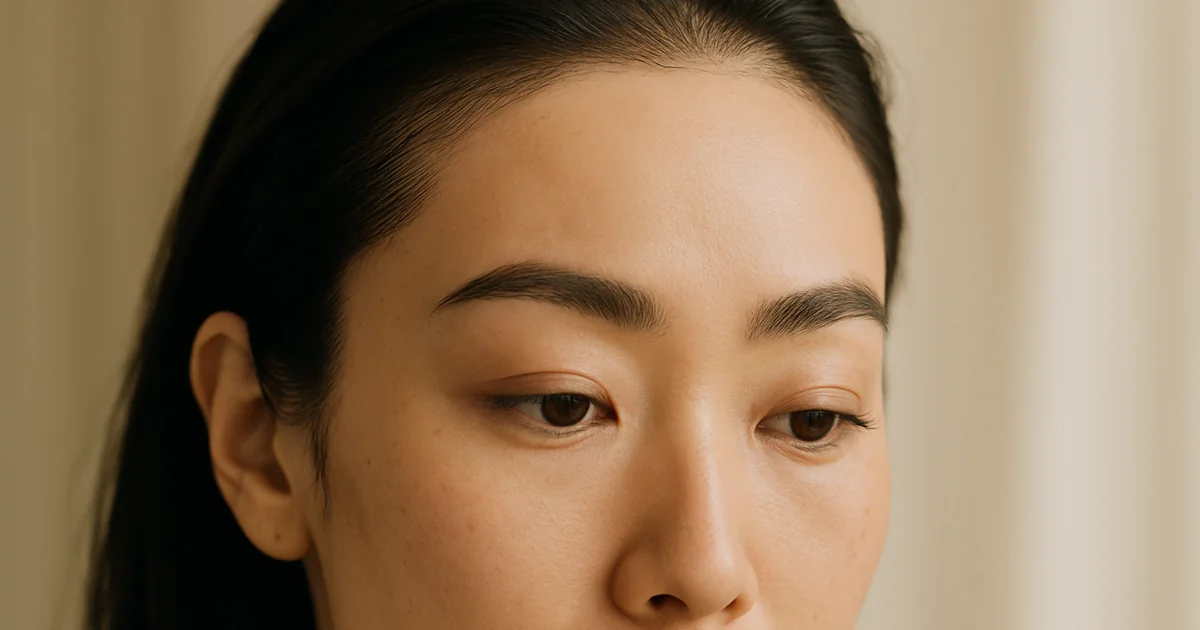
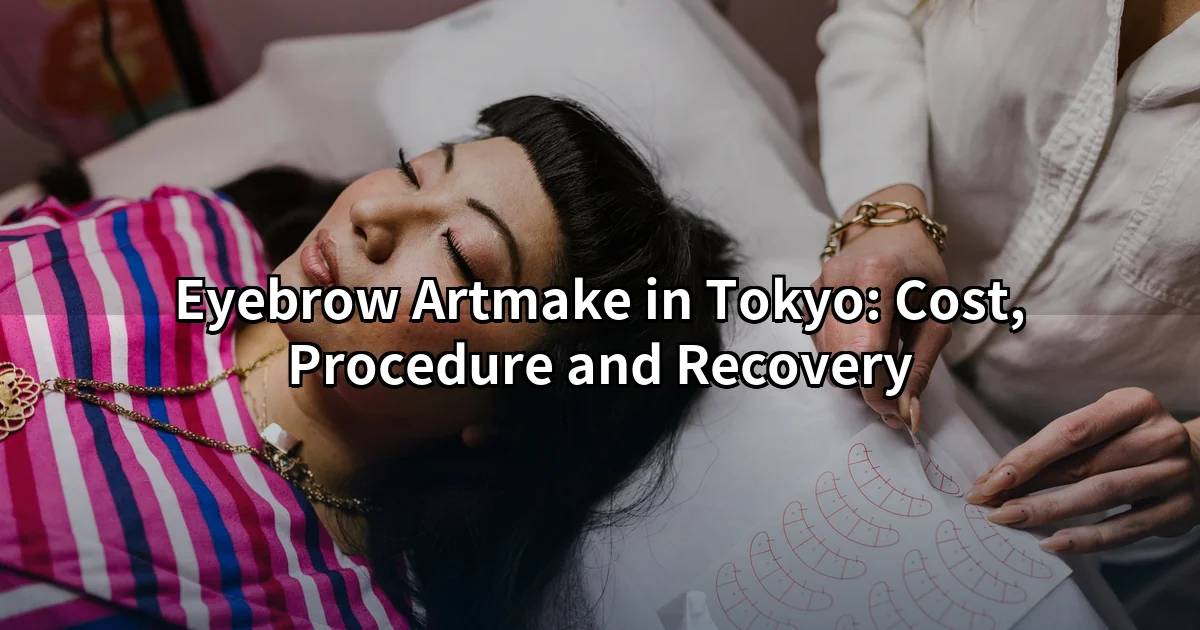
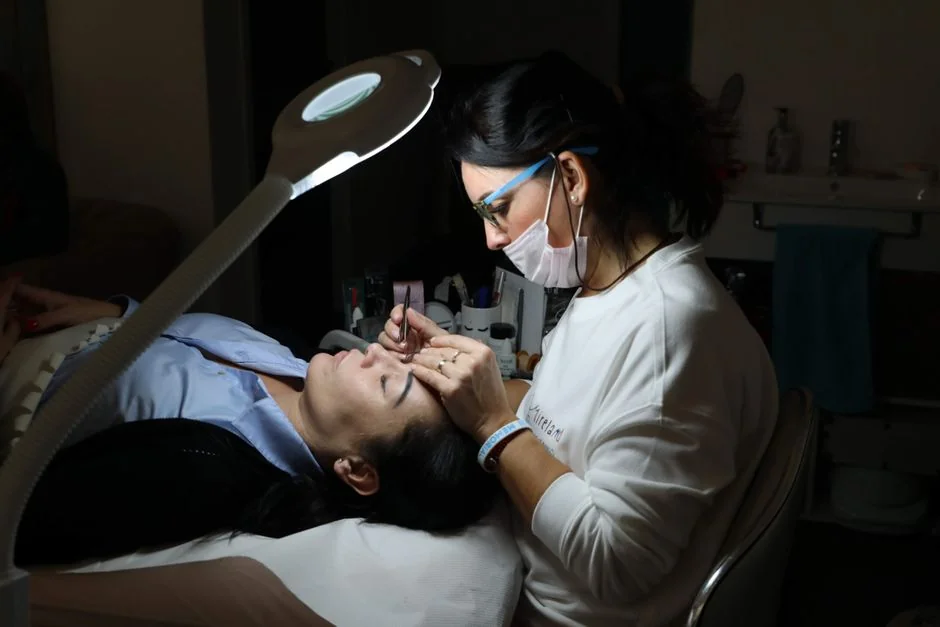
At the consultation, the practitioner assesses your natural brow hair, facial proportions, skin type and skin tone, then designs the shape with a pencil for your approval before any pigment is introduced. Pigment colour is selected to complement your hair colour and undertone.
A topical anaesthetic is applied to reduce discomfort. Most people describe the sensation as scratching or light pressure rather than sharp pain, although tolerance varies considerably between individuals and no procedure of this type can be described as entirely sensation-free.
Common Techniques
- Hair-stroke (feather) technique: individual strokes are drawn to mimic real brow hairs, giving a natural, textured result. Suited to those with some existing brow hair who want definition rather than density.
- Powder / ombré technique: pigment is applied in a soft, diffused gradient, producing an effect similar to lightly filled-in brows with a pencil or powder. Often preferred for sparse brows or oily skin.
- Combination: hair strokes layered with powder shading, which many clinics offer as an add-on to the base menu.
How Many Sessions?
Eyebrow artmake is not a single-visit treatment. Our clinic group’s published guidance for its hair-stroke brow menu is that two to three sessions are typically required, spaced to allow the skin to settle between visits. The first session establishes shape and base colour; the second corrects any uneven pigment retention and builds density. Periodic retouching thereafter maintains the result as the pigment fades.
Artmake, Microblading and Traditional Tattooing Compared
| Feature | Machine artmake (PMU) | Microblading | Decorative tattoo |
|---|---|---|---|
| Tool | Digital device with fine needle cartridge | Hand-held blade with a row of fine needles | Tattoo machine |
| Pigment depth | Superficial skin layers | Superficial skin layers | Deeper into the dermis |
| Pigment particle size | Larger PMU colorant particles | Larger PMU colorant particles | Finer tattoo ink particles |
| Longevity | Fades gradually; reapplication needed | Fades gradually; reapplication needed | Long-term, resists fading |
| Typical sessions | 2–3, then retouches | 2, then retouches | 1 or more, no scheduled retouch |
| Legal status in Japan | Medical act; clinic only | Medical act; clinic only | Regulated separately from artmake |
Eyebrow Artmake Cost in Tokyo
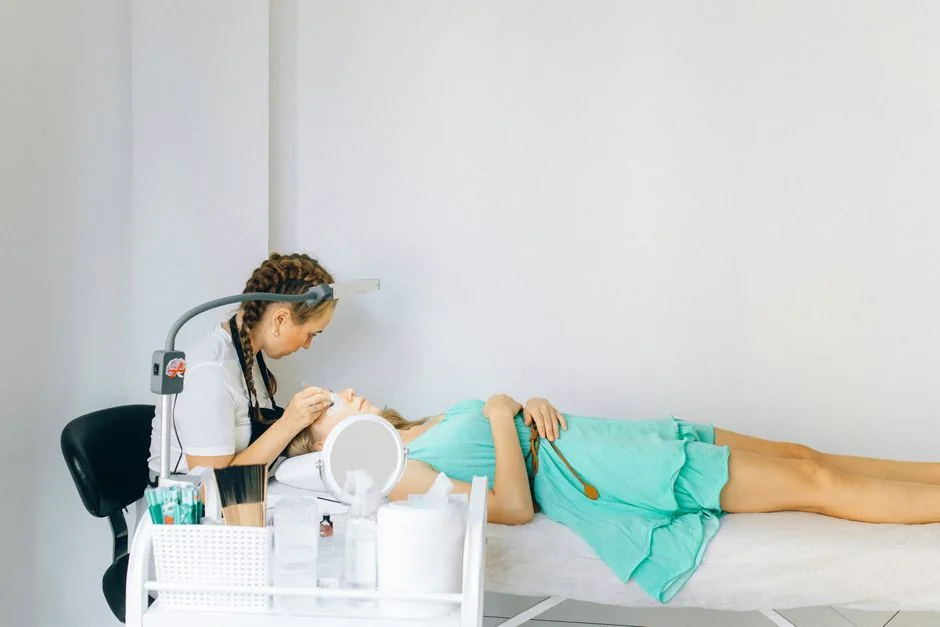
Tokyo clinics generally price eyebrow artmake per session, with a discounted two-session set and a lower rate for later retouches. Pricing tiers usually reflect the seniority and technique of the individual practitioner rather than the anatomy being treated.
As a concrete reference point, the Kojimachi Clinic group’s publicly listed eyebrow artmake menu, as published at the time of writing, shows first sessions in the region of ¥77,000 to ¥98,000 depending on the practitioner tier, two-session sets offered at a reduced combined rate, retouch sessions from approximately ¥55,000, and an optional supplement of around ¥11,000 where powder shading is added to a hair-stroke design. Monitor (case-photo) rates are listed separately and are lower.
Two practical points for budgeting. First, treat artmake as a multi-session cost, not a one-off — comparing a single-session headline price between clinics can be misleading. Second, published menus change, and promotional or monitor pricing is conditional.
Because prices are revised periodically and the applicable tier depends on which practitioner you see, please confirm current figures on the official price page or by enquiry. To get an accurate quote for your brows, book a consultation with BIOTOPE CLINIC — you can reach the English-speaking team via LINE or WhatsApp.
Have a question about this treatment?
Message us on LINE or WhatsApp — our English-speaking team usually replies the same day.
Healing, Downtime and Aftercare
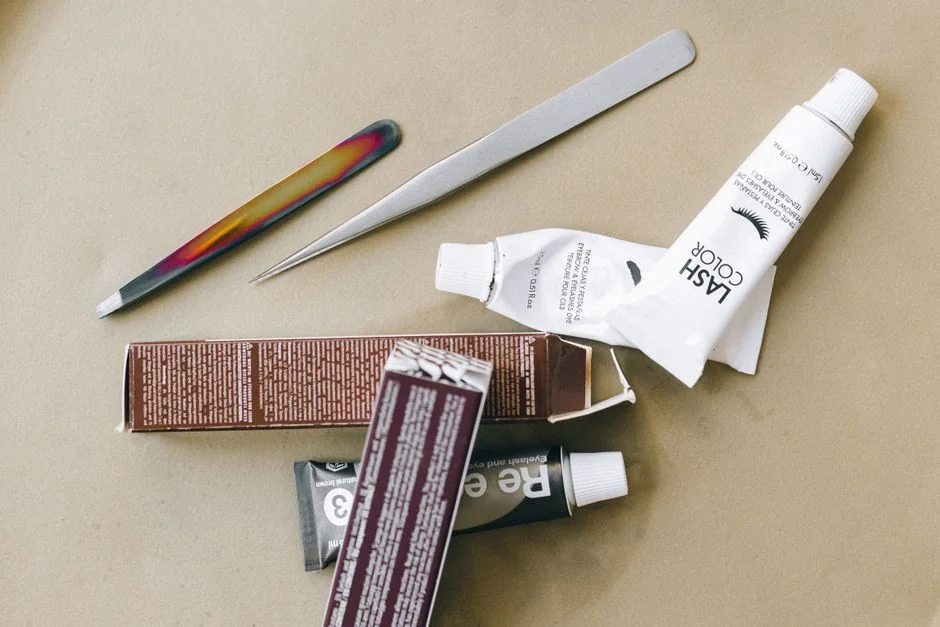
Expect the brows to look darker, sharper and more defined immediately after the session than they will once healed. Mild redness and slight swelling in the treated area are common in the first days, followed by light flaking as the skin recovers. The colour typically softens noticeably as healing completes, which is one reason a second session is scheduled.
Standard aftercare is straightforward: keep the area clean, apply any ointment your clinic provides, do not pick or scratch flaking skin, and avoid saunas, swimming pools, heavy sweating and direct sun exposure while healing. Makeup should be kept off the treated area until your clinic advises otherwise.
Risks You Should Know About
Artmake is a controlled skin injury, and the medical literature documents a real, if uncommon, complication profile. A 2024 review in the Journal of Clinical Medicine catalogued adverse reactions to tattoo and permanent makeup pigments including allergic and inflammatory reactions, bacterial, mycobacterial, viral and fungal infections, granulomatous reactions and pigment-related skin changes. Notably, reactions may appear immediately or emerge months to years later.
A published case report in Cureus (2023) described a patient who developed chronic granulomatous dermatitis of both eyebrows roughly one month after microblading, requiring topical and intralesional corticosteroid treatment over an extended period. The authors emphasised the need for qualified practitioners and proper counselling about delayed skin reactions.
The U.S. Food and Drug Administration also notes that although many colour additives are approved for cosmetic use, none are approved for injection into the skin, and that tattoos and permanent makeup are difficult to remove and may cause lasting discolouration. None of this makes artmake unreasonable — but it does mean the choice of a medical setting, sterile single-use needles and a practitioner who can manage a complication matters more than the price.
Who Is a Good Candidate — and Common Misconceptions
Artmake tends to suit people with sparse, patchy or over-plucked brows, those with thinning brow hair related to ageing or alopecia, people who find daily brow makeup difficult due to eyesight or dexterity, and those with active lifestyles who dislike makeup transferring or washing off. It is also used in reconstructive contexts, including camouflage over scars and areola restoration.
You should postpone or reconsider if you are pregnant or breastfeeding, have active skin disease, infection, eczema or inflamed acne in the brow area, have a keloid tendency, are taking anticoagulants or isotretinoin, or have poorly controlled diabetes or an immunosuppressive condition. Recent brow-area cosmetic injections or resurfacing treatments may also require a waiting interval. Always disclose your full medical history and medications at the consultation.
Misconception 1: “Artmake is not a tattoo, so it carries none of the risks.”
The technique is gentler and the pigment is placed more superficially, but the skin is still being punctured and pigment is still being deposited. The published complication profile — infection, allergic contact dermatitis, granulomatous reactions — overlaps substantially with that of conventional tattooing, which is precisely why Japanese regulators classify artmake as a medical act.
Misconception 2: “It is permanent, so I will be stuck with it forever.”
The opposite concern is more accurate in practice. Because PMU colorants are formulated with larger pigment particles and placed superficially, they fade with skin turnover and require reapplication to maintain colour density and shape. Artmake should be planned as a maintained result, not a one-time permanent decision. That said, fading is gradual and unpredictable in tone, so a design you are genuinely happy with still matters.
Misconception 3: “Artmake makes MRI scanning unsafe.”
Concern about metallic pigment components is understandable, but the available population data are reassuring. In the Rhineland Study, 3,639 participants underwent 3-Tesla brain MRI, of whom 305 (8.4%) had tattoos, permanent make-up, or both; none reported adverse events related to them (Lohner et al., Frontiers in Neurology, 2022). You should still inform radiology staff about facial artmake before any scan so they can assess your individual case.
Where to Get Artmake in Tokyo (Our Sister Clinic BIOTOPE)
Within our clinic group, artmake is performed at BIOTOPE CLINIC in Shirokanedai (Minato-ku), directed by Dr. Jun Karibe. Our English-speaking team covers both clinics and handles all English enquiries.
Kojimachi Dermatology & Plastic Surgery Clinic in Ichigaya (Chiyoda-ku) is the group’s main location for dermatology and plastic surgery, but artmake is not performed there. If you enquire through the Kojimachi Clinic, the same intake team will arrange your artmake consultation at BIOTOPE CLINIC.
When comparing any Tokyo provider — ours included — it is worth confirming a short list of things: that the provider is a registered medical clinic, that the practitioner holds a medical or nursing licence, that single-use sterile needles are used, that you will see and approve the drawn design before pigment is applied, that a physician is available if a complication arises, and that the retouch schedule and its cost are explained in writing before you commit.
Frequently Asked Questions
- Q. How long does eyebrow artmake last?
- It fades gradually rather than disappearing on a fixed date, because permanent makeup colorants are placed superficially and are broken down by normal skin turnover. Most people plan for periodic retouch sessions to maintain colour density and shape; your practitioner can estimate a schedule based on your skin type after the first session.
- Q. Can I have artmake done if I do not speak Japanese?
- Yes. Our clinic group has an English-speaking intake team covering both the Kojimachi and BIOTOPE locations, and consultations for English-speaking patients are arranged through them. Because brow design involves detailed discussion of shape and colour, having language support at the consultation is genuinely useful rather than optional.
- Q. Is artmake covered by Japanese health insurance?
- No. Eyebrow artmake for cosmetic purposes is a self-pay (自由診療) treatment in Japan and is not covered by the national health insurance system. You should budget for the full cost of every session, including retouches.
- Q. Can artmake be removed if I dislike the result?
- Removal is possible but is neither simple nor guaranteed to be complete. The FDA notes that tattoos and permanent makeup are not easily removed and may in some cases cause lasting discolouration, so the design approval stage before pigment is applied is the most important safeguard.
Have a question about this treatment?
Message us on LINE or WhatsApp — our English-speaking team usually replies the same day.
Summary
Eyebrow artmake can be a practical solution for sparse or over-plucked brows, but in Japan it is a medical procedure by law, not a salon service. MHLW notices in 2023 and 2025 confirmed that inserting pigment to draw eyebrows constitutes a medical act, which means your provider should be a licensed clinic with licensed practitioners.
Plan for two to three sessions plus ongoing retouches rather than a single visit, and read published pricing as a course cost. Understand the documented risks — infection, allergic and granulomatous reactions, and the difficulty of removal — and choose a setting where a physician can manage them.
Within the Kojimachi Clinic group, artmake is performed at BIOTOPE CLINIC in Shirokanedai under Dr. Jun Karibe, with English support available throughout. A consultation is the point at which shape, pigment colour, suitability and the current price for your specific plan can all be confirmed.
24/7 Consultation & Booking
Book a Consultation or Treatment
Our English-speaking team responds via LINE or WhatsApp — usually the same day.
References
- Andreou E, Hatziantoniou S, Rallis E, Kefala V. Why Permanent Makeup (PMU) Is Not a Lifetime Application. Cosmetics. 2024;11(5):160.
- Bălăceanu-Gurău B, Apostol E, Caraivan M, Ion A, Tatar R, Mihai MM, Popa LG, Gurău CD, Orzan OA. Cutaneous Adverse Reactions Associated with Tattoos and Permanent Makeup Pigments. Journal of Clinical Medicine. 2024;13(2):503.
- Suleman S, Villegas M, Davis T, Stevens CS, Castaneda P. Chronic Granulomatous Reaction to Semi-permanent Eyebrow Tint. Cureus. 2023;15(8):e44070.
- Lohner V, Enkirch SJ, Hattingen E, Stöcker T, Breteler MMB. Safety of Tattoos, Permanent Make-Up, and Medical Implants in Population-Based 3T Magnetic Resonance Brain Imaging: The Rhineland Study. Frontiers in Neurology. 2022;13:795573.
- Ministry of Health, Labour and Welfare, Japan. Handling of so-called artmake performed by persons without a physician’s licence (Isei-i-hatsu 0703 No. 4), 3 July 2023; and Handling of aesthetic medical care (Isei-hatsu 0815 No. 21), 15 August 2025.
- U.S. Food and Drug Administration. Tattoos & Permanent Makeup: Fact Sheet. Center for Food Safety and Applied Nutrition.
Related Articles
You may also find these articles useful.
- Artmake vs Microblading vs Tattoo: Tokyo Guide
- Artmake Aftercare Guide: Healing Timeline and What to Avoid
- Artmake Pain, Safety & Side Effects Guide
- Artmake Removal Tokyo: Laser & Revision Options Guide
- Eyeliner Artmake Tokyo: Safety, Technique & Results
SUPERVISED BY
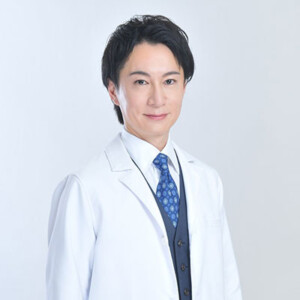
Dr. Jun Karibe
MD
Director
Education & Career
Certifications
Awards
MEDICAL REVIEW