Melasma Treatment in Tokyo: Causes and Solutions
Melasma is one of the most frustrating skin conditions to live with — it fades, then returns after one sunny weekend, and the products that clear ordinary sun spots often make it worse.
If you are living in or visiting Tokyo and looking for a considered, medically grounded approach, this article explains what melasma actually is, why it behaves the way it does, and which treatments have real evidence behind them.
What you’ll learn in this article:
- What melasma is and how it differs from ordinary sun spots and freckles
- The hormonal, ultraviolet and visible-light triggers that drive it
- Which treatments are supported by clinical evidence — topical, oral and device-based
- Realistic costs, session counts and downtime in Tokyo
- Two common misconceptions that lead patients to over-treat and worsen their pigmentation
Have a question about this treatment?
Message us on LINE or WhatsApp — our English-speaking team usually replies the same day.
What Is Melasma?
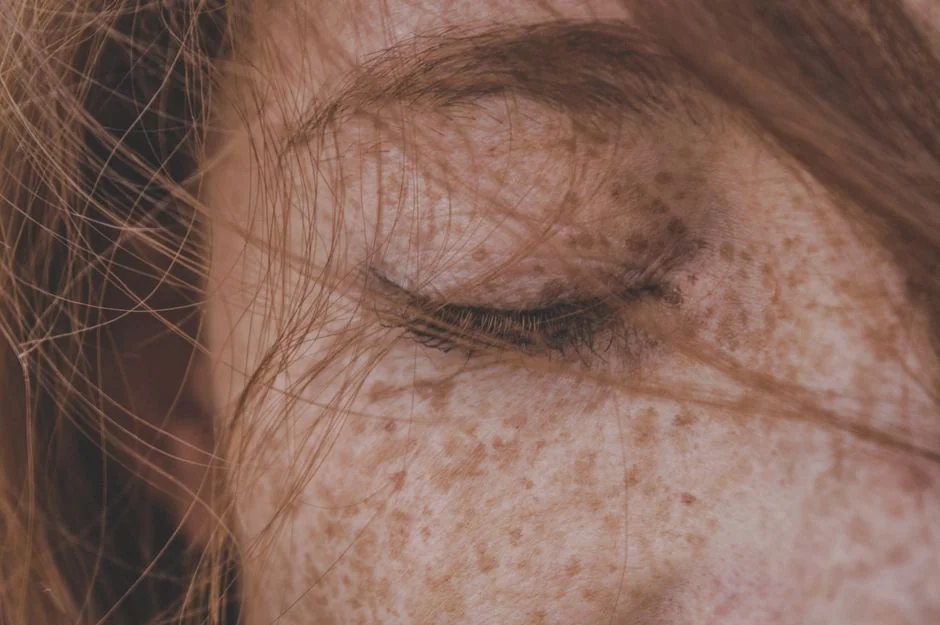
Melasma (肝斑, kanpan in Japanese) is a chronic disorder of pigmentation that produces symmetrical brown or grey-brown patches, usually on the cheeks, forehead, upper lip and jawline. Unlike a solar lentigo — the discrete, sharply bordered “sun spot” — melasma tends to appear as broad, diffuse, mirror-image patches with soft edges.
Dermatological references describe three distribution patterns: centrofacial (forehead, cheeks, nose and upper lip), which accounts for roughly 50–80 per cent of cases; malar, over the cheeks and nose; and mandibular, along the jawline. Lesions are also classified as epidermal, dermal or mixed, with the mixed type being the most common — a distinction that matters because dermal pigment responds far less predictably to treatment.
Who develops melasma
Melasma affects women far more often than men, with typical onset between the ages of 20 and 40. It is most common in Fitzpatrick skin phototypes III and IV — the range into which most East Asian skin falls — and less common in very fair or very deeply pigmented skin. Around 60 per cent of patients report an affected family member, which suggests a meaningful genetic contribution.
What Causes Melasma?
Melasma is best understood as an overactive, hypersensitive pigment system rather than simple sun damage. Melanocytes in affected skin are larger and more reactive, and the surrounding keratinocytes, blood vessels and even the dermal layer participate in keeping the pigment switched on.
The three most consistent drivers are ultraviolet and visible light exposure, hormonal influence, and heat or inflammation. Pregnancy and oral contraceptives are implicated in approximately one quarter of affected women, and thyroid disorders show an association. Scented cosmetics and certain medications can also act as triggers.
Visible light deserves particular attention. Standard SPF ratings measure protection against ultraviolet radiation only, so a sunscreen can be labelled SPF 50+ and still allow the high-energy visible light that provokes melasma to reach the skin. For a reader in Tokyo, this is relevant year-round — commuting on foot, cycling and even light through office windows all contribute.
At BIOTOPE CLINIC in Shirokanedai, we frequently see patients who have spent months on aggressive brightening routines aimed at “sun spots,” only to find the patches on their cheeks have widened rather than faded. In most of those cases, the underlying diagnosis was melasma, and the treatment plan had been working against the condition rather than with it.
How Melasma Is Treated: What the Evidence Shows
1. Photoprotection — the non-negotiable foundation
No melasma protocol works reliably without daily broad-spectrum sun protection, and evidence suggests that protection against visible light adds something meaningful. In a 2025 randomised, investigator-blinded study of 42 women followed through a Mediterranean summer, both tinted (iron-oxide, visible-light protective) and untinted sunscreens reduced mMASI scores, with no significant difference between the groups on that measure. However, the colorimetric contrast between affected and unaffected skin was significantly reduced only in the tinted group.
The practical reading: consistent sunscreen use matters most, and a tinted formulation may offer an additional advantage in evening out tone.
2. Topical therapy
Triple combination cream — hydroquinone, tretinoin and a moderate-potency topical corticosteroid — remains the reference topical treatment, with clearance or substantial improvement reported in roughly 60–80 per cent of patients. It requires physician supervision, because prolonged unsupervised use of hydroquinone or steroids carries its own risks. Medical-grade topical programmes such as Zo Skin Health are one route we discuss with patients at consultation.
3. Oral tranexamic acid
Tranexamic acid interferes with the plasminogen–plasmin pathway, dampening the keratinocyte-to-melanocyte signalling that drives melanin production, and it also has an anti-angiogenic effect that can reduce the redness component of melasma. A 2026 literature review reports typical dosing of 250–500 mg twice daily, with one trial showing a 49 per cent reduction in mMASI at three months versus 18 per cent in controls.
Safety is the question most patients ask about. A 2025 multicentre propensity score–matched cohort of 1,364 patients found venous thromboembolism at 120 days in 1.6 per cent of both the tranexamic acid group and the matched control group (risk ratio 1.01; 95% CI 0.42–2.41). Clinical reports indicate no observed increase in short-term thromboembolic risk among appropriately screened patients — screening for clotting history, and for the use of oestrogen-containing contraceptives, remains essential.
4. Lasers and energy devices — helpful, but easy to overdo
Low-fluence Q-switched Nd:YAG laser, marketed in Japan as “laser toning” (レーザートーニング), is the most widely used device approach. A systematic review covering 42 studies and 1,736 melasma patients found most studies reported 30–60 per cent MASI improvement, typically over 5–15 sessions (most often 9–10) at one- to two-week intervals.
The same review documents the risks candidly: mottled hypopigmentation in 5–21.9 per cent of patients, rebound hyperpigmentation in 5–14.1 per cent, and post-inflammatory hyperpigmentation in 2–6 per cent. Recurrence within a year was reported as high as 58.8–81 per cent when laser was used alone. Notably, combining laser with other modalities reduced the rate of mottled hypopigmentation and rebound to 1.1 per cent, compared with 14.1 per cent for monotherapy.
A 2025 network meta-analysis of 14 trials and 738 women ranked intradermal platelet-rich plasma, and intradermal PRP combined with oral tranexamic acid, at the top of the SUCRA rankings, ahead of several device-only approaches. The consistent theme across the literature is that combination therapy outperforms any single modality.
| Approach | Typical course | Evidence signal | Main cautions |
|---|---|---|---|
| Broad-spectrum / tinted sunscreen | Daily, indefinitely | Improves tone uniformity; foundation of every protocol | Must be reapplied; not sufficient alone |
| Triple combination cream | 8–16 weeks, supervised | 60–80% clearance or improvement reported | Irritation; requires physician oversight |
| Oral tranexamic acid | 8–12 weeks typical | ~49% mMASI reduction vs 18% control at 3 months in one trial | Screening required; mild GI upset, menstrual changes |
| Laser toning (low-fluence QS Nd:YAG) | 5–15 sessions, 1–2 weeks apart | 30–60% MASI improvement in most studies | Mottled hypopigmentation 5–21.9%; high recurrence as monotherapy |
| Pico toning / RF microneedling | Course-based, physician-planned | Combination protocols reduce adverse events markedly | Same overtreatment risks; requires conservative settings |
Who is a good candidate — and who should wait
Good candidates are patients with a confirmed melasma diagnosis who can commit to daily photoprotection and a multi-month course. Those who should postpone or avoid certain elements include women who are pregnant or breastfeeding, patients with a personal or family history of thrombosis or who are on oestrogen-containing contraception (relevant to oral tranexamic acid), and anyone with active facial inflammation, recent isotretinoin use or a recent tan.
Cost of Melasma Treatment in Tokyo
Melasma care in Japan is, in almost all cases, self-pay. The following figures are from our group’s current published price list and are tax-inclusive.
- Consultation (initial or follow-up): ¥3,300
- Laser toning, full face: ¥15,000 per session; ¥135,000 for a course of 10
- Pico toning, full face: ¥25,000 per session
- Photofacial M22 (IPL), full face: ¥28,000 per session; ¥126,000 for 5
- POTENZA (RF microneedling), full face skin rejuvenation: ¥39,800
Because melasma responds to combinations rather than single treatments, budget realistically for a multi-month programme combining topical and oral therapy with a device course. Prices are subject to change — please see the clinic’s official price page or contact us for a current quote. For an accurate quote, please book a consultation.
Have a question about this treatment?
Message us on LINE or WhatsApp — our English-speaking team usually replies the same day.
What People Often Get Wrong About Melasma
Misconception 1: “Tranexamic acid for melasma is covered by Japanese health insurance.”
It generally is not. The approved indications on the prescription tranexamic acid product information in Japan cover conditions such as abnormal bleeding, pharyngolaryngitis, stomatitis and urticaria — melasma is not among them, so prescribing it for melasma is off-label and self-pay. Separately, an over-the-counter formulation is approved as a 第1類医薬品 (Class 1 OTC medicine) with the indication 「しみ(肝斑に限る)」 — spots, limited to melasma — dosed as two tablets twice daily over an eight-week programme. Approval as an OTC product for melasma and insurance coverage for a prescription are two entirely different things.
Misconception 2: “More laser sessions will clear it faster.”
This is the single most damaging assumption in melasma care. The systematic review data above links excessive cumulative laser energy to mottled hypopigmentation — white speckling that is considerably harder to correct than the original pigment. Restraint, conservative settings and combination therapy consistently outperform intensity.
Where to Get Melasma Treatment in Tokyo
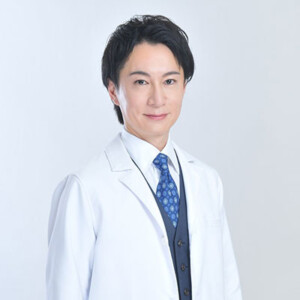
Within our clinic group, both BIOTOPE CLINIC (Shirokanedai, Minato-ku) and Kojimachi Dermatology & Plastic Surgery Clinic (Ichigaya, Chiyoda-ku) offer English-language consultation with Dr. Jun Karibe’s team. Melasma treatment — laser toning, pico laser, RF microneedling, medical topical programmes and oral therapy — is handled at BIOTOPE CLINIC in Shirokanedai, where Dr. Karibe personally consults. Insurance-covered general dermatology, such as eczema, acne or rashes, is handled at the Kojimachi clinic, the group’s main office. Bookings and enquiries in English: LINE or WhatsApp.
If you are unsure whether your pigmentation is melasma or something else, a diagnostic consultation is the sensible first step — treatment for sun spots and treatment for melasma pull in opposite directions.
Frequently Asked Questions
- Q. How long before I see results?
- Most protocols are assessed at 8–12 weeks, which matches the treatment durations used in the published trials. Melasma is a slow-responding, chronic condition, and maintenance is expected rather than optional.
- Q. Will melasma come back after treatment?
- Recurrence is common — studies of laser monotherapy report rates of roughly 59–81 per cent within a year. Ongoing photoprotection and maintenance therapy are what keep results stable, and no clinic can promise permanent clearance.
- Q. Is there downtime with laser toning?
- Low-fluence laser toning typically involves mild transient redness and warmth rather than true downtime, and most patients return to normal activity the same day. Device treatments such as RF microneedling involve more visible redness for a few days.
- Q. Can I be treated while pregnant or breastfeeding?
- Melasma often appears or worsens during pregnancy, but most active treatments — including oral tranexamic acid and topical retinoids — are not appropriate at that time. Photoprotection and gentle skincare are the mainstays until after breastfeeding, when a fuller plan can be discussed.
- Q. Do I need to speak Japanese to be treated?
- No. Both clinics in the group provide English-language consultation, and enquiries can be made in English via LINE or WhatsApp.
Have a question about this treatment?
Message us on LINE or WhatsApp — our English-speaking team usually replies the same day.
Summary
Melasma is a chronic, hormonally and light-driven pigmentation disorder, not a collection of sun spots, and it rewards patience over intensity. The strongest evidence supports a layered approach: daily broad-spectrum photoprotection, supervised topical therapy, oral tranexamic acid where appropriate after screening, and conservative device treatment used as part of a combination rather than alone.
Equally important is what to avoid — aggressive single-modality laser courses, unsupervised long-term hydroquinone or steroid use, and the assumption that faster is better. Realistic expectations, set at a proper diagnostic consultation, are the difference between steady improvement and a setback that takes longer to repair than the original condition.
If you have questions about melasma treatment in Tokyo, both BIOTOPE CLINIC (Shirokanedai, Minato-ku) and Kojimachi Dermatology & Plastic Surgery Clinic (Ichigaya, Chiyoda-ku) offer English-language consultation with Dr. Karibe and his team. Melasma treatment is primarily handled at BIOTOPE CLINIC in Shirokanedai. English enquiries: LINE or WhatsApp.
24/7 Consultation & Booking
Book a Consultation or Treatment
Our English-speaking team responds via LINE or WhatsApp — usually the same day.
References
- Lee YS, Lee YJ, Lee JM, Han TY, Lee JH, Choi JE. The Low-Fluence Q-Switched Nd:YAG Laser Treatment for Melasma: A Systematic Review. Medicina (Kaunas). 2022;58(7):936.
- AlJabr A, AlAnazi AMI, AlEtebi RAA. Tranexamic Acid for Hyperpigmentation Disorders: A Literature Review on Efficacy and Safety in Melasma and PIH. Journal of Cosmetic Dermatology. 2026.
- Hernandez T, Penny K, Culotta N. Oral tranexamic acid use for melasma is not associated with thromboembolism: Findings from a multicenter propensity score–matched electronic health record cohort. JAAD International. 2025.
- Leung JH, Leung HWC, Wang SY, Jang YC, Chan ALF. Efficacy and Safety of Different Treatments for Melasma: Network Meta-Analysis of Updated Data. Diseases. 2025.
- Polena H, Queille-Roussel C, Graizeau C, Duteil L, Sayag M, Passeron T. Comparison of Visible Light-Protective Tinted Sunscreen to Untinted Sunscreen to Protect Melasma Patients During Summer: A Prospective Randomized Investigator-Blinded Study. Journal of Cosmetic Dermatology. 2025.
Related Articles
You may also find these articles useful.
- Tranexamic Acid Serum: How It Differs from Oral Tranexamic Acid and Its Role in Melasma Treatment
- English-Speaking Dermatologist Tokyo: Melasma & Pigmentation
- Dark Spot Removal Tokyo: Laser Treatment Options
- PicoWay Laser Tokyo: Pigmentation and Tattoo Removal
- Laser Skin Treatment Tokyo: English-Speaking Clinic Guide
SUPERVISED BY
Dr. Jun Karibe
MD
Director
Education & Career
Certifications
Awards
MEDICAL REVIEW