What Is Asymmetric Double Eyelid Correction?
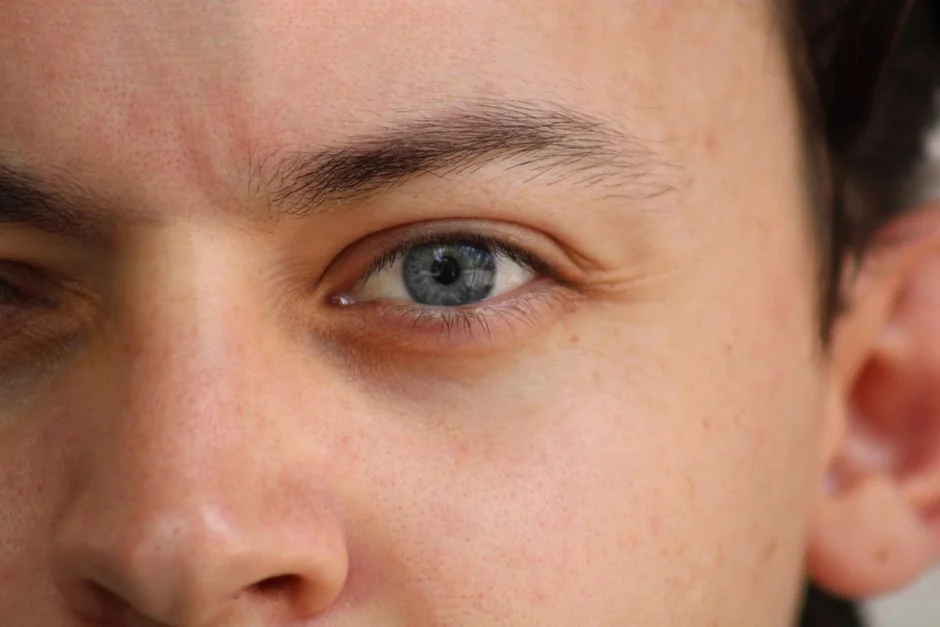
Noticing that one eyelid crease sits higher, folds differently, or looks “done” while the other still looks natural can be unsettling, especially weeks or months after you expected to be fully healed.
Asymmetric double eyelid correction refers to a follow-up procedure that adjusts one or both upper eyelids so the crease height, shape, and fold width match more closely. This article explains why unevenness happens, how it is corrected, what it costs in Tokyo, and when it is genuinely worth acting on.
What you’ll learn in this article:
- Why double eyelid results become asymmetric, even with a skilled surgeon
- How suture (buried) and incision-based correction methods differ
- Realistic cost ranges for revision surgery in Tokyo
- How long you should wait before pursuing a correction
- Who is, and isn’t, a good candidate for revision at this stage
Have a question about this treatment?
Message us on LINE or WhatsApp — our English-speaking team usually replies the same day.
Why Double Eyelid Results Turn Out Asymmetric
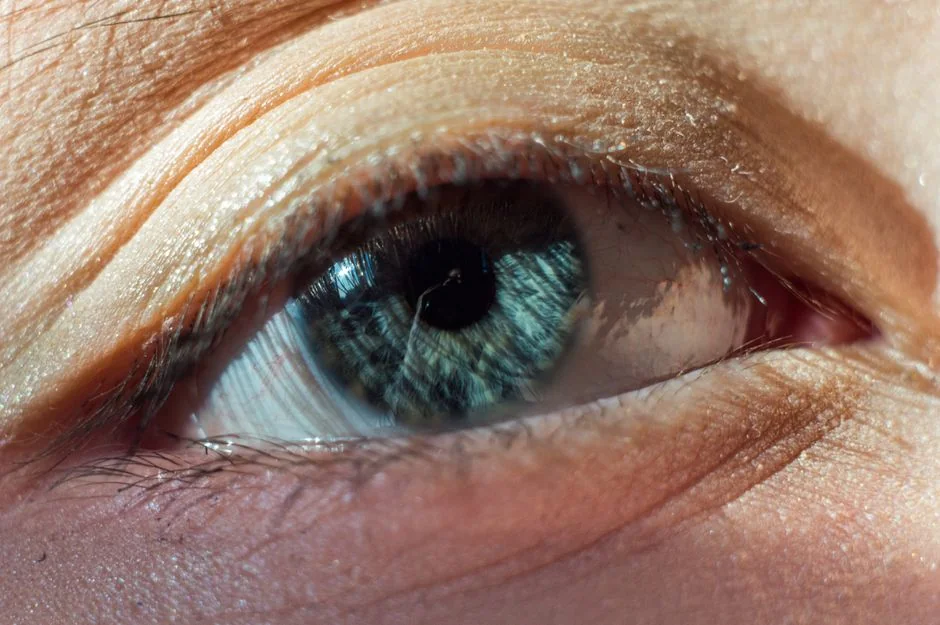
Asymmetry is not a rare complication — it is consistently the single most common source of dissatisfaction after double eyelid surgery.
A 2025 analysis of complaints following Asian blepharoplasty published in the Journal of Cosmetic Dermatology found that asymmetry accounted for 41.7% of complaints after primary double eyelid surgery and rose to 48.0% among patients who had already undergone a revision.
Within that category, uneven crease height was the largest single subgroup, and uneven crease shape was significantly more common in revision cases than in first-time surgery.
Several factors drive this. Most people have some degree of natural facial and eyelid asymmetry before any surgery — slightly different brow height, orbital bone shape, or eyelid skin thickness — and a double eyelid procedure can make a pre-existing difference more visible rather than create it. Uneven levator muscle strength (the muscle that lifts the eyelid) is another common contributor, particularly when mild ptosis, or eyelid drooping, is present on one side but was not addressed at the time of the original surgery.
The surgical technique itself also matters. A 2025 comparative study in the Archives of Aesthetic Plastic Surgery, following 1,500 buried-suture cases over four years, found that suture loosening accounted for 73.4% of all reoperations, and that a simple two-point suture technique had a reoperation rate of 26.2% compared with 13.4% for a continuous suture technique. In other words, a result that looked even at first can drift out of alignment over time as sutures settle unevenly on each side.
How Asymmetric Double Eyelid Correction Works
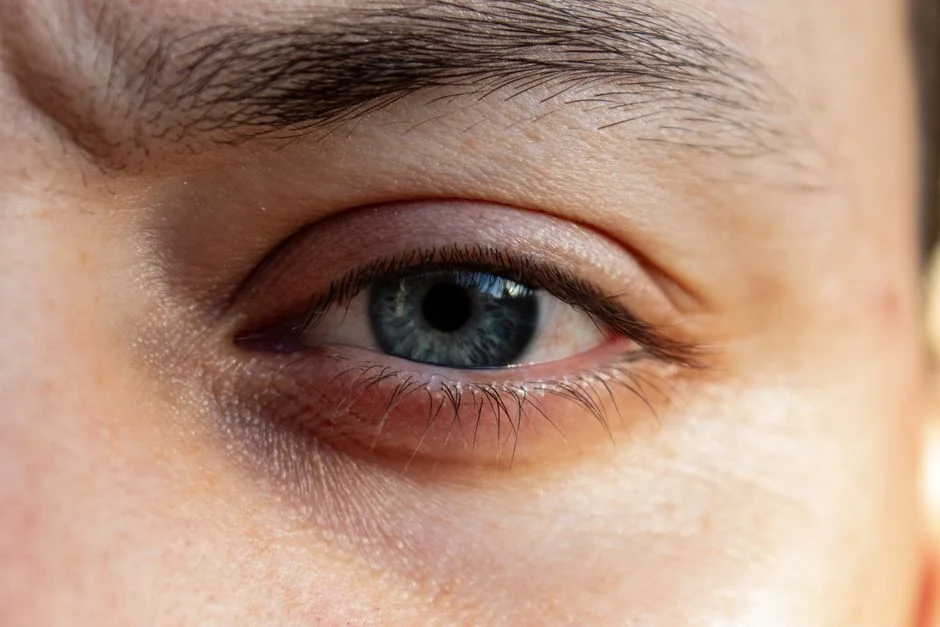
The right correction approach depends on how the original crease was made, how long ago it was done, and whether the underlying issue is the crease line itself or an eyelid-height (ptosis) difference. At BIOTOPE CLINIC in Shirokanedai, we frequently see patients who had a two-point suture procedure elsewhere and later noticed the crease loosening or shifting more on one side than the other — a pattern consistent with the reoperation data above.
Suture (buried) method revision
If the original procedure used sutures rather than an incision, a revision often involves removing the existing sutures and re-placing a new buried suture set, sometimes with additional fixation points, to even out the crease height and depth on both sides.
Incisional or ptosis-linked revision
When asymmetry stems from unequal levator muscle function rather than the crease line alone, correction may involve a levator aponeurosis advancement (a standard ptosis correction technique) on the weaker side, sometimes combined with crease adjustment, so both eyelids open to the same height and fold in the same way.
| Approach | Best suited for | Typical downtime |
|---|---|---|
| Repeat suture (buried) correction | Loosened or shifted crease from a prior suture procedure, thin eyelid skin | Swelling and bruising for around 7–14 days; crease settles further over about a month |
| Incisional revision | Thicker eyelid tissue, prior incisional surgery, or a crease that needs reshaping rather than just re-tightening | Longer initial swelling, typically several weeks, with fuller settling over a few months |
| Ptosis-linked correction | One eyelid visibly lower or opening less than the other (levator muscle weakness) | Similar to incisional revision; final eyelid height is usually assessed at follow-up visits |
Cost of Asymmetric Double Eyelid Correction in Tokyo
Within this clinic group, standard (non-revision) double eyelid suture surgery is priced by the number of fixation points: two-point suturing is listed at ¥110,000 for both eyes, four-point at ¥187,000, and six-point at ¥341,000, with additional points priced at ¥16,500 each beyond three points. A combined suture-and-fat-removal procedure for thicker eyelids is listed at ¥495,000, and standard ptosis correction is listed at ¥418,000.
Revision or correction work is priced separately from these standard rates, since the scope varies by how much needs to be adjusted and whether one or both eyelids are involved. Please see the clinic’s official price page or contact us for a current quote. For an accurate quote, please book a consultation.
Have a question about this treatment?
Message us on LINE or WhatsApp — our English-speaking team usually replies the same day.
What to Expect: Before, During and After Correction
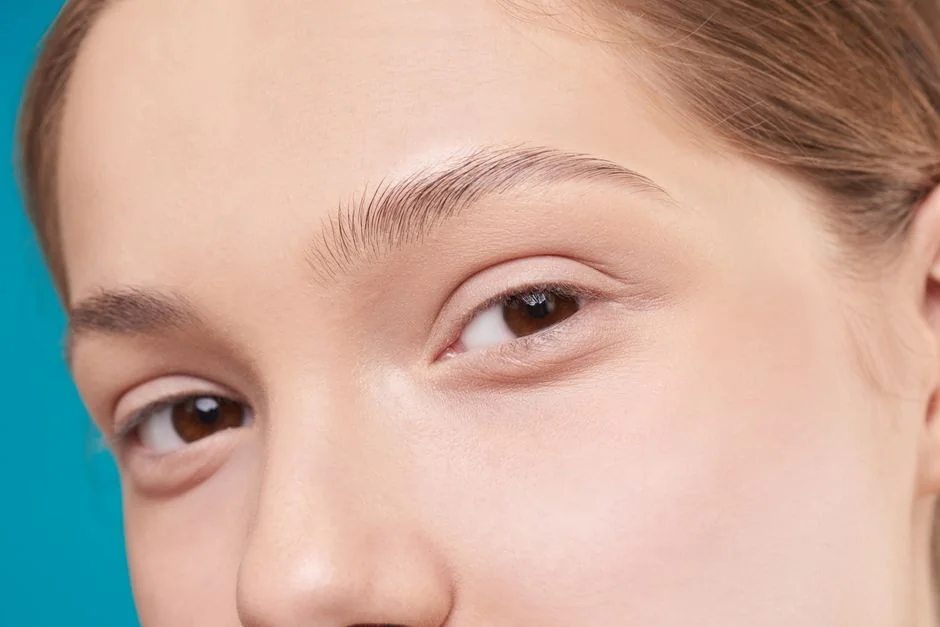
Before any revision, the consultation typically includes a close visual assessment of both eyelids at rest and during movement, a review of what was done originally if known, and photographs to document the baseline difference. This is also when a doctor will discuss whether the cause looks like a crease-line issue, a muscle-strength issue, or both.
During the procedure itself, timing is similar to the original surgery type: a repeat suture correction is usually a short outpatient procedure performed under local anaesthesia, while an incisional or ptosis-linked revision takes longer and involves more meticulous measurement to match both sides.
After surgery, swelling and bruising are expected and are often slightly uneven between the two eyes in the first one to two weeks purely because two separate sites are healing — this is not the same as a failed result. Most surgeons recommend allowing the initial swelling to fully resolve, generally over several weeks to a few months, before judging whether the crease itself is truly asymmetric or simply still settling.
Common Misconceptions About Asymmetric Eyelid Correction
Misconception: “If it looks uneven a week after surgery, something went wrong and I need an immediate fix.”
Early post-operative swelling is very rarely identical on both sides, and clinical guidance from oculoplastic practice consistently notes that a result which looks asymmetric at a few weeks can look balanced once both sides have fully healed, generally over a period of months. Judging final symmetry too early is one of the most common reasons patients seek unnecessary early revisions.
Misconception: “A suture (buried) double eyelid result that looks fine at first will stay that way.”
As the 2025 Archives of Aesthetic Plastic Surgery data above shows, suture loosening is the leading cause of revision surgery, and simpler two-point techniques loosen unevenly more often than techniques with more fixation points. A good early result does not guarantee it will stay symmetric for years.
Who Is a Good Candidate?
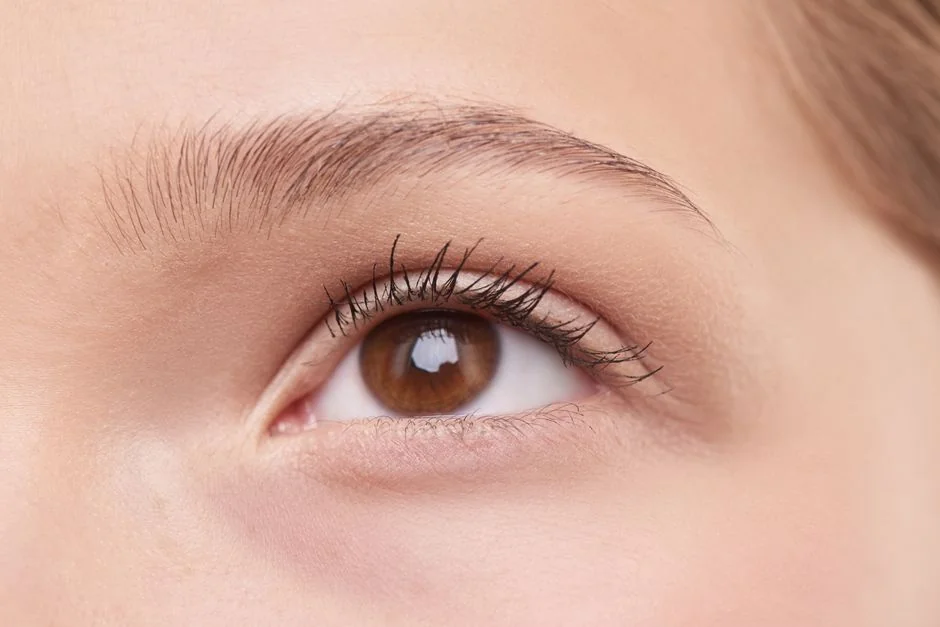
Good candidates for correction are patients whose eyelids have fully healed from the original procedure — generally once swelling has resolved and the crease has stabilised — and who still see a clear, consistent difference in crease height, shape, or eyelid opening between the two sides. Patients with a specific, describable concern (for example, “the right crease sits about 2mm higher”) tend to have the most predictable consultations.
Correction is generally not advisable very soon after the original surgery, while swelling is still resolving, or for extremely minor differences that fall within normal facial asymmetry. Patients with active eyelid infection, unhealed wounds, or unrealistic expectations of perfect mirror-image symmetry — which does not exist naturally on any face — should discuss timing and expectations carefully with a doctor before proceeding. This is a treatment available at BIOTOPE CLINIC in Shirokanedai — feel free to ask about it during a consultation with Dr. Karibe’s team.
Where to Get Asymmetric Double Eyelid Correction in Tokyo
Within our clinic group, both BIOTOPE CLINIC (Shirokanedai, Minato-ku) and Kojimachi Dermatology & Plastic Surgery Clinic (Ichigaya, Chiyoda-ku) offer English-language consultation with Dr. Jun Karibe’s team. Asymmetric double eyelid correction, as a cosmetic and plastic surgery procedure, is primarily handled at BIOTOPE CLINIC. Bookings and enquiries in English: LINE or WhatsApp.
Frequently Asked Questions
- Q. How long should I wait after my original double eyelid surgery before seeking correction?
- Most surgical guidance suggests allowing the eyelid to fully heal first, which generally takes several months to about a year for suture-related swelling and scar tissue to settle. A consultation can help determine whether what you’re seeing is still normal healing or a true, stable asymmetry.
- Q. Can a two-point suture procedure be corrected without switching to an incisional method?
- In many cases yes — a repeat suture correction, sometimes adding fixation points, can address a loosened or uneven crease. Whether this is appropriate depends on eyelid skin thickness and how the original result has changed over time.
- Q. Is some asymmetry after eyelid surgery normal?
- Yes. Most faces have a degree of natural asymmetry before any surgery, and studies on post-blepharoplasty complaints confirm asymmetry is the most frequently reported concern, which is why careful pre-operative assessment and realistic expectations matter.
- Q. Does correction always require an incisional procedure?
- No. The right approach depends on whether the issue is the crease line itself, eyelid-opening height (possible ptosis), or both — this is assessed individually during consultation.
Have a question about this treatment?
Message us on LINE or WhatsApp — our English-speaking team usually replies the same day.
Summary
Asymmetric double eyelid results are common enough to be the leading complaint after both first-time and revision blepharoplasty, and they usually stem from a combination of pre-existing natural asymmetry, uneven muscle strength, or suture loosening over time. Correction options range from a repeat suture adjustment to an incisional or ptosis-linked revision, chosen based on the underlying cause and how long ago the original surgery was performed. If you have questions about asymmetric double eyelid correction, both BIOTOPE CLINIC (Shirokanedai, Minato-ku) and Kojimachi Dermatology & Plastic Surgery Clinic (Ichigaya, Chiyoda-ku) offer English-language consultation with Dr. Karibe and his team. This procedure is primarily handled at BIOTOPE CLINIC. English enquiries: LINE or WhatsApp.
24/7 Consultation & Booking
Book a Consultation or Treatment
Our English-speaking team responds via LINE or WhatsApp — usually the same day.
References
- Su X, et al. A 7-year analysis of complaints related to Asian blepharoplasty. Journal of Cosmetic Dermatology. 2025.
- Okumura T, et al. Comparison of long-term stability among continuous, two-point, and transconjunctival buried suture methods in double-eyelid surgery: a 4-year retrospective cohort study of 1,500 cases. Archives of Aesthetic Plastic Surgery. 2025.
- Zhang Y, et al. Management of Unsatisfactory Postoperative Double Eyelid With Intralesional Corticosteroid Injection. Frontiers in Medicine. 2021.
Related Articles
You may also find these articles useful.
- Double Eyelid Surgery Tokyo: English-Speaking Clinic Guide
- How Long Should You Stay in Tokyo for Double Eyelid Surgery? Downtime, Pain & Flying Guide
- Ptosis Correction Surgery Tokyo: Droopy Eyelid Treatment
- Under Eye Bags Surgery Tokyo: Transconjunctival Guide
- Scar Revision Surgery in Tokyo: Options and Cost Guide
SUPERVISED BY
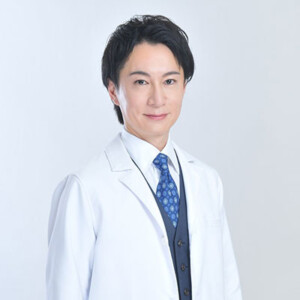
Dr. Jun Karibe
MD
Director
Education & Career
Certifications
Awards
MEDICAL REVIEW