Under-Eye Bags Surgery in Tokyo: Transconjunctival Blepharoplasty Explained

If you have reached the point where concealer no longer hides the shadow under your eyes, and people keep telling you that you look tired when you feel fine, you are not imagining it. Under-eye bags are usually a structural change — orbital fat pushing forward against a thinning support layer — rather than a skincare problem.
This article explains transconjunctival blepharoplasty, the incision-from-inside approach to under-eye bag surgery, in plain language: how it works, what the published evidence reports about results and complications, realistic costs in Tokyo, recovery timelines, and who is genuinely a good candidate.
What you’ll learn in this article:
- What transconjunctival blepharoplasty is and why it leaves no visible skin scar
- How fat removal differs from fat repositioning, and when each is chosen
- What clinical studies report about satisfaction rates, swelling, and complications
- Current pricing at our Tokyo clinic group and what the fee includes
- Who is suited to this surgery — and who is better served by another treatment
Have a question about this treatment?
Message us on LINE or WhatsApp — our English-speaking team usually replies the same day.
What Is Transconjunctival Blepharoplasty?
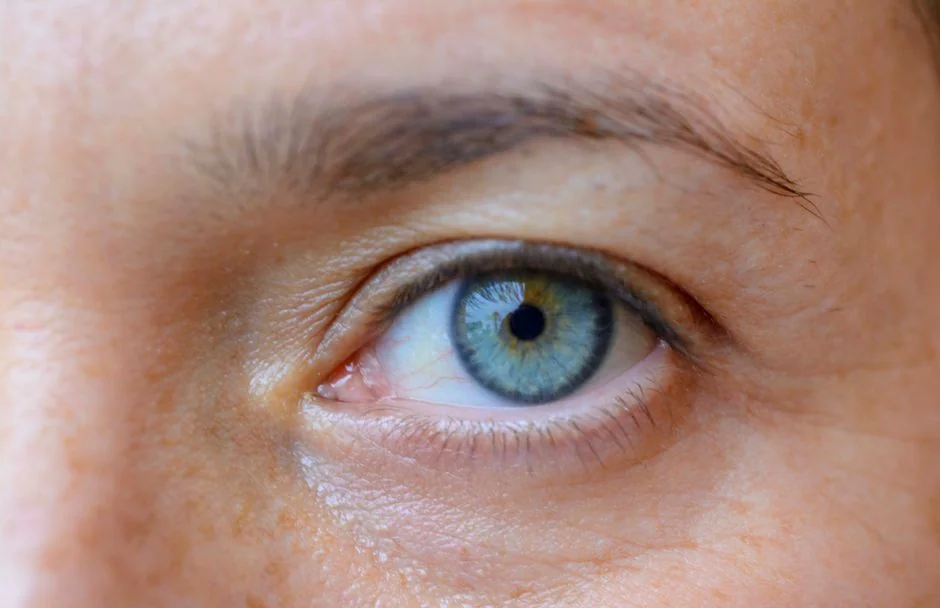
Transconjunctival blepharoplasty is a lower eyelid procedure performed through an incision on the inner surface of the eyelid — the conjunctiva — rather than through the skin. Because the incision sits inside the lid, there is no external scar on the eyelid skin.
Through that opening, the surgeon accesses the three fat compartments (medial, central and lateral) that sit in front of the eyeball, cushioned by the orbital septum. With age, the septum weakens and this fat protrudes forward, creating the bulge people call an eye bag and the shadow directly beneath it.
In Japanese clinics the procedure is commonly listed as 経結膜脱脂法 (keiketsumaku dasshi-hō). English-speaking patients may encounter it as “transconjunctival lower blepharoplasty”, “transconjunctival lipectomy”, or simply “under-eye fat removal”.
Why a shadow appears even on young faces
The hollow at the junction between the lower lid and the cheek — the tear trough — is anchored by a retaining ligament. When fat bulges above that fixed line, the contrast between the bulge and the hollow reads as a dark semicircle, even in people in their late twenties or thirties with no pigmentation at all.
How the Procedure Works

Surgery is typically performed under local anaesthesia, sometimes combined with nitrous oxide or intravenous sedation for patients who feel anxious. Most cases take roughly 30 to 60 minutes for both eyes, depending on technique.
Fat removal versus fat repositioning
There are two broad strategies, and the distinction matters more than most patients realise.
Fat removal (lipectomy): the protruding portion of fat is conservatively trimmed so the lid surface flattens. This suits patients whose main problem is the bulge itself, with a relatively shallow tear trough.
Fat repositioning (transposition): instead of discarding the fat, the surgeon releases it and lays it forward over the orbital rim to fill the hollow below. This suits patients whose bulge sits above a deep, sharply defined tear trough, where simple removal alone might leave the groove looking unchanged or even more obvious.
A published retrospective series on refined orbital fat trimming emphasised that the volume removed must be judged individually rather than to a fixed amount, because over-resection produces a hollowed, aged appearance that is considerably harder to correct than the original bulge.
Closure
The conjunctival incision is frequently left to heal without sutures, or closed with fine absorbable stitches. Either way, nothing needs to be removed from the skin surface afterwards.
Comparing Your Options for Under-Eye Bags
| Option | Best suited to | Incision / scar | Typical downtime | Longevity |
|---|---|---|---|---|
| Transconjunctival blepharoplasty | Protruding orbital fat with good skin quality and little excess skin | Inside the eyelid; no external scar | Visible swelling and bruising for roughly 1–2 weeks | Long-lasting; removed fat does not return, though ageing continues |
| Transcutaneous (subciliary) blepharoplasty | Significant excess lower eyelid skin as well as fat | Below the lash line; fine external scar | Comparable to slightly longer; sutures removed at about 1 week | Long-lasting |
| Hyaluronic acid filler to the tear trough | Hollowing with minimal or no fat bulge | Needle or cannula only | Minimal; occasional bruising | Temporary; repeat treatment required |
| Energy-based tightening (HIFU, RF microneedling such as Morpheus8) | Mild laxity and skin texture, no true fat herniation | None | Little to none | Gradual, temporary; maintenance sessions needed |
Filler and energy devices are legitimate treatments, but they address different problems. Injecting filler beneath a genuine fat bulge tends to add volume to an already crowded area, which is why an in-person assessment matters before choosing.
Expected Results and What the Evidence Shows

Studies suggest satisfaction with this operation is generally high.
A retrospective cohort of 97 patients undergoing transconjunctival lower blepharoplasty with refined fat trimming, published in Medicine in 2025, reported a mean FACE-Q Satisfaction with Eyes score of 3.63 out of 4, with 67.01% of patients “very satisfied” and 29.90% “somewhat satisfied”; 3.09% were somewhat dissatisfied and no major complications or reoperations were recorded.
In that same series, minor issues were common but transient: mild chemosis (swelling of the conjunctiva) in 2.1%, temporary mid-facial numbness in 3.1% resolving within three weeks, and mild bleeding in 7.2%. Transient lid swelling occurred in essentially all patients and settled within eight weeks.
A separate 2024 single-centre retrospective study of 88 patients in Cureus reported swelling in 78.41% and bruising in 87.5% at one week, both at 0% by six weeks, and symptomatic dry eye in 21.59% at one week resolving by twelve weeks. Around two-thirds of patients had resumed social activities by two weeks.
Results are not a guarantee, and outcomes depend on anatomy, technique and healing. What the literature does support is that most patients see a meaningful flattening of the bulge with a low rate of serious complications.
Before, during and after: a realistic timeline
- Before: consultation, photographic assessment, and pre-operative blood work. Blood thinners, alcohol and smoking are discussed in advance.
- Day of surgery: anaesthesia, roughly 30–60 minutes of operating time, then a short rest before going home the same day.
- Days 1–3: peak swelling and bruising; cold compresses and sleeping with the head elevated help.
- Week 1–2: most bruising fades; many patients return to work sooner if some concealer is acceptable.
- Month 1–3: residual swelling resolves and the final contour becomes apparent.
Cost in Tokyo

Under-eye bag surgery for cosmetic reasons is not covered by Japanese national health insurance. It is a self-pay (自由診療) procedure, so fees vary between clinics and it is worth confirming exactly what is included.
At our group’s aesthetic branch, the current published fees are as follows (all tax-inclusive):
- Transconjunctival fat removal for under-eye bags (経結膜脱脂法): 280,000 yen
- Lower eyelid sagging removal (下眼瞼たるみ除去): 320,000 yen
- Local anaesthesia: 22,000 yen; nitrous oxide sedation: 11,000 yen (used with local anaesthesia); intravenous sedation: 77,000 yen
- Pre-operative blood testing: 11,000 yen
Please see the clinic’s official price page for the most current figures, as fees are subject to revision. When comparing quotes elsewhere, check whether anaesthesia, blood work and follow-up visits are bundled or billed separately — this is where advertised headline prices often diverge from the final total. For an accurate quote, please book a consultation.
Have a question about this treatment?
Message us on LINE or WhatsApp — our English-speaking team usually replies the same day.
Who Is a Good Candidate — and Who Is Not
The classic indication has been recognised for decades. The 1993 retrospective analysis by Palmer and colleagues in Archives of Otolaryngology–Head & Neck Surgery concluded that patients with prominent orbital fat but without excess lower eyelid skin are the ideal candidates for the transconjunctival approach, and that inadequate fat removal — not lid malposition — was the most common shortcoming of the technique.
Likely to benefit
- Visible fat bulges that become more obvious in downward lighting
- Reasonable skin elasticity, with little redundant skin
- Patients in their twenties to fifties whose concern is contour rather than skin texture
- Anyone who wants to avoid an external eyelid scar
Better served by something else, or requiring caution
- Dark circles caused mainly by pigmentation or by thin, translucent skin — these do not respond to fat removal
- Significant loose lower eyelid skin, which may require a skin-tightening or transcutaneous approach in addition
- Pre-existing lower lid laxity, previous eyelid surgery, or thyroid eye disease — these need specialist assessment first
- Active eye infection, severe dry eye, uncontrolled bleeding disorders, or pregnancy
At BIOTOPE CLINIC in Shirokanedai, we frequently see patients who arrive expecting surgery and turn out to have a mixed picture — a modest fat bulge combined with hollowing and pigmentation. In those cases the plan often involves discussing surgery alongside adjunct options such as hyaluronic acid filler or PicoWay laser for pigmentation. These are treatments available at BIOTOPE CLINIC — feel free to ask about them during a consultation with Dr. Karibe.
What People Often Get Wrong
Misconception 1: “This surgery will get rid of my dark circles.”
It reliably addresses the shadow cast by protruding fat. It does not treat melanin pigmentation, nor the bluish tone caused by visible blood vessels beneath thin skin. Palmer and colleagues framed the candidacy question in exactly these anatomical terms — prominent fat, minimal excess skin — and that framing still holds. Patients whose darkness persists in flat, even lighting usually have a pigment or vascular component that needs a different treatment.
Misconception 2: “No external scar means no risk.”
Avoiding a skin incision does reduce certain problems. A 2025 meta-analysis in the Journal of Clinical Medicine, pooling 19 studies and 2,103 patients in the context of orbital and zygomaticofacial fracture repair, found the subciliary (through-the-skin) approach carried higher odds of ectropion, scleral show and visible scarring — but also found the transconjunctival approach carried higher odds of entropion, an inward-turning lid margin. That evidence comes from trauma surgery rather than cosmetic cases, so it should not be read as a direct complication rate for elective blepharoplasty, but it does illustrate the principle: each route has its own risk profile. Temporary dry eye, chemosis and asymmetry during healing are also realistic possibilities in the cosmetic setting.
Where to Get Under-Eye Bag Surgery in Tokyo
Within our clinic group, both BIOTOPE CLINIC (Shirokanedai, Minato-ku) and Kojimachi Dermatology & Plastic Surgery Clinic (Ichigaya, Chiyoda-ku) offer English-language consultation with Dr. Jun Karibe’s team. Transconjunctival blepharoplasty for under-eye bags is handled at BIOTOPE CLINIC in Shirokanedai, where Dr. Karibe personally consults. Bookings and enquiries in English: LINE or WhatsApp.
The two clinics are sister facilities under the same medical group. Kojimachi handles insurance-covered general dermatology — eczema, acne, rashes, warts, moles — as well as general and aesthetic plastic surgery, while BIOTOPE CLINIC covers cosmetic dermatology, aesthetic surgery, injectables, regenerative medicine and men’s health.
Frequently Asked Questions
- Q. How long before I can return to work?
- Many patients return to desk work within a few days, though visible bruising commonly persists for one to two weeks. In one published series, roughly two-thirds of patients had resumed social activities by the two-week mark.
- Q. Will the fat come back?
- Fat that has been surgically removed does not regenerate, so the correction is generally durable. Ageing continues, however, and skin laxity or facial volume loss may create new concerns over the following years.
- Q. Can I wear contact lenses afterwards?
- Contact lens wear is normally paused for a period after surgery while the conjunctiva heals, and your surgeon will specify the timing. Temporary dry eye is common in the early weeks and usually resolves within about three months.
- Q. Is this covered by Japanese health insurance?
- No. Cosmetic under-eye bag surgery is self-pay. Certain functional eyelid conditions, such as ptosis, may be assessed differently — this can be discussed at consultation.
- Q. Do I need to speak Japanese to be treated?
- No. Both clinics in the group provide English-language consultation, and enquiries can be made in English via LINE or WhatsApp.
Have a question about this treatment?
Message us on LINE or WhatsApp — our English-speaking team usually replies the same day.
Summary
Transconjunctival blepharoplasty treats under-eye bags by removing or repositioning protruding orbital fat through an incision inside the lower eyelid, leaving no external scar. Published series report high patient satisfaction and a low rate of serious complications, with swelling and bruising as the main short-term inconveniences.
It is not a universal fix for dark circles. The strongest candidates are those whose concern is a genuine fat bulge with reasonably firm skin; pigmentation, thin skin or significant laxity call for different or additional approaches.
If you have questions about under-eye bags surgery and transconjunctival blepharoplasty, both BIOTOPE CLINIC (Shirokanedai, Minato-ku) and Kojimachi Dermatology & Plastic Surgery Clinic (Ichigaya, Chiyoda-ku) offer English-language consultation with Dr. Karibe and his team. Transconjunctival blepharoplasty is primarily handled at BIOTOPE CLINIC in Shirokanedai. English enquiries: LINE or WhatsApp.
24/7 Consultation & Booking
Book a Consultation or Treatment
Our English-speaking team responds via LINE or WhatsApp — usually the same day.
References
- Li W, Gao Y, Qi Z, Li Z, Wu F. Refined trimming of orbital fat in transconjunctival lower blepharoplasty: A retrospective cohort study on clinical outcomes and aesthetic assessment. Medicine (Baltimore). 2025.
- Gupta R, Khosa A, Bansal P, Chaudhury G. Exploring the Versatility of Transconjunctival Blepharoplasty: A Retrospective Single-Center Study. Cureus. 2024.
- Palmer FR 3rd, Rice DH, Churukian MM. Transconjunctival Blepharoplasty: Complications and Their Avoidance — A Retrospective Analysis and Review of the Literature. Archives of Otolaryngology–Head & Neck Surgery. 1993;119(9):993–999.
- Chen YY, Lai YJ, Chen TY, Yen YF. Eyelid Complications in Subciliary Versus Transconjunctival Approaches to Orbital and Zygomaticofacial Fractures: A Meta-Analysis. Journal of Clinical Medicine. 2025.
Related Articles
You may also find these articles useful.
- Under Eye Dark Circles Treatment Tokyo: Injections vs Surgery
- Under Eye Filler Tokyo: Risks, Benefits & Costs
- Ptosis Correction Surgery Tokyo: Droopy Eyelid Treatment
- How Long Should You Stay in Tokyo for Double Eyelid Surgery? Downtime, Pain & Flying Guide
- Under Eye Filler Tokyo: Risks, Benefits & Results
SUPERVISED BY

Dr. Jun Karibe
MD
Director
Education & Career
Certifications
Awards
MEDICAL REVIEW