FaceTite for the Jawline and Neck in Tokyo: Results, Downtime and Cost
If you have reached the point where a good skincare routine and a HIFU session no longer sharpen your jawline, but a facelift feels like far more than you want to sign up for, you are in what plastic surgeons openly call the “treatment gap.”
It is one of the most common reasons people in their forties and fifties book a consultation in Tokyo.
FaceTite is one of the procedures designed specifically for that gap: a minimally invasive radiofrequency treatment performed through a small entry point rather than an incision. This article explains what it realistically achieves on the jawline and neck, what published studies actually report, how much downtime to plan for, what it costs in Tokyo, and — importantly for anyone being treated in Japan — its regulatory status here.
What you’ll learn in this article:
- How FaceTite’s internal radiofrequency energy differs from HIFU, thread lifts and surgical liposuction
- What peer-reviewed studies report for jawline and neck outcomes — including the honest limitations
- A realistic recovery timeline, from the swelling peak to the final result
- How FaceTite pricing works in Tokyo and what drives the range
- Who benefits most, who should choose surgery instead, and the regulatory status of the device in Japan
Have a question about this treatment?
Message us on LINE or WhatsApp — our English-speaking team usually replies the same day.
What Is FaceTite, and How Does It Work?

FaceTite is part of InMode’s RFAL platform — RadioFrequency Assisted Lipo-coagulation. In plain language, it uses radio waves to heat the fat and connective tissue under the skin in a controlled way, so that the tissue contracts and the skin redrapes over a tighter foundation.
According to InMode’s own product documentation, FaceTite and its sister devices are indicated for “dermatological and general surgical procedures where contraction of soft tissue or hemostasis is needed.”
The manufacturer states that the RFAL technology used in BodyTite, FaceTite and AccuTite holds FDA clearances for electrocoagulation and haemostasis. Note that this is a US clearance and is not the same thing as Japanese approval — a distinction covered in detail further down.
The physics: heating from the inside out
Most energy devices you may have tried — HIFU, monopolar RF, Volnewmer — deliver energy from the skin surface downwards. Everything they do has to pass through the epidermis first, which limits how much heat can safely be deposited in the deeper layers.
FaceTite inverts that geometry. A thin, blunt cannula is passed into the subcutaneous fat layer through an entry point of a few millimetres, and it forms one pole of a bipolar circuit. An external electrode glides along the skin above it as the second pole, so the energy travels through the target tissue between them rather than through the skin.
This is why temperature control matters so much. In the largest published multicentre series of the technique, treatment was delivered to an internal temperature cut-off of 68°C with an external skin temperature cut-off of 38°C — the internal probe is allowed to reach a genuinely collagen-denaturing temperature while the skin surface is held near body temperature. The device monitors both continuously and cuts power if either threshold is exceeded.
Why the jawline and neck respond well
The lower face and neck combine three problems at once: a small pad of stubborn subcutaneous fat under the chin, loose fibrous septa that no longer suspend the tissue, and skin that has lost elastic recoil. Surface-only devices address the third problem and barely touch the first two.
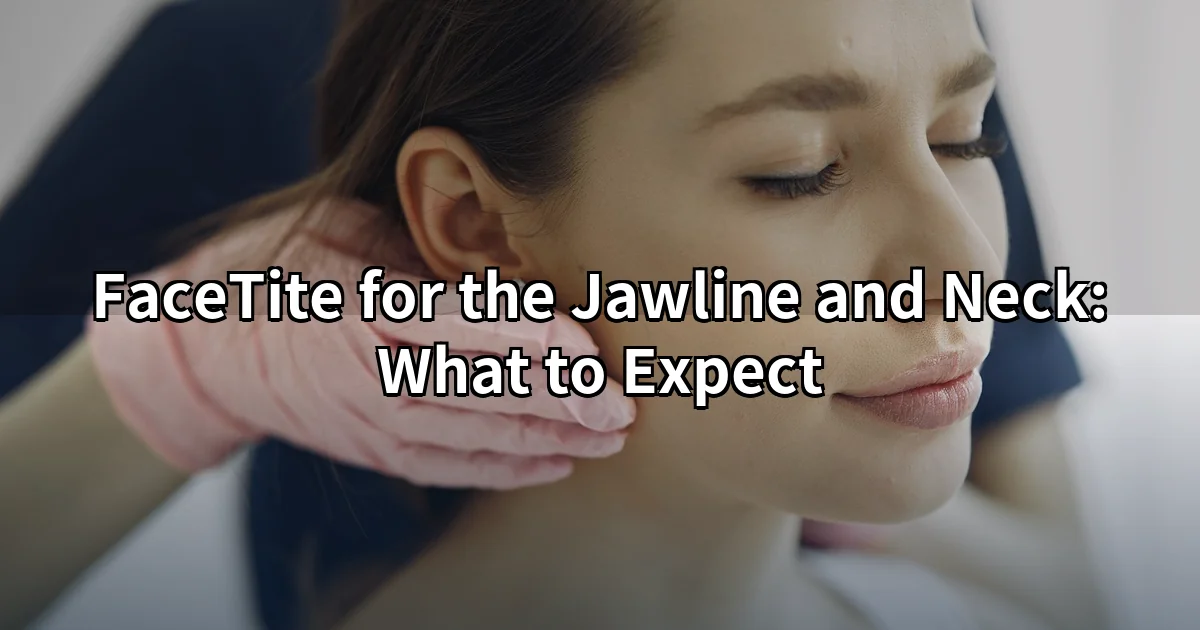
Because the FaceTite cannula sits within the fat layer itself, a single pass addresses all three — the heat coagulates a portion of the fat, contracts the fibrous septa that anchor skin to the deeper structures, and stimulates a dermal remodelling response. In practice, it is often combined with aspiration of the melted fat, or with a fractional RF microneedling device such as Morpheus8 to treat skin texture at the same visit. InMode markets that specific pairing as Embrace RF, which is the form in which the treatment is offered within our clinic group.
What the Evidence Shows: Realistic Results
The most substantial data on FaceTite for the lower face and neck comes from a 2020 multicentre retrospective study published in Plastic and Reconstructive Surgery – Global Open by Dayan and colleagues, covering 247 patients treated with bipolar RF (FaceTite) combined with fractional bipolar RF (Morpheus8).
Patients in that series had a mean Baker Face/Neck Classification score of 3.1 at baseline and improved by a mean of 1.4 points — roughly the difference between “moderate laxity with a visible jowl” and “mild laxity.” Mean procedure time was 58 minutes, 97.2% were performed under local anaesthesia alone, and 93% of patients reported being pleased with the result and said they would undergo it again. Mean follow-up was 2.1 years.
Complications in that series were uncommon but real: prolonged swelling beyond six weeks in 4.8%, a persistent hardened area beyond twelve weeks in 3.2%, and marginal mandibular neuropraxia — temporary weakness of the nerve that moves the lower lip — in 1.2%. The authors report that all of these resolved without further intervention.
It is equally important to read the sceptical literature. A 2022 systematic review in Annals of Plastic Surgery by Swanson examined 30 studies of subsurface radiofrequency and characterised the measured tissue contraction as modest, citing one comparison in which RF-assisted liposuction produced a 13% surface area reduction versus 8% in a control arm. The review also noted that most studies were small — a median of 25 patients — and concluded that the available evidence does not establish these treatments as superior to conventional surgical options such as submental lipectomy.
Taken together, studies suggest FaceTite produces a genuine, measurable tightening of the jawline and submental area that outperforms non-invasive devices, while falling short of what a neck lift achieves. Anyone promising you facelift-equivalent results from a device procedure is overselling it.
Cost of FaceTite for the Jawline and Neck in Tokyo
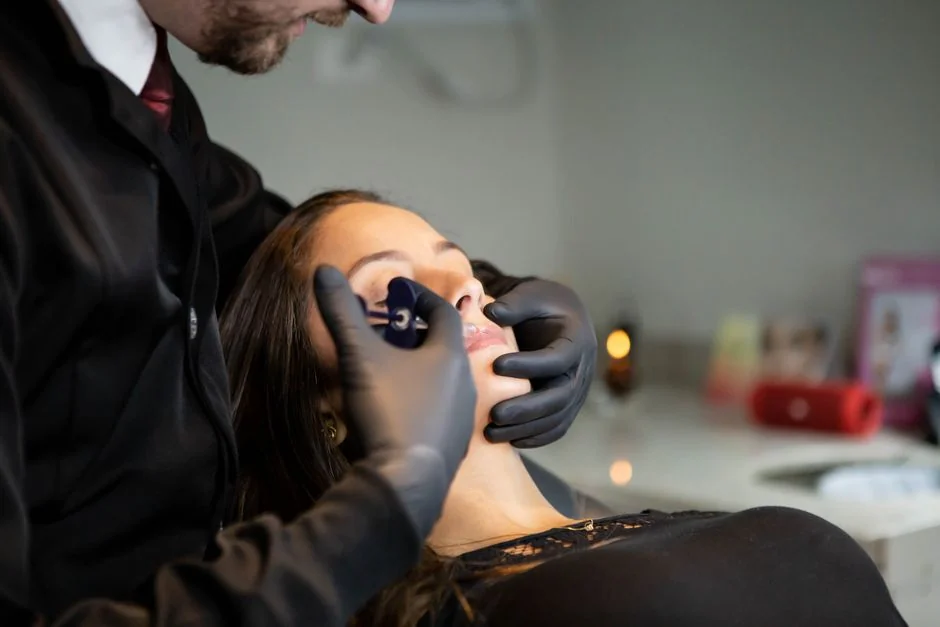
FaceTite is an entirely self-pay (自由診療) treatment in Japan. It is not covered by Japanese national health insurance, and it is not covered by most international insurance policies either, since it is classified as aesthetic rather than medically necessary.
Pricing in Tokyo is driven by four variables: how many zones are treated (jawline alone versus jawline plus submental plus neck), whether fat aspiration is added, whether a fractional RF pass such as Morpheus8 is included in the same session, and the anaesthesia arrangement. A jawline-only treatment under local anaesthesia sits at the bottom of any clinic’s range; a full lower-face-and-neck treatment with aspiration and a resurfacing pass sits at the top.
Within our clinic group, FaceTite is delivered as part of the Embrace RF protocol. The group’s published price list does not display a standalone face-and-neck FaceTite line item, so we will not quote a figure here that we cannot stand behind. Please see the clinic’s official price page or contact us for a current quote.
For orientation, two neighbouring treatments on the group’s current published price list (effective 1 October 2023, all figures tax-included) may help you calibrate what this category of treatment costs in Tokyo: HIFU for the full face plus under-chin is listed at ¥110,000, with an additional ¥11,000 if you request that a physician performs it; submental (under-chin) liposuction is listed at ¥280,000. FaceTite sits between these two in invasiveness, and its pricing generally reflects that position.
Be cautious about comparing headline prices across clinics without checking what is included. Some quoted figures cover the device pass only, with anaesthesia, the compression garment, post-treatment reviews and any touch-up billed separately. For an accurate quote, please book a consultation.
Have a question about this treatment?
Message us on LINE or WhatsApp — our English-speaking team usually replies the same day.
What to Expect: Before, During and After

The procedure itself is usually an outpatient appointment of roughly one to two hours including preparation. As noted above, the published series performed 97.2% of cases under local anaesthesia, with tumescent infiltration of the treatment area — you are awake, and you go home the same day.
Your surgeon marks the treatment zones with you sitting upright, since jowl and submental anatomy shifts when you lie down. Entry points of a few millimetres are made in concealed positions — typically behind the earlobe and in the submental crease — and are usually closed with a single suture or left to heal without one.
Recovery timeline
Our group’s own patient guidance for Embrace RF states that swelling peaks the day after treatment and generally settles over one to two weeks, with light work possible within a few days to a week. A compression garment for the chin and neck is typically worn for the first several days.
| Period | What is typical | Practical planning |
|---|---|---|
| Day 0–1 | Swelling rises to its peak; bruising may appear; area feels tight and warm | Treat as a rest day; sleep with the head elevated |
| Day 2–7 | Swelling begins to subside; bruising discolours and fades; numbness common | Most people resume desk work in this window; avoid video calls early on |
| Week 2–4 | Residual swelling and firmness under the chin; skin may feel lumpy or corded | Presentable socially; gentle massage often advised |
| Month 2–3 | Firmness resolving; contraction becoming visible | Resume all normal activity including sport |
| Month 3–6 | Collagen remodelling continues; final contour emerges | Assessment point for whether anything further is wanted |
The most common complaint in the first month is not pain but the odd firmness and irregularity of the healing tissue. This is expected — it is the fibrous response the treatment deliberately provokes — and in the published series it had resolved by twelve weeks in all but 3.2% of patients.
Who Is a Good Candidate — and Who Should Choose Something Else

FaceTite suits the patient who is genuinely in the treatment gap: visible jowling or a soft submental contour, skin that has lost some elasticity but still has reasonable recoil, and a realistic expectation of improvement rather than transformation. Age is less predictive than skin quality; a well-selected patient in their late fifties may do better than a poorly selected one in their forties.
Better served by an alternative
Several groups should be steered elsewhere. If your main issue is a heavy platysmal band or genuinely redundant skin that hangs when you turn your head, a device will not lift it — a neck lift will, and delaying it rarely helps.
There is now published reason to take that point seriously.
A 2026 study in the Aesthetic Surgery Journal by O’Daniel and Patton reviewed 180 neck lift procedures and found that prior nonsurgical neck treatments, including energy-based devices, were associated with fibrosis, loss of normal tissue planes and unpredictable fat distribution; a deep cervicoplasty addressing subplatysmal structures was required in 94% of their cases. Clinical reports of this kind indicate that stacking device treatments in a neck that ultimately needs surgery can make that surgery more complex, not less.
FaceTite should also be avoided or deferred if you have an active infection or inflammatory skin condition in the area, a bleeding disorder or ongoing anticoagulation that cannot be paused, an implanted electronic device such as a pacemaker, or if you are pregnant or breastfeeding. Patients with a history of keloid or hypertrophic scarring should discuss that explicitly at consultation.
| FaceTite (Embrace RF) | HIFU | Submental liposuction | Neck lift surgery | |
|---|---|---|---|---|
| Invasiveness | Minimally invasive; millimetre entry points | Non-invasive; no break in the skin | Minimally invasive; small incisions | Surgical incisions around the ear |
| Best for | Mild-to-moderate laxity with a small fat pad | Early laxity, skin quality maintenance | Fat excess with good skin recoil | Skin redundancy, platysmal bands |
| Anaesthesia | Local (97.2% in published series) | None or topical | Local or sedation | General or deep sedation |
| Typical social downtime | Several days to about two weeks | Essentially none | About one to two weeks | Two to three weeks or more |
| Skin tightening | Moderate; measurable in studies | Mild | Limited; relies on natural recoil | Definitive |
| Time to final result | 3–6 months | 2–3 months | 3 months | 6–12 months |
| Repeat frequency | Generally a one-off; occasional touch-up | Every 6–12 months | Generally a one-off | One-off |
What People Often Get Wrong About FaceTite
Misconception 1: “It is FDA-approved, so it must be approved in Japan too.”
These are entirely separate regulatory systems, and conflating them is one of the most common errors in aesthetic marketing. InMode’s US clearances for the RFAL platform cover electrocoagulation and haemostasis. Separately, InMode Japan announced in October 2025 that it had obtained Japanese manufacturing and marketing approval for its Morpheus Pro device — approval number 30700BZX00257000, granted 3 October 2025, for soft tissue ablation for fractional skin resurfacing.
FaceTite was not part of that approval. In Japan it is used as a device obtained by physician import, and under the Ministry of Health, Labour and Welfare’s medical advertising guidelines a clinic offering such treatment must disclose that the device is unapproved, its route of acquisition, whether a domestically approved equivalent exists, and available overseas safety information. Ask any clinic you are considering to state this clearly.
Misconception 2: “It is basically a non-surgical facelift with no downtime.”
The phrase appears constantly in advertising and it is not supported by the literature. Published data show meaningful but modest tightening — a 2022 systematic review characterised the measured contraction as modest and cited a 13% surface area reduction for RF-assisted liposuction against 8% in a control arm — alongside genuine downtime, with prolonged swelling in 4.8% and persistent induration in 3.2% of the largest published series. It is a real procedure with a real recovery, and it belongs in the same conversation as surgery, not in the same conversation as a facial.
Where to Get FaceTite for the Jawline and Neck in Tokyo
Within our clinic group, both BIOTOPE CLINIC (Shirokanedai, Minato-ku) and Kojimachi Dermatology & Plastic Surgery Clinic (Ichigaya, Chiyoda-ku) offer English-language consultation with Dr. Jun Karibe’s team. FaceTite and Embrace RF for the jawline and neck are handled at BIOTOPE CLINIC in Shirokanedai. Bookings and enquiries in English: LINE or WhatsApp.
The two clinics are sister sites of the same medical group under Dr. Karibe, who is board-certified by the Japan Society of Plastic and Reconstructive Surgery. Kojimachi is the group’s main office and handles insurance-covered general dermatology — eczema, acne, rashes, warts, moles — alongside general and aesthetic plastic surgery. BIOTOPE in Shirokanedai is where Dr. Karibe personally consults and where the cosmetic dermatology, injectable, device and men’s health services sit.
At BIOTOPE CLINIC in Shirokanedai, we frequently see patients who arrive having already had several rounds of a non-invasive device and who are unsure whether the honest next step is more of the same or something more definitive. That question is worth answering carefully before committing, because the answer changes the cost, the downtime and the result.
If FaceTite turns out not to be the right fit for your anatomy, related options available at BIOTOPE CLINIC include HIFU and Volnewmer for earlier-stage laxity, and Morpheus8 RF microneedling for skin texture and pore quality. These are treatments available at BIOTOPE CLINIC in Shirokanedai — feel free to ask about them during a consultation with Dr. Karibe.
Frequently Asked Questions
- Q. How long until I can return to work after FaceTite on my jawline and neck?
- Our group’s Embrace RF guidance describes swelling peaking the day after treatment and easing over one to two weeks, with light work possible within a few days to a week. Most patients plan for a long weekend at minimum, and schedule the treatment away from important in-person commitments.
- Q. Is FaceTite painful?
- The procedure is generally performed under local anaesthesia with tumescent infiltration — 97.2% of cases in the largest published series were done this way — so you feel pressure and movement rather than pain. Afterwards, most patients describe tightness and soreness rather than sharp pain, typically managed with simple oral analgesia.
- Q. Will one session be enough?
- FaceTite is usually planned as a single treatment, with the final contour emerging over three to six months as collagen remodelling completes. A small number of patients elect a touch-up or an adjunctive treatment once the result has fully settled, which is assessed at follow-up rather than promised in advance.
- Q. Can FaceTite replace a neck lift?
- No. Published data show meaningful but moderate improvement — a mean 1.4-point gain on the Baker Face/Neck scale in a 247-patient series — which is not equivalent to surgical excision of redundant skin. If you have hanging skin or prominent platysmal bands, a consultation should honestly discuss surgery as the more appropriate option.
- Q. Is FaceTite covered by insurance in Japan?
- No. It is a self-pay aesthetic treatment and is not covered by Japanese national health insurance. Because the device is not approved under Japan’s Pharmaceuticals and Medical Devices Act, it also falls outside the national relief system for adverse drug and device reactions — something your clinic should explain to you at consultation.
Have a question about this treatment?
Message us on LINE or WhatsApp — our English-speaking team usually replies the same day.
Summary
FaceTite occupies a genuine and useful position between non-invasive devices and surgery for the jawline and neck. It heats the subcutaneous tissue directly through a bipolar cannula, contracting fat and fibrous septa in a way that surface devices cannot reach, and published multicentre data support a moderate, durable improvement with high patient satisfaction and a low rate of complications that resolved.
The trade-offs are equally real: several days to two weeks of social downtime, three to six months to the final result, a modest rather than dramatic degree of tightening, and a device that is not approved under Japanese regulation and is used here on a physician-import basis. Anyone in Tokyo considering it deserves to hear all of that before booking, not after.
The single most valuable thing you can do is get an honest assessment of whether you are actually in the treatment gap — because the patients who do best with FaceTite are precisely those who would have been under-treated by a device and over-treated by surgery.
If you have questions about FaceTite for the jawline and neck, both BIOTOPE CLINIC (Shirokanedai, Minato-ku) and Kojimachi Dermatology & Plastic Surgery Clinic (Ichigaya, Chiyoda-ku) offer English-language consultation with Dr. Karibe and his team. FaceTite is primarily handled at BIOTOPE CLINIC in Shirokanedai. English enquiries: LINE or WhatsApp.
24/7 Consultation & Booking
Book a Consultation or Treatment
Our English-speaking team responds via LINE or WhatsApp — usually the same day.
References
- Dayan E, Rovatti P, Aston S, Chia CT, Rohrich R, Theodorou S. Multimodal Radiofrequency Application for Lower Face and Neck Laxity. Plastic and Reconstructive Surgery – Global Open. 2020;8(8):e2862.
- Swanson E. A Systematic Review of Subsurface Radiofrequency Treatments in Plastic Surgery. Annals of Plastic Surgery. 2022;89(3):274–285.
- O’Daniel TG, Patton S. Neck Lift After Nonsurgical Treatments: Fibrosis, Fat Loss, and Surgical Complexity. Aesthetic Surgery Journal. 2026;46(4):372–383.
- InMode Japan K.K. Press release: Morpheus Pro medical device manufacturing and marketing approval (approval no. 30700BZX00257000, granted 3 October 2025). Published 28 October 2025.
- Ministry of Health, Labour and Welfare, Japan. Medical Advertising Guidelines and associated Q&A — requirements for advertising self-pay treatment using unapproved drugs and medical devices. https://www.mhlw.go.jp/
- U.S. Food and Drug Administration. 510(k) Premarket Notification database. https://www.fda.gov/
Related Articles
You may also find these articles useful.
- FaceTite for Jawline and Neck in Tokyo
- FaceTite Tokyo: RF-Assisted Lipolysis for Jawline Contouring
- Embrace RF Tokyo: FaceTite Plus Morpheus8 Explained
- FaceTite vs Surgical Facelift in Tokyo: Which to Choose
- Neck Botox Tokyo: Nefertiti Lift Guide for Platysma Bands
SUPERVISED BY
Dr. Jun Karibe
MD
Director
Education & Career
Certifications
Awards
MEDICAL REVIEW