FaceTite for Jawline and Neck in Tokyo: Results, Downtime and Cost

Concerns about a softening jawline, loose neck skin, or persistent jowling are among the most common reasons people seek cosmetic treatment in their thirties, forties, and beyond. FaceTite is a minimally invasive radiofrequency procedure designed specifically to address these areas — without the recovery demands of a full surgical facelift. This article explains what FaceTite involves, what results are realistic, how much it costs in Tokyo, and what the experience of treatment and recovery actually looks like.
What you’ll learn in this article:
- How FaceTite uses radiofrequency energy to tighten skin on the jawline and neck
- What results are clinically supported and what is not realistic to expect
- Typical cost range for FaceTite in Tokyo
- Downtime, aftercare, and what to expect before, during, and after treatment
- Who is and is not a suitable candidate
Have a question about this treatment?
Message us on LINE or WhatsApp — our English-speaking team usually replies the same day.
What Is FaceTite?
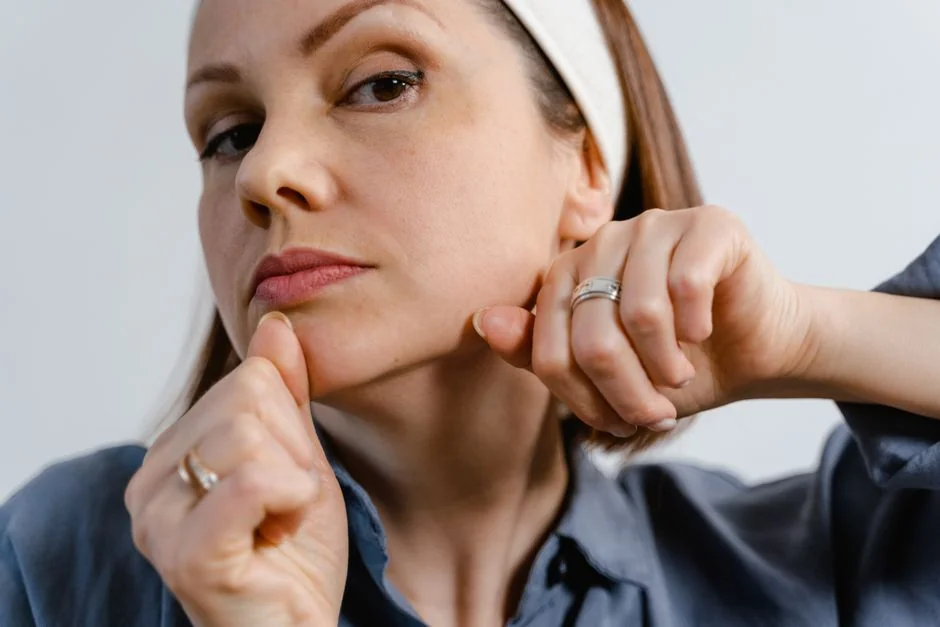
FaceTite is a minimally invasive body-contouring and skin-tightening device manufactured by InMode. It uses a technology called radiofrequency-assisted lipolysis (RFAL), meaning it delivers radiofrequency (RF) energy both beneath the skin (via a thin internal probe) and to the skin surface simultaneously, using a small bipolar electrode system.
The procedure is not the same as a traditional surgical facelift. There are no large incisions, no flap lifting, and no general anaesthesia in most cases. However, it is more invasive than surface-level energy devices such as HIFU or RF microneedling, because the internal probe requires tiny entry points (typically 1–2 mm) through which it is inserted under the skin.
The dual-electrode system heats the deeper fatty layer and the underside of the skin simultaneously. This controlled heating causes collagen fibres to contract and stimulates new collagen production over the months that follow. The result is a gradual tightening and contouring of the treated area — most commonly the jawline, jowls, submental region (under the chin), and neck.
How FaceTite Works on the Jawline and Neck
The Technology Explained
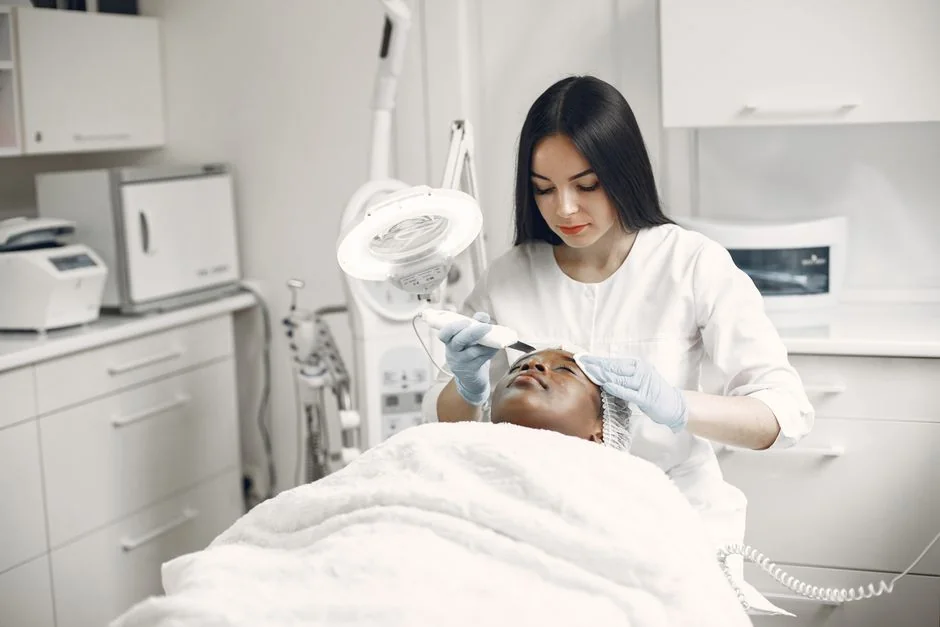
The FaceTite handpiece consists of two electrodes: one inserted beneath the skin and one resting on the skin surface. Radiofrequency energy passes between them, heating the target tissue to a precise therapeutic temperature — typically around 38–42 °C at the skin surface and up to 70 °C internally.
A built-in temperature-monitoring system continuously tracks tissue temperature to help prevent burns.
This simultaneous internal and external energy delivery differentiates FaceTite from purely surface-level devices. The internal heating addresses fat reduction and deeper tissue contraction, while the external electrode promotes skin tightening from the outside inward.
What Happens During a Session
Local anaesthesia (tumescent anaesthetic solution) is administered to the treatment area before the probe is inserted. The procedure itself generally takes 45 minutes to 1.5 hours depending on the size of the treatment zone. Because local rather than general anaesthesia is used, patients remain awake and comfortable throughout.
FaceTite is frequently combined with Morpheus8 (radiofrequency microneedling) in the same session to address surface skin texture and fine lines simultaneously. At our clinic in Ichigaya, Tokyo, we frequently see patients who choose combination protocols to target both skin laxity at depth and surface quality in a single treatment visit — a practical consideration for those travelling from abroad or managing busy schedules.
Expected Results: What Is Realistic?
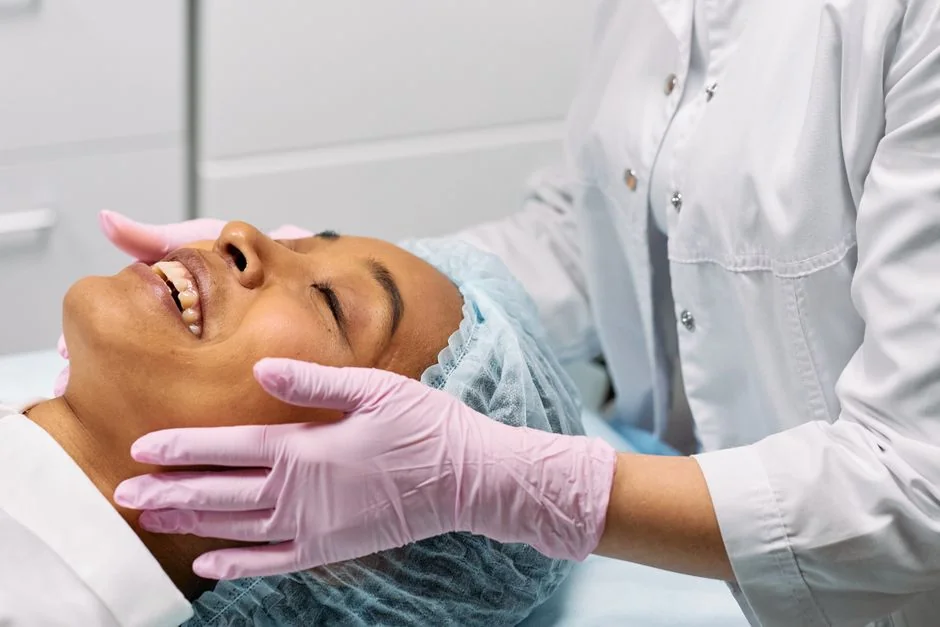
Clinical studies suggest that FaceTite can produce meaningful improvements in skin laxity and jaw contour definition. A peer-reviewed study published in the journal Plastic and Reconstructive Surgery Global Open reported that RFAL produced an average of approximately 37% improvement in skin laxity in facial and neck areas at six months post-treatment.
Results vary by individual, and outcomes depend heavily on degree of skin laxity, skin quality, age, and the treating physician’s technique.
Most patients begin to notice visible tightening within four to six weeks as initial swelling resolves, with continued improvement over three to six months as new collagen matures. The results from a single session are generally considered to last one to three years, though this varies significantly between individuals and is influenced by ongoing ageing, lifestyle factors, and sun exposure.
FaceTite does not deliver the same degree of lift or tissue repositioning as a surgical facelift. It is most appropriate for mild to moderate laxity. Patients with significant skin redundancy — sometimes described as excess hanging skin — are unlikely to achieve a satisfying result from FaceTite alone and may be better served by a surgical approach.
Common Misconceptions About FaceTite
Misconception 1: FaceTite Is a Non-Surgical Facelift with Surgical Results
FaceTite is often marketed using language such as “non-surgical facelift,” which can create unrealistic expectations. While it is far less invasive than surgery, it also produces more modest — and more gradual — results. It is best understood as a significant step up from surface-level devices, but not a replacement for surgical lifting in patients with advanced skin laxity.
Misconception 2: Recovery Is Trivial
Because FaceTite is described as “minimally invasive,” some patients assume recovery will be similar to having a facial. In practice, swelling and bruising around the jawline and neck can be substantial in the first week, and many patients require seven to ten days before they feel comfortable returning to professional or social settings. It is important to plan accordingly, especially for international patients visiting Tokyo.
Dr. Karibe’s Note
Many of our international patients ask me whether they can combine FaceTite with other treatments in the same visit to make the most of their time in Tokyo. Combination with Morpheus8 is clinically reasonable and frequently performed, as both procedures use complementary RF mechanisms targeting different tissue depths.
What I always emphasise, however, is that a thorough consultation is essential before any plan is finalised — the right treatment is the one matched to your specific anatomy and skin quality, not simply the most comprehensive menu available.
— Dr. Jun Karibe M.D. Ph.D.
Board-Certified Plastic Surgeon
BIOTOPE CLINIC / Kojimachi Dermatology & Plastic Surgery Clinic, Tokyo
FaceTite Cost in Tokyo

General Price Context
FaceTite pricing in Tokyo varies considerably depending on the clinic, the extent of the treatment area (jawline only, submental only, or full lower face and neck), and whether it is combined with other procedures such as Morpheus8 or liposuction. As a reference, clinical reports from aesthetic medicine markets in Asia suggest that RFAL procedures for the face and neck typically range from approximately ¥400,000 to ¥900,000 or more for a comprehensive session, though pricing structures differ widely between providers.
Related Treatments Available at Kojimachi Dermatology & Plastic Surgery Clinic
While FaceTite itself is not listed in the current procedure menu at our Ichigaya clinic, several closely related and complementary treatments for jawline definition and neck laxity are available. Patients seeking jawline contouring and skin tightening may wish to consider the following options, which can be discussed in detail at consultation:
| Treatment | Mechanism | Target Concern | Price Range (JPY) |
|---|---|---|---|
| HIFU | High-intensity focused ultrasound; lifts and tightens deep tissue layers | Skin laxity, jawline definition, neck lifting | ¥25,000 – ¥110,000 |
| Morpheus8 (RF Microneedling) | Fractional RF energy delivered via microneedles into dermis and sub-dermis | Skin tightening, texture, mild laxity | ¥35,000 – ¥49,800 (POTENZA RF) |
| Thread Lift (Tesslift) | Absorbable cog threads mechanically reposition and stimulate tissue | Jowling, jawline definition, cheek lifting | ¥48,000 per thread |
| Liposuction (Jawline/Cheek) | Surgical removal of localised fat deposits | Submental fat, jowl volume | ¥280,000 per area |
| Fat-Dissolving Injection | Deoxycholic acid or phosphatidylcholine dissolves submental fat | Double chin, submental fullness | Price on consultation |
HIFU and Morpheus8 (or the equivalent POTENZA RF platform at our clinic) are treatments available at our Ichigaya clinic — feel free to ask about either during a consultation to determine which approach best suits your anatomy and goals.
For an accurate quote, we recommend booking a consultation.
Have a question about this treatment?
Message us on LINE or WhatsApp — our English-speaking team usually replies the same day.
What to Expect: Before, During and After Treatment

Before the Procedure
A thorough consultation is the essential first step. The treating physician will assess skin laxity, fat distribution, and overall skin quality to determine whether FaceTite (or an alternative treatment) is appropriate. Pre-operative blood work is standard for procedures involving local anaesthesia. Patients are typically advised to avoid blood-thinning medications and supplements (such as aspirin, ibuprofen, fish oil, and vitamin E) for one to two weeks prior.
During the Procedure
Tumescent local anaesthesia is administered to numb the area thoroughly before the probe is introduced. Patients report feeling warmth and mild pressure but generally describe the procedure as comfortable. The treating physician monitors skin temperature continuously throughout the session.
Downtime and Recovery
The first 48 to 72 hours typically involve swelling, bruising, and a sensation of tightness in the treated area. A compression garment worn around the jaw and neck is usually recommended for one to two weeks to support healing and optimise tissue contraction. Most patients return to light daily activities within three to five days, but visible bruising may persist for seven to fourteen days.
Strenuous exercise, significant sun exposure, and alcohol are generally advised against for the first two weeks. International patients planning treatment in Tokyo should factor in a minimum of seven to ten days of local recovery time before considering travel.
How FaceTite Works on the Jawline and Neck
The Dual-Electrode System
The FaceTite handpiece has two electrodes.
One electrode is inserted beneath the skin.
The other rests on the surface.
Radiofrequency energy travels between them, creating controlled heating within the tissue.
This dual-direction approach distinguishes FaceTite from treatments that deliver energy only from the surface.
Internal Heating
The internal probe heats the fatty layer and fibrous tissue beneath the skin.
This may produce:
- Fat-cell disruption
- Localized fat reduction
- Fibrous tissue contraction
- Deeper contour improvement
- Collagen contraction
External Heating
The external electrode monitors and heats the skin surface.
This supports skin contraction while allowing temperature control.
The device includes real-time monitoring intended to help reduce the risk of overheating.
Treatment Temperatures
FaceTite typically heats tissue to different temperatures internally and externally.
The skin surface may reach approximately:
38–42°C
Internal tissue may reach higher temperatures, sometimes approaching:
60–70°C
depending on the protocol and tissue characteristics.
These temperatures must be monitored carefully.
Excessive heat may increase the risk of burns, nerve irritation, or tissue injury.
This is why physician experience is important.
What Areas Can FaceTite Treat?
FaceTite is commonly used for:
- Jawline
- Jowls
- Under the chin
- Submental fat
- Lower cheeks
- Upper neck
- Mild neck laxity
- Early lower-face sagging
It may be particularly useful when both fat and loose skin contribute to the problem.
FaceTite for Jowls
Jowls can result from several factors:
- Skin laxity
- Descent of facial fat pads
- Localized fat accumulation
- Bone support changes
- Loss of jawline definition
FaceTite may improve jowls when the main concerns are mild to moderate laxity and localized lower-face fat.
However, it cannot fully reposition significantly descended facial tissue.
Patients with advanced jowling may need thread lifting or surgery.
FaceTite for a Double Chin
A double chin may be caused by:
- Submental fat
- Loose skin
- Weak chin projection
- Neck-muscle anatomy
- Genetics
- Weight change
FaceTite may help when submental fat and mild skin laxity occur together.
However, patients with a retruded chin or significant platysma banding may need a different approach.
Possible alternatives include:
- Chin filler
- Chin implant
- Liposuction
- Fat-dissolving injections
- HIFU
- Neck-lift surgery
Correct diagnosis is essential.
FaceTite for Neck Tightening
FaceTite may improve mild to moderate neck laxity.
It may help patients with:
- Early neck looseness
- Mild crepey skin
- Reduced jaw-neck definition
- Small amounts of submental fat
However, it is less likely to provide a satisfying result when there is:
- Significant excess skin
- Strong platysma bands
- Advanced neck ageing
- Major tissue descent
- Very poor skin elasticity
In these cases, neck-lift surgery may be more appropriate.
What Happens During FaceTite Treatment?
Step 1: Consultation
The physician assesses:
- Skin laxity
- Fat distribution
- Jawline anatomy
- Neck anatomy
- Skin elasticity
- Previous procedures
- Medical history
- Medications
- Scarring history
- Desired outcome
The consultation should determine whether FaceTite is genuinely appropriate or whether another treatment would provide a better result.
Step 2: Clinical Photography and Marking
Standardized photographs may be taken.
The treatment area is marked while the patient is upright.
This helps identify:
- Fat pockets
- Jowl borders
- Jawline contour
- Areas of loose skin
- Important anatomical structures
Step 3: Tumescent Anaesthesia
A tumescent local anaesthetic solution is placed into the treatment area.
This usually contains:
- Local anaesthetic
- Saline
- Medication to reduce bleeding
The solution numbs the tissue and creates space for safe probe movement.
Step 4: Small Entry Points
Tiny entry points, often approximately 1–2 mm, are created.
The internal probe is inserted beneath the skin through these openings.
These entry points are much smaller than surgical facelift incisions.
Step 5: Radiofrequency Treatment
The physician moves the internal probe beneath the skin while the external electrode remains on the surface.
The device heats the tissue in a controlled manner.
The physician continuously monitors:
- Temperature
- Tissue resistance
- Probe position
- Skin response
- Treatment symmetry
Step 6: Fat Removal if Combined with Liposuction
FaceTite may be combined with small-volume liposuction.
This may be helpful when there is more significant:
- Submental fat
- Lower-face fat
- Jowl fullness
FaceTite alone is not always sufficient for larger fat deposits.
How Long Does FaceTite Take?
Treatment time depends on the area and whether other procedures are combined.
Typical procedure time may be:
45–90 minutes
A more extensive lower-face and neck treatment may take longer.
Additional preparation and recovery time should also be expected.
Is FaceTite Painful?
FaceTite is generally performed under tumescent local anaesthesia.
During the procedure, patients may feel:
- Pressure
- Pulling
- Warmth
- Movement beneath the skin
- Mild vibration
Sharp pain should not be expected once the area is adequately numb.
After treatment, patients may experience:
- Soreness
- Tightness
- Tenderness
- Swelling
- Bruising
Pain medication may be recommended.
Who Is a Good Candidate?
FaceTite is generally considered most suitable for adults aged roughly 35 to 60 with mild to moderate skin laxity on the jawline or neck, who prefer to avoid or delay surgical intervention. Good skin elasticity — the skin’s inherent capacity to contract after being stretched — tends to predict better outcomes.
Patients with a moderate amount of submental fat (fat beneath the chin) often see particularly satisfying results, as the device addresses both fat and overlying skin simultaneously.
The procedure may be less suitable for those who have already undergone significant surgical lifting (where excess skin has already been removed), those with very poor skin elasticity, or those with a high degree of excess skin. Individuals with active skin infections, uncontrolled diabetes, certain cardiac conditions, or metal implants in the treatment area should discuss their medical history thoroughly with the physician before proceeding. Pregnant or breastfeeding individuals are typically advised to postpone elective energy-based treatments.
FaceTite and Morpheus8
FaceTite is often combined with Morpheus8, a form of RF microneedling.
The two treatments target different depths.
This combination may address:
- Deep contour
- Skin tightening
- Fine lines
- Texture
- Enlarged pores
- Mild acne scarring
However, combining treatments increases total tissue stress and may lengthen recovery.
A physician should determine whether combination treatment is appropriate.
Frequently Asked Questions
- Q. Is FaceTite painful?
- The procedure is performed under tumescent local anaesthesia, so the treatment area is numbed before the probe is introduced. Most patients report feeling warmth and mild pressure during the session rather than sharp pain. Some post-procedure soreness and tightness are common in the first few days as the anaesthetic wears off, and over-the-counter pain relief is typically sufficient.
- Q. How long do FaceTite results last?
- Clinical reports indicate that results from a single session are generally maintained for one to three years, though individual longevity varies considerably depending on age, skin quality, lifestyle, and the degree of ongoing ageing. Maintaining results with complementary energy treatments such as HIFU or RF microneedling in the years following is a strategy some patients choose to explore at consultation.
- Q. Can FaceTite be combined with other treatments?
- Yes. FaceTite is frequently combined with Morpheus8 (radiofrequency microneedling) in the same session to address surface skin texture alongside deeper laxity. It can also be paired with liposuction for more significant fat removal, or with injectable treatments for overall facial rejuvenation. Whether combination treatment is appropriate depends on individual anatomy and should be determined during a thorough consultation.
- Q. Will I need time off work after FaceTite?
- Most patients plan for seven to ten days before returning to professional settings where appearance matters, as bruising and swelling around the jaw and neck can be noticeable during this period. Those working remotely or in environments where temporary bruising is not a concern may feel comfortable returning sooner.
- Q. Is FaceTite available at BIOTOPE CLINIC/ Kojimachi Dermatology & Plastic Surgery Clinic?
- FaceTite as a specific branded device is not currently listed in the clinic’s procedure menu. However, several treatments that address comparable concerns — including HIFU for skin lifting, Morpheus8-equivalent RF microneedling (POTENZA), thread lifts, and liposuction of the jaw and cheek area — are available. The team at our BIOTOPE clinic can discuss which option is most appropriate for your specific goals at a consultation.
Have a Question About Jawline or Neck Treatment?
Message our English-speaking team through LINE or WhatsApp.
The team can assist with:
- Treatment enquiries
- English consultation booking
- Price guidance
- Travel scheduling
- Recovery planning
- Comparison of HIFU, RF microneedling, thread lifts and liposuction
Have a question about this treatment?
Message us on LINE or WhatsApp — our English-speaking team usually replies the same day.
Summary
FaceTite in Tokyo is a minimally invasive radiofrequency-assisted procedure designed to tighten skin and remodel localized fat around the jawline, jowls, under-chin area, and neck.
It uses an internal probe and an external electrode to deliver controlled radiofrequency energy through the tissue.
FaceTite may improve:
- Mild to moderate jawline laxity
- Early jowls
- Submental fat
- Mild neck looseness
- Lower-face contour
Results develop gradually over three to six months and may last one to three years or longer.
However, FaceTite does not produce the same degree of tissue repositioning or excess-skin removal as a surgical facelift.
Patients should expect meaningful downtime, including swelling and bruising for approximately seven to fourteen days. Compression garments are often required.
In Tokyo, FaceTite or comparable RFAL procedures may generally cost approximately ¥400,000–¥900,000 or more, depending on the area and combination treatments.
FaceTite is not currently listed as a standard procedure at BIOTOPE CLINIC or Kojimachi Dermatology & Plastic Surgery Clinic, Tokyo. However, patients can consult in English about available alternatives such as HIFU, POTENZA RF microneedling, thread lifting, facial liposuction, fat-dissolving injections, chin filler, and masseter Botox.
The best first step is not choosing a device name.
It is identifying whether your jawline concern is caused by fat, skin laxity, muscle, tissue descent, or facial structure and then selecting the treatment that best matches your anatomy.
24/7 Consultation & Booking
Book a Consultation or Treatment
Our English-speaking team responds via LINE or WhatsApp — usually the same day.
References
- Mulholland RS. Radiofrequency energy for non-invasive and minimally invasive skin tightening. Clinics in Plastic Surgery. 2011;38(3):437–448.
- Theodorou SJ, Chia CT. Radiofrequency-assisted liposuction for arm contouring: technique and outcome analysis. Plastic and Reconstructive Surgery Global Open. 2013;1(5):e37.
- Duncan DI. Nonexcisional tissue tightening: creating skin surface area reduction during abdominal liposuction by adding radiofrequency heating. Aesthetic Surgery Journal. 2013;33(8):1154–1166.
- Dayan E, Burns AJ, Rohrich RJ, Theodorou S. The use of radiofrequency in aesthetic surgery. Plastic and Reconstructive Surgery Global Open. 2020;8(8):e2861.
- Ingargiola MJ, Motakef S, Chung MT, Vasconez HC, Sasaki GH. Cryolipolysis for fat reduction and body contouring: safety and efficacy of current treatment paradigms — review article contextualising RFAL within broader energy-based aesthetics. Plastic and Reconstructive Surgery. 2015;135(6):1581–1590.
Related Articles
You may also find these articles useful.
- FaceTite vs Surgical Facelift Tokyo: Minimally Invasive Alternative
- Non-Surgical Facelift Tokyo for Foreigners: Full Guide
- Facial Sagging Treatment: HIFU vs RF Microneedling
- Skin Tightening Treatment Tokyo: Options and Cost
- HIFU in Tokyo: Non-Surgical Skin Tightening Explained
SUPERVISED BY

Dr. Jun Karibe
MD
Director
Education & Career
Certifications
Awards
MEDICAL REVIEW