FaceTite vs Surgical Facelift in Tokyo: Choosing Between Tightening and Lifting
If you have started noticing softness along the jawline or a heaviness under the chin that make-up no longer disguises, you are likely caught between two very different options — a minimally invasive radiofrequency treatment such as FaceTite, or a formal surgical facelift.
The gap between the two, in downtime, cost and what they can realistically achieve, is much wider than most marketing suggests.
This article sets out what each procedure actually does to the tissue, what the published evidence supports, what recovery looks like, and how the regulatory picture differs in Japan compared with the United States. The aim is to help you arrive at a consultation knowing which question to ask.
What you’ll learn in this article:
- How FaceTite’s radiofrequency-assisted lipolysis differs mechanically from a SMAS facelift
- What peer-reviewed studies report for tissue contraction after subsurface radiofrequency — including the limitations
- Published complication rates for both approaches, so you can weigh risk honestly
- Realistic cost expectations in Tokyo and why facial pricing is usually quoted individually
- The regulatory status of FaceTite in Japan, which is not the same as its status in the United States
Have a question about this treatment?
Message us on LINE or WhatsApp — our English-speaking team usually replies the same day.
What Is FaceTite, and What Is a Surgical Facelift?
The two procedures are often presented as competing versions of the same thing. They are not. One reshapes tissue by heating it from underneath; the other repositions tissue by lifting and securing it.
FaceTite: radiofrequency-assisted lipolysis (RFAL)
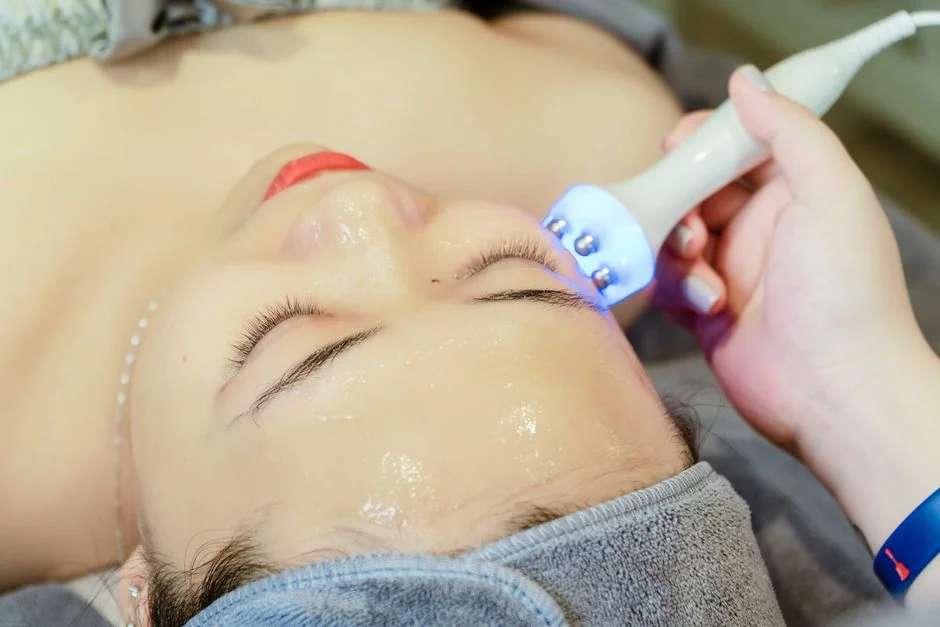
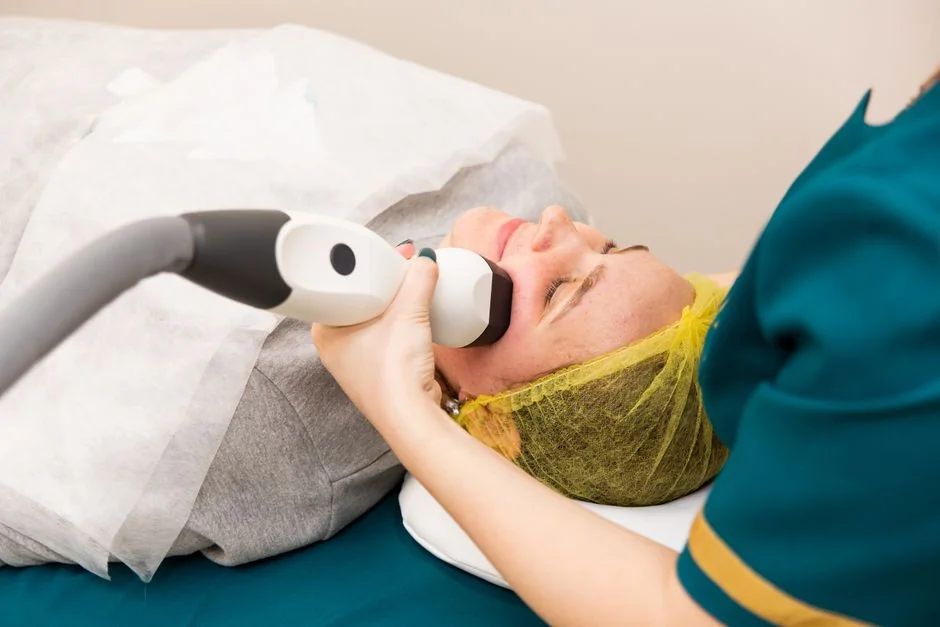
FaceTite is part of the InMode RFAL platform, delivered through the manufacturer’s IgniteRF workstation. A very fine internal cannula is passed under the skin through an incision of only a few millimetres, while an external electrode sits on the skin surface.
Bipolar radiofrequency energy travels between the internal cannula and the external electrode. According to InMode’s own product documentation, the RFAL technologies used in FaceTite, BodyTite and AccuTite hold United States FDA clearances for electrocoagulation and haemostasis of soft tissue.
In practice, the energy does two things at once: it disrupts small volumes of subcutaneous fat, and it heats the fibrous connective tissue between the skin and the deeper layers so that it contracts. It is a contouring and tightening procedure, not a lifting one.
In Japan, FaceTite is most often offered as part of Embrace RF — a combination protocol pairing FaceTite (and sometimes AccuTite for very small areas) with Morpheus8 radiofrequency microneedling in the same session. This is a treatment available at BIOTOPE CLINIC in Shirokanedai, and it is worth asking about specifically during a consultation with Dr. Karibe.
The surgical facelift (rhytidectomy)
A surgical facelift works on a structural level. Incisions are placed around the ear and into the hairline, the skin is elevated, and the underlying SMAS layer — the superficial musculoaponeurotic system, a sheet of fibrous and muscular tissue that carries much of the face’s weight — is repositioned, tightened or partially removed.
Excess skin is then redraped and trimmed. Because the surgeon is physically moving descended tissue back to a higher position, a facelift can correct things that no external or subdermal energy device can reach: deep nasolabial heaviness, jowling that has crossed the jawline, and significant neck laxity.
Interest in this operation is not declining. The American Society of Plastic Surgeons’ 2025 Plastic Surgery Statistics Report, released on 1 September 2026, records facelifts up 13 per cent and neck lifts up 21 per cent compared with 2024, against a 7 per cent rise in cosmetic surgical procedures overall.
Dr. JUN has over 17 years of experience and a proven track record as a plastic surgery specialist, and has performed an overwhelming number of facelift procedures both in Japan and abroad.
How the Two Work: Heat-Driven Contraction vs Mechanical Repositioning
Understanding the underlying physics explains why the results differ so much — and why one cannot substitute for the other beyond a certain degree of laxity.
Collagen is a triple-helix protein that begins to denature and shorten when held within a specific thermal window. Published work on the FaceTite–Morpheus8 combination describes skin surface temperatures in the region of 40 to 50 degrees Celsius, at which the fibroseptal network contracts and a subsequent wound-healing response drives neocollagenesis, elastogenesis and angiogenesis over the following months.
That contraction is real but finite. It pulls tissue inward and upward along existing fibrous attachments; it cannot detach a descended SMAS layer and move it somewhere new.
A facelift, by contrast, applies mechanical force. The tissue goes where the surgeon places it and is held there by sutures, which is why the correction of true descent is more predictable — and why the recovery is correspondingly longer.
What the published evidence actually shows for RFAL
The most useful summary for a prospective patient is a systematic review of subsurface radiofrequency treatments in plastic surgery published by Swanson in Annals of Plastic Surgery in 2022, which examined 30 articles; InMode devices were used in 23 of them (77 per cent).
The contraction figures reported in that literature vary widely. Paul and Mulholland reported linear contraction ranging from 12.7 per cent to 47 per cent at six months after radiofrequency-assisted liposuction. Duncan (2013) found a 36 per cent surface area reduction for RF-assisted liposuction versus 8 per cent in a control arm, while Chia and colleagues (2015) reported 13 per cent versus 8 per cent for control.
That spread — 13 per cent in one controlled comparison, 36 per cent in another — is itself the honest answer to “how much tightening will I get?” Studies suggest meaningful contraction is achievable, but the magnitude is not consistent between investigators, body sites or patients.
The same review is candid about its overall verdict, concluding that “little evidence supports improved efficacy or easier recovery after subcutaneous RF treatments compared with results obtained using traditional methods.” A well-informed patient should hear that alongside the enthusiastic version.
FaceTite vs Surgical Facelift: A Side-by-Side Comparison
| Factor | FaceTite (RFAL, often as Embrace RF) | Surgical facelift (rhytidectomy) |
|---|---|---|
| Mechanism | Bipolar radiofrequency heats subcutaneous fat and the fibroseptal network, causing contraction and later neocollagenesis | SMAS layer is surgically repositioned or tightened; excess skin excised and redraped |
| Incisions | A few millimetres, typically hidden under the chin or behind the ear | Around the ear and into the hairline; longer, though placed to conceal |
| Anaesthesia | Local anaesthesia, sometimes with intravenous sedation | General anaesthesia or deep sedation, depending on extent |
| Best suited to | Mild to moderate laxity with some excess submental fat; earlier-stage jawline softening | Moderate to advanced descent, established jowling, significant neck laxity |
| Skin redraping | Not possible — no skin is removed | Yes — genuine excess skin can be excised |
| Typical return to desk work | Several days to about one week, per the clinic’s published guidance | Generally longer; visible bruising and swelling persist further into recovery |
| Swelling course | Peaks around day one, largely settles in 1–2 weeks; residual puffiness may last 1–3 months | Extended; final contour typically assessed over several months |
| Sessions | Usually one treatment produces a noticeable effect; some cases benefit from combination or repeat treatment | Single operation |
| Reported adverse events in literature | Cook et al. (2021, n=745): adverse events in 19% of patients, about half prolonged swelling. Keramidas and Rodopoulou (2016, n=55): burns 3.6%, persistent hardness 9%, marginal mandibular neuropraxia 2% | Jacono et al. (2019, 183 studies): temporary nerve injury 1.85% for high lateral SMAS, 1.52% for composite rhytidectomy; deep plane and SMAS imbrication associated with increased major haematoma |
| Japanese regulatory status | Not approved under Japan’s Pharmaceuticals and Medical Devices Act; obtained via physician individual importation | An established surgical operation, performed as self-pay cosmetic surgery |
Expected Results, Downtime and Recovery
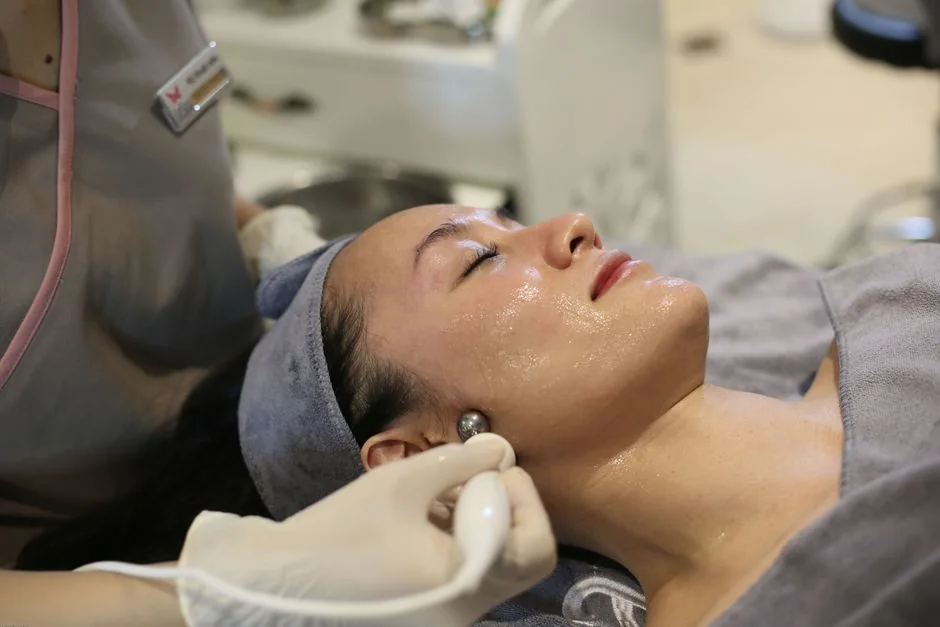
Recovery is usually the deciding factor for people living and working in Tokyo, where taking three weeks away from the office is rarely straightforward.
After FaceTite / Embrace RF
According to the clinic’s published patient guidance, swelling peaks on the first day and largely subsides within one to two weeks, though a degree of puffiness can persist for one to three months. Showering is generally permitted from the following day, while alcohol and hot baths are restricted initially.
Light desk work is typically resumed within several days to about one week. Because the tightening depends on a collagen remodelling response, the visible result continues to develop over the months following treatment rather than appearing immediately.
The clinic’s own materials list the recognised risks plainly: swelling, bruising, prolonged puffiness, asymmetry, numbness, firmness or nodules, mild thermal burns, infection, nerve injury and skin surface irregularities. These are uncommon but not theoretical, and the published series cited above give a sense of their real-world frequency.
After a surgical facelift
Facelift recovery is staged over a longer horizon: an initial period of pronounced swelling and bruising, then a gradual settling of contour and sensation over subsequent months. Numbness around the ears and along the incision lines is expected early and generally improves.
On complications, a systematic review by Fang and de la Torre published in Annals of Plastic Surgery in 2025, covering the literature from 2000 to 2024, found that haematoma remained the most commonly reported complication at 27 per cent of all complications, followed by unfavourable scarring at 24 per cent, neurapraxia at 22 per cent and seroma at 7 per cent.
The trade-off is durability and reach. A facelift addresses a category of change that radiofrequency cannot, and it does so in a single operation — but the recovery, the anaesthetic requirement and the risk profile are all correspondingly greater.
Cost in Tokyo
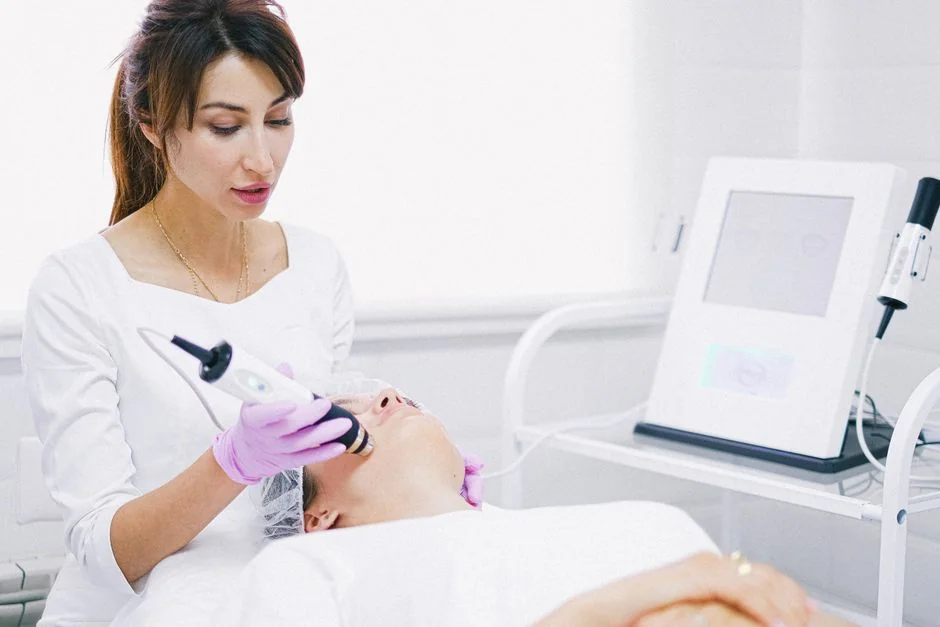
Pricing for facial radiofrequency contouring in Tokyo is normally quoted per case rather than published as a fixed figure, because the treated zones — lower face only, lower face plus submental area, or a fuller combination with Morpheus8 — differ substantially between patients.
On our group’s current published price list, Embrace RF is listed for body areas at ¥330,000 for the upper arms and ¥330,000 for the upper or lower abdomen (tax included). Facial Embrace RF, FaceTite and surgical facelift are not listed as fixed-price items on that page. Please see the clinic’s official price page or contact us for a current quote.
For context on where less invasive alternatives sit, the same published price list shows HIFU for the full face plus under-chin area at ¥110,000, HIFU Shower for the full face at ¥25,000, and thread lifts priced per thread — ranging from ¥33,000 to ¥55,500 depending on the thread type. These figures are useful anchors when deciding how far up the intervention ladder you actually need to go.
Remember that a surgical facelift also carries anaesthesia and facility costs that a local-anaesthetic device procedure does not, so comparing headline numbers alone will understate the difference. For an accurate quote, please book a consultation.
Have a question about this treatment?
Message us on LINE or WhatsApp — our English-speaking team usually replies the same day.
Who Is a Good Candidate — and Who Should Choose the Other Option?
The single most useful distinction at consultation is between laxity (skin and superficial tissue that has lost tone) and descent (deeper structures that have physically moved downward). Radiofrequency addresses the first reasonably well and the second poorly.
At BIOTOPE CLINIC in Shirokanedai, consultations for jawline concerns routinely begin by separating those two components — assessing skin quality, the volume of submental fat, and whether the heaviness persists when the tissue is manually elevated. That assessment, rather than the patient’s age, determines which option is discussed.
FaceTite may suit you if: you have mild to moderate laxity, some excess fat under the chin or along the jawline, reasonable skin quality, and you need to be back at work within roughly a week. It is also often the more proportionate choice for patients in their late thirties to fifties who want to address early change rather than reverse advanced change.
A surgical facelift is likely the better option if: jowls have clearly crossed the jawline, there is genuine excess skin that would need to be removed, neck laxity is pronounced, or you have previously had energy-based tightening without sufficient result.
Neither may be appropriate if: you have an active skin infection in the treatment area, a bleeding disorder or are on anticoagulants that cannot be safely paused, poorly controlled diabetes, are pregnant or breastfeeding, or have an implanted electronic device such as a pacemaker — radiofrequency is contraindicated in that last case. A history of keloid or hypertrophic scarring also warrants careful discussion before any incision is made.
Smoking deserves separate mention. It meaningfully impairs skin flap healing, and most surgeons will require a period of cessation before and after a facelift.
What People Often Get Wrong
Misconception 1: “FaceTite is a non-surgical facelift”
Two things are wrong with this phrase. First, FaceTite is not non-surgical — it requires incisions, a cannula passed beneath the skin, and local anaesthesia at minimum, with intravenous sedation sometimes added. It is minimally invasive, which is a different category.
Second, it is not a facelift. The Swanson systematic review’s conclusion is worth repeating: little evidence supports improved efficacy compared with traditional methods. Patients who expect facelift-grade correction from a device procedure are frequently the ones who end up disappointed, and a consultation that promises otherwise is not serving you well.
Misconception 2: “It’s FDA-cleared, so it must be approved in Japan”
This is the most consequential misunderstanding for anyone treated in Japan, and it comes up often with expatriate patients who researched the device before arriving.
United States FDA clearance and Japanese approval are entirely separate regulatory processes. InMode’s RFAL devices are not currently approved under Japan’s Pharmaceuticals and Medical Devices Act; Japanese clinics offering them generally obtain them through physician individual importation.
The Ministry of Health, Labour and Welfare states directly that for individually imported products, quality, efficacy and safety “have not been confirmed” under that Act. Critically, MHLW also states that health damage arising from individually imported products is not eligible for Japan’s national adverse-reaction relief system — the compensation scheme that covers domestically approved products.
This is not a reason to avoid the treatment; it is a reason to insist on informed consent. MHLW’s revision to the medical advertising guideline (notice 医政発0322第10号, 22 March 2024) requires clinics advertising self-pay treatment with unapproved products to disclose five things: that the product is unapproved, how it was obtained, whether an approved domestic equivalent exists, safety information from countries where it is approved, and that the national relief system does not apply. If a clinic will not discuss these points with you, that itself is informative.
Where to Get FaceTite or a Facelift in Tokyo
Within our clinic group, both BIOTOPE CLINIC (Shirokanedai, Minato-ku) and Kojimachi Dermatology & Plastic Surgery Clinic (Ichigaya, Chiyoda-ku) offer English-language consultation with Dr. Jun Karibe’s team. FaceTite and Embrace RF, along with facial contouring and lifting procedures generally, are handled at BIOTOPE CLINIC in Shirokanedai. Bookings and enquiries in English: LINE or WhatsApp.
The two sites are sister clinics under the same medical group. Kojimachi is the group’s main office and focuses on insurance-covered general dermatology — eczema, acne, rashes, warts and mole assessment — alongside general and aesthetic plastic surgery. BIOTOPE is the cosmetic dermatology, cosmetic surgery and men’s health branch, where Dr. Karibe, a plastic surgeon certified by the Japan Society of Plastic and Reconstructive Surgery, personally consults.
In practice, this matters when your concern spans both. At BIOTOPE CLINIC in Shirokanedai, patients considering FaceTite are commonly assessed for adjacent options in the same visit — HIFU or thread lifting where the laxity is mild, Morpheus8 where skin texture is the dominant complaint, or referral for surgical planning where the descent is structural. Being able to compare all of these in one consultation is usually more valuable than committing to a single named treatment in advance.
Frequently Asked Questions
- Q. Can FaceTite be done at the same time as other treatments?
- Yes — the Embrace RF protocol deliberately combines FaceTite with Morpheus8 radiofrequency microneedling in a single session, addressing subdermal contour and skin surface quality together. Whether this combination suits you depends on your skin quality and the depth of the change, which is assessed at consultation.
- The tightening effect depends on a collagen remodelling response, so results develop over several months and then gradually decline as natural ageing continues. Published follow-up in the RFAL literature is commonly reported at around six months, and longer-term comparative data remain limited, so any specific multi-year figure should be treated with caution.
- Q. Will there be a visible scar?
- FaceTite incisions are only a few millimetres and are typically placed under the chin or behind the ear where they are concealed. Facelift incisions are longer and sited around the ear and hairline; unfavourable scarring accounted for 24 per cent of reported complications in the 2025 systematic review by Fang and de la Torre, so scarring is a genuine point to discuss beforehand.
- Q. I’m visiting Tokyo for a short trip — is FaceTite realistic?
- The clinic’s published guidance indicates light desk work is generally resumed within several days to about a week, but swelling peaks on day one and residual puffiness can last one to three months. If you have a fixed departure date or an event soon after, raise this at consultation before booking, as timing may argue for a less invasive option.
- Q. Does Japanese health insurance cover either procedure?
- No. Both FaceTite and cosmetic facelift surgery are self-pay (自由診療) procedures in Japan and are not covered by national health insurance. Insurance-covered dermatological conditions are handled separately at the Kojimachi clinic.
Q. How long do FaceTite results last?
1
2