
Under-Eye Dark Circles in Tokyo: Filler Injections vs Surgery — What Actually Works?
If you have tried concealer, cold compresses, and under-eye creams without meaningful result, you are not alone. Dark circles are among the most common concerns raised at facial aesthetic consultations in Tokyo — and among the most misunderstood. The reason topical products so often disappoint is that many dark circles originate from structural changes beneath the skin, not on its surface.
This article explains the two most effective clinical approaches available in Tokyo — tear trough filler injections and transconjunctival blepharoplasty (under-eye surgery) — how each works, what the evidence shows, how much each costs, and how to decide which option matches your anatomy.
What you’ll learn in this article:
- Why dark circles fall into four distinct types, and why that classification determines which treatment will — or will not — work for you
- How tear trough hyaluronic acid filler restores under-eye volume and reduces shadowing without surgery
- How transconjunctival blepharoplasty removes or repositions herniated fat without leaving a visible external scar
- A side-by-side comparison of both approaches across key criteria: downtime, longevity, reversibility, and cost
- How to decide whether to book a filler consultation, a surgical consultation, or both
Have a question about this treatment?
Message us on LINE or WhatsApp — our English-speaking team usually replies the same day.
Why Under-Eye Dark Circles Are Harder to Treat Than They Look
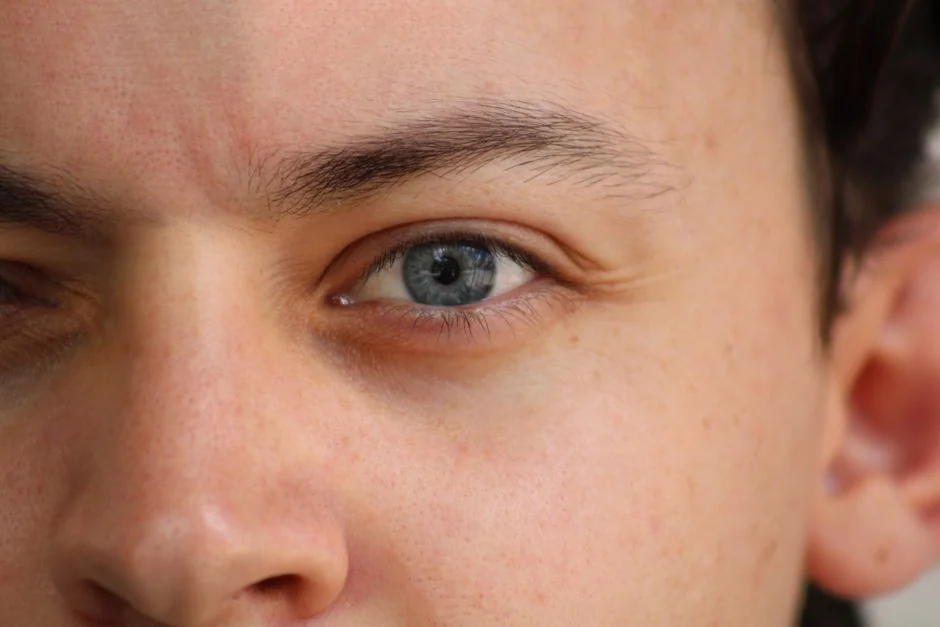
The first challenge is recognising that “dark circles” is not one condition — it is an umbrella term for four distinct subtypes. A treatment that is highly effective for one type may achieve nothing for another.
- Pigmented (brown) circles
- Caused by excess melanin in the periorbital skin. They appear brown or tan, are more prevalent in individuals with medium to dark skin tones, and are often worsened by sun exposure and ageing. Topical brightening agents, chemical peels, and laser treatments address this type. Volume-restoring injections have no meaningful effect on melanin-driven discolouration.
- Vascular (blue or purple) circles
- Caused by visible fine blood vessels or sluggish microcirculation beneath the thin lower-eyelid skin. They appear bluish or purplish and are typically worsened by fatigue, alcohol, and allergies. Neither filler nor surgery directly corrects vascular discolouration, though improving volume around the area can reduce contrast.
- Structural (shadow) circles
- Caused by volume loss along the tear trough — the groove separating the lower eyelid from the upper cheek — which deepens with age and casts a shadow. This is the type that responds most directly to hyaluronic acid filler injections and to surgical fat repositioning. When orbital fat also herniates forward (creating a visible bag), the shadow is compounded.
- Mixed
- A combination of two or more subtypes, very common in patients in their 40s and beyond, where ageing simultaneously drives pigment changes and structural hollowing.
At BIOTOPE CLINIC in Shirokanedai, patients frequently arrive having already tried high-end eye creams for months, only to learn through consultation that their dark circles are primarily structural in origin. Volume replacement — whether via injectable filler or surgical fat repositioning — produces the kind of improvement that topicals cannot reach.
Option 1 — Tear Trough Filler Injections

Tear trough filler involves injecting a small volume of hyaluronic acid (HA) gel — typically 0.5 to 1 ml per side — along the orbital rim to restore lost volume. By lifting the tear trough groove, the skin sits smoothly against the underlying bone instead of hollowing inward, and the shadow that created the illusion of darkness is significantly reduced.
The procedure takes approximately 20 to 30 minutes in clinic. Topical anaesthetic cream is applied beforehand; most patients describe mild pressure rather than pain. Results are visible immediately, with the final appearance settling within one to two weeks as minor post-injection swelling resolves.
What the clinical evidence shows
A 2024 trial involving 333 patients found that at least 76% reported reduced under-eye shadows following tear trough HA filler treatment, at least 79% reported looking less tired, and 87.4% showed measurable improvement in hollowing at three months, compared with 17.7% among untreated control patients. Studies suggest the average duration of improvement is approximately 10.8 months, with a subset of patients retaining visible benefit at 18 to 24 months.
A particularly important advantage is reversibility. If a patient is dissatisfied or develops a complication such as the Tyndall effect — a bluish discolouration caused by filler placed too superficially — the HA gel can be dissolved rapidly with an enzyme called hyaluronidase. This reversibility makes HA filler the natural first step for most patients who are not yet ready to consider surgery. Tear trough filler is available at BIOTOPE CLINIC in Shirokanedai as part of the clinic’s cosmetic injectable offering — a consultation with Dr. Karibe’s team will confirm whether it is the right approach for your specific anatomy.
Option 2 — Transconjunctival Blepharoplasty

When the primary problem is herniated orbital fat — a visible bag caused by the fat cushion pressing forward through the lower eyelid — adding volume with filler worsens the appearance. The correct treatment in this situation is blepharoplasty: surgical correction of the fat compartments themselves.
In the transconjunctival approach, the surgeon accesses the orbital fat through a small incision on the inner surface of the lower eyelid (the conjunctiva). There is no incision on the outer skin. Herniated fat is either removed or, in the modern approach preferred by many surgeons, repositioned over the orbital rim. Repositioning preserves volume, smooths the lid-to-cheek transition, and simultaneously softens the tear trough depression — addressing both bags and hollowing in a single procedure.
Recovery and outcomes
A 2024 retrospective study of 88 patients who underwent transconjunctival blepharoplasty (Gupta et al., Cureus) found that swelling, bruising, and mild surface eye irritation were common but typically resolved within one to two weeks. By two weeks, approximately 67% of patients had returned to normal social activity; by three weeks, all had done so. No major complications — including haemorrhage, vision disturbance, or lid retraction — were reported. Mild dry-eye symptoms at one week resolved completely by 12 weeks in all affected patients.
Results from transconjunctival blepharoplasty are long-lasting — typically measured in years, not months. While no surgical outcome is permanent (the ageing process continues), most patients do not require revision for a decade or more.
Comparing the Two Options
| Criterion | HA Filler Injection | Transconjunctival Blepharoplasty |
|---|---|---|
| Procedure type | Non-surgical (injectable) | Surgical (local anaesthetic) |
| Duration of results | Average ~10–18 months | Long-lasting (typically years) |
| Downtime | Minimal; possible bruising 2–5 days | Social downtime ~1–2 weeks |
| Reversible? | Yes — dissolved with hyaluronidase | No — permanent structural change |
| Visible scar | None | None (incision inside the eyelid) |
| Addresses fat herniation (bags) | No — can worsen bags | Yes — primary indication |
| Addresses hollowing/shadow | Yes — primary indication | Yes — via fat repositioning |
| Anaesthesia required | Topical cream only | Local (sedation optional) |
What people often get wrong
Misconception 1: “Any dark circle will respond to filler.” This is a common and costly misunderstanding. Only structural dark circles — those caused by hollowing and volume loss along the tear trough — respond to injectable volume restoration. Pigmented and vascular dark circles are driven by different mechanisms (melanin deposition and blood vessel visibility, respectively) that filler cannot correct. A patient with primarily pigmented circles who pursues filler will see no meaningful improvement and may delay the treatment that would actually help.
Misconception 2: “Eyelid surgery always leaves a visible scar.” The older transcutaneous (through-the-skin) blepharoplasty did leave a fine line below the lash line, which typically fades well but is an external scar. The transconjunctival approach — now the standard technique for patients with adequate lower-eyelid skin tone — uses an internal incision only, visible to no one. Patients are often surprised to learn that the surgical option and the non-surgical option have identical external scar profiles: none.
Under-Eye Treatment Costs in Tokyo

The following figures are drawn from the current published price page of Kojimachi Dermatology & Plastic Surgery Clinic (biyou.kojihifu.com), the plastic surgery office of this clinic group, verified during this writing. Prices at BIOTOPE CLINIC in Shirokanedai may differ for injectable procedures; please confirm at consultation.
- Tear trough / under-eye hyaluronic acid filler: ¥99,000
- Fat injection (autologous) for under-eye hollows: ¥99,000
- Transconjunctival fat removal (経結膜脱脂法): ¥280,000
- Transconjunctival Hamura method (裏ハムラ法): ¥428,000
- Open Hamura method (表ハムラ法), for more complex cases: ¥528,000
It is worth noting that HA filler requires periodic maintenance as the gel is gradually absorbed — cumulative costs over several years may approach the one-time investment of surgery for some patients. For an accurate, personalised quote that reflects your specific anatomy and treatment plan, please book a consultation.
Have a question about this treatment?
Message us on LINE or WhatsApp — our English-speaking team usually replies the same day.
Who Is a Good Candidate?
Consider tear trough filler if:
- Your dark circles appear primarily as a shadow or groove in the tear trough, rather than a bag or bulge
- You do not have significant fat herniation — the area looks hollow or sunken, not puffy
- Your lower-eyelid skin has reasonable elasticity and is not significantly loose or crepey
- You want a non-surgical, reversible option with minimal downtime
- You are generally in your late 20s to mid-40s and volume loss is mild to moderate
Consider transconjunctival blepharoplasty if:
- You have a visible fat bag — a true bulge under the eye, rather than a simple hollow
- Adding volume via filler would worsen, not improve, the appearance of an already full area
- You want a long-lasting result and are prepared for one to two weeks of social downtime
- A surgical assessment has confirmed adequate lower-eyelid tone for the transconjunctival approach
Borderline and combination cases
Many patients in their 40s and 50s present with both concerns simultaneously: some fat herniation causing puffiness, and adjacent hollowing in the tear trough. In these cases, fat repositioning via blepharoplasty can address both elements in one procedure. Occasionally, a small volume of filler placed lateral to the surgical correction site complements the surgical result. A clinical assessment — including in-person examination of lower-eyelid tone, fat distribution, and skin quality — is the only reliable way to determine which approach is appropriate for a specific patient.
Frequently Asked Questions
- Q. How long does tear trough filler last, and will I need annual top-ups?
- Clinical studies suggest an average duration of approximately 10 to 18 months, with some patients retaining visible benefit at 24 months. Individual metabolism, the specific HA product used, and the volume injected all influence longevity. Most patients find a single top-up session per year sufficient to maintain results, though some require treatment less frequently than that.
- Q. Is transconjunctival blepharoplasty painful, and does it require general anaesthesia?
- The procedure is typically performed under local anaesthetic — you remain awake, but the periorbital area is fully numbed. Light sedation is available for patients who prefer it. Postoperative discomfort is generally described as a sensation of tightness or mild pressure rather than sharp pain, and it is well managed with standard oral analgesics for the first few days.
- Q. Can I start with filler now and switch to surgery if my concerns worsen over time?
- Yes, this is a common and clinically sensible progression. Many patients begin with filler to address mild hollowing in their 30s and consider blepharoplasty a decade later as fat herniation increases. Prior HA filler does not preclude surgery; a surgeon can dissolve residual filler with hyaluronidase before operating if needed. The two approaches are not mutually exclusive over the course of a patient’s aesthetic journey.
Have a question about this treatment?
Message us on LINE or WhatsApp — our English-speaking team usually replies the same day.
Where to Get Under-Eye Treatment in Tokyo
Within our clinic group, both BIOTOPE CLINIC (Shirokanedai, Minato-ku) and Kojimachi Dermatology & Plastic Surgery Clinic (Ichigaya, Chiyoda-ku) offer English-language consultation with Dr. Jun Karibe’s team. For this topic, the treatment pathway is as follows: tear trough filler injections are handled at BIOTOPE CLINIC in Shirokanedai, as part of the clinic’s cosmetic dermatology and injectable offering; transconjunctival blepharoplasty and related surgical procedures for the lower eyelid are performed at Kojimachi Dermatology & Plastic Surgery Clinic in Ichigaya, the group’s main plastic surgery office. Both clinics are accessible by public transport — BIOTOPE via the Tokyo Metro Namboku Line at Shirokanedai Station, and Kojimachi via the Tokyo Metro Yurakucho Line at Kojimachi Station.
Patients who are uncertain whether their dark circles call for injections, surgery, or a combination are encouraged to book a consultation at either clinic. The team will assess your anatomy, identify which subtype of dark circle is dominant, and recommend the treatment pathway most likely to achieve a meaningful result. Bookings and English-language enquiries: LINE or WhatsApp.
Summary
Under-eye dark circles caused by structural hollowing — volume loss along the tear trough — respond to two established clinical approaches: hyaluronic acid filler injections for mild to moderate cases without fat herniation, and transconjunctival blepharoplasty for cases where herniated fat bags are the primary concern or where a long-lasting, non-repeatable result is the goal. Selecting between them requires an accurate diagnosis of the underlying cause. No treatment works across all four dark circle subtypes, and the most common mistake is treating a vascular or pigmented circle with volume when the anatomy does not support it.
If you have questions about under-eye dark circle treatment, both BIOTOPE CLINIC (Shirokanedai, Minato-ku) and Kojimachi Dermatology & Plastic Surgery Clinic (Ichigaya, Chiyoda-ku) offer English-language consultation with Dr. Karibe and his team. Tear trough filler injections are primarily handled at BIOTOPE CLINIC in Shirokanedai; transconjunctival blepharoplasty and surgical lower-eyelid correction are primarily handled at Kojimachi Dermatology & Plastic Surgery Clinic in Ichigaya. English enquiries: LINE or WhatsApp.
24/7 Consultation & Booking
Book a Consultation or Treatment
Our English-speaking team responds via LINE or WhatsApp — usually the same day.
References
- Gupta R, Khosa A, Bansal P, Chaudhury G. Exploring the Versatility of Transconjunctival Blepharoplasty: A Retrospective Single-Center Study. Cureus. 2024;16(11):e72929.
- Long-Term Effects of Tear Trough Hyaluronic Acid Filler: A Retrospective Study. Journal of Clinical and Aesthetic Dermatology. 2025;18(11):44–47.
- Liu H, et al. Prospective comparative clinical study: Efficacy evaluation of collagen combined with hyaluronic acid injections for tear trough deformity. Journal of Cosmetic Dermatology. 2024. doi:10.1111/jocd.16211.
Related Articles
You may also find these articles useful.
- Under-Eye Dark Circles: Injections vs Surgery in Tokyo
- Under Eye Filler Tokyo: Risks, Benefits & Costs
- Under Eye Bags Surgery Tokyo: Transconjunctival Guide
- Under Eye Bags Surgery Tokyo: Transconjunctival Blepharoplasty
SUPERVISED BY

Dr. Jun Karibe
MD
Director
Education & Career
Certifications
Awards
MEDICAL REVIEW