English-Speaking Dermatologist in Tokyo: A Complete Guide for Expats and Visitors
Finding a dermatologist is stressful enough in your own language. Doing it in Tokyo — where the receptionist may not speak English, the insurance rules are unfamiliar, and you are not sure whether your rash counts as “medical” or “cosmetic” — can be enough to make people postpone care for months.
This guide explains how dermatology actually works in Japan, what English-language support really means in practice, what it costs, and how to prepare for your appointment. It is written for foreign residents, medical tourists, and short-term visitors in Tokyo.
What you’ll learn in this article:
- What “English-speaking dermatologist” means in Tokyo — and the three very different levels of language support you may encounter
- How Japan’s health insurance system divides skin care into covered (medical) and self-pay (cosmetic) treatment
- Realistic cost ranges in Tokyo for both insurance dermatology and self-pay cosmetic dermatology
- How to prepare for a first appointment, including documents, vocabulary, and what to bring
- Two widespread misconceptions that lead foreign patients to the wrong clinic
Have a question about this treatment?
Message us on LINE or WhatsApp — our English-speaking team usually replies the same day.
What “English-Speaking Dermatologist” Actually Means in Tokyo
Tokyo has a large and growing international population.
Immigration Services Agency data reported at the end of 2025 recorded 4,125,395 foreign residents nationwide, with 801,438 of them living in Tokyo — roughly one in five.
Despite those numbers, English-language dermatology remains relatively limited, and the phrase “English OK” on a clinic website can mean several different things.
Three levels of language support
Level 1 — English-language paperwork only. Forms and signage are translated, but the consultation itself runs in Japanese, sometimes with a translation app. This is common and is usually adequate for a straightforward prescription refill.
Level 2 — Interpreter support. The clinic uses a telephone or on-site medical interpreter. This works well for detailed histories, but adds a third party and lengthens the appointment.
Level 3 — A doctor who consults directly in English. The physician takes the history, examines you, and explains the diagnosis and treatment options in English without an intermediary. This is the least common arrangement in Tokyo and is what most English-speaking patients are actually looking for.
When you call or message a clinic, it is worth asking specifically which of these three applies. “Do you have English support?” and “Will the doctor consult with me in English?” are different questions.
Public resources for finding language support
The Tokyo Metropolitan Government operates a free telephone service for foreign patients, commonly known as Himawari, on 03-5285-8181, available every day from 9 a.m. to 8 p.m., 365 days a year, in English, Chinese, Korean, Thai and Spanish. Advisers can point you toward medical institutions with language support and explain how the Japanese system works.
Separately, the Ministry of Health, Labour and Welfare and the Japan Tourism Agency maintain a list of medical institutions that accept foreign patients, nominated by each prefecture. The list was published on 30 June 2026 and partially updated on 6 August 2026, and it is searchable through the Japan National Tourism Organization website by area, supported language and medical department.
How Dermatology Works in Japan: Insurance-Covered vs. Self-Pay
This is the single most important distinction for a new patient in Japan, and it determines both where you should go and what you will pay.
Enrolment in public health insurance is compulsory for essentially everyone residing in Japan for three months or more, regardless of nationality. For enrolees under 70, the patient’s share of covered treatment is 30 per cent, with reduced rates for young children and older adults.
However, ward office guidance is explicit that treatment which is not aimed at illness or injury falls outside coverage. Toshima City’s official English guide, for example, states that general medical check-ups, vaccinations and cosmetic surgery are not covered by National Health Insurance. Shibuya City’s English guide lists health check-ups, cosmetic surgery, orthodontics, normal childbirth, abortions for economic reasons and voluntary vaccinations as not covered.
In practice, this means the same clinic visit can sit on either side of the line depending on why you are there.
| Insurance dermatology (保険診療) | Cosmetic dermatology (自由診療) | |
|---|---|---|
| Typical reasons | Eczema, atopic dermatitis, acne, psoriasis, hives, fungal infection, shingles, warts, hair loss assessment, suspicious moles | Pigmentation, enlarged pores, acne scarring, skin laxity, wrinkles, unwanted texture, tattoo removal |
| Who pays | You pay 30% (under 70); insurance covers the rest | You pay 100% |
| Price setting | Fees are set nationally by the Ministry of Health, Labour and Welfare through the Central Social Insurance Medical Council and reviewed periodically | Set by each clinic; varies widely between clinics |
| Insurance card needed | Yes | No |
| Typical examples | Topical steroids, antihistamines, antifungals, antivirals, antibiotics, narrowband UVB phototherapy | HIFU, RF microneedling, picosecond laser, CO2 fractional laser, botulinum toxin, hyaluronic acid filler |
Because insurance fees are nationally set rather than clinic-set, an insurance-covered dermatology consultation costs the same at any participating clinic in Japan. Self-pay cosmetic treatment does not work that way, which is why price comparison matters far more on the cosmetic side.
A practical note: skin conditions common among foreign residents are often genuinely medical rather than cosmetic. Adult atopic dermatitis is a good example — a Japanese cost-of-illness study by Murota and colleagues, published in The Journal of Dermatology in 2020, cited an adult prevalence figure of 6.8 per cent and estimated the nationwide annual disease burden at roughly JPY 3 trillion, of which around 70 per cent was attributed to lost work productivity rather than direct medical cost. Studies of this kind suggest that untreated skin disease carries a cost well beyond the clinic bill.
Cost of Dermatology in Tokyo: What to Budget
For insurance-covered dermatology, budget modestly. You pay 30 per cent of a nationally fixed fee, plus 30 per cent of any prescribed medication dispensed at the pharmacy. A routine eczema or acne visit is generally an inexpensive out-of-pocket expense for an insured patient.
For self-pay cosmetic dermatology, ranges are much wider. The following figures are taken from our clinic group’s current published price list and are indicative only; treatment areas, session counts and product brands all change the total.
- Consultation: ¥3,300 (dermatology consultation); ¥2,200 (cosmetic surgery doctor consultation)
- Picosecond laser (PicoWay): from ¥11,000–¥15,000 for individual spot treatment; ¥25,000 for full-face toning
- CO2 fractional laser: ¥11,000–¥66,000 depending on the area treated
- Dermapen (microneedling): ¥9,800–¥55,000 depending on the protocol
- Botulinum toxin injection: ¥9,900–¥68,000 depending on brand and area
- Hyaluronic acid filler: ¥66,000–¥88,000 per unit
- HIFU (full face and jawline): ¥110,000, or ¥121,000 when performed by a physician
- Embrace RF: ¥330,000 per area
Prices are subject to change. Please see the clinic’s official price page for the current list. For an accurate quote, please book a consultation.
Have a question about this treatment?
Message us on LINE or WhatsApp — our English-speaking team usually replies the same day.
What to Expect: Before, During and After Your Appointment
Before
Bring your residence card, your health insurance card or My Number card if you have one, and a list of any medications you currently take, including those brought from your home country. If you are visiting Japan without Japanese insurance, expect to pay the full fee and to request an itemised receipt for your travel insurer.
Photograph the affected skin when it is at its worst. Skin conditions fluctuate, and a flare that has settled by the time you reach the clinic is much harder to assess.
During
A dermatology consultation in Japan is typically brief and focused. Come prepared with the essentials: when it started, what makes it better or worse, what you have already tried, and any allergies. Ask the doctor to write down the diagnosis and the drug names — this makes follow-up care abroad far easier.
At BIOTOPE CLINIC in Shirokanedai, we frequently see patients who have delayed seeking care for a skin problem for months, simply because they were unsure how to describe the symptom in Japanese or which department to visit. Bringing photographs and a short written timeline resolves most of that friction.
After
Prescriptions in Japan are usually filled at a separate dispensing pharmacy near the clinic, not at the clinic itself. Confirm how long to continue a topical treatment and when to return, because chronic skin conditions are managed over months rather than in a single visit.
What People Often Get Wrong
Misconception 1: “My Japanese health insurance will cover the laser or the filler.”
It will not. Cosmetic procedures are explicitly excluded from National Health Insurance coverage in official ward office guidance. Treatment aimed at appearance rather than at illness or injury is self-pay, and you should expect to pay the full amount.
The reverse also surprises people: conditions that feel “cosmetic” to the patient — persistent acne, hair loss, warts, benign moles — may in fact be treated under insurance when there is a medical indication. It is worth asking rather than assuming.
Misconception 2: “I’ll just bring a bilingual friend to interpret.”
This is common and understandable, but the evidence is not reassuring. A widely cited systematic review by Flores, published in Medical Care Research and Review in 2005, examined 36 studies and concluded that trained professional interpreters and bilingual healthcare providers appear to improve communication, patient satisfaction and outcomes, and to reduce interpreter errors with potential clinical consequences — while reliance on ad hoc interpreters such as family members was associated with worse results.
Clinical reports of this kind suggest that a consultation conducted directly in a language you speak, or with a trained interpreter, is not a luxury. It is part of the quality of the care itself.
Where to Get English-Speaking Dermatology Care in Tokyo
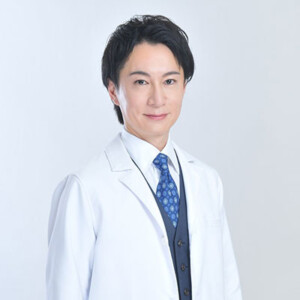
Within our clinic group, English-speaking consultations are handled at BIOTOPE CLINIC in Shirokanedai (Minato-ku, Tokyo) by Dr. Jun Karibe, a plastic surgeon board-certified by the Japan Society of Plastic and Reconstructive Surgery. Our sister clinic Kojimachi Dermatology & Plastic Surgery Clinic in Ichigaya (Chiyoda-ku) — the group’s main office — handles Japanese-language insurance dermatology. Bookings and enquiries in English: LINE or WhatsApp.
Both clinics belong to the same medical group and share a treatment philosophy, but English-language doctor consultations are currently available only at the Shirokanedai location. English-speaking patients should therefore book at BIOTOPE, whether the concern is a general skin complaint or a cosmetic one.
For pigmentation and uneven tone, picosecond laser (PicoWay) is one of the options available at BIOTOPE CLINIC in Shirokanedai — feel free to ask about it during a consultation with Dr. Karibe. For skin laxity along the jawline, HIFU is also available and can be discussed at the same visit.
Frequently Asked Questions
- Q. Can I see a dermatologist in Tokyo without Japanese health insurance?
- Yes. Visitors and uninsured patients can be seen on a self-pay basis and will be charged the full fee rather than 30 per cent. Ask for an itemised receipt if you intend to claim from a travel or international insurer.
- Q. Do I need to enrol in Japanese health insurance if I live here?
- Enrolment in public health insurance is compulsory for those residing in Japan for three months or more, regardless of nationality. Registration is handled at your local city or ward office, normally shortly after you register your address.
- Q. Is my prescription from home available in Japan?
- Not always. Approval status, brand names and available strengths differ between Japan and other countries, and a medication approved abroad is not necessarily approved or covered here. Bring the generic drug name and dose so the doctor can identify the closest equivalent available in Japan.
- Q. How do I find English-language medical help outside clinic hours?
- The Tokyo Metropolitan Government’s Himawari service on 03-5285-8181 operates every day from 9 a.m. to 8 p.m. in English, Chinese, Korean, Thai and Spanish. It is free to use, though you pay your own call charges.
Have a question about this treatment?
Message us on LINE or WhatsApp — our English-speaking team usually replies the same day.
Summary
Dermatology in Tokyo is accessible and, on the insurance side, inexpensive — the harder part is navigating the language gap and understanding where the line between covered and self-pay treatment fallsDr. JUN has over 17 years of experience and a proven track record as a board-certified plastic surgeon, and has treated an overwhelming number of cases involving skin troubles,Acne,Atopic skin, scars and keloids both in Japan and abroad.
Before booking, clarify three things: whether the doctor consults directly in English, whether your concern is medical or cosmetic, and what the treatment will cost in full. Those three answers will save you most of the confusion foreign patients typically run into.
If you have questions about finding an English-speaking dermatologist in Tokyo, English-speaking consultations are handled at BIOTOPE CLINIC in Shirokanedai (Minato-ku, Tokyo) by Dr. Karibe. Our sister clinic Kojimachi Dermatology & Plastic Surgery Clinic in Ichigaya (Chiyoda-ku) handles Japanese-language insurance dermatology. English enquiries: LINE or WhatsApp.
24/7 Consultation & Booking
Book a Consultation or Treatment
Our English-speaking team responds via LINE or WhatsApp — usually the same day.
References
- Flores G. The impact of medical interpreter services on the quality of health care: a systematic review. Medical Care Research and Review. 2005;62(3):255–299.
- Murota H, Inoue S, Yoshida K, Ishimoto A. Cost of illness study for adult atopic dermatitis in Japan: A cross-sectional Web-based survey. The Journal of Dermatology. 2020;47(7):689–698.
- Immigration Services Agency of Japan. Statistics on foreign residents in Japan (as of the end of 2025). 2026.
- Ministry of Health, Labour and Welfare and Japan Tourism Agency. List of medical institutions accepting foreign patients. Published 30 June 2026; partially updated 6 August 2026.
- Tokyo Metropolitan Government, Bureau of Public Health and Medical Care. Medical information service for foreign patients (Himawari). 2026.
Related Articles
You may also find these articles useful.
- English Speaking Dermatologist Tokyo: Complete Guide
- English Speaking Dermatologist Tokyo: Complete Guide
- English Speaking Dermatologist Tokyo: First Visit Guide
- English-Speaking Dermatologist Tokyo: Fees & Costs
- English Speaking Dermatologist Tokyo: Insurance Coverage
SUPERVISED BY
Dr. Jun Karibe
MD
Director
Education & Career
Certifications
Awards