Forehead Botox in Tokyo: What to Expect and How Much It Costs
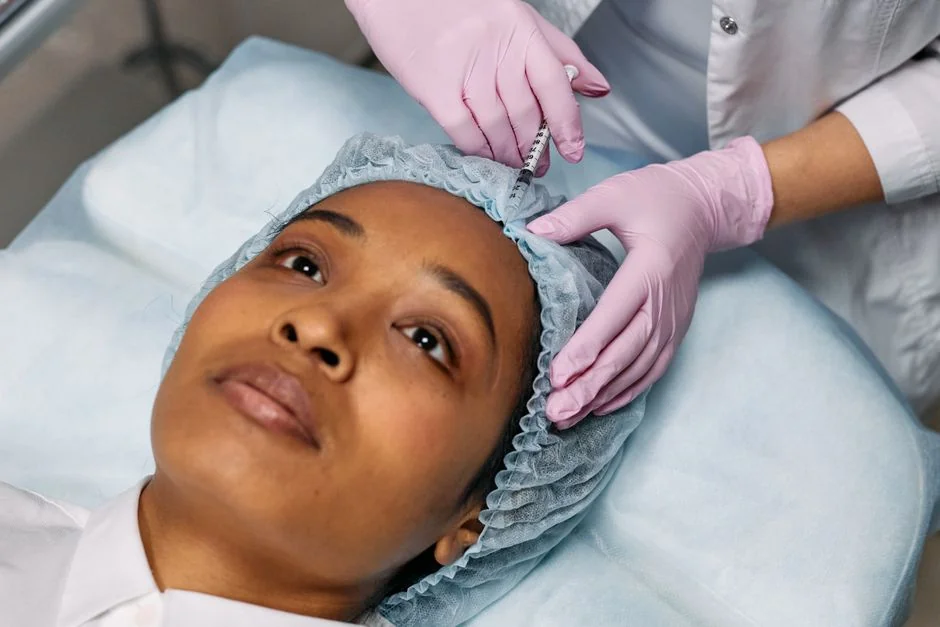
If you have been noticing horizontal lines across your forehead — whether they appear only when you raise your eyebrows or have become visible even at rest — you are far from alone. Forehead lines are among the most common cosmetic concerns that bring international patients to clinics in Tokyo.
This article explains how forehead Botox works, what realistic results look like, how much it costs in Tokyo, and how to decide whether it is right for you.
What you’ll learn in this article:
- How Botox works to relax forehead muscles and soften lines
- What to expect before, during, and after treatment
- Realistic cost range for forehead Botox at a Tokyo clinic
- Who is and is not a suitable candidate
- Common misconceptions that could affect your decision
Have a question about this treatment?
Message us on LINE or WhatsApp — our English-speaking team usually replies the same day.
What Is Forehead Botox?
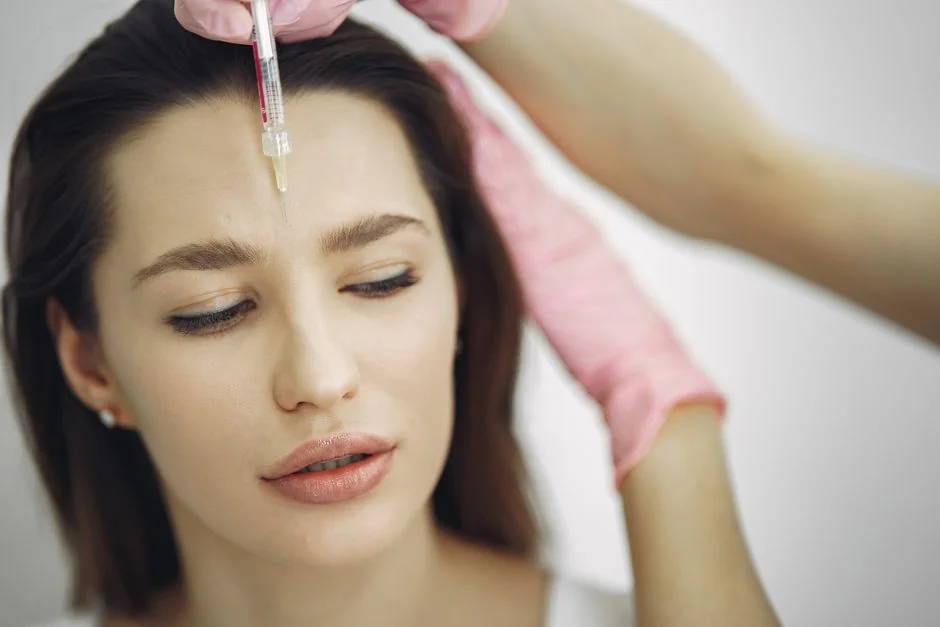
Botox is the brand name for botulinum toxin type A, a purified protein produced by the bacterium Clostridium botulinum. When injected in small, precisely measured doses into a facial muscle, it temporarily interrupts the nerve signals that cause that muscle to contract.
The result is a controlled, localised relaxation of the targeted muscle.
In the context of the forehead, the primary target is the frontalis muscle — the broad, sheet-like muscle that runs vertically across the forehead and is responsible for raising the eyebrows.
Repeated contraction of this muscle over many years creates the horizontal creases most people associate with an “aged” or “worried” appearance.
Botox does not fill lines with volume (that is the role of dermal fillers). Instead, it reduces the muscular movement that causes lines to form and deepen in the first place.
How Forehead Botox Works
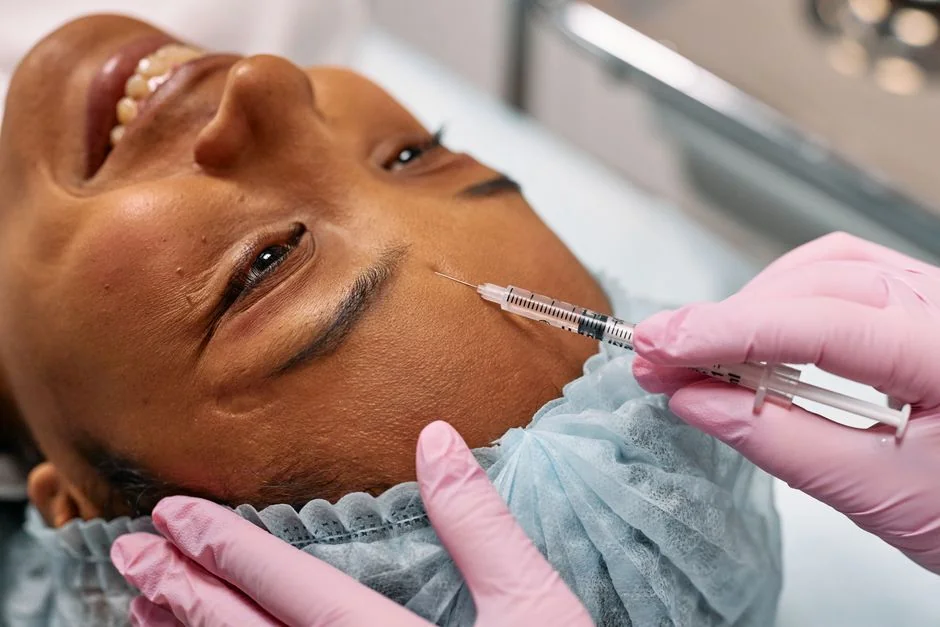
The mechanism of action
After injection, botulinum toxin binds to the nerve endings at the neuromuscular junction — the point where a nerve communicates with a muscle fibre. It inhibits the release of acetylcholine, the chemical messenger that triggers muscle contraction. Without that signal, the frontalis muscle simply cannot contract as forcefully, and the overlying skin becomes smoother.
The effect is not immediate. Most patients begin to notice softening within 3–5 days, with full results typically visible by 10–14 days after treatment.
How long does it last?
The effects of botulinum toxin are temporary. Clinical reports indicate that the average duration is 3–4 months, after which the nerve endings gradually recover their ability to release acetylcholine and muscle activity slowly returns. With consistent repeat treatments over time, some patients find that they require injections less frequently, as the muscle may partially atrophy (reduce in bulk) from prolonged reduced use.
Treatment at the clinic
At our clinic in Ichigaya, Tokyo, we use Allergan Botox, the original FDA- and regulatory body–approved formulation, as well as Korean-brand botulinum toxin options, depending on the patient’s preference and clinical needs. The injector will map out injection points across the forehead, typically placing 4–8 small injections to achieve balanced relaxation while preserving natural expression.
Expected Results: What Forehead Botox Can and Cannot Do
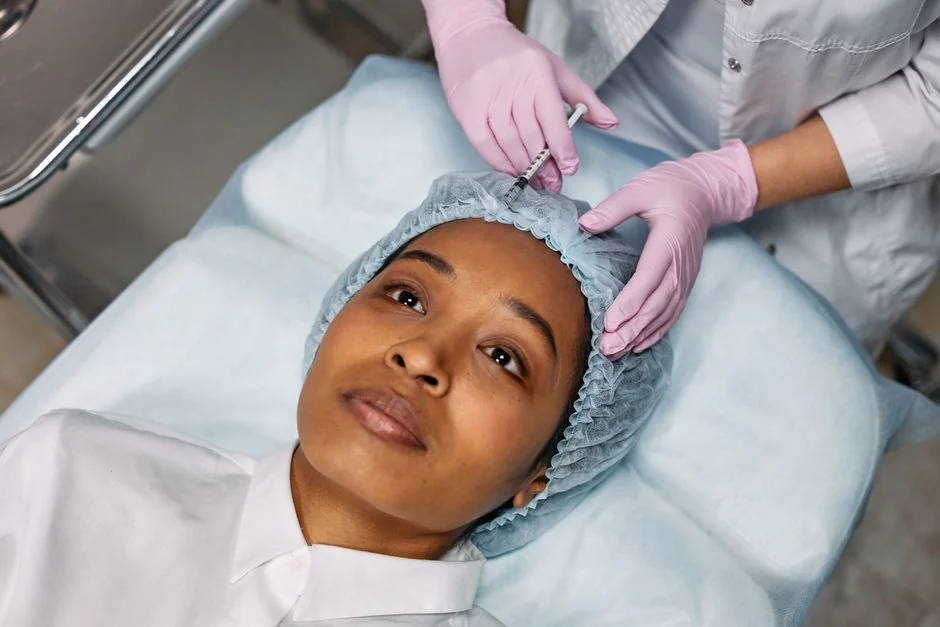
Studies suggest that botulinum toxin injections significantly reduce the severity of dynamic forehead lines (those formed by muscle movement) in the majority of treated patients. A randomised controlled trial published in Dermatologic Surgery reported a clinically meaningful improvement in forehead line severity in approximately 80% of subjects at four weeks post-injection, compared with placebo.
However, results depend heavily on the type and depth of the lines being treated:
- Dynamic lines (visible only when raising the brows): typically respond very well to Botox alone.
- Static lines (visible even at rest, etched into the skin): Botox reduces further deepening and may partially soften these lines, but deeply set creases may also benefit from a combination approach, such as a small amount of hyaluronic acid filler or a skin-resurfacing treatment.
In our clinical experience at Kojimachi Dermatology & Plastic Surgery Clinic, many patients in their late 20s to early 40s who address forehead lines at a relatively early stage achieve a noticeably smoother appearance from Botox alone. Patients with more established static lines are counselled that combination treatment — for example, pairing Botox with a course of Morpheus8 RF microneedling to remodel the dermis — may yield more comprehensive results. Morpheus8 is available at our Ichigaya clinic; feel free to ask about it during a consultation.
Forehead Botox Cost in Tokyo
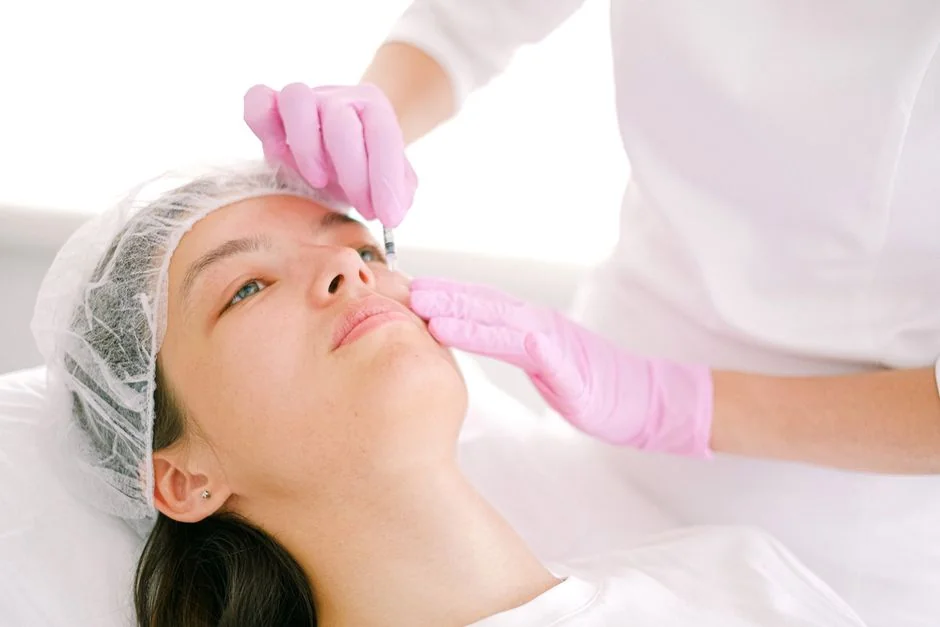
Pricing for Botox in Tokyo varies based on the brand of toxin used, the number of units required, and the clinical setting. At BIOTOPE CLINIC or Kojimachi Dermatology & Plastic Surgery Clinic, forehead Botox pricing falls within the following ranges:
| Product | Price Range (JPY, tax included) | Notes |
|---|---|---|
| Botox Allergan | ¥22,000 – ¥148,000 | Original FDA-approved formulation; dose determines final cost |
| Botox (Korean brand) | ¥9,900 – ¥45,000 | Comparable efficacy; more budget-conscious option |
| Micro-Botox | ¥22,000 – ¥33,000 | Intradermal technique; addresses skin texture and pore size |
For a standard forehead Botox treatment, most patients will fall within the lower-to-mid portion of the Allergan range, or within the Korean-brand range, depending on the number of units required. The precise dose is determined during consultation based on the strength of the frontalis muscle and the desired degree of movement reduction.
An initial consultation at the clinic costs ¥3,300. A surgical consultation with Dr. Karibe specifically is ¥2,200.
For an accurate quote, we recommend booking a consultation.
Have a question about this treatment?
Message us on LINE or WhatsApp — our English-speaking team usually replies the same day.
What to Expect: Before, During, and After Treatment
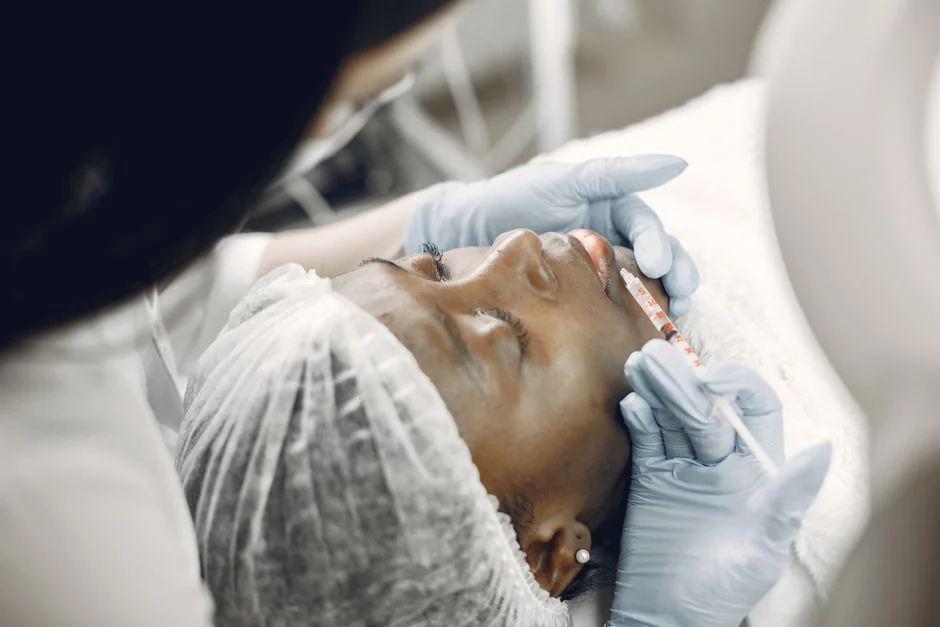
Before your appointment
Patients are generally advised to avoid blood-thinning medications and supplements — such as aspirin, ibuprofen, fish oil, and high-dose vitamin E — for approximately one week prior to injection, in order to minimise the risk of bruising. Alcohol should be avoided for 24 hours before treatment. A thorough medical history, including any prior Botox treatments, neurological conditions, or pregnancy, will be taken at the consultation stage.
During the procedure
The injection process itself takes approximately 10–20 minutes. A topical anaesthetic cream may be applied beforehand, although most patients find the discomfort minimal — the needles used are very fine. There is typically no need for sedation or downtime.
After treatment
Patients are advised to remain upright for at least four hours after injection and to avoid rubbing or massaging the treated area for 24 hours, to prevent unintended migration of the toxin. Strenuous exercise, saunas, and significant heat exposure should also be avoided for the first 24 hours.
Minor swelling or small red marks at the injection sites are normal and resolve within a few hours to a day. Bruising is possible but generally mild. Most patients return to work or social activities on the same day.
Dr. Karibe’s Note
Many of our international patients are surprised to find that forehead Botox, when performed conservatively, does not prevent all expression — it simply softens it. A common request I receive is to maintain the ability to raise the eyebrows slightly while still reducing the depth of horizontal lines. This balance is entirely achievable with careful dose planning, and it is something we discuss in detail during every consultation. The goal is a natural result that suits your face, not a uniformly frozen appearance.
Common Misconceptions About Forehead Botox
Misconception 1: “Botox will make my face look frozen or expressionless”
This concern is understandable, but it is largely a product of over-treatment, not a property of Botox itself. When an appropriate dose is selected for the individual patient’s muscle mass and aesthetic goals, natural movement is preserved. Clinical experience at reputable clinics consistently shows that patients treated conservatively retain meaningful eyebrow movement and expression.
The “frozen” look occurs when too many units are injected, or when the toxin is distributed without accounting for compensatory muscle activity. This is why choosing an experienced, medically qualified injector is important.
Misconception 2: “Stopping Botox will make my lines worse than before”
There is no clinical evidence that discontinuing Botox accelerates ageing beyond the natural baseline. If a patient stops treatment, muscle activity gradually returns over the following months, and lines re-form to approximately where they would have been without any treatment. The skin does not become “worse” as a consequence of having received Botox previously.
Who Is a Good Candidate for Forehead Botox?
Forehead Botox is generally suitable for adults who:
- Have noticeable horizontal forehead lines — either dynamic (movement-related) or beginning to set as static lines
- Are in good general health with no active skin infection at the treatment site
- Have realistic expectations about the degree of improvement achievable
- Are not pregnant or breastfeeding
- Have not had a known adverse reaction to botulinum toxin products in the past
Patients with very low or heavy brows should be evaluated carefully, as injecting the frontalis without appropriate planning can affect brow position. This is one of the nuances that an experienced injector will assess at the consultation stage.
Who should avoid forehead Botox:
- Pregnant or breastfeeding individuals
- Patients with neuromuscular conditions such as myasthenia gravis or Lambert-Eaton syndrome
- Those with a known allergy to botulinum toxin or its excipients (such as human albumin)
- Individuals on certain antibiotics (aminoglycosides) that may potentiate the toxin’s effect — this will be reviewed at consultation
Frequently Asked Questions
- Q. How many units of Botox are typically needed for the forehead?
- The number of units required varies by individual, depending on the strength and size of the frontalis muscle. A general range for the forehead alone is 10–20 units of Allergan Botox, but this is assessed on a case-by-case basis during consultation. Treating the forehead in isolation without also addressing the glabellar (frown line) area between the brows is sometimes not recommended, as it can affect the brow position.
- Q. Can I combine forehead Botox with filler or other treatments on the same visit?
- In many cases, yes. Botox and hyaluronic acid filler are frequently combined in the same session — Botox to relax muscle-driven lines and filler to restore volume or address deeper static creases. Your injector will advise on the most appropriate combination and sequencing of treatments at your consultation.
- Q. Is the treatment painful? Will I need anaesthetic?
- Most patients describe the sensation as a brief, mild pinch at each injection point. Topical numbing cream can be applied beforehand to minimise discomfort, and this is available at the clinic. General or local anaesthetic is not required for Botox injections.
- Q. Are consultations at the clinic available in English?
- Yes.BIOTOPE CLINIC or Kojimachi Dermatology & Plastic Surgery Clinic offers consultations in English for international patients. The clinic is conveniently located in Ichigaya, Chiyoda-ku, near Kojimachi, Hanzomon, and Nagatacho stations.
Have a question about this treatment?
Message us on LINE or WhatsApp — our English-speaking team usually replies the same day.
Summary
Forehead Botox is a well-established, minimally invasive treatment for dynamic and early static forehead lines. It works by temporarily reducing the contractile activity of the frontalis muscle, producing a smoother forehead appearance with minimal downtime. Results typically last 3–4 months, and studies suggest a meaningful clinical improvement in the majority of treated patients.
Cost at a Tokyo clinic such as BIOTOPE CLINIC or Kojimachi Dermatology & Plastic Surgery Clinic ranges from approximately ¥9,900 to ¥148,000 depending on the product and dose used, placing it well within reach for patients seeking a medically supervised treatment in a clinic setting. The treatment is suitable for most healthy adults without contraindications, and natural-looking results are achievable when dose and technique are tailored to the individual.
If you have questions about forehead Botox in Tokyo, our team at BIOTOPE CLINIC or Kojimachi Dermatology & Plastic Surgery Clinic in Tokyo would be happy to help. We offer consultations in English.
24/7 Consultation & Booking
Book a Consultation or Treatment
Our English-speaking team responds via LINE or WhatsApp — usually the same day.
References
- Carruthers A, Carruthers J. Botulinum toxin type A: history and current cosmetic use in the upper face. Seminars in Cutaneous Medicine and Surgery. 2001.
- Monheit G, Carruthers A, Brandt F, Rand R. A randomized, double-blind, placebo-controlled study of botulinum toxin type A for the treatment of glabellar lines: determination of optimal dose. Dermatologic Surgery. 2007.
- Hexsel D, Brum C, do Prado DZ, et al. Field effect of two commercial preparations of botulinum toxin type A: a double-blind, randomized trial. Journal of the American Academy of Dermatology. 2012.
- Carruthers J, Fagien S, Matarasso SL; Botox Consensus Group. Consensus recommendations on the use of botulinum toxin type A in facial aesthetics. Plastic and Reconstructive Surgery. 2004.
- Kane MA. Classification of crow’s feet patterns among Caucasian women: the key to individualizing treatment. Plastic and Reconstructive Surgery. 2003.
Related Articles
You may also find these articles useful.
- Botox for Crow’s Feet Tokyo: Cost, Results & Safety
- Botox vs Dermal Fillers: Which Treatment Is Right for You?
SUPERVISED BY
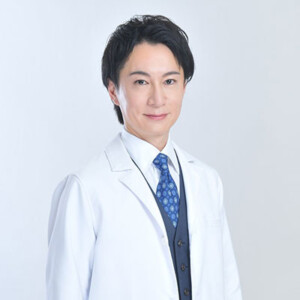
Dr. Jun Karibe
MD
Director
Education & Career
Certifications
Awards
MEDICAL REVIEW