Volnewmer Combined with Botox and Filler in Tokyo: A Complete Treatment Plan Guide
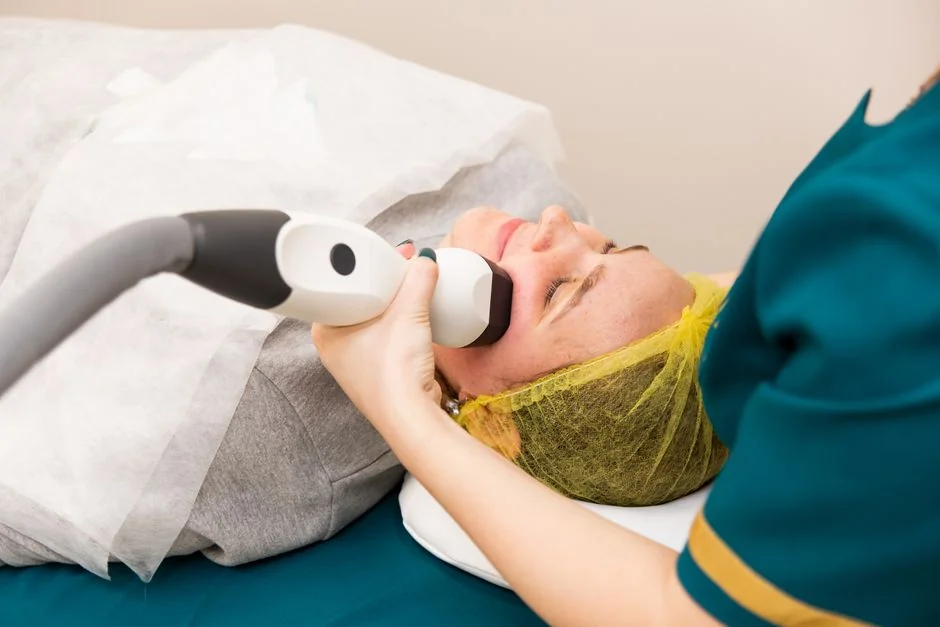
Many patients seeking facial rejuvenation in Tokyo find themselves weighing multiple treatment options, unsure how to combine them effectively and safely.
Combining Volnewmer radiofrequency treatment with Botox and hyaluronic acid (HA) filler is a multi-modal approach that treats skin quality, volume loss, and dynamic lines in one coordinated plan, rather than addressing each concern in isolation.
This guide explains what each treatment does, how they complement one another, what realistic results look like, the cost breakdown in Tokyo, and how to determine whether this combination is right for you.
Volnewmer + Botox + Filler Combination
| What it treats | Skin laxity, dynamic wrinkles, and volume loss — together |
| Components | Volnewmer (RF), Botox (botulinum toxin), HA filler |
| Invasiveness | Non-invasive (Volnewmer, Botox) / minimally invasive injection (filler) |
| Typical sequence | Volnewmer first → 2–4 week interval → Botox and filler (often same day) |
| Downtime | Minimal; hours for Volnewmer, days for filler bruising |
| Results visible | Botox: 7–14 days; filler: immediate–2 weeks; Volnewmer: 4–12 weeks, cumulative |
| Results last | Botox: 3–6 months; filler: 12–18 months; Volnewmer course: recommended every few months |
| Indicative combined cost | ¥154,000–¥400,000+ per plan (one session each) |
| Where to book | BIOTOPE CLINIC / Kojimachi Dermatology & Plastic Surgery Clinic, Ichigaya, Tokyo |
| Clinical direction | Dr. Jun Karibe, board-certified plastic surgeon |
| English support | Full English-language consultation available |
What You’ll Learn in This Guide
-
- What Volnewmer is and how it differs from other radiofrequency devices
- Why Volnewmer, Botox, and filler are frequently combined — and in what sequence
- Realistic outcomes supported by published clinical evidence
- Transparent cost ranges at BIOTOPE CLINIC and Kojimachi Dermatology & Plastic Surgery Clinic in Ichigaya, Tokyo
- Who is an ideal candidate, and who should consider alternative treatments
Have a question about this treatment?
Message us on LINE or WhatsApp — our English-speaking team usually replies the same day.
What Is Volnewmer?
What Is Volnewmer?
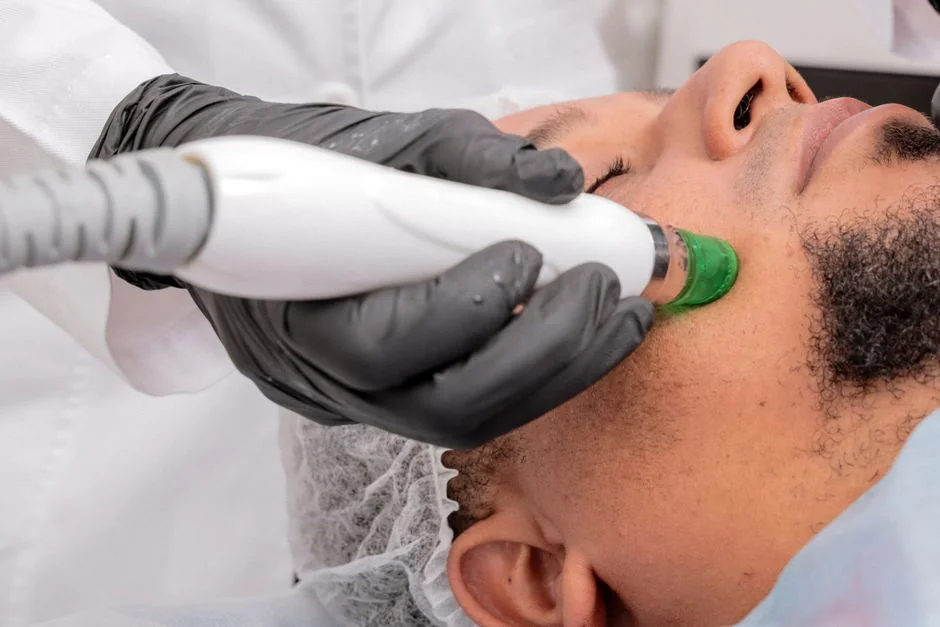
Volnewmer is a non-invasive radiofrequency (RF) device designed for deep dermal remodelling and skin laxity. Unlike surface-level treatments, it delivers focused volumetric radiofrequency energy to the deeper layers of the dermis and subcutaneous tissue — the layers where collagen and elastin fibres are produced and maintained. “Volumetric” refers to how the energy is distributed throughout the tissue depth, rather than concentrated at a single focal point, which stimulates fibroblasts (the cells responsible for producing collagen) without the surface ablation associated with laser resurfacing.
How Volnewmer Differs from Other RF Devices
Patients sometimes confuse Volnewmer with other RF-based treatments such as Morpheus8 or POTENZA, both of which use microneedle electrodes to deliver RF energy. Volnewmer, by contrast, is a non-invasive, non-needle technology that works entirely from the skin’s surface using a specialised handpiece. This distinction matters clinically, since the two approaches target different tissue layers and carry different downtime profiles.
Morpheus8, also available at BIOTOPE CLINIC and Kojimachi Dermatology & Plastic Surgery Clinic in Ichigaya, combines RF energy with microneedling for more aggressive dermal remodelling, and is frequently chosen for moderate-to-severe acne scarring or pronounced laxity. Volnewmer is generally preferred when the priority is tissue tightening and improved skin quality with minimal social downtime — feel free to ask about both options during a consultation.
How Volnewmer Differs from Other RF Devices
Patients sometimes confuse Volnewmer with other RF-based treatments such as Morpheus8 or POTENZA, both of which use microneedle electrodes to deliver RF energy. Volnewmer, by contrast, is a non-invasive, non-needle technology — it works entirely from the skin’s surface using a specialised handpiece. This distinction matters clinically because the two approaches target slightly different tissue layers and carry different downtime profiles.
Morpheus8, which is also available at BIOTOPE CLINIC or Kojimachi Dermatology & Plastic Surgery Clinic in Tokyo, combines RF energy with microneedling to achieve more aggressive dermal remodelling and is frequently chosen for patients with moderate-to-severe acne scarring or pronounced laxity. Volnewmer is generally preferred when the priority is tissue tightening and improved skin quality with minimal social downtime — feel free to ask about both options during a consultation.
How the Three-Treatment Combination Works
How the Three-Treatment Combination Works
Volnewmer, Botox, and HA filler each address a different biological dimension of facial ageing. Understanding these mechanisms clarifies why combining them produces results that neither treatment achieves alone.
The Biological Targets
Volnewmer targets structural deterioration — the gradual thinning and disorganisation of collagen and elastin fibres in the dermis. By heating the deeper dermis to a precise therapeutic temperature (typically 40–45°C at the target tissue), it triggers a controlled wound-healing response; over the following weeks, fibroblasts lay down new collagen, progressively tightening and thickening the dermis.
Botox (botulinum toxin type A) targets dynamic lines — wrinkles created by repeated facial muscle contractions, such as frown lines between the brows, forehead lines, and crow’s feet. By temporarily relaxing specific muscles, Botox smooths the overlying skin and, used over time, may slow the deepening of those lines.
Hyaluronic acid (HA) filler targets volume loss, a defining feature of facial ageing. Fat compartments beneath the skin atrophy and descend with age, leaving hollows under the eyes, flattened cheeks, and deepened nasolabial folds. HA filler physically replaces lost volume and, because hyaluronic acid is hydrophilic (water-attracting), also contributes to skin hydration.
Sequencing: Which Treatment Comes First?
The order of treatment matters for both safety and efficacy. A general clinical principle is to complete energy-based treatments before injecting filler in the same area, since significant heat applied over existing filler deposits may, in theory, alter the distribution or integrity of the product. In practice, many practitioners sequence Volnewmer first, allow a recovery interval, then proceed with Botox and filler at a subsequent appointment.
Botox and HA filler can typically be performed at the same appointment. Individual circumstances — the areas being treated, the volume of filler placed, and the patient’s overall treatment goals — determine the precise schedule, which should always be confirmed during a medical consultation.
Dr. Karibe’s NoteMany of our international patients at Kojimachi Dermatology & Plastic Surgery Clinic arrive having already received one treatment abroad and wanting to complete a combination approach here in Tokyo.
A common question I receive is whether it is safe to have filler placed shortly after a Volnewmer session. My general recommendation is to allow at least two to four weeks between Volnewmer and filler in the same region — this gives the initial thermal response time to settle, and it means we are injecting into tissue that is in a stable state. The exact interval will always depend on the specific areas involved, and I am happy to review a patient’s prior treatment history at consultation.
Expected Results and Clinical Evidence

Patients considering this combination approach reasonably want to know what improvements to expect. Honest communication about both the potential benefits and their limitations is essential.
For Volnewmer specifically, clinical reports indicate that patients undergoing a course of volumetric RF treatments demonstrate measurable improvements in skin laxity and texture, with histological studies showing increased collagen density in the treated dermis. Studies suggest that the collagen remodelling process continues for up to three to six months following a session, meaning the full benefit of a Volnewmer course may not be visible immediately after treatment ends.
For Botox, peer-reviewed literature consistently supports significant reduction in the appearance of dynamic wrinkles within seven to fourteen days of injection, with effects lasting approximately three to six months in most patients, depending on the dose administered and individual muscle activity. A 2021 systematic review published in Aesthetic Surgery Journal noted that satisfaction rates among patients receiving botulinum toxin for upper facial lines remain among the highest documented for any non-surgical cosmetic intervention.
For HA filler, clinical data indicate that modern cross-linked formulations can maintain volumising effects for twelve to eighteen months in many patients, though longevity varies by product, injection location, and metabolic rate.
When all three modalities are used in a coordinated plan, the combined effect addresses skin quality, skin position (laxity), and volume simultaneously — producing outcomes that are generally more comprehensive than any single treatment could achieve alone. Results are progressive and individual, and no absolute outcomes can be promised.
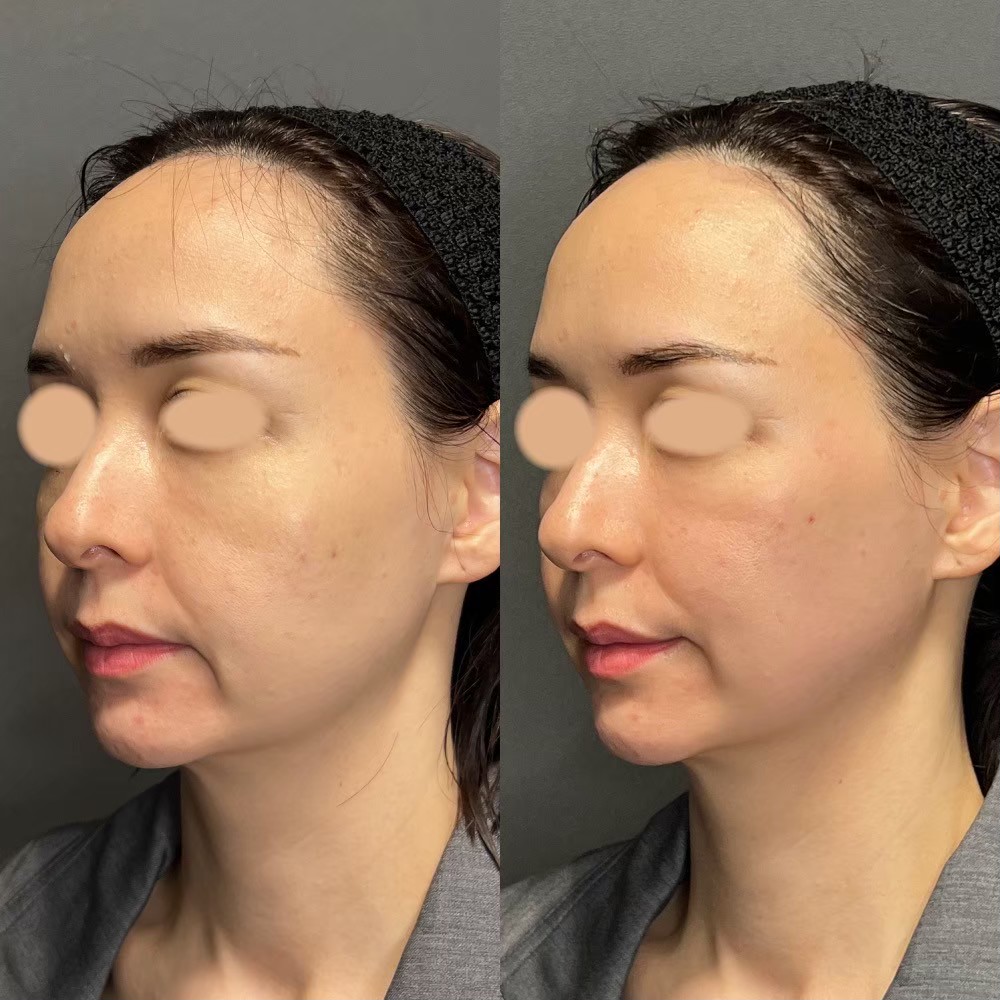
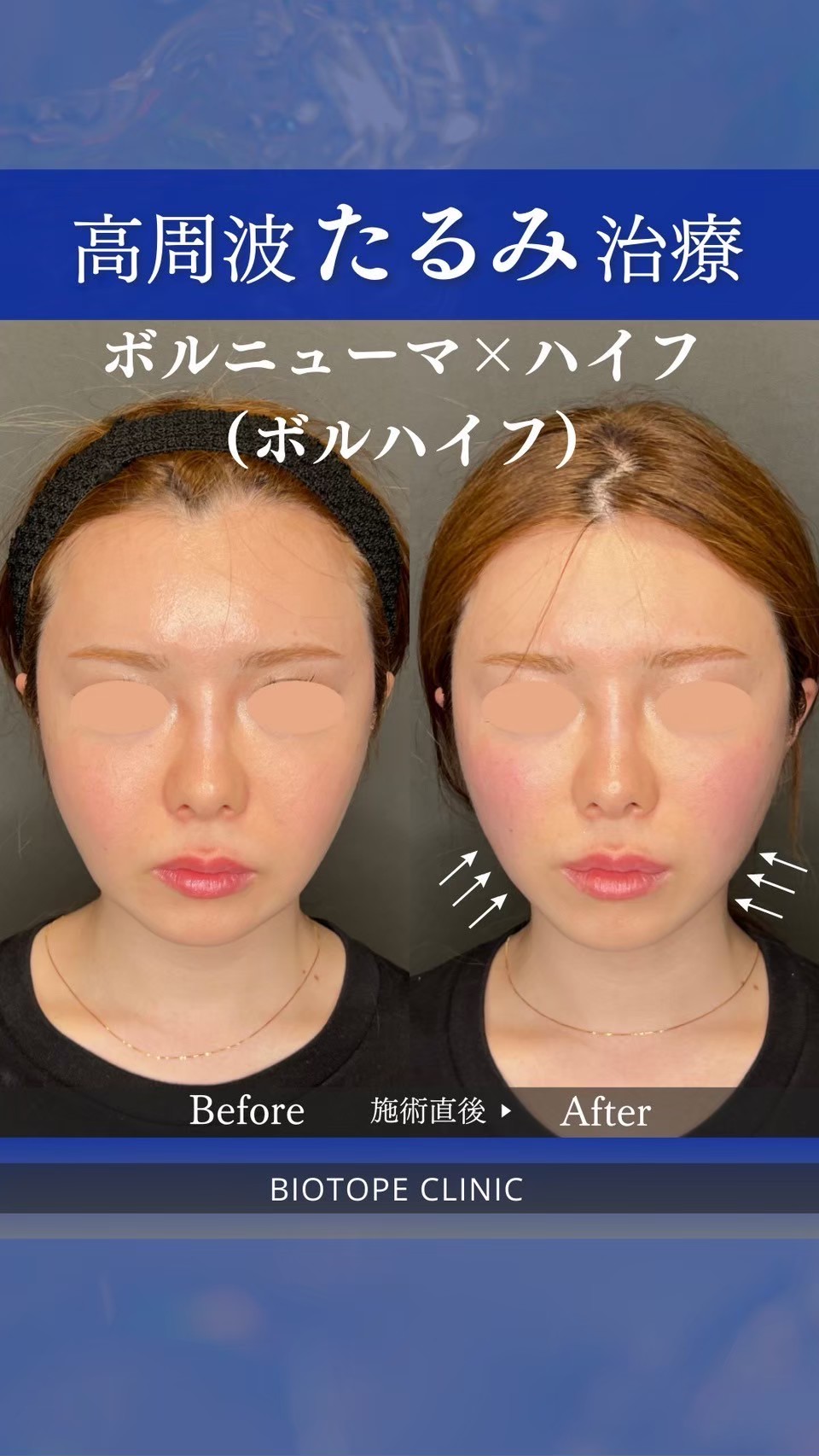
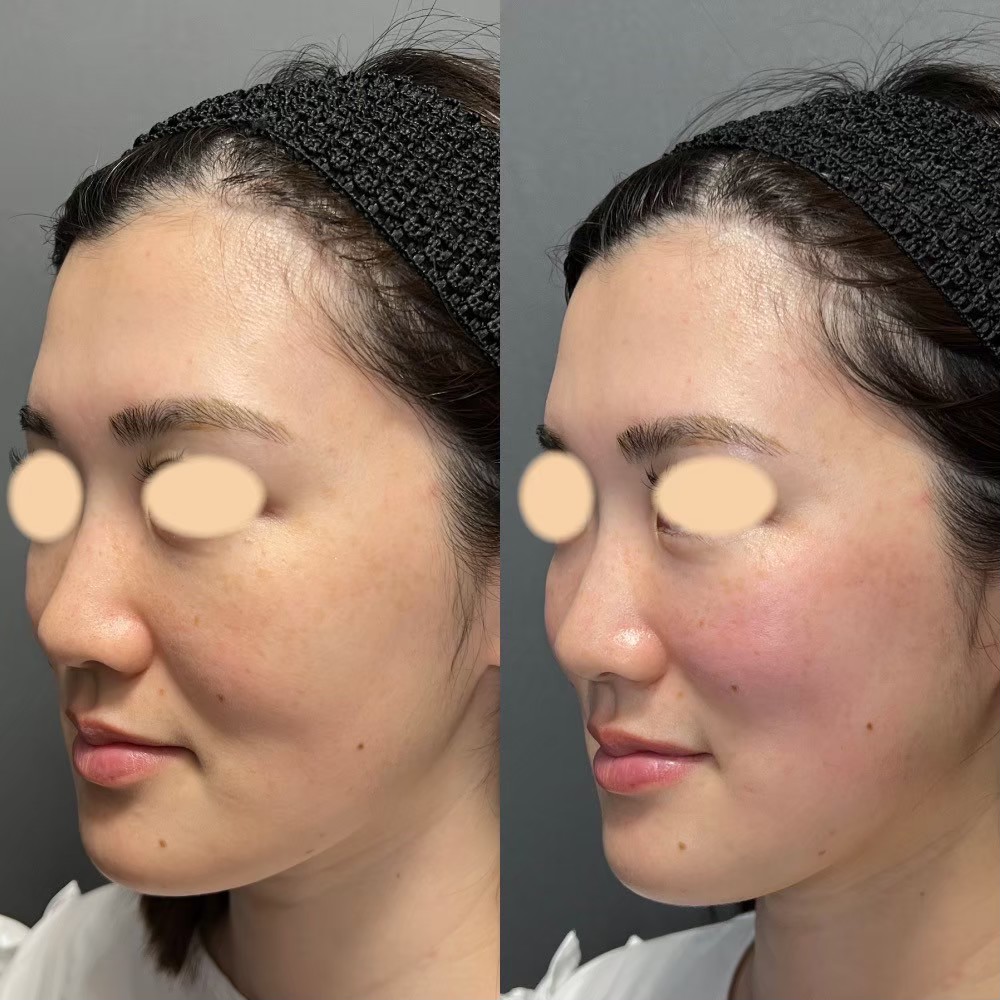
Real Patient Results — Before & After
The following are actual Volnewmer treatment results from patients at BIOTOPE CLINIC (Shirokanedai, Minato-ku, Tokyo), where Dr. Jun Karibe personally performs the procedure. Photos are shared with patient permission. Individual results vary depending on skin condition, age, and treatment plan. Tap each case to view the full treatment disclosure required by the Japanese Medical Advertising Guidelines.
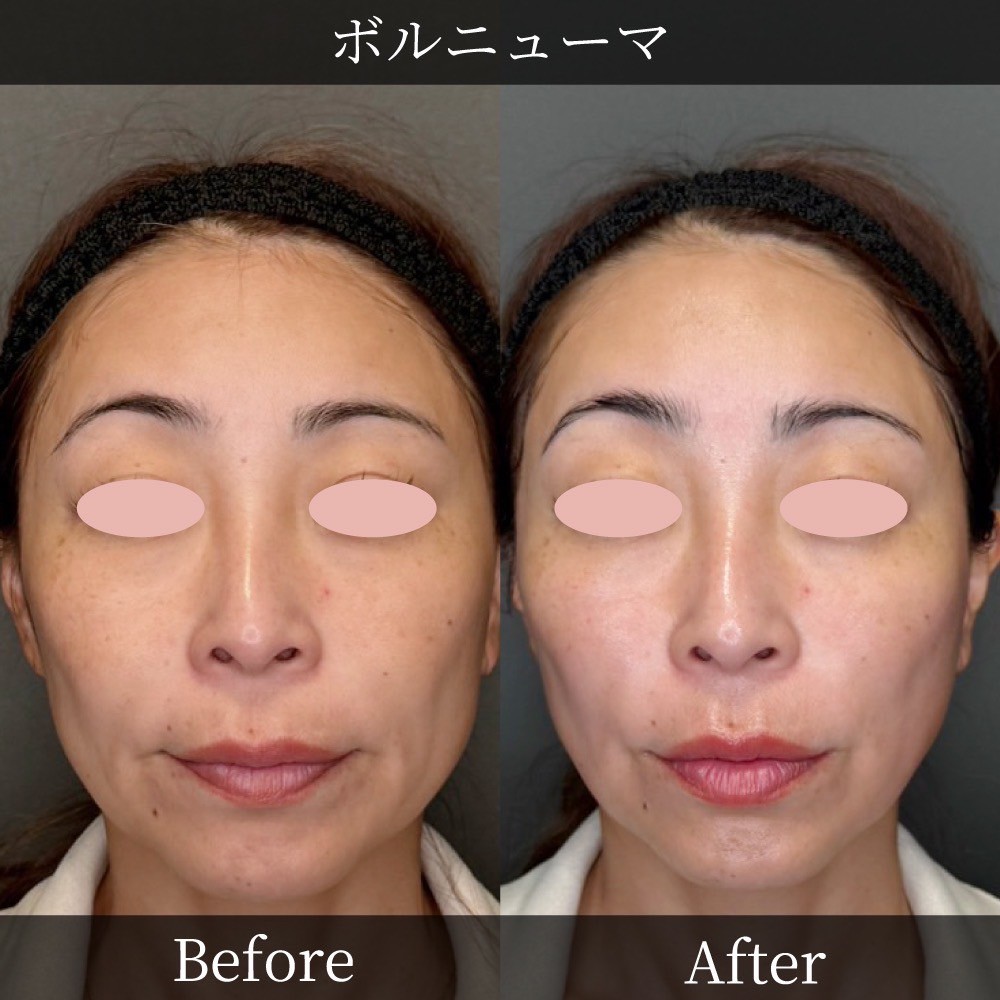
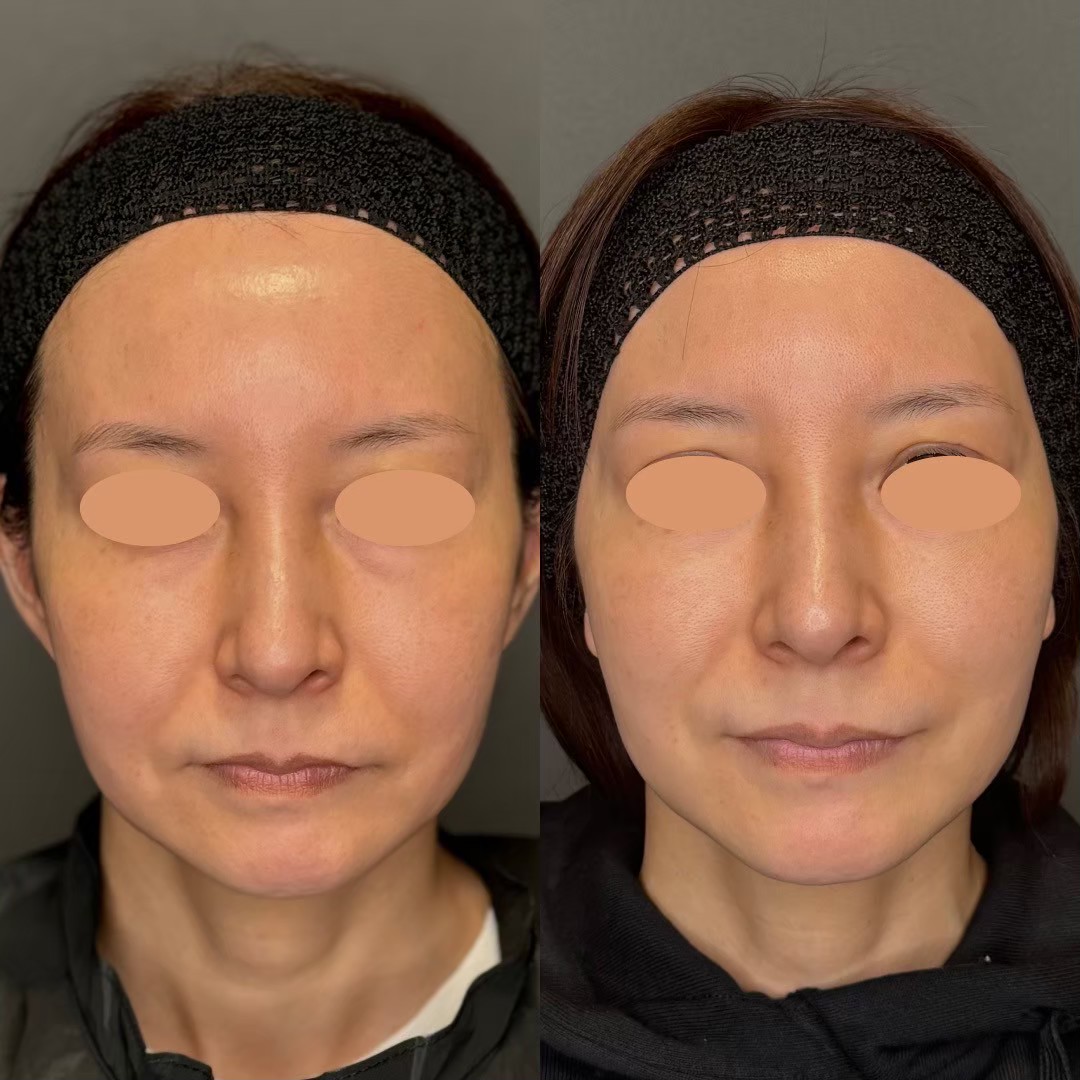
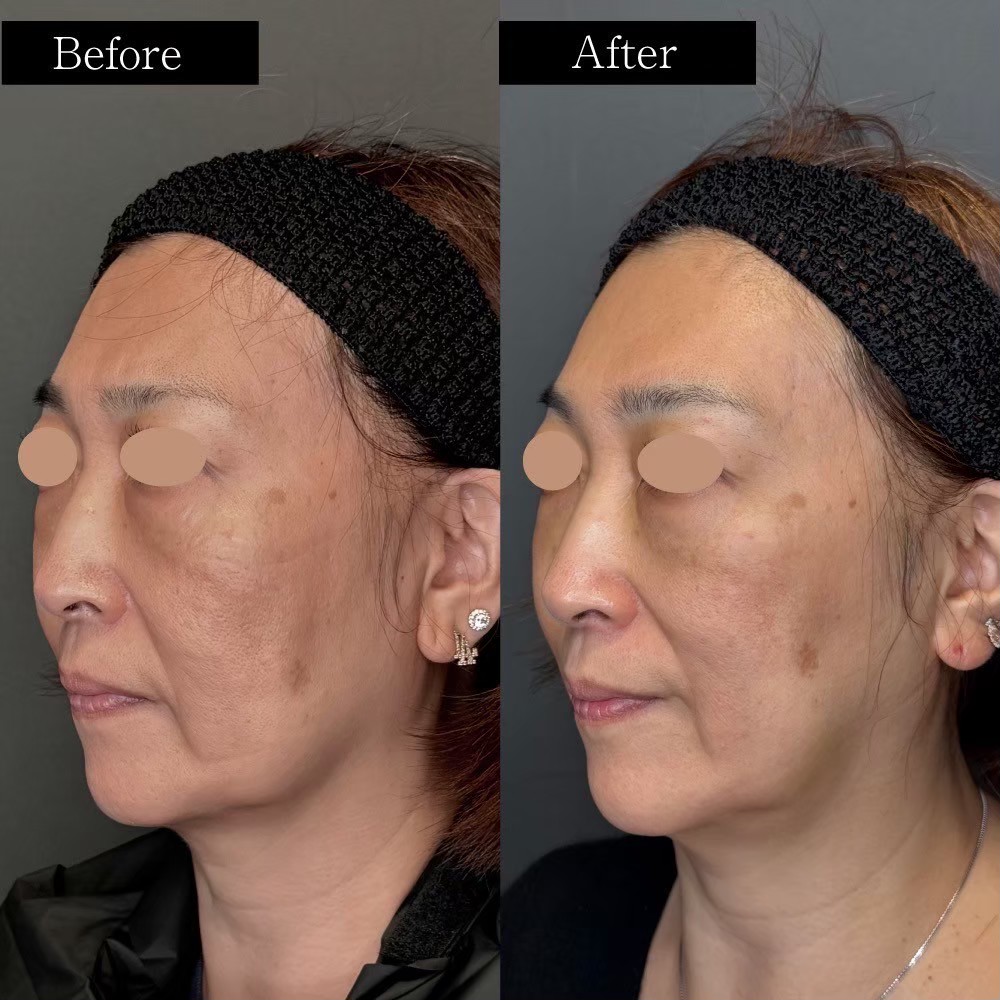
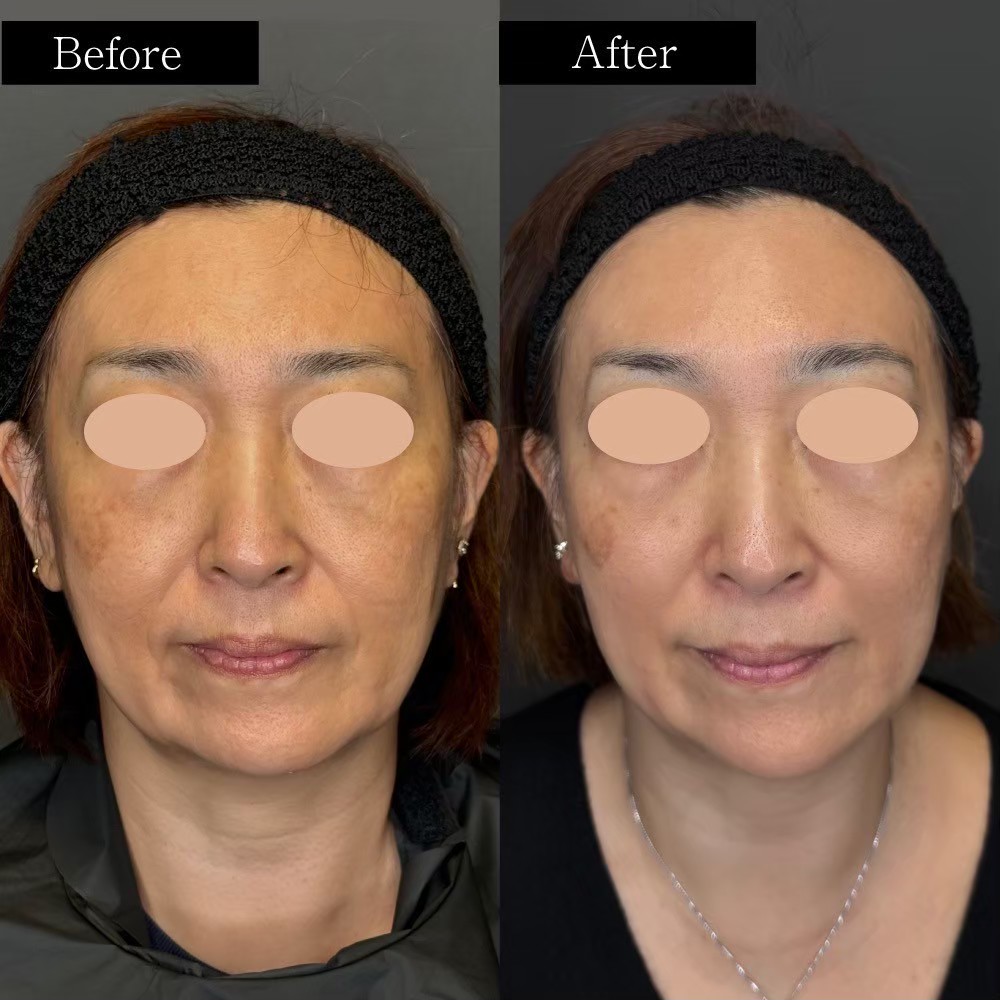
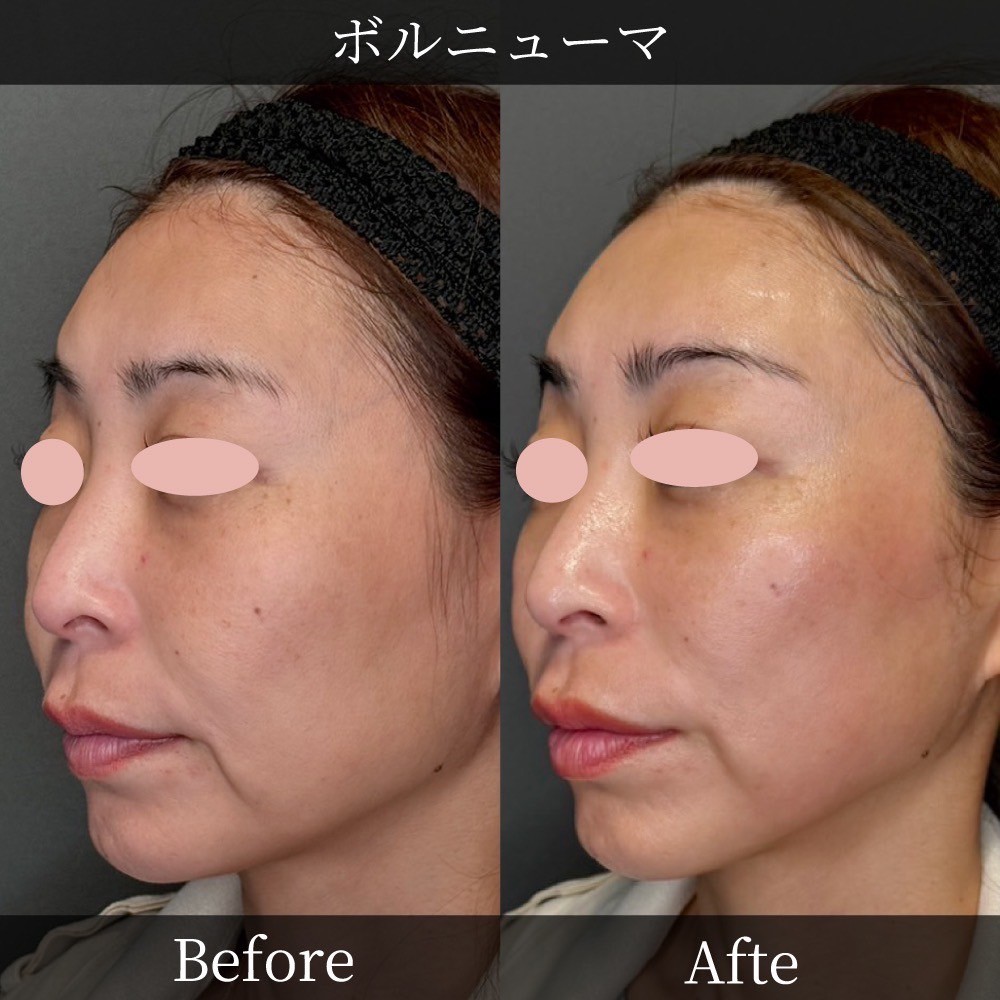
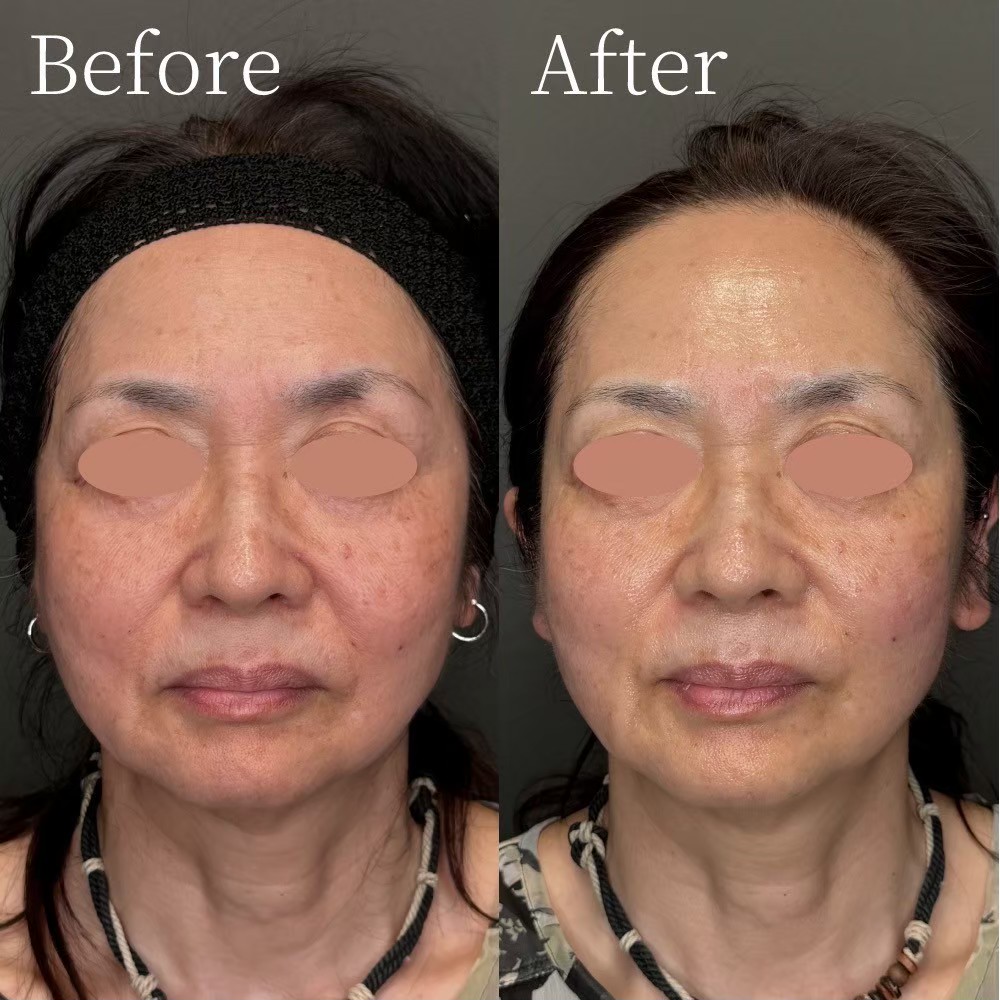
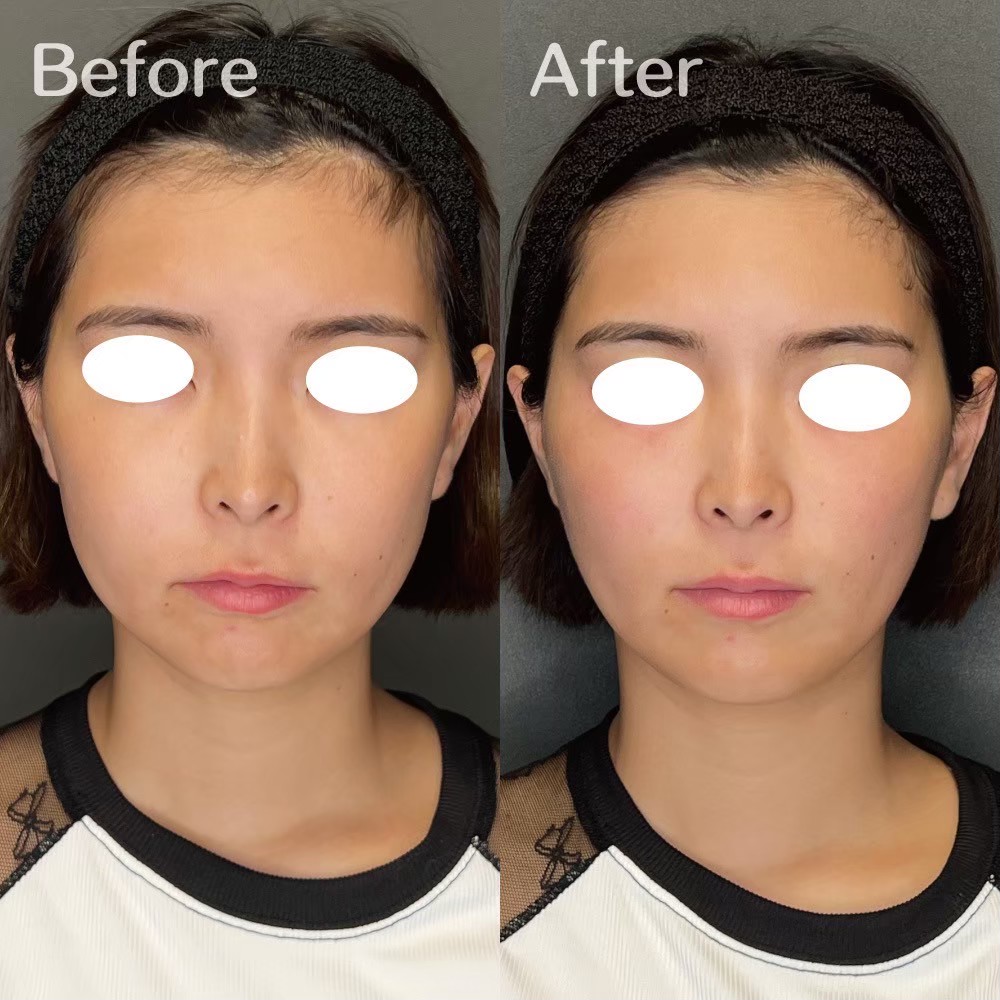
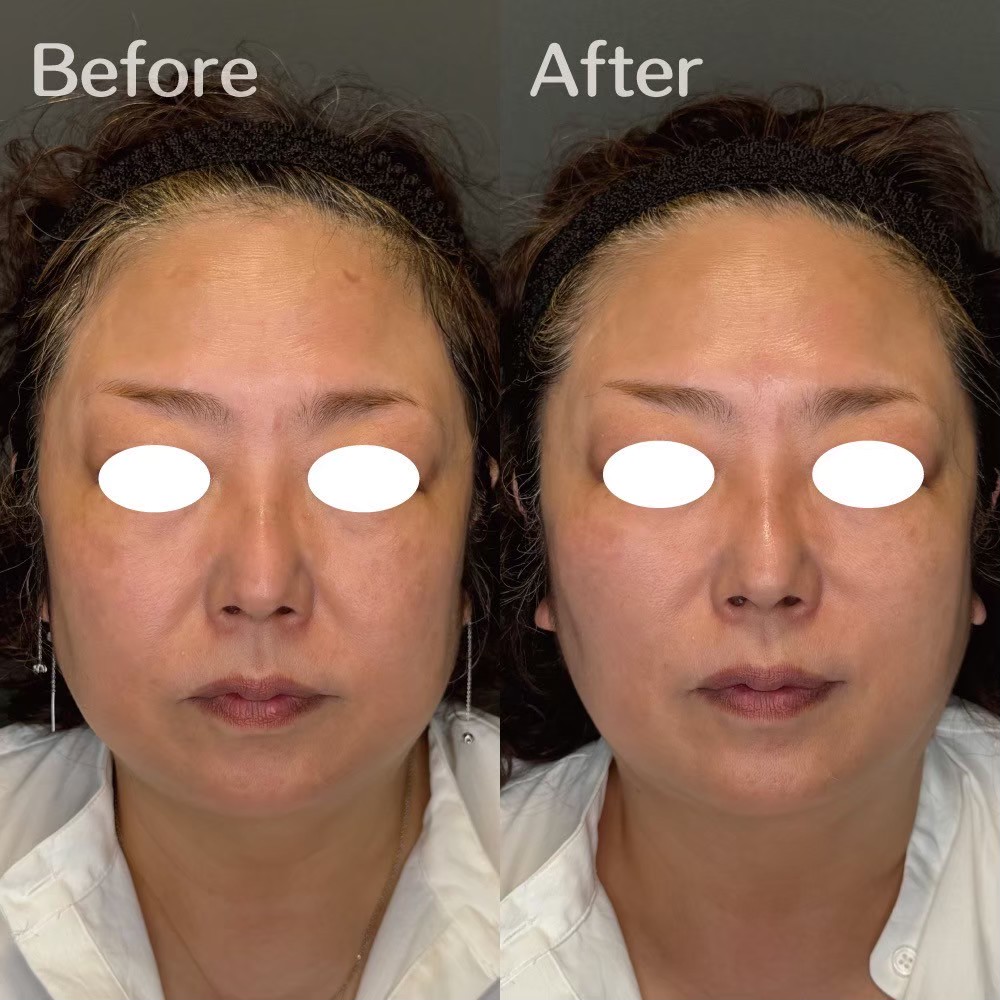
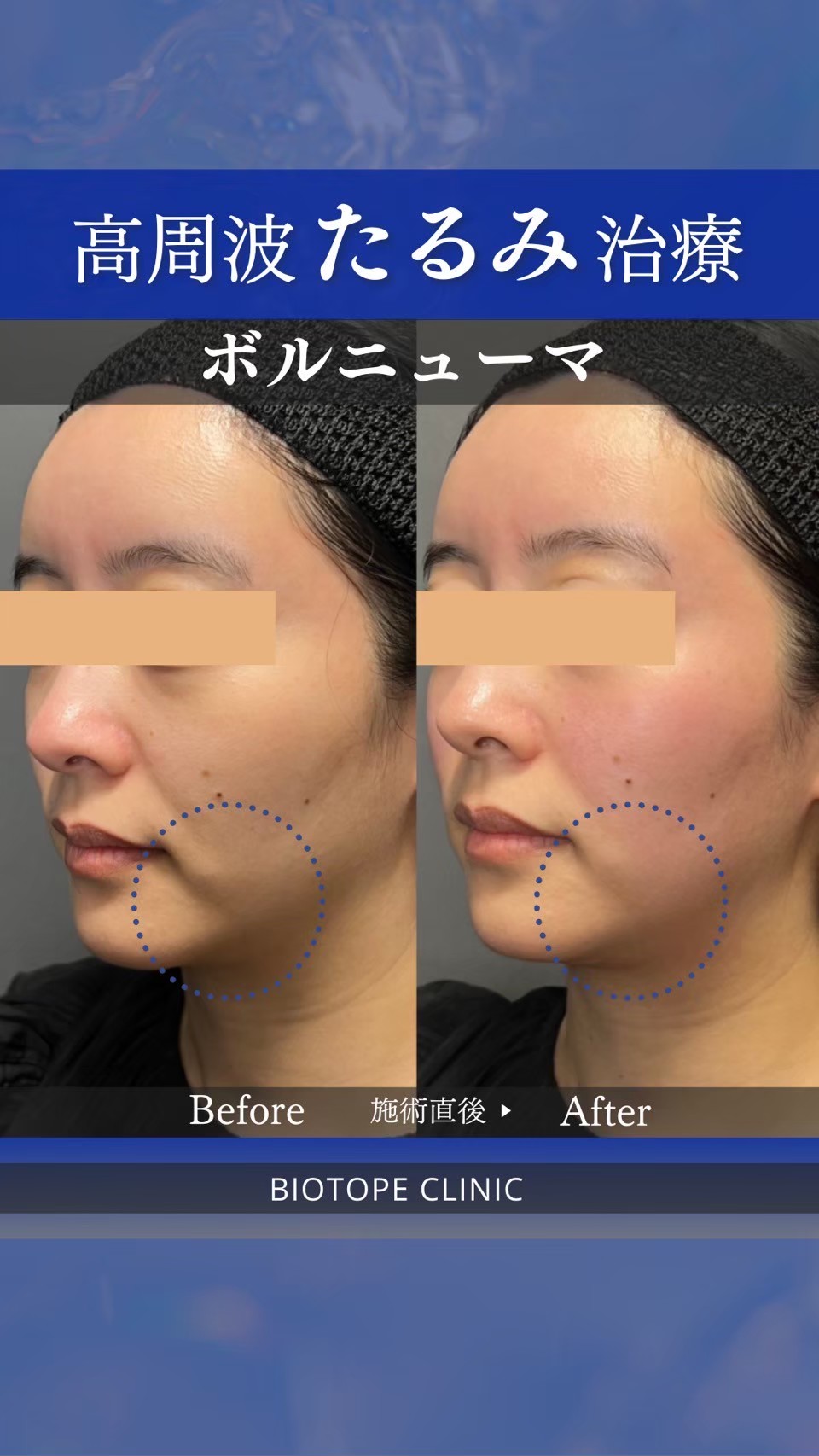
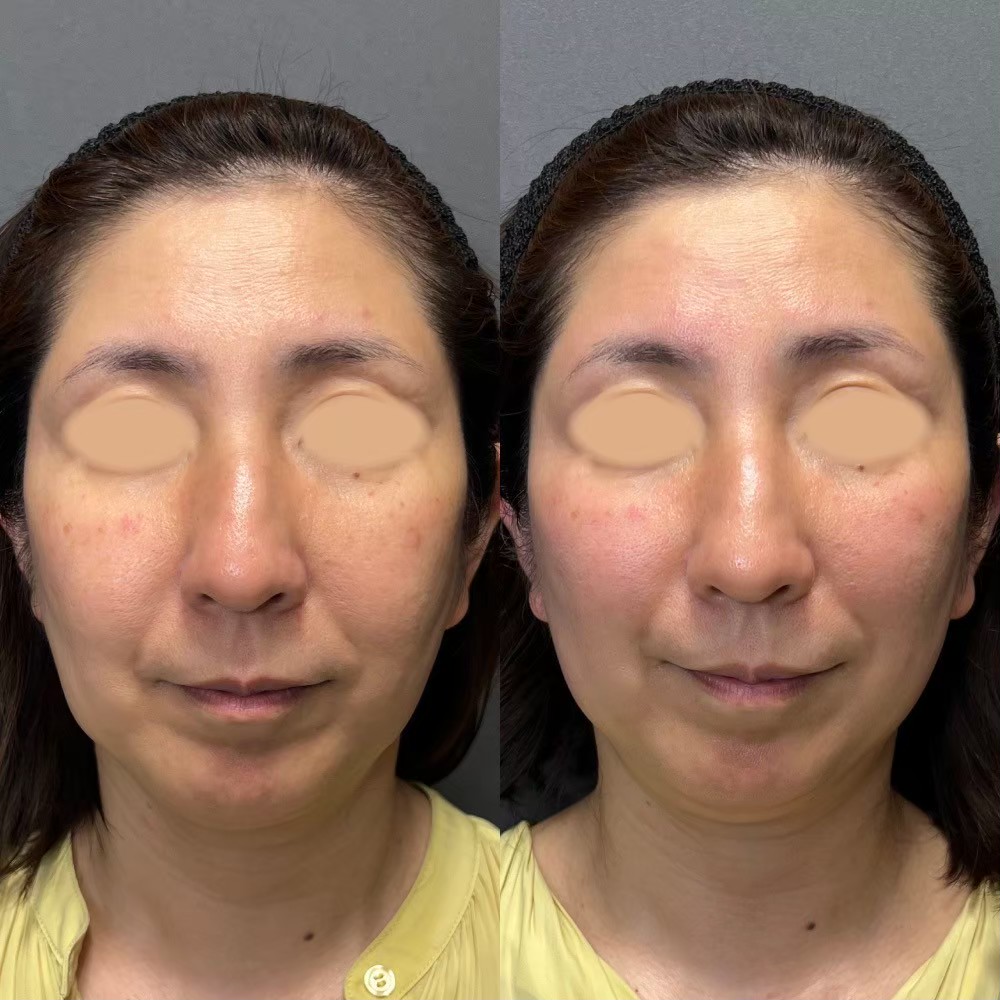
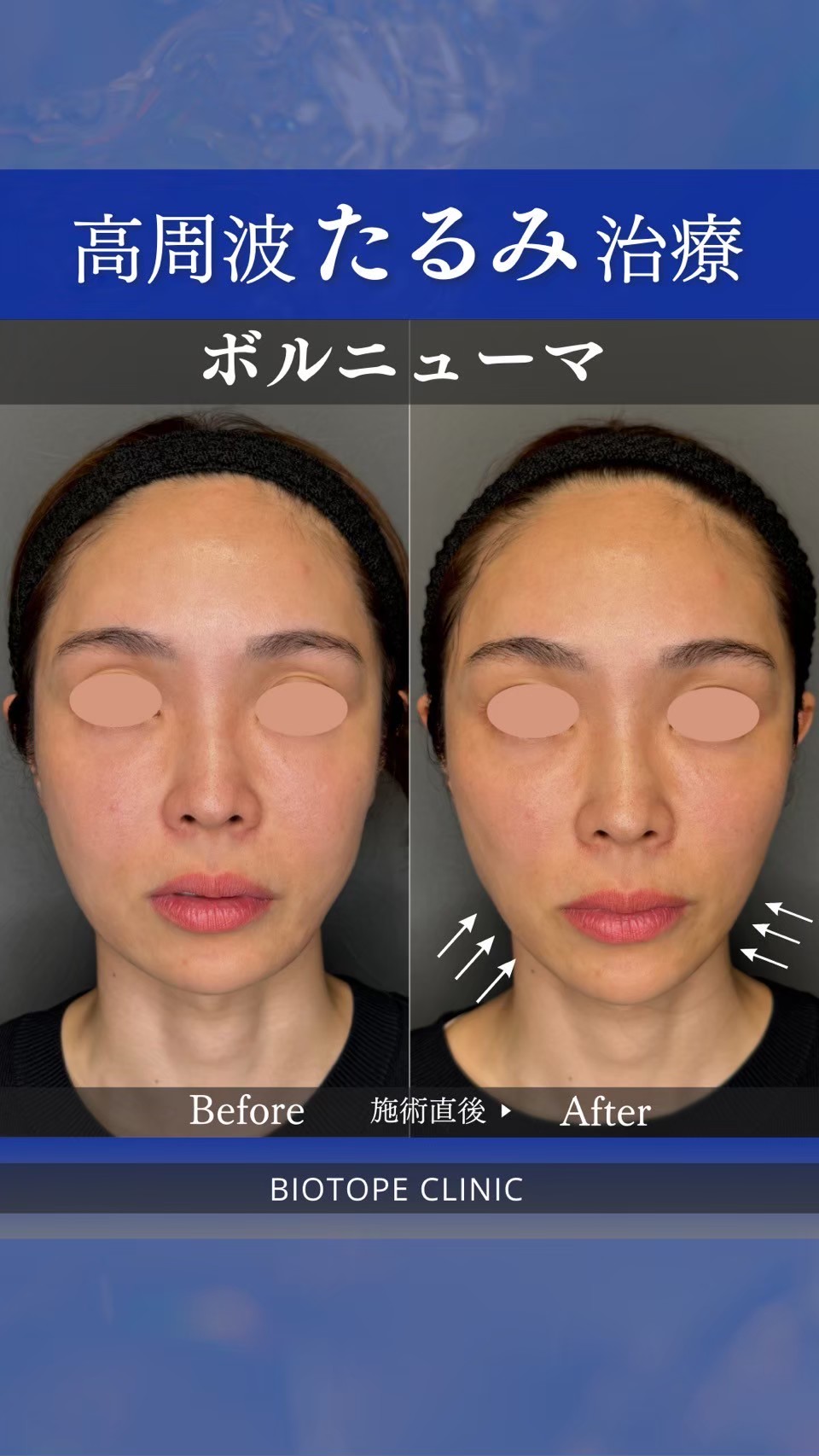
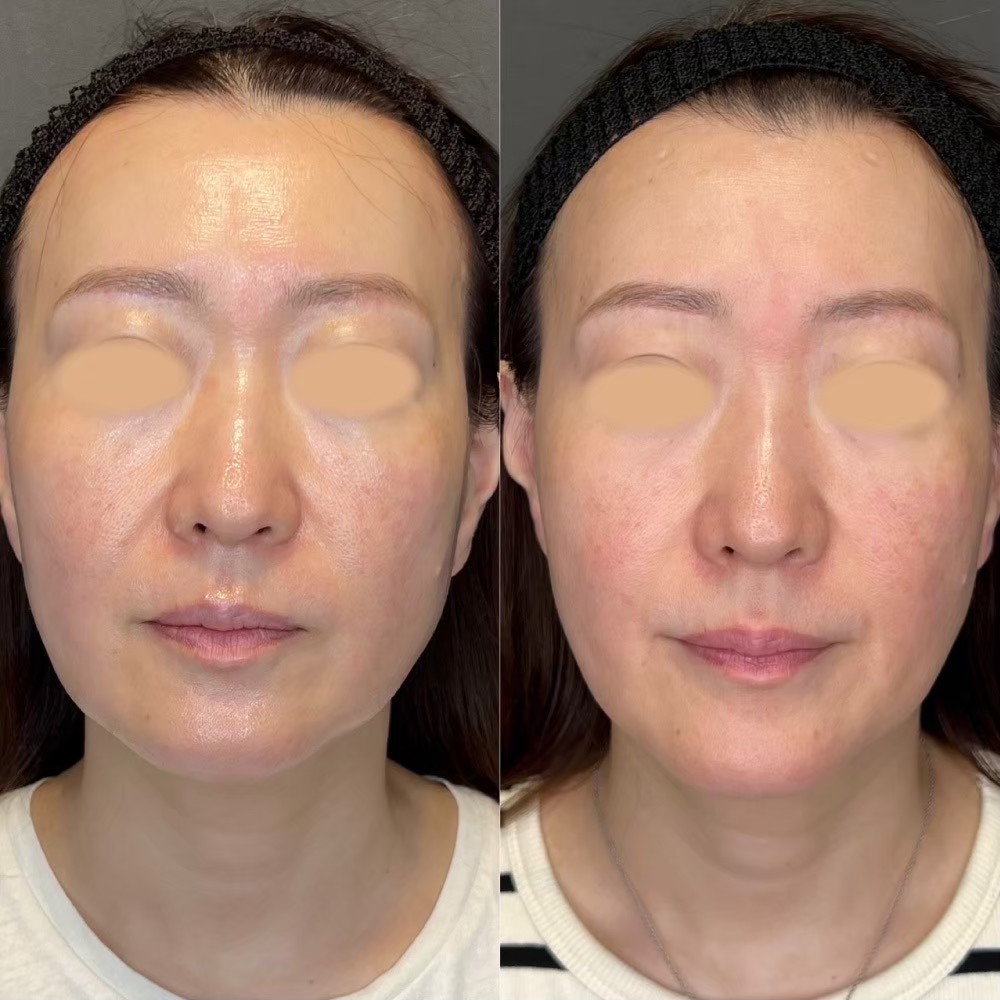
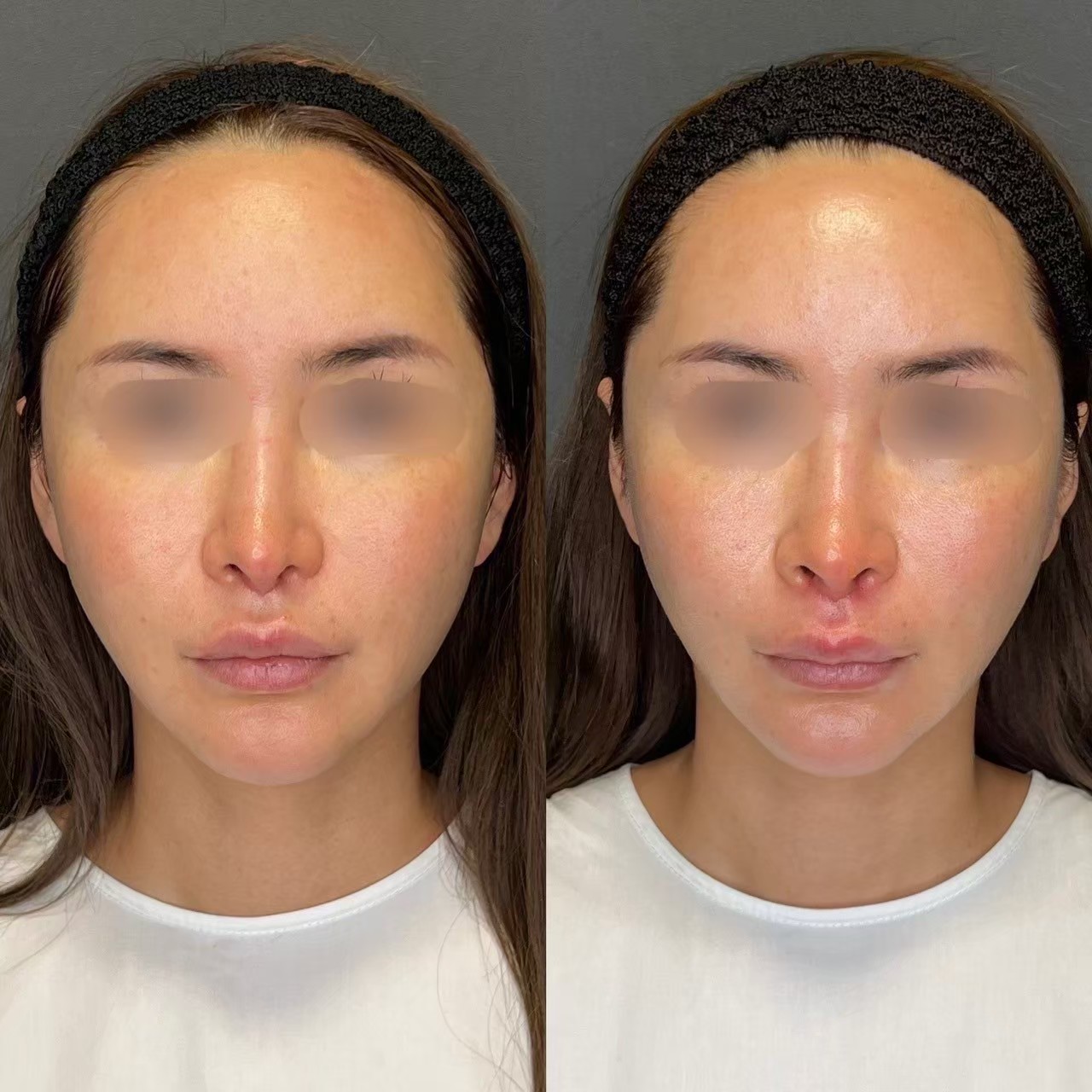
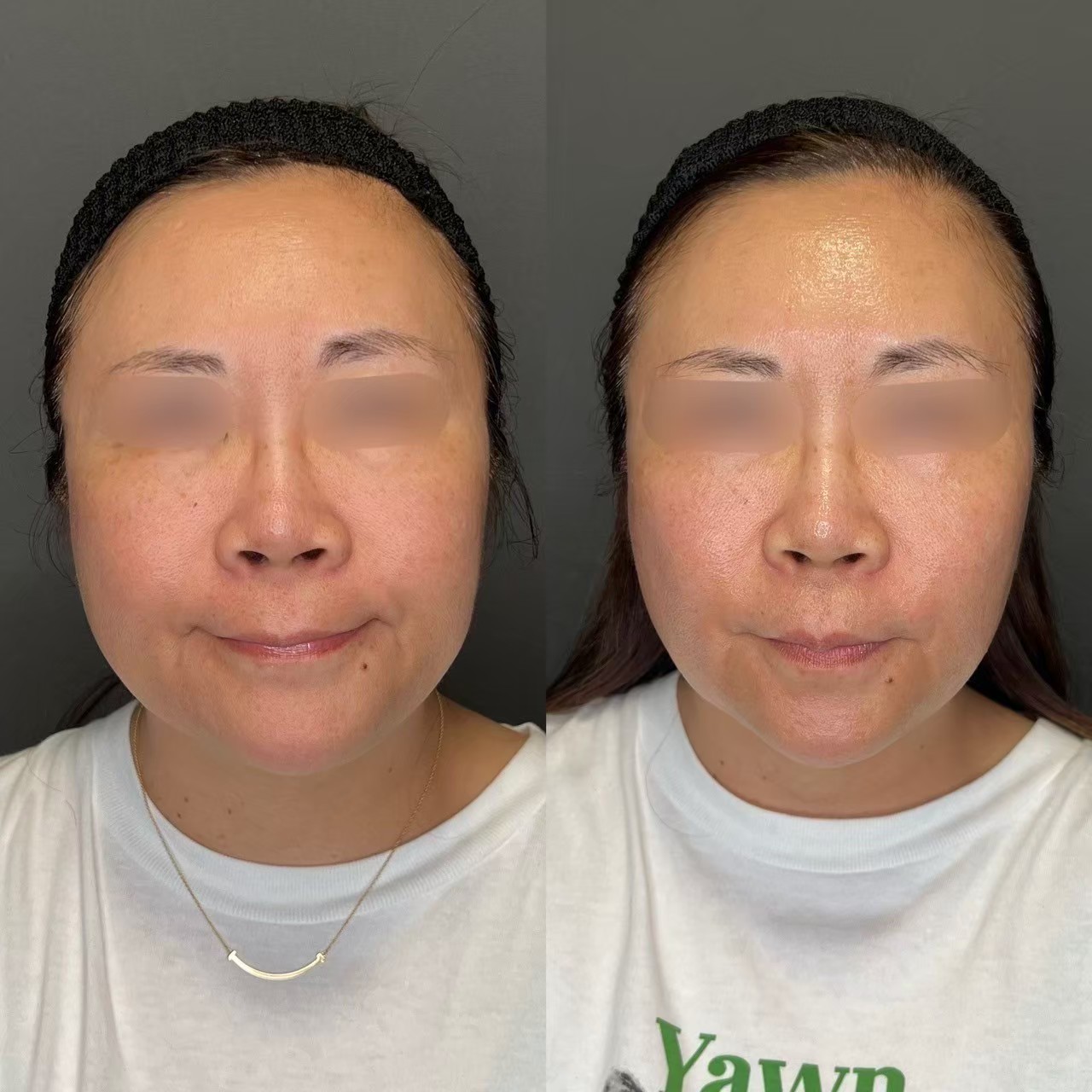
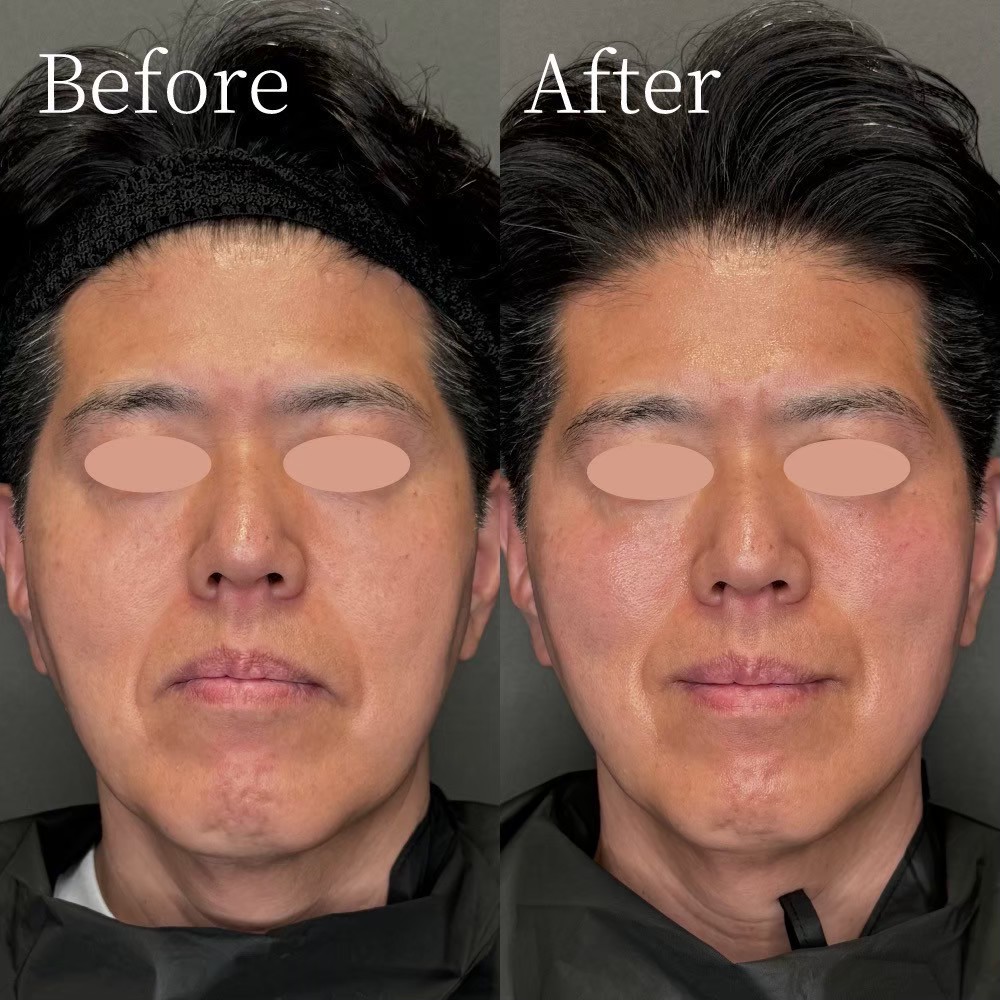
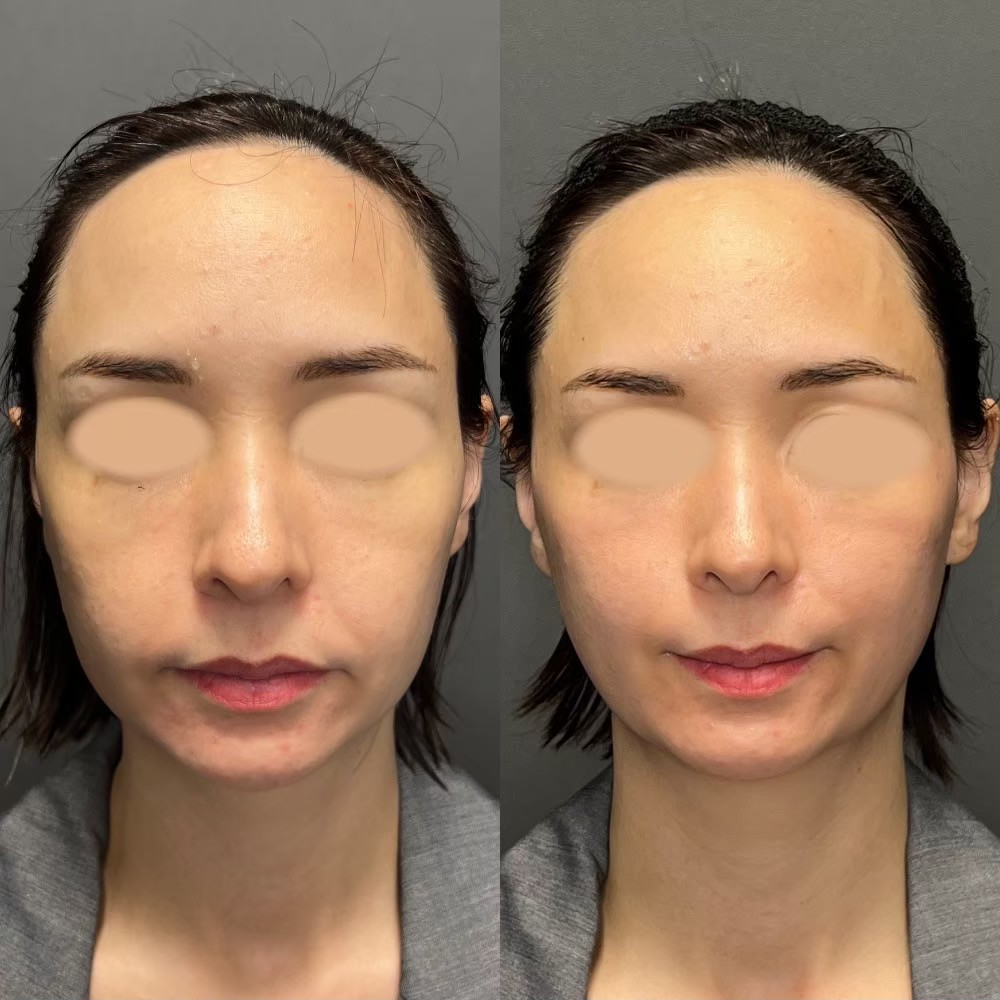
Case 1 — Treatment disclosure
Individual results vary. The information below is provided per the Japanese Medical Advertising Guidelines.
- Treatment name
- Volnewmer (monopolar radiofrequency skin tightening)
- Session length
- 20–60 minutes
- Downtime
- Pain / swelling: usually resolves within a few hours.
Other: temporary warmth (hot flushing) and rare burn risk. If redness or pain persists, contact the clinic promptly. - Post-treatment care
- Washing face / makeup: permitted the same day.
Bathing / hair washing / showering: permitted the same day. - Precautions & contraindications
- Pregnancy or breastfeeding; keloid tendency; active skin disease at the treatment site; implanted electronic devices such as pacemakers; heart disease; severe diabetes; presence of gold threads, silicone, or titanium plates in the treatment area.
- Fees (BIOTOPE CLINIC, tax included)
- ¥66,000–¥165,000 per session, depending on shot count and treatment area (200 / 300 / 500 shots). A Volnewmer × HIFU combination is ¥148,000 per session. The exact plan and fee are confirmed at consultation.
- Insurance
- Not covered by Japanese public health insurance. Prices may change — please confirm at consultation.
Case 2 — Treatment disclosure
Individual results vary. The information below is provided per the Japanese Medical Advertising Guidelines.
- Treatment name
- Volnewmer (monopolar radiofrequency skin tightening)
- Session length
- 20–60 minutes
- Downtime
- Pain / swelling: usually resolves within a few hours.
Other: temporary warmth (hot flushing) and rare burn risk. If redness or pain persists, contact the clinic promptly. - Post-treatment care
- Washing face / makeup: permitted the same day.
Bathing / hair washing / showering: permitted the same day. - Precautions & contraindications
- Pregnancy or breastfeeding; keloid tendency; active skin disease at the treatment site; implanted electronic devices such as pacemakers; heart disease; severe diabetes; presence of gold threads, silicone, or titanium plates in the treatment area.
- Fees (BIOTOPE CLINIC, tax included)
- ¥66,000–¥165,000 per session, depending on shot count and treatment area (200 / 300 / 500 shots). A Volnewmer × HIFU combination is ¥148,000 per session. The exact plan and fee are confirmed at consultation.
- Insurance
- Not covered by Japanese public health insurance. Prices may change — please confirm at consultation.
Case 3 — Treatment disclosure
Individual results vary. The information below is provided per the Japanese Medical Advertising Guidelines.
- Treatment name
- Volnewmer (monopolar radiofrequency skin tightening)
- Session length
- 20–60 minutes
- Downtime
- Pain / swelling: usually resolves within a few hours.
Other: temporary warmth (hot flushing) and rare burn risk. If redness or pain persists, contact the clinic promptly. - Post-treatment care
- Washing face / makeup: permitted the same day.
Bathing / hair washing / showering: permitted the same day. - Precautions & contraindications
- Pregnancy or breastfeeding; keloid tendency; active skin disease at the treatment site; implanted electronic devices such as pacemakers; heart disease; severe diabetes; presence of gold threads, silicone, or titanium plates in the treatment area.
- Fees (BIOTOPE CLINIC, tax included)
- ¥66,000–¥165,000 per session, depending on shot count and treatment area (200 / 300 / 500 shots). A Volnewmer × HIFU combination is ¥148,000 per session. The exact plan and fee are confirmed at consultation.
- Insurance
- Not covered by Japanese public health insurance. Prices may change — please confirm at consultation.
Case 4 — Treatment disclosure
Individual results vary. The information below is provided per the Japanese Medical Advertising Guidelines.
- Treatment name
- Volnewmer (monopolar radiofrequency skin tightening)
- Session length
- 20–60 minutes
- Downtime
- Pain / swelling: usually resolves within a few hours.
Other: temporary warmth (hot flushing) and rare burn risk. If redness or pain persists, contact the clinic promptly. - Post-treatment care
- Washing face / makeup: permitted the same day.
Bathing / hair washing / showering: permitted the same day. - Precautions & contraindications
- Pregnancy or breastfeeding; keloid tendency; active skin disease at the treatment site; implanted electronic devices such as pacemakers; heart disease; severe diabetes; presence of gold threads, silicone, or titanium plates in the treatment area.
- Fees (BIOTOPE CLINIC, tax included)
- ¥66,000–¥165,000 per session, depending on shot count and treatment area (200 / 300 / 500 shots). A Volnewmer × HIFU combination is ¥148,000 per session. The exact plan and fee are confirmed at consultation.
- Insurance
- Not covered by Japanese public health insurance. Prices may change — please confirm at consultation.
Case 5 — Treatment disclosure
Individual results vary. The information below is provided per the Japanese Medical Advertising Guidelines.
- Treatment name
- Volnewmer (monopolar radiofrequency skin tightening)
- Session length
- 20–60 minutes
- Downtime
- Pain / swelling: usually resolves within a few hours.
Other: temporary warmth (hot flushing) and rare burn risk. If redness or pain persists, contact the clinic promptly. - Post-treatment care
- Washing face / makeup: permitted the same day.
Bathing / hair washing / showering: permitted the same day. - Precautions & contraindications
- Pregnancy or breastfeeding; keloid tendency; active skin disease at the treatment site; implanted electronic devices such as pacemakers; heart disease; severe diabetes; presence of gold threads, silicone, or titanium plates in the treatment area.
- Fees (BIOTOPE CLINIC, tax included)
- ¥66,000–¥165,000 per session, depending on shot count and treatment area (200 / 300 / 500 shots). A Volnewmer × HIFU combination is ¥148,000 per session. The exact plan and fee are confirmed at consultation.
- Insurance
- Not covered by Japanese public health insurance. Prices may change — please confirm at consultation.
Case 6 — Treatment disclosure
Individual results vary. The information below is provided per the Japanese Medical Advertising Guidelines.
- Treatment name
- Volnewmer (monopolar radiofrequency skin tightening)
- Session length
- 20–60 minutes
- Downtime
- Pain / swelling: usually resolves within a few hours.
Other: temporary warmth (hot flushing) and rare burn risk. If redness or pain persists, contact the clinic promptly. - Post-treatment care
- Washing face / makeup: permitted the same day.
Bathing / hair washing / showering: permitted the same day. - Precautions & contraindications
- Pregnancy or breastfeeding; keloid tendency; active skin disease at the treatment site; implanted electronic devices such as pacemakers; heart disease; severe diabetes; presence of gold threads, silicone, or titanium plates in the treatment area.
- Fees (BIOTOPE CLINIC, tax included)
- ¥66,000–¥165,000 per session, depending on shot count and treatment area (200 / 300 / 500 shots). A Volnewmer × HIFU combination is ¥148,000 per session. The exact plan and fee are confirmed at consultation.
- Insurance
- Not covered by Japanese public health insurance. Prices may change — please confirm at consultation.
Case 7 — Treatment disclosure
Individual results vary. The information below is provided per the Japanese Medical Advertising Guidelines.
- Treatment name
- Volnewmer (monopolar radiofrequency skin tightening)
- Session length
- 20–60 minutes
- Downtime
- Pain / swelling: usually resolves within a few hours.
Other: temporary warmth (hot flushing) and rare burn risk. If redness or pain persists, contact the clinic promptly. - Post-treatment care
- Washing face / makeup: permitted the same day.
Bathing / hair washing / showering: permitted the same day. - Precautions & contraindications
- Pregnancy or breastfeeding; keloid tendency; active skin disease at the treatment site; implanted electronic devices such as pacemakers; heart disease; severe diabetes; presence of gold threads, silicone, or titanium plates in the treatment area.
- Fees (BIOTOPE CLINIC, tax included)
- ¥66,000–¥165,000 per session, depending on shot count and treatment area (200 / 300 / 500 shots). A Volnewmer × HIFU combination is ¥148,000 per session. The exact plan and fee are confirmed at consultation.
- Insurance
- Not covered by Japanese public health insurance. Prices may change — please confirm at consultation.
Case 8 — Treatment disclosure
Individual results vary. The information below is provided per the Japanese Medical Advertising Guidelines.
- Treatment name
- Volnewmer (monopolar radiofrequency skin tightening)
- Session length
- 20–60 minutes
- Downtime
- Pain / swelling: usually resolves within a few hours.
Other: temporary warmth (hot flushing) and rare burn risk. If redness or pain persists, contact the clinic promptly. - Post-treatment care
- Washing face / makeup: permitted the same day.
Bathing / hair washing / showering: permitted the same day. - Precautions & contraindications
- Pregnancy or breastfeeding; keloid tendency; active skin disease at the treatment site; implanted electronic devices such as pacemakers; heart disease; severe diabetes; presence of gold threads, silicone, or titanium plates in the treatment area.
- Fees (BIOTOPE CLINIC, tax included)
- ¥66,000–¥165,000 per session, depending on shot count and treatment area (200 / 300 / 500 shots). A Volnewmer × HIFU combination is ¥148,000 per session. The exact plan and fee are confirmed at consultation.
- Insurance
- Not covered by Japanese public health insurance. Prices may change — please confirm at consultation.
Case 9 — Treatment disclosure
Individual results vary. The information below is provided per the Japanese Medical Advertising Guidelines.
- Treatment name
- Volnewmer (monopolar radiofrequency skin tightening)
- Session length
- 20–60 minutes
- Downtime
- Pain / swelling: usually resolves within a few hours.
Other: temporary warmth (hot flushing) and rare burn risk. If redness or pain persists, contact the clinic promptly. - Post-treatment care
- Washing face / makeup: permitted the same day.
Bathing / hair washing / showering: permitted the same day. - Precautions & contraindications
- Pregnancy or breastfeeding; keloid tendency; active skin disease at the treatment site; implanted electronic devices such as pacemakers; heart disease; severe diabetes; presence of gold threads, silicone, or titanium plates in the treatment area.
- Fees (BIOTOPE CLINIC, tax included)
- ¥66,000–¥165,000 per session, depending on shot count and treatment area (200 / 300 / 500 shots). A Volnewmer × HIFU combination is ¥148,000 per session. The exact plan and fee are confirmed at consultation.
- Insurance
- Not covered by Japanese public health insurance. Prices may change — please confirm at consultation.
Case 10 — Treatment disclosure
Individual results vary. The information below is provided per the Japanese Medical Advertising Guidelines.
- Treatment name
- Volnewmer (monopolar radiofrequency skin tightening)
- Session length
- 20–60 minutes
- Downtime
- Pain / swelling: usually resolves within a few hours.
Other: temporary warmth (hot flushing) and rare burn risk. If redness or pain persists, contact the clinic promptly. - Post-treatment care
- Washing face / makeup: permitted the same day.
Bathing / hair washing / showering: permitted the same day. - Precautions & contraindications
- Pregnancy or breastfeeding; keloid tendency; active skin disease at the treatment site; implanted electronic devices such as pacemakers; heart disease; severe diabetes; presence of gold threads, silicone, or titanium plates in the treatment area.
- Fees (BIOTOPE CLINIC, tax included)
- ¥66,000–¥165,000 per session, depending on shot count and treatment area (200 / 300 / 500 shots). A Volnewmer × HIFU combination is ¥148,000 per session. The exact plan and fee are confirmed at consultation.
- Insurance
- Not covered by Japanese public health insurance. Prices may change — please confirm at consultation.
Case 11 — Treatment disclosure
Individual results vary. The information below is provided per the Japanese Medical Advertising Guidelines.
- Treatment name
- Volnewmer (monopolar radiofrequency skin tightening)
- Session length
- 20–60 minutes
- Downtime
- Pain / swelling: usually resolves within a few hours.
Other: temporary warmth (hot flushing) and rare burn risk. If redness or pain persists, contact the clinic promptly. - Post-treatment care
- Washing face / makeup: permitted the same day.
Bathing / hair washing / showering: permitted the same day. - Precautions & contraindications
- Pregnancy or breastfeeding; keloid tendency; active skin disease at the treatment site; implanted electronic devices such as pacemakers; heart disease; severe diabetes; presence of gold threads, silicone, or titanium plates in the treatment area.
- Fees (BIOTOPE CLINIC, tax included)
- ¥66,000–¥165,000 per session, depending on shot count and treatment area (200 / 300 / 500 shots). A Volnewmer × HIFU combination is ¥148,000 per session. The exact plan and fee are confirmed at consultation.
- Insurance
- Not covered by Japanese public health insurance. Prices may change — please confirm at consultation.
Case 12 — Treatment disclosure
Individual results vary. The information below is provided per the Japanese Medical Advertising Guidelines.
- Treatment name
- Volnewmer (monopolar radiofrequency skin tightening)
- Session length
- 20–60 minutes
- Downtime
- Pain / swelling: usually resolves within a few hours.
Other: temporary warmth (hot flushing) and rare burn risk. If redness or pain persists, contact the clinic promptly. - Post-treatment care
- Washing face / makeup: permitted the same day.
Bathing / hair washing / showering: permitted the same day. - Precautions & contraindications
- Pregnancy or breastfeeding; keloid tendency; active skin disease at the treatment site; implanted electronic devices such as pacemakers; heart disease; severe diabetes; presence of gold threads, silicone, or titanium plates in the treatment area.
- Fees (BIOTOPE CLINIC, tax included)
- ¥66,000–¥165,000 per session, depending on shot count and treatment area (200 / 300 / 500 shots). A Volnewmer × HIFU combination is ¥148,000 per session. The exact plan and fee are confirmed at consultation.
- Insurance
- Not covered by Japanese public health insurance. Prices may change — please confirm at consultation.
Case 13 — Treatment disclosure
Individual results vary. The information below is provided per the Japanese Medical Advertising Guidelines.
- Treatment name
- Volnewmer (monopolar radiofrequency skin tightening)
- Session length
- 20–60 minutes
- Downtime
- Pain / swelling: usually resolves within a few hours.
Other: temporary warmth (hot flushing) and rare burn risk. If redness or pain persists, contact the clinic promptly. - Post-treatment care
- Washing face / makeup: permitted the same day.
Bathing / hair washing / showering: permitted the same day. - Precautions & contraindications
- Pregnancy or breastfeeding; keloid tendency; active skin disease at the treatment site; implanted electronic devices such as pacemakers; heart disease; severe diabetes; presence of gold threads, silicone, or titanium plates in the treatment area.
- Fees (BIOTOPE CLINIC, tax included)
- ¥66,000–¥165,000 per session, depending on shot count and treatment area (200 / 300 / 500 shots). A Volnewmer × HIFU combination is ¥148,000 per session. The exact plan and fee are confirmed at consultation.
- Insurance
- Not covered by Japanese public health insurance. Prices may change — please confirm at consultation.
Case 14 — Treatment disclosure
Individual results vary. The information below is provided per the Japanese Medical Advertising Guidelines.
- Treatment name
- Volnewmer (monopolar radiofrequency skin tightening)
- Session length
- 20–60 minutes
- Downtime
- Pain / swelling: usually resolves within a few hours.
Other: temporary warmth (hot flushing) and rare burn risk. If redness or pain persists, contact the clinic promptly. - Post-treatment care
- Washing face / makeup: permitted the same day.
Bathing / hair washing / showering: permitted the same day. - Precautions & contraindications
- Pregnancy or breastfeeding; keloid tendency; active skin disease at the treatment site; implanted electronic devices such as pacemakers; heart disease; severe diabetes; presence of gold threads, silicone, or titanium plates in the treatment area.
- Fees (BIOTOPE CLINIC, tax included)
- ¥66,000–¥165,000 per session, depending on shot count and treatment area (200 / 300 / 500 shots). A Volnewmer × HIFU combination is ¥148,000 per session. The exact plan and fee are confirmed at consultation.
- Insurance
- Not covered by Japanese public health insurance. Prices may change — please confirm at consultation.
Case 15 — Treatment disclosure
Individual results vary. The information below is provided per the Japanese Medical Advertising Guidelines.
- Treatment name
- Volnewmer (monopolar radiofrequency skin tightening)
- Session length
- 20–60 minutes
- Downtime
- Pain / swelling: usually resolves within a few hours.
Other: temporary warmth (hot flushing) and rare burn risk. If redness or pain persists, contact the clinic promptly. - Post-treatment care
- Washing face / makeup: permitted the same day.
Bathing / hair washing / showering: permitted the same day. - Precautions & contraindications
- Pregnancy or breastfeeding; keloid tendency; active skin disease at the treatment site; implanted electronic devices such as pacemakers; heart disease; severe diabetes; presence of gold threads, silicone, or titanium plates in the treatment area.
- Fees (BIOTOPE CLINIC, tax included)
- ¥66,000–¥165,000 per session, depending on shot count and treatment area (200 / 300 / 500 shots). A Volnewmer × HIFU combination is ¥148,000 per session. The exact plan and fee are confirmed at consultation.
- Insurance
- Not covered by Japanese public health insurance. Prices may change — please confirm at consultation.
Case 16 — Treatment disclosure
Individual results vary. The information below is provided per the Japanese Medical Advertising Guidelines.
- Treatment name
- Volnewmer (monopolar radiofrequency skin tightening)
- Session length
- 20–60 minutes
- Downtime
- Pain / swelling: usually resolves within a few hours.
Other: temporary warmth (hot flushing) and rare burn risk. If redness or pain persists, contact the clinic promptly. - Post-treatment care
- Washing face / makeup: permitted the same day.
Bathing / hair washing / showering: permitted the same day. - Precautions & contraindications
- Pregnancy or breastfeeding; keloid tendency; active skin disease at the treatment site; implanted electronic devices such as pacemakers; heart disease; severe diabetes; presence of gold threads, silicone, or titanium plates in the treatment area.
- Fees (BIOTOPE CLINIC, tax included)
- ¥66,000–¥165,000 per session, depending on shot count and treatment area (200 / 300 / 500 shots). A Volnewmer × HIFU combination is ¥148,000 per session. The exact plan and fee are confirmed at consultation.
- Insurance
- Not covered by Japanese public health insurance. Prices may change — please confirm at consultation.
Case 17 — Treatment disclosure
Individual results vary. The information below is provided per the Japanese Medical Advertising Guidelines.
- Treatment name
- Volnewmer (monopolar radiofrequency skin tightening)
- Session length
- 20–60 minutes
- Downtime
- Pain / swelling: usually resolves within a few hours.
Other: temporary warmth (hot flushing) and rare burn risk. If redness or pain persists, contact the clinic promptly. - Post-treatment care
- Washing face / makeup: permitted the same day.
Bathing / hair washing / showering: permitted the same day. - Precautions & contraindications
- Pregnancy or breastfeeding; keloid tendency; active skin disease at the treatment site; implanted electronic devices such as pacemakers; heart disease; severe diabetes; presence of gold threads, silicone, or titanium plates in the treatment area.
- Fees (BIOTOPE CLINIC, tax included)
- ¥66,000–¥165,000 per session, depending on shot count and treatment area (200 / 300 / 500 shots). A Volnewmer × HIFU combination is ¥148,000 per session. The exact plan and fee are confirmed at consultation.
- Insurance
- Not covered by Japanese public health insurance. Prices may change — please confirm at consultation.
Case 18 — Treatment disclosure
Individual results vary. The information below is provided per the Japanese Medical Advertising Guidelines.
- Treatment name
- Volnewmer (monopolar radiofrequency skin tightening)
- Session length
- 20–60 minutes
- Downtime
- Pain / swelling: usually resolves within a few hours.
Other: temporary warmth (hot flushing) and rare burn risk. If redness or pain persists, contact the clinic promptly. - Post-treatment care
- Washing face / makeup: permitted the same day.
Bathing / hair washing / showering: permitted the same day. - Precautions & contraindications
- Pregnancy or breastfeeding; keloid tendency; active skin disease at the treatment site; implanted electronic devices such as pacemakers; heart disease; severe diabetes; presence of gold threads, silicone, or titanium plates in the treatment area.
- Fees (BIOTOPE CLINIC, tax included)
- ¥66,000–¥165,000 per session, depending on shot count and treatment area (200 / 300 / 500 shots). A Volnewmer × HIFU combination is ¥148,000 per session. The exact plan and fee are confirmed at consultation.
- Insurance
- Not covered by Japanese public health insurance. Prices may change — please confirm at consultation.
Case 19 — Treatment disclosure
Individual results vary. The information below is provided per the Japanese Medical Advertising Guidelines.
- Treatment name
- Volnewmer (monopolar radiofrequency skin tightening)
- Session length
- 20–60 minutes
- Downtime
- Pain / swelling: usually resolves within a few hours.
Other: temporary warmth (hot flushing) and rare burn risk. If redness or pain persists, contact the clinic promptly. - Post-treatment care
- Washing face / makeup: permitted the same day.
Bathing / hair washing / showering: permitted the same day. - Precautions & contraindications
- Pregnancy or breastfeeding; keloid tendency; active skin disease at the treatment site; implanted electronic devices such as pacemakers; heart disease; severe diabetes; presence of gold threads, silicone, or titanium plates in the treatment area.
- Fees (BIOTOPE CLINIC, tax included)
- ¥66,000–¥165,000 per session, depending on shot count and treatment area (200 / 300 / 500 shots). A Volnewmer × HIFU combination is ¥148,000 per session. The exact plan and fee are confirmed at consultation.
- Insurance
- Not covered by Japanese public health insurance. Prices may change — please confirm at consultation.
Case 20 — Treatment disclosure
Individual results vary. The information below is provided per the Japanese Medical Advertising Guidelines.
- Treatment name
- Volnewmer (monopolar radiofrequency skin tightening)
- Session length
- 20–60 minutes
- Downtime
- Pain / swelling: usually resolves within a few hours.
Other: temporary warmth (hot flushing) and rare burn risk. If redness or pain persists, contact the clinic promptly. - Post-treatment care
- Washing face / makeup: permitted the same day.
Bathing / hair washing / showering: permitted the same day. - Precautions & contraindications
- Pregnancy or breastfeeding; keloid tendency; active skin disease at the treatment site; implanted electronic devices such as pacemakers; heart disease; severe diabetes; presence of gold threads, silicone, or titanium plates in the treatment area.
- Fees (BIOTOPE CLINIC, tax included)
- ¥66,000–¥165,000 per session, depending on shot count and treatment area (200 / 300 / 500 shots). A Volnewmer × HIFU combination is ¥148,000 per session. The exact plan and fee are confirmed at consultation.
- Insurance
- Not covered by Japanese public health insurance. Prices may change — please confirm at consultation.
Case 21 — Treatment disclosure
Individual results vary. The information below is provided per the Japanese Medical Advertising Guidelines.
- Treatment name
- Volnewmer (monopolar radiofrequency skin tightening)
- Session length
- 20–60 minutes
- Downtime
- Pain / swelling: usually resolves within a few hours.
Other: temporary warmth (hot flushing) and rare burn risk. If redness or pain persists, contact the clinic promptly. - Post-treatment care
- Washing face / makeup: permitted the same day.
Bathing / hair washing / showering: permitted the same day. - Precautions & contraindications
- Pregnancy or breastfeeding; keloid tendency; active skin disease at the treatment site; implanted electronic devices such as pacemakers; heart disease; severe diabetes; presence of gold threads, silicone, or titanium plates in the treatment area.
- Fees (BIOTOPE CLINIC, tax included)
- ¥66,000–¥165,000 per session, depending on shot count and treatment area (200 / 300 / 500 shots). A Volnewmer × HIFU combination is ¥148,000 per session. The exact plan and fee are confirmed at consultation.
- Insurance
- Not covered by Japanese public health insurance. Prices may change — please confirm at consultation.
What to Expect: Before, During, and After Treatment
Before Treatment
A thorough consultation is the starting point. Dr. Karibe or a qualified practitioner will assess skin condition, facial anatomy, medical history, and prior treatments. Patients are typically advised to avoid blood-thinning medications and supplements (such as aspirin, ibuprofen, and high-dose vitamin E) for approximately one week before filler injections to minimise bruising risk. Retinoid-based topical products may need to be paused before energy-based treatments depending on the skin's sensitivity.
Photographs are usually taken at baseline to allow objective comparison at follow-up appointments.
During Treatment
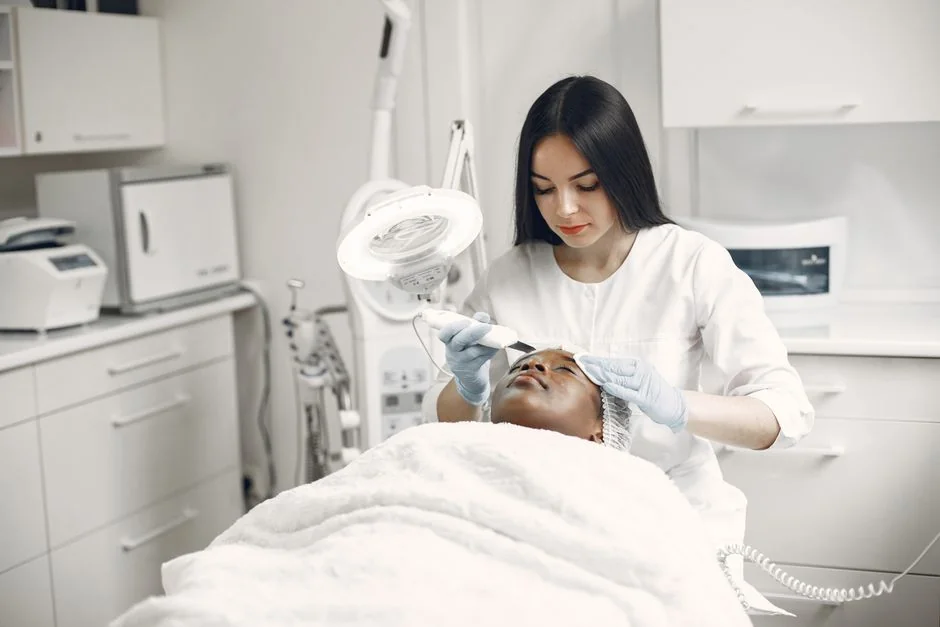
Volnewmer sessions are generally described as warm and comfortable rather than painful. A conductive gel is applied to the skin, and the handpiece is moved across the treatment area in a controlled pattern. Sessions typically last between thirty and sixty minutes depending on the zone being treated.
Botox injections take approximately ten to fifteen minutes for a standard upper-face treatment. A fine-gauge needle is used, and the procedure is performed without anaesthesia in most cases, though a topical numbing cream can be applied if requested. HA filler placement can range from fifteen to thirty minutes; a topical or injectable local anaesthetic is often used to improve comfort.
After Treatment and Recovery
Volnewmer requires minimal downtime. Mild redness and warmth in the treated area are common for several hours post-treatment and typically resolve by the following day. There is no open skin, so there is no wound-care requirement. Patients can return to normal daily activities immediately in most cases.
After Botox, patients are advised to avoid lying down, exercising vigorously, or touching the injection sites for several hours. After HA filler, minor swelling and bruising are common for three to seven days; these are expected and not a cause for concern in most instances. Sun protection and avoidance of intense heat (saunas, steam rooms) are advised for the first week following any injectable treatment.
Volnewmer vs. Alternative RF and Energy Treatments: Comparison
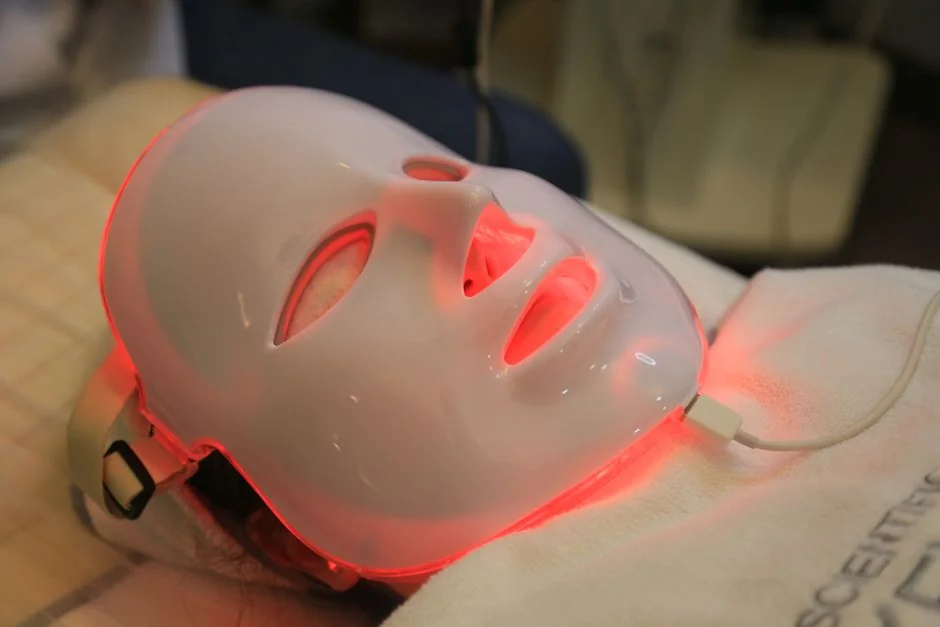
Patients evaluating Volnewmer often compare it with other energy-based devices. The table below summarises the key clinical differences to assist with decision-making.
| Treatment | Mechanism | Invasiveness | Primary Indication | Downtime | Approximate Cost at Clinic |
|---|---|---|---|---|---|
| Volnewmer | Non-invasive volumetric RF | Non-invasive | Skin laxity, dermal remodelling, overall texture | Minimal (hours) | ¥66,000–¥165,000 |
| Morpheus8 | RF microneedling | Minimally invasive (needles) | Acne scars, laxity, pore size, deeper remodelling | 3–5 days (redness, micro-crusting) | Consultation required |
| POTENZA | RF microneedling (monopolar/bipolar) | Minimally invasive (needles) | Texture, pores, mild laxity | 1–3 days | ¥35,000–¥49,800 |
| HIFU | High-intensity focused ultrasound | Non-invasive | Deep tissue lifting (SMAS layer), jawline definition | Minimal (possible temporary soreness) | ¥25,000–¥110,000 |
| CO2 Fractional Laser | Ablative fractional laser | Minimally invasive (ablative) | Acne scars, enlarged pores, surface texture | 5–7 days (redness, peeling) | ¥11,000–¥66,000 |
This comparison is a general guide. The optimal device choice for any individual depends on their specific skin concerns, skin type, tolerance, schedule, and treatment history. A personalised assessment at consultation will clarify which combination is most appropriate.
Cost of Volnewmer Combined with Botox and Filler in Tokyo
Understanding the realistic cost of a combined treatment plan helps patients plan appropriately. At Kojimachi Dermatology & Plastic Surgery Clinic in Ichigaya, Tokyo, the following pricing applies.
Volnewmer: ¥66,000–¥165,000 per session. The range reflects differences in treatment area size and session duration. A course of treatments (typically three to five sessions spaced at intervals of two to four weeks) is often recommended for optimal collagen remodelling, meaning the total investment for a full Volnewmer course may range from approximately ¥200,000 to ¥600,000 or more.
Botox (Allergan): ¥22,000–¥148,000. The wide range reflects the significant variation in the number of units used and the number of areas treated. A standard three-zone upper-face treatment (forehead, glabella, crow's feet) will fall comfortably within this range. A Korean-brand Botox option is also available from ¥9,900–¥45,000 for patients prioritising cost efficiency.
Hyaluronic acid filler: ¥66,000–¥88,000 per syringe. Most patients require one to two syringes per treatment session depending on the degree of volume loss and the areas being addressed. Cheek augmentation and tear trough (under-eye hollow) correction are among the most common indications in this combination context.
Initial consultation: ¥3,300. A surgical consultation with Dr. Karibe specifically is ¥2,200.
For a combined treatment plan incorporating a single Volnewmer session, Botox to the upper face, and one syringe of HA filler, a realistic indicative range at this clinic would be approximately ¥154,000–¥400,000+ depending on the specific products, areas, and volumes chosen. For an accurate quote, we recommend booking a consultation.
Have a question about this treatment?
Message us on LINE or WhatsApp — our English-speaking team usually replies the same day.
Who Is a Good Candidate?
This combination approach tends to offer the most meaningful benefit to patients who present with multiple concurrent signs of facial ageing: visible skin laxity or loss of firmness, dynamic expression lines, and noticeable volume deflation. It is not a single-concern treatment.
In our clinical experience at BIOTOPE CLINIC or Kojimachi Dermatology & Plastic Surgery Clinic, patients in their mid-thirties to mid-fifties often present with exactly this combination of concerns — the skin has begun to lose its intrinsic structural support, early volume loss is visible in the midface, and dynamic lines around the eyes and forehead are becoming more apparent. This is the demographic that tends to respond most appreciably to the three-modality approach.
Good general health, realistic expectations, and commitment to a multi-session plan are also important factors. Patients who are primarily concerned with a single issue — for example, only dynamic wrinkles — may achieve their goals with Botox alone and may not require the added investment of Volnewmer or filler.
Who Should Avoid or Postpone This Combination
Certain individuals are not suitable candidates for one or more components of this plan:
- Pregnancy and breastfeeding: Botox, filler, and energy-based treatments are generally contraindicated during pregnancy and the breastfeeding period.
- Active skin infection or inflammation: Any area with active acne breakouts, cold sores, or inflammatory skin conditions should not be treated until the condition has resolved.
- Neuromuscular conditions: Patients with conditions such as myasthenia gravis or Eaton-Lambert syndrome should not receive Botox.
- Known allergy to HA or Botox components: A full allergy history must be disclosed at consultation.
- Implanted metal devices in the treatment area: Most RF devices carry precautions regarding metal implants such as pacemakers or cochlear implants. This must be disclosed at assessment.
- Patients with severe volume loss or significant skin redundancy: For marked facial ptosis or very significant skin laxity, surgical options such as thread lift (Tesslift) or more advanced surgical interventions may provide more substantial and durable results. Thread lift using Tesslift is available at the clinic from ¥48,000 per thread.
Common Misconceptions About This Treatment Combination
Misconception 1: "Adding filler after RF treatment means the filler will dissolve faster." This concern is understandable, but clinical evidence does not support the idea that properly sequenced RF treatment meaningfully accelerates the degradation of correctly placed HA filler. The key word is sequencing: when Volnewmer is completed before filler is injected (with an appropriate interval), there is no active heat source affecting the filler product. What does affect filler longevity is patient metabolism, the specific filler product selected, and the anatomical location of placement.
Misconception 2: "Botox and filler do the same job, so one replaces the other." This is a persistent misunderstanding even among patients who have received both treatments separately. Botox relaxes muscles to smooth dynamic lines. Filler physically replaces volume and lifts tissue that has descended or atrophied. A fold between the nose and mouth (nasolabial fold), for example, is primarily a structural consequence of volume loss and tissue descent — Botox alone will not address it effectively. Conversely, filler placed in the forehead will not adequately address deep dynamic frown lines caused by active muscle contraction. Understanding this distinction is fundamental to setting realistic expectations.
Frequently Asked Questions
- Q. How many Volnewmer sessions are needed when combining it with Botox and filler?
- Most patients undergoing a combined treatment plan will receive between three and five Volnewmer sessions, spaced two to four weeks apart, before reassessing skin quality outcomes. Botox is typically repeated every three to six months, and filler is topped up at twelve to eighteen months depending on individual response. The specific schedule for your plan will be outlined at consultation.
- Q. Can all three treatments be done on the same day?
- In some cases, Botox and HA filler can be performed during the same appointment. However, Volnewmer is generally scheduled as a separate session — either before or after injectables, with a recommended interval of two to four weeks between Volnewmer and filler placement in the same region. Your treating physician will confirm the safest and most effective sequence for your individual plan.
- Q. Is this combination suitable for East Asian skin?
- Volnewmer is a non-ablative technology and does not carry the same post-inflammatory hyperpigmentation risk associated with ablative lasers, which can be a consideration for patients with Fitzpatrick skin types III–V (common among East Asian patients). Botox and HA filler are widely used in East Asian populations with strong safety records. Individual assessment of skin type and concerns remains important, and this should be discussed openly at consultation.
- Q. How long until results are visible after starting the combination plan?
- Botox results are typically visible within seven to fourteen days of injection. HA filler results are immediate, with the final result apparent once post-injection swelling has resolved — usually within one to two weeks. Volnewmer results emerge more gradually as collagen remodelling progresses; most patients notice improvements from approximately four to twelve weeks after their first session, with cumulative gains over the full course.
- Q. Are there English-speaking staff at the clinic for international patients?
- Yes. Kojimachi Dermatology & Plastic Surgery Clinic in Ichigaya, Tokyo offers consultations in English, making the clinic accessible to expatriates, medical tourists, and international visitors. The clinic is conveniently located near Kojimachi, Hanzomon, and Nagatacho stations.
Have a question about this treatment?
Message us on LINE or WhatsApp — our English-speaking team usually replies the same day.
Summary
Combining Volnewmer, Botox, and hyaluronic acid filler is a well-reasoned, multi-modal approach to facial rejuvenation that addresses the three principal biological dimensions of ageing: structural collagen loss, dynamic line formation, and volume deflation. Each treatment works through a distinct mechanism, and their effects are complementary rather than overlapping.
Realistic expectations, appropriate sequencing, and personalised dosing most strongly determine the quality of outcomes. This is not a one-size-fits-all protocol — the specific combination, session frequency, and product selection should always be tailored to the individual's anatomy, concerns, and goals at a formal medical consultation.
At BIOTOPE CLINIC and Kojimachi Dermatology & Plastic Surgery Clinic in Ichigaya, Tokyo, this combination approach is offered under the clinical direction of Dr. Jun Karibe, a board-certified plastic surgeon certified by the Japan Society of Plastic and Reconstructive Surgery. The clinic is accessible to English-speaking patients and conveniently located near Kojimachi, Hanzomon, and Nagatacho stations.
If you have questions about Volnewmer combined with Botox and filler in Tokyo, our team at BIOTOPE CLINIC and Kojimachi Dermatology & Plastic Surgery Clinic in Ichigaya, Tokyo would be happy to help. We offer consultations in English.
24/7 Consultation & Booking
Book a Consultation or Treatment
Our English-speaking team responds via LINE or WhatsApp — usually the same day.
References
- Fabi SG, Goldman MP. The safety and efficacy of combining radiofrequency and fractional laser for facial rejuvenation. Dermatologic Surgery. 2012.
- Carruthers J, Carruthers A. Botulinum toxin type A: history and current cosmetic use in the upper face. Seminars in Cutaneous Medicine and Surgery. 2001.
- Wollina U, Goldman A. Hyaluronic acid fillers for the treatment of facial aging: clinical results and safety. Clinical Interventions in Aging. 2020.
- Ogilvie P, Sattler G, Galadari H, et al. A randomised, evaluator-blinded study comparing the effectiveness and safety of a cohesive polydensified matrix hyaluronic acid filler versus a monophasic product. Plastic and Reconstructive Surgery. 2015.
- Brobst RW, Ferguson M, Perkins SW. Botulinum toxin in aesthetic medicine: efficacy, safety, and patient satisfaction outcomes. Aesthetic Surgery Journal. 2021.
Related Articles
You may also find these articles useful.
- Volnewmer Tokyo: Monopolar RF Skin Tightening 2026
- Volnewmer vs Thermage vs HIFU: RF Comparison
- Volnewmer Recovery: Downtime, Side Effects & Aftercare
- Volnewmer Cost Tokyo 2026: Sessions, Pricing Guide
- Botox vs Dermal Fillers: Which Treatment Is Right for You?
SUPERVISED BY

Dr. Jun Karibe
MD
Director
Education & Career
Certifications
Awards
MEDICAL REVIEW