Neck Botox in Tokyo: A Practical Guide to the Nefertiti Lift

Many people first notice their neck rather than their face — the vertical cords that appear when speaking, or a jawline that no longer looks as defined in photographs.
It is a common and understandable concern, and one that has become far better understood in the last two years as regulators and researchers have looked more closely at treating the platysma muscle.
This guide explains what the Nefertiti lift (neck Botox) actually is, what the published evidence supports, what it costs in Tokyo, and — importantly for readers in Japan — how the regulatory status here differs from the United States.
What you’ll learn in this article:
- What the Nefertiti lift is and which muscle it targets
- What clinical trials and a recent meta-analysis actually found
- The regulatory position in Japan versus the FDA — and why the difference matters
- Realistic cost, downtime and duration of results in Tokyo
- Who is a suitable candidate, and who should consider a different approach
Have a question about this treatment?
Message us on LINE or WhatsApp — our English-speaking team usually replies the same day.
What Is the Nefertiti Lift? (Neck Botox Explained)

The Nefertiti lift is an injection technique in which botulinum toxin type A is placed into the platysma — a broad, thin sheet of muscle that runs from the collarbone up across the front and sides of the neck and attaches along the jawline.
The technique was first described in the medical literature by Levy in the Journal of Cosmetic and Laser Therapy in 2007, and takes its name from the sharply defined jaw profile of the bust of Queen Nefertiti.
The underlying idea is mechanical.
The platysma pulls downward on the lower face; the muscles above the jawline pull upward.
By selectively relaxing the downward pull along the mandibular border and in the vertical platysmal bands, the upward vectors are left less opposed.
The visible effects patients typically look for are a softening of the vertical neck cords and a cleaner, less blurred jawline contour. It is an injectable procedure, not surgery.
Platysmal bands versus other neck concerns
It is worth separating three different problems that all get described as “an ageing neck”: muscle bands that stand out on contraction, loose or crepey skin, and submental fullness (fat under the chin). Neck Botox addresses the first of these. It does not remove fat or tighten lax skin.
How Neck Botox Works, and What the Evidence Shows
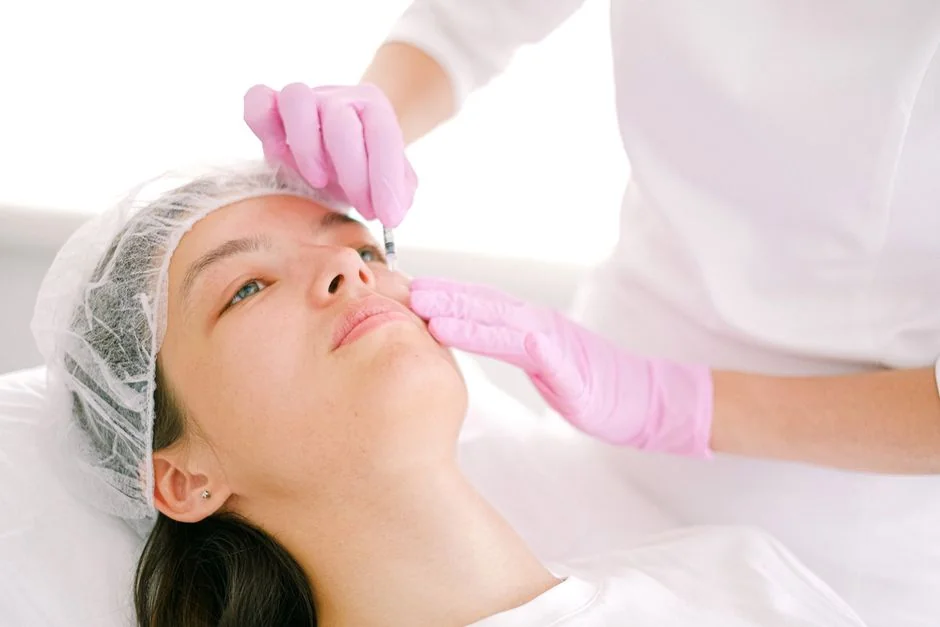
Botulinum toxin type A blocks the release of acetylcholine at the neuromuscular junction, temporarily reducing the muscle’s ability to contract. Applied to the platysma, this reduces the prominence of the bands that appear when the muscle is activated.
The evidence base strengthened considerably in October 2024, when the US Food and Drug Administration approved BOTOX Cosmetic (onabotulinumtoxinA) for the temporary improvement in the appearance of moderate to severe platysma bands associated with platysma muscle activity in adults. This made platysma bands the first approved aesthetic indication for the product outside the face.
In the two phase 3 studies supporting that approval, doses of 26, 31 or 36 units were evaluated. Approximately 65 percent and 62 percent of treated participants reported satisfaction with the appearance of their neck and jawline at day 14, compared with 12 percent on placebo. On the stricter primary endpoint — a two-grade or greater improvement rated by both investigator and participant — 32 percent and 31 percent of treated participants responded, versus 2 percent and 0 percent on placebo (p<0.0001).
A 2026 systematic review and meta-analysis in the Journal of Cosmetic Dermatology pooled three randomised controlled trials totalling 912 participants (483 treated, 429 placebo). Clinical reports indicate a risk ratio of 4.11 (95% CI 3.60–4.69) for at least one-grade improvement and 1.83 (95% CI 1.54–2.17) for at least two-grade improvement, with a satisfaction risk ratio of 5.55 (95% CI 4.15–7.43). Treatment-emergent adverse events occurred in 109 of 483 treated participants versus 114 of 429 on placebo (RR 0.95; 95% CI 0.76–1.20), most being mild, transient injection-site reactions.
Two honest observations follow from those figures. The treatment produces a meaningful and reproducible effect, and satisfaction rates are high — but the proportion achieving a large, two-grade change is a minority. Expectations should be set accordingly.
What People Often Get Wrong About Neck Botox
Misconception 1: “It’s FDA-approved, so it must be approved in Japan”
This is the single most important point for readers being treated in Tokyo. In Japan, the approved indication for BOTOX VISTA is limited to glabellar (frown) lines or lateral canthal (crow’s feet) lines in adults under 65 years of age, according to the package insert revised in March 2025. The therapeutic BOTOX product carries a separate list of medical indications — blepharospasm, hemifacial spasm, cervical dystonia, limb spasticity, severe primary axillary hyperhidrosis, strabismus, spasmodic dysphonia and certain bladder conditions — none of which is platysmal bands for cosmetic purposes.
Neck Botox in Japan is therefore an off-label, self-pay (自由診療) treatment. It is not covered by Japanese national health insurance, and the Japanese approval does not extend to this area. FDA approval, Korean KFDA approval and Japanese approval are three separate things and should never be treated as interchangeable.
Misconception 2: “It replaces a neck lift”
The approved wording is deliberately narrow: temporary improvement in the appearance of bands associated with platysma muscle activity.
Where the concern is genuine skin laxity, submental fat or advanced descent of the tissues, a muscle-relaxing injection is unlikely to deliver what the patient is imagining, and a different modality or a surgical assessment is the more honest answer.
Comparing the options
| Approach | Primary target | Mechanism | Typical duration of effect |
|---|---|---|---|
| Neck Botox (Nefertiti lift) | Platysma muscle activity, visible bands | Temporarily reduces muscle contraction | Approximately 3–6 months per clinic guidance for botulinum toxin |
| HIFU / RF skin tightening | Skin laxity and tissue support | Energy-based thermal stimulation of deeper layers | Varies by device and individual; assessed at consultation |
| RF microneedling (Morpheus8) | Skin quality and texture | Radiofrequency delivered via microneedles | Varies; typically a course of sessions |
| Surgical neck lift | Excess skin and structural descent | Surgical repositioning and excision | Long-lasting, but with operative recovery |
HIFU, Morpheus8 and botulinum toxin injection are all available at BIOTOPE CLINIC in Shirokanedai — it is reasonable to ask during a consultation with Dr. Karibe’s team which of them, or which combination, actually fits your neck.
Cost of Neck Botox in Tokyo
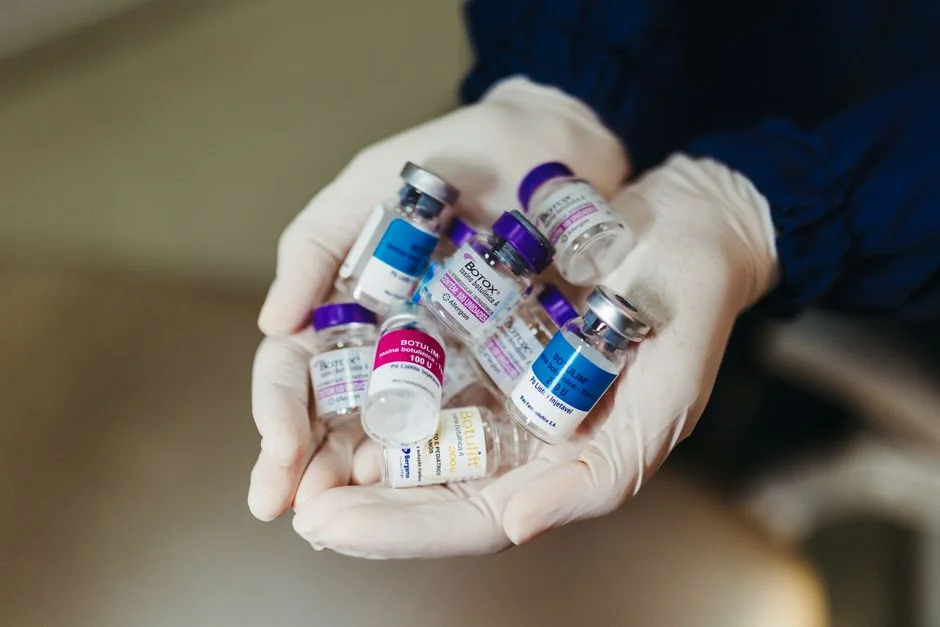
Because the treatment is off-label and self-pay, pricing is set by each clinic and is not standardised across Japan. Within our clinic group, the Nefertiti lift is listed on the current published price table at ¥45,000 (tax included) using a Korean-manufactured botulinum toxin preparation, or ¥55,000 (tax included) using the Allergan product.
The price difference reflects the product, not the technique. The Allergan preparation is the botulinum toxin approved by Japan’s Ministry of Health, Labour and Welfare; Korean-manufactured toxins hold KFDA authorisation and are used internationally but are unapproved in Japan, meaning their safety and efficacy data differ from domestically approved drugs and domestic adverse-event reporting is limited. Our clinic discloses this distinction and requires informed consent before a product is chosen.
If shoulder and neck tension is part of the picture, shoulder (肩こり) botulinum toxin is listed separately at ¥75,000〜 for 100 units and ¥148,000 for 200 units, tax included, depending on the product selected. Prices are subject to change — please see the clinic’s official price page for the current table. For an accurate quote, please book a consultation.
Have a question about this treatment?
Message us on LINE or WhatsApp — our English-speaking team usually replies the same day.
What to Expect, and Who Is a Good Candidate
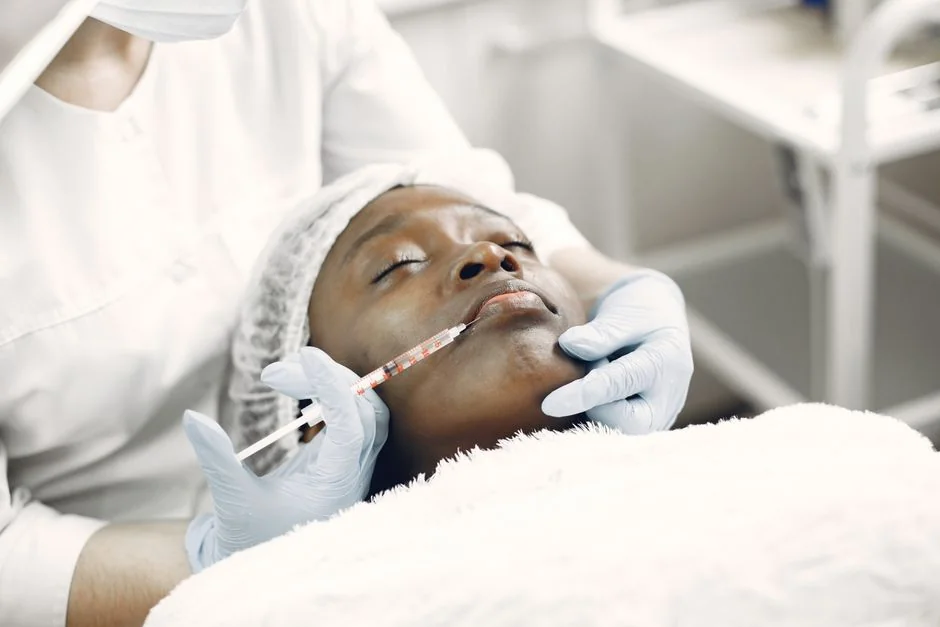
Before, during and after
Treatment begins with an assessment of the neck at rest and on active contraction, since the bands that respond best are the ones that become prominent when the platysma is engaged. Injection points are then mapped along the bands and, in the Nefertiti technique, along the lower border of the jaw.
The injections themselves take only a few minutes. Downtime is minimal: makeup can generally be applied immediately, though our clinic advises avoiding vigorous rubbing, sauna, intense exercise, alcohol and massage for several days afterwards.
Onset is not immediate. Effects typically begin to appear within 2–3 days and persist for approximately 3–6 months before gradually wearing off, at which point retreatment is required to maintain the result.
Who tends to be a suitable candidate
The best candidates generally have visible platysmal banding driven by muscle activity, together with reasonably preserved skin elasticity and no significant submental fat. At BIOTOPE CLINIC in Shirokanedai, we frequently see patients who arrive asking about the neck but whose main concern, once examined, turns out to be jawline definition — which is precisely the overlap the Nefertiti technique was designed for.
Who should avoid it
Botulinum toxin is not appropriate for people who are pregnant or breastfeeding, who have a known hypersensitivity to the preparation, or who have neuromuscular disorders such as myasthenia gravis. Anyone with an active infection at the injection site should postpone treatment.
Because the neck contains muscles involved in swallowing and head posture, dose and depth matter.
Reported risks of injection in this region include temporary difficulty swallowing and neck weakness, so the treatment should only be performed by a physician experienced with the anatomy of the area. Disclose all medications, particularly aminoglycoside antibiotics and other agents affecting neuromuscular transmission.
Where to Get Neck Botox in Tokyo
Within our clinic group, both BIOTOPE CLINIC (Shirokanedai, Minato-ku) and Kojimachi Dermatology & Plastic Surgery Clinic (Ichigaya, Chiyoda-ku) offer English-language consultation with Dr. Jun Karibe’s team. Neck Botox / the Nefertiti lift is handled at BIOTOPE CLINIC (Shirokanedai, Minato-ku). Bookings and enquiries in English: LINE or WhatsApp.
BIOTOPE CLINIC is the group’s cosmetic dermatology, cosmetic and plastic surgery, and men’s health branch, located about one minute from Shirokanedai Station. Dr. Karibe, a plastic surgeon board-certified by the Japan Society of Plastic and Reconstructive Surgery, consults there. Kojimachi Dermatology & Plastic Surgery Clinic is the group’s main office and handles insurance-covered general dermatology — eczema, acne, rashes, warts and moles — alongside general and aesthetic plastic surgery.
Frequently Asked Questions
- Q. Is neck Botox covered by Japanese health insurance?
- No. The approved Japanese indication for BOTOX VISTA covers only glabellar and lateral canthal lines in adults under 65, so cosmetic treatment of the neck is off-label and entirely self-pay. Insurance-covered botulinum toxin in Japan applies to separate medical conditions such as cervical dystonia and severe primary axillary hyperhidrosis.
- Q. How soon will I see a result, and how long does it last?
- Effects generally begin to appear within 2–3 days and last approximately 3–6 months before gradually fading. Individual response varies, and maintenance treatment is needed to sustain the effect.
- Q. Will it tighten loose skin on my neck?
- No. The approved indication is limited to the appearance of bands associated with platysma muscle activity. Skin laxity is a different problem and is usually better addressed with energy-based tightening or, in more advanced cases, surgery.
- Q. Can I have neck Botox during a short trip to Tokyo?
- Downtime is minimal and makeup can typically be worn the same day, so it is practical for visitors. Bear in mind that the effect takes a few days to appear, so you may not see the result before you leave.
- Q. Is the Korean-made toxin safe?
- Korean-manufactured botulinum toxins hold KFDA authorisation and are widely used internationally, but they are unapproved in Japan, their data differ from domestically approved products, and domestic adverse-event reporting is limited. Our clinic explains this distinction and obtains informed consent before you choose a product.
Have a question about this treatment?
Message us on LINE or WhatsApp — our English-speaking team usually replies the same day.
Summary
The Nefertiti lift is a well-described injectable technique that relaxes the platysma to soften vertical neck bands and sharpen the jawline. Randomised trial data and a 2026 meta-analysis of 912 participants support a real, reproducible effect with a favourable short-term safety profile, though the proportion achieving a dramatic two-grade improvement is a minority.
In Japan, this remains an off-label, self-pay procedure — the Japanese approval covers only the glabella and crow’s feet — and it addresses muscle activity rather than skin laxity or fat. A careful in-person assessment is the only reliable way to know whether your neck concern is the kind that responds.
If you have questions about neck Botox and the Nefertiti lift, both BIOTOPE CLINIC (Shirokanedai, Minato-ku) and Kojimachi Dermatology & Plastic Surgery Clinic (Ichigaya, Chiyoda-ku) offer English-language consultation with Dr. Karibe and his team. Neck Botox is primarily handled at BIOTOPE CLINIC. English enquiries: LINE or WhatsApp.
24/7 Consultation & Booking
Book a Consultation or Treatment
Our English-speaking team responds via LINE or WhatsApp — usually the same day.
References
- Levy PM. The ‘Nefertiti lift’: a new technique for specific re-contouring of the jawline. Journal of Cosmetic and Laser Therapy. 2007;9(4):249–252.
- Syed R, Khan AA, Shah S, et al. Efficacy and Safety of OnabotulinumtoxinA for the Treatment of Platysma Prominence: A Systematic Review and Meta-Analysis of Randomized Controlled Trials. Journal of Cosmetic Dermatology. 2026;25(2):e70701.
- Allergan Aesthetics, an AbbVie Company. BOTOX Cosmetic (onabotulinumtoxinA) Receives FDA Approval for Moderate to Severe Vertical Bands Connecting the Jaw and Neck (Platysma Bands). Press release, 18 October 2024.
- BOTOX VISTA for Injection 50 Units, Japanese package insert (revised March 2025). Pharmaceuticals and Medical Devices Agency, Japan. https://www.pmda.go.jp/
- BOTOX for Injection 50 Units, Japanese package insert (revised June 2026). Pharmaceuticals and Medical Devices Agency, Japan. https://www.pmda.go.jp/
Related Articles
You may also find these articles useful.
- Neck Botox Tokyo: Nefertiti Lift Guide
- Botox in Tokyo: Areas, Pricing and What to Expect
- Jawline Slimming Botox Tokyo: Masseter Results & Costs
- FaceTite for Jawline and Neck in Tokyo
- Xerf for Men Tokyo: Jawline & Neck Tightening
SUPERVISED BY
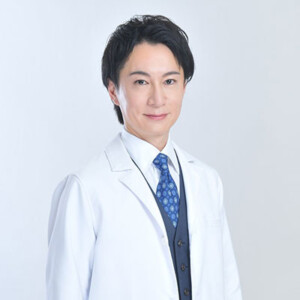
Dr. Jun Karibe
MD
Director
Education & Career
Certifications
Awards
MEDICAL REVIEW