NMN Drip Therapy in Tokyo: An Evidence-Based Guide to Anti-Ageing IV Treatment
If you have been reading about NAD+ and longevity, you have probably seen NMN drips marketed across Tokyo — and wondered whether the science behind them is as strong as the marketing. It is a fair question, particularly when the treatment is self-pay and the price is not trivial.
This guide explains what NMN drip therapy is, what the published human research does and does not show, what it costs in Tokyo, and who is genuinely a reasonable candidate.
What you’ll learn in this article:
- What NMN and NAD+ actually are, in plain language
- What controlled human trials have found — including where results were not significant
- How an NMN IV differs from an oral NMN capsule
- Current NMN drip pricing at our clinic group in Tokyo
- Who is a suitable candidate, and who should hold off
Have a question about this treatment?
Message us on LINE or WhatsApp — our English-speaking team usually replies the same day.
What Is NMN Drip Therapy?
NMN stands for beta-nicotinamide mononucleotide. It is a small molecule found naturally in foods such as broccoli, edamame and avocado, and it is a direct precursor of NAD+ (nicotinamide adenine dinucleotide).
NAD+ is a coenzyme every cell uses for energy metabolism, DNA repair and the activity of the sirtuin family of proteins. Tissue NAD+ concentrations are widely reported to fall with age, which is the biological rationale behind supplementing its precursors.
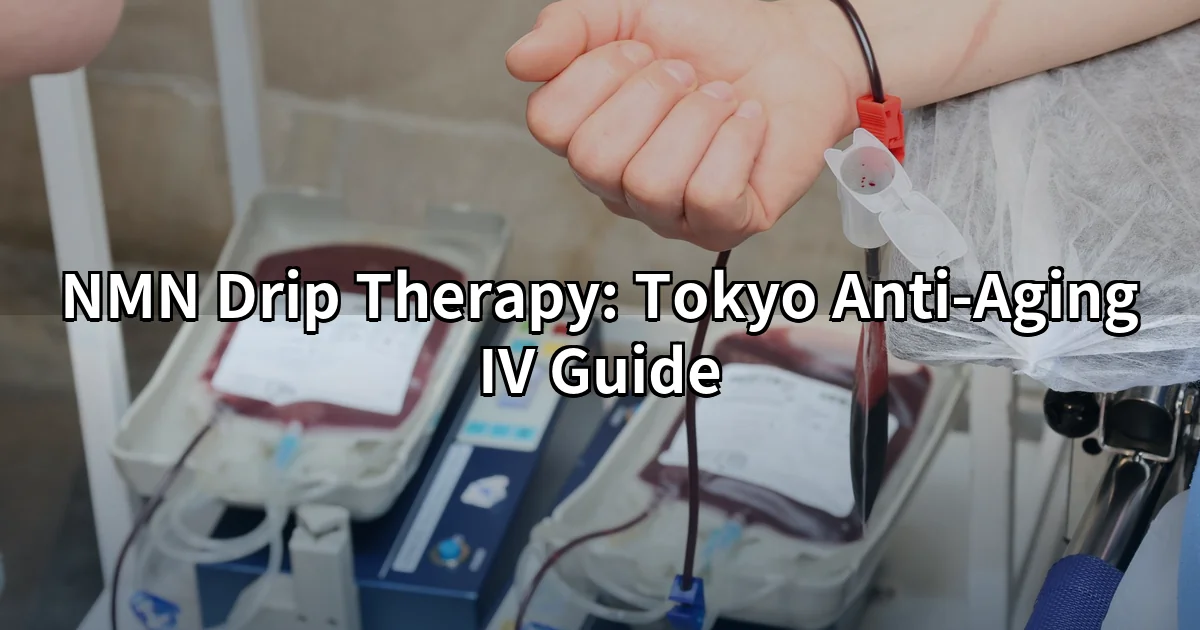
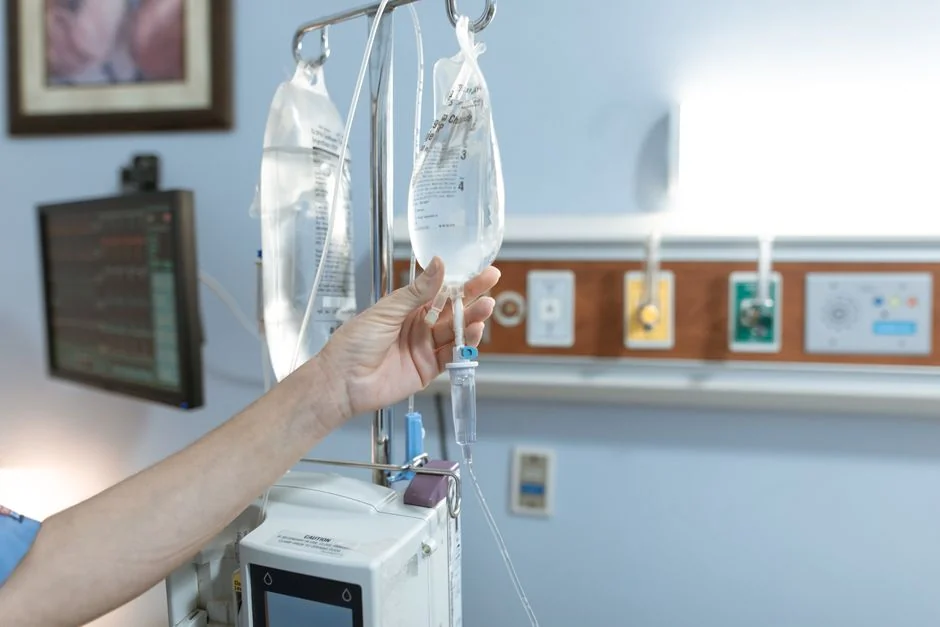
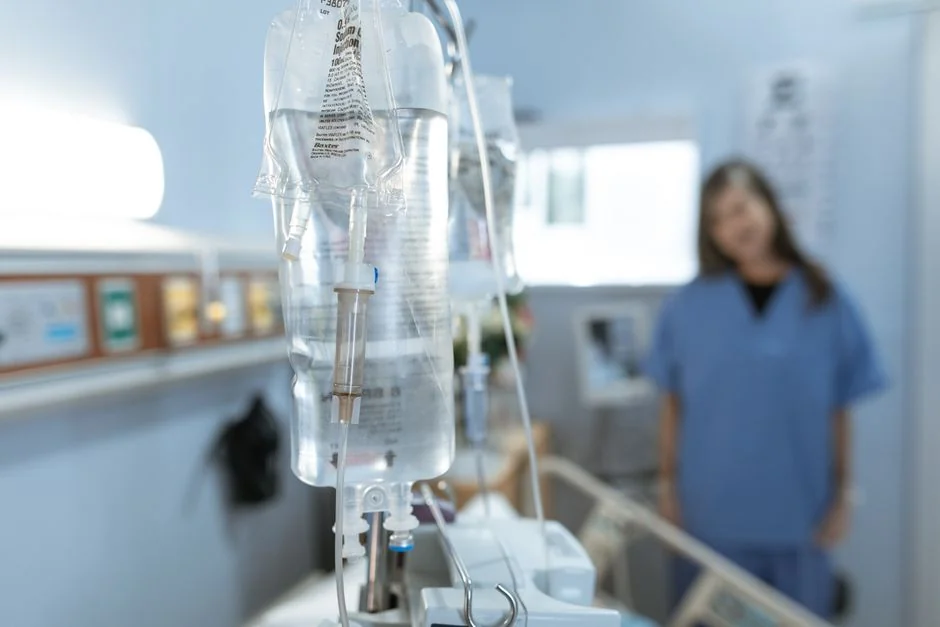
NMN drip therapy delivers NMN dissolved in saline directly into a vein, bypassing digestion. In Japan, NMN is not an approved pharmaceutical: the Ministry of Health, Labour and Welfare’s 2020 notification on drug/food classification (薬生監麻発0331第9号, 31 March 2020) added beta-nicotinamide mononucleotide to the list of ingredient substances not judged to be pharmaceuticals unless medicinal claims are made. In practical terms, that means NMN drips are entirely self-pay (自由診療) and are not covered by Japanese national health insurance.
Why the intravenous route is used
Oral NMN must survive the digestive tract and first-pass liver metabolism. An IV places the molecule straight into the bloodstream, which produces a faster and higher peak in circulating NAD+ precursors than a capsule can.
That is a pharmacokinetic argument, not automatically a clinical one — and the distinction matters when you are deciding what to spend money on.
What the Research Actually Shows

Oral NMN: the stronger evidence base
Most controlled human data on NMN comes from oral supplementation. A randomised, double-blind, placebo-controlled study published in GeroScience in 2024 gave 60 Japanese adults aged 65–75 either 250 mg/day of NMN or placebo for 12 weeks.
Importantly, the study’s primary outcome — a stepping test — showed no significant difference between groups at 4 or 12 weeks. Secondary outcomes did: the NMN group had significantly higher blood NAD+ and NAD+ metabolite levels, a significantly shorter 4-metre walking time than placebo, and improved sleep quality. Studies suggest a benefit, in other words, but the headline finding was not the trial’s primary endpoint.
An earlier randomised, double-blind, placebo-controlled trial in Nutrients (2022) studied 105 older Japanese adults, mean age around 72.6 years, taking 250 mg/day for 12 weeks. The group taking NMN in the afternoon showed the largest effect sizes for sleep-related measures and for the five-times sit-to-stand test, although the overall between-group interaction did not reach significance for sleep quality.
Intravenous NMN: promising but preliminary
Human data on the IV route is far thinner. The most cited study, published in Cureus in 2022, was an open-label, single-arm exploratory trial in 10 healthy volunteers aged 20–70, who received 300 mg of NMN in 100 mL of saline infused at 5 mL per minute.
Blood NAD+ rose significantly from 0.5 to 3 hours after infusion, and blood triglycerides fell significantly from 0.5 to 5 hours. No adverse events were seen on electrocardiogram, vital signs, blood counts, or liver, pancreatic, cardiac and renal markers.
Clinical reports of this kind are genuinely encouraging on short-term safety and on the ability of an IV to raise NAD+. They are not, however, placebo-controlled, and ten participants studied over a single day cannot establish long-term anti-ageing outcomes.
| Feature | NMN IV drip | Oral NMN supplement |
|---|---|---|
| Route | Intravenous infusion, bypasses digestion | Capsule, subject to digestion and liver metabolism |
| Doses used in published human work | 300 mg single infusion (Cureus, 2022) | 250 mg/day for 12 weeks (GeroScience 2024; Nutrients 2022) |
| Strength of evidence | Open-label, single-arm, n=10 | Randomised, double-blind, placebo-controlled |
| Time course | NAD+ rise within 0.5–3 hours | Measured over weeks of daily intake |
| Typical use pattern | Sessions at 1–4 week intervals | Daily, continuous |
| Main practical drawback | Clinic visit required; higher cost per dose | Requires consistency; slower onset |
Cost of NMN Drip Therapy in Tokyo
NMN drips are self-pay, so pricing varies considerably between clinics and by dose. The figures below are those published on our group’s official treatment page at the time of writing.
- First-time trial infusion: 100 mg ¥23,000 / 200 mg ¥34,000 / 300 mg ¥46,000
- NMN 200 mg: single session ¥48,000; 5 sessions ¥228,000; 10 sessions ¥432,000
- NMN 300 mg: single session ¥64,000; 5 sessions ¥304,000; 10 sessions ¥576,000
Oral NMN is also available as an in-clinic supplement (NMN 9000+, 150 mg per capsule, ¥162,000 for 60 capsules), which some patients prefer as a daily baseline between infusions.
Prices can change, and package terms and tax treatment should be confirmed directly. Please see the clinic’s official price page or contact us for a current quote. For an accurate quote, please book a consultation.
Have a question about this treatment?
Message us on LINE or WhatsApp — our English-speaking team usually replies the same day.
What to Expect: Before, During and After

A first appointment begins with a medical consultation covering your health history, current medication, and what you are hoping to achieve. Blood testing is sometimes suggested where an underlying issue such as anaemia or a nutritional deficiency may be a better explanation for fatigue than low NAD+.
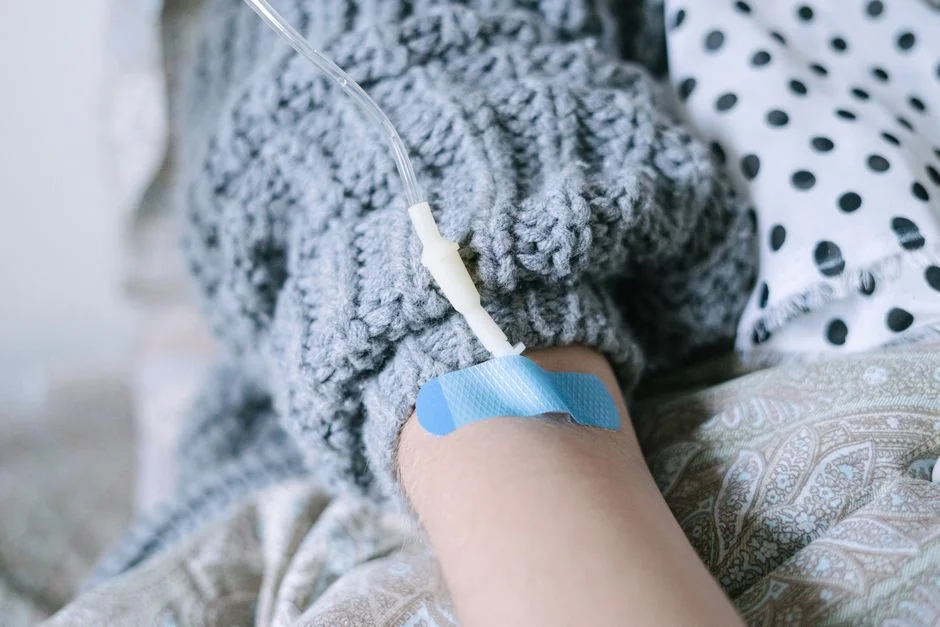
The infusion itself takes approximately 15 to 30 minutes. You sit or recline with a cannula in the arm, and can read or work throughout.
There is no downtime in the surgical sense — you can return to work or travel plans the same day. The clinic’s published information lists discomfort along the vein during infusion as the main expected side effect; as with any intravenous line, bruising or tenderness at the puncture site is also possible.
Who is a reasonable candidate?
Generally, adults in good health from around their thirties onward who are interested in preventive and anti-ageing care, and who understand that this is an elective, self-pay treatment with evolving evidence. Many patients pair it with orthomolecular (nutritional) therapy or other IV drip therapy such as high-dose vitamin C or glutathione.
Who should not proceed without careful discussion?
Anyone who is pregnant or breastfeeding, who has significant liver, kidney or cardiac disease, an active malignancy, or who is taking multiple prescription medications should discuss suitability with a physician first. Published trials excluded participants with malignancies, infections, and psychiatric or metabolic disorders, so evidence in those groups is essentially absent.
If your main complaint is persistent exhaustion, poor sleep or hair loss, a diagnostic work-up should come before an elective infusion — not after it.
What People Often Get Wrong About NMN Drips
“NMN is an approved anti-ageing medicine”
It is not. In Japan, NMN sits on the MHLW list of substances not judged to be pharmaceuticals unless medicinal claims are made, which is a food-ingredient classification rather than a drug approval. There is no approved indication, no insurance coverage, and clinics cannot lawfully advertise NMN as treating or curing disease.
“It’s FDA-approved, so it must be proven”
This conflates two entirely different things. Regulatory analyses report that in letters dated 29 September 2025 the US FDA reversed its earlier position and determined that NMN is not excluded from the definition of a dietary supplement — a decision about whether an oral supplement may be sold, not an approval of intravenous NMN, and with no bearing on Japanese regulatory status.
“An IV must work better than a capsule”
An IV certainly raises circulating NAD+ faster. But the randomised, placebo-controlled evidence to date is on oral dosing, and we are not aware of published head-to-head randomised trials comparing IV against oral NMN for clinical outcomes. In consultations at BIOTOPE CLINIC in Shirokanedai, this is one of the most common points Dr. Karibe’s team walks patients through before booking a course.
Where to Get NMN Drip Therapy in Tokyo
Within our clinic group, both BIOTOPE CLINIC (Shirokanedai, Minato-ku) and Kojimachi Dermatology & Plastic Surgery Clinic (Ichigaya, Chiyoda-ku) offer English-language consultation with Dr. Jun Karibe’s team. NMN drip therapy and preventive/anti-ageing care are handled at BIOTOPE CLINIC in Shirokanedai, while insurance-covered general dermatology — eczema, acne, rashes, warts and moles — is handled at Kojimachi. Bookings and enquiries in English: LINE or WhatsApp.
Related preventive services such as orthomolecular nutritional therapy, gut microbiome analysis and high-dose vitamin C or glutathione IV drips are also available at BIOTOPE CLINIC in Shirokanedai — feel free to ask about them during a consultation with Dr. Karibe.
Frequently Asked Questions
- Q. How often should NMN drips be repeated?
- Our clinic’s published guidance suggests intervals of roughly one to four weeks for patients seeking sustained effects. The appropriate interval depends on your goals and response, and should be set at consultation rather than fixed in advance.
- Q. Will I feel a difference immediately?
- Some patients report improved energy or sleep, but these are subjective impressions rather than trial endpoints, and no reputable clinic can promise a specific outcome. The one measurable, published short-term change after IV NMN is a rise in blood NAD+ within hours of infusion.
- Q. Is NMN drip therapy covered by Japanese health insurance?
- No. Because NMN is classified as a non-pharmaceutical ingredient in Japan, drips are entirely self-pay. You should budget for the full listed price, and note that National Health Insurance and most travel insurance will not reimburse elective anti-ageing treatment.
- Q. Can I do this as a visitor to Tokyo on a short trip?
- Yes — the session takes about 15 to 30 minutes with no downtime, so a single infusion fits easily into a trip. Both clinics in our group provide English-language consultation, so you can discuss suitability before booking.
Have a question about this treatment?
Message us on LINE or WhatsApp — our English-speaking team usually replies the same day.
Summary
NMN drip therapy delivers a NAD+ precursor directly into the bloodstream, and the available human data indicates it is well tolerated in the short term and does raise blood NAD+ within hours.
The stronger randomised evidence, however, sits with oral NMN at around 250 mg daily over 12 weeks, where trials have shown higher NAD+ levels and some measures of walking speed and sleep quality improving — while primary endpoints have not always reached significance. Treat NMN as a reasonable, evidence-informed option within preventive care, not as a proven anti-ageing cure.
If you have questions about NMN drip therapy, both BIOTOPE CLINIC (Shirokanedai, Minato-ku) and Kojimachi Dermatology & Plastic Surgery Clinic (Ichigaya, Chiyoda-ku) offer English-language consultation with Dr. Karibe and his team. NMN drip therapy is primarily handled at BIOTOPE CLINIC in Shirokanedai. English enquiries: LINE or WhatsApp.
24/7 Consultation & Booking
Book a Consultation or Treatment
Our English-speaking team responds via LINE or WhatsApp — usually the same day.
References
- Kimura S, Ichikawa M, Sugawara S, Katagiri T, Hirasawa Y, Ishikawa T, Matsunaga W, Gotoh A. Nicotinamide Mononucleotide Is Safely Metabolized and Significantly Reduces Blood Triglyceride Levels in Healthy Individuals. Cureus. 2022.
- Morifuji M, Higashi S, Ebihara S, Nagata M. Ingestion of β-nicotinamide mononucleotide increased blood NAD levels, maintained walking speed, and improved sleep quality in older adults in a double-blind randomized, placebo-controlled study. GeroScience. 2024;46(5):4671–4688.
- Kim M, et al. Effect of 12-Week Intake of Nicotinamide Mononucleotide on Sleep Quality, Fatigue, and Physical Performance in Older Japanese Adults: A Randomized, Double-Blind Placebo-Controlled Study. Nutrients. 2022;14(4):755.
- Ministry of Health, Labour and Welfare, Japan. Examples of the handling of ingredient substances (raw materials) in the drug/food classification (薬生監麻発0331第9号). 31 March 2020.
- Venable LLP. FDA Declares Nicotinamide Mononucleotide Is a Dietary Supplement. 2025.
Related Articles
You may also find these articles useful.
- Where to Get NAD+ IV in Tokyo (2026 English-Speaking Clinic Guide)
- NMN vs NAD+ in Japan: Which Should You Actually Take?
- IV Vitamin Drip Tokyo: Wellness Treatment for Expats
- IV Vitamin Drip Tokyo: Wellness Treatment for Expats
- Anti-Aging Treatments Tokyo: Complete Guide for Expats
SUPERVISED BY

Dr. Jun Karibe
MD
Director
Education & Career
Certifications
Awards
MEDICAL REVIEW