Embrace RF in Tokyo: FaceTite plus Morpheus8 Explained
If you have started noticing softness along the jawline, a fullness under the chin that photographs badly, or a neck that no longer looks as defined as it did a decade ago, you are dealing with one of the most stubborn concerns in facial ageing.
Creams do not reach it, and many people feel they are not ready for a surgical facelift.
Embrace RF sits in that gap. This article explains what the combination of FaceTite and Morpheus8 actually does to the tissue, what the published evidence shows, what recovery genuinely involves, and how to judge whether you are a suitable candidate.
What you’ll learn in this article:
- What Embrace RF is, and how FaceTite and Morpheus8 divide the work between deep and superficial tissue layers
- What peer-reviewed studies report for skin tightening, patient satisfaction and complication rates
- Realistic recovery: swelling, firmness, return to work, and when the final result appears
- How cost is structured in Tokyo, and why a facial quote requires an in-person assessment
- Who benefits most from this approach, and who should consider surgery or a non-invasive option instead
Have a question about this treatment?
Message us on LINE or WhatsApp — our English-speaking team usually replies the same day.
What Is Embrace RF?
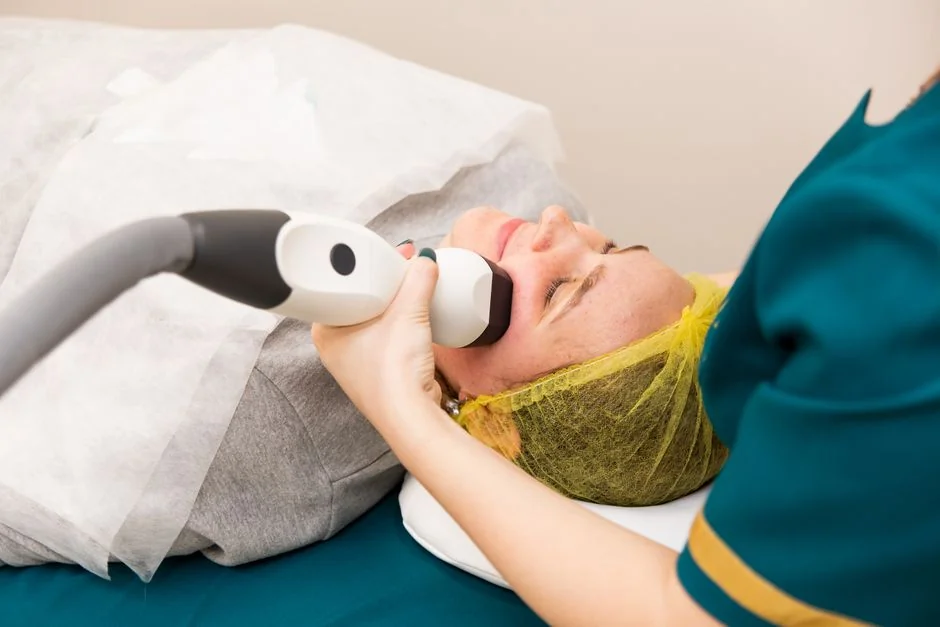
Embrace RF is not a single machine. It is a treatment protocol that combines two radiofrequency (RF) technologies from the same platform, delivered in one visit under local anaesthesia: FaceTite and Morpheus8.
The logic is straightforward. Lower-face and neck laxity is rarely a problem in only one tissue layer. There is usually a combination of loose skin, a fibrous support layer that has weakened, and a pocket of fat that has shifted or enlarged.
Treating only one of those layers tends to produce a partial result. Embrace RF addresses the deep layer and the dermis in the same session, which is why it is often described as a “subdermal adipose remodelling” approach rather than a simple skin treatment.
What FaceTite Does
FaceTite is a bipolar radiofrequency-assisted lipolysis (RFAL) device.
A thin, blunt-tipped internal cannula is inserted through a small entry point under local anaesthetic, while a second electrode rests on the skin surface. Energy travels between the two, heating the fibrous septae and fat in between.
This does two things simultaneously: it liquefies and coagulates small volumes of fat, and it heats the fibrous network that tethers skin to deeper structures, causing it to contract. In the neck and jowl, this deep contraction is what produces the visible change in contour.
What Morpheus8 Does
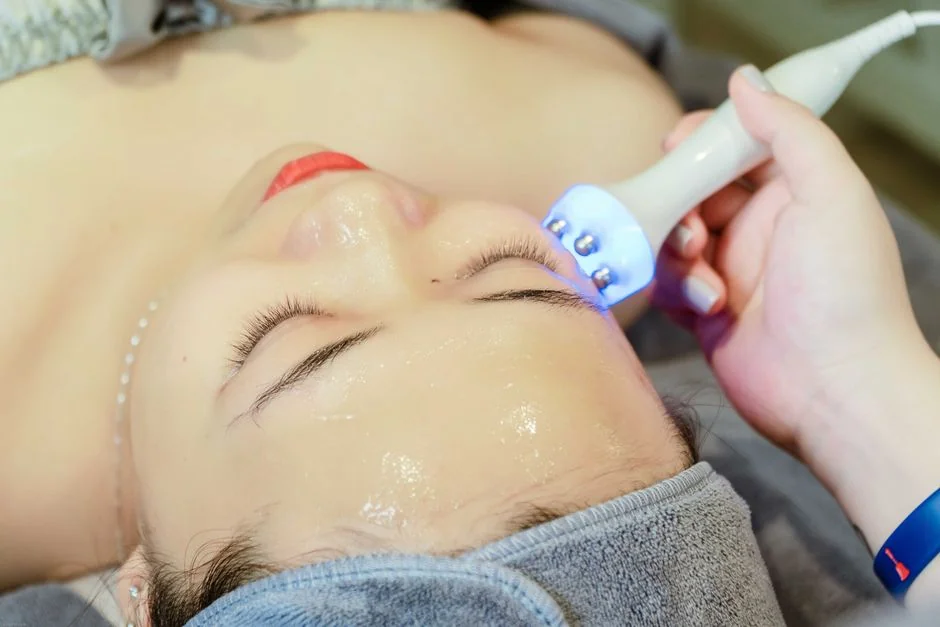
Morpheus 8 is a fractional bipolar RF microneedling device. Insulated needles pass through the epidermis and deliver radiofrequency energy at a set depth in the dermis and immediate subdermis, creating columns of controlled thermal injury while leaving untreated tissue in between.
Those untreated islands are the reason recovery is faster than with fully ablative resurfacing: they act as reservoirs of healthy tissue for repair.
The healing response drives new collagen and elastin formation over the following months, which improves skin texture, pore appearance and fine crepiness — the qualities FaceTite alone does not address.
The InMode System with the Morpheus8 applicators holds US FDA 510(k) clearance (K200947, decision date 2 July 2020), and the manufacturer announced a further clearance in July 2024 covering fractional radiofrequency delivery in dermatologic procedures where coagulation or contraction of soft tissue is needed. Note: a US clearance is a US regulatory decision only and is not the same as approval under Japan’s Pharmaceuticals and Medical Devices Act.
How Embrace RF Works: The Physics Behind the Result
Collagen contracts when it is heated past a threshold. Published reviews of radiofrequency in aesthetic surgery describe that for exposures of several seconds, the shrinkage temperature of collagen falls in the range of 60–65°C, whereas for millisecond exposures the threshold rises above 85°C.
That is why device temperature control matters more than raw power. In the same literature, subdermal temperatures of 65–68°C with skin surface temperatures of 38–42°C are described as the window required to obtain optimal contraction without injuring the epidermis.
In the largest published series of this combination, the reported protocol used an internal temperature cut-off of 68°C and an external cut-off of 38°C. The internal probe measures tissue temperature in real time and modulates energy delivery, which is the principal safety mechanism separating this from older, uncontrolled RF approaches.
There are two phases to the result. Immediate contraction of heated collagen produces some change on the day, but the more meaningful improvement comes from neocollagenesis — the gradual laying down of new collagen — which the published series describes as taking approximately three to four months.
Expected Results: What the Published Evidence Shows
The most substantial dataset on this specific combination is a multicentre retrospective study of 247 patients (234 women, 13 men, mean age 55.1 years) treated between January 2013 and December 2018 with bipolar RF (FaceTite) and fractional bipolar RF (the device that became Morpheus8), published in Plastic and Reconstructive Surgery – Global Open in 2020.
In that series, patients improved by a mean of 1.4 points (SD ±1.1) on the Baker Face/Neck Classification, a graded scale of lower-face and neck laxity. Ninety-three percent indicated they were pleased with their results and would undergo the procedure again, and 97.2 percent of cases were performed under local anaesthesia alone.
For the deep-layer component specifically, a separate prospective series of 55 patients treated with RFAL of the neck and lower face reported soft-tissue contraction of up to 34 percent over 12 months, with 85 percent of patients satisfied overall and 90 percent of outcomes rated moderate to excellent by an independent surgeon at six months. Mean energy delivered was 4.5 kJ, and the average operative time for the neck was around 45 minutes.
Studies suggest, then, a meaningful but moderate improvement — a redefined jaw and neck line and better skin quality — not the degree of change a surgical neck lift produces. Individual outcomes vary with age, skin quality, fat volume and the degree of underlying laxity, and no result can be guaranteed.
What People Often Get Wrong About Embrace RF
Misconception 1: “It is a non-surgical facelift with no downtime.”
Embrace RF is minimally invasive, not non-invasive. It requires local anaesthetic infiltration, small entry points for the cannula, and it carries a real complication profile. In the 247-patient series, prolonged swelling beyond six weeks occurred in 4.8 percent, a persistent hardened area beyond twelve weeks in 3.2 percent, and marginal mandibular neuropraxia — temporary weakness of the nerve controlling the lower lip — in 1.2 percent. All resolved without further intervention, but they are not trivial to live through.
A 2022 systematic review in Annals of Plastic Surgery that evaluated 30 articles on subsurface radiofrequency treatments noted that hardening, induration and nodularity were the most frequently reported complications across the literature.
Misconception 2: “You see the final result straight away.”
You do not. Swelling dominates the first weeks, and the collagen-driven improvement accrues over roughly three to four months. Judging the outcome at week two is judging an oedematous face, not a finished result.
It is also worth being aware that the same 2022 systematic review concluded that the evidence base is dominated by small studies (median sample size 25 patients) and that comparative evidence establishing superiority over conventional submental liposuction or lipectomy remains limited. A clinic that presents this as settled science is overstating the literature; an honest consultation should present it as a well-tolerated option with encouraging but methodologically modest evidence behind it.
Embrace RF Compared With the Alternatives
The right choice depends on which tissue layer is actually driving your concern. The table below sets out how the main options differ.
| Option | Tissue layer targeted | Anaesthesia | Typical downtime | Best suited to | Main limitation |
|---|---|---|---|---|---|
| Embrace RF (FaceTite + Morpheus8) | Fat and fibrous septae plus dermis, in one session | Local | Swelling peaks day 1, mostly settles in 1–2 weeks; residual facial oedema up to about 1 month | Mild to moderate jowl and neck laxity with some excess fat, plus skin-quality concerns | Not a substitute for surgery in advanced laxity; final result takes 3–4 months |
| FaceTite alone | Fat and fibrous septae (deep) | Local | Similar to above | Contour and volume problems where skin surface quality is already good | Does not improve texture, pores or fine crepiness |
| Morpheus8 alone | Dermis and immediate subdermis | Topical numbing | Redness and grid marks for several days | Texture, acne scarring, enlarged pores, mild skin laxity | Limited effect on jowl fat or a heavy submental pocket |
| HIFU (focused ultrasound) | SMAS and deep dermis, non-invasively | None | Essentially none | Early laxity, or patients who cannot accept any downtime | Gentler effect; no fat removal; usually needs repeating |
| Surgical lift | Skin, SMAS and platysma, with excision | Local with sedation or general | Weeks | Moderate to severe laxity with genuine skin excess | Greater cost, greater recovery, scars |
HIFU and Morpheus8 are both offered as standalone treatments at BIOTOPE CLINIC in Shirokanedai — if you are unsure whether you need the deep component at all, this is worth raising during a consultation with Dr. Karibe’s team.
Cost of Embrace RF in Tokyo
Embrace RF is a self-pay (自由診療) cosmetic procedure. It is not covered by Japanese national health insurance, and neither is any consultation conducted specifically for it, so the full amount is payable by the patient.
Pricing in Tokyo is structured by treatment area rather than by session, because the energy required for a small submental pocket and for a full lower face and neck differ substantially. On our group’s published price list (in effect from 1 October 2023), Embrace RF is listed at ¥330,000 including tax for the upper arms, and ¥330,000 including tax for the abdomen (upper or lower).
Facial and neck area pricing is not published as a single figure on that page, because the area combination is determined at assessment. Please see the clinic’s official price page or contact us for a current quote.
For context on the non-invasive alternative, HIFU for the full face plus under-chin is listed at ¥110,000 including tax, with an additional ¥11,000 where the treatment is performed by a physician. Prices are subject to revision, so always confirm the current figure at the time of booking.
Two further costs are worth budgeting for: a post-treatment compression garment where the neck is treated, and follow-up review appointments. Ask for these to be itemised in writing before you commit. For an accurate quote, please book a consultation.
Have a question about this treatment?
Message us on LINE or WhatsApp — our English-speaking team usually replies the same day.
What to Expect: Before, During and After
Before and During
At BIOTOPE CLINIC in Shirokanedai, a consultation for lower-face laxity begins with a physical assessment of three separate variables: skin quality and elasticity, the volume and position of submental and jowl fat, and the definition of the underlying jawline and platysma. Photographs are taken as a baseline, and your medical history, medications and any history of keloid scarring are reviewed.
On the day, the treatment area is marked while you are seated upright, then local anaesthetic is infiltrated. The FaceTite cannula is introduced through small entry points, and the device is passed through the deep layer with continuous temperature monitoring until the endpoint temperature is reached. Morpheus8 passes are then performed over the same region, typically at more than one depth setting.
Published reports describe an operative time in the region of 45 minutes for the neck; a full lower face and neck treatment takes longer. Most patients describe pressure and warmth rather than sharp pain once the anaesthetic has taken effect.
Recovery Timeline
Swelling peaks around day one and largely resolves over one to two weeks. Some residual oedema in the face can persist for roughly a month, and on body areas for two to three months; mild left-to-right asymmetry during healing usually settles within about three months.
Most people can return to light desk work within a few days to a week, depending on how visible their treated area is and how much swelling they are willing to be seen with. Alcohol is generally avoided for around three days, and hot baths, saunas and strenuous exercise are deferred until swelling has settled.
Firmness or small hard areas under the skin during the first weeks are common and typically respond to gentle massage. Anything that is painful, spreading, hot to touch, or worsening rather than improving should be reviewed by the clinic promptly.
Who Is a Good Candidate — and Who Isn’t
Likely to benefit: patients in roughly their late thirties to early sixties with mild to moderate jowl or submental laxity, reasonable skin elasticity, a modest amount of excess fat in the treated area, and realistic expectations about a moderate improvement. The mean age in the largest published series was 55.1 years, so this is not a treatment confined to younger patients.
Better served by an alternative: patients with genuine skin excess and deep platysmal banding, for whom skin tightening cannot substitute for skin removal — a surgical consultation is the honest recommendation. Patients whose only concern is texture, pores or acne scarring do not need the deep component and may be suited to Morpheus8 alone. Patients who cannot accommodate any downtime may prefer HIFU.
Should not proceed, or require careful assessment first: anyone who is pregnant or breastfeeding; anyone with an active skin infection or inflammatory condition in the treatment area; anyone with a pacemaker, implantable defibrillator or other implanted electronic device, since radiofrequency energy can interfere with them; patients with a bleeding disorder or on anticoagulants; patients with poorly controlled diabetes or impaired wound healing; and patients with a history of keloid or hypertrophic scarring. Metal implants or permanent fillers in the treatment field must be disclosed. Because the marginal mandibular nerve runs through the jawline treatment zone, any prior facial nerve injury or facial surgery should be discussed in detail.
Where to Get Embrace RF in Tokyo
Within our clinic group, both BIOTOPE CLINIC (Shirokanedai, Minato-ku) and Kojimachi Dermatology & Plastic Surgery Clinic (Ichigaya, Chiyoda-ku) offer English-language consultation with Dr. Jun Karibe’s team. Embrace RF, as a cosmetic radiofrequency and body-contouring treatment, is handled at BIOTOPE CLINIC in Shirokanedai. Bookings and enquiries in English: LINE or WhatsApp.
Kojimachi is the group’s main office and covers insurance-covered general dermatology — eczema, acne, rashes, warts and moles — alongside general and aesthetic plastic surgery. BIOTOPE CLINIC in Shirokanedai is the cosmetic dermatology, cosmetic surgery and men’s health branch, and is where Dr. Karibe personally consults. Both branches support English-speaking patients.
One point specific to being treated in Japan: many aesthetic energy devices in use here are not approved under Japan’s Pharmaceuticals and Medical Devices Act and are obtained through the route by which a physician may import a device for use in treating their own patients, under the physician’s own responsibility, as set out by Japan’s regional health bureaus. A US FDA clearance is not a Japanese approval. It is entirely reasonable to ask any clinic — ours included — which device will be used, its regulatory status in Japan, and to have the self-pay nature of the treatment and its main risks explained before you consent.
Frequently Asked Questions
- Q. How many Embrace RF sessions will I need?
- The combination is usually planned as a single session for the deep FaceTite component, since the fibrous contraction is not something that is repeated at short intervals. Some patients add further Morpheus8 sessions afterwards for skin quality, which is decided at review rather than assumed in advance.
- Q. When will I see the final result?
- Some change is visible once the initial swelling settles at two to four weeks, but the collagen-driven improvement continues for approximately three to four months according to the published series. Assessment photographs are best compared at the three-month point rather than earlier.
- Q. Is it painful?
- The treatment is performed under local anaesthesia — in the largest published series, 97.2 percent of cases were done this way — and most patients report pressure and heat rather than sharp pain. Some tenderness and tightness for several days afterwards is normal.
- Q. Can I have this as a medical tourist on a short trip to Tokyo?
- It is possible, but you should plan for a consultation before the treatment day and at least one review before you fly, and expect visible swelling for one to two weeks. Long-haul flights immediately after any procedure involving swelling are best discussed with the treating physician first.
- Q. Is Embrace RF covered by Japanese health insurance?
- No. It is a cosmetic self-pay treatment, so the consultation, the procedure and any follow-up related to it are charged privately. Insurance-covered dermatology at our group is handled separately at the Kojimachi branch.
Have a question about this treatment?
Message us on LINE or WhatsApp — our English-speaking team usually replies the same day.
Summary
Embrace RF pairs FaceTite, which heats and contracts the deep fibrous layer while reducing small volumes of fat, with Morpheus8, which remodels the dermis through fractional radiofrequency microneedling. Treating both layers in one session under local anaesthesia is the core rationale.
The published evidence is encouraging but measured: a mean improvement of 1.4 points on the Baker Face/Neck Classification and 93 percent patient satisfaction in a 247-patient series, alongside up to 34 percent soft-tissue contraction over twelve months reported for the deep RFAL component. A 2022 systematic review reminds us that these studies are mostly small and that superiority over conventional surgical methods has not been established.
Practically, this suits mild to moderate jowl and neck laxity with reasonable skin elasticity, involves one to two weeks of meaningful swelling, and delivers its final result at around three to four months. Advanced laxity with true skin excess is better served by surgery.
If you have questions about Embrace RF, FaceTite or Morpheus8, both BIOTOPE CLINIC (Shirokanedai, Minato-ku) and Kojimachi Dermatology & Plastic Surgery Clinic (Ichigaya, Chiyoda-ku) offer English-language consultation with Dr. Karibe and his team. Embrace RF is primarily handled at BIOTOPE CLINIC in Shirokanedai. English enquiries: LINE or WhatsApp.
24/7 Consultation & Booking
Book a Consultation or Treatment
Our English-speaking team responds via LINE or WhatsApp — usually the same day.
References
- Dayan E, Rovatti P, Aston S, Chia CT, Rohrich R, Theodorou S. Multimodal Radiofrequency Application for Lower Face and Neck Laxity. Plastic and Reconstructive Surgery – Global Open. 2020;8(8):e2862.
- Dayan E, Burns AJ, Rohrich RJ, Theodorou S. The Use of Radiofrequency in Aesthetic Surgery. Plastic and Reconstructive Surgery – Global Open. 2020;8(8):e2861.
- Keramidas E, Rodopoulou S. Radiofrequency-assisted Liposuction for Neck and Lower Face Adipodermal Remodeling and Contouring. Plastic and Reconstructive Surgery – Global Open. 2016;4(8):e850.
- Swanson E. A Systematic Review of Subsurface Radiofrequency Treatments in Plastic Surgery. Annals of Plastic Surgery. 2022;89(3):274–285.
- U.S. Food and Drug Administration. 510(k) Premarket Notification Database: K200947, InMode System with the Morpheus8 Applicators, decision date 2 July 2020. https://www.fda.gov/
Related Articles
You may also find these articles useful.
- Non-Surgical Facelift Tokyo: Embrace RF for 40s & 50s
- FaceTite vs Surgical Facelift in Tokyo: Which to Choose
- Morpheus8 RF Microneedling Tokyo: Review and Cost
- FaceTite Tokyo: RF-Assisted Lipolysis for Facial Contouring
- Embrace RF vs HIFU vs Deep Plane Facelift Tokyo
SUPERVISED BY
Dr. Jun Karibe
MD
Director
Education & Career
Certifications
Awards
MEDICAL REVIEW