Dutasteride 0.5 mg in Japan: Dosage, Brands and What Doctors Prescribe
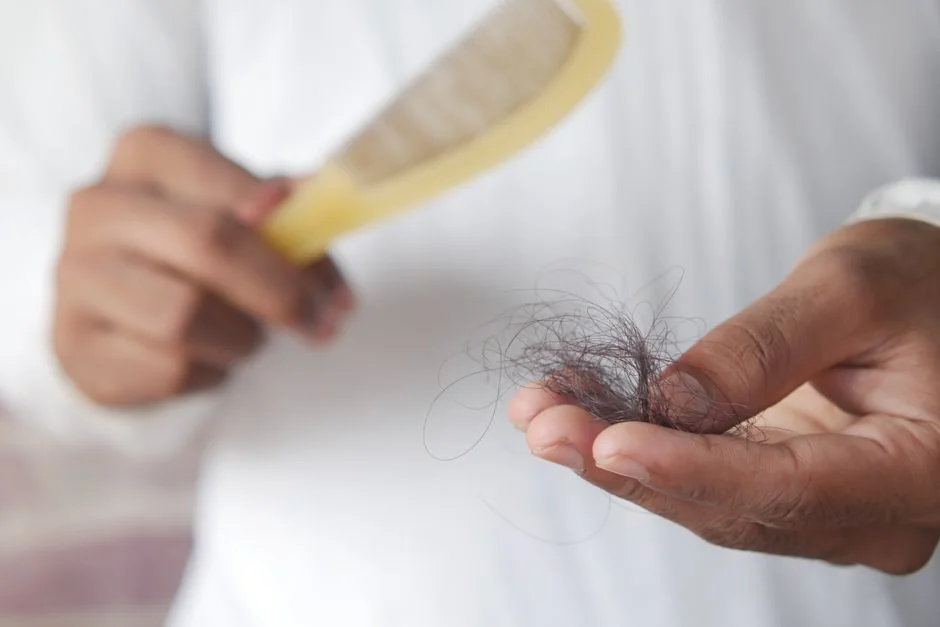
If your hairline is receding or your crown is thinning, you may have heard that dutasteride is a stronger option than finasteride.
Before starting a medicine you will take every day, you will want clear answers. In Japan this can be confusing, because the same medicine is sold under different brand names for different conditions.
This guide covers how dutasteride is approved and dosed in Japan, what the clinical data show, what treatment costs in Tokyo and who should avoid it.
What you’ll learn in this article:
- How Avolve, Zagallo and generic dutasteride differ in Japan
- Why the Japanese label starts at 0.1 mg, and when 0.5 mg is used
- What clinical trials report on hair count compared with finasteride
- Self-pay costs at our clinic group in Tokyo
- Side effects, PSA testing and the six-month blood donation rule
Have a question about this treatment?
Message us on LINE or WhatsApp — our English-speaking team usually replies the same day.
What Is Dutasteride and How Does It Work?

Dutasteride is a tablet-form medicine in a group called 5-alpha reductase inhibitors. 5-alpha reductase is an enzyme that turns testosterone into dihydrotestosterone (DHT), a stronger male hormone.
In the hair follicles on the front and top of the scalp, DHT shortens the growth phase of each hair. Over time the hairs become thinner and shorter. This process is called miniaturisation, and it is the main feature of male pattern hair loss (androgenetic alopecia, usually called “AGA” in Japan).
Why dutasteride is described as “dual” action
The enzyme comes in two types.
The Japanese Dermatological Association (JDA) guideline notes that finasteride blocks type 2, while dutasteride blocks both type 1 and type 2.
The Japanese package insert for Zagallo reports that after 24 weeks, blood DHT levels fell by 83.6% on 0.1 mg daily and by 90.9% on 0.5 mg daily. Foreign data in the same insert show scalp DHT falling by 40% and 52% respectively after six months.
Dutasteride Brands in Japan: Avolve, Zagallo and Generics
Every dutasteride product in Japan contains the same active ingredient, but each is approved for a specific condition. That approval decides whether national health insurance applies.
| Product | Strength | Approved use in Japan | Insurance |
|---|---|---|---|
| Avolve (GSK) | 0.5 mg capsule | Benign prostatic hyperplasia (BPH) | On the national drug price list for BPH |
| Generic dutasteride “AV” | 0.5 mg capsule | BPH | On the national drug price list (generic) |
| Zagallo (GSK) | 0.1 mg and 0.5 mg capsules | Male pattern hair loss only | Not covered (self-pay) |
| Generic dutasteride “ZA” | 0.5 mg capsules or tablets, depending on the maker | Male pattern hair loss | Not on the national drug price list (self-pay) |
BPH is a non-cancerous enlargement of the prostate, and Avolve is the BPH brand. Zagallo’s label states that it is approved for male pattern hair loss only, not for other types of hair loss, and that it is not covered by health insurance.
The first generic “ZA” capsules for hair loss were approved on 5 October 2020. In February 2024 a film-coated 0.5 mg tablet was launched, and its maker said the tablet form was chosen partly because the capsule contents can be absorbed through the skin.
The rules are different outside Japan. In the United States, dutasteride (Avodart) is FDA-approved for BPH only. The International Society of Hair Restoration Surgery notes that its use for hair loss there is off-label, while oral dutasteride is approved for androgenetic alopecia in Japan, South Korea and Taiwan.
Dosage: 0.1 mg or 0.5 mg, and What Doctors Prescribe
Zagallo‘s Japanese label gives a usual adult male dose of 0.1 mg once daily, and says 0.5 mg once daily may be used when needed. So in Japan, 0.5 mg is within the approved dosing for hair loss.
The capsule should be swallowed whole, not chewed or opened, because the contents can irritate the mouth and throat. Because it is a medicine rather than a procedure, there is no downtime. What it does require is taking it every day and coming back for follow-up visits.
What the clinical trials show
The international phase II/III trial behind Zagallo enrolled 917 men aged 20 to 50, including 200 Japanese men. After 24 weeks, the average change in hair count within a 2.54 cm circle on the crown was:
- Placebo: −4.9 hairs
- Dutasteride 0.1 mg: +63.0 hairs
- Dutasteride 0.5 mg: +89.6 hairs
- Finasteride 1 mg: +56.5 hairs
Both dutasteride doses beat placebo and were shown to be at least as effective as finasteride. The JDA guideline adds some balance: 0.5 mg beat finasteride on total hair count and hair thickness, but the number of thicker hairs (60 micrometres or more) did not differ significantly, and differences in photo-based scores were small.
How long before results appear
The label says some men improve within 12 weeks, but about six months of treatment is usually needed to judge the effect. If there is no improvement after six months, the label advises stopping. Even after that, the doctor should check regularly whether the medicine is still needed.
The JDA guideline (2017 edition, still the current version on the JDA website) gives oral dutasteride grade “A”, meaning strongly recommended, for male pattern hair loss. It gives grade “D”, meaning should not be used, for female pattern hair loss.
Cost of Dutasteride in Tokyo

In Japan, treatment for male pattern hair loss is paid for by the patient. Zagallo is not covered by insurance, and generic “ZA” products are not on the national drug price list, so prices vary from clinic to clinic.
At the time of writing, our clinic group’s Japanese-language AGA page lists:
- Zagallo: ¥11,000 per box of 30
- Generic dutasteride: ¥7,700 per prescription
- Consultation fee (first or follow-up visit): ¥3,300, or ¥5,500 for a consultation with Dr. Karibe (tax included, per the group’s price list)
The page does not state the strength or quantity for the generic, so please confirm the dose and how long the supply lasts when you book. Prices can change, so please see the clinic’s official price page or contact us for a current quote. For an accurate quote, please book a consultation.
Have a question about this treatment?
Message us on LINE or WhatsApp — our English-speaking team usually replies the same day.
Side Effects, Safety and Who Is a Good Candidate

Reported side effects
The side effects people ask about most are sexual: lower sex drive, erectile dysfunction and ejaculation problems. In the international trial cited by the JDA, the rates were 3.3%, 5.4% and 3.3%. A 52-week non-randomised study of 120 Japanese men reported higher rates of 8.3%, 11.7% and 5.0%.
The label also lists breast changes (enlargement, tenderness), headache, low mood and rash. It notes that sexual side effects have been reported to continue after stopping. Liver problems and jaundice are listed as serious side effects, with frequency unknown.
In a foreign study of healthy men taking 0.5 mg for 52 weeks, total sperm count, semen volume and sperm movement fell by an average of 23%, 26% and 18%. The averages stayed within the normal range, and how this affects fertility is unclear. Men planning to have a child should raise this at their consultation.
Who should not take dutasteride
- Women and children. The drug can be absorbed through the skin, so they should not touch the contents of a leaking capsule. If contact happens, wash immediately with soap and water.
- Men under 20, because safety and effectiveness have not been established.
- People with severe liver impairment.
- Anyone allergic to dutasteride or other 5-alpha reductase inhibitors.
Some medicines that block the liver enzyme CYP3A4, such as ritonavir, can raise dutasteride levels in the blood. Tell your doctor about everything you take.
Who is a good candidate
A good candidate is a man aged 20 or over with confirmed male pattern hair loss who can take the medicine every day for at least six months. A doctor confirms the pattern by asking about your history and examining the scalp, sometimes with a magnifying dermatoscope.
Blood donation
The Japanese Red Cross does not accept blood donations until six months after the last dose of dutasteride. For finasteride the wait is one month. The US prescribing information gives the same six-month rule.
Common Misconceptions About Dutasteride
“0.5 mg is a prostate dose, so using it for hair loss is off-label in Japan”
That is not the case in Japan. The Zagallo label allows 0.5 mg once daily for male pattern hair loss when needed. The misconception probably comes from the United States, where no dutasteride product is approved for hair loss.
“A low PSA result on dutasteride means my prostate is fine”
PSA (prostate-specific antigen) is a blood marker used to screen for prostate cancer. The label states that dutasteride lowers PSA by about 50% after six months, even when cancer is present, so doctors should double the measured value when comparing it with the normal range. Always tell the doctor ordering the test that you take dutasteride.
The label also reports a four-year international study of 8,231 men aged 50 to 75. In that study, high-grade prostate cancer (Gleason score 8–10) was found in 1.0% of the dutasteride group and 0.5% of the placebo group. Men over 50 in particular should discuss prostate screening with their doctor.
Frequently Asked Questions
- Q. Is dutasteride for hair loss covered by Japanese health insurance?
- No. The Zagallo label states it is not covered, and generic “ZA” products are not on the national drug price list. Avolve is on the price list, but only for BPH, which is a different diagnosis.
- Q. Is 0.5 mg more effective than 0.1 mg?
- In the 24-week trial, the average increase in hair count was larger with 0.5 mg (+89.6) than with 0.1 mg (+63.0), and blood DHT fell further. Results vary between people, and the dose should be chosen with a doctor, taking side effects into account.
- Q. What happens if I stop taking it?
- The JDA guideline notes that the trial did not study hair changes after stopping dutasteride or use beyond one year. For finasteride, which works on the same hormone pathway, the guideline states that the benefit disappears after stopping. Talk to your doctor before you stop.
- Q. Can my partner handle my capsules?
- Women and children should not touch the contents of a leaking capsule, because dutasteride can be absorbed through the skin. If contact happens, wash the area straight away with soap and water.
Have a question about this treatment?
Message us on LINE or WhatsApp — our English-speaking team usually replies the same day.
Summary
- In Japan, Zagallo and generic “ZA” dutasteride are approved for male pattern hair loss. The label’s starting dose is 0.1 mg, and 0.5 mg is used when needed.
- Avolve contains the same ingredient but is approved for BPH.
- Trial data suggest greater hair-count gains with 0.5 mg than with finasteride 1 mg over 24 weeks, but results take about six months to assess.
- Treatment for hair loss is self-pay. Dutasteride lowers PSA by about half, and blood donation must wait six months after the last dose.
Within our clinic group, both BIOTOPE CLINIC (Shirokanedai, Minato-ku) and Kojimachi Dermatology & Plastic Surgery Clinic (Ichigaya, Chiyoda-ku) offer English-language consultation with Dr. Jun Karibe’s team. Dutasteride treatment for male pattern hair loss is handled at BIOTOPE CLINIC in Shirokanedai. Bookings and enquiries in English: LINE or WhatsApp.
The JDA guideline also gives topical 5% minoxidil a grade “A” recommendation for men. It is a treatment available at BIOTOPE CLINIC in Shirokanedai, so feel free to ask about it during a consultation with Dr. Karibe.
If you have questions about dutasteride 0.5 mg, both BIOTOPE CLINIC (Shirokanedai, Minato-ku) and Kojimachi Dermatology & Plastic Surgery Clinic (Ichigaya, Chiyoda-ku) offer English-language consultation with Dr. Karibe and his team. Dutasteride treatment for hair loss is primarily handled at BIOTOPE CLINIC. English enquiries: LINE or WhatsApp.
24/7 Consultation & Booking
Book a Consultation or Treatment
Our English-speaking team responds via LINE or WhatsApp — usually the same day.
References
- Gubelin Harcha W, Barboza Martínez J, Tsai TF, et al. A randomized, active- and placebo-controlled study of the efficacy and safety of different doses of dutasteride versus placebo and finasteride in the treatment of male subjects with androgenetic alopecia. J Am Acad Dermatol. 2014;70(3):489-498.
- Manabe M, Tsuboi R, Itami S, et al.; Male and Female Pattern Hair Loss Guideline Committee. Guidelines for the diagnosis and treatment of male-pattern and female-pattern hair loss, 2017 version. Japanese Journal of Dermatology. 2017;127(13):2763-2777. (In Japanese)
- Tsunemi Y, Irisawa R, Yoshiie H, et al. Long-term safety and efficacy of dutasteride in the treatment of male patients with androgenetic alopecia. J Dermatol. 2016;43:1051-1058.
- GlaxoSmithKline K.K. Zagallo Capsules 0.1 mg / 0.5 mg, Japanese package insert. Revised August 2025 (2nd edition). (In Japanese)
- GlaxoSmithKline. AVODART (dutasteride) soft gelatin capsules, US prescribing information. Revised October 2023.
Related Articles
You may also find these articles useful.
- AGA vs Finasteride & Minoxidil: Tokyo Regenerative Care
- Hair Loss Treatment Tokyo: AGA Options for Expats
- English-Speaking Dermatologist Tokyo: Hair Loss & AGA
- Hair Mesotherapy Tokyo: Manual vs Hydro-Injector AGA
SUPERVISED BY

Dr. Jun Karibe
MD
Director
Education & Career
Certifications
Awards
MEDICAL REVIEW