What Is AGA Treatment?

If you’ve been in Tokyo for a few months and noticed more hair in the shower drain than you’d like, you’re not imagining it — and you’re also not alone. Androgenetic alopecia (AGA), also known as male pattern hair loss, is a common, gradual condition driven by genetics and the hormone dihydrotestosterone (DHT).We have a lot of patients from all over the world to have AGA treatment.
This article explains what realistic progress looks like around the six-month mark, so you can set expectations before you start.
What you’ll learn in this article:
- What AGA treatment involves and how the main options work
- What results — and non-results — are realistic to expect at 6 months
- Typical self-pay cost ranges for AGA treatment in Tokyo
- Common misconceptions that lead patients to quit too early
- Who is (and isn’t) a good candidate for treatment
Have a question about this treatment?
Message us on LINE or WhatsApp — our English-speaking team usually replies the same day.
How AGA Treatment Works
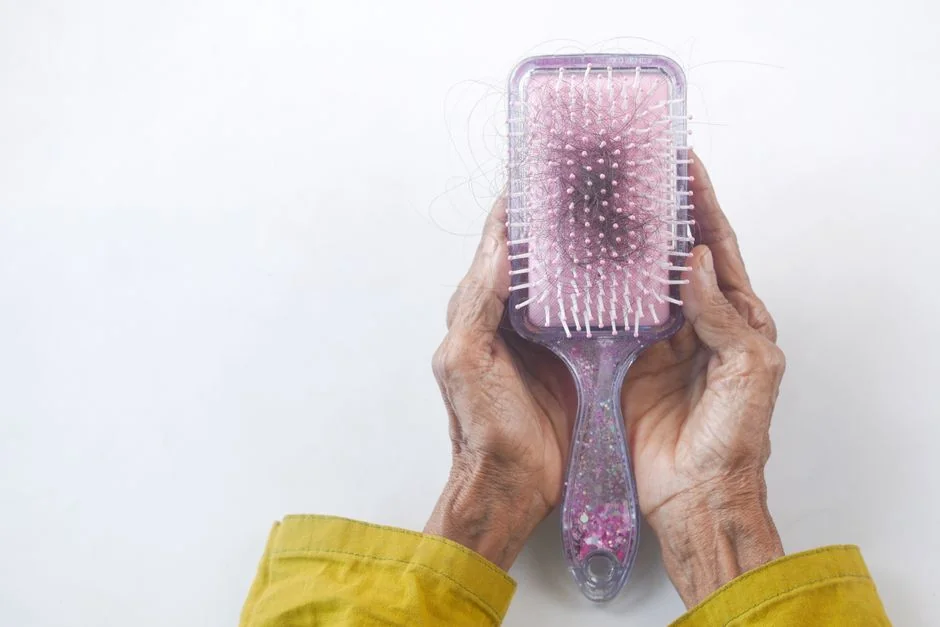
Most first-line AGA treatments work by either slowing the hormonal process that shrinks hair follicles or by directly stimulating blood flow and the hair growth cycle at the scalp.
Oral 5-alpha reductase inhibitors
Finasteride and dutasteride are oral medications that reduce DHT, the hormone most responsible for follicle miniaturisation in AGA. Finasteride blocks the type 2 form of the 5-alpha reductase enzyme, while dutasteride blocks both type 1 and type 2, which is why clinical reports generally describe dutasteride as producing a larger reduction in circulating DHT than finasteride.[1,3]
A 2025 network meta-analysis of 33 studies found dutasteride 0.5 mg/day ranked as the most effective monotherapy for total hair density at 24 weeks, ahead of both finasteride 1 mg/day and topical minoxidil.[1] Dutasteride was approved by Japan’s health authorities in 2015 specifically for AGA in men, distinct from its earlier approval for prostate conditions under a different brand name.
Topical and oral minoxidil
Minoxidil, applied topically or taken as a low-dose oral tablet, widens blood vessels around the follicle and is thought to extend the hair growth (anagen) phase. It doesn’t lower DHT, so it’s frequently combined with a 5-alpha reductase inhibitor.
A randomised study comparing topical finasteride, topical minoxidil, and the combination found the combination produced significantly better total and terminal hair density at 24 weeks than either treatment alone.[2]
Procedural add-ons
Scalp microneedling and Stem cell culture supernatant injection are sometimes used alongside medication, particularly for patients who want to support the treated area more actively. These are adjuncts, not replacements, for pharmacological therapy — they do not address the underlying DHT-driven process on their own.
AGA Before and After 6 Months: A Realistic Results Timeline
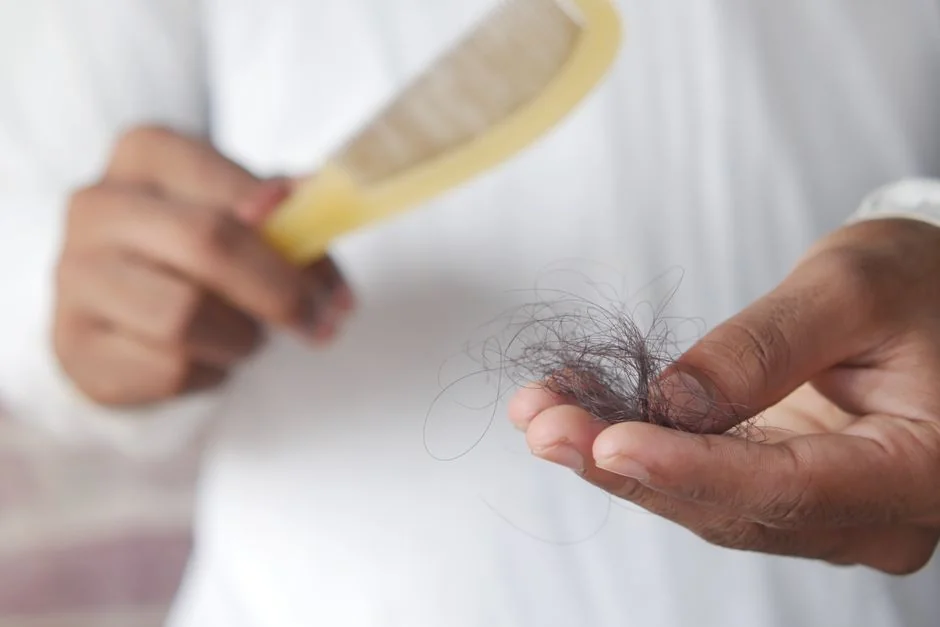
Six months is the point at which most clinical studies of AGA treatment take their first meaningful measurement — but “meaningful” doesn’t mean “dramatic.” Here is what tends to happen at each stage.
Months 1 to 3: Stabilisation, not regrowth
During the first three months, the goal is simply slowing further loss. Some patients starting minoxidil, and occasionally finasteride, notice a temporary increase in shedding within the first few weeks as weaker, dying-phase hairs are pushed out to make way for a new growth cycle. This is a recognised, usually temporary phenomenon rather than a sign the treatment is failing.
Months 3 to 6: Early signs, if any
Visible thickening, where it occurs, typically starts to become apparent in this window — this lines up with the 24-week (roughly 6-month) timepoint used in most published trials.[1,2] Not everyone will see a clear photographic difference this early; density is usually still building.
Months 6 to 12: The fuller picture
The most reliable before-and-after comparisons are generally made at 12 months, once a full hair growth cycle has completed under treatment. Patients and clinicians often describe the 6-month mark as “encouraging or neutral” and the 12-month mark as “the real before-and-after.”
| Treatment | How it works | Typical timeline to assess effect | Key consideration |
|---|---|---|---|
| Oral finasteride | Blocks type 2 5-alpha reductase, lowers DHT | Assessed from around 3-6 months; fuller picture at 12 months | FDA-approved oral option; daily tablet |
| Oral dutasteride | Blocks type 1 and type 2 5-alpha reductase, larger DHT reduction | Assessed from around 3-6 months; fuller picture at 12 months | Ranked most effective monotherapy in recent network meta-analysis[1]; approved in Japan for AGA since 2015 |
| Topical minoxidil 5% | Extends the hair growth phase; does not affect DHT | Initial shedding possible in weeks 1-4; effect assessed from 3-6 months | Often combined with a 5-alpha reductase inhibitor for additive effect[2] |
| Combination therapy | DHT reduction plus growth-phase extension | Superior density outcomes reported at 24 weeks vs either alone[2] | Requires adherence to two products/medications |
Common Misconceptions About 6-Month AGA Results
Misconception 1: “If I don’t see thicker hair by month 3, the treatment isn’t working.”
Early shedding and a lack of visible change in the first 8-12 weeks are both within the expected range for minoxidil and, less commonly, for oral 5-alpha reductase inhibitors. Published trial data consistently uses 24 weeks (about 6 months) as the earliest real assessment point, not week 8 or 12.[1,2]
Misconception 2: “Dutasteride and finasteride work the same way, so it doesn’t matter which one I use.”
Both lower DHT, but dutasteride inhibits an additional enzyme subtype and produces a greater overall DHT reduction, which is one reason recent comparative data ranks it ahead of finasteride for hair density outcomes.[1,3] The right choice still depends on an individual consultation, since dutasteride’s longer half-life also means a longer washout period if a patient wants to stop.
Misconception 3: “Once I hit 6 months, I’ve reached my final result.”
Six months is a checkpoint, not a finish line. Clinical studies that follow patients to 48 weeks generally show the same ranking of treatments holding steady, meaning ongoing treatment continues to matter well past the half-year mark.[1]
Cost of AGA Treatment in Tokyo

AGA treatment is classified as elective, self-pay care in Japan — it is not covered by national health insurance, whether prescribed as finasteride, dutasteride, or minoxidil, because insurance in Japan applies to disease treatment rather than cosmetic or pattern hair loss management.
Within our clinic group, published self-pay guide prices include an initial consultation from approximately 3,300 yen, a specialist consultation with Dr. Karibe from approximately 2,200 yen, and pre-treatment bloodwork from approximately 11,000 yen.
Oral finasteride is priced from around 5,280 yen for a month’s supply, and dutasteride-based medication from around 11,000 yen per month. Topical minoxidil 5% is available from around 5,500 yen, with oral minoxidil tablets from around 8,800 yen.
Adjunctive scalp microneedling ranges widely by protocol, from roughly 9,800 yen up to 220,000 yen depending on the treatment plan, and stem cell culture supernatant scalp injection is available from around 88,000 yen per session. For an accurate quote, please book a consultation.
Have a question about this treatment?
Message us on LINE or WhatsApp — our English-speaking team usually replies the same day.
Who Is a Good Candidate for AGA Treatment?

AGA treatment is generally most suitable for adult men with a family history of pattern hair loss, early-to-moderate thinning at the crown or hairline, and realistic expectations about a gradual, months-long process. At BIOTOPE CLINIC in Shirokanedai, we frequently see patients who are expats or medical tourists wanting a second opinion in English before committing to long-term medication, which is a reasonable and common first step.
Treatment is generally not appropriate, or requires careful discussion, for patients who are trying to conceive with a partner (given theoretical effects of 5-alpha reductase inhibitors), those with significant liver conditions, or those expecting results within weeks rather than months. Anyone currently on other hormone-related medication should disclose this during consultation, since interactions and monitoring needs vary by individual.
Frequently Asked Questions

- Q. Is it normal to see more shedding in the first month of AGA treatment?
- Yes, a temporary increase in shedding is a recognised response, particularly with minoxidil, as the hair cycle resets. It is not, by itself, a sign the treatment has failed, but persistent heavy shedding beyond a few months is worth discussing with a doctor.
- Q. Will I see a visible difference in before-and-after photos at 6 months?
- Some patients do, but published studies generally describe the 6-month mark as an early assessment point rather than the peak result. A clearer before-and-after difference is more typically apparent by 12 months of consistent treatment.
- Q. Is dutasteride better than finasteride for AGA?
- Comparative data suggests dutasteride may produce greater hair density gains for some patients, in part due to its broader inhibition of DHT-producing enzymes.[1,3] The most appropriate option still depends on an individual medical history, which is best reviewed in consultation.
- Q. Is AGA treatment covered by insurance in Japan?
- No. AGA medication and related treatments are self-pay in Japan, as they are classified as elective rather than insurance-covered disease treatment.
Have a question about this treatment?
Message us on LINE or WhatsApp — our English-speaking team usually replies the same day.
Summary
Realistic AGA treatment expectations centre on the 6-month mark as an early, encouraging checkpoint rather than a final result — with the fuller picture typically emerging by 12 months of consistent use. Oral finasteride, oral dutasteride, and topical minoxidil each work differently, and combination approaches have shown stronger density outcomes than any single option alone in published comparative studies.[1,2]
Within our clinic group, both BIOTOPE CLINIC (Shirokanedai, Minato-ku) and Kojimachi Dermatology & Plastic Surgery Clinic (Ichigaya, Chiyoda-ku) offer English-language consultation with Dr. Jun Karibe’s team. AGA and men’s health treatment is primarily handled at BIOTOPE CLINIC, where Dr. Karibe personally consults. If you have questions about AGA treatment before and after 6 months, both clinics can direct you appropriately, and English enquiries are welcome by LINE or WhatsApp.
24/7 Consultation & Booking
Book a Consultation or Treatment
Our English-speaking team responds via LINE or WhatsApp — usually the same day.
References
- Gupta AK, Bamimore MA, Williams G, Talukder M. Comparative Efficacy of Minoxidil and 5-Alpha Reductase Inhibitors Monotherapy for Male Pattern Hair Loss: Network Meta-Analysis Study of Current Empirical Evidence. Journal of Cosmetic Dermatology. 2025.
- Bharadwaj AV, Mendiratta V, Rehan HS, Tripathi S. Comparative Efficacy of Topical Finasteride (0.25%) in Combination with Minoxidil (5%) Against 5% Minoxidil or 0.25% Finasteride Alone in Male Androgenetic Alopecia: A Pilot, Randomized Open-Label Study. International Journal of Trichology. 2023.
- International Society of Hair Restoration Surgery. Dutasteride: Dosage, Efficacy and Side-Effects. Patient education resource.
Related Articles
You may also find these articles useful.
- AGA vs Finasteride & Minoxidil: Tokyo Regenerative Care
- How to Get Dutasteride Legally in Japan: Guide for Expats
- Dutasteride in Japan: Approval, Prescription & English Care
- Hair Mesotherapy Tokyo: Manual vs Hydro-Injector AGA
- Hair Loss Treatment Tokyo: AGA Options for Expats
SUPERVISED BY

Dr. Jun Karibe
MD
Director
Education & Career
Certifications
Awards
MEDICAL REVIEW