What Is SPF? UVB Protection Explained

SPF (Sun Protection Factor) measures how well a sunscreen blocks UVB radiation — the shorter-wavelength rays (280–320 nm) responsible for sunburn, surface-level DNA damage, and the majority of UV-linked skin cancer mutations. The number represents a multiplication factor: with SPF 30 correctly applied at the standard test quantity, unprotected skin would take approximately 30 times longer to produce the same degree of UVB-induced reddening.
In absolute percentage terms the differences are real but not dramatic. SPF 15 blocks approximately 93 per cent of UVB rays; SPF 30 blocks approximately 97 per cent; SPF 50 blocks approximately 98 per cent. The gap between SPF 30 and SPF 50 is roughly one percentage point of additional UVB blocked — most meaningful over prolonged outdoor exposure rather than a brief commute.
Japan’s SPF 50+ Label Cap
Japan caps sunscreen labels at SPF 50+ under Japan Cosmetic Industry Association (JCIA) voluntary standards, which are recognised by Japan’s Ministry of Health, Labour and Welfare. The “+” notation distinguishes products whose measured SPF confidence interval sits above 51 from those that just reach SPF 50. This cap reflects broad international consensus that differences above SPF 50 offer marginal additional benefit and that very high numbers can discourage the reapplication that is actually responsible for maintaining rated protection.
What Is the PA Rating? Japan’s UVA Protection Scale
PA (Protection Grade of UVA) is a classification system developed by the Japan Cosmetic Industry Association in January 1996. It fills the gap SPF alone cannot: protection against UVA radiation (315–400 nm), the longer wavelengths that penetrate deeper into the dermis, driving photoageing, uneven pigmentation, and a portion of skin cancer risk. Unlike UVB, UVA does not cause sunburn — so its cumulative damage often goes unnoticed until years later.
PA grades are derived from Persistent Pigment Darkening (PPD) testing, which quantifies how much UVA exposure is required to produce lasting skin darkening. Higher PPD values indicate stronger UVA protection. The system originally had three grades; a fourth — PA++++ — was added in January 2013. The JCIA updated its underlying methodology to align with ISO 24442:2022 in September 2022.
| Rating System | Grade | Protection Level | Threshold |
|---|---|---|---|
| SPF | SPF 15 | UVB — basic | ~93% UVB blocked |
| SPF | SPF 30 | UVB — standard | ~97% UVB blocked |
| SPF | SPF 50+ | UVB — maximum Japanese label | ≥98% UVB blocked |
| PA | PA+ | UVA — some protection | PPD 2 to <4 |
| PA | PA++ | UVA — moderate protection | PPD 4 to <8 |
| PA | PA+++ | UVA — high protection | PPD 8 to <16 |
| PA | PA++++ | UVA — extremely high protection | PPD 16 or above |
Most daily-use Japanese sunscreens now carry at least PA+++ or PA++++. Products labelled PA+ or PA++ are formulated for limited indoor use and provide insufficient UVA coverage for Tokyo’s spring-to-summer outdoor conditions.
Tokyo’s UV Index: When Protection Becomes Non-Negotiable
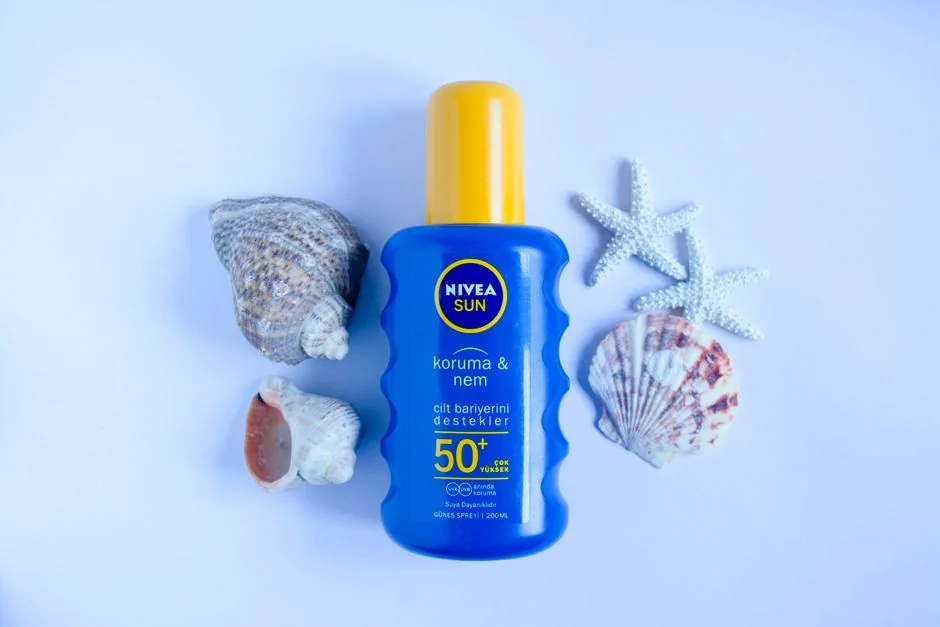
Tokyo’s UV levels exceed what many new residents anticipate. Monthly average UV index data show the index reaching approximately 8 (very high) in March, rising to 9 in April, and peaking at 11 — classified as extreme — from May through August. At UV index 11, unprotected skin can sustain measurable damage in as little as ten minutes at midday. September holds at 10, and October sits at approximately 7, still within the high range requiring active protection.
UVA behaves differently across the calendar: it does not drop as sharply in winter and penetrates ordinary window glass and light cloud cover year-round. This matters for office workers and commuters who may feel their daily sun exposure is minimal — UVA accumulates through windows over months and years. Studies suggest that UV radiation is responsible for approximately 60 to 70 per cent of malignant melanomas, with risk following a dose-response pattern: greater cumulative exposure correlates with higher incidence.
Common Misconceptions About Japanese Sunscreen Labels
Misconception 1: “SPF 50+ is excessive for a daily urban commute”
The absolute UVB difference between SPF 30 and SPF 50+ is one percentage point, so this seems reasonable at first. The stronger argument for SPF 50+ in Tokyo’s summer is the real-world application gap: studies indicate that most people apply between 25 and 50 per cent of the quantity used in laboratory SPF testing, which approximately halves the effective protection in practice. A product rated SPF 50+ applied thinly delivers roughly SPF 25–30 in real conditions. Choosing a higher-rated product compensates for that unavoidable shortfall. During extreme UV months, SPF 50+ is the clinically appropriate choice for any outdoor exposure exceeding twenty minutes.
Misconception 2: “PA rating is only relevant at the beach or in summer”
Because UVA produces no sunburn, its effects are easy to overlook. In practice, UVA intensity varies less than UVB across seasons and is present throughout the day — not only at midday. It also passes through standard window glass. At BIOTOPE CLINIC in Shirokanedai, patients regularly present with pigmentation asymmetry on one side of the face or one forearm — a pattern consistent with years of incidental UVA exposure through vehicle or office windows, not deliberate sun exposure. A PA+++ or PA++++ rating is the appropriate daily baseline year-round in Tokyo, not only for outdoor leisure.
Choosing and Using Sunscreen Effectively in Japan
Matching Ratings to Your Activity
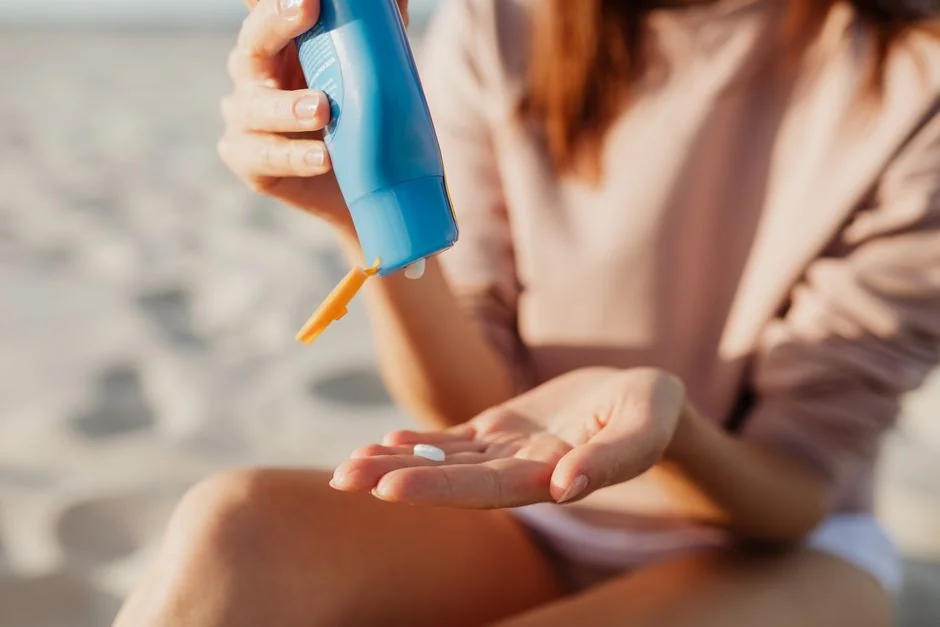
For a typical Tokyo office commute with limited midday outdoor exposure, SPF 30–50 combined with PA+++ or PA++++ is adequate. For outdoor sport, long walks, or any activity during the 10:00–14:00 peak UV window from March to October, SPF 50+ PA++++ is the standard recommendation. Water-resistant formulations — labelled ウォータープルーフ on Japanese packaging — suit exercise or humid conditions. Mineral-filter products are labelled 紫外線吸収剤フリー (no UV absorbers) or ノンケミカル, and may suit sensitive or reactive skin types.
Application Quantity and Reapplication
Clinical evidence underscores the importance of daily use. A randomized trial found that daily sunscreen users were 24 per cent less likely to show measurable increases in skin ageing over 4.5 years compared with occasional users. A separate randomized trial found that regular daily use of SPF 15 sunscreen reduced squamous cell carcinoma risk by approximately 40 per cent and melanoma risk by approximately 50 per cent. Both outcomes depend on adequate quantity: approximately half a teaspoon (0.5 ml) for the face and neck is the standard reference amount. Reapplication every two hours — and immediately after swimming, towelling, or heavy perspiration — is necessary to maintain the label-rated protection.
Medical-Grade Sunscreen and Professional Skincare
For patients managing existing UV-related pigmentation, post-procedure skin, or reactive skin types, physician-dispensed formulations offer controlled ingredient quality beyond retail options. Zo Skin Health, available through BIOTOPE CLINIC in Shirokanedai, includes daily protection products designed to work alongside active skincare regimens — feel free to ask about it during a consultation with Dr. Karibe. For current product recommendations and pricing, a consultation is the most accurate starting point.
Have a question about this treatment?
Message us on LINE or WhatsApp — our English-speaking team usually replies the same day.
Sun-Damage Consultation in Tokyo
Within our clinic group, both BIOTOPE CLINIC (Shirokanedai, Minato-ku) and Kojimachi Dermatology & Plastic Surgery Clinic (Ichigaya, Chiyoda-ku) offer English-language consultation with Dr. Jun Karibe’s team. UV-related cosmetic concerns — including existing pigmentation, uneven skin tone, and photoageing — are handled at BIOTOPE CLINIC (Shirokanedai). Treatments such as the PicoWay picosecond laser for targeted pigmentation and the CO2 fractional laser for skin texture concerns are available following consultation with Dr. Karibe. For insurance-covered general dermatology — including sun-aggravated eczema, rosacea, or atopic dermatitis — Kojimachi Dermatology & Plastic Surgery Clinic (Ichigaya) is the appropriate first point of contact. English bookings and enquiries: LINE or WhatsApp.
Frequently Asked Questions
- Q. Is there a meaningful real-world difference between SPF 30 and SPF 50+ for daily use in Tokyo?
- In laboratory conditions the difference is approximately one percentage point of additional UVB blocked. In practice, where most people apply significantly less than the tested quantity, a higher SPF label provides a useful buffer. During Tokyo’s May-to-August extreme UV period, the margin matters for anyone spending extended time outdoors.
- Q. Is the PA rating on a Japanese sunscreen recognised internationally?
- PA is a Japan-specific voluntary standard administered by the JCIA, updated in 2022 to align with the ISO 24442:2022 PPD test method. European markets use a star-rating system and EU UVA seal; US markets use a “Broad Spectrum” designation. The formulation and its UVA protection are identical wherever the product is used — only the labelling convention differs by market.
- Q. Can I rely on SPF in foundation or tinted moisturiser instead of a dedicated sunscreen?
- SPF in cosmetics is typically applied in quantities far below what is needed to deliver the labelled protection — people apply make-up for coverage and colour, not protection density. A dedicated sunscreen applied as a base layer, with any SPF-rated cosmetic on top, is the recommended approach for reliable daily protection.
- Q. Do I need sunscreen indoors in Tokyo?
- UVA penetrates ordinary window glass. Anyone who sits regularly near a south- or east-facing window — particularly during the high-UV months — is accumulating meaningful UVA exposure without stepping outside. Dermatologists generally recommend a PA-rated daily sunscreen for any regular proximity to untreated windows in Tokyo, where UV levels are at least moderate from February through November.
Have a question about this treatment?
Message us on LINE or WhatsApp — our English-speaking team usually replies the same day.
Summary
Japanese sunscreen labels carry two independent rating systems: SPF measures UVB protection and is capped at SPF 50+ on Japanese labels; PA measures UVA protection across four grades — PA+ through PA++++ — based on PPD thresholds set by the Japan Cosmetic Industry Association. In Tokyo, where UV levels reach extreme classification from May through August and remain high from March to October, a combination of SPF 50+ and PA++++ is the appropriate daily standard for outdoor exposure. Consistent use at an adequate quantity, applied before going out and reapplied every two hours, is at least as important as the rating itself.
If you have questions about sun protection, UV-induced pigmentation, or building a medical-grade skincare routine for Tokyo’s UV conditions, both BIOTOPE CLINIC (Shirokanedai, Minato-ku) and Kojimachi Dermatology & Plastic Surgery Clinic (Ichigaya, Chiyoda-ku) offer English-language consultation with Dr. Karibe and his team. Cosmetic dermatology and photoageing concerns are primarily handled at BIOTOPE CLINIC in Shirokanedai. English enquiries: LINE or WhatsApp.
24/7 Consultation & Booking
Book a Consultation or Treatment
Our English-speaking team responds via LINE or WhatsApp — usually the same day.
References
- Japan Cosmetic Industry Association (JCIA). JCIA Standards and Related Notifications for Sun Protection Factor (SPF) and UVA Protection Grade (PA). JCIA; revised September 2022.
- Green AC, Williams GM, Logan V, Strutton GM. Reduced melanoma after regular sunscreen use: randomized trial follow-up. Journal of Clinical Oncology. 2011;29(3):257–263.
- Hughes MCB, Williams GM, Baker P, Green AC. Sunscreen and prevention of skin aging: a randomized trial. Annals of Internal Medicine. 2013;158(11):781–790.
- Cadet J, Douki T. Formation of UV-induced DNA damage contributing to skin cancer development. Photochemical & Photobiological Sciences. 2018;17(12):1816–1841.
Related Articles
You may also find these articles useful.
- Skincare Routine for Tokyo Weather: Humidity & Pollution
- Melasma Treatment Tokyo: Causes and Best Solutions
- Sensitive Skin Care Tokyo: See a Dermatologist in Japan
- Dark Spot Removal Tokyo: Laser Treatment Options
- Rosacea Treatment Tokyo Clinic Guide for English Speakers
SUPERVISED BY
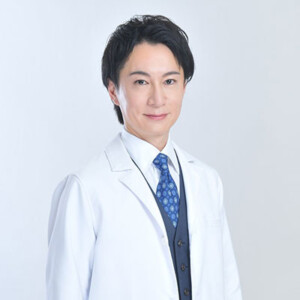
Dr. Jun Karibe
MD
Director
Education & Career
Certifications
Awards
MEDICAL REVIEW