Cyst Removal in Tokyo: What to Expect at a Dermatologist
Discovering a lump beneath your skin can be unsettling, especially when you are living abroad and unsure how to navigate the local healthcare system. Whether you have noticed a slow-growing bump on your back, scalp, or face, understanding your options is the first step toward peace of mind.
This article explains what skin cysts are, how they are removed, what the procedure involves at a Tokyo dermatology clinic, and what you can realistically expect before, during, and after treatment.
- What a skin cyst is and why it forms
- How cyst removal (excision) is performed at a clinic in Tokyo
- Realistic cost ranges for cyst excision in Japan
- Recovery, downtime, and what results to expect
- Who is a suitable candidate and when to seek medical advice promptly
Have a question about this treatment?
Message us on LINE or WhatsApp — our English-speaking team usually replies the same day.
What Is a Skin Cyst?
A skin cyst is a closed, sac-like pocket of tissue that can form just beneath the surface of the skin. It typically contains fluid, semi-solid material, or keratin — a protein naturally produced by skin cells. Cysts are generally benign (non-cancerous) and grow slowly over months or years.
The most common type seen in dermatology practice is the epidermoid cyst (sometimes called an epidermal inclusion cyst or, less accurately, a sebaceous cyst). Other types include pilar cysts, which tend to appear on the scalp, and milia, which are very small keratin-filled cysts near the surface of the skin. Each type has slightly different characteristics, but the fundamental approach to removal is similar.
Cysts rarely resolve on their own. When left untreated, they can become inflamed, infected, or rupture — causing pain and potentially making surgical removal more complicated. For this reason, most dermatologists and plastic surgeons recommend elective removal when a cyst is stable, rather than waiting until it becomes symptomatic.
How Cyst Removal Works
The Excision Procedure
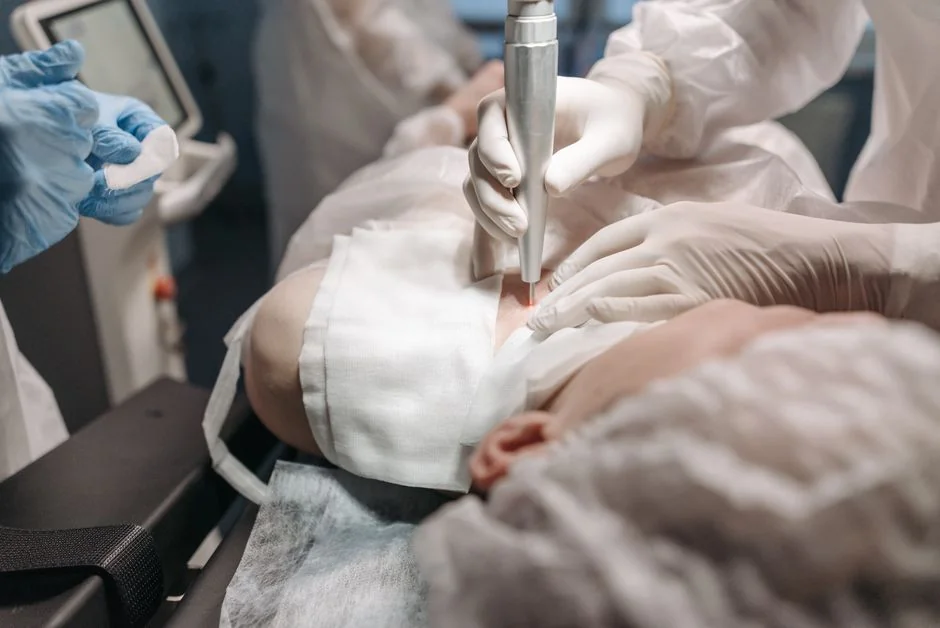
Cyst excision is an outpatient surgical procedure performed under local anaesthesia. The skin over the cyst is cleaned and numbed with an injection of local anaesthetic, so the patient remains awake but does not feel pain during the procedure itself.
The surgeon then makes a small incision, carefully removes the entire cyst wall (capsule) along with its contents, and closes the wound with sutures.
Removing the entire capsule is critical. If any part of the cyst wall is left behind, the cyst is likely to recur. This is one reason why surgical excision by a trained physician yields meaningfully better long-term outcomes than attempting to drain or squeeze a cyst at home.
Surgical vs. Minimal-Excision Technique
Depending on the size and location of the cyst, a surgeon may use the standard elliptical excision or the minimal-excision (punch biopsy) technique. The minimal-excision approach uses a smaller circular incision, which can reduce scarring on cosmetically sensitive areas such as the face. The most appropriate technique will be determined at your consultation based on the cyst’s depth, size, and location.
| Feature | Standard Excision | Minimal-Excision Technique |
|---|---|---|
| Incision size | Elliptical; proportional to cyst | Small circular punch (2–4 mm) |
| Suitable cyst size | Any size | Generally smaller, superficial cysts |
| Scar potential | Linear scar, typically well-concealed | Smaller scar; may suit facial areas |
| Recurrence risk | Low when complete capsule removed | Slightly higher if capsule not fully extracted |
| Anaesthesia | Local | Local |
| Procedure time | 15–45 minutes | 10–20 minutes |
What About Inflamed or Infected Cysts?
When a cyst is actively inflamed or infected, immediate surgical excision is generally not the first step. A clinician may first prescribe antibiotics or perform a minor incision and drainage to reduce inflammation. Definitive excision is then scheduled once the tissue has settled, typically after several weeks. Studies suggest that attempting complete excision of an acutely inflamed cyst carries a higher risk of recurrence and wound complications.
What to Expect: Before, During, and After
Before the Procedure
At the initial consultation, the physician will examine the cyst, confirm the likely diagnosis, and discuss the most appropriate removal technique. Pre-operative blood work (¥11,000) is required before surgical procedures. Patients are generally advised to avoid blood-thinning medications and supplements — such as aspirin, ibuprofen, or high-dose vitamin E — for approximately one week before the procedure, unless medically directed otherwise.
During the Procedure
The local anaesthetic injection may cause a brief stinging sensation, but the excision itself is not typically painful. Most procedures are completed within 15 to 45 minutes, depending on the size and complexity of the cyst. Patients can walk in and walk out the same day.
After the Procedure and Recovery
After excision, the wound is closed with sutures, and a sterile dressing is applied. Sutures are usually removed at a follow-up appointment seven to fourteen days later, depending on the location of the wound. Most patients can return to desk-based work the same day or the following day.
Strenuous physical activity, submerging the wound in water (swimming, bathing), and direct sun exposure to the area should be avoided during the healing period. A small, flat scar will remain after the wound heals. Over several months, this scar will typically fade and flatten, though individual healing varies considerably. For patients concerned about residual scarring, scar revision options are available at Kojimachi Dermatology & Plastic Surgery Clinic.
Dr. Karibe’s Note
Many of our international patients are surprised to find that cyst excision in Tokyo is a straightforward outpatient procedure — no hospital stay, no general anaesthesia, and in most uncomplicated cases, minimal disruption to daily life.
A common question I receive is whether the cyst will come back. The honest answer is that complete removal of the capsule significantly reduces that risk, but no surgical outcome can be guaranteed in advance. That is why a careful pre-operative assessment matters so much.
Cost of Cyst Removal in Tokyo
In Japan, cyst removal is often eligible for coverage under the national health insurance (Koken Hoken) when the procedure is deemed medically necessary. For patients who qualify, out-of-pocket costs under insurance are significantly lower than the self-pay (jishu shinryo) rate. However, coverage eligibility depends on individual insurance status, cyst type, and clinical indications — this should be confirmed at the time of your consultation.
For self-pay patients, the cost of cyst excision at a Tokyo dermatology or plastic surgery clinic varies depending on the size of the cyst, its location, and the complexity of the procedure. Pre-operative blood work is required at ¥11,000, and anaesthesia costs range from ¥2,200 to ¥77,000. An initial consultation is ¥3,300, or ¥2,200 for a surgical consultation with Dr. Karibe. All procedure fees will be discussed transparently at the consultation stage.
For an accurate quote, we recommend booking a consultation.
Have a question about this treatment?
Message us on LINE or WhatsApp — our English-speaking team usually replies the same day.
Common Misconceptions About Cyst Removal
Misconception 1: Draining a Cyst Is the Same as Removing It
This is one of the most widespread misunderstandings in lay discussions of cysts. Draining — or “popping” — a cyst removes only the contents, not the capsule. Because the cyst wall remains intact, the cyst will almost invariably refill and recur.
Clinical reports indicate that the recurrence rate following drainage alone is substantially higher than that following complete surgical excision with capsule removal. True excision removes the entire sac, which is why it is the standard of care for definitive treatment.
Misconception 2: Cysts Always Need to Be Removed Urgently
Unless a cyst is rapidly growing, painful, infected, or in a cosmetically or functionally sensitive location, there is generally no medical emergency requiring immediate surgery. Many people live with stable, small cysts for years without complications. That said, elective removal is advisable before inflammation occurs, as inflamed cysts are more technically demanding to excise completely and carry a higher risk of recurrence.
In our clinical experience at Kojimachi Dermatology & Plastic Surgery Clinic, patients who come in early — when the cyst is small and uninflamed — tend to have smoother procedures, smaller incisions, and faster recovery times.
Who Is a Good Candidate for Cyst Removal?
Most healthy adults with a confirmed benign cyst are suitable candidates for excision. Ideal candidates include individuals whose cyst is stable or slowly growing, causing cosmetic concern or mild discomfort, or located in an area prone to friction and irritation (such as the back of the neck or the waistline).
Patients with bleeding disorders, those taking anticoagulant medications, or individuals with compromised immune function may require additional evaluation before proceeding with surgery. Patients with an actively infected or inflamed cyst will typically need to complete a course of treatment before elective excision is scheduled.
Cyst excision is a treatment available at our Ichigaya clinic — feel free to ask about it during a consultation. Dr. Karibe, a board-certified plastic surgeon, performs these procedures with attention to both complete removal and minimising visible scarring.
Frequently Asked Questions
- Q. Will cyst removal leave a permanent scar?
- All surgical excisions leave some degree of scarring, as any incision through the skin will heal with scar tissue. However, scars typically fade and flatten significantly over six to twelve months. A skilled surgeon will plan the incision carefully — for example, along natural skin creases — to minimise visibility. For patients concerned about scarring, treatments such as CO2 fractional laser or Dermapen may be discussed at a follow-up consultation to help improve scar appearance over time.
- Q. Is cyst removal covered by Japanese health insurance?
- Cyst removal may be covered by Japanese national health insurance when the procedure is medically indicated. Coverage eligibility depends on the type of cyst, your insurance status, and the clinical judgment of the treating physician. Patients with private international health insurance should check the terms of their policy in advance. The clinic’s reception team can assist with insurance-related documentation questions.
- Q. How long does the procedure take, and can I go back to work the same day?
- Most uncomplicated cyst excisions are completed within 15 to 45 minutes. As the procedure is performed under local anaesthesia and does not require sedation, the majority of patients are able to return to desk-based or light-duty work the same day. Patients should avoid strenuous physical activity, heavy lifting, and water immersion of the wound site during the initial healing period.
- Q. What happens if I leave my cyst untreated?
- Many cysts remain stable for years without causing significant problems. However, cysts can become inflamed, infected, or rupture spontaneously — events that cause pain and may make subsequent removal more complicated. Clinical reports and dermatological guidelines generally favour elective excision of symptomatic or enlarging cysts while they remain uninflamed.
- Q. Does the procedure hurt?
- The injection of local anaesthetic may produce a brief stinging or burning sensation, but this subsides within seconds as the area becomes numb. The excision itself should not be painful. Some mild soreness or tenderness around the wound site is normal in the days following the procedure and is typically manageable with over-the-counter pain relief.
Have a question about this treatment?
Message us on LINE or WhatsApp — our English-speaking team usually replies the same day.
Summary
Skin cysts are common, generally benign growths that rarely resolve without intervention. Surgical excision — performed under local anaesthesia as an outpatient procedure — remains the most reliable method of definitive removal. The key to minimising recurrence is complete removal of the cyst capsule, which requires the skill of a trained surgeon or dermatologist.
For English-speaking patients in Tokyo, navigating medical care can feel daunting, but cyst excision is a routine, well-established procedure with a predictable recovery timeline. Understanding the process, realistic costs, and what to expect before and after surgery allows patients to make informed decisions about their care.
Studies suggest that recurrence rates following complete excision are substantially lower than those following drainage or incomplete removal, reinforcing the importance of choosing a qualified practitioner for this procedure. If scarring is a concern post-excision, adjunctive treatments are available to support the healing process.
If you have questions about cyst removal in Tokyo, our team at BIOTOPE CLINIC or Kojimachi Dermatology & Plastic Surgery Clinic in Minato-ku , Tokyo would be happy to help. We offer consultations in English.
24/7 Consultation & Booking
Book a Consultation or Treatment
Our English-speaking team responds via LINE or WhatsApp — usually the same day.
References
- Zuber TJ. Minimal excision technique for epidermoid (sebaceous) cysts. American Family Physician. 2002.
- Nakamura M, Tokura Y. Epithelial cysts of the skin: clinical and histological features. Journal of Dermatology. 2011.
- Dahl MV, Lynch PJ. Epidermoid cysts: classification, diagnosis, and management. Dermatologic Surgery. 2004.
- Lee HE, Yang CH, Chen CH, Hong HS, Kuan YZ. Comparison of recurrence rate between complete and incomplete removal of epidermoid cysts. Dermatologic Surgery. 2006.
- Klin B, Ashkenazi H. Sebaceous cyst excision with minimal surgery. American Family Physician. 1990.
Related Articles
You may also find these articles useful.
- Acne Treatment at Tokyo Dermatologist: What to Expect
- Acne Treatment at a Tokyo Dermatologist: What to Expect
- Scar Revision Surgery Tokyo: Options, Results & Cost
- English Speaking Dermatologist Tokyo: Complete Guide
- HIFU in Tokyo: Non-Surgical Skin Tightening Explained
SUPERVISED BY
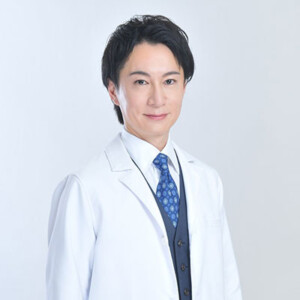
Dr. Jun Karibe
MD
Director
Education & Career
Certifications
Awards
MEDICAL REVIEW