XERF for Men in Tokyo: Jawline, Neck and Forehead Tightening — A Complete Guide
Many men in Tokyo — whether long-term residents, business visitors, or those exploring medical tourism — are noticing that the face and neck they see in the mirror no longer reflects how vital and energetic they feel. Loose skin along the jawline, a softening neck, and a furrowed or heavy forehead are among the earliest and most visible signs of ageing in men, yet they often go unaddressed simply because of a lack of clear, English-language information. This guide explains everything you need to know skin-tightening treatment for men in Tokyo, covering how it works, realistic results, costs, and whether you are a suitable candidate.
What you’ll learn in this article:
- What XERF treatment is and how it tightens skin on the jawline, neck, and forehead
- How XERF compares to other non-surgical tightening options available in Tokyo
- Realistic results and timeline — what men can expect and when
- Cost ranges for XERF and related treatments at Tokyo clinics in 2024–2025
- Who makes a good candidate, who should consider an alternative, and what the recovery involves
Have a question about this treatment?
Message us on LINE or WhatsApp — our English-speaking team usually replies the same day.
What Is XERF? Understanding the Technology
XERF is a radiofrequency (RF) energy device used for non-surgical skin tightening and contouring.
The name refers to a specific class of monopolar or bipolar RF platform engineered to deliver controlled thermal (heat) energy into the deeper layers of the skin and the subcutaneous tissue beneath it. Unlike ablative lasers that work on the skin surface, RF devices like XERF bypass the outermost layer of skin and deposit heat at depth, where the structural proteins — primarily collagen and elastin — reside.
Radiofrequency technology has been used in dermatology and plastic surgery for more than two decades. The principle is well established: when tissue is heated to a therapeutic temperature range of approximately 60–70°C, existing collagen fibres contract immediately, and fibroblast cells are stimulated to synthesise new collagen over the following weeks and months. The result is a gradual firming and tightening of treated areas — without incisions, sutures, or general anaesthesia.
XERF is specifically designed with applicators suited to the anatomical contours of the male face and neck, where skin tends to be thicker and sebaceous glands more active than in female patients. It is frequently used for three primary zones in male patients: the lower face and jawline, the submental neck (the area under the chin), and the forehead and upper brow region.
How Xérf Differs from HIFU
A question that arises often in consultations is how XERF (RF-based) compares to HIFU (High-Intensity Focused Ultrasound), another popular non-surgical tightening method. Both aim to stimulate collagen by heating deep tissue, but the physics and clinical feel of each are distinct.
HIFU delivers focused ultrasound energy to precise focal points at depths of 1.5 mm, 3 mm, and 4.5 mm in the skin and SMAS layer (the superficial musculoaponeurotic system — essentially the fibromuscular sheet that underlies facial soft tissue). RF energy, by contrast, heats a broader volumetric area rather than discrete focal points, which some clinicians consider advantageous for surface skin texture improvement and softer overall tightening. In practice, many patients — particularly men with moderate rather than severe laxity — benefit from one or the other, or a combination of both, depending on their skin thickness, tissue depth, and aesthetic goals.
At our BIOTOPE CLINIC, Tokyo, we frequently see male patients who have had unsatisfying results elsewhere simply because a tightening device was selected without a proper assessment of their skin thickness and tissue anatomy. A thorough pre-treatment consultation is essential to match the right technology to the right patient.
How Xérf Works on the Jawline, Neck, and Forehead
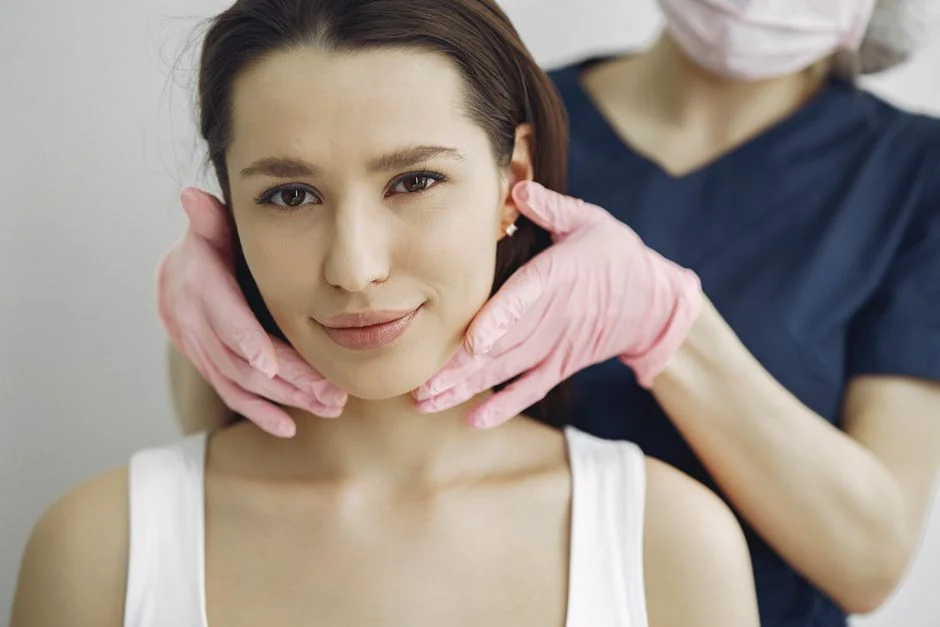
The Jawline and Lower Face
In men, the jawline is often one of the first areas to show jowling — a downward migration of cheek fat and soft tissue that blurs the sharp mandibular angle most men wish to preserve.
RF energy applied along the jawline heats the dermis and subcutaneous tissue, causing immediate collagen contraction and triggering a prolonged remodelling process. Over 90 to 180 days following treatment, fibroblasts lay down new collagen, resulting in a firmer, more defined lower facial contour.
Clinical reports indicate that patients with mild to moderate jowling tend to see the most clinically meaningful improvement from RF tightening, with studies suggesting a measurable improvement in skin laxity scores in 70–80% of treated subjects at three-month follow-up. Results in patients with significant soft tissue descent are more modest without surgical adjuncts.
The Neck and Submental Area
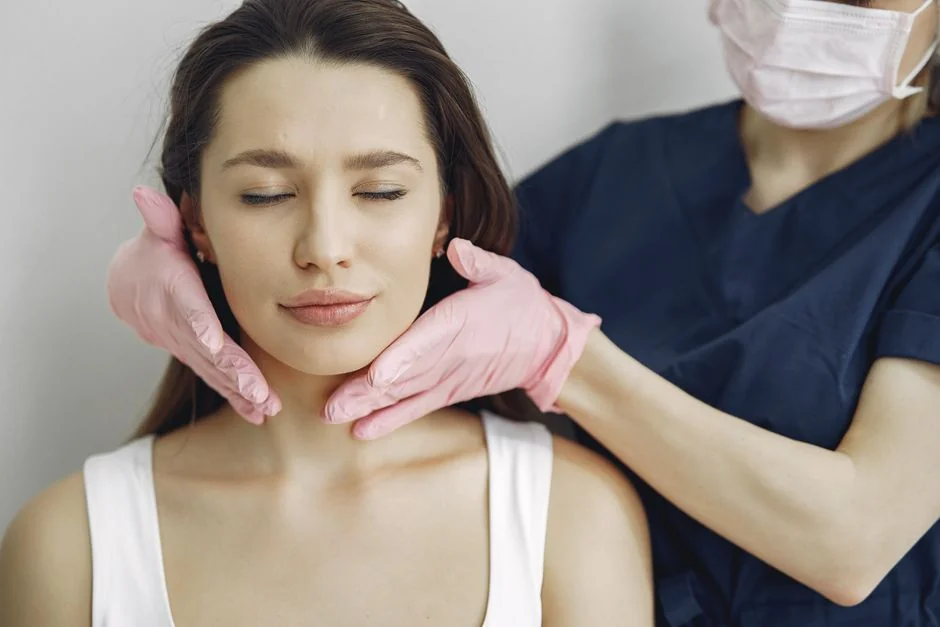
The neck is a particularly important target zone in male patients. A softening of the platysmal bands (the vertical cords of muscle visible in the neck) and accumulation of submental fat beneath the chin are common in men from the late thirties onward.
RF energy can address the dermal component of neck laxity — loose, crepey skin — while also providing some modest improvement in submental fullness when combined with fat-dissolving injections. For men with predominantly fat-related fullness rather than skin laxity, fat-dissolving injections may be a more appropriate primary treatment, and this is worth discussing at consultation.
The Forehead and Brow
The forehead in men is frequently characterised by deep horizontal rhytides (wrinkles) caused by repeated frontalis muscle contraction, as well as skin laxity that contributes to brow ptosis (brow drooping). RF tightening on the forehead targets the dermal layer to improve skin quality, texture, and firmness. It is often used in combination with Botox injections to address both the dynamic (muscle-related) and structural (skin quality) components of forehead ageing simultaneously. This combination approach is one that the team at Kojimachi Dermatology and Plastic Surgery Clinic can discuss with you in detail.
XERF vs. Other Non-Surgical Tightening Options for Men: Comparison
Choosing the right tightening treatment requires weighing several factors: depth of tissue targeted, downtime, number of sessions required, cost, and the nature of the concern being treated. The table below summarises the most commonly available non-surgical options for men in Tokyo.
| Treatment | Energy Type | Primary Depth | Best For | Sessions Typically Needed | Downtime | Approx. Cost at Our Clinic (JPY) |
|---|---|---|---|---|---|---|
| Xérf / RF Tightening | Radiofrequency | Dermis + subcutaneous | Overall skin firming, jawline, neck, forehead | 1–3 | Minimal (1–3 days redness) | Ask at consultation |
| HIFU (e.g. Ultherapy-type) | Focused ultrasound | SMAS layer (4.5 mm) | Deeper lifting, brow and midface | 1–2 per year | Minimal to mild | ¥25,000–¥110,000 |
| Morpheus8 (RF Microneedling) | RF + microneedles | Dermis (up to 4 mm) | Skin texture, mild laxity, pores, scars | 2–3 | 3–5 days redness/swelling | See POTENZA / Dermapen pricing; ¥35,000–¥49,800 (POTENZA) |
| Thread Lift (Tesslift) | Mechanical / PDO threads | Subcutaneous | Immediate lift of midface, jawline | Single procedure | Mild bruising 3–7 days | ¥48,000 per thread |
| Botox (forehead / neck bands) | Neuromodulator injection | Muscle | Dynamic wrinkles, platysmal banding | Every 3–4 months | None to minimal | ¥22,000–¥148,000 (Allergan) |
| Liposuction (Jawline / Cheek) | Surgical | Subcutaneous fat | Significant fat excess, defined jawline | Single procedure | 7–14 days visible swelling | ¥280,000 per area |
This comparison illustrates that no single treatment addresses every concern. Men with deep tissue laxity may benefit most from HIFU or a thread lift, while those with skin quality concerns alongside mild laxity are often well served by RF-based treatments. Surgical options such as jawline liposuction remain the most definitive intervention for men with significant fat excess. These are all treatments discussed and offered at our Ichigaya clinic — feel free to ask about them during a consultation.
Dr. Karibe’s Note
Many of our international male patients arrive having already read extensively online and having formed the idea that one particular device is definitively superior to others. In my clinical experience, the most important factor is not which device is used, but whether the treatment is matched correctly to the individual’s tissue depth, skin thickness, and specific concern. A man with heavy jowling and significant submental fat, for example, will often see more meaningful improvement from a combined approach — or even a surgical option — than from a single RF session alone. I always encourage patients to be honest about what bothers them most, because that shapes the entire treatment plan.
Expected Results and Timeline
One of the most important expectations to manage is the timeline for results from RF tightening. Unlike Botox, which produces visible changes within days, RF-based collagen stimulation is a biological process that unfolds gradually.
Most patients begin to notice an improvement in skin firmness and definition at around four to six weeks post-treatment, with the peak result typically visible at three to six months.
Studies suggest that a single RF tightening session can produce measurable improvements in skin laxity and surface topography in appropriately selected patients. A 2019 review published in the Journal of Cosmetic and Laser Therapy reported that RF treatments demonstrated statistically significant improvement in facial skin laxity scores in the majority of study participants, with effects persisting for six to twelve months in most cases. A subsequent session at six to twelve months is commonly recommended to maintain and build on the initial result.
For the neck and submental area, results tend to be visible earlier — patients often report improved skin texture and a slightly lifted appearance of the neck skin within four to six weeks. The forehead responds well when RF is combined with Botox, as the relaxation of the frontalis muscle reduces competing mechanical forces on the skin while the RF-stimulated collagen remodelling takes place.
It is important to state clearly: results are not permanent, and the ageing process continues after treatment. Maintenance sessions and a consistent skincare regimen — including SPF and, where appropriate, prescription-grade topicals — are part of a realistic long-term plan.
Cost of XERF and Related Treatments in Tokyo
Treatment pricing in Tokyo varies considerably depending on the clinic, the device used, the area treated, and the number of sessions included in a package. The following figures reflect the pricing structure at BIOTOPE CLINIC or Kojimachi Dermatology and Plastic Surgery Clinic in Ichigaya.
For energy-based skin tightening, relevant price points include:
- HIFU (skin lifting and tightening): ¥25,000–¥110,000 depending on area and number of shots
- POTENZA (RF-based treatment): ¥35,000–¥49,800
- Dermapen (RF microneedling adjunct): ¥9,800–¥220,000 depending on scope
- Volnewmer (deep RF tightening): ¥66,000–¥165,000
- Botox — Allergan brand: ¥22,000–¥148,000 (forehead, neck bands)
- Thread lift — Tesslift: ¥48,000 per thread
- Liposuction (jawline / cheek): ¥280,000 per area (plus anaesthesia ¥2,200–¥77,000 and pre-operative blood work ¥11,000)
An initial consultation is priced at ¥3,300; a surgical consultation with Dr. Karibe is ¥2,200. These fees are generally deducted from or credited toward treatment. For an accurate quote, we recommend booking a consultation.
Have a question about this treatment?
Message us on LINE or WhatsApp — our English-speaking team usually replies the same day.
What to Expect: Before, During, and After Treatment
Before Your Appointment
A thorough pre-treatment consultation is essential. At this appointment, your skin laxity, tissue anatomy, and medical history will be assessed. It is important to disclose any history of skin conditions, previous facial procedures, pacemakers or implanted metal devices (which may be a contraindication for RF), active infections, or use of blood-thinning medications. Photographs are typically taken to provide a baseline for comparison.
In the days before treatment, patients are generally advised to avoid prolonged sun exposure, self-tanning products, and skincare actives such as retinoids or AHAs on the areas to be treated, as these can increase skin sensitivity. Staying well hydrated in the days before treatment is advisable.
During the Procedure
A topical anaesthetic cream is typically applied to the treatment area approximately thirty to sixty minutes before the session begins, to minimise discomfort. The handpiece is then passed over the skin in systematic passes. Most patients describe the sensation as a deep warmth or a mild prickling heat — generally well tolerated. Session duration varies from approximately thirty minutes for a single zone (such as the neck) to sixty to ninety minutes for the full face, neck, and forehead.
After Treatment and Recovery
Immediately following RF tightening, the treated skin typically appears pink or mildly red and may feel warm and slightly swollen. This is a normal inflammatory response and usually resolves within twenty-four to seventy-two hours in most patients. In men with thicker skin or more intensive treatment settings, mild swelling and sensitivity can persist for up to five days. There is generally no open wound and no requirement to avoid public activity, making it a practical option for working professionals.
Post-treatment care typically includes gentle moisturisation, avoidance of direct sun exposure for at least one week, consistent application of broad-spectrum SPF, and avoidance of saunas, steam rooms, and vigorous exercise for forty-eight hours following the procedure.
Who Is a Good Candidate for Xérf? Who Should Consider an Alternative?
Ideal Candidates
- Men aged approximately 35–65 with mild to moderate skin laxity on the jawline, neck, or forehead
- Those who notice early jowling, a softening neck contour, or forehead skin that lacks its previous firmness
- Men who prefer a non-surgical approach and can accept gradual, natural-looking improvement over several months
- Patients with realistic expectations and a commitment to a maintenance schedule
- Those in general good health without contraindications to RF energy (see below)
Who Should Consider an Alternative
- Men with significant, advanced tissue descent or heavy jowling — surgical options such as a neck lift or jawline liposuction are likely to yield more meaningful improvement
- Those with active skin infections, open sores, or inflammatory skin conditions in the target area
- Patients with implanted electronic devices (e.g., pacemakers, cochlear implants) — RF energy may be contraindicated
- Men with very thin skin or a history of abnormal scarring (keloids or hypertrophic scars), where RF energy parameters must be carefully adjusted
- Individuals primarily concerned with dynamic wrinkles (expression lines) — these are better addressed with Botox rather than RF tightening
- Patients expecting results equivalent to a surgical facelift from a non-surgical device — expectations should be carefully calibrated at consultation
Common Misconceptions About RF Skin Tightening for Men
Misconception 1: “One session will produce dramatic, immediate results.”
This is perhaps the most common misunderstanding. RF-based collagen stimulation is a biological process driven by fibroblast activation, and the most significant improvements appear gradually over three to six months. Immediately after treatment, some patients do notice a subtle firming from collagen contraction, but this is modest. The more meaningful and visible result develops over the weeks that follow. Clinics or marketing materials that imply otherwise are overstating what the science supports.
Misconception 2: “RF tightening and HIFU are interchangeable — it doesn’t matter which one you use.”
While both technologies stimulate collagen through controlled heat, they reach different tissue depths and produce subtly different effects. HIFU is particularly effective at targeting the SMAS layer (a deeper fibromuscular structure), making it well suited to patients with deeper tissue descent. RF energy treats a broader volumetric zone in the dermis and upper subcutaneous tissue, which is often more appropriate for skin quality improvement, surface tightening, and patients who want a gentler thermal profile. Choosing between them — or combining them — is a clinical decision that should be made after proper assessment, not based solely on brand recognition or online reviews.
In our clinical experience at Kojimachi Dermatology and Plastic Surgery Clinic, male patients who invest time in a thorough consultation, understand the mechanism of their treatment, and follow through with maintenance care consistently report the highest satisfaction — regardless of which specific device was used.
Frequently Asked Questions
- Q. How many sessions of Xérf will I need to see results on my jawline and neck?
- The number of sessions required depends on the degree of laxity, the patient’s skin characteristics, and the treatment goals established at consultation. Many men see meaningful improvement after a single session, with a follow-up session recommended at six to twelve months to maintain and build on the result. Those with more pronounced laxity may benefit from two to three sessions spaced four to six weeks apart as an initial course.
- Q. Is RF tightening painful? What does it feel like for men with thicker skin?
- Most patients describe the sensation as a deep, spreading warmth with occasional brief moments of more intense heat as the energy is delivered. Topical anaesthetic cream is applied before the procedure to reduce discomfort significantly. Men with thicker, more sebaceous skin may require slightly higher energy settings to achieve the same therapeutic temperature at depth, which can feel more intense — your treating clinician will adjust parameters throughout the session based on your feedback.
- Q. Can Xérf be combined with Botox or filler on the same visit?
- In many cases, yes — combination treatments are commonly performed on the same day when clinically appropriate. For example, Botox for forehead lines and RF tightening for the lower face and neck can complement each other by addressing different layers and mechanisms of facial ageing simultaneously. However, the sequencing and compatibility of treatments should always be assessed individually at consultation; there are circumstances where a gap between procedures is advisable.
- Q. How long do the results last?
- Results from RF tightening are not permanent. Studies suggest that improvements in skin laxity are typically maintained for six to twelve months, after which the ageing process continues. Most clinicians recommend an annual maintenance session alongside a consistent SPF and skincare regimen. Lifestyle factors such as smoking, sun exposure, and significant weight fluctuation affect how long results are maintained.
- Q. I am visiting Tokyo for a short period. Can I have this treatment and return home shortly afterwards?
- RF tightening generally has minimal downtime, and most patients are able to resume normal activities within one to three days. For medical tourists or business visitors, this is one of the more practical non-surgical options available. However, it is recommended that you allow at least 48–72 hours before long-haul travel for any initial redness or swelling to subside, and a follow-up consultation should ideally be factored into your plans where possible.
- Q. Does BIOTOPE CLINIC or Kojimachi Dermatology and Plastic Surgery Clinic offer consultations in English?
- Yes. The clinic offers consultations in English and is experienced in working with international patients, expatriates, and medical tourists visiting Tokyo. Appointments can be booked in advance, and the clinical team is familiar with the specific concerns and practical considerations relevant to non-Japanese-speaking patients.
Have a question about this treatment?
Message us on LINE or WhatsApp — our English-speaking team usually replies the same day.
Summary
XERF and related RF tightening technologies represent a well-established, non-surgical option for men in Tokyo seeking to address early to moderate laxity of the jawline, neck, and forehead without the commitment or recovery associated with surgery. The mechanism — controlled thermal stimulation of collagen in the dermis and subcutaneous tissue — is grounded in decades of clinical science, and studies suggest that most appropriately selected patients achieve measurable improvement at three to six months following treatment.
For men in Tokyo, the range of non-surgical tightening options includes RF-based treatments, HIFU, RF microneedling, thread lifts, and injectable options such as Botox. Each addresses a different layer of tissue and a different component of facial ageing, which is why a thorough consultation with a qualified clinician — one who will assess your anatomy rather than simply recommend a standard protocol — makes a substantive difference to outcomes.
Surgical options, including jawline liposuction and surgical thread lifts, remain available for men with more advanced concerns who are ready to consider a more definitive procedure.
If you have questions about XERF for men in Tokyo, including jawline, neck, and forehead tightening, our team at BIOTOPE CLINIC or Kojimachi Dermatology and Plastic Surgery Clinic in Ichigaya, Tokyo would be happy to help. We offer consultations in English.
24/7 Consultation & Booking
Book a Consultation or Treatment
Our English-speaking team responds via LINE or WhatsApp — usually the same day.
References
- Fabi SG, Goldman MP. Retrospective evaluation of micro-focused ultrasound for lifting and tightening the face and neck. Dermatologic Surgery. 2012.
- Alexiades-Armenakas M, Dover JS, Arndt KA. Unipolar versus bipolar radiofrequency treatment of rhytides and laxity using a mobile painless delivery method. Lasers in Surgery and Medicine. 2008.
- Weiss RA, Weiss MA, Munavalli G, Beasley KL. Monopolar radiofrequency facial tightening: a retrospective analysis of efficacy and safety in over 600 treatments. Journal of Drugs in Dermatology. 2006.
- Suh DH, Shin MK, Lee SJ, et al. Intense focused ultrasound tightening in Asian skin: clinical and pathologic results. Dermatologic Surgery. 2011.
- Oni G, Hoxworth R, Teotia S, Brown S, Kenkel JM. Evaluation of a microfocused ultrasound system for improving skin laxity and tightening in the lower face. Aesthetic Surgery Journal. 2014.
Related Articles
You may also find these articles useful.
- XERF: Tokyo Dual-Frequency RF Tightening 2026
- Volnewmer vs Thermage vs HIFU: RF Comparison
- Skin Tightening Treatment Tokyo: Options and Cost
- Facial Sagging Treatment: HIFU vs RF Microneedling
SUPERVISED BY
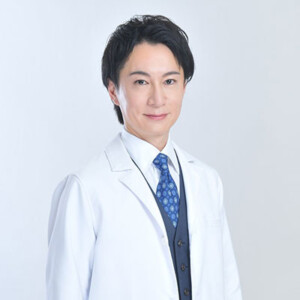
Dr. Jun Karibe
MD
Director
Education & Career
Certifications
Awards
MEDICAL REVIEW