Finding an English-Speaking Dermatologist in Tokyo for Hair Loss and AGA

Noticing your hair thinning or a receding hairline is unsettling at any age, and navigating the Japanese healthcare system without fluent Japanese can make the experience feel even more isolating.
This guide explains what to expect when consulting an English-speaking dermatologist in Tokyo for hair loss and androgenetic alopecia (AGA) — covering how AGA is diagnosed, what treatments are available, realistic costs, and where to find a doctor who can communicate with you clearly in English.
What you’ll learn in this article:
- What androgenetic alopecia (AGA) is and how it differs from other types of hair loss
- How AGA is diagnosed during a clinical consultation in Tokyo
- Which treatments are available in Japan, and what the evidence says about them
- Approximate costs for AGA treatment in Tokyo
- Where to book an English-speaking consultation at a qualified clinic
Have a question about this treatment?
Message us on LINE or WhatsApp — our English-speaking team usually replies the same day.
What Is Androgenetic Alopecia (AGA)?
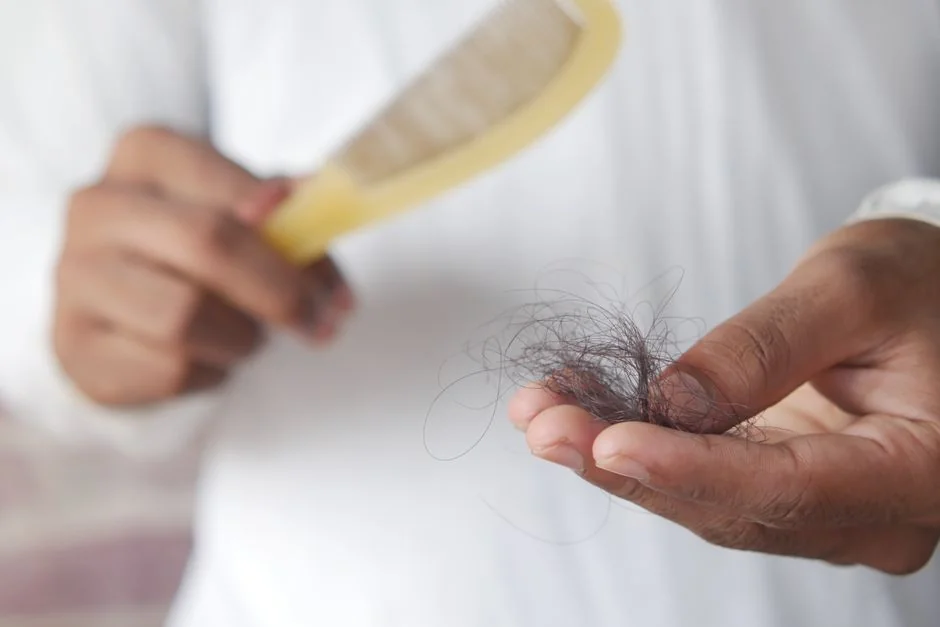
Androgenetic alopecia — commonly called male-pattern or female-pattern hair loss — is the most prevalent form of hair loss worldwide. It is driven by a combination of genetic predisposition and the hormone dihydrotestosterone (DHT), which causes hair follicles to miniaturise progressively until they can no longer produce visible hair.
In men, AGA typically presents as a receding hairline at the temples and thinning at the crown. In women, the pattern is different: diffuse thinning across the top and mid-scalp, usually with the hairline preserved. Distinguishing AGA from other causes of hair loss — such as alopecia areata (an autoimmune condition), telogen effluvium (stress or nutritional-related shedding), or scalp conditions — is an essential first step that requires a proper clinical assessment, not self-diagnosis.
How Common Is AGA?
AGA is far more widespread than many people realise.
Clinical studies suggest that approximately 50% of men over the age of 50 experience some degree of androgenetic alopecia, and research published in dermatology literature indicates that female-pattern hair loss affects roughly 40% of women by the age of 70. Early intervention consistently produces better outcomes than waiting until significant follicle loss has occurred.
What People Often Get Wrong About Hair Loss
Misconception 1: “Shedding means my hair is falling out permanently.” Not all hair shedding is AGA. Telogen effluvium — a temporary, stress-induced or nutritionally related shedding phase — can cause dramatic short-term hair loss that resolves on its own or with minor intervention. A dermatologist can distinguish between these conditions through examination and blood tests, preventing unnecessary anxiety or inappropriate treatment.
Misconception 2: “AGA only affects older men.” AGA can begin in the mid-twenties and affects people of all genders. Many international patients in Tokyo are surprised to learn that female-pattern hair loss is under-recognised and under-treated globally — yet it is both common and responsive to appropriate therapy when caught early.
How AGA Is Diagnosed in a Clinical Setting

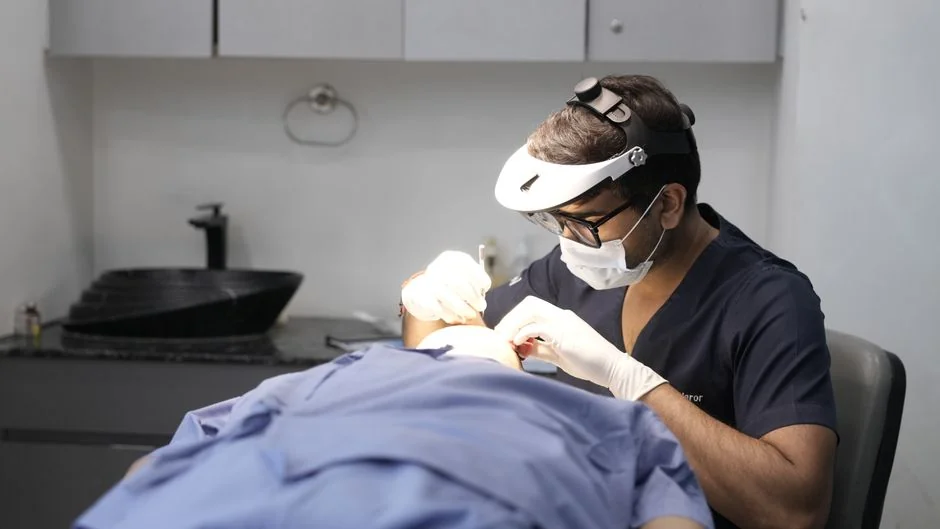
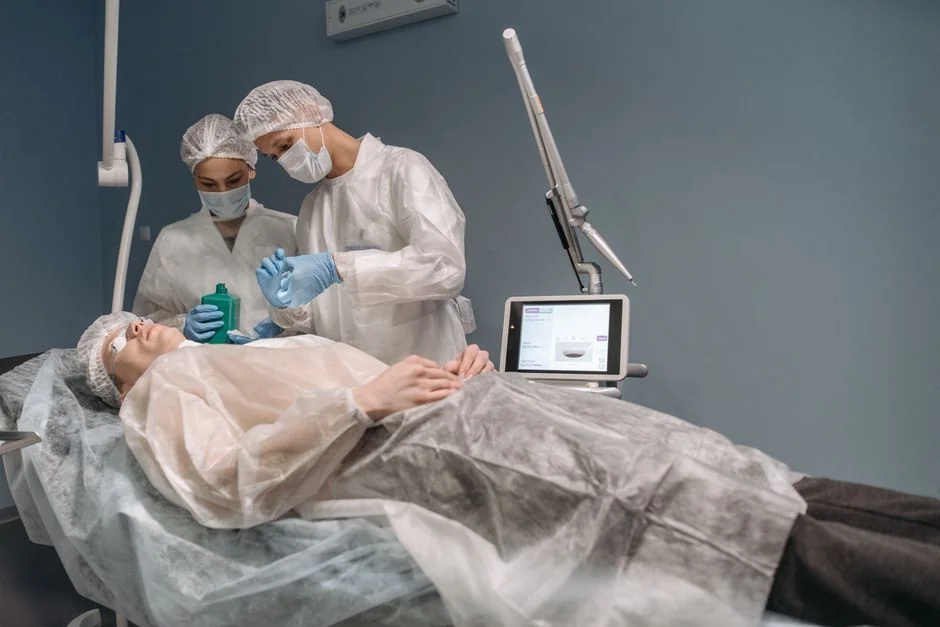
A thorough consultation for hair loss typically involves several components. The doctor will review your personal and family medical history, assess your scalp and hair visually, and may use a dermatoscope — a magnifying instrument that allows close examination of individual follicles and scalp skin. This technique, called trichoscopy, can reveal follicular miniaturisation that is characteristic of AGA before it is visible to the naked eye.
Blood tests are frequently requested to rule out contributing factors such as iron deficiency, thyroid dysfunction, or hormonal imbalances — all of which can cause or worsen hair thinning and must be addressed alongside any AGA-specific treatment. At BIOTOPE CLINIC in Shirokanedai, Dr. Karibe frequently sees international patients who have been self-treating for months without identifying an underlying contributing condition that was making their hair loss worse.
Dr. Karibe’s Note
A common question I receive from international patients is whether they can simply continue the hair loss medication they started in their home country. In most cases, yes — but I always recommend a fresh scalp assessment and, where appropriate, updated bloodwork. Dosages, formulations, and the regulatory status of certain medications differ between countries, and a consultation ensures your current regimen is appropriate for your situation here in Japan.
AGA Treatments Available in Tokyo
Oral and Topical Medications
The most evidence-supported medications for AGA are finasteride (oral, for men), dutasteride (oral, for men), and minoxidil (topical or oral, for men and women).
Finasteride and dutasteride work by inhibiting the enzyme that converts testosterone to DHT, thereby slowing follicle miniaturisation. Clinical reports indicate that finasteride produces measurable hair count improvement in approximately 80–90% of men who use it consistently for 12 months or longer.
Minoxidil is a topical vasodilator that increases blood flow and nutrient delivery to the scalp. It is available over the counter in Japan but is often used alongside prescription DHT-blocking medications for a synergistic effect. In women with AGA, topical minoxidil is currently the most widely used pharmacological option.
Nutritional and Preventive Medicine Approaches
Nutritional deficiencies — particularly iron, zinc, biotin, and vitamin D — are frequently identified in patients with hair thinning. Orthomolecular (nutritional) therapy, which involves targeted supplementation based on individual blood analysis, is offered as part of BIOTOPE CLINIC’s preventive medicine programme. IV drip therapy containing glutathione and high-dose vitamin C may also be discussed as a supportive measure during a consultation with Dr. Karibe, depending on your individual profile.
Platelet-Rich Plasma (PRP),Stem cell supertanat and Energy-Based Scalp Treatments
Platelet-rich plasma (PRP) or Stem cell supernatant therapy, in which the patient’s own blood is processed to concentrate growth factors and then injected into the scalp, has attracted considerable clinical interest for AGA. Studies suggest PRP produces statistically significant improvement in hair density and thickness after a course of treatments, with a favourable safety profile given that it uses the patient’s own biological material.
Microneedling of the scalp — performed with devices such as the Dermapen — is a complementary technique that creates controlled micro-channels to enhance topical medication absorption and may independently stimulate the hair follicle environment. This is a treatment available at BIOTOPE CLINIC in Shirokanedai — feel free to ask about it during a consultation with Dr. Karibe.
Cost of AGA Treatment in Tokyo
Medication costs in Japan vary depending on whether treatment is prescribed through the insurance system or obtained privately (self-pay). AGA medications — finasteride, dutasteride, and minoxidil — are generally not covered by Japanese health insurance when used for cosmetic purposes and are typically self-pay.
The following table provides a general overview of costs commonly associated with hair loss consultations and treatments in a Tokyo cosmetic/dermatology setting. Prices at BIOTOPE CLINIC are indicated where applicable.
| Item | Approximate Cost (JPY) | Notes |
|---|---|---|
| Initial consultation | ¥3,300 | English-speaking consultation at BIOTOPE CLINIC |
| Dr. Karibe surgical / specialist consultation | ¥2,200 | Applicable for in-depth AGA assessment |
| Dermapen scalp microneedling | ¥9,800 – ¥220,000 | Range reflects single session to course packages |
| IV drip therapy (vitamin C, glutathione) | Varies by formulation | Part of preventive medicine programme; enquire at consultation |
| Oral AGA medication (finasteride/dutasteride) | Varies; self-pay | Typically monthly cost; confirmed at consultation |
| Bloodwork (pre-treatment) | ¥11,000 | Recommended to rule out contributing deficiencies |
For an accurate quote tailored to your specific diagnosis and treatment plan, we recommend booking a consultation.
Have a question about this treatment?
Message us on LINE or WhatsApp — our English-speaking team usually replies the same day.
Real Patient AGA Treatment Results — Before & After
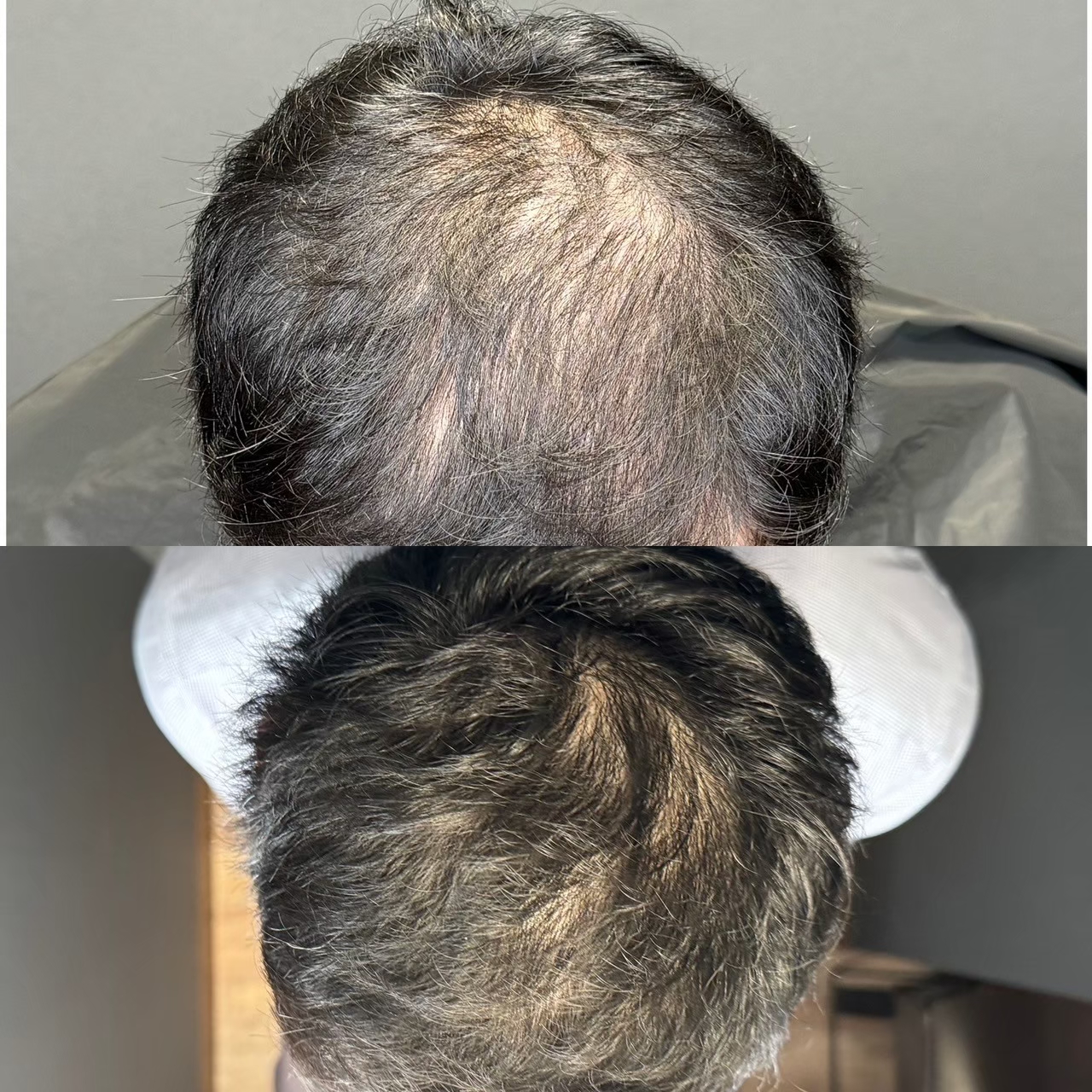
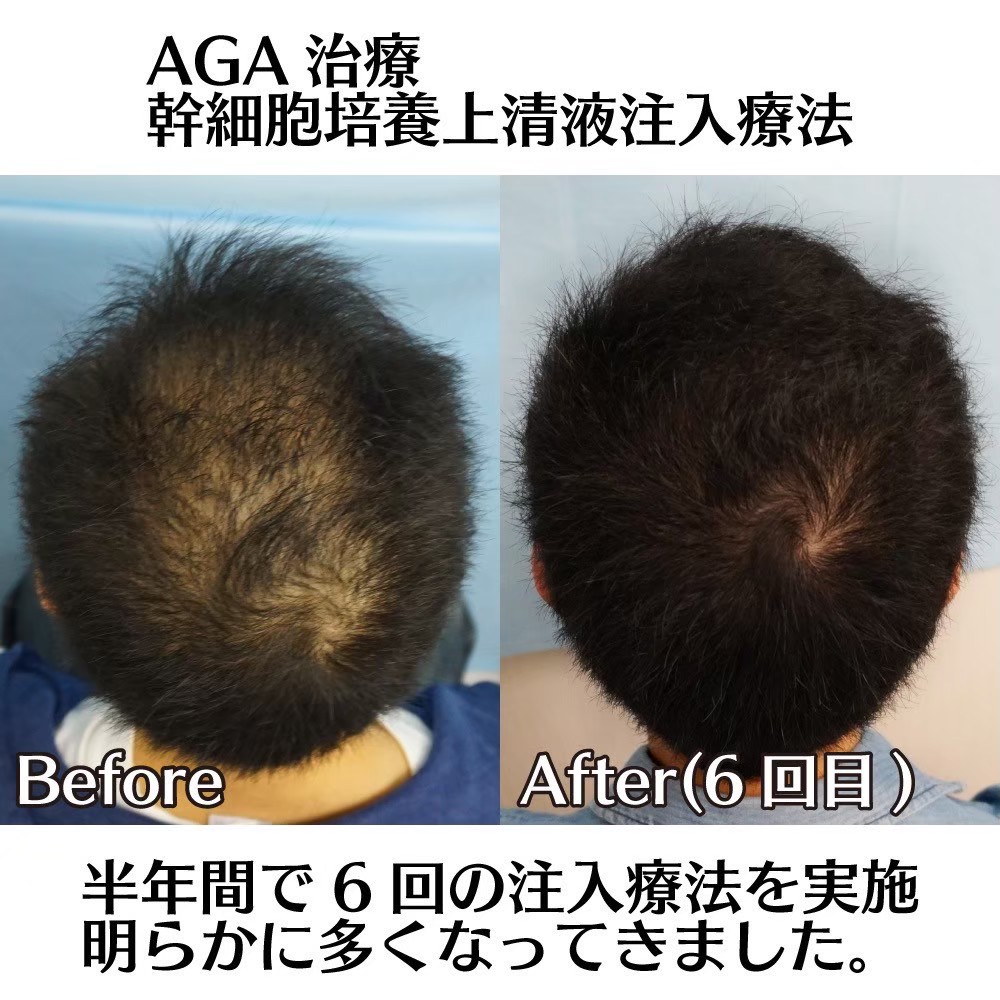
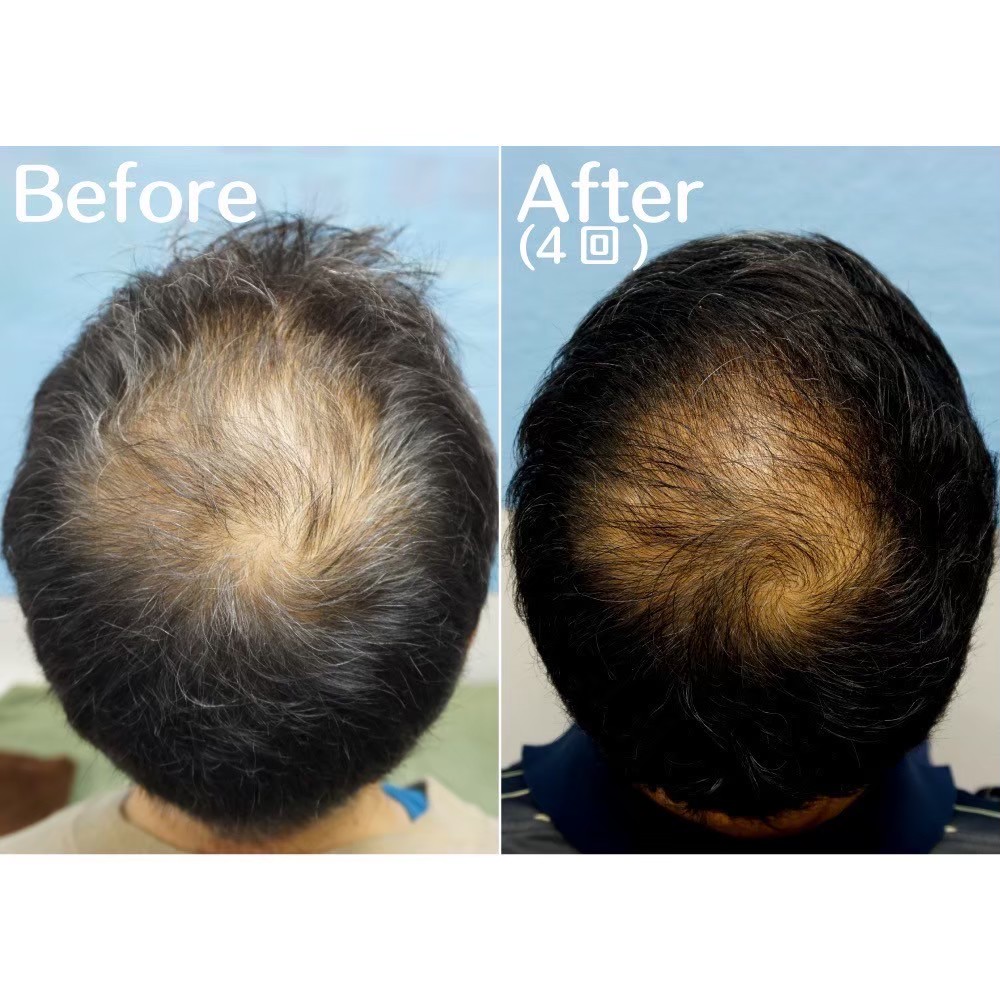
The following are actual AGA (androgenetic alopecia) treatment results from patients at Kojimachi Dermatology & Plastic Surgery Clinic and its sister clinic BIOTOPE CLINIC (Shirokanedai, Minato-ku, Tokyo), both directed by Dr. Jun Karibe. Photos are shared with patient permission. Individual results vary depending on age, hair loss stage, adherence to medication, and treatment plan. Tap each case to view the full treatment disclosure required by the Japanese Medical Advertising Guidelines.
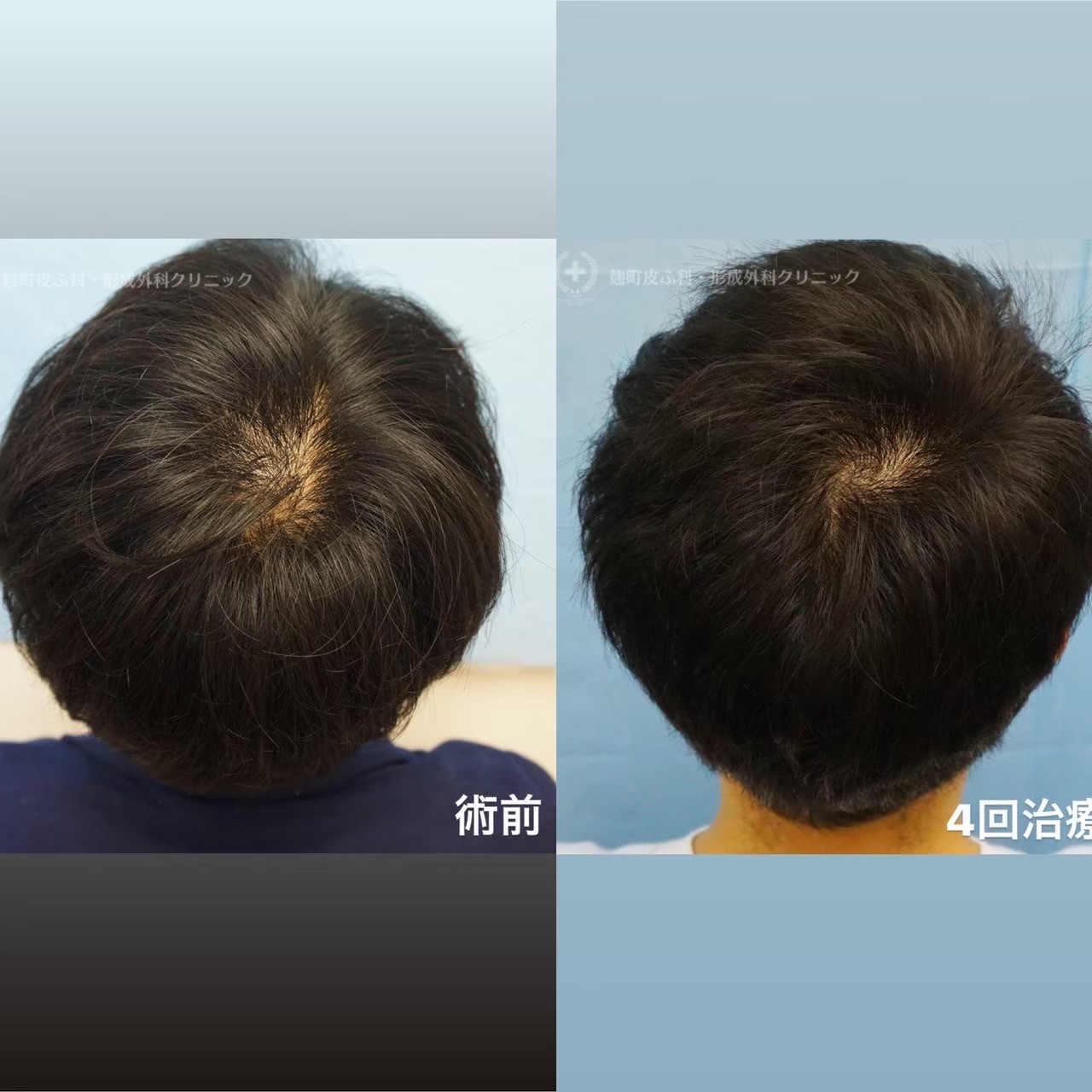
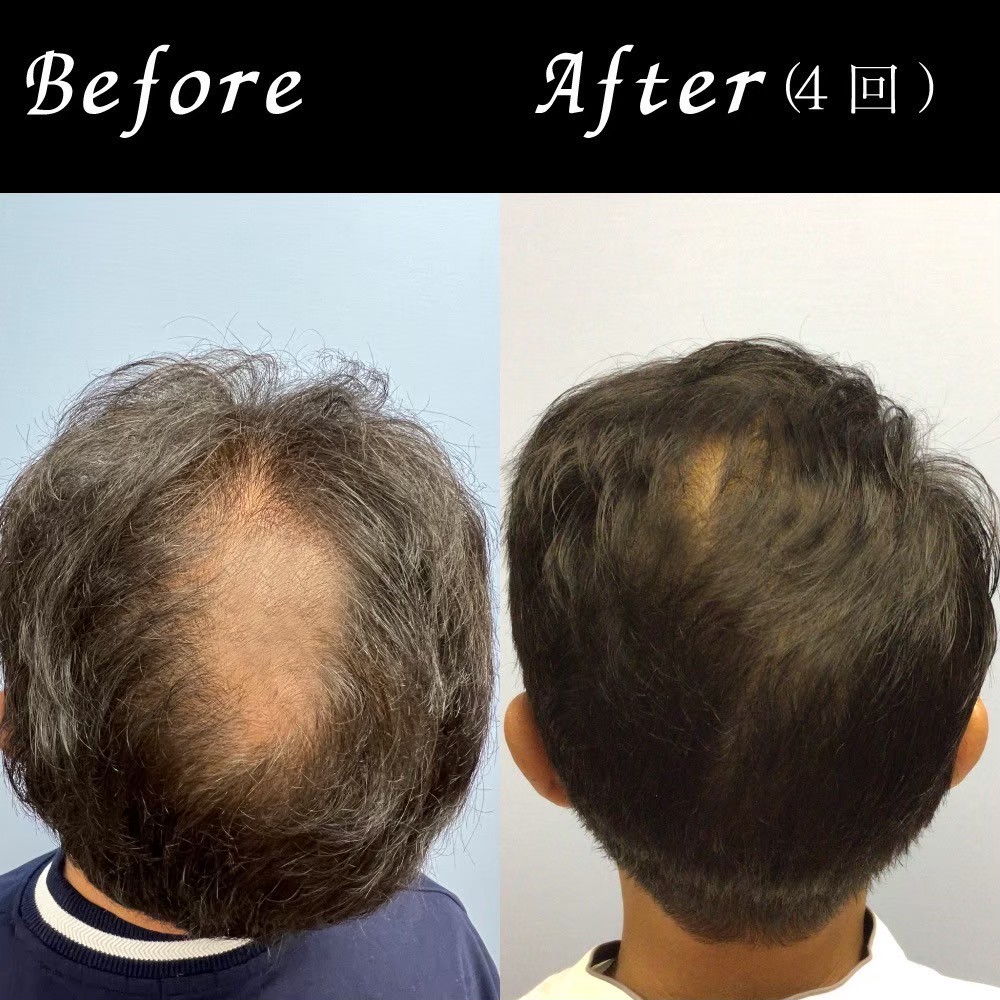
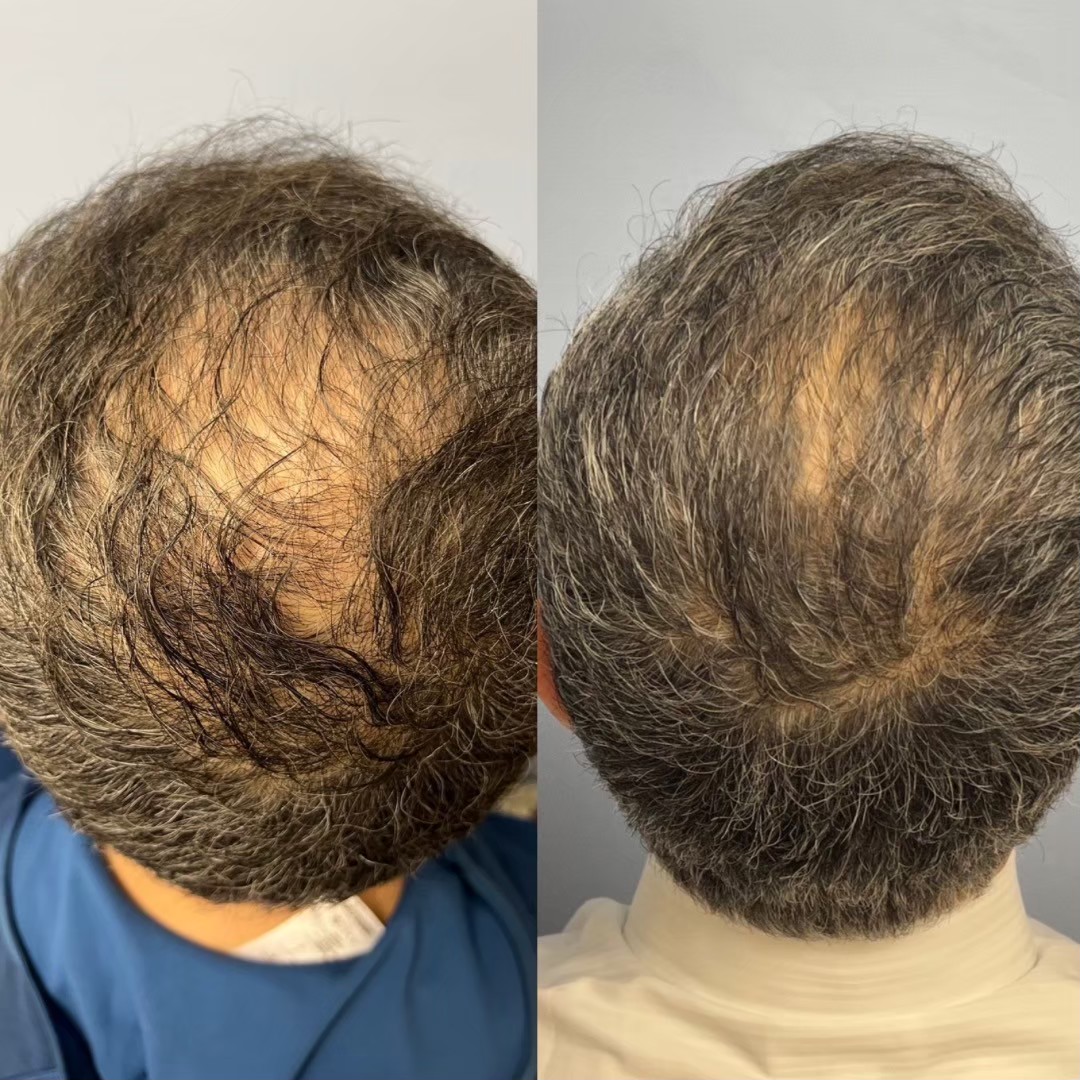
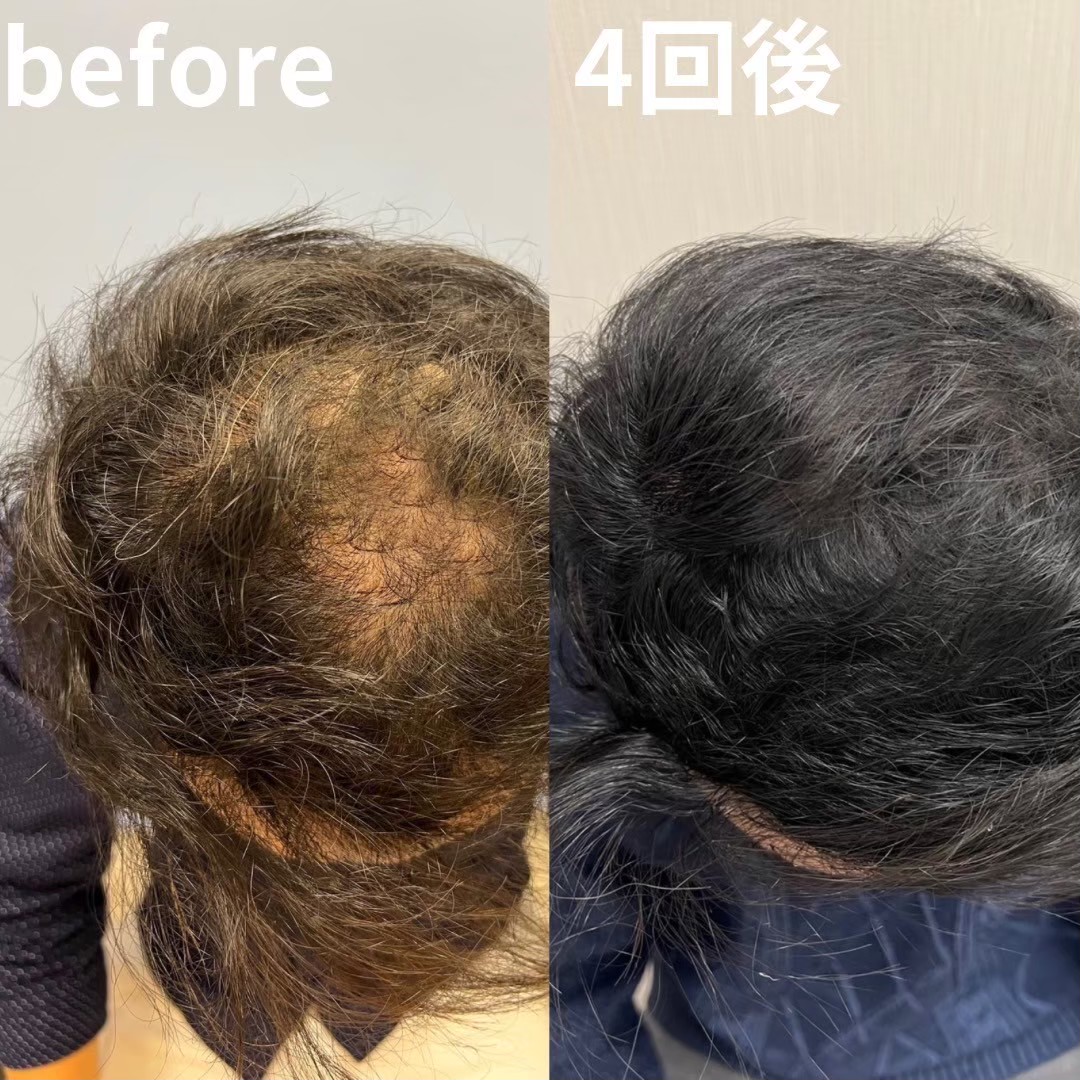
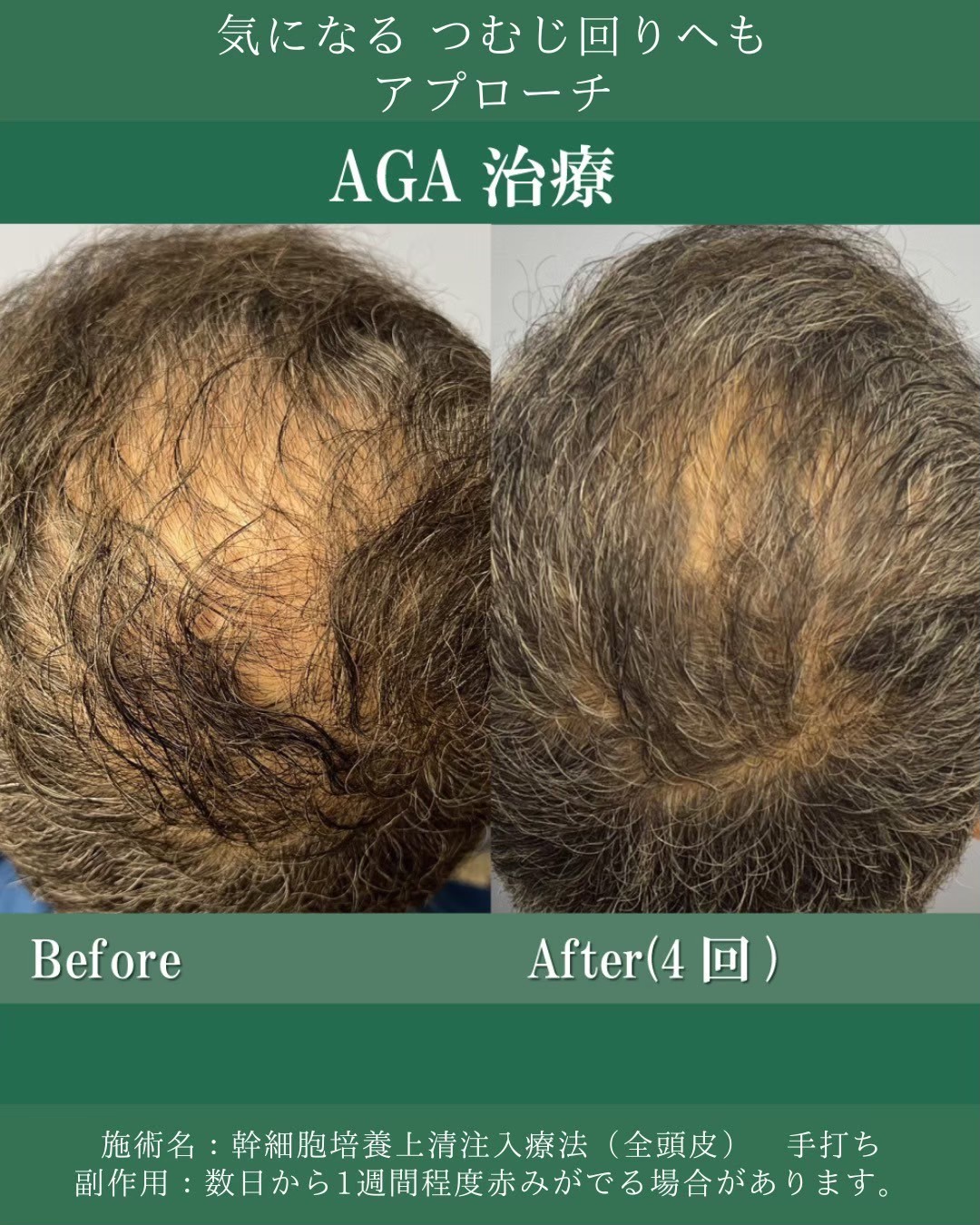
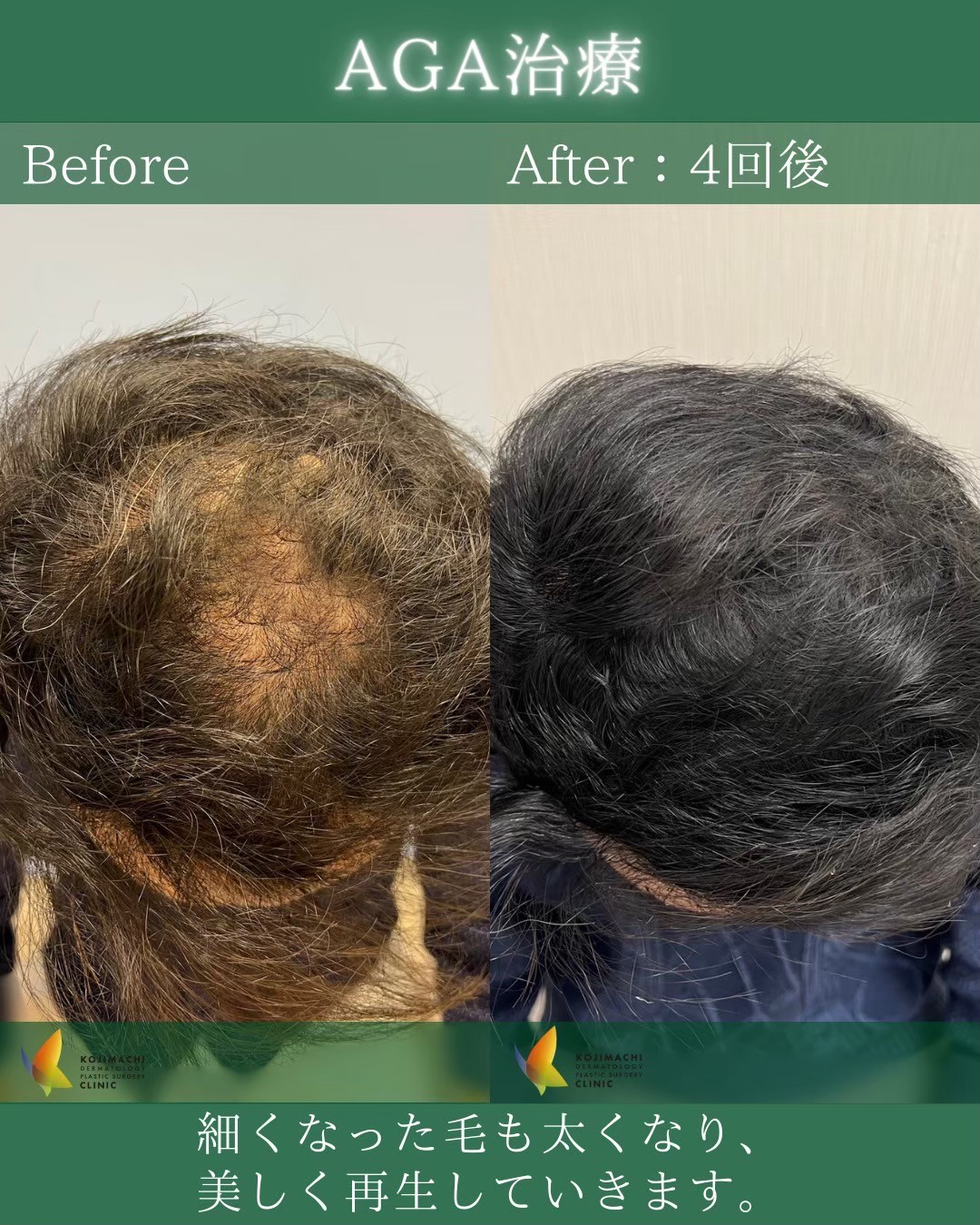
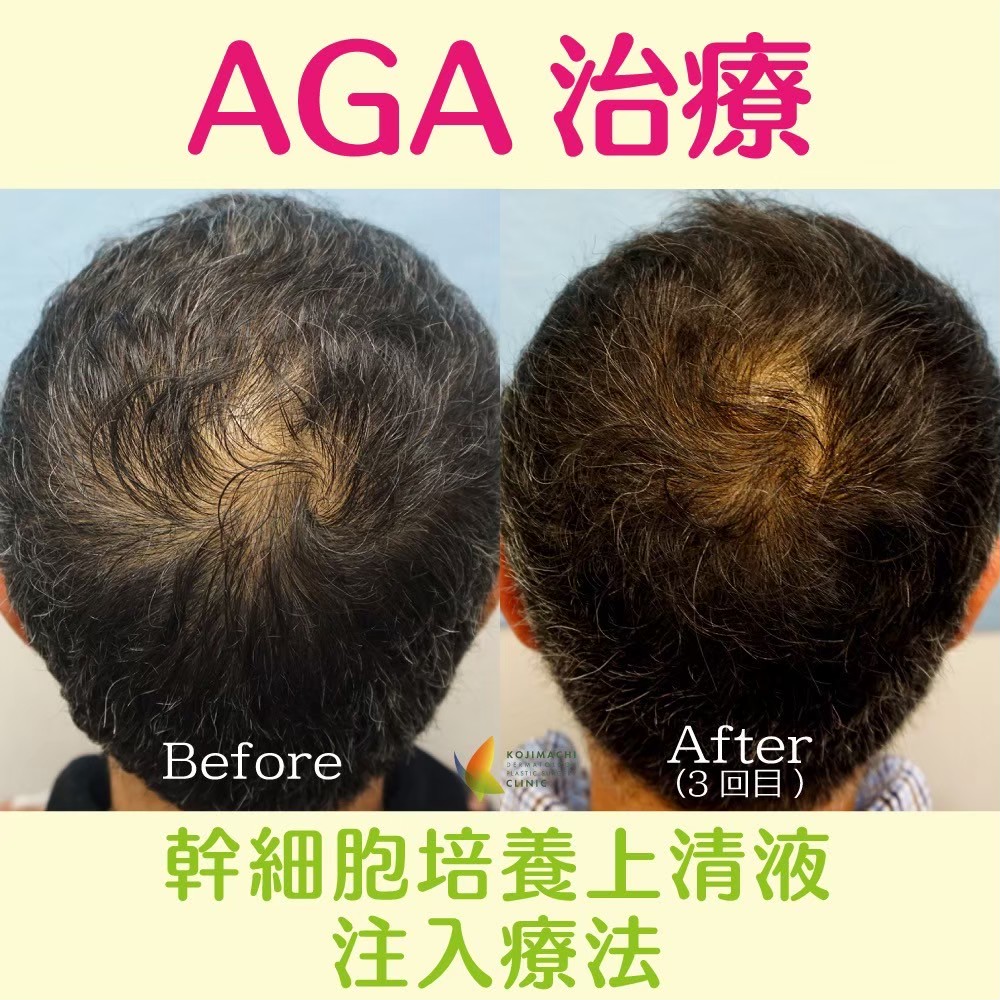
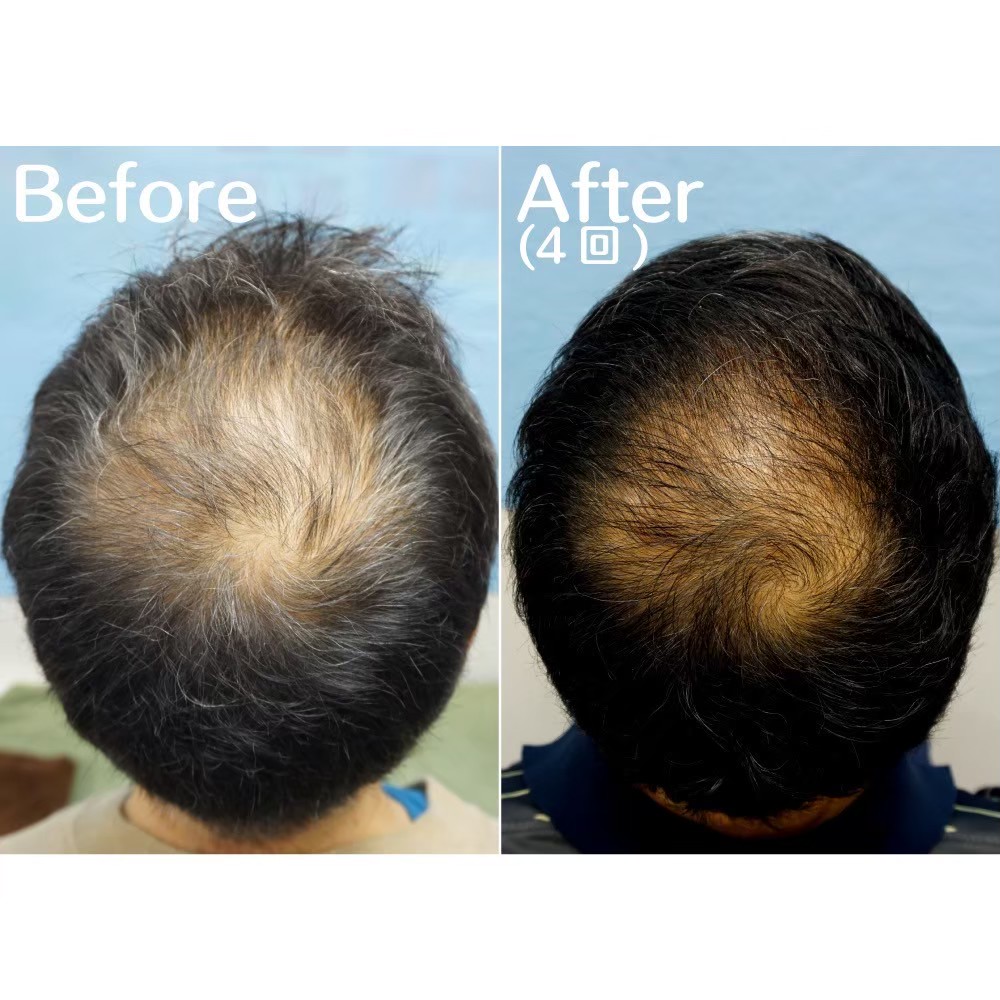
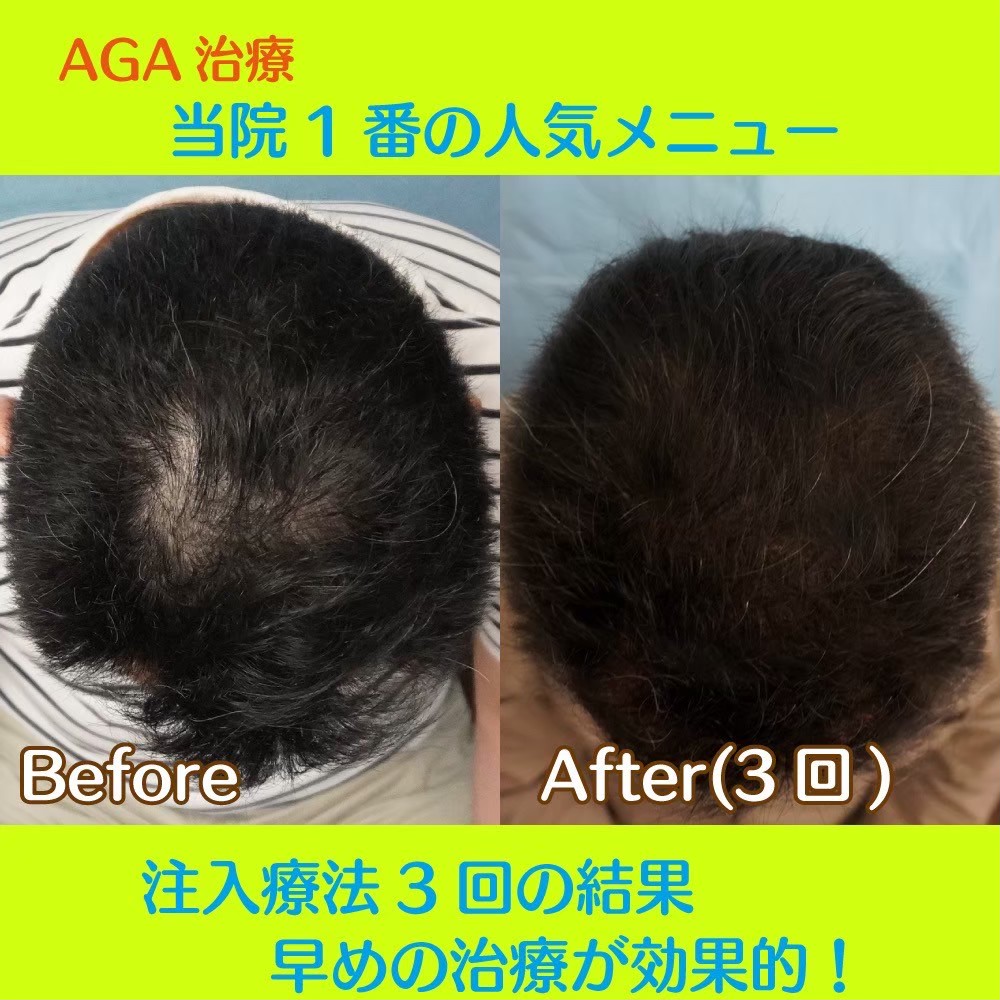
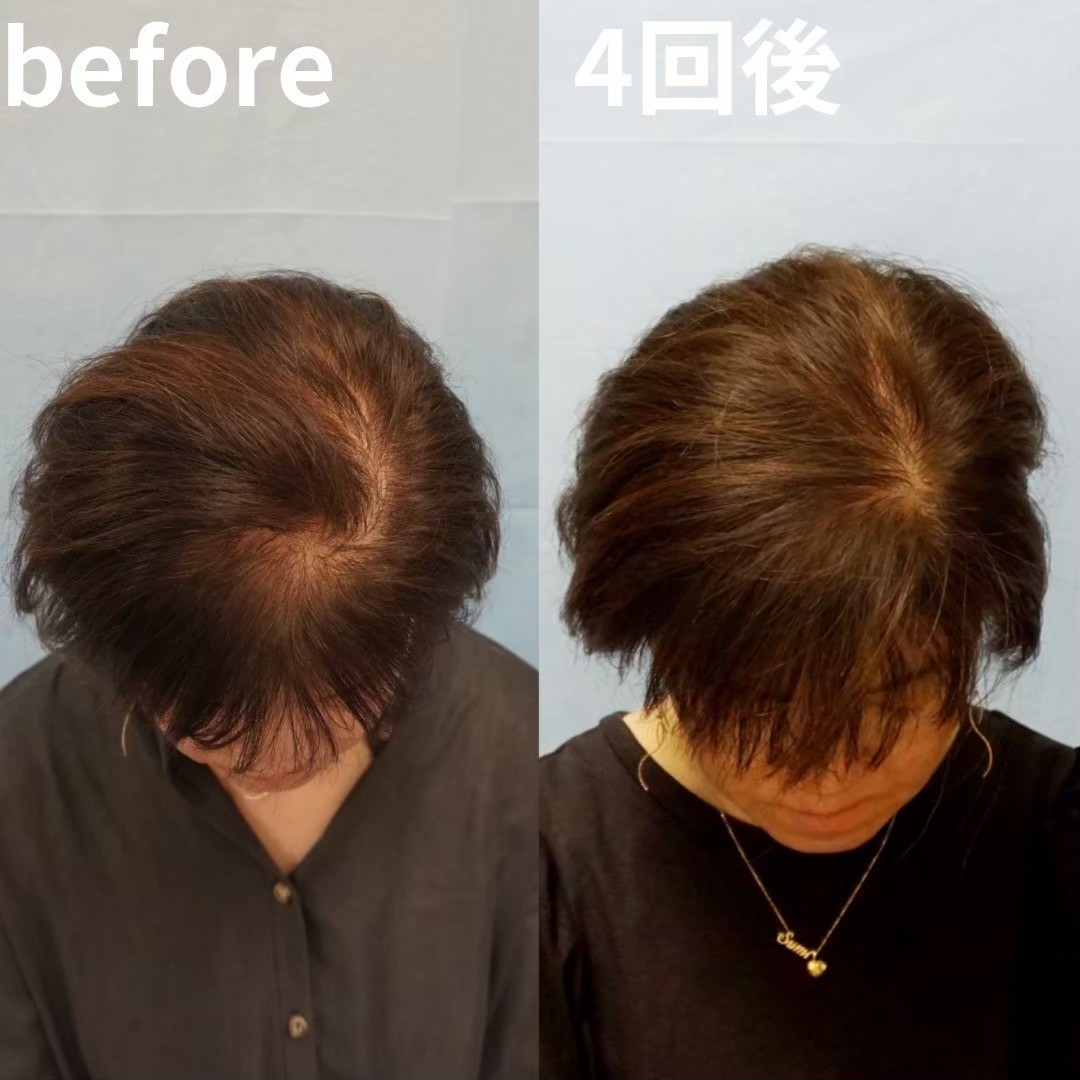
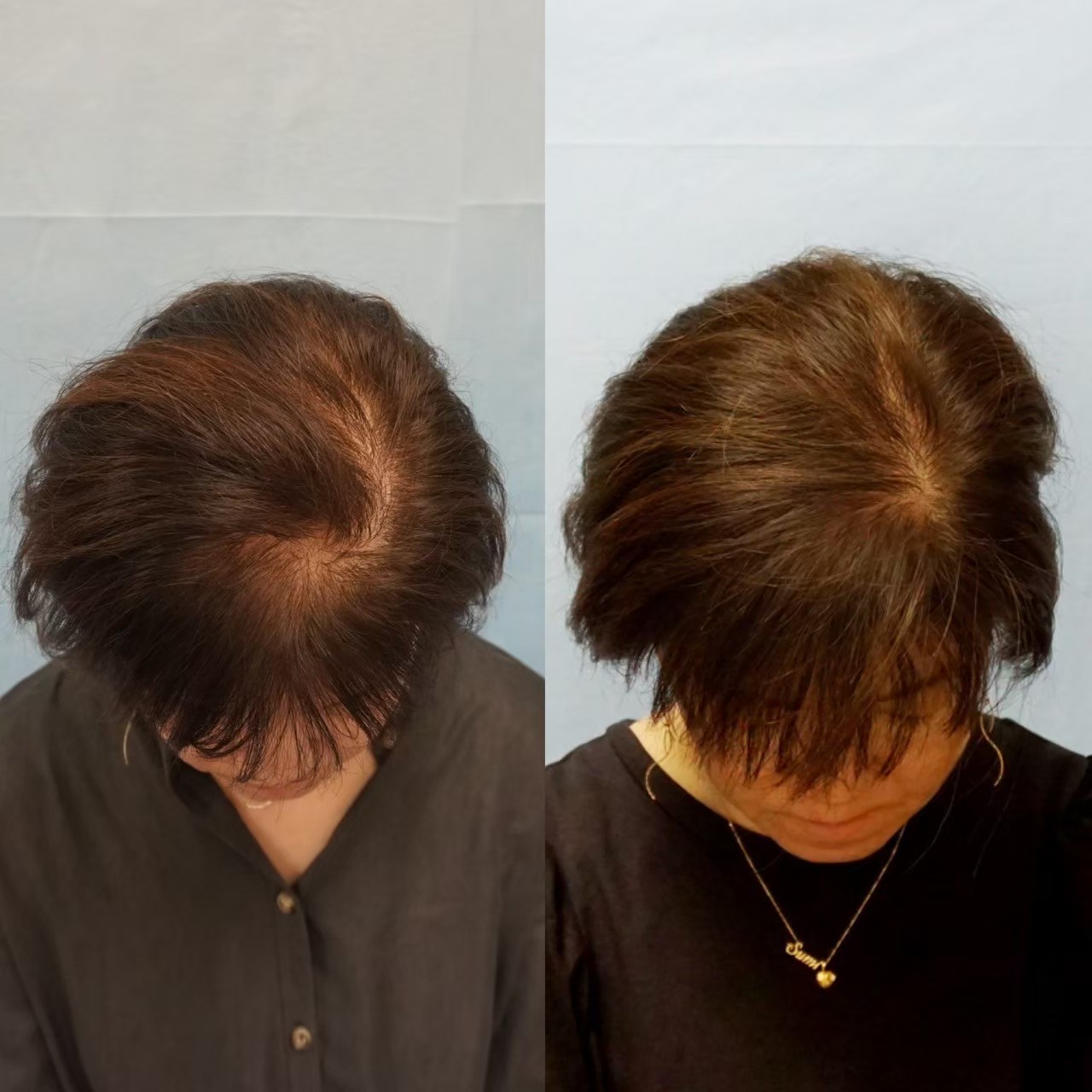
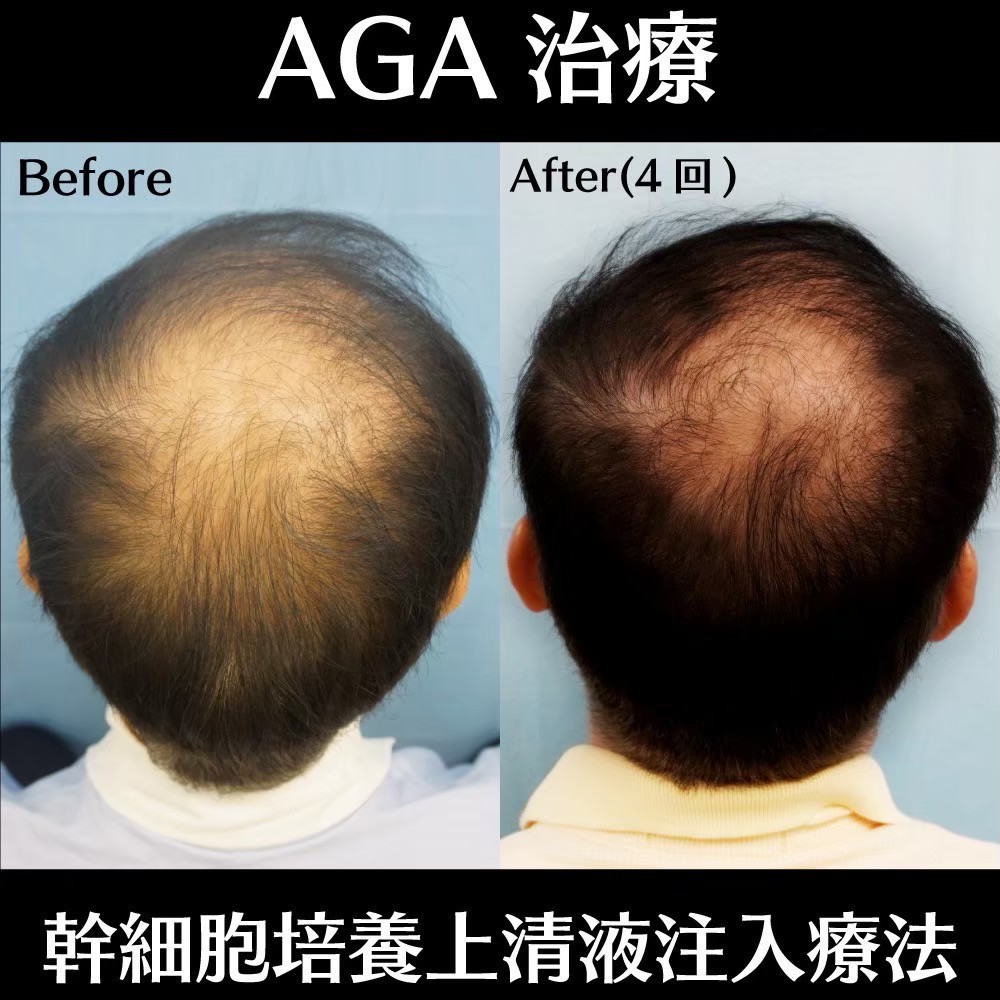
Case 1 — Treatment disclosure
Individual results vary. The information below is provided per the Japanese Medical Advertising Guidelines.
- Treatment category
- AGA (androgenetic alopecia) treatment — oral 5-alpha-reductase inhibitors (finasteride, dutasteride), topical or oral minoxidil, and optional regenerative scalp injection therapy.
- How it works
- Finasteride / dutasteride block DHT, the hormone that drives follicular miniaturization. Minoxidil prolongs the growth (anagen) phase and increases scalp blood flow. Stem-cell culture supernatant injections stimulate follicular regeneration. Visible improvement is typically observed after 3–6 months of continuous use.
- Number of sessions / duration
- Oral medications: daily use, results assessed at 3, 6, and 12 months.
Injection courses: typically 5 sessions.
Continued use is generally required to maintain results. - Main side effects
-
Finasteride / dutasteride: sexual dysfunction (decreased libido, erectile dysfunction, ejaculatory disorder), liver dysfunction, mood changes; dutasteride may also cause gastrointestinal symptoms.
Minoxidil: scalp irritation, itching, unwanted body hair; oral minoxidil may cause palpitations, dizziness, and lower-limb edema. Initial shedding may occur in the first 1–2 months.
Injection therapy: in rare cases, swelling, warmth, pain, or allergic reactions may occur; these typically subside over time. - Precautions & contraindications
- Finasteride and dutasteride must not be used by women — especially those pregnant, potentially pregnant, or breastfeeding — even physical contact with crushed or broken tablets should be avoided. Not for use in children. Patients with hepatic dysfunction, active prostate cancer, or a history of hypersensitivity should not use these medications. Oral minoxidil requires cardiovascular assessment before starting.
- Fees (Kojimachi Clinic / BIOTOPE CLINIC, tax included)
-
Oral medications (per box):
• Finasteride, 28 tablets: ¥4,800
• Zagallo (dutasteride), 30 capsules: ¥9,000
• Minoxidil (in-clinic formulation), 28 tablets: ¥8,800
Regenerative injection therapy (stem-cell culture supernatant, whole scalp):
• Single session: ¥80,000
• 5-session course: ¥300,000
Overall fee range: ¥80,000–¥300,000 for injection therapy. Oral medications add ¥4,800–¥9,000 per box. The exact plan and fee for each patient are confirmed at consultation. - Insurance
- Not covered by Japanese public health insurance. AGA treatment is an elective self-pay treatment. Prices may change — please confirm at consultation.
Case 2 — Treatment disclosure
Individual results vary. The information below is provided per the Japanese Medical Advertising Guidelines.
- Treatment category
- AGA (androgenetic alopecia) treatment — oral 5-alpha-reductase inhibitors (finasteride, dutasteride), topical or oral minoxidil, and optional regenerative scalp injection therapy.
- How it works
- Finasteride / dutasteride block DHT, the hormone that drives follicular miniaturization. Minoxidil prolongs the growth (anagen) phase and increases scalp blood flow. Stem-cell culture supernatant injections stimulate follicular regeneration. Visible improvement is typically observed after 3–6 months of continuous use.
- Number of sessions / duration
- Oral medications: daily use, results assessed at 3, 6, and 12 months.
Injection courses: typically 5 sessions.
Continued use is generally required to maintain results. - Main side effects
-
Finasteride / dutasteride: sexual dysfunction (decreased libido, erectile dysfunction, ejaculatory disorder), liver dysfunction, mood changes; dutasteride may also cause gastrointestinal symptoms.
Minoxidil: scalp irritation, itching, unwanted body hair; oral minoxidil may cause palpitations, dizziness, and lower-limb edema. Initial shedding may occur in the first 1–2 months.
Injection therapy: in rare cases, swelling, warmth, pain, or allergic reactions may occur; these typically subside over time. - Precautions & contraindications
- Finasteride and dutasteride must not be used by women — especially those pregnant, potentially pregnant, or breastfeeding — even physical contact with crushed or broken tablets should be avoided. Not for use in children. Patients with hepatic dysfunction, active prostate cancer, or a history of hypersensitivity should not use these medications. Oral minoxidil requires cardiovascular assessment before starting.
- Fees (Kojimachi Clinic / BIOTOPE CLINIC, tax included)
-
Oral medications (per box):
• Finasteride, 28 tablets: ¥4,800
• Zagallo (dutasteride), 30 capsules: ¥9,000
• Minoxidil (in-clinic formulation), 28 tablets: ¥8,800
Regenerative injection therapy (stem-cell culture supernatant, whole scalp):
• Single session: ¥80,000
• 5-session course: ¥300,000
Overall fee range: ¥80,000–¥300,000 for injection therapy. Oral medications add ¥4,800–¥9,000 per box. The exact plan and fee for each patient are confirmed at consultation. - Insurance
- Not covered by Japanese public health insurance. AGA treatment is an elective self-pay treatment. Prices may change — please confirm at consultation.
Case 3 — Treatment disclosure
Individual results vary. The information below is provided per the Japanese Medical Advertising Guidelines.
- Treatment category
- AGA (androgenetic alopecia) treatment — oral 5-alpha-reductase inhibitors (finasteride, dutasteride), topical or oral minoxidil, and optional regenerative scalp injection therapy.
- How it works
- Finasteride / dutasteride block DHT, the hormone that drives follicular miniaturization. Minoxidil prolongs the growth (anagen) phase and increases scalp blood flow. Stem-cell culture supernatant injections stimulate follicular regeneration. Visible improvement is typically observed after 3–6 months of continuous use.
- Number of sessions / duration
- Oral medications: daily use, results assessed at 3, 6, and 12 months.
Injection courses: typically 5 sessions.
Continued use is generally required to maintain results. - Main side effects
-
Finasteride / dutasteride: sexual dysfunction (decreased libido, erectile dysfunction, ejaculatory disorder), liver dysfunction, mood changes; dutasteride may also cause gastrointestinal symptoms.
Minoxidil: scalp irritation, itching, unwanted body hair; oral minoxidil may cause palpitations, dizziness, and lower-limb edema. Initial shedding may occur in the first 1–2 months.
Injection therapy: in rare cases, swelling, warmth, pain, or allergic reactions may occur; these typically subside over time. - Precautions & contraindications
- Finasteride and dutasteride must not be used by women — especially those pregnant, potentially pregnant, or breastfeeding — even physical contact with crushed or broken tablets should be avoided. Not for use in children. Patients with hepatic dysfunction, active prostate cancer, or a history of hypersensitivity should not use these medications. Oral minoxidil requires cardiovascular assessment before starting.
- Fees (Kojimachi Clinic / BIOTOPE CLINIC, tax included)
-
Oral medications (per box):
• Finasteride, 28 tablets: ¥4,800
• Zagallo (dutasteride), 30 capsules: ¥9,000
• Minoxidil (in-clinic formulation), 28 tablets: ¥8,800
Regenerative injection therapy (stem-cell culture supernatant, whole scalp):
• Single session: ¥80,000
• 5-session course: ¥300,000
Overall fee range: ¥80,000–¥300,000 for injection therapy. Oral medications add ¥4,800–¥9,000 per box. The exact plan and fee for each patient are confirmed at consultation. - Insurance
- Not covered by Japanese public health insurance. AGA treatment is an elective self-pay treatment. Prices may change — please confirm at consultation.
Case 4 — Treatment disclosure
Individual results vary. The information below is provided per the Japanese Medical Advertising Guidelines.
- Treatment category
- AGA (androgenetic alopecia) treatment — oral 5-alpha-reductase inhibitors (finasteride, dutasteride), topical or oral minoxidil, and optional regenerative scalp injection therapy.
- How it works
- Finasteride / dutasteride block DHT, the hormone that drives follicular miniaturization. Minoxidil prolongs the growth (anagen) phase and increases scalp blood flow. Stem-cell culture supernatant injections stimulate follicular regeneration. Visible improvement is typically observed after 3–6 months of continuous use.
- Number of sessions / duration
- Oral medications: daily use, results assessed at 3, 6, and 12 months.
Injection courses: typically 5 sessions.
Continued use is generally required to maintain results. - Main side effects
-
Finasteride / dutasteride: sexual dysfunction (decreased libido, erectile dysfunction, ejaculatory disorder), liver dysfunction, mood changes; dutasteride may also cause gastrointestinal symptoms.
Minoxidil: scalp irritation, itching, unwanted body hair; oral minoxidil may cause palpitations, dizziness, and lower-limb edema. Initial shedding may occur in the first 1–2 months.
Injection therapy: in rare cases, swelling, warmth, pain, or allergic reactions may occur; these typically subside over time. - Precautions & contraindications
- Finasteride and dutasteride must not be used by women — especially those pregnant, potentially pregnant, or breastfeeding — even physical contact with crushed or broken tablets should be avoided. Not for use in children. Patients with hepatic dysfunction, active prostate cancer, or a history of hypersensitivity should not use these medications. Oral minoxidil requires cardiovascular assessment before starting.
- Fees (Kojimachi Clinic / BIOTOPE CLINIC, tax included)
-
Oral medications (per box):
• Finasteride, 28 tablets: ¥4,800
• Zagallo (dutasteride), 30 capsules: ¥9,000
• Minoxidil (in-clinic formulation), 28 tablets: ¥8,800
Regenerative injection therapy (stem-cell culture supernatant, whole scalp):
• Single session: ¥80,000
• 5-session course: ¥300,000
Overall fee range: ¥80,000–¥300,000 for injection therapy. Oral medications add ¥4,800–¥9,000 per box. The exact plan and fee for each patient are confirmed at consultation. - Insurance
- Not covered by Japanese public health insurance. AGA treatment is an elective self-pay treatment. Prices may change — please confirm at consultation.
Case 5 — Treatment disclosure
Individual results vary. The information below is provided per the Japanese Medical Advertising Guidelines.
- Treatment category
- AGA (androgenetic alopecia) treatment — oral 5-alpha-reductase inhibitors (finasteride, dutasteride), topical or oral minoxidil, and optional regenerative scalp injection therapy.
- How it works
- Finasteride / dutasteride block DHT, the hormone that drives follicular miniaturization. Minoxidil prolongs the growth (anagen) phase and increases scalp blood flow. Stem-cell culture supernatant injections stimulate follicular regeneration. Visible improvement is typically observed after 3–6 months of continuous use.
- Number of sessions / duration
- Oral medications: daily use, results assessed at 3, 6, and 12 months.
Injection courses: typically 5 sessions.
Continued use is generally required to maintain results. - Main side effects
-
Finasteride / dutasteride: sexual dysfunction (decreased libido, erectile dysfunction, ejaculatory disorder), liver dysfunction, mood changes; dutasteride may also cause gastrointestinal symptoms.
Minoxidil: scalp irritation, itching, unwanted body hair; oral minoxidil may cause palpitations, dizziness, and lower-limb edema. Initial shedding may occur in the first 1–2 months.
Injection therapy: in rare cases, swelling, warmth, pain, or allergic reactions may occur; these typically subside over time. - Precautions & contraindications
- Finasteride and dutasteride must not be used by women — especially those pregnant, potentially pregnant, or breastfeeding — even physical contact with crushed or broken tablets should be avoided. Not for use in children. Patients with hepatic dysfunction, active prostate cancer, or a history of hypersensitivity should not use these medications. Oral minoxidil requires cardiovascular assessment before starting.
- Fees (Kojimachi Clinic / BIOTOPE CLINIC, tax included)
-
Oral medications (per box):
• Finasteride, 28 tablets: ¥4,800
• Zagallo (dutasteride), 30 capsules: ¥9,000
• Minoxidil (in-clinic formulation), 28 tablets: ¥8,800
Regenerative injection therapy (stem-cell culture supernatant, whole scalp):
• Single session: ¥80,000
• 5-session course: ¥300,000
Overall fee range: ¥80,000–¥300,000 for injection therapy. Oral medications add ¥4,800–¥9,000 per box. The exact plan and fee for each patient are confirmed at consultation. - Insurance
- Not covered by Japanese public health insurance. AGA treatment is an elective self-pay treatment. Prices may change — please confirm at consultation.
Case 6 — Treatment disclosure
Individual results vary. The information below is provided per the Japanese Medical Advertising Guidelines.
- Treatment category
- AGA (androgenetic alopecia) treatment — oral 5-alpha-reductase inhibitors (finasteride, dutasteride), topical or oral minoxidil, and optional regenerative scalp injection therapy.
- How it works
- Finasteride / dutasteride block DHT, the hormone that drives follicular miniaturization. Minoxidil prolongs the growth (anagen) phase and increases scalp blood flow. Stem-cell culture supernatant injections stimulate follicular regeneration. Visible improvement is typically observed after 3–6 months of continuous use.
- Number of sessions / duration
- Oral medications: daily use, results assessed at 3, 6, and 12 months.
Injection courses: typically 5 sessions.
Continued use is generally required to maintain results. - Main side effects
-
Finasteride / dutasteride: sexual dysfunction (decreased libido, erectile dysfunction, ejaculatory disorder), liver dysfunction, mood changes; dutasteride may also cause gastrointestinal symptoms.
Minoxidil: scalp irritation, itching, unwanted body hair; oral minoxidil may cause palpitations, dizziness, and lower-limb edema. Initial shedding may occur in the first 1–2 months.
Injection therapy: in rare cases, swelling, warmth, pain, or allergic reactions may occur; these typically subside over time. - Precautions & contraindications
- Finasteride and dutasteride must not be used by women — especially those pregnant, potentially pregnant, or breastfeeding — even physical contact with crushed or broken tablets should be avoided. Not for use in children. Patients with hepatic dysfunction, active prostate cancer, or a history of hypersensitivity should not use these medications. Oral minoxidil requires cardiovascular assessment before starting.
- Fees (Kojimachi Clinic / BIOTOPE CLINIC, tax included)
-
Oral medications (per box):
• Finasteride, 28 tablets: ¥4,800
• Zagallo (dutasteride), 30 capsules: ¥9,000
• Minoxidil (in-clinic formulation), 28 tablets: ¥8,800
Regenerative injection therapy (stem-cell culture supernatant, whole scalp):
• Single session: ¥80,000
• 5-session course: ¥300,000
Overall fee range: ¥80,000–¥300,000 for injection therapy. Oral medications add ¥4,800–¥9,000 per box. The exact plan and fee for each patient are confirmed at consultation. - Insurance
- Not covered by Japanese public health insurance. AGA treatment is an elective self-pay treatment. Prices may change — please confirm at consultation.
Case 7 — Treatment disclosure
Individual results vary. The information below is provided per the Japanese Medical Advertising Guidelines.
- Treatment category
- AGA (androgenetic alopecia) treatment — oral 5-alpha-reductase inhibitors (finasteride, dutasteride), topical or oral minoxidil, and optional regenerative scalp injection therapy.
- How it works
- Finasteride / dutasteride block DHT, the hormone that drives follicular miniaturization. Minoxidil prolongs the growth (anagen) phase and increases scalp blood flow. Stem-cell culture supernatant injections stimulate follicular regeneration. Visible improvement is typically observed after 3–6 months of continuous use.
- Number of sessions / duration
- Oral medications: daily use, results assessed at 3, 6, and 12 months.
Injection courses: typically 5 sessions.
Continued use is generally required to maintain results. - Main side effects
-
Finasteride / dutasteride: sexual dysfunction (decreased libido, erectile dysfunction, ejaculatory disorder), liver dysfunction, mood changes; dutasteride may also cause gastrointestinal symptoms.
Minoxidil: scalp irritation, itching, unwanted body hair; oral minoxidil may cause palpitations, dizziness, and lower-limb edema. Initial shedding may occur in the first 1–2 months.
Injection therapy: in rare cases, swelling, warmth, pain, or allergic reactions may occur; these typically subside over time. - Precautions & contraindications
- Finasteride and dutasteride must not be used by women — especially those pregnant, potentially pregnant, or breastfeeding — even physical contact with crushed or broken tablets should be avoided. Not for use in children. Patients with hepatic dysfunction, active prostate cancer, or a history of hypersensitivity should not use these medications. Oral minoxidil requires cardiovascular assessment before starting.
- Fees (Kojimachi Clinic / BIOTOPE CLINIC, tax included)
-
Oral medications (per box):
• Finasteride, 28 tablets: ¥4,800
• Zagallo (dutasteride), 30 capsules: ¥9,000
• Minoxidil (in-clinic formulation), 28 tablets: ¥8,800
Regenerative injection therapy (stem-cell culture supernatant, whole scalp):
• Single session: ¥80,000
• 5-session course: ¥300,000
Overall fee range: ¥80,000–¥300,000 for injection therapy. Oral medications add ¥4,800–¥9,000 per box. The exact plan and fee for each patient are confirmed at consultation. - Insurance
- Not covered by Japanese public health insurance. AGA treatment is an elective self-pay treatment. Prices may change — please confirm at consultation.
Case 8 — Treatment disclosure
Individual results vary. The information below is provided per the Japanese Medical Advertising Guidelines.
- Treatment category
- AGA (androgenetic alopecia) treatment — oral 5-alpha-reductase inhibitors (finasteride, dutasteride), topical or oral minoxidil, and optional regenerative scalp injection therapy.
- How it works
- Finasteride / dutasteride block DHT, the hormone that drives follicular miniaturization. Minoxidil prolongs the growth (anagen) phase and increases scalp blood flow. Stem-cell culture supernatant injections stimulate follicular regeneration. Visible improvement is typically observed after 3–6 months of continuous use.
- Number of sessions / duration
- Oral medications: daily use, results assessed at 3, 6, and 12 months.
Injection courses: typically 5 sessions.
Continued use is generally required to maintain results. - Main side effects
-
Finasteride / dutasteride: sexual dysfunction (decreased libido, erectile dysfunction, ejaculatory disorder), liver dysfunction, mood changes; dutasteride may also cause gastrointestinal symptoms.
Minoxidil: scalp irritation, itching, unwanted body hair; oral minoxidil may cause palpitations, dizziness, and lower-limb edema. Initial shedding may occur in the first 1–2 months.
Injection therapy: in rare cases, swelling, warmth, pain, or allergic reactions may occur; these typically subside over time. - Precautions & contraindications
- Finasteride and dutasteride must not be used by women — especially those pregnant, potentially pregnant, or breastfeeding — even physical contact with crushed or broken tablets should be avoided. Not for use in children. Patients with hepatic dysfunction, active prostate cancer, or a history of hypersensitivity should not use these medications. Oral minoxidil requires cardiovascular assessment before starting.
- Fees (Kojimachi Clinic / BIOTOPE CLINIC, tax included)
-
Oral medications (per box):
• Finasteride, 28 tablets: ¥4,800
• Zagallo (dutasteride), 30 capsules: ¥9,000
• Minoxidil (in-clinic formulation), 28 tablets: ¥8,800
Regenerative injection therapy (stem-cell culture supernatant, whole scalp):
• Single session: ¥80,000
• 5-session course: ¥300,000
Overall fee range: ¥80,000–¥300,000 for injection therapy. Oral medications add ¥4,800–¥9,000 per box. The exact plan and fee for each patient are confirmed at consultation. - Insurance
- Not covered by Japanese public health insurance. AGA treatment is an elective self-pay treatment. Prices may change — please confirm at consultation.
Case 9 — Treatment disclosure
Individual results vary. The information below is provided per the Japanese Medical Advertising Guidelines.
- Treatment category
- AGA (androgenetic alopecia) treatment — oral 5-alpha-reductase inhibitors (finasteride, dutasteride), topical or oral minoxidil, and optional regenerative scalp injection therapy.
- How it works
- Finasteride / dutasteride block DHT, the hormone that drives follicular miniaturization. Minoxidil prolongs the growth (anagen) phase and increases scalp blood flow. Stem-cell culture supernatant injections stimulate follicular regeneration. Visible improvement is typically observed after 3–6 months of continuous use.
- Number of sessions / duration
- Oral medications: daily use, results assessed at 3, 6, and 12 months.
Injection courses: typically 5 sessions.
Continued use is generally required to maintain results. - Main side effects
-
Finasteride / dutasteride: sexual dysfunction (decreased libido, erectile dysfunction, ejaculatory disorder), liver dysfunction, mood changes; dutasteride may also cause gastrointestinal symptoms.
Minoxidil: scalp irritation, itching, unwanted body hair; oral minoxidil may cause palpitations, dizziness, and lower-limb edema. Initial shedding may occur in the first 1–2 months.
Injection therapy: in rare cases, swelling, warmth, pain, or allergic reactions may occur; these typically subside over time. - Precautions & contraindications
- Finasteride and dutasteride must not be used by women — especially those pregnant, potentially pregnant, or breastfeeding — even physical contact with crushed or broken tablets should be avoided. Not for use in children. Patients with hepatic dysfunction, active prostate cancer, or a history of hypersensitivity should not use these medications. Oral minoxidil requires cardiovascular assessment before starting.
- Fees (Kojimachi Clinic / BIOTOPE CLINIC, tax included)
-
Oral medications (per box):
• Finasteride, 28 tablets: ¥4,800
• Zagallo (dutasteride), 30 capsules: ¥9,000
• Minoxidil (in-clinic formulation), 28 tablets: ¥8,800
Regenerative injection therapy (stem-cell culture supernatant, whole scalp):
• Single session: ¥80,000
• 5-session course: ¥300,000
Overall fee range: ¥80,000–¥300,000 for injection therapy. Oral medications add ¥4,800–¥9,000 per box. The exact plan and fee for each patient are confirmed at consultation. - Insurance
- Not covered by Japanese public health insurance. AGA treatment is an elective self-pay treatment. Prices may change — please confirm at consultation.
Case 10 — Treatment disclosure
Individual results vary. The information below is provided per the Japanese Medical Advertising Guidelines.
- Treatment category
- AGA (androgenetic alopecia) treatment — oral 5-alpha-reductase inhibitors (finasteride, dutasteride), topical or oral minoxidil, and optional regenerative scalp injection therapy.
- How it works
- Finasteride / dutasteride block DHT, the hormone that drives follicular miniaturization. Minoxidil prolongs the growth (anagen) phase and increases scalp blood flow. Stem-cell culture supernatant injections stimulate follicular regeneration. Visible improvement is typically observed after 3–6 months of continuous use.
- Number of sessions / duration
- Oral medications: daily use, results assessed at 3, 6, and 12 months.
Injection courses: typically 5 sessions.
Continued use is generally required to maintain results. - Main side effects
-
Finasteride / dutasteride: sexual dysfunction (decreased libido, erectile dysfunction, ejaculatory disorder), liver dysfunction, mood changes; dutasteride may also cause gastrointestinal symptoms.
Minoxidil: scalp irritation, itching, unwanted body hair; oral minoxidil may cause palpitations, dizziness, and lower-limb edema. Initial shedding may occur in the first 1–2 months.
Injection therapy: in rare cases, swelling, warmth, pain, or allergic reactions may occur; these typically subside over time. - Precautions & contraindications
- Finasteride and dutasteride must not be used by women — especially those pregnant, potentially pregnant, or breastfeeding — even physical contact with crushed or broken tablets should be avoided. Not for use in children. Patients with hepatic dysfunction, active prostate cancer, or a history of hypersensitivity should not use these medications. Oral minoxidil requires cardiovascular assessment before starting.
- Fees (Kojimachi Clinic / BIOTOPE CLINIC, tax included)
-
Oral medications (per box):
• Finasteride, 28 tablets: ¥4,800
• Zagallo (dutasteride), 30 capsules: ¥9,000
• Minoxidil (in-clinic formulation), 28 tablets: ¥8,800
Regenerative injection therapy (stem-cell culture supernatant, whole scalp):
• Single session: ¥80,000
• 5-session course: ¥300,000
Overall fee range: ¥80,000–¥300,000 for injection therapy. Oral medications add ¥4,800–¥9,000 per box. The exact plan and fee for each patient are confirmed at consultation. - Insurance
- Not covered by Japanese public health insurance. AGA treatment is an elective self-pay treatment. Prices may change — please confirm at consultation.
Case 11 — Treatment disclosure
Individual results vary. The information below is provided per the Japanese Medical Advertising Guidelines.
- Treatment category
- AGA (androgenetic alopecia) treatment — oral 5-alpha-reductase inhibitors (finasteride, dutasteride), topical or oral minoxidil, and optional regenerative scalp injection therapy.
- How it works
- Finasteride / dutasteride block DHT, the hormone that drives follicular miniaturization. Minoxidil prolongs the growth (anagen) phase and increases scalp blood flow. Stem-cell culture supernatant injections stimulate follicular regeneration. Visible improvement is typically observed after 3–6 months of continuous use.
- Number of sessions / duration
- Oral medications: daily use, results assessed at 3, 6, and 12 months.
Injection courses: typically 5 sessions.
Continued use is generally required to maintain results. - Main side effects
-
Finasteride / dutasteride: sexual dysfunction (decreased libido, erectile dysfunction, ejaculatory disorder), liver dysfunction, mood changes; dutasteride may also cause gastrointestinal symptoms.
Minoxidil: scalp irritation, itching, unwanted body hair; oral minoxidil may cause palpitations, dizziness, and lower-limb edema. Initial shedding may occur in the first 1–2 months.
Injection therapy: in rare cases, swelling, warmth, pain, or allergic reactions may occur; these typically subside over time. - Precautions & contraindications
- Finasteride and dutasteride must not be used by women — especially those pregnant, potentially pregnant, or breastfeeding — even physical contact with crushed or broken tablets should be avoided. Not for use in children. Patients with hepatic dysfunction, active prostate cancer, or a history of hypersensitivity should not use these medications. Oral minoxidil requires cardiovascular assessment before starting.
- Fees (Kojimachi Clinic / BIOTOPE CLINIC, tax included)
-
Oral medications (per box):
• Finasteride, 28 tablets: ¥4,800
• Zagallo (dutasteride), 30 capsules: ¥9,000
• Minoxidil (in-clinic formulation), 28 tablets: ¥8,800
Regenerative injection therapy (stem-cell culture supernatant, whole scalp):
• Single session: ¥80,000
• 5-session course: ¥300,000
Overall fee range: ¥80,000–¥300,000 for injection therapy. Oral medications add ¥4,800–¥9,000 per box. The exact plan and fee for each patient are confirmed at consultation. - Insurance
- Not covered by Japanese public health insurance. AGA treatment is an elective self-pay treatment. Prices may change — please confirm at consultation.
Case 12 — Treatment disclosure
Individual results vary. The information below is provided per the Japanese Medical Advertising Guidelines.
- Treatment category
- AGA (androgenetic alopecia) treatment — oral 5-alpha-reductase inhibitors (finasteride, dutasteride), topical or oral minoxidil, and optional regenerative scalp injection therapy.
- How it works
- Finasteride / dutasteride block DHT, the hormone that drives follicular miniaturization. Minoxidil prolongs the growth (anagen) phase and increases scalp blood flow. Stem-cell culture supernatant injections stimulate follicular regeneration. Visible improvement is typically observed after 3–6 months of continuous use.
- Number of sessions / duration
- Oral medications: daily use, results assessed at 3, 6, and 12 months.
Injection courses: typically 5 sessions.
Continued use is generally required to maintain results. - Main side effects
-
Finasteride / dutasteride: sexual dysfunction (decreased libido, erectile dysfunction, ejaculatory disorder), liver dysfunction, mood changes; dutasteride may also cause gastrointestinal symptoms.
Minoxidil: scalp irritation, itching, unwanted body hair; oral minoxidil may cause palpitations, dizziness, and lower-limb edema. Initial shedding may occur in the first 1–2 months.
Injection therapy: in rare cases, swelling, warmth, pain, or allergic reactions may occur; these typically subside over time. - Precautions & contraindications
- Finasteride and dutasteride must not be used by women — especially those pregnant, potentially pregnant, or breastfeeding — even physical contact with crushed or broken tablets should be avoided. Not for use in children. Patients with hepatic dysfunction, active prostate cancer, or a history of hypersensitivity should not use these medications. Oral minoxidil requires cardiovascular assessment before starting.
- Fees (Kojimachi Clinic / BIOTOPE CLINIC, tax included)
-
Oral medications (per box):
• Finasteride, 28 tablets: ¥4,800
• Zagallo (dutasteride), 30 capsules: ¥9,000
• Minoxidil (in-clinic formulation), 28 tablets: ¥8,800
Regenerative injection therapy (stem-cell culture supernatant, whole scalp):
• Single session: ¥80,000
• 5-session course: ¥300,000
Overall fee range: ¥80,000–¥300,000 for injection therapy. Oral medications add ¥4,800–¥9,000 per box. The exact plan and fee for each patient are confirmed at consultation. - Insurance
- Not covered by Japanese public health insurance. AGA treatment is an elective self-pay treatment. Prices may change — please confirm at consultation.
Case 13 — Treatment disclosure
Individual results vary. The information below is provided per the Japanese Medical Advertising Guidelines.
- Treatment category
- AGA (androgenetic alopecia) treatment — oral 5-alpha-reductase inhibitors (finasteride, dutasteride), topical or oral minoxidil, and optional regenerative scalp injection therapy.
- How it works
- Finasteride / dutasteride block DHT, the hormone that drives follicular miniaturization. Minoxidil prolongs the growth (anagen) phase and increases scalp blood flow. Stem-cell culture supernatant injections stimulate follicular regeneration. Visible improvement is typically observed after 3–6 months of continuous use.
- Number of sessions / duration
- Oral medications: daily use, results assessed at 3, 6, and 12 months.
Injection courses: typically 5 sessions.
Continued use is generally required to maintain results. - Main side effects
-
Finasteride / dutasteride: sexual dysfunction (decreased libido, erectile dysfunction, ejaculatory disorder), liver dysfunction, mood changes; dutasteride may also cause gastrointestinal symptoms.
Minoxidil: scalp irritation, itching, unwanted body hair; oral minoxidil may cause palpitations, dizziness, and lower-limb edema. Initial shedding may occur in the first 1–2 months.
Injection therapy: in rare cases, swelling, warmth, pain, or allergic reactions may occur; these typically subside over time. - Precautions & contraindications
- Finasteride and dutasteride must not be used by women — especially those pregnant, potentially pregnant, or breastfeeding — even physical contact with crushed or broken tablets should be avoided. Not for use in children. Patients with hepatic dysfunction, active prostate cancer, or a history of hypersensitivity should not use these medications. Oral minoxidil requires cardiovascular assessment before starting.
- Fees (Kojimachi Clinic / BIOTOPE CLINIC, tax included)
-
Oral medications (per box):
• Finasteride, 28 tablets: ¥4,800
• Zagallo (dutasteride), 30 capsules: ¥9,000
• Minoxidil (in-clinic formulation), 28 tablets: ¥8,800
Regenerative injection therapy (stem-cell culture supernatant, whole scalp):
• Single session: ¥80,000
• 5-session course: ¥300,000
Overall fee range: ¥80,000–¥300,000 for injection therapy. Oral medications add ¥4,800–¥9,000 per box. The exact plan and fee for each patient are confirmed at consultation. - Insurance
- Not covered by Japanese public health insurance. AGA treatment is an elective self-pay treatment. Prices may change — please confirm at consultation.
Case 14 — Treatment disclosure
Individual results vary. The information below is provided per the Japanese Medical Advertising Guidelines.
- Treatment category
- AGA (androgenetic alopecia) treatment — oral 5-alpha-reductase inhibitors (finasteride, dutasteride), topical or oral minoxidil, and optional regenerative scalp injection therapy.
- How it works
- Finasteride / dutasteride block DHT, the hormone that drives follicular miniaturization. Minoxidil prolongs the growth (anagen) phase and increases scalp blood flow. Stem-cell culture supernatant injections stimulate follicular regeneration. Visible improvement is typically observed after 3–6 months of continuous use.
- Number of sessions / duration
- Oral medications: daily use, results assessed at 3, 6, and 12 months.
Injection courses: typically 5 sessions.
Continued use is generally required to maintain results. - Main side effects
-
Finasteride / dutasteride: sexual dysfunction (decreased libido, erectile dysfunction, ejaculatory disorder), liver dysfunction, mood changes; dutasteride may also cause gastrointestinal symptoms.
Minoxidil: scalp irritation, itching, unwanted body hair; oral minoxidil may cause palpitations, dizziness, and lower-limb edema. Initial shedding may occur in the first 1–2 months.
Injection therapy: in rare cases, swelling, warmth, pain, or allergic reactions may occur; these typically subside over time. - Precautions & contraindications
- Finasteride and dutasteride must not be used by women — especially those pregnant, potentially pregnant, or breastfeeding — even physical contact with crushed or broken tablets should be avoided. Not for use in children. Patients with hepatic dysfunction, active prostate cancer, or a history of hypersensitivity should not use these medications. Oral minoxidil requires cardiovascular assessment before starting.
- Fees (Kojimachi Clinic / BIOTOPE CLINIC, tax included)
-
Oral medications (per box):
• Finasteride, 28 tablets: ¥4,800
• Zagallo (dutasteride), 30 capsules: ¥9,000
• Minoxidil (in-clinic formulation), 28 tablets: ¥8,800
Regenerative injection therapy (stem-cell culture supernatant, whole scalp):
• Single session: ¥80,000
• 5-session course: ¥300,000
Overall fee range: ¥80,000–¥300,000 for injection therapy. Oral medications add ¥4,800–¥9,000 per box. The exact plan and fee for each patient are confirmed at consultation. - Insurance
- Not covered by Japanese public health insurance. AGA treatment is an elective self-pay treatment. Prices may change — please confirm at consultation.
Case 15 — Treatment disclosure
Individual results vary. The information below is provided per the Japanese Medical Advertising Guidelines.
- Treatment category
- AGA (androgenetic alopecia) treatment — oral 5-alpha-reductase inhibitors (finasteride, dutasteride), topical or oral minoxidil, and optional regenerative scalp injection therapy.
- How it works
- Finasteride / dutasteride block DHT, the hormone that drives follicular miniaturization. Minoxidil prolongs the growth (anagen) phase and increases scalp blood flow. Stem-cell culture supernatant injections stimulate follicular regeneration. Visible improvement is typically observed after 3–6 months of continuous use.
- Number of sessions / duration
- Oral medications: daily use, results assessed at 3, 6, and 12 months.
Injection courses: typically 5 sessions.
Continued use is generally required to maintain results. - Main side effects
-
Finasteride / dutasteride: sexual dysfunction (decreased libido, erectile dysfunction, ejaculatory disorder), liver dysfunction, mood changes; dutasteride may also cause gastrointestinal symptoms.
Minoxidil: scalp irritation, itching, unwanted body hair; oral minoxidil may cause palpitations, dizziness, and lower-limb edema. Initial shedding may occur in the first 1–2 months.
Injection therapy: in rare cases, swelling, warmth, pain, or allergic reactions may occur; these typically subside over time. - Precautions & contraindications
- Finasteride and dutasteride must not be used by women — especially those pregnant, potentially pregnant, or breastfeeding — even physical contact with crushed or broken tablets should be avoided. Not for use in children. Patients with hepatic dysfunction, active prostate cancer, or a history of hypersensitivity should not use these medications. Oral minoxidil requires cardiovascular assessment before starting.
- Fees (Kojimachi Clinic / BIOTOPE CLINIC, tax included)
-
Oral medications (per box):
• Finasteride, 28 tablets: ¥4,800
• Zagallo (dutasteride), 30 capsules: ¥9,000
• Minoxidil (in-clinic formulation), 28 tablets: ¥8,800
Regenerative injection therapy (stem-cell culture supernatant, whole scalp):
• Single session: ¥80,000
• 5-session course: ¥300,000
Overall fee range: ¥80,000–¥300,000 for injection therapy. Oral medications add ¥4,800–¥9,000 per box. The exact plan and fee for each patient are confirmed at consultation. - Insurance
- Not covered by Japanese public health insurance. AGA treatment is an elective self-pay treatment. Prices may change — please confirm at consultation.
What to Expect: Before, During and After Your Consultation
Before Your Appointment
It is helpful to bring a record of any medications or supplements you are currently taking, as well as photographs of your hairline over the past few years if you have them. This gives the doctor a baseline and helps contextualise the rate of change. If you have had recent blood tests, bring those results as well.
During the Consultation
Expect the appointment to cover your medical and family history, a dermatoscopic scalp examination, and a discussion of suitable treatment options. At BIOTOPE CLINIC, consultations with Dr. Karibe are conducted in English, so there is no need for a translator or medical interpreter. The doctor will explain findings and recommendations clearly, and you are encouraged to ask questions.
After Starting Treatment
Most pharmacological AGA treatments require consistent use for a minimum of three to six months before visible improvement is apparent — this is a biological reality, not a treatment failure. Patients are generally reviewed at regular intervals to assess response and adjust the approach. It is important to maintain realistic expectations: AGA treatments are most effective at slowing progression and, in many cases, achieving partial regrowth. Complete restoration of previous hair density is not a typical outcome, and any clinic promising otherwise should be regarded with caution.
Who Is a Good Candidate for AGA Treatment?
Most adults who are experiencing progressive hair thinning consistent with a genetic pattern are appropriate candidates for AGA assessment. Early-stage patients tend to respond better than those with long-standing, advanced hair loss where many follicles may be permanently inactive. Women of childbearing age should note that finasteride and dutasteride are contraindicated in pregnancy and are not prescribed for women who may become pregnant.
Individuals with certain medical conditions — including liver disease, prostate conditions (for the relevant medications), or hypersensitivity to specific active ingredients — may not be candidates for standard AGA pharmacotherapy, and a thorough medical history review at consultation will identify this.
Where to Get Hair Loss Treatment in English in Tokyo
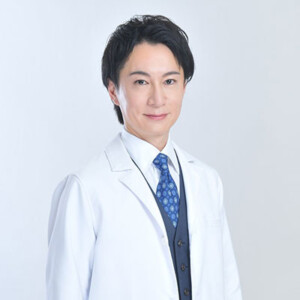
Within our clinic group, English-speaking consultations are handled at BIOTOPE CLINIC in Shirokanedai (Minato-ku, Tokyo) by Dr. Jun Karibe, a board-certified plastic surgeon certified by the Japan Society of Plastic and Reconstructive Surgery. Our sister clinic, Kojimachi Dermatology and Plastic Surgery Clinic in Ichigaya (Chiyoda-ku), serves as the group's main office and handles Japanese-language, insurance-covered dermatology — it is an excellent resource for Japanese-speaking patients but does not currently offer English-speaking doctor consultations. Bookings and enquiries in English for both hair loss assessment and any other cosmetic or dermatological concern should be directed to BIOTOPE CLINIC via LINE or WhatsApp.
Frequently Asked Questions
- Q. Can I get AGA medication prescribed in English at a clinic in Tokyo?
- Yes. At BIOTOPE CLINIC in Shirokanedai, Dr. Karibe conducts consultations in English and can evaluate whether prescription AGA medication is appropriate for your situation. Finasteride, dutasteride, and topical minoxidil are available in Japan on a self-pay basis and can be discussed during your appointment.
- Q. How long does AGA treatment take to show results?
- Most evidence-based AGA treatments require a minimum of three to six months of consistent use before noticeable improvement occurs, with the most meaningful results typically assessed at the 12-month mark. Early treatment initiation generally produces better and faster responses, as follicles that have already miniaturised significantly are harder to reactivate.
- Q. Is AGA treatment covered by Japanese health insurance?
- AGA medications and device-based treatments are generally classified as cosmetic (self-pay) in Japan and are not covered by the national health insurance system. However, if a related condition — such as scalp inflammation or a hormonal disorder contributing to hair loss — is identified, that aspect of treatment may be covered separately. This distinction is best clarified during your consultation.
- Q. I am a woman experiencing hair thinning. Can I also be seen for this?
- Absolutely. Female-pattern hair loss is a recognised medical condition that responds to treatment, though the approach differs from that used in men. Dr. Karibe assesses both male and female patients for hair loss at BIOTOPE CLINIC, and consultations include evaluation for contributing factors such as iron deficiency, thyroid function, and hormonal changes.
- Q. Do I need to speak Japanese to be seen at this clinic?
- No. BIOTOPE CLINIC in Shirokanedai is specifically equipped for English-speaking patients, and both the doctor and the front-desk team can communicate in English. Enquiries can also be made in advance via LINE or WhatsApp in English before your appointment.
Have a question about this treatment?
Message us on LINE or WhatsApp — our English-speaking team usually replies the same day.
Summary
Androgenetic alopecia is a common, progressive condition that responds best to early, evidence-based intervention. An accurate diagnosis — distinguishing AGA from other causes of hair loss through clinical examination and bloodwork — is the essential first step. Treatments including DHT-blocking medications, minoxidil, scalp microneedling, nutritional therapy, and PRP can slow progression and support regrowth when used consistently and appropriately.
For international residents and visitors in Tokyo, the barrier to accessing this kind of care in English has historically been high.
BIOTOPE CLINIC in Shirokanedai addresses this directly with a fully English-language consultation experience under the supervision of a board-certified plastic surgeon and dermatology specialist.
If you have questions about hair loss or AGA assessment, English-speaking consultations are handled at BIOTOPE CLINIC in Shirokanedai (Minato-ku, Tokyo) by Dr. Karibe. Our sister clinic Kojimachi Dermatology and Plastic Surgery Clinic in Ichigaya (Chiyoda-ku) handles Japanese-language insurance dermatology. English enquiries: LINE or WhatsApp.
24/7 Consultation & Booking
Book a Consultation or Treatment
Our English-speaking team responds via LINE or WhatsApp — usually the same day.
References
- Rossi A, Cantisani C, Melis L, Iorio A, Scali E, Calvieri S. Minoxidil use in dermatology, side effects and recent patents. Recent Patents on Inflammation and Allergy Drug Discovery. 2012.
- Mella JM, Perret MC, Manzotti M, Catalano HN, Guyatt G. Efficacy and safety of finasteride therapy for androgenetic alopecia: a systematic review. Archives of Dermatology. 2010.
- Gentile P, Garcovich S, Bielli A, Scioli MG, Orlandi A, Cervelli V. The effect of platelet-rich plasma in hair regrowth: a randomized placebo-controlled trial. Stem Cells Translational Medicine. 2015.
- Blume-Peytavi U, Blumeyer A, Tosti A, et al. S1 guideline for diagnostic evaluation in androgenetic alopecia in men, women and adolescents. British Journal of Dermatology. 2011.
- Sinclair R, Torkamani N, Jones L. Androgenetic alopecia: new insights into the pathogenesis and mechanism of hair loss. F1000Research. 2015.
Related Articles
You may also find these articles useful.
- FAGA Treatment Tokyo: Regenerative Hair Loss Solutions
- Hair Loss Treatment Tokyo: AGA Options for Expats
SUPERVISED BY
Dr. Jun Karibe
MD
Director
Education & Career
Certifications
Awards
MEDICAL REVIEW