Female Hair Thinning Treatment in Tokyo: A Guide for English-Speaking Patients
Finding more hair on your brush, noticing a wider parting, or watching the crown gradually thin is a deeply unsettling experience — and one that affects far more women than is often acknowledged.
Female hair thinning is common, progressive if left unaddressed, and in many cases treatable once the cause is correctly identified. This guide explains the types of hair loss affecting women, what treatment options are available in Tokyo, and what realistic outcomes to expect from each approach.
What you’ll learn in this article:
- The difference between female pattern hair loss and shedding disorders such as telogen effluvium
- The most common triggers — including nutritional and hormonal factors that are frequently missed
- Which treatments have published clinical evidence, and how effective they actually are
- How specialist clinics in Tokyo diagnose and manage female hair thinning
- Where to access English-language consultation in Tokyo
Have a question about this treatment?
Message us on LINE or WhatsApp — our English-speaking team usually replies the same day.
How Common Is Female Hair Thinning?
Female pattern hair loss (FPHL) — also termed female androgenetic alopecia — is significantly more prevalent than popular culture suggests.
A 2026 review published in the Canadian Medical Association Journal found that 12% of women show symptoms by age 29, rising to 25% by age 50 and reaching 41–50% at age 70 and older. Despite these figures, many women spend years attributing visible thinning to styling damage or temporary stress before seeking a clinical opinion.
The psychological burden associated with hair loss in women is disproportionately high. Screening for anxiety and depression is considered part of best-practice clinical management — a point underscored by the same CMAJ review. Seeking an early assessment not only improves physical outcomes but also reduces the period of uncertainty that many patients describe as the most distressing part of the experience.
Types of Female Hair Loss: Why Getting the Right Diagnosis Matters
Female Pattern Hair Loss (FPHL)
FPHL is a non-scarring, progressive condition characterised by the gradual miniaturisation of hair follicles. With each growth cycle, affected follicles produce progressively finer and shorter hairs until they stop producing visible hair altogether. Unlike male pattern baldness, women rarely develop an entirely bald patch; instead, the central parting widens and the crown thins, while the frontal hairline is largely preserved. A genetic predisposition is central to FPHL, though the exact mechanism is multifactorial and not yet fully understood.
Telogen Effluvium
Telogen effluvium (TE) is a shedding disorder — an excess of follicles entering the resting (telogen) phase simultaneously, causing mass shedding. Crucially, the follicles themselves are structurally intact and have not miniaturised. TE typically begins 8–12 weeks after a triggering event such as childbirth, major illness, surgery, significant weight loss, or severe psychological stress, and generally resolves within 3–6 months once the trigger is removed.
Distinguishing FPHL from TE is clinically important because their treatments diverge significantly. A treatment appropriate for FPHL may be ineffective — or unnecessary — for a case of TE that would resolve with nutritional correction alone.
What Causes Hair Thinning in Women?
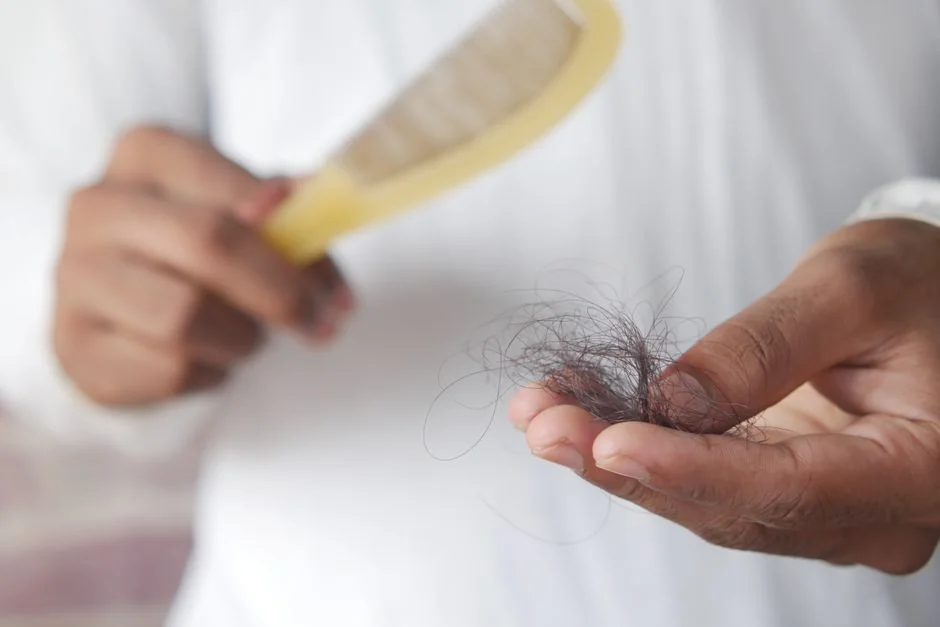
FPHL has a strong polygenic inheritance pattern, but the presence of genetic predisposition does not mean progression is inevitable or untreatable. Several co-factors can accelerate or mimic female hair thinning:
- Iron deficiency: Rapidly dividing hair follicle cells depend heavily on iron; deficiency is one of the most common and correctable causes of excess shedding, particularly in women with heavy menstrual cycles, recent pregnancy, or restrictive dietary patterns.
- Thyroid dysfunction: Both hypothyroidism and hyperthyroidism can produce diffuse hair thinning and increased brittleness.
- Postpartum hormonal shift: The elevated oestrogen of pregnancy extends the hair growth (anagen) phase; the sharp drop in oestrogen after delivery triggers a synchronised shedding that typically peaks at 3–4 months postpartum and resolves by 6–12 months.
- Chronic stress: Both physiological and psychological stress can shift follicles into the resting phase, with shedding appearing weeks after the stress event itself.
- Nutritional and metabolic factors: Protein insufficiency, micronutrient imbalances, and gut absorption issues can all affect follicle health over time.
How Is Female Hair Loss Diagnosed in Tokyo?
A thorough consultation at a specialist clinic should include a clinical scalp examination and, where indicated, trichoscopy — a non-invasive technique using a dermatoscope to evaluate follicular miniaturisation, hair diameter variability, and scalp condition at a level not visible to the naked eye. Trichoscopy has become a key tool for differentiating FPHL from TE and for assessing disease severity without the need for biopsy in most cases.
Blood tests are a standard part of the workup and should cover at minimum: ferritin (stored iron), a full thyroid panel (TSH, free T3, free T4), complete blood count, and sex hormones where clinically relevant. Identifying a correctable underlying cause — particularly iron deficiency — can produce meaningful improvement in shedding even before any cosmetic intervention begins.
Treatment Options for Female Hair Thinning
Topical Minoxidil
Topical minoxidil is the most established first-line treatment for FPHL and has the strongest evidence base. In Japan, a 1% minoxidil solution for women is available as a Class 1 over-the-counter drug — requiring pharmacist consultation before purchase — under brand names such as RiUP Regenne.
Results typically take 6–12 months to become visible and treatment must be maintained continuously; stopping minoxidil leads to gradual reversal of gains. An initial increase in shedding during the first 4–8 weeks of use is a well-documented and temporary effect, not a sign of failure.
Oral Medications
For women who respond insufficiently to topical minoxidil, oral options including spironolactone (an antiandrogen used off-label for FPHL) may be considered under physician supervision. The 2026 CMAJ review noted that spironolactone increased hair density in approximately 43% of users. These medications are prescription-only and are contraindicated during pregnancy.
Platelet-Rich Plasma (PRP) Therapy
PRP involves drawing a small volume of the patient’s own blood, concentrating the growth-factor-rich plasma by centrifugation, and injecting it into the scalp. The growth factors stimulate follicle stem cells, prolong the anagen phase, and reduce follicle cell apoptosis. A 2024 systematic review and meta-analysis published in Skin Research and Technology — encompassing 21 randomised controlled trials and 628 female participants — reported a statistically significant increase in hair density following PRP therapy (mean difference +405.26 hairs/cm²). Adverse effects were mild and transient, comprising temporary scalp tightness and occasional headache resolving within 24 hours.
Low-Level Laser Therapy (LLLT)
LLLT uses specific wavelengths of red or near-infrared light to stimulate follicle metabolism at the cellular level. A 2020 systematic review published in Skin Appendage Disorders, which analysed 10 randomised controlled trials including three studies evaluating exclusively female subjects, found that all sham-device controlled studies demonstrated statistically significant increases in hair diameter or density (p < 0.01). Terminal hair count increases of 48–51% compared to sham controls were observed in female-specific trials. The safety profile was consistently good, with only minor adverse effects such as scalp pruritus reported.
Nutritional and Orthomolecular Support
Where blood tests reveal specific deficiencies, targeted nutritional correction can make a meaningful contribution to hair quality and shedding reduction. It is important to note that supplementation has not been shown to benefit hair growth in patients with normal nutrient levels — the clinical evidence supports correcting a confirmed deficiency, not supplementing broadly in the hope of cosmetic gain.
Orthomolecular (nutritional) therapy and IV drip therapy — including targeted vitamin and micronutrient infusions calibrated to the patient’s test results — are available at BIOTOPE CLINIC in Shirokanedai as part of a preventive medicine consultation.
This approach can complement dermatological hair loss treatment, particularly for patients whose shedding appears linked to nutritional or metabolic factors. Nutritional assessment should always precede and inform this type of supplementary treatment.
Treatment Options at a Glance
| Treatment | Best suited for | Evidence level | Typical timeline to visible results | Prescription required? |
|---|---|---|---|---|
| Topical minoxidil 1% | FPHL, early to moderate | Strong (multiple RCTs) | 6–12 months | No (OTC, pharmacist consultation) |
| Oral spironolactone | FPHL with androgen sensitivity | Moderate | 6–12 months | Yes |
| PRP injections | FPHL, telogen effluvium | Moderate–Strong (2024 meta-analysis) | 3–6 months (series of sessions) | No (clinical procedure) |
| Low-level laser therapy | FPHL, adjunctive use | Moderate (multiple RCTs) | 4–6 months | No |
| Nutritional correction | Telogen effluvium with confirmed deficiency | Conditional (deficiency-dependent) | 3–6 months after correction | No for supplements / Yes for prescription iron or thyroid medication |
Cost of Female Hair Thinning Treatment in Tokyo
Treatment costs vary considerably depending on the approach. Over-the-counter topical minoxidil is accessible at Japanese pharmacies with a pharmacist consultation. Clinical treatments — including PRP sessions, LLLT, nutritional IV therapy, and specialist medical consultations — are self-pay (jiko futan) in a cosmetic or preventive medicine context and are typically structured as per-session or course-based fees.
Pricing at Tokyo clinics depends on the specific protocol, the number of sessions required, and whether combination approaches are recommended. Please see the clinic’s official price page or contact the clinic directly for a current quote. For an accurate, personalised cost estimate, please book a consultation.
Have a question about this treatment?
Message us on LINE or WhatsApp — our English-speaking team usually replies the same day.
What People Often Get Wrong About Female Hair Loss
Misconception: Female hair thinning is always a hormonal problem
Many women — and some clinicians — assume that thinning hair necessarily reflects elevated androgens or a hormonal imbalance. In reality, a substantial proportion of FPHL cases occur in women whose androgen levels fall entirely within the normal range, as the CMAJ review confirmed. Meanwhile, many presentations that initially appear hormonal are driven by iron deficiency or thyroid dysfunction — both of which a blood panel can identify and treat directly.
Proceeding straight to hormonal treatment without a full workup risks addressing the wrong mechanism and missing a simpler, correctable cause.
Misconception: Hair thinning in women cannot be meaningfully treated
This belief leads women to delay seeking help until significant density has already been lost — by which point fewer active follicles remain to respond to treatment. Multiple interventions with published clinical evidence demonstrate meaningful improvements in hair density: the 2024 PRP meta-analysis showed significant gains across 628 women, and LLLT trials consistently show statistically significant improvements against sham controls. No treatment recreates the hair density of a patient’s twenties, but early intervention can halt progression, partially reverse established miniaturisation, and improve the quality and coverage of existing hair.
Who Is a Good Candidate for Treatment?
Most adult women experiencing hair thinning are candidates for at least one form of treatment, provided underlying causes have been assessed first. Outcomes are consistently better when treatment begins early, when more active follicles are still present and responsive. PRP and LLLT are well suited to patients with early-to-moderate follicular miniaturisation; topical minoxidil can be used alongside either.
Women who are pregnant or breastfeeding should avoid minoxidil and spironolactone. Those with significant iron deficiency or thyroid disease should address those conditions as the primary intervention before adding cosmetic treatments. Women with scarring alopecia (such as lichen planopilaris or frontal fibrosing alopecia) have a different pathophysiology and require specialist assessment before committing to any treatment pathway.
Where to Get Female Hair Thinning Treatment in Tokyo
Within the same clinic group, both BIOTOPE CLINIC (Shirokanedai, Minato-ku) and Kojimachi Dermatology & Plastic Surgery Clinic (Ichigaya, Chiyoda-ku) offer English-language consultation with Dr. Jun Karibe’s team. Female hair thinning treatment in a cosmetic and preventive medicine context — including orthomolecular assessment, IV nutritional therapy, and aesthetic clinical treatments — is handled at BIOTOPE CLINIC in Shirokanedai, where Dr. Karibe consults directly. Bookings and enquiries in English: LINE or WhatsApp.
Frequently Asked Questions
- Q. Can I buy effective female hair loss treatment at a Japanese pharmacy without seeing a doctor first?
- Topical minoxidil 1% is available as a Class 1 OTC drug in Japan and requires only a pharmacist consultation before purchase. However, starting any treatment without a clinical assessment carries the risk of treating the wrong condition — using minoxidil for a case that is primarily telogen effluvium driven by iron deficiency, for example, addresses the wrong mechanism entirely. A specialist consultation identifies the cause, checks for contraindications, and ensures the chosen treatment is appropriate for the type and stage of hair loss.
- Q. How long before I see results from treatment?
- Results timelines vary by treatment. Topical and oral minoxidil typically require 6–12 months before visible improvement is apparent; an initial increase in shedding during the first 4–8 weeks is a well-documented and temporary effect. PRP results generally become visible after a series of 3–4 sessions spaced approximately four to six weeks apart. No hair treatment produces overnight results — monthly progress photographs taken under consistent lighting conditions are a useful way to track changes that are too gradual to perceive day to day.
- Q. Is PRP painful, and is it safe for women?
- PRP uses the patient’s own blood, eliminating the risk of allergic reaction or disease transmission. The scalp injections involve mild, brief discomfort that the majority of patients tolerate well; topical anaesthetic can be applied beforehand at the clinician’s discretion. The 2024 meta-analysis of 21 randomised controlled trials in 628 women found that adverse effects were mild and transient, comprising mainly temporary scalp tightness and occasional headache resolving within 24 hours. No severe complications were reported across the reviewed studies.
- Q. Can postpartum hair loss be treated, or does it resolve on its own?
- The majority of postpartum hair loss is telogen effluvium triggered by the drop in oestrogen after delivery. It typically peaks at 3–4 months postpartum and resolves without treatment by 6–12 months. If shedding continues beyond this window, persists heavily, or is accompanied by visible scalp thinning rather than diffuse shedding, a clinical assessment is warranted to check for iron deficiency, postpartum thyroiditis, or underlying FPHL that was previously masked by pregnancy-related hair growth.
- Q. Is female hair thinning treatment covered by Japan’s national health insurance?
- In Japan, cosmetic hair loss treatments — including PRP, LLLT, and aesthetic consultations — are self-pay (jiko futan). An initial general dermatology consultation at Kojimachi Dermatology & Plastic Surgery Clinic (Ichigaya) may be covered by national health insurance for assessment purposes, depending on the presenting diagnosis. However, the treatment of androgenetic alopecia and cosmetic hair restoration is generally not insurance-covered. Please confirm your individual insurance situation directly with the clinic or your insurer.
Have a question about this treatment?
Message us on LINE or WhatsApp — our English-speaking team usually replies the same day.
Summary
Female hair thinning is a common and clinically manageable condition, but effective treatment depends on reaching the right diagnosis first. Female pattern hair loss and telogen effluvium are the most frequent presentations and require different approaches; both can coexist.
Evidence-backed options — topical minoxidil, PRP, and low-level laser therapy — have demonstrated meaningful improvements in clinical trials, and nutritional correction plays a vital role where deficiency is confirmed. Starting treatment early, with an accurate clinical and laboratory assessment, consistently delivers better outcomes than waiting.
If you have questions about female hair thinning treatment, both BIOTOPE CLINIC (Shirokanedai, Minato-ku) and Kojimachi Dermatology & Plastic Surgery Clinic (Ichigaya, Chiyoda-ku) offer English-language consultation with Dr. Karibe and his team. Female hair thinning treatment in a cosmetic and preventive medicine context is primarily handled at BIOTOPE CLINIC in Shirokanedai. English enquiries: LINE or WhatsApp.
24/7 Consultation & Booking
Book a Consultation or Treatment
Our English-speaking team responds via LINE or WhatsApp — usually the same day.
References
- McMullen E, Saed Aldien A, Sibbald C, Donovan J. Female pattern hair loss. Canadian Medical Association Journal. 2026;198(8):E295.
- Yuan X, et al. Effectiveness of platelet-rich plasma in treating female hair loss: A systematic review and meta-analysis of randomized controlled trials. Skin Research and Technology. 2024.
- Egger A, Resnik SR, Aickara D, Maranda E, Kaiser M, Wikramanayake TC, Jimenez JJ. Examining the safety and efficacy of low-level laser therapy for male and female pattern hair loss: a review of the literature. Skin Appendage Disorders. 2020.
Related Articles
You may also find these articles useful.
- Spironolactone for Female Hair Loss in Japan: Guide
- FAGA Treatment Tokyo: Regenerative Hair Loss Solutions
- Postpartum Hair Loss in Tokyo: When to Worry & Recovery
- Hair Loss in Women in Japan: The Iron, Thyroid and Nutrition Angle
- Exosome Hair Therapy in Tokyo vs PRP and Mesotherapy
SUPERVISED BY
Dr. Jun Karibe
MD
Director
Education & Career
Certifications
Awards
MEDICAL REVIEW