Long-Term Results of Liposuction Tightening in Tokyo: What to Expect at One Year and Beyond
Deciding to undergo liposuction is a significant step, and it is natural to have questions about what happens afterward.
How swollen will the area look? When can you return to work? Is hardness beneath the skin normal? Will the skin tighten smoothly after the fat is removed?
For facial, jawline, and submental liposuction, the most visible recovery usually occurs during the first one to two weeks — but complete healing takes much longer. Swelling, numbness, firmness, and uneven texture can continue for several months while the tissue adheres, scar tissue softens, and the skin gradually redrapes.
It is also important to understand that “liposuction with skin tightening” is not one standardised procedure. The phrase may refer to any of the following, which differ in invasiveness, recovery, cost, and risk:
- Liposuction followed by natural postoperative skin contraction
- Liposuction combined with an internal radiofrequency device
- Liposuction combined with laser or ultrasound energy
- Liposuction followed later by a non-invasive treatment
- Liposuction combined with surgical removal of loose skin
This guide explains the full recovery process — with particular attention to facial, cheek, jawline, and under-chin liposuction in Tokyo — covering what is normal, what may require treatment, when results become visible, and how patients can support safe healing.
Quick Facts: Liposuction Tightening Recovery
| What it treats | Localised facial/jawline/submental fat, with variable skin contraction afterward |
| Visible swelling resolves | Mostly within 7–14 days |
| Return to desk work | Typically 7–10 days |
| Fibrosis (firmness) softens | Over 3–6 months |
| Skin retraction largely complete | By 9–12 months |
| Long-term reduction | Removed fat cells do not regenerate; remaining cells can still enlarge with weight gain |
| 2026 cost (Tokyo) | ¥280,000 per area, plus blood work, anaesthesia, and consultation fees |
| Where to book | BIOTOPE CLINIC / Kojimachi Dermatology & Plastic Surgery Clinic, Ichigaya, Tokyo |
| Clinical direction | Dr. Jun Karibe, board-certified plastic surgeon |
| English support | Full English-language consultation available |
What You’ll Learn in This Guide
- How liposuction and postoperative skin contraction work together
- The difference between natural contraction and energy-assisted tightening
- A day-by-day and month-by-month recovery timeline
- How long swelling, bruising, numbness, and hardness may last
- When most patients return to work and exercise
- Common side effects and less common complications
- Which symptoms require urgent medical assessment
- The 2026 cost of facial liposuction in Tokyo
- Who is most likely to achieve smooth skin redraping, and when HIFU, RF, or lifting surgery may be more appropriate
- What international patients should arrange before travelling home
Have a question about this treatment?
Message us on LINE or WhatsApp — our English-speaking team usually replies the same day.
What Is Liposuction With Skin Tightening?
Liposuction is a surgical procedure that removes selected deposits of subcutaneous fat through a narrow hollow tube called a cannula. The surgeon introduces the cannula through small incisions and moves it through the fat layer using controlled strokes, removing part of the fat while preserving enough tissue to maintain a smooth, natural contour.
Facial liposuction may be performed on the lower cheeks, jawline, jowl-adjacent areas, beneath the chin, and the upper neck.
The primary effect of liposuction is fat reduction, not skin removal. Liposuction does not directly remove loose skin — after the underlying volume is reduced, the overlying skin must contract and adapt to the new contour. The quality of this redraping depends on skin elasticity, skin thickness, age-related tissue changes, sun damage, smoking, the amount of fat removed, surgical technique, previous weight loss, postoperative swelling and fibrosis, and individual healing response.
Recognised liposuction risks include residual loose skin, rippling, irregular contours, and asymmetry, particularly when the skin cannot contract adequately or fat removal is uneven (Mayo Clinic).
Does Liposuction Tighten the Skin?
Liposuction may be followed by some degree of skin contraction, but the amount cannot be guaranteed. After surgery, tissue undergoes a wound-healing response that includes inflammation, fluid accumulation, fibroblast activation, collagen deposition, formation and maturation of scar tissue, contraction of fibrous tissue, and gradual adherence of the skin to deeper layers — a process that can help skin redrape over the reduced fat layer.
Patients with good baseline elasticity often experience more effective contraction. Patients with thin, heavily sun-damaged, or significantly loose skin may experience less tightening, and in some patients, removing the fat that previously supported loose skin can make laxity appear more obvious. This is one reason a surgeon must assess skin quality before recommending facial or neck liposuction.
Natural Contraction vs. Energy-Assisted Tightening
These are related but different processes, and understanding the distinction helps set realistic expectations.
Natural Post-Liposuction Contraction
Traditional liposuction removes fat mechanically. Afterward, healing and fibrosis may produce gradual contraction of the treated tissue, with no additional thermal device necessarily used. Potential advantages include no added thermal injury, lower equipment-related cost, reduced risk of heat-associated burns, and suitability for patients with good skin elasticity. Its limitation is that contraction depends mainly on the patient’s tissue quality and healing response.
Energy-Assisted Liposuction
Energy-assisted procedures deliver radiofrequency, laser, ultrasound, or another energy source within the subcutaneous plane. Intended goals may include fat disruption, improved haemostasis, thermal contraction of collagen-rich tissue, additional soft-tissue tightening, and improved contour in patients with mild laxity.
A 2026 systematic review comparing adjunctive tightening technologies found that reported retraction rates vary widely across devices and studies, with substantial differences in measurement methods and evidence quality that make direct comparisons difficult (PubMed). Energy-assisted treatment may benefit selected patients, but it does not guarantee smooth or tight skin.
Types of Skin-Tightening Procedures Used With Liposuction
Radiofrequency-Assisted Liposuction
Radiofrequency-assisted liposuction uses an internal probe beneath the skin and an external electrode above it. RF energy travels between the electrodes, heating the intervening tissue, with potential effects including soft-tissue coagulation, collagen contraction, haemostasis, fat disruption, and progressive tissue remodelling. RF-assisted liposuction is an invasive procedure, distinct from surface-applied monopolar RF treatments such as Volnewmer.
Laser-Assisted Lipolysis
Laser-assisted lipolysis places a thin laser fibre beneath the skin, heating fat and surrounding fibrous tissue before or during suction. A 2025 review reported potential advantages in small-to-moderate treatment areas, including improved skin appearance and faster recovery in selected studies — though results depend on device settings, technique, and patient selection (PMC). Possible risks include burns, thermal injury, fat necrosis, and contour irregularity.
Ultrasound-Assisted Liposuction
Ultrasound-assisted devices use acoustic energy to emulsify or disrupt fat before suction. They may help in fibrous areas or revision surgery, but introduce additional risks related to heat and energy delivery.
Helium-Plasma RF and Other Subdermal Devices
Some systems use plasma and radiofrequency energy to contract tissue after fat removal. Published safety reports exist, but some evidence has been derived from manufacturer-sponsored or retrospective studies, and results should be interpreted with that context in mind (PMC).
Surgical Skin Excision
When skin redundancy is significant, the most predictable way to tighten the area is to remove excess skin surgically — for example, a mini neck lift, neck lift, lower facelift, direct excisional procedure, or body-lift procedure for non-facial areas. Skin excision involves more scars and recovery, but provides a degree of tightening that liposuction and energy devices cannot reliably reproduce.
How Liposuction Works: The Biology of Fat Removal and Skin Retraction
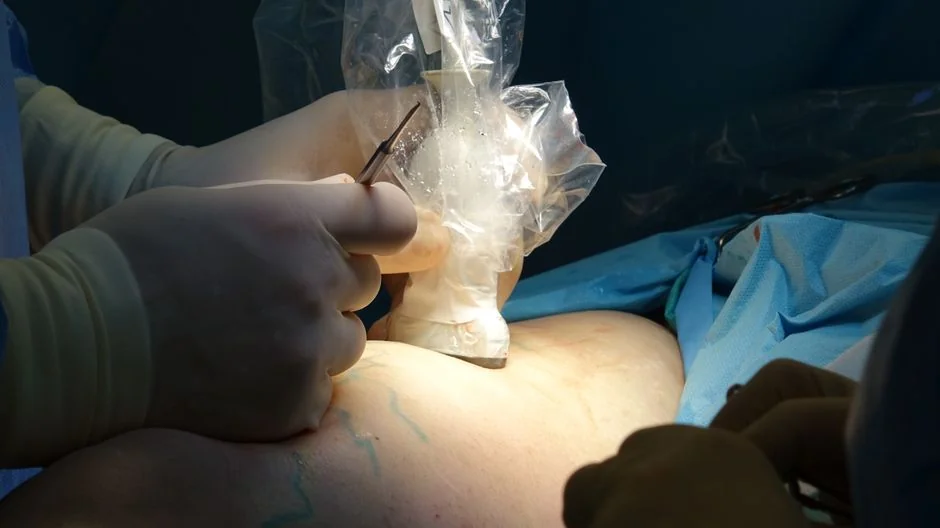
Step 1: Preoperative Assessment
The surgeon evaluates:
- Location and depth of fat
- Skin elasticity
- Degree of laxity
- Chin projection
- Jaw and neck anatomy
- Facial asymmetry
- Previous filler
- Previous liposuction
- Previous HIFU or RF treatment
- Medical history
- Anaesthetic risk
- Patient expectations
For facial treatment, the surgeon must determine whether fullness is caused by:
- Superficial fat
- Deep fat
- Loose skin
- Large muscles
- Weak skeletal projection
- Glands
- Descended tissue
- Several factors together
Step 2: Surgical Marking
The treatment area is usually marked while the patient is upright.
This helps the surgeon identify:
- Areas of excess fat
- Areas where fat should be preserved
- Natural asymmetry
- Jawline position
- Chin-to-neck angle
- Areas at greater risk of hollowing
Step 3: Anaesthesia
Possible anaesthetic approaches include:
- Local anaesthesia
- Tumescent anaesthesia
- Oral sedation
- Intravenous sedation
- General anaesthesia in selected cases
The safest option depends on procedure extent, medical history and patient comfort.
Step 4: Tumescent Infiltration
Tumescent fluid is introduced into the fat layer.
It typically contains:
- Saline
- Local anaesthetic
- Adrenaline
- Other components according to the clinic’s protocol
Tumescent infiltration helps:
- Reduce bleeding
- Provide local anaesthesia
- Expand the treatment plane
- Facilitate smoother cannula movement
Step 5: Fat Removal
A narrow cannula is introduced through small, discreet incisions.
The surgeon removes fat using controlled movements.
The goal should not be to remove all available fat. A smooth, protective layer should usually remain beneath the skin.
Overly aggressive removal increases the risk of:
- Dents
- Visible adhesions
- Skeletonised contours
- Premature facial hollowing
- Surface irregularities
- Increased appearance of laxity
Step 6: Energy Delivery, When Indicated
When energy-assisted tightening is part of the procedure, the surgeon delivers thermal energy within the treatment plane.
Energy should be controlled carefully to reduce the risk of:
- Burns
- Skin injury
- Fat necrosis
- Excessive fibrosis
- Nerve injury
- Irregular contraction
Step 7: Closure and Compression
The small entry points may be sutured or left partially open for temporary drainage, depending on the surgeon’s technique.
A facial or neck compression garment may then be applied.
Immediately After Surgery: What Will You Look and Feel Like?
The treated area will not normally look slimmer immediately after surgery.
In fact, it often appears larger because of:
- Tumescent fluid
- Inflammation
- Tissue trauma
- Fluid accumulation
- Early bruising
Expected early symptoms include:
- Swelling
- Tightness
- Bruising
- Tenderness
- Numbness
- Mild drainage
- Temporary asymmetry
- A firm or stiff sensation
- Restricted facial or neck movement
Swelling is an expected response to the mechanical trauma of liposuction. Older clinical reviews describe swelling becoming apparent during the first 24–48 hours and sometimes continuing to increase during the early postoperative period. (PMC)
The first several days should therefore not be used to judge the final result.
Liposuction With Skin Tightening Recovery Timeline
Recovery varies according to:
- Treatment area
- Amount of fat removed
- Anaesthesia
- Use of thermal energy
- Number of procedures performed
- Patient age
- Skin quality
- Smoking status
- Individual healing response
The following timeline is a general guide.
Facial Liposuction: Cheeks and Jawline
Facial liposuction — particularly of the cheeks and jawline — requires a conservative and precise approach because the facial skin is thinner and more visible than truncal skin. At Kojimachi Dermatology & Plastic Surgery Clinic, cheek and jawline liposuction is offered at ¥280,000 per area, performed under the direction of Dr. Jun Karibe, a board-certified plastic surgeon. The procedure is frequently requested by patients seeking a more defined lower face without the longer recovery associated with open facial surgery.
In our clinical experience at Kojimachi Dermatology & Plastic Surgery Clinic, patients whose skin has reasonable baseline elasticity tend to see the most pronounced long-term tightening response in the cheek and jaw region, often noticing continued improvement between the third and sixth month post-operatively, with results stabilising toward the end of the first year.
What the Evidence Says: Results at 12 Months and Beyond

Published literature on long-term liposuction outcomes consistently supports durability when patients maintain stable body weight. A study published in Plastic and Reconstructive Surgery (Hernandez et al., 2011) found that patients who underwent tumescent liposuction maintained significant fat reduction at one-year follow-up, with the treated areas showing no measurable re-accumulation of fat cells, given that mature adipocytes do not regenerate after removal.
Clinical reports also indicate that skin quality outcomes are closely tied to patient age and pre-operative skin laxity. Studies suggest that younger patients — generally under 40 — with good skin elasticity achieve higher rates of measurable skin retraction at 12 months compared with older cohorts. One frequently cited figure is that patients with good elasticity can expect roughly 60–80% of their total skin retraction to occur within the first three months, with the remaining remodelling continuing through month twelve.
It is important to note that fat cells removed by liposuction do not return. However, remaining fat cells in untreated areas can expand with weight gain, which may alter the overall aesthetic result over time. This is a physiological reality, not a failure of the procedure itself.
What “Tightening” Looks Like at One Year
By the 12-month mark, swelling is fully resolved, fibrosis (temporary firmness from healing tissue) has softened, and the skin has completed the majority of its retraction. Most patients will have a stable, accurate representation of their final result at this point.
In the cheek and jawline area, a well-executed procedure with appropriate patient selection typically yields a visibly cleaner jaw angle, reduced cheek fullness, and smoother skin surface that — under the right conditions — appears tighter than before surgery. This outcome may be enhanced when complementary treatments are used in the months following surgery.
Complementary Treatments That Support Long-Term Skin Tightening
Liposuction addresses volume, but it does not directly stimulate collagen in the way that energy-based devices do. For patients seeking to maximise skin tightening results over the long term, combining liposuction with non-surgical treatments in the months following surgery is an evidence-informed strategy.
High-Intensity Focused Ultrasound (HIFU) uses targeted ultrasound energy to heat the SMAS layer (the structural muscular layer beneath the skin) and stimulate collagen neogenesis — the production of new collagen fibres. Studies suggest that HIFU treatment can produce measurable skin lifting and tightening outcomes that accumulate over three to six months following each session. HIFU is available at Kojimachi Dermatology & Plastic Surgery Clinic at ¥25,000–¥110,000 depending on the treatment zone. This is a treatment offered at our Ichigaya clinic — feel free to ask about it during a consultation.
Morpheus8, a radiofrequency (RF) microneedling device, delivers fractional radiofrequency energy through fine needles to the subdermal layer, promoting collagen remodelling and mild fat sculpting in the superficial tissue. It is particularly well-suited for skin-tightening maintenance in the months after facial liposuction. Morpheus8 is also available at the clinic — patients often ask about it as a follow-up treatment to liposuction to help optimise and prolong their results.
| Treatment | Primary Mechanism | Best Timing After Liposuction | Approximate Cost at Clinic | Downtime |
|---|---|---|---|---|
| Facial Liposuction (cheek/jaw) | Surgical fat removal; mechanical collagen stimulation | Baseline procedure | ¥280,000 per area | 7–14 days social |
| HIFU | Focused ultrasound; SMAS heating; collagen neogenesis | 3–6 months post-op | ¥25,000–¥110,000 | Minimal (redness 1–2 days) |
| Morpheus8 (RF Microneedling) | RF energy + microneedling; collagen remodelling | 3–6 months post-op | Contact clinic for quote | 2–5 days |
| Fat-Dissolving Injection | Chemical lipolysis; adipocyte membrane disruption | As standalone or adjunct (consult required) | Contact clinic for quote | 3–7 days (swelling) |
| Hyaluronic Acid Filler | Volume restoration; structural support | 6–12 months post-op (if volume correction needed) | ¥66,000–¥88,000 per syringe | Minimal (bruising possible) |
Cost of Liposuction Tightening in Tokyo

At BIOTOPE CLINIC or Kojimachi Dermatology & Plastic Surgery Clinic, facial liposuction of the cheek or jawline is priced at ¥280,000 per area. Additional costs to factor in include pre-operative blood work (¥11,000), which is required for all surgical procedures, and anaesthesia fees (¥2,200–¥77,000 depending on type and duration).
An initial consultation is ¥3,300, while a surgical consultation with Dr. Karibe is ¥2,200. These fees are applied with transparency so patients understand the full cost structure before committing to any procedure.
For patients considering complementary treatments to support and extend their liposuction results, HIFU sessions are priced at ¥25,000–¥110,000 depending on the number of shots and treatment area. Hyaluronic acid filler, sometimes used at a later stage to restore any over-corrected volume, is priced at ¥66,000–¥88,000 per syringe.
It is worth noting that liposuction in Tokyo at reputable, board-certified surgical clinics typically involves significantly higher overhead and safety standards than budget providers. Cost alone should not be the primary deciding factor for a surgical procedure. For an accurate quote, we recommend booking a consultation.
Have a question about this treatment?
Message us on LINE or WhatsApp — our English-speaking team usually replies the same day.
What People Often Get Wrong About Liposuction and Long-Term Tightening
Several persistent misconceptions affect how patients evaluate their results — and their satisfaction — over time.
Misconception 1: Liposuction is a one-time permanent fix regardless of lifestyle. While fat cells removed by liposuction do not regenerate, remaining adipocytes in both treated and untreated areas will respond to caloric surplus. Patients who gain significant weight after liposuction may notice contour changes in unexpected areas — a phenomenon sometimes called “fat redistribution.” Maintaining a stable weight is the most important factor in preserving long-term results. This is not a flaw of the technique; it reflects normal adipose physiology.
Misconception 2: The final result is visible at six weeks. At six weeks post-operatively, the majority of surgical swelling has resolved, but fibrosis — a temporary firmness caused by healing tissue — is still present and can make the area feel harder or look less refined than the final outcome. Collagen remodelling continues for up to 12 to 18 months. Evaluating results before the six-month mark will often underestimate the degree of tightening that will ultimately occur.
Dr. Karibe’s Note
Many of our international patients are surprised to learn that the most significant concern at one year is not fat returning, but rather the degree to which the skin has retracted — and this is something that must be assessed and discussed honestly before surgery, not after. A common question I receive is: “Will my skin tighten on its own?” The honest answer is: it depends on your skin’s baseline elasticity, your age, and whether you support the healing process with appropriate skincare and — where appropriate — adjunctive devices. I always recommend a thorough consultation and realistic expectation-setting as the first step, particularly for patients who have never undergone cosmetic surgery before.
Who Is a Good Candidate — and Who Should Consider Alternatives?
Patient selection is arguably the most important determinant of long-term liposuction tightening outcomes. A technically well-executed procedure on an unsuitable candidate will consistently produce inferior results compared with a straightforward case on an ideal candidate.
Good Candidates for Facial Liposuction Tightening
- Adults with localised, well-defined fat deposits in the cheeks or jawline that are resistant to diet and exercise
- Patients with good baseline skin elasticity — typically under 45, though elasticity varies individually
- Non-smokers or former smokers (smoking impairs wound healing and collagen production)
- Patients at or near a stable, healthy body weight
- Those with realistic expectations and an understanding that final results develop over 6–12 months
- Patients in good general health with no contraindications to surgery or local anaesthesia
Patients Who Should Consider Alternatives
- Patients with significant skin laxity, where fat removal alone may worsen sagging — non-surgical tightening or thread lift procedures may be more appropriate
- Those seeking body weight loss rather than focal contouring — liposuction is not a weight-loss procedure
- Patients with unrealistic expectations of a dramatic, immediate, or permanent transformation without lifestyle maintenance
- Individuals with certain bleeding disorders, immune conditions, or active skin infections in the treatment area
- Patients who are pregnant or breastfeeding
At BIOTOPE CLINIC and Kojimachi Dermatology & Plastic Surgery Clinic in Tokyo, we frequently see patients who enquire about facial liposuction after exploring non-surgical options. In many cases, a combination approach — beginning with energy-based treatments such as HIFU or Morpheus8, followed by surgical assessment if needed — is a more appropriate pathway, particularly for patients with borderline skin laxity.
Before, During, and After: What the Process Looks Like
Before the Procedure
A surgical consultation with Dr. Karibe (¥2,200) is the essential first step. Pre-operative blood work (¥11,000) is required to screen for any conditions that would affect surgical safety. Patients are typically advised to avoid blood-thinning medications, supplements, and alcohol for at least one week before the procedure, and to arrange transportation home, as they will not be able to drive after sedation.
During the Procedure
Facial liposuction is generally performed under local anaesthesia with or without light sedation in an outpatient setting. The procedure typically takes 45–90 minutes depending on the area and volume of fat being addressed. The surgeon makes small, discreet incisions — often concealed within natural contours — inserts the cannula, and removes the targeted fat with controlled, precise movements.
After the Procedure and the Recovery Timeline
Patients should expect swelling and bruising for approximately 7–14 days following facial liposuction. A compression garment may be recommended to support skin retraction in the early healing phase. Most patients are comfortable returning to work within 7–10 days, though visible bruising may persist slightly longer.
The tightening effect develops progressively: most patients notice improvement at 6–8 weeks, continued refinement at 3–6 months, and a stable final result between 9 and 12 months post-procedure. Annual follow-up is advisable to assess whether adjunctive maintenance treatments are appropriate.
Frequently Asked Questions
How Long Do Liposuction Results Last?
The reduction in the treated fat compartment is long-lasting.
Weight change and ageing can alter the visible result over time.
Does Liposuction Last Forever?
The removed fat cells are permanently removed.
The appearance is not permanently fixed because the body continues to change.
Can Fat Grow Back After Liposuction?
Remaining fat cells can enlarge, and new cells may develop with substantial long-term weight gain.
The removed cells do not simply reappear in the same number.
Can Fat Move to Another Area?
No.
Fat does not migrate. Weight gain may appear more prominent in untreated areas.
What Happens Five Years After Liposuction?
The treated fat reduction is usually still present if weight is stable.
Skin and surrounding tissues will have continued to age.
What Happens Ten Years After Liposuction?
The patient will have aged naturally.
The contour change may remain visible, but laxity, weight change or volume loss may create new concerns.
Is the Final Result Visible at One Year?
One year is generally a reliable time to assess the long-term contour.
Subtle scar maturation may continue.
Can Skin Continue Tightening After One Year?
Some tissue maturation may continue, but major progressive tightening should not automatically be expected after one year.
Does Liposuction Make Skin Tighter?
It may be followed by natural contraction.
The degree depends on skin elasticity and healing.
Can Liposuction Make Skin Looser?
Yes.
Removing supporting fat can make pre-existing laxity more visible.
Does Liposuction Cause Premature Ageing?
It does not accelerate biological ageing.
Excessive facial fat removal can make age-related volume loss more obvious.
Can I Gain Weight After Liposuction?
Yes.
Remaining fat cells can enlarge.
Where Does Weight Go After Liposuction?
Weight gain is stored in remaining adipose tissue throughout the body.
The pattern depends on genetics and physiology.
Can Exercise Preserve the Result?
Yes.
Exercise supports stable weight, muscle mass and metabolic health.
What Happens if I Lose More Weight After Liposuction?
The result may become more defined, but skin laxity or hollowing may also increase.
Should I Have Liposuction Before or After GLP-1 Weight Loss?
Usually after weight loss has stabilised.
The final decision depends on the treatment area and medical plan.
Does Ozempic Ruin Liposuction Results?
Not directly.
Additional weight loss may change facial or body volume and reveal skin laxity.
Can I Have Liposuction While Taking Mounjaro?
Possibly, but medication use, gastric symptoms, nutrition and anaesthesia risk must be assessed.
Do not stop prescribed treatment without medical advice.
Can Volnewmer Maintain the Result?
Volnewmer may improve mild residual firmness loss.
It does not prevent ageing or remove significant fat.
Can HIFU Maintain the Result?
HIFU may help selected areas of mild laxity.
It should be used after adequate healing.
Can Morpheus8 Improve Loose Skin After Liposuction?
It may improve mild laxity and texture.
It cannot correct substantial loose skin.
When Can I Have RF After Liposuction?
Timing is individual.
Many patients are assessed after several months when swelling and fibrosis have improved.
Can Filler Correct Over-Liposuction?
Hyaluronic acid filler may help selected contour deficiencies.
Fat grafting may be more suitable for larger deficits.
Can Fat Be Put Back?
Autologous fat grafting can restore selected volume, but graft survival varies.
Can I Have Liposuction Twice?
Yes, in selected cases.
Revision is more complex due to scar tissue and irregular fat thickness.
How Long Should I Wait Before Revision?
Many aesthetic revisions are considered after approximately six to twelve months.
Urgent complications are treated sooner.
Is Under-Correction Better Than Over-Correction?
A small degree of under-correction is generally easier to revise than severe over-resection.
Will I Need a Facelift Later?
Possibly.
Facial ageing may eventually create laxity that liposuction cannot address.
Can Liposuction Prevent Jowls?
No.
It may reduce fatty heaviness but cannot prevent future tissue descent.
Can Liposuction Remove Jowls Permanently?
A true jowl includes descended tissue and laxity.
Fat removal alone may not correct it.
Can Liposuction Permanently Remove a Double Chin?
It can permanently reduce selected superficial fat cells.
Weight change, skin laxity and deeper anatomy can affect the future contour.
Will My Skin Be Smooth After Ten Years?
Smoothness depends on ageing, weight, elasticity and the original surgical result.
No procedure can guarantee unchanged skin for ten years.
Is Facial Liposuction Better in Younger Patients?
Younger patients often have stronger elasticity, but anatomy and skin quality matter more than age alone.
Is Facial Liposuction Suitable After 50?
It may be suitable when localised fat is present and skin elasticity is adequate.
Many patients over 50 require lifting rather than suction alone.
Can Smoking Ruin the Result?
Smoking impairs circulation and collagen production and may reduce healing quality.
Does Sun Exposure Affect the Result?
Chronic UV exposure degrades collagen and contributes to laxity.
Is Liposuction a Weight-Loss Treatment?
No.
It is a localised contouring procedure.
Can Liposuction Improve Health?
It is not a substitute for medical weight management or exercise.
Its primary benefit is cosmetic contouring.
What Is the Cost of Facial Liposuction in Tokyo?
At our clinic, cheek or jawline liposuction is ¥280,000 per area, plus anaesthesia, blood testing and consultation.
Is the Result Guaranteed?
No.
Results vary according to anatomy, healing, weight, ageing and surgical technique.
Is Facial Liposuction Worth It?
It may be worthwhile when superficial fat is the primary problem and adequate skin elasticity is present.
It may be disappointing when laxity, weak bone structure or facial volume loss is the real concern.
Have a question about this treatment?
Message us on LINE or WhatsApp — our English-speaking team usually replies the same day.
Summary
Summary: Long-Term Liposuction Tightening Results
Liposuction permanently removes selected fat cells from the treated area.
The procedure may provide long-lasting improvement in:
- Facial fullness
- Jawline definition
- Under-chin contour
- Lower-face proportion
- Body shape
However, liposuction does not permanently stop:
- Weight gain
- Skin ageing
- Collagen decline
- Facial volume loss
- Hormonal change
- Pregnancy-related changes
- Tissue descent
The removed fat cells do not simply regenerate in the same number.
Remaining adipocytes can enlarge, and substantial weight gain may alter both treated and untreated areas.
Skin tightening after liposuction depends on:
- Elasticity
- Age
- Skin thickness
- Amount of fat removed
- Smoking
- Weight stability
- Healing response
- Surgical technique
At approximately one year, the result is usually stable enough for long-term assessment.
At five years, the treated reduction generally remains evident in stable-weight patients, although skin and surrounding tissues have continued to age.
At ten years, the patient will have aged naturally. The liposuction result may still influence the contour, but new laxity, weight change or facial volume loss may require maintenance or additional treatment.
GLP-1-related weight loss should be considered carefully because rapid or substantial loss may produce:
- Facial hollowing
- Skin laxity
- Jowling
- Changes in body contour
Weight should ideally stabilise before elective liposuction.
Maintenance options may include:
- HIFU
- Volnewmer
- Morpheus8
- Potenza
- Filler
- Fat grafting
- Thread lifting
- Facelift or neck lift
- Revision liposuction
At Kojimachi Dermatology & Plastic Surgery Clinic, the current facial-liposuction fees are:
- Cheek or jawline liposuction: ¥280,000 per area
- Anaesthesia: ¥2,200–¥77,000
- Preoperative blood testing: ¥11,000
- Surgical consultation with Dr. Karibe: ¥2,200
An illustrative one-area total is approximately:
¥295,400–¥370,200
The most reliable long-term result comes from:
- Correct anatomical diagnosis
- Conservative fat removal
- Stable weight
- Good skin quality
- Nicotine avoidance
- Realistic expectations
- Appropriate follow-up
The goal should not be maximum fat removal.
It should be a balanced result that looks natural not only after one year, but also after five, ten and more years of normal ageing.
Our teams at Kojimachi Dermatology & Plastic Surgery Clinic and BIOTOPE CLINIC in Tokyo provide consultations in English for international residents and medical tourists.
Have a question about long-term liposuction results in Tokyo?
Message us on LINE or WhatsApp. Our English-speaking team usually replies on the same day.
Book via LINE
24/7 Consultation & Booking
Book a Consultation or Treatment
Our English-speaking team responds via LINE or WhatsApp — usually the same day.
References
- Hernandez TL, Kittelson JM, Law CK, et al. Fat redistribution following suction lipectomy: defense of body fat and patterns of restoration. Obesity. 2011.
- Prado A, Andrades P, Danilla S, Leniz P, Castillo P, Gaete F. A prospective randomised controlled trial comparing laser-assisted liposuction with suction-assisted liposuction. Plastic and Reconstructive Surgery. 2006.
- Chia CT, Theodorou SJ. 1000 consecutive cases of laser-assisted liposuction and suction-assisted lipectomy managed with local anesthesia. Aesthetic Plastic Surgery. 2012.
- Araco A, Gravante G, Araco F, Delogu D, Cervelli V. Aesthetic results after face-lifting: our experience with 269 patients. Aesthetic Plastic Surgery. 2009.
- MacGregor JL, Tanzi EL. Microfocused ultrasound for skin tightening. Seminars in Cutaneous Medicine and Surgery. 2013.
Related Articles
You may also find these articles useful.
- Skin Tightening Treatment Tokyo: Options and Cost
- FaceTite vs Surgical Facelift Tokyo: Minimally Invasive Alternative
SUPERVISED BY
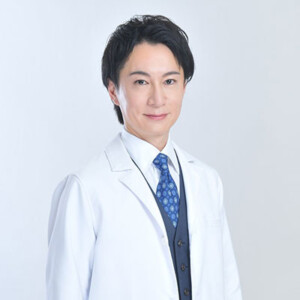
Dr. Jun Karibe
MD
Director
Education & Career
Certifications
Awards
MEDICAL REVIEW