What Is NMN Drip Therapy and How Does It Work?
Nicotinamide mononucleotide (NMN) is a naturally occurring molecule found in small amounts in foods such as edamame, broccoli, and avocado. In the body, it serves as a direct precursor to nicotinamide adenine dinucleotide (NAD+) — a coenzyme present in every living cell.
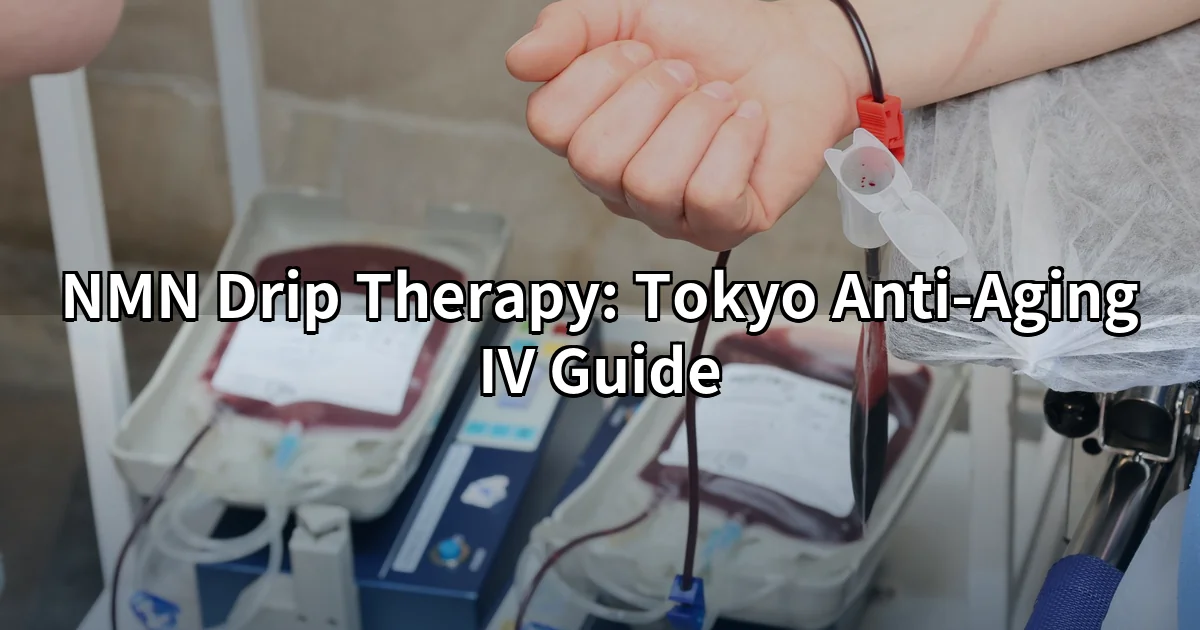
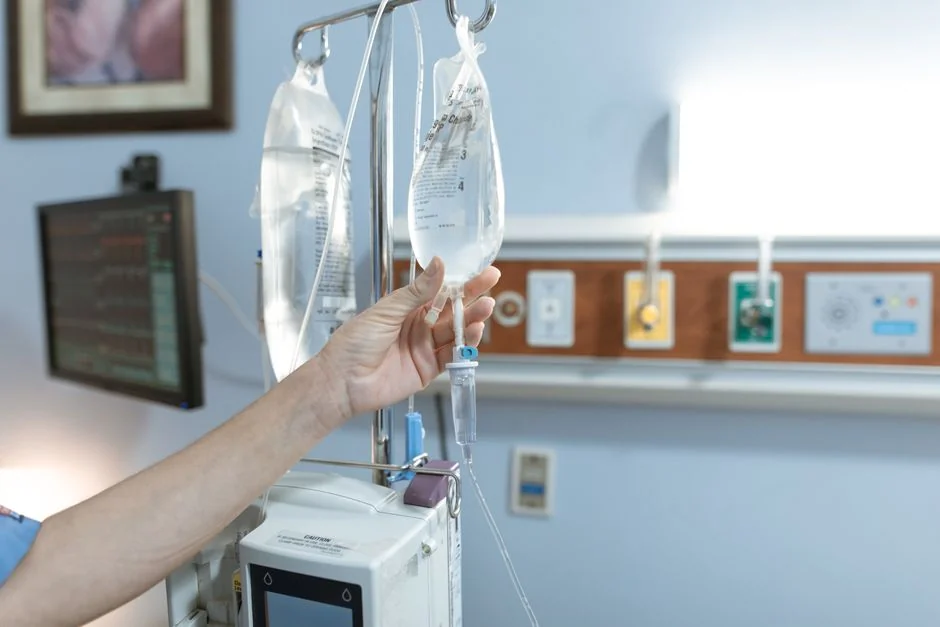
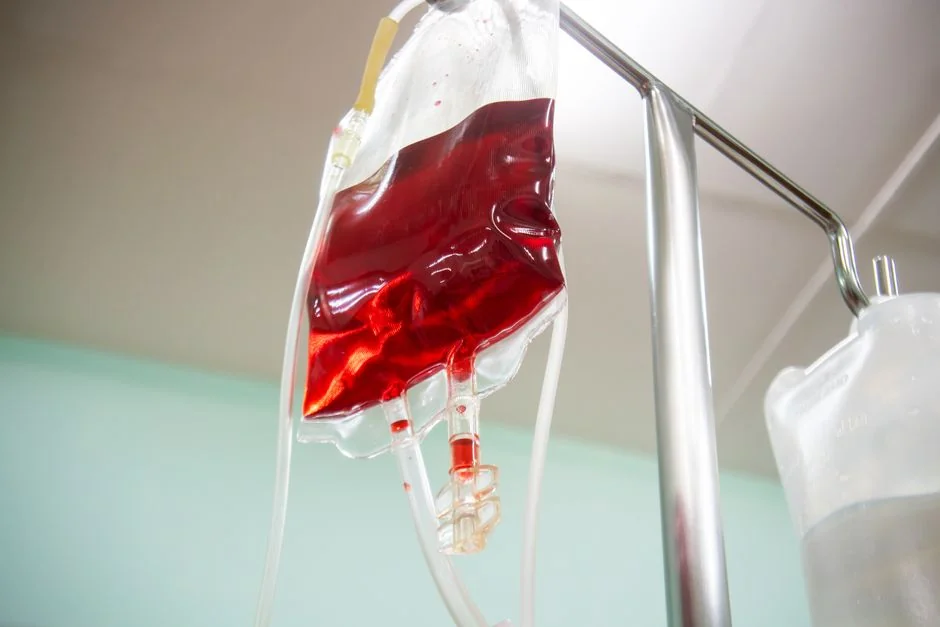
NMN drip therapy delivers NMN intravenously under physician supervision. The rationale is that bypassing the gastrointestinal tract may achieve more rapid systemic elevation of circulating NMN and, subsequently, NAD+. Doses offered at Tokyo clinics typically range from 150 mg to 600 mg per session, administered over 30 to 60 minutes.
The NAD+–Sirtuin Connection
NAD+ is required for hundreds of metabolic reactions, but its role in sirtuin biology is particularly relevant to ageing. Sirtuins are a family of proteins — sometimes called longevity-associated enzymes — that regulate DNA repair, mitochondrial function, inflammation, and cellular energy metabolism. They cannot function without NAD+ as a cofactor.
A 2012 study by Massudi et al., published in PLOS ONE, examined NAD+ levels in human skin tissue across the lifespan (n = 49, age range newborn to 77+). The authors observed a strong negative correlation between NAD+ concentration and age in both males (r = −0.706; p = 0.001) and females (r = −0.537; p = 0.01), suggesting that NAD+ availability diminishes significantly as we age.
By supporting NAD+ production, NMN is thought to help sustain sirtuin activity and the downstream processes associated with healthy ageing.
IV Delivery Versus Oral Supplementation
Oral NMN supplements are widely available in Japan, where the Ministry of Health, Labour and Welfare (MHLW) classifies NMN as a food ingredient. The IV route is offered at specialist clinics as a complementary or alternative option for those who prefer supervised clinical administration.
A 2026 narrative review in Frontiers in Aging (Alangari et al.) confirmed that IV administration of NAD+ precursors achieves “rapid systemic exposure” compared with oral routes — while also noting that elevated blood biomarkers do not automatically translate into measurable clinical benefit.
What the Research Currently Shows

The most robust human evidence on NMN covers oral supplementation. A 2024 review in Frontiers in Pharmacology (Yu et al.) analysed multiple human trials and found that oral NMN at 100–1,250 mg per day consistently raised blood NAD+ levels in a dose-dependent manner, with no adverse reactions reported. Observed benefits across trials included improvements in physical performance, metabolic markers in prediabetic postmenopausal women, and sleep quality in older adults.
Evidence specifically for intravenous NMN delivery is more limited. The same 2026 Frontiers in Aging narrative review characterised IV NAD+ precursor therapy as investigational, concluding that evidence supporting efficacy claims for anti-ageing, cognitive enhancement, and metabolic optimisation “is currently insufficient” and that adequately powered randomised controlled trials are needed.
A 2026 retrospective tolerability study in the same journal (Reyna et al.) compared IV NAD+ and IV nicotinamide riboside (NR — a closely related NAD+ precursor) administered at 500 mg over four consecutive days. The direct NAD+ IV group experienced moderate to severe abdominal cramping, nausea, and vomiting; the NR IV group showed only mild tingling and minor cramping. No serious adverse events were documented in either group during a 30-day follow-up period. These findings inform clinical practice: slower infusion rates and careful patient selection are standard at reputable Tokyo clinics.
Oral NMN Supplement vs. NMN IV Drip: At a Glance
| Feature | Oral NMN Supplement | NMN IV Drip |
|---|---|---|
| Delivery route | Swallowed capsule or powder | Intravenous infusion |
| Absorption pathway | Via gastrointestinal tract | Bypasses GI tract |
| Speed of NAD+ elevation | Gradual over several hours | More rapid systemic exposure |
| Human clinical evidence | Multiple randomised controlled trials | Emerging; considered investigational |
| Typical session time | N/A (self-administered) | 30–60 minutes per session |
| Japanese health insurance | Not covered | Not covered |
| Clinical supervision required | No | Yes — administered by medical staff |
What People Often Get Wrong About NMN IV Therapy
Misconception 1: NMN IV drip and NAD+ IV drip are the same thing.
They are not. Some clinics infuse NAD+ directly; others infuse NMN or NR, which are precursors that the body converts to NAD+. The 2026 tolerability study in Frontiers in Aging found that direct NAD+ IV produced significantly more severe side effects than NR IV at the same dose. NMN and NR infusions are generally better tolerated than direct NAD+, though protocols vary by clinic. Always confirm with your physician exactly which molecule is being infused and at what dose.
Misconception 2: One session produces lasting anti-ageing results.
Published NMN trials have evaluated sustained supplementation over multiple weeks, not single-dose interventions. At BIOTOPE CLINIC in Shirokanedai, the preventive medicine team frequently sees patients who initially attend expecting immediate transformation from a single drip — a conversation about realistic timelines and the difference between a biomarker boost and a measurable health outcome is a standard part of the pre-treatment consultation. Periodic sessions, typically every two to four weeks, are more likely to support sustained NAD+ availability than an isolated infusion.
What to Expect: Before, During and After
Before the session, a physician will conduct a brief medical consultation covering your health history, current medications, and any conditions that may affect suitability for IV therapy. This step is not optional — it is both a clinical and regulatory requirement for responsible administration.
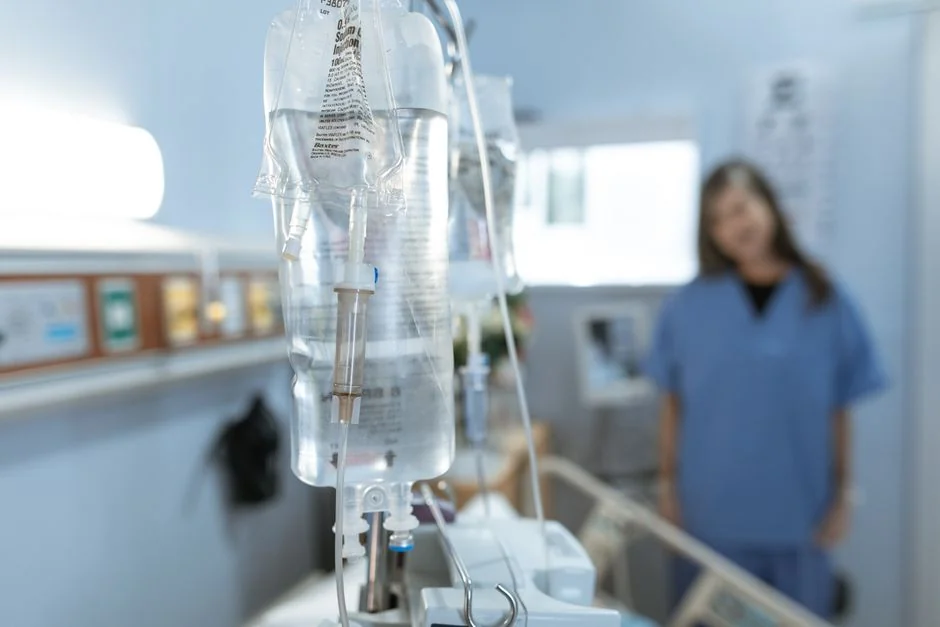
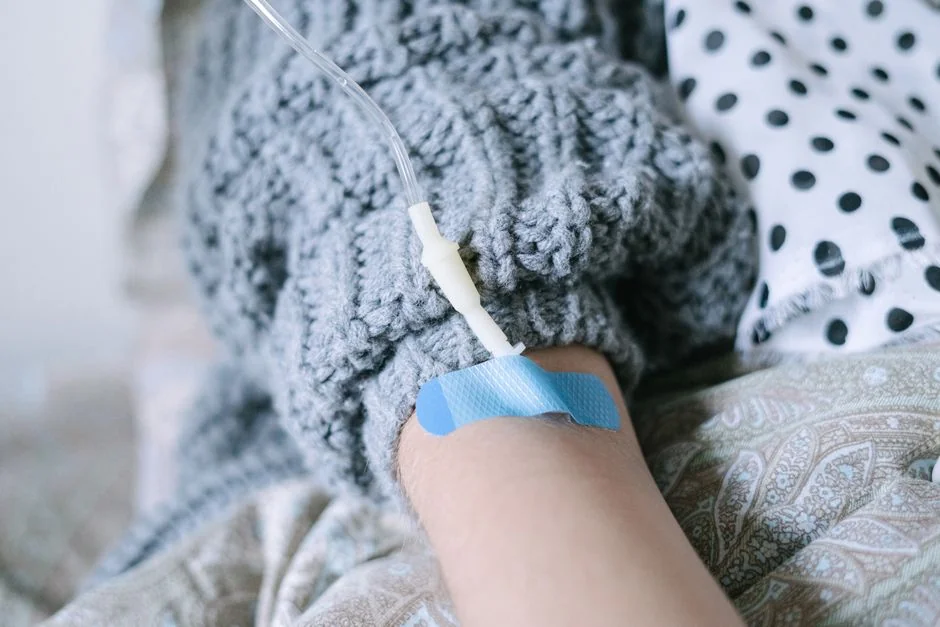
During the infusion, you are seated comfortably while the IV line is in place. Administration typically takes 30 to 60 minutes at a slow, controlled rate — this is important, as the 2026 clinical literature confirms that faster infusion rates are associated with greater gastrointestinal discomfort. Some patients notice mild warmth or a faint tingling sensation during the drip; these effects resolve quickly. Medical staff monitor you throughout.
After the session, there is no prescribed downtime and most patients return to normal activities immediately. Subjective reports of increased energy or improved mental clarity in the days following treatment are common, though individual responses vary and the evidence base for these effects in isolation remains limited. If you are also incorporating oral NMN supplementation, your physician can advise on how to structure both forms of support as part of a broader preventive medicine plan — a service available at BIOTOPE CLINIC alongside complementary IV options such as high-dose vitamin C and glutathione infusions.
Cost of NMN Drip Therapy in Tokyo
NMN IV drip therapy is not covered by Japanese health insurance and is priced as an elective preventive medicine treatment. Market rates at Tokyo clinics in 2025–2026 vary depending on the NMN dose per session, the number of sessions purchased together, and the clinic’s specific protocols.
At BIOTOPE CLINIC, pricing for IV preventive medicine treatments including NMN is provided at consultation.
Please see the clinic’s current fee schedule or contact us directly for an up-to-date quote. For an accurate quote, please book a consultation.
Have a question about this treatment?
Message us on LINE or WhatsApp — our English-speaking team usually replies the same day.
Who Is a Good Candidate — and Who Should Avoid This Treatment?
NMN IV therapy is most commonly sought by:
- Adults in their 40s and older with a proactive interest in preventive and regenerative medicine
- Those experiencing persistent fatigue, slower post-exercise recovery, or early signs of metabolic change despite otherwise healthy lifestyle habits
- Individuals already taking oral NMN who are interested in periodic supervised IV sessions as a complement to their existing routine
- Medical tourists and expatriates in Tokyo who want access to preventive medicine in an English-speaking clinical setting
The 2026 Frontiers in Aging narrative review identified several populations for whom IV NAD+ precursor therapy should be approached with significant caution or avoided:
- Those with active malignancy — theoretical concerns about NAD+ metabolism in tumour cells remain unresolved
- Those with renal or hepatic dysfunction — safety data in these groups is currently insufficient
- Pregnant or breastfeeding individuals
- People taking anticoagulants or with known clotting disorders
- Those with active infection or autoimmune disease
A thorough physician consultation before commencing treatment is essential for anyone in these groups.
Where to Get NMN Drip Therapy in Tokyo

Within our clinic group, both BIOTOPE CLINIC (Shirokanedai, Minato-ku) and Kojimachi Dermatology & Plastic Surgery Clinic (Ichigaya, Chiyoda-ku) offer English-language consultation with Dr. Jun Karibe and his team. NMN drip therapy and other IV preventive medicine treatments are handled at BIOTOPE CLINIC in Shirokanedai, which is the group’s dedicated cosmetic, regenerative, and preventive medicine branch. Kojimachi Dermatology & Plastic Surgery Clinic focuses on insurance-covered dermatology and general aesthetic plastic surgery.
BIOTOPE CLINIC is located in Shirokanedai, Minato-ku, a short walk from Shirokanedai Station (Toei Mita Line / Tokyo Metro Namboku Line) and accessible from most central Tokyo locations within 30 minutes. Bookings and enquiries in English: LINE or WhatsApp.
Frequently Asked Questions
- Q. Is NMN drip therapy legal in Japan?
- NMN is classified as a food ingredient by Japan’s Ministry of Health, Labour and Welfare (MHLW) and is legally available as a dietary supplement. Administering NMN intravenously in a clinical setting is a lawful medical procedure in Japan when performed by a licensed physician. It is not covered by public health insurance and is priced as a self-pay elective treatment.
- Q. How many sessions are recommended, and how often?
- There is no universally agreed clinical protocol. Tokyo clinics typically suggest starting with monthly sessions and adjusting frequency based on individual response. Some physicians recommend an initial course of three to five sessions to establish a baseline, followed by maintenance at intervals of four to eight weeks. Your physician will advise based on your health assessment and goals.
- Q. Can I combine NMN IV drip with other IV or aesthetic treatments?
- Many patients at BIOTOPE CLINIC combine NMN drips with other preventive IV therapies — such as high-dose vitamin C or glutathione infusions — during the same visit. Combining with aesthetic treatments such as HIFU skin tightening is also common. Your physician will assess your full treatment plan and any relevant contraindications or interactions based on current medications and health status.
- Q. Will I feel a noticeable difference after one session?
- Subjective reports of improved energy and mental clarity in the days following an infusion are common but not universal. Published research has primarily evaluated sustained supplementation over weeks to months rather than single-dose effects, so near-term expectations should be managed accordingly. Patients who attend regularly tend to report more consistent improvements over time.
- Q. Is English-language support available during consultation and treatment?
- Yes. Both BIOTOPE CLINIC (Shirokanedai, Minato-ku) and Kojimachi Dermatology & Plastic Surgery Clinic (Ichigaya, Chiyoda-ku) offer English-language consultation with Dr. Jun Karibe and his team. NMN IV therapy is carried out at BIOTOPE CLINIC in Shirokanedai. English enquiries are welcome via LINE or WhatsApp.
Have a question about this treatment?
Message us on LINE or WhatsApp — our English-speaking team usually replies the same day.
Summary
NMN IV drip therapy delivers nicotinamide mononucleotide intravenously to support NAD+ production — a coenzyme central to cellular energy, DNA repair, and the function of sirtuin proteins associated with healthy ageing. Human tissue studies have documented a meaningful age-related decline in NAD+ levels. Oral NMN supplementation has demonstrated safety and the ability to raise blood NAD+ across multiple randomised controlled trials; direct evidence for IV NMN therapy is still emerging, and a 2026 review in Frontiers in Aging characterises it as investigational pending larger, standardised trials.
For adults proactively interested in preventive medicine, the treatment is available in Tokyo with physician consultation, careful candidate selection, and English-language support.
If you have questions about NMN drip therapy or other preventive medicine options, both BIOTOPE CLINIC (Shirokanedai, Minato-ku) and Kojimachi Dermatology & Plastic Surgery Clinic (Ichigaya, Chiyoda-ku) offer English-language consultation with Dr. Karibe and his team. NMN IV drip therapy is primarily handled at BIOTOPE CLINIC in Shirokanedai. English enquiries: LINE or WhatsApp.
24/7 Consultation & Booking
Book a Consultation or Treatment
Our English-speaking team responds via LINE or WhatsApp — usually the same day.
References
- Massudi H, Grant R, Braidy N, Guest J, Farnsworth B, Guillemin GJ. Age-associated changes in oxidative stress and NAD+ metabolism in human tissue. PLOS ONE. 2012;7(7):e42357.
- Yu B, Jing X, Jia L, Wang M, Liu L, Ping S, Wang Y, Yang M. The versatile multi-functional substance NMN: its unique characteristics, metabolic properties, pharmacodynamic effects, clinical trials, and diverse applications. Frontiers in Pharmacology. 2024;15:1436597.
- Alangari A, Arif J, Al Qureshah F, Alkhodairy F. Narrative review of intravenous NAD+ and NAD+ precursors in wellness and translational medicine. Frontiers in Aging. 2026;7:1887175.
- Reyna et al. Intravenous infusion of nicotinamide adenine dinucleotide (NAD+) versus nicotinamide riboside (NR): a retrospective tolerability pilot study in a real-world setting. Frontiers in Aging. 2026;7:1652582.
Related Articles
You may also find these articles useful.
- NMN vs NAD+ in Japan: Which Should You Actually Take?
- Where to Get NAD+ IV in Tokyo (2026 English-Speaking Clinic Guide)
- IV Vitamin Drip Tokyo: Wellness Treatment for Expats
- Exosome Therapy Tokyo: Skin Rejuvenation & Anti-Aging Guide
- Anti-Aging Treatments Tokyo: Complete Guide for Expats
SUPERVISED BY
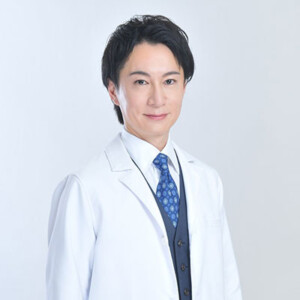
Dr. Jun Karibe
MD
Director
Education & Career
Certifications
Awards
MEDICAL REVIEW