Artmake for Foreigners in Tokyo: An English-Speaking Clinic Guide
Researching artmake from outside Japan — or while living here without fluent Japanese — can feel like guessing. Clinic websites are largely in Japanese, the rules around who may legally perform the procedure differ sharply from those in the United States or Europe, and it is rarely clear which questions you should be asking before you sit in the chair.
This guide explains what artmake is, how the technique works, what it costs in Tokyo, what healing realistically looks like, and how the procedure is regulated in Japan. It is written for English-speaking readers by the Kojimachi Clinic group, and it points you to where artmake is performed within our group.
What you’ll learn in this article:
- What artmake is, and how it differs from microblading and a decorative tattoo
- Why Japanese law treats artmake as a medical procedure — and what that means for you as a patient
- Typical fee ranges in Tokyo and how sessions are structured
- What healing, aftercare and touch-up intervals actually involve
- The documented risks, and who should think twice before booking
Have a question about this treatment?
Message us on LINE or WhatsApp — our English-speaking team usually replies the same day.
What Is Artmake, and How Does It Work?
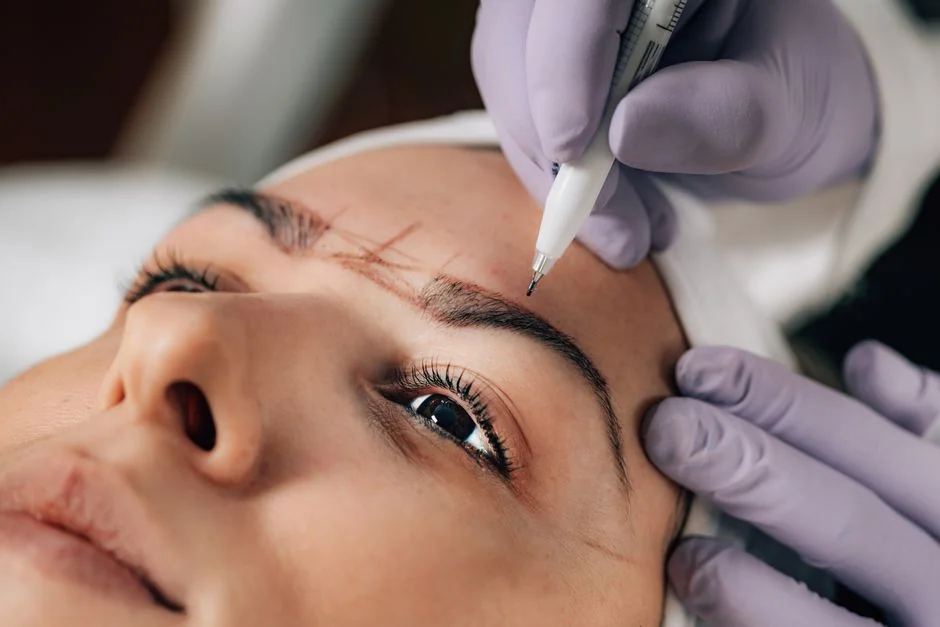
Artmake — known internationally as permanent makeup (PMU) or cosmetic micropigmentation — is a form of tattooing used to replace or enhance the effect of daily makeup. The most common areas are the eyebrows, the upper eyelid margin (eyeliner) and the lips.
A fine needle deposits pigment into the skin, reaching the dermis, the layer beneath the surface. Because pigment sits in living tissue that continually renews itself, the colour softens over time rather than staying fixed, which is why the word “permanent” is misleading.
The technique in practice
Most medical clinics use a digital device, sometimes combined with hand tools, to build colour gradually across more than one visit. A first session establishes shape and base colour; a second session, usually several weeks later once healing is complete, corrects any unevenness and deepens the result.
Topical anaesthetic cream is normally applied beforehand. Discomfort varies between individuals and between areas — the lip border is generally more sensitive than the brow — so no clinic should promise you a pain-free experience.
Why artmake is a medical procedure in Japan
This is the point most visitors from abroad find surprising. Japan’s Ministry of Health, Labour and Welfare confirmed in a notification dated 3 July 2023 (Iseiihatsu 0703 No. 4) that inserting pigment into the skin with a needle in the course of artmake constitutes a medical act, and that a person without a physician’s licence who performs it as a business violates Article 17 of the Medical Practitioners Act.
A further ministry notification issued on 15 August 2025 (Iseihatsu 0815 No. 21) reinforced this, stating that inserting pigment into the skin to draw eyebrows or similar features is a medical act regardless of what the service is called, and setting out obligations on cosmetic-medicine providers covering medical records, safety management and staff training.
Japan’s Supreme Court reached a different conclusion about decorative tattooing in a Second Petty Bench decision of 16 September 2020, holding that tattooing by a non-physician tattooist is not a medical act. The two are treated separately: artmake sits inside medicine, decorative tattooing does not.
Artmake, microblading and tattoos compared
| Medical artmake | Microblading | Decorative tattoo | |
|---|---|---|---|
| What it is | Cosmetic micropigmentation, usually machine-assisted | Hand-held blade creating fine hair-like strokes; a sub-type of permanent makeup | Body art placed for decorative or symbolic reasons |
| Legal status in Japan | Medical act; must be performed by licensed medical staff at a medical institution | Also pigment insertion into skin, so treated the same way | Held by the Supreme Court in 2020 not to be a medical act |
| Pigment placement | Into the upper skin layers, reaching the dermis | Superficial dermis | Deeper dermal placement |
| How it changes over time | Softens gradually with skin turnover; refresh sessions expected | Tends to fade sooner than machine work, particularly on oilier skin | Intended to last indefinitely; removal is difficult |
| Typical sessions | Usually two to build the result, then periodic refresh | Usually two | One or more, by design |
What Artmake Costs in Tokyo
Artmake is elective cosmetic care and is paid for privately; it is not treatment of a disease or injury, so you should budget for the full fee yourself. Fees in Tokyo vary by area treated, by the number of sessions in the package, and by the individual practitioner’s experience.
As published on the Kojimachi Clinic group’s official artmake page at the time of writing, eyebrow artmake is listed from ¥77,000 to ¥98,000 for a single session, with two-session sets from ¥138,000 to ¥179,000. Eyeliner is listed from ¥55,000 per session and lip artmake from ¥77,000. Reduced fees are published for repeat sessions, including maintenance work within two years of the original treatment.
Fees differ between practitioners on the same menu, and published figures change. Please see the BIOTOPE CLINIC official price page or contact us via LINE / WhatsApp for a current quote, and book a consultation with BIOTOPE CLINIC to confirm the exact fee for your case before committing.
Have a question about this treatment?
Message us on LINE or WhatsApp — our English-speaking team usually replies the same day.
Healing and Aftercare: The First Few Weeks
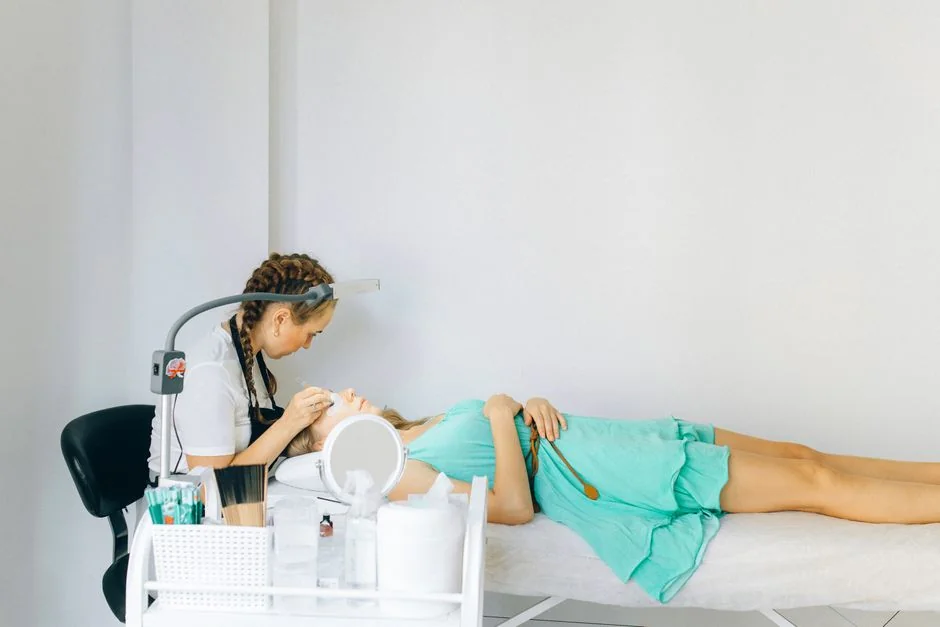
Expect swelling and redness immediately after a session, most noticeably on the lips. Most people return to ordinary daily activities the same day, though the treated area will look darker and sharper than the final result for the first several days.
Light flaking or scabbing usually follows as the skin settles. Picking at it removes pigment unevenly, so the standard instruction is to leave the area alone, keep it clean, apply the ointment your clinic provides, and avoid soaking, saunas, swimming pools and heavy sweating until the surface has healed.
Sun exposure accelerates fading, so daily sun protection once the skin has closed is worth the effort. Plan around your calendar as well: because two sessions are spaced several weeks apart, visitors travelling to Tokyo specifically for artmake should discuss the timing with the clinic before booking flights.
Who Is a Good Candidate — and What the Risks Are
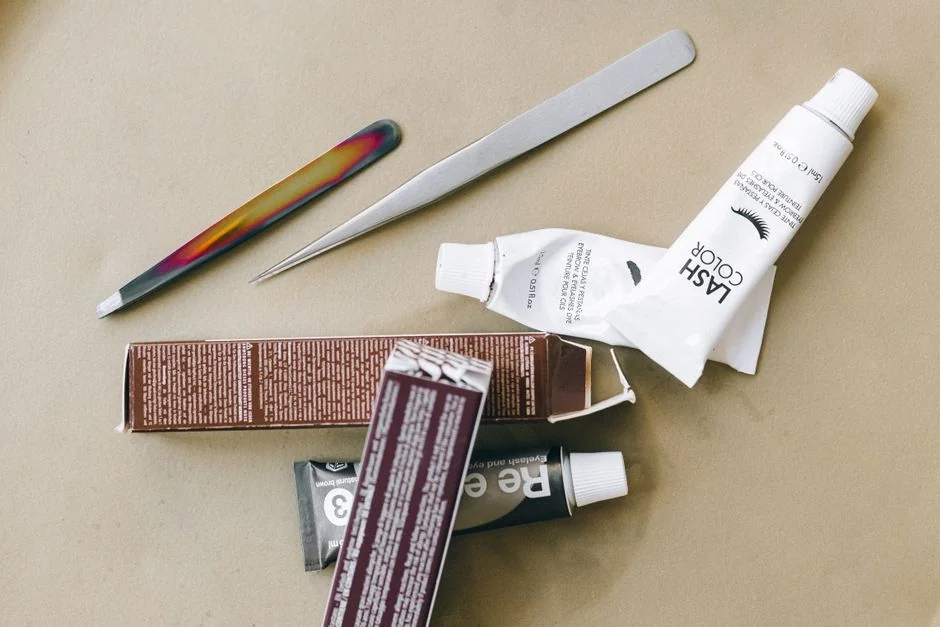
Artmake suits people who want to reduce daily makeup time, those with sparse or asymmetric brows, and people whose eyebrow or lash-line definition has thinned with age, illness or medical treatment. It also has a role in camouflaging scars and areas of lost pigmentation.
It is less suitable if you have an active skin condition, infection or open lesion in the area, a history of keloid scarring, a known pigment or metal allergy, or if you are pregnant or breastfeeding. Anyone taking anticoagulants, isotretinoin or immunosuppressive medication should disclose this at consultation, and a physician-led clinic is the right place to have that conversation.
The documented risks are real but uncommon. A 2024 review in the Journal of Clinical Medicine found allergic reactions to be the most prevalent complication of tattoo and permanent-makeup pigments, with red pigments most frequently implicated. Reported reactions range from itching and swelling to eczematous and granulomatous changes, and onset can be immediate, within days, or delayed by years.
A systematic review published in Cureus in 2026 examined granulomatous skin reactions after tattooing and cosmetic micropigmentation. Of 144 documented cases, only 11 followed cosmetic micropigmentation rather than decorative tattooing, and the mean interval between procedure and symptom onset was 3.9 years, ranging from about two months to twenty years.
Removal deserves particular thought. Pigments containing iron oxide can darken irreversibly when exposed to laser light, which is why correcting or removing artmake is more complicated than many people assume. Discuss what happens if you dislike the result before the first needle touches your skin.
Common misconceptions
“Artmake is just a tattoo, so any studio can do it.” Not in Japan. The ministry notifications of 2023 and 2025 place artmake inside medical practice; performing it without a physician’s licence is a criminal matter, and the 2025 notification directs health authorities to refer confirmed violations to investigative agencies. The 2020 Supreme Court decision applies to decorative tattooing, not to artmake.
“Permanent makeup is permanent.” It is not. Pigment fades as the skin renews itself, and maintaining the look requires further sessions over the years. Treat “permanent” as marketing shorthand for “long-lasting and difficult to remove”, not as a promise that the result stays unchanged.
Where to Get Artmake in Tokyo (Our Sister Clinic, BIOTOPE)
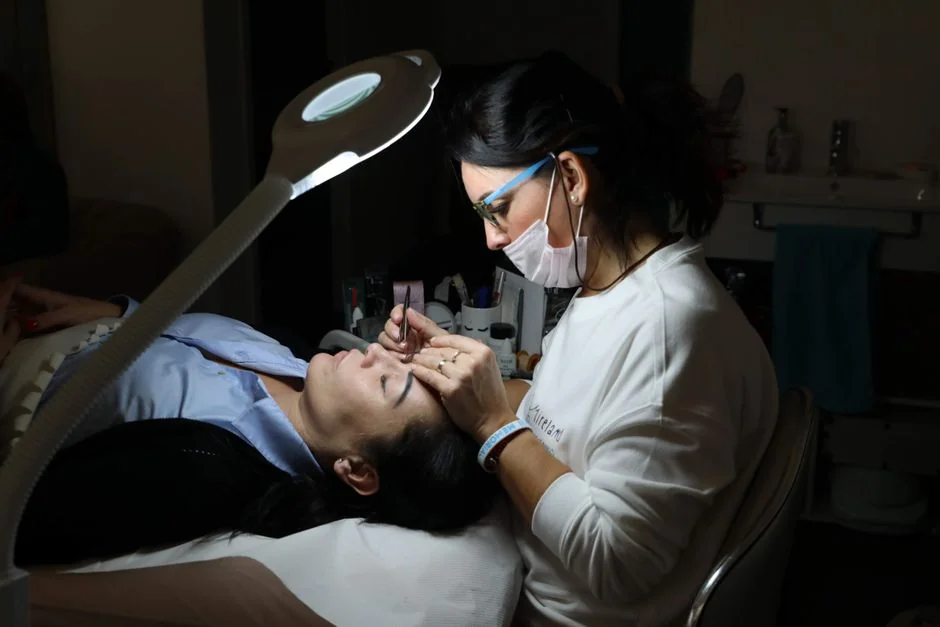
Within our clinic group, artmake is performed at BIOTOPE CLINIC in Shirokanedai (Minato-ku), directed by Dr. Jun Karibe. Our English-speaking team covers both clinics and handles all English enquiries.
Kojimachi Dermatology & Plastic Surgery Clinic in Chiyoda-ku is the group’s main location and does not perform artmake. BIOTOPE CLINIC is at 4-9-10 Shirokanedai, Minato-ku (Green Leaves 2F), roughly one minute on foot from Exit 1 of Shirokanedai Station, and is open 10:00 to 19:00; the clinic telephone number is 03-5422-9901.
Because Japanese regulation places artmake within medical care, treatment in a physician-directed clinic means your consultation, medical history, pigment selection and any complication are managed in a medical setting rather than a beauty salon. Consumer complaints about cosmetic medical services in Japan remain substantial — the National Consumer Affairs Center recorded 10,744 consultations in fiscal 2024 and 7,944 in fiscal 2025 across cosmetic medicine as a whole — so choosing a licensed setting that explains risks fully matters.
Frequently Asked Questions
- Q. Can I have artmake done in Japan as a tourist or foreign resident?
- Yes — there is no nationality or residency restriction on receiving artmake. Because it is treated as medical care, you will go through a consultation and medical history review first, and you should allow for a second session several weeks after the first.
- Q. Does artmake hurt?
- Topical anaesthetic is normally applied beforehand, and most patients describe the sensation as tolerable scratching or pressure rather than sharp pain. Sensitivity differs by area and by individual, so no clinic can honestly describe the procedure as painless.
- Q. Will artmake affect an MRI scan?
- Interference between tattoo pigments and MRI has been reported, and pigments containing iron oxide are the usual concern. Tell the radiology department that you have artmake before any MRI so they can take it into account.
- Q. What if I don’t like the result, or want it removed later?
- Shape and colour can often be adjusted at the second session, which is one reason the treatment is deliberately built over more than one visit. Full removal is harder — laser exposure can cause iron-oxide-containing pigment to darken irreversibly — so raise removal options at consultation rather than afterwards.
Have a question about this treatment?
Message us on LINE or WhatsApp — our English-speaking team usually replies the same day.
Summary
Artmake places pigment into the upper layers of the skin to define the brows, lash line or lips, and in Japan it is regulated as a medical act that must be carried out by licensed medical staff in a medical institution. Results are long-lasting rather than permanent, and are built over two sessions with periodic refreshment thereafter.
Published fees at our clinic group start from ¥55,000 for eyeliner and ¥77,000 for eyebrows or lips per session, with package and repeat-session pricing available; confirm current figures directly, as they change. Risks are uncommon but documented, allergic and granulomatous reactions being the most reported, and removal is more difficult than many patients expect.
If you are researching artmake in Tokyo in English, the practical next step is a consultation where design, pigment, fees and aftercare are discussed in a language you are comfortable in — at BIOTOPE CLINIC in Shirokanedai, with English enquiries handled by the team covering both of our clinics.
24/7 Consultation & Booking
Book a Consultation or Treatment
Our English-speaking team responds via LINE or WhatsApp — usually the same day.
References
- Ministry of Health, Labour and Welfare, Japan. Notifications on the handling of so-called artmake and of cosmetic medicine under Article 17 of the Medical Practitioners Act (Iseiihatsu 0703 No. 4, 3 July 2023; Iseihatsu 0815 No. 21, 15 August 2025).
- Ghafari G, Newcomer J, Rigali S, Liszewski W. Permanent makeup: A review of its technique, regulation, and complications. Journal of the American Academy of Dermatology. 2024;91(4):690–698.
- Bălăceanu-Gurău B, et al. Cutaneous Adverse Reactions Associated with Tattoos and Permanent Makeup Pigments. Journal of Clinical Medicine. 2024;13(2):503.
- Rajan YRD, Deepthi S, Dosakayala B, Mummadireddy S, Erri SD, Alaparthi R. Clinical Presentations of Granulomatous Skin Reactions Following Tattooing and Cosmetic Micropigmentation: A Systematic Review. Cureus. 2026;18(1):e102227.
- National Consumer Affairs Center of Japan. Cosmetic medical services: consultation numbers and trends (PIO-NET registered data, accessed 2026).
Related Articles
You may also find these articles useful.
- Artmake vs Microblading vs Tattoo: Tokyo Guide
- Eyebrow Artmake Tokyo: Cost, Procedure & Clinic Guide
- Artmake Pain, Safety & Side Effects Guide
- Artmake Aftercare Guide: Healing Timeline and What to Avoid
- Artmake Removal Tokyo: Laser & Revision Options Guide
SUPERVISED BY
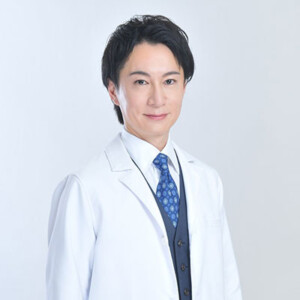
Dr. Jun Karibe
MD
Director
Education & Career
Certifications
Awards
MEDICAL REVIEW