Botox for Crow’s Feet in Tokyo: A Practical Guide to Results, Cost and Safety
Crow’s feet — the fan of fine lines that radiates from the outer corner of each eye when you smile — are one of the first changes most people notice in the mirror, and they can make a rested face look tired. If you are living in or visiting Tokyo and wondering whether botulinum toxin (“Botox”) is a sensible option, the questions are usually the same: does it work, how long does it last, what does it cost, and is it safe.
This article sets out what the approved Japanese product data and published clinical trials actually show, so you can weigh the treatment realistically rather than from marketing copy.
What you’ll learn in this article:
- What crow’s feet are and how botulinum toxin injections work on them
- What Japanese and international clinical trials found — including response rates and how long the effect lasted
- Realistic cost in Tokyo, and why prices differ so widely between products
- Downtime, side effects, and who should not have the treatment
- Two things people commonly get wrong about crow’s feet Botox
Have a question about this treatment?
Message us on LINE or WhatsApp — our English-speaking team usually replies the same day.
What Crow’s Feet Are and How Botox Works

Crow’s feet, known medically as lateral canthal lines, are created by the repeated contraction of the orbicularis oculi — the ring-shaped muscle that closes the eyelids. Every smile or squint folds the overlying skin, and over years those folds become etched.
Botulinum toxin type A works by temporarily blocking the nerve signal that tells that muscle to contract. The muscle relaxes, the skin over it creases less, and the lines soften. It is not a filler: it does not add volume or “plump” the area.
In Japan, the botulinum toxin preparation Botox Vista holds an approved indication for expression lines of the glabella (between the brows), granted in 2009, with the lateral canthal line — crow’s feet — indication added on 23 May 2016. The approved wording covers adults under 65 years of age.
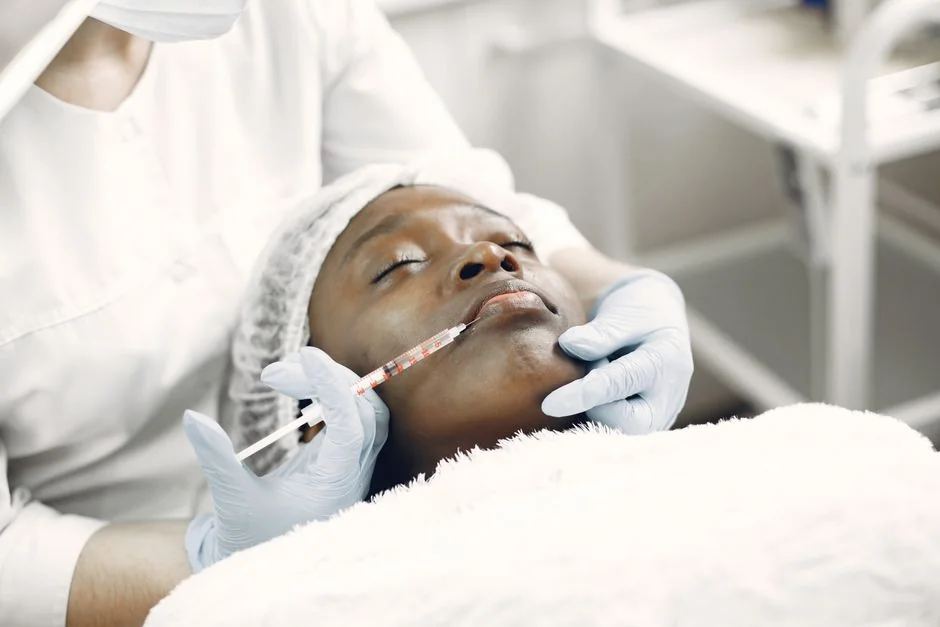
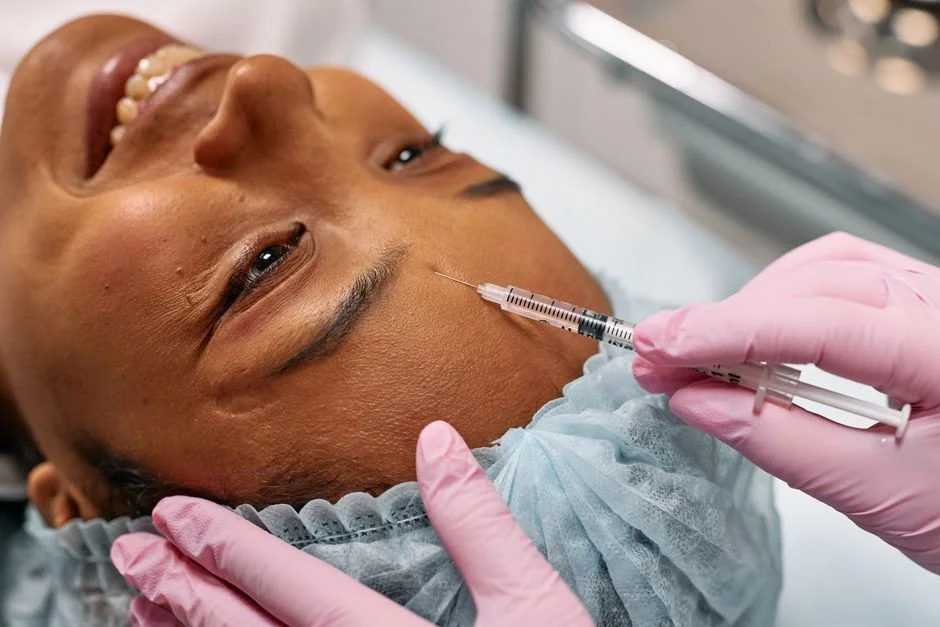
The approved technique is specific: a total of 12–24 units divided equally across six injection points — three per side — into the lateral portion of the orbicularis oculi. The Japanese package insert sets 24 units as the maximum per session for this area. For context, the US Food and Drug Administration approved Botox Cosmetic for moderate-to-severe lateral canthal lines in September 2013, having approved the glabellar indication in 2002.
Expected Results: What the Clinical Data Shows
The most directly relevant evidence for readers in Japan is the domestic phase 3 trial, published by Harii and colleagues in Aesthetic Plastic Surgery in 2017. It enrolled 300 Japanese participants with moderate-to-severe crow’s feet at maximum smile, randomised to 24 units, 12 units, or placebo.
At day 30, the proportion achieving “none or mild” severity at maximum smile was 68.3% with 24 units and 56.6% with 12 units, compared with 8.2% on placebo (P < 0.001). Patient-reported satisfaction followed the same pattern: 51.0% of the 24-unit group reported being very or mostly satisfied at day 30, versus 7.2% on placebo.
Duration is where expectations often need adjusting. In the same Japanese study, the median duration of effect using the primary responder definition was approximately three months — 95 days for 24 units and 85 days for 12 units. Manufacturer patient information in Japan describes onset at around 2–3 days, peak effect at 2–3 weeks, and an effect lasting roughly 4–6 months; the trial’s stricter responder threshold gives the shorter figure. Individual results vary, and no clinic can promise a specific outcome.
Internationally, a review by Carruthers and colleagues in Aesthetic Surgery Journal (2016) pooled two randomised phase 3 studies comprising 1,362 patients and reported significantly greater responder rates with onabotulinumtoxinA than placebo at day 30, with eyelid oedema (1%) the only adverse event occurring in at least 1% of treated patients.
Cost of Crow’s Feet Botox in Tokyo
Botulinum toxin for wrinkles is self-pay (jihi) treatment in Japan — it is not covered by Japanese national health insurance, regardless of your visa or residency status. Prices are set by each clinic, and the single biggest driver of price is which product is used.
On our clinic group’s current published cosmetic price list (effective 1 October 2023, tax included), crow’s feet Botox is listed at ¥9,900 for the Korean-manufactured preparation and ¥22,000 for the Allergan preparation. Topical anaesthetic, if used, is an additional ¥2,200. Please see the clinic’s official price page for the most current figures, as price lists are revised periodically.
| Point of comparison | Allergan preparation (Botox Vista) | Korean-manufactured preparations |
|---|---|---|
| Japanese regulatory status for facial expression lines | Approved — glabellar lines (2009), lateral canthal lines (2016), adults under 65 | Not approved in Japan; used as unapproved-product self-pay treatment |
| Listed price, crow’s feet (tax included) | ¥22,000 | ¥9,900 |
| Japanese-population trial data for this indication | Yes — 300-subject domestic phase 3 trial | Not established under the Japanese approval framework |
| Approved dose range for crow’s feet | 12–24 units total, six injection points | Dosing follows physician judgement; no Japanese approved dosing for this area |
Neither option is “the right one” in the abstract. The approved product carries the regulatory and trial data described above; the Korean-manufactured options are widely used in Japanese aesthetic practice at lower cost but sit outside the Japanese approval framework, which is a distinction you are entitled to have explained before consenting. For an accurate quote, please book a consultation.
Have a question about this treatment?
Message us on LINE or WhatsApp — our English-speaking team usually replies the same day.
What to Expect Before, During and After

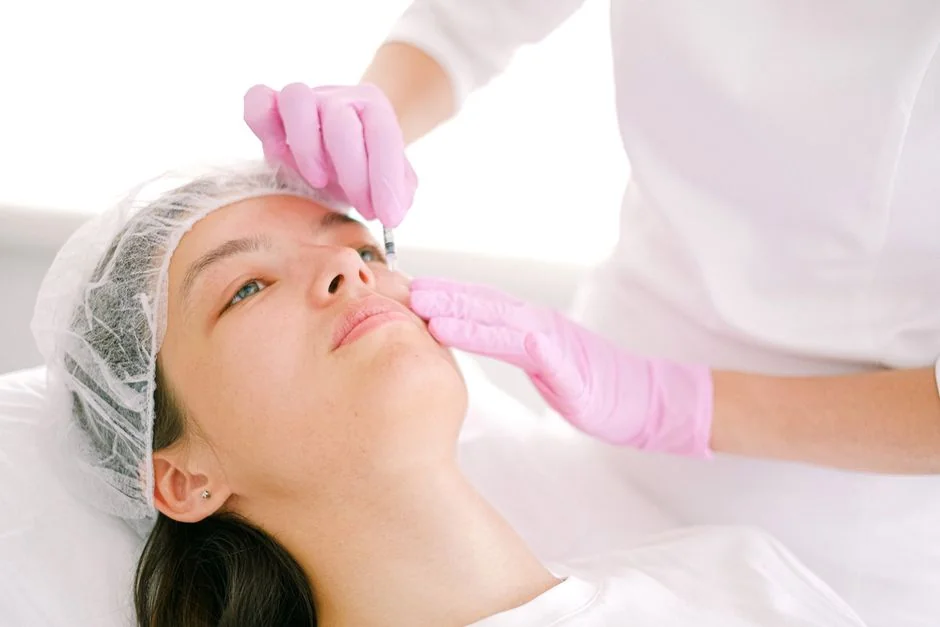
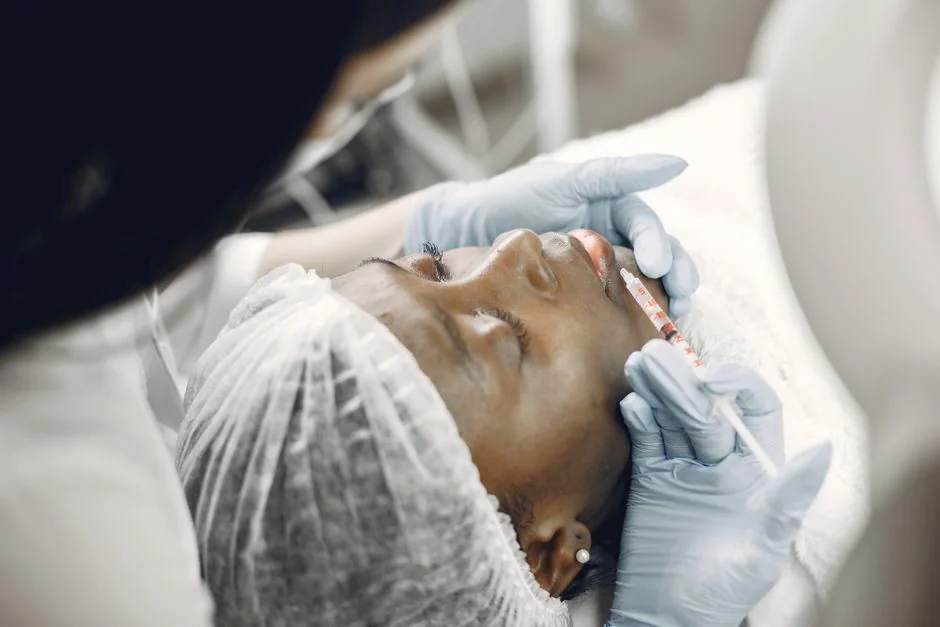
A first appointment begins with an assessment of how your outer-eye lines behave at rest and at full smile, since the two respond differently. The injection itself takes only a few minutes: six small injections, three on each side, into the muscle at the outer eye.
Downtime is minimal. Transient redness, small bumps at the injection points, and occasional bruising are the usual findings; in the Japanese trial, injection-site haemorrhage occurred in 4.0–4.9% of participants and bruising in 2.1–4.0%. Most people return to normal activities the same day, though vigorous exercise, saunas, alcohol and rubbing the treated area are generally best avoided immediately afterwards.
The Japanese package insert instructs that repeat treatment within three months should be avoided. Reported adverse effects for periocular use include eyelid ptosis (drooping, listed at 1–5%), and less commonly double vision or blurred vision (each under 1%); these are temporary but are a reason to be treated by a physician familiar with the anatomy of the region.
Who Is a Good Candidate?
The treatment suits adults whose crow’s feet are most visible when they smile or squint — dynamic lines driven by muscle movement. Lines that remain deeply etched at complete rest are less responsive to toxin alone, and other approaches such as skin-tightening devices or injectable treatments may be discussed. HIFU and Morpheus8 RF microneedling are among the treatments available at BIOTOPE CLINIC in Shirokanedai — feel free to ask about them during a consultation with Dr. Karibe.
Who Should Avoid It?
The Japanese labelling contraindicates botulinum toxin in people with generalised disorders of neuromuscular transmission (such as myasthenia gravis, Lambert-Eaton syndrome or ALS), in pregnancy or suspected pregnancy, while breastfeeding, in those with known hypersensitivity to the components, and in anyone concurrently receiving another botulinum toxin product. The approved cosmetic indication applies to adults under 65.
What People Often Get Wrong About Crow’s Feet Botox
“Botox fills in the wrinkle.” It does not. The approved technique injects the muscle around the eye, and the Japanese trial measured its primary endpoint at maximum smile — that is, it was designed around movement-related lines. Volume loss and static creasing are separate problems requiring separate tools.
“All Botox is the same product, so cheaper is simply better value.” In Japan, only Botox Vista holds regulatory approval for glabellar and lateral canthal expression lines. Korean-manufactured botulinum toxin preparations are approved by their own national regulator but remain unapproved in Japan and are administered as self-pay, off-label treatment. Both are used legitimately in Japanese practice; what matters is that you are told which one you are receiving.
Where to Get Crow’s Feet Botox in Tokyo
Within our clinic group, English-speaking consultations are handled at BIOTOPE CLINIC in Shirokanedai (Minato-ku, Tokyo) by Dr. Jun Karibe. Our sister clinic Kojimachi Dermatology & Plastic Surgery Clinic in Ichigaya handles Japanese-language insurance dermatology. Bookings and enquiries in English: LINE or WhatsApp.
Dr. Karibe is a plastic surgeon certified by the Japan Society of Plastic and Reconstructive Surgery, a specialist of the Japan Society of Aesthetic Plastic Surgery (JSAPS), and an Allergan botulinum toxin VST-certified physician. Consultations cover which product is appropriate, realistic dosing within the approved range, and whether toxin alone is the right answer for your particular lines.
Frequently Asked Questions
- Q. How soon will I see results, and how long will they last?
- Manufacturer information in Japan describes onset at around 2–3 days with peak effect at 2–3 weeks. In the Japanese phase 3 trial, the median duration of effect was roughly three months at the 24-unit dose, though everyday reports of 4–6 months are common; individual responses vary.
- Q. Is crow’s feet Botox covered by Japanese health insurance?
- No. Botulinum toxin for facial expression lines is cosmetic self-pay treatment in Japan and is not reimbursed by national health insurance. Insurance-covered dermatology is a separate service, handled in Japanese at our Ichigaya sister clinic.
- Q. Can I have it done as a visitor and fly home a few days later?
- Downtime is minimal, and most patients resume normal activity the same day. Bear in mind that the visible effect develops over 2–3 weeks, so any review appointment would need to be planned around your travel.
- Q. How often can I repeat the treatment?
- The Japanese package insert states that re-treatment within three months should be avoided. Your physician will advise on timing based on how your result has held.
Have a question about this treatment?
Message us on LINE or WhatsApp — our English-speaking team usually replies the same day.
Summary
Botulinum toxin is an evidence-supported option for crow’s feet caused by muscle movement, with a Japanese approval specific to this area since 2016 and domestic trial data showing 68.3% of participants reaching none-or-mild severity at day 30 on the 24-unit dose. It is temporary, self-pay, and works best when expectations about duration are realistic.
The main decisions are which product you receive, what dose sits appropriately within the approved 12–24 unit range, and whether your lines are dynamic enough to respond well. Those are consultation questions, not website questions.
If you have questions about Botox for crow’s feet, English-speaking consultations are handled at BIOTOPE CLINIC in Shirokanedai (Minato-ku, Tokyo) by Dr. Karibe. Our sister clinic Kojimachi Dermatology & Plastic Surgery Clinic in Ichigaya (Chiyoda-ku) handles Japanese-language insurance dermatology. English enquiries: LINE or WhatsApp.
24/7 Consultation & Booking
Book a Consultation or Treatment
Our English-speaking team responds via LINE or WhatsApp — usually the same day.
References
- Harii K, Kawashima M, Furuyama N, Lei X, Hopfinger R, Lee E. OnabotulinumtoxinA (Botox) in the Treatment of Crow’s Feet Lines in Japanese Subjects. Aesthetic Plastic Surgery. 2017;41(5):1186–1197.
- Carruthers A, Bruce S, Cox SE, Kane MAC, Lee E, Gallagher CJ. OnabotulinumtoxinA for Treatment of Moderate to Severe Crow’s Feet Lines: A Review. Aesthetic Surgery Journal. 2016;36(5):591–597.
- Allergan Japan. Botox Vista Injection 50 Units — Japanese package insert (indications, dosage and administration, contraindications, adverse reactions). Approval of the lateral canthal line indication, 23 May 2016.
- Pharmaceuticals and Medical Devices Agency (PMDA), Japan. Review report and approval documentation for Botox Vista Injection 50 Units, 2016. https://www.pmda.go.jp/
- U.S. Food and Drug Administration. Approval of Botox Cosmetic (onabotulinumtoxinA) for temporary improvement of moderate to severe lateral canthal lines in adults, September 2013. https://www.fda.gov/
Related Articles
You may also find these articles useful.
- Botox in Tokyo: Areas, Pricing and What to Expect
- Forehead Botox Tokyo: What to Expect and Cost
- Botox Effects and Duration Explained|How Long Does Botox Last and How to Make It Last Longer?
- Botox vs Dermal Fillers: Which Treatment Is Right for You?
- Under Eye Dark Circles Treatment Tokyo: Injections vs Surgery
SUPERVISED BY

Dr. Jun Karibe
MD
Director
Education & Career
Certifications
Awards
MEDICAL REVIEW