Hair Mesotherapy in Tokyo: Manual Injection vs Hydro-Injector for AGA
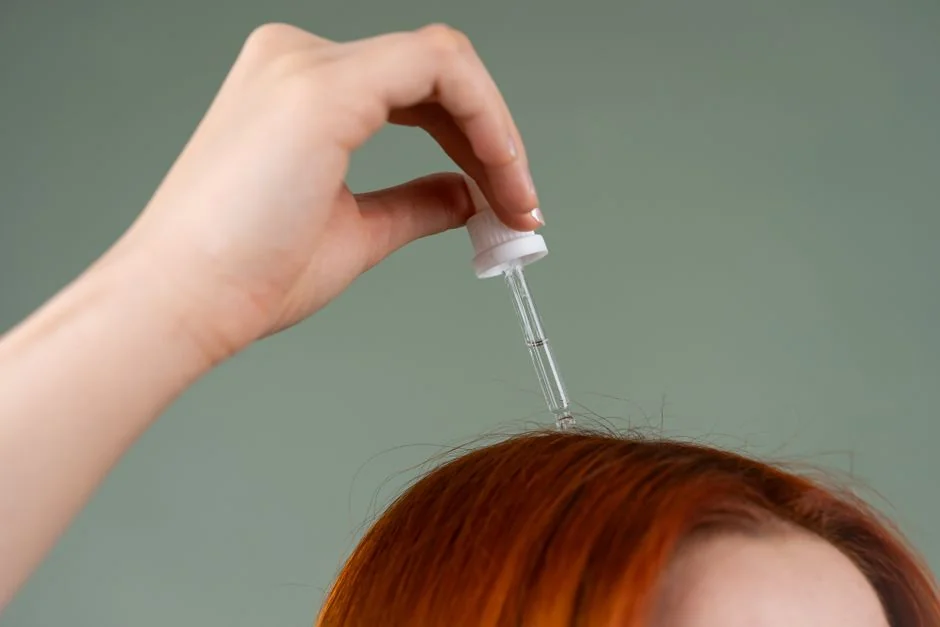
If you are losing hair in Tokyo and have started researching clinics, you have probably run into the term “hair mesotherapy” — scalp injections promised as a faster route to regrowth. It is a confusing area, partly because clinics deliver the same solution in very different ways, and partly because the evidence behind it is weaker than the marketing suggests.
This article explains what hair mesotherapy actually is, how manual (hand) injection differs from device-assisted or needle-free “hydro-injector” delivery, and what published evidence and Japanese guidelines say about both.
What you’ll learn in this article:
- What hair mesotherapy is and what is typically injected into the scalp
- How manual needle injection compares with hydro-injector and needle-free jet devices
- What clinical studies and the Japanese Dermatological Association guideline actually report
- Realistic cost in Tokyo, downtime, and who is and is not a good candidate
- Two things patients commonly get wrong about scalp injections in Japan
Have a question about this treatment?
Message us on LINE or WhatsApp — our English-speaking team usually replies the same day.
What Is Hair Mesotherapy?
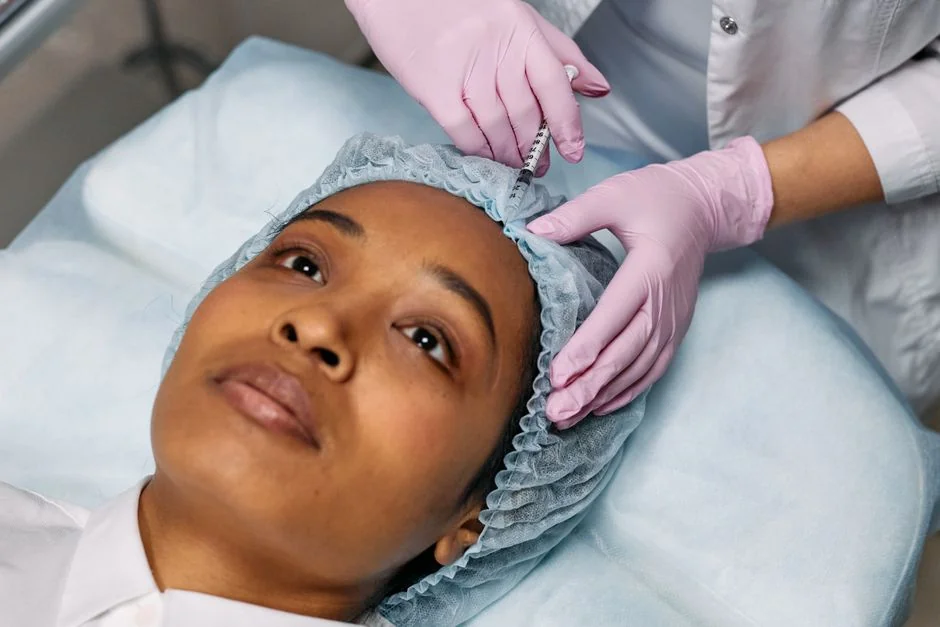
Mesotherapy means delivering small amounts of a solution into the superficial layers of the skin, rather than swallowing a tablet or rubbing a lotion on the surface. Applied to the scalp, the aim is to place active ingredients close to the hair follicle itself.
What is injected varies widely between clinics. Common formulations include stem cell culture supernatant (a filtered liquid containing growth factors and cytokines secreted by cultured cells), platelet-rich plasma prepared from the patient’s own blood, vitamin and amino acid cocktails, or diluted drugs such as dutasteride.
It is important to be clear about the regulatory picture in Japan. Oral finasteride, oral dutasteride and topical minoxidil are established, guideline-backed treatments for male pattern hair loss (androgenetic alopecia, or AGA), but AGA treatment in Japan is self-pay (jiyū shinryō) and is not covered by national health insurance. Scalp injection therapies sit further out again — they are self-pay procedures using products that are not approved by Japan’s regulator for hair growth.
Manual Injection vs Hydro-Injector: How Delivery Differs
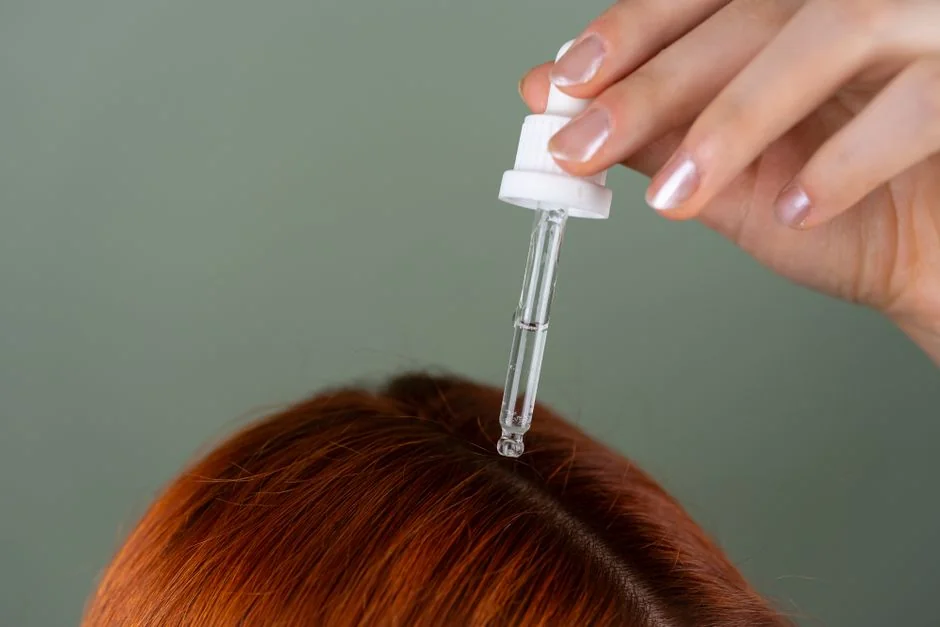
The solution is only half the treatment. How it is placed into the scalp affects comfort, evenness, session time and how much of the product is actually retained in the skin.
Manual (hand) injection
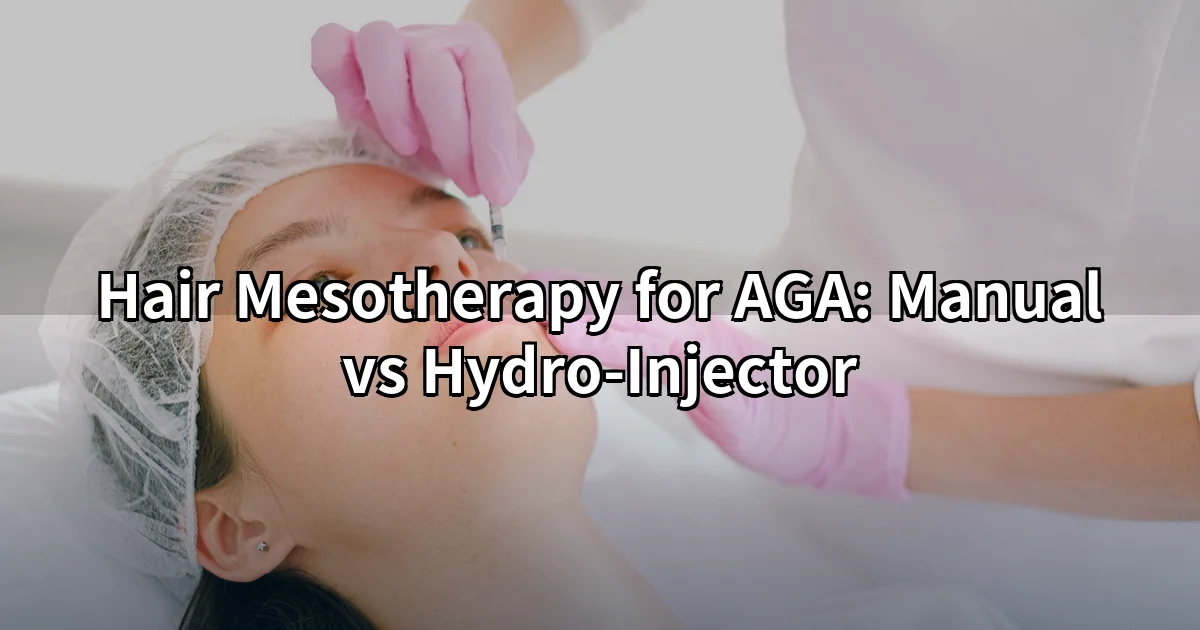
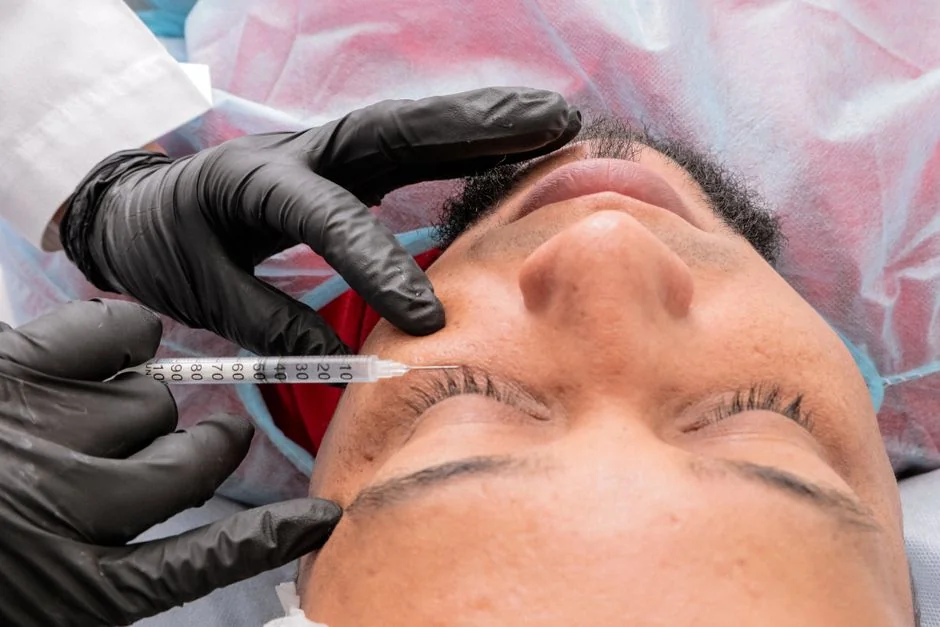
A physician uses a fine needle and syringe to place small deposits across the thinning area, typically dozens of individual injections per session. The operator controls depth and dose by feel, which allows deliberate targeting of specific zones such as a receding frontal hairline or a defined crown patch.
The trade-offs are time and comfort. Each puncture is felt, the session is longer, and consistency of depth depends entirely on the operator’s technique.
Hydro-injector and automated multi-needle devices
“Hydro-injector” is used loosely in the Japanese aesthetic market. Most often it refers to an automated injector with a multi-needle handpiece that uses gentle negative pressure to lift the skin, with depth, volume and speed set on the device rather than judged by hand. The appeal is standardisation: the same depth and the same micro-dose at every point.
Needle-free jet injectors
A separate category dispenses with needles altogether. Needle-free jet injectors convert stored energy into a high-velocity stream that penetrates the skin. A 2025 review in Aesthetic Surgery Journal Open Forum reports jet velocities in the range of 100 to 350 m/s and around 16 to 20 MPa of pressure to cross the stratum corneum, with a skin entry point of roughly 0.17 mm compared with 0.31 mm for a 30-gauge needle.
The same review notes consistently reduced pain scores and better patient acceptance versus needle-syringe injection, alongside real limitations: dermal trauma, splashback, aerosol generation, nozzle clogging and inconsistent dose delivery with incomplete penetration. One device used in Japan for scalp delivery, MESOJET, drives the solution through a jet approximately 0.03 mm in diameter using carbon dioxide.
| Factor | Manual injection | Hydro-injector / multi-needle device | Needle-free jet |
|---|---|---|---|
| Depth control | Operator-dependent, adjustable point by point | Set on the device, uniform across the field | Determined by jet pressure and nozzle |
| Comfort | Each puncture felt; usually the least comfortable | Intermediate | Reported as the most comfortable in review data |
| Precision targeting | Best for small, defined areas such as the hairline | Best for broad, even coverage | Broad coverage; less selective |
| Session time | Longest | Shorter | Shortest |
| Main drawback | Pain, variability between operators | Less flexible for irregular patches | Splashback, possible incomplete or uneven delivery |
| Typical marks afterwards | Pinpoint bleeding, small bumps | Pinpoint marks, transient redness | Redness, occasional bruising |
Note: no head-to-head trial has established that one delivery route grows more hair than another for AGA. The differences above are practical, not proven outcome differences.
Expected Results: What the Evidence Actually Shows
This is where expectations need calibrating. The Japanese Dermatological Association’s Guidelines for the Diagnosis and Treatment of Male-pattern and Female-pattern Hair Loss (2017) addresses growth-factor introduction and cell transplantation therapies directly under Clinical Question 13 and assigns them recommendation grade C2 — “better not to perform” — stating that their efficacy, including safety, cannot be said to have been sufficiently verified.
By contrast, the same guideline gives grade A (strongly recommended) to oral finasteride and oral dutasteride for men and to topical minoxidil, and grade D (should not be performed) to oral minoxidil. In one Japanese randomised trial cited there, 58% of men on finasteride 1 mg daily showed at least slight improvement at 48 weeks, rising to 68% at two years and 78% at three years of continued use.
Injected drugs have somewhat better data than injected growth factors.
A 2025 systematic review and meta-analysis in the Journal of Cosmetic Dermatology pooled eight studies of intralesional dutasteride and reported an overall improvement rate of 75%, higher for combination therapy (82%) than monotherapy (65%) — but also a 37% pooled rate of adverse effects, with 38% of patients reporting pain, and substantial heterogeneity between studies.
A randomised trial of 77 men with Norwood-Hamilton stage III–V hair loss, published in the Journal of the European Academy of Dermatology and Venereology, compared monthly with quarterly dutasteride mesotherapy. Both schedules produced only modest gains in total hair density, and terminal hair density did not significantly improve in either group.
Studies suggest, in short, that scalp injection may add something as an adjunct — but it is not a substitute for the oral and topical treatments with grade A evidence behind them.
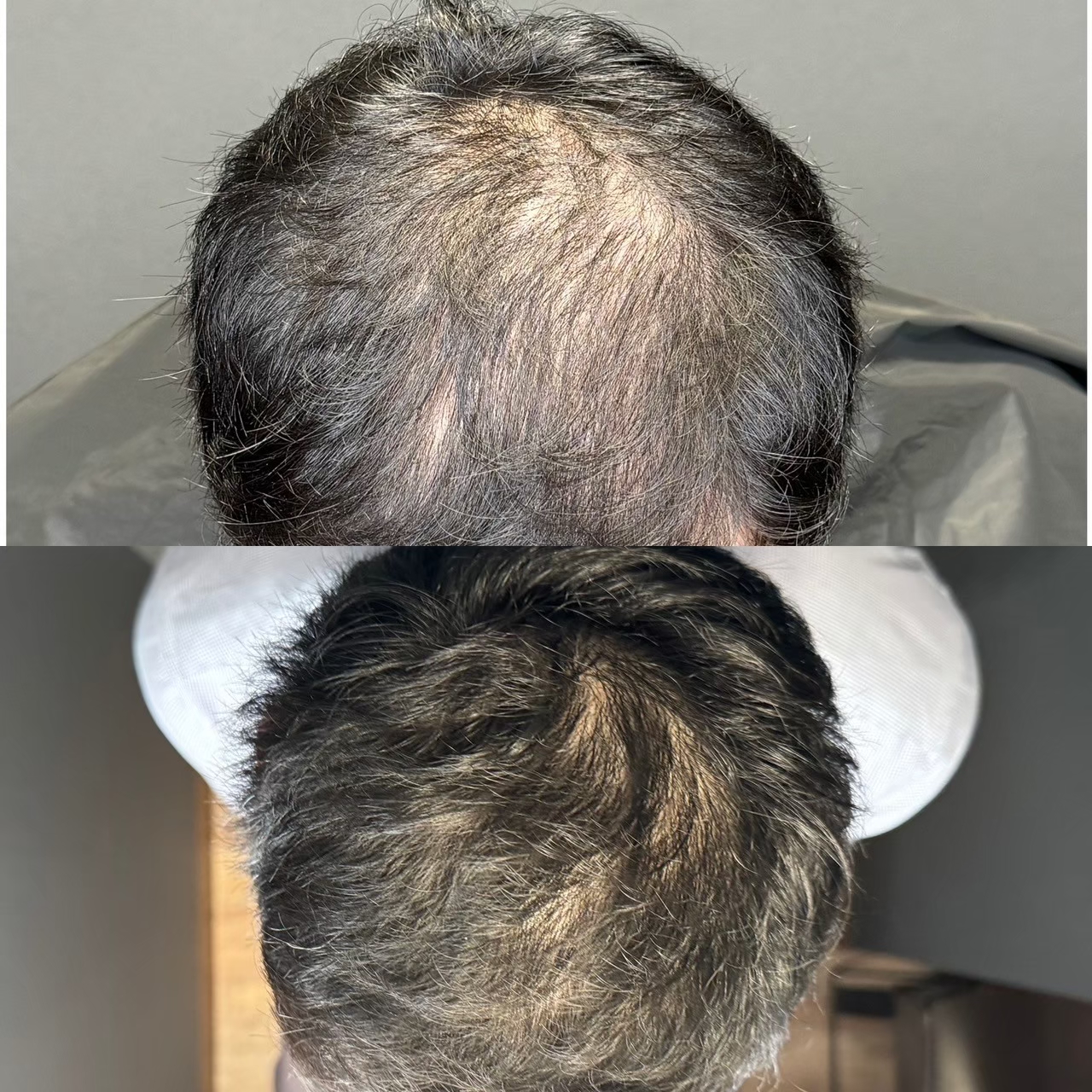
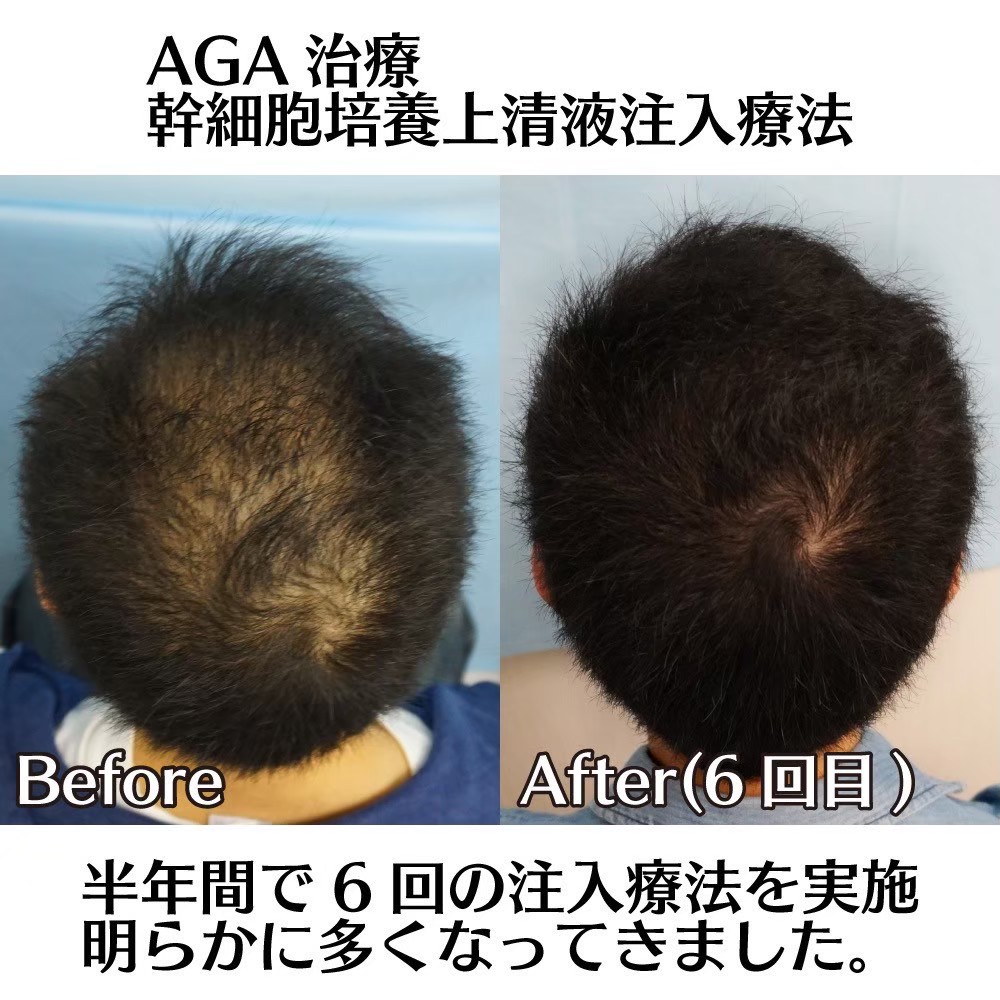
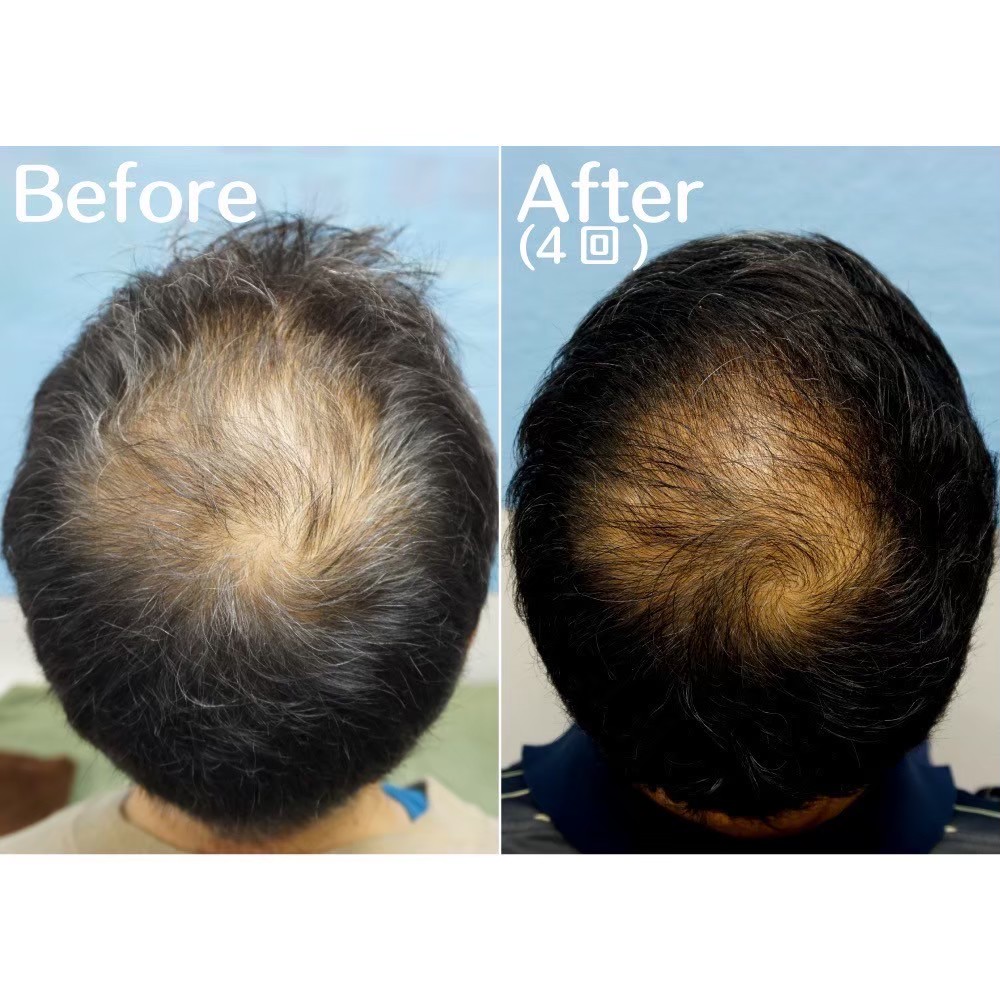
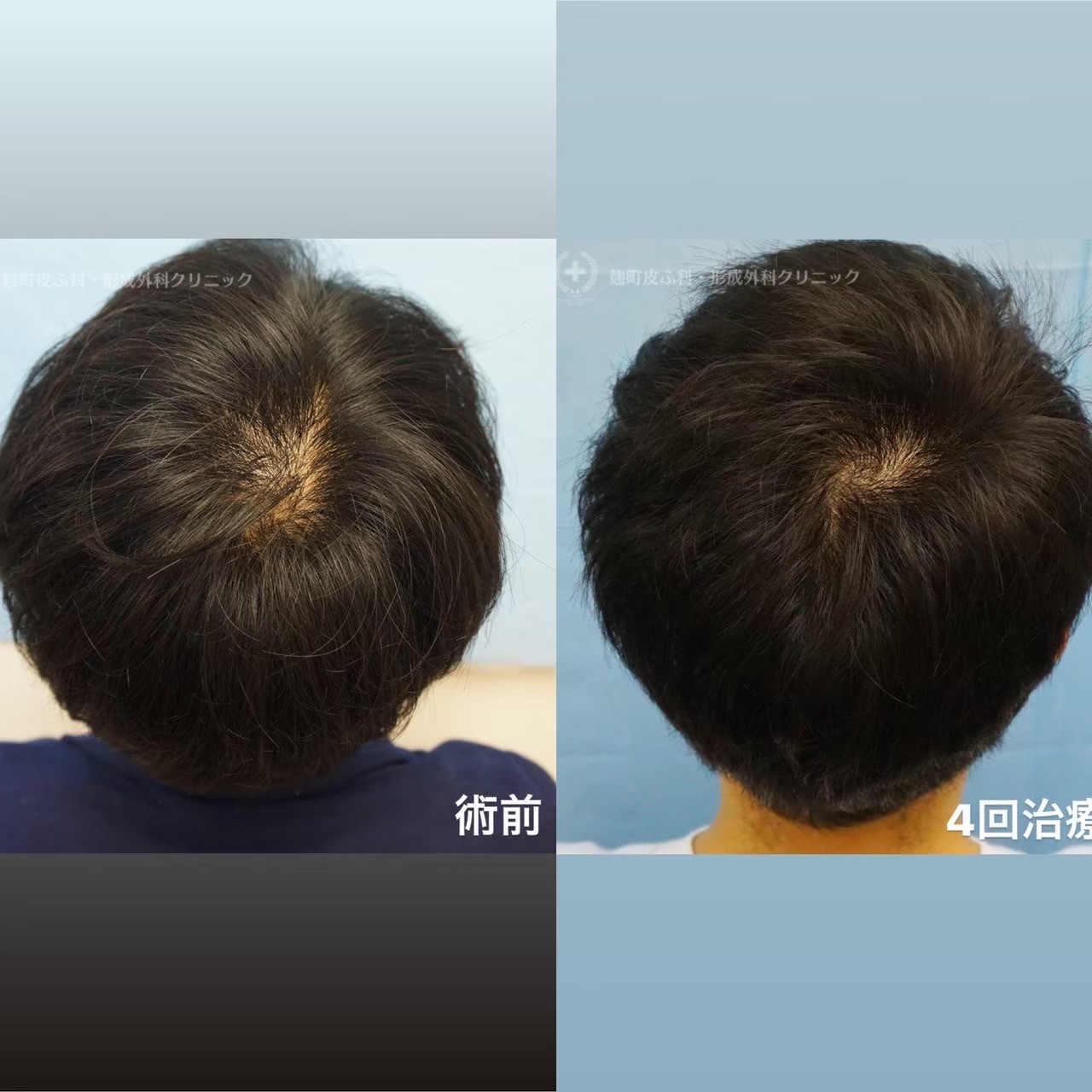
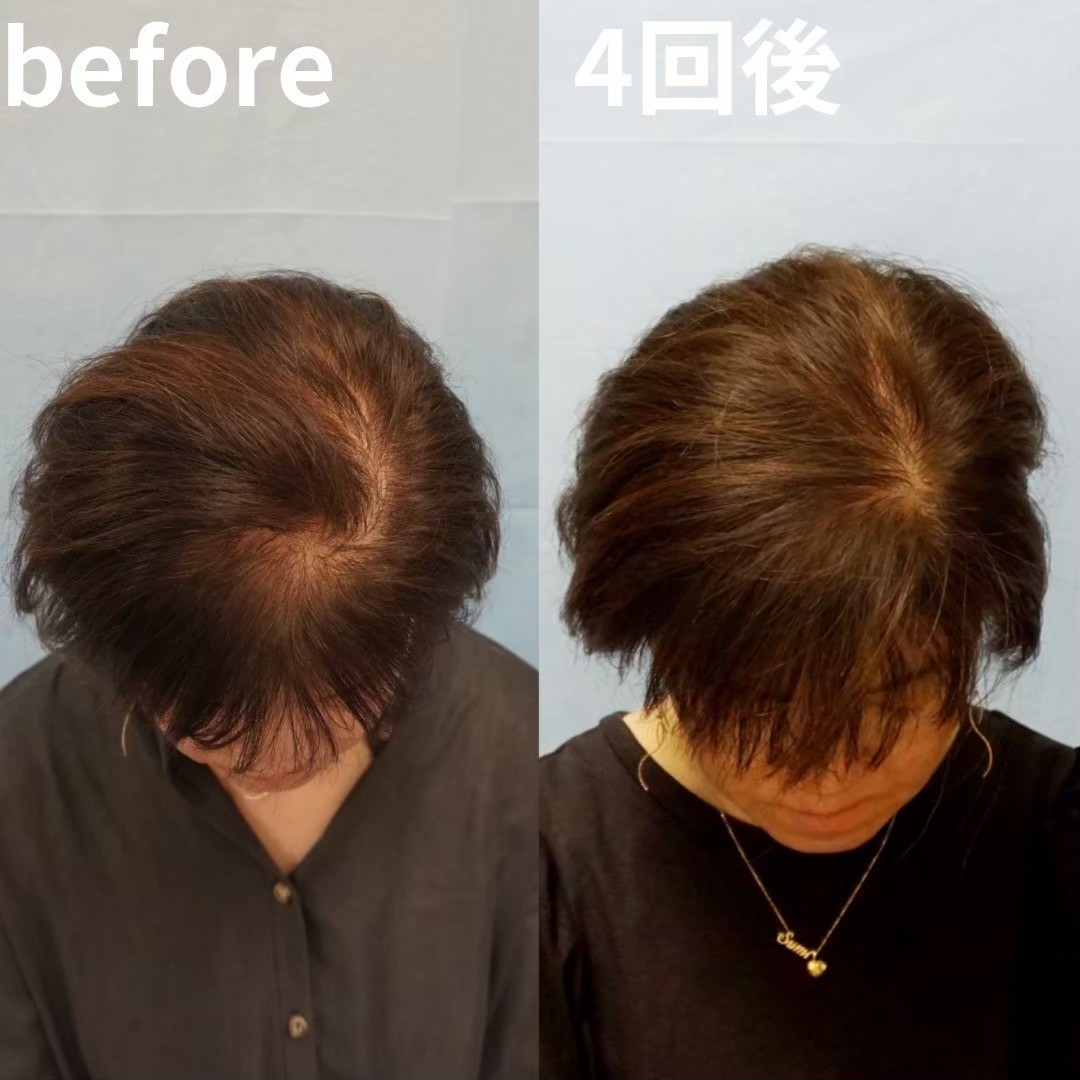
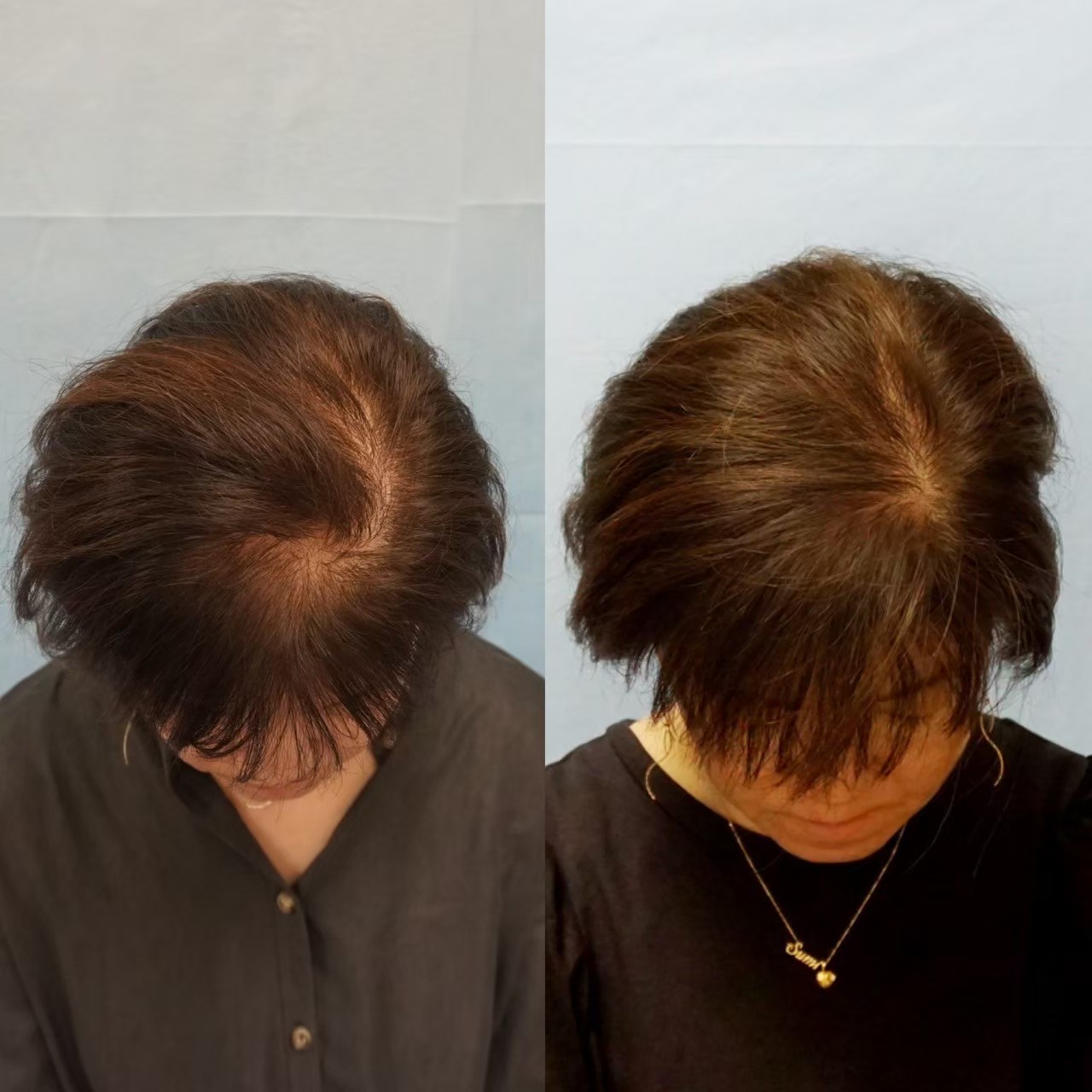
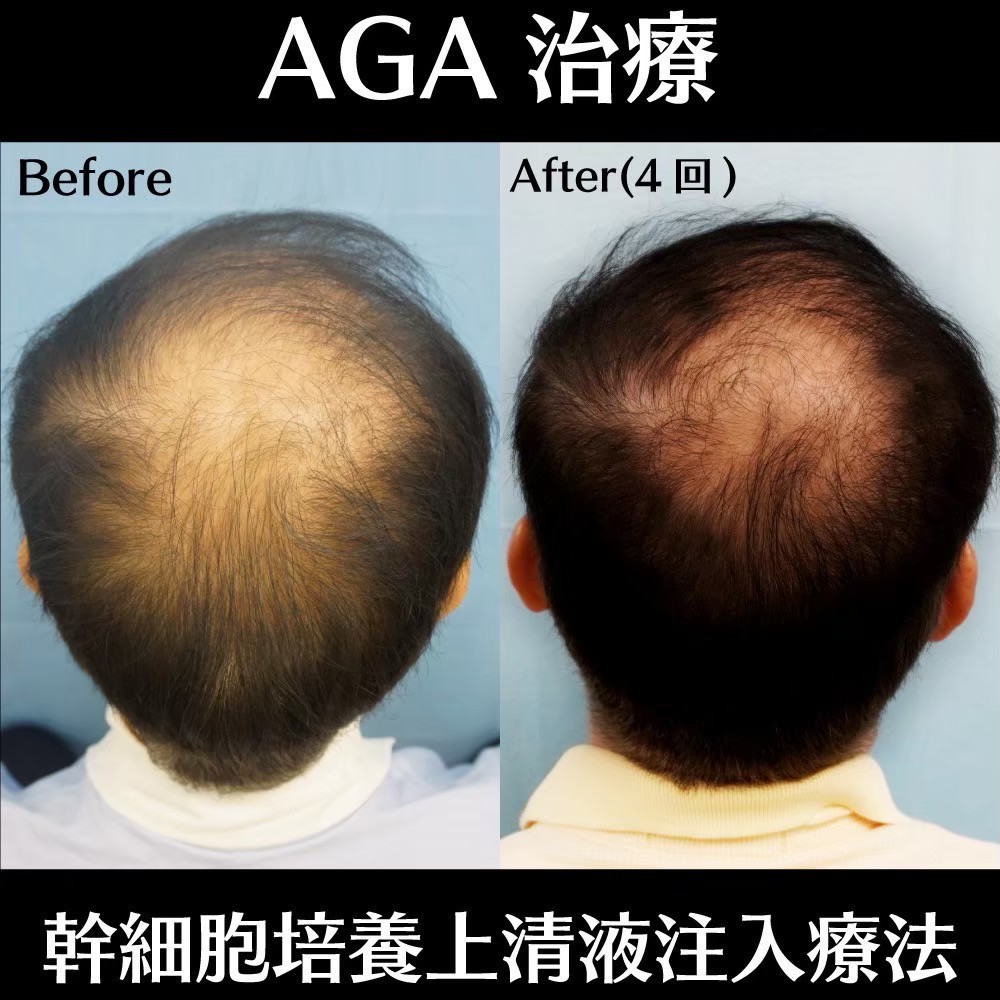
Real Patient AGA Treatment Results — Before & After
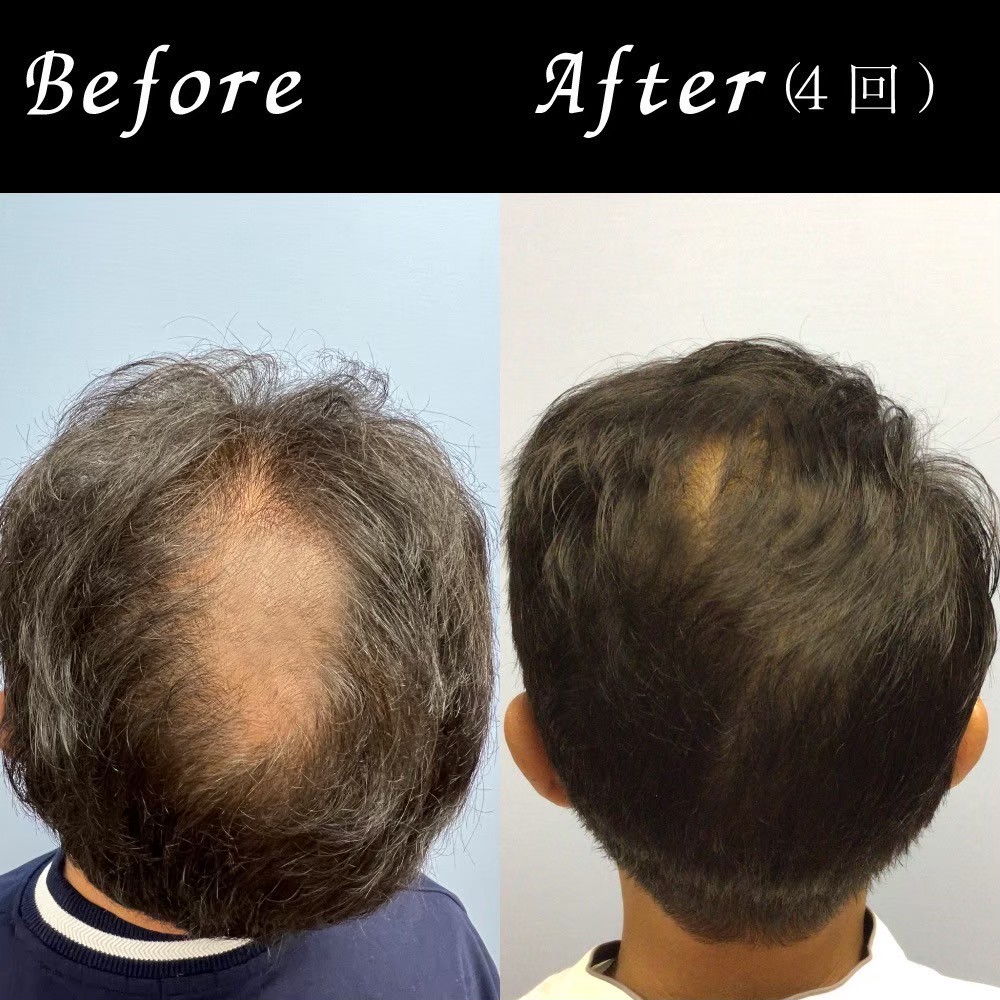
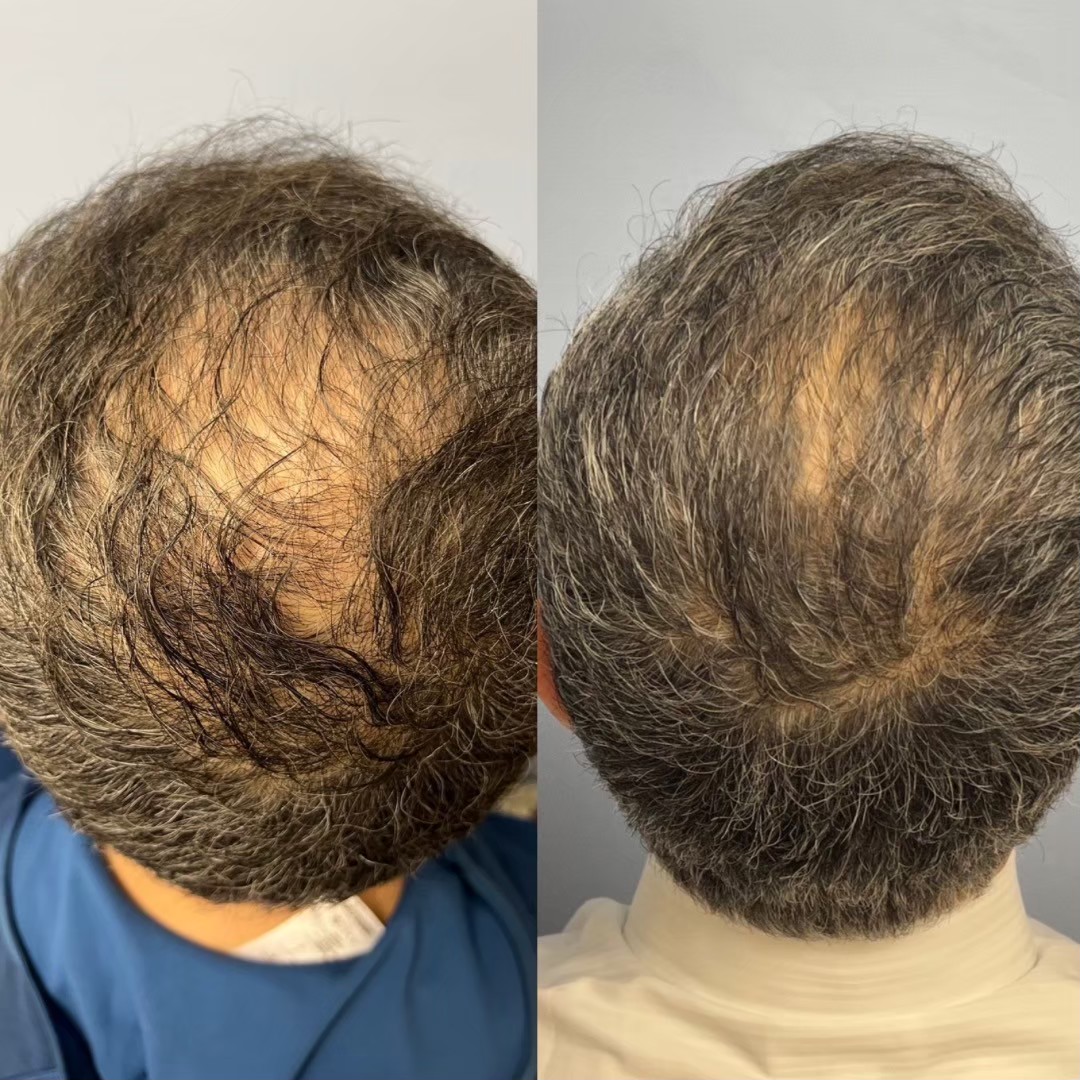
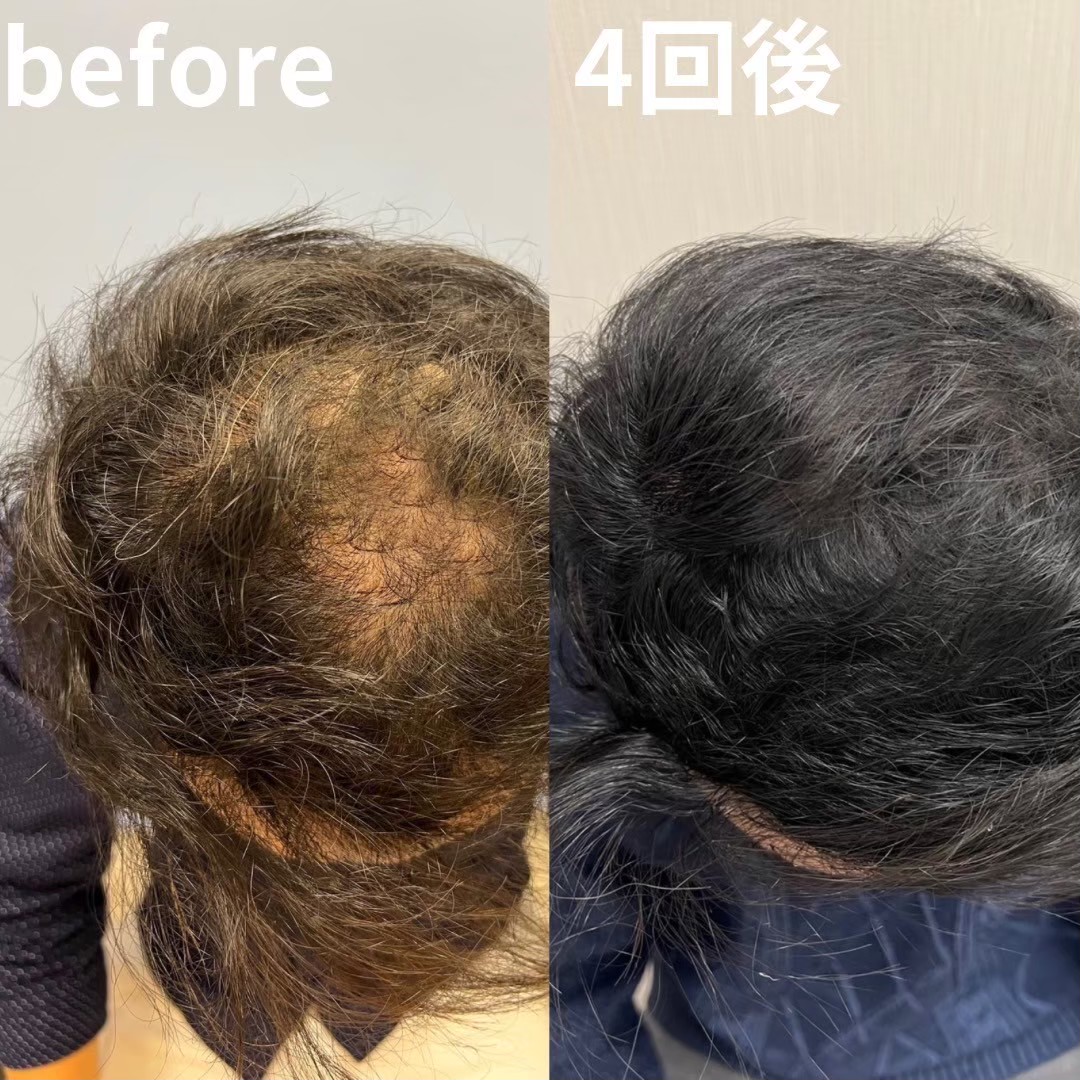
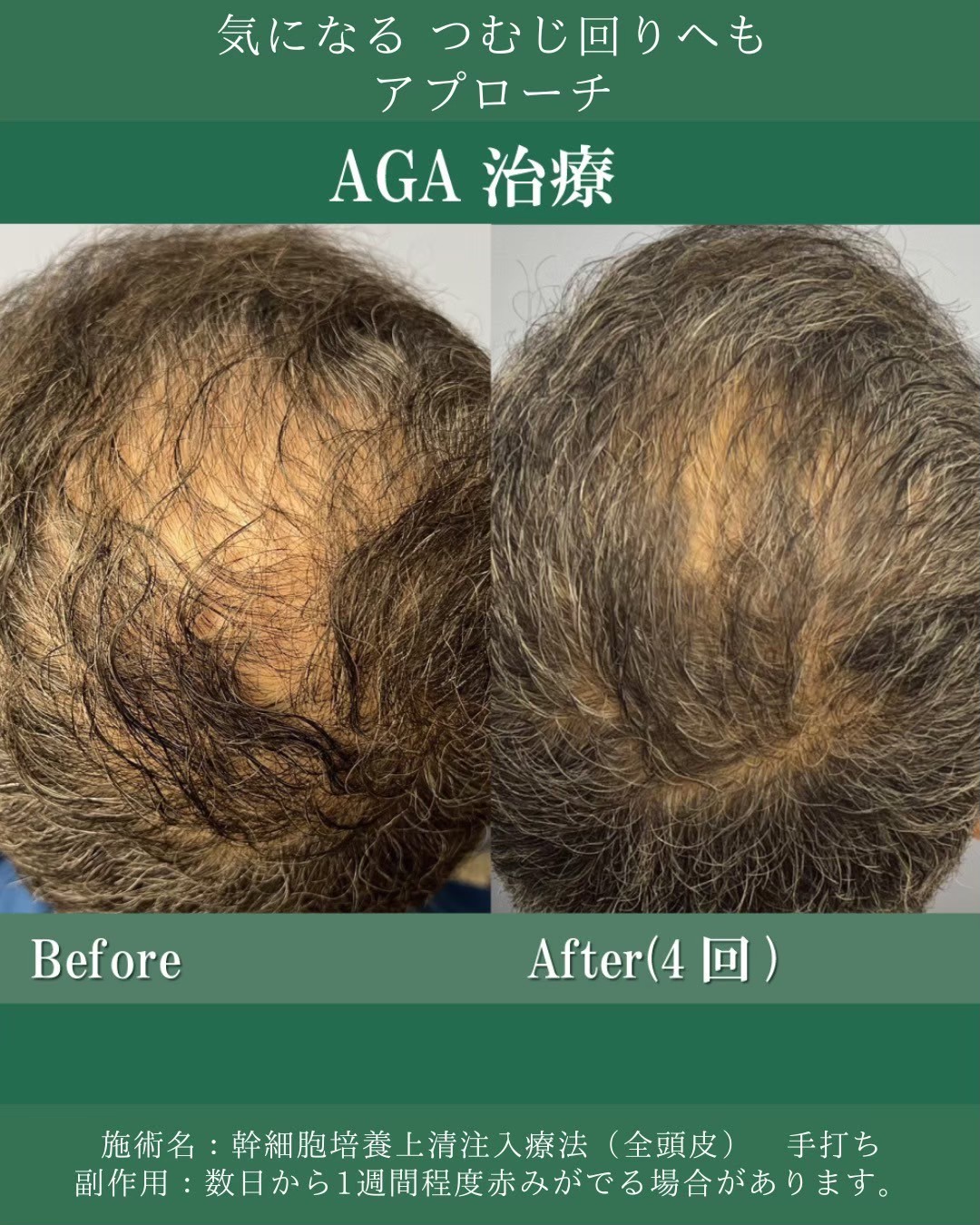
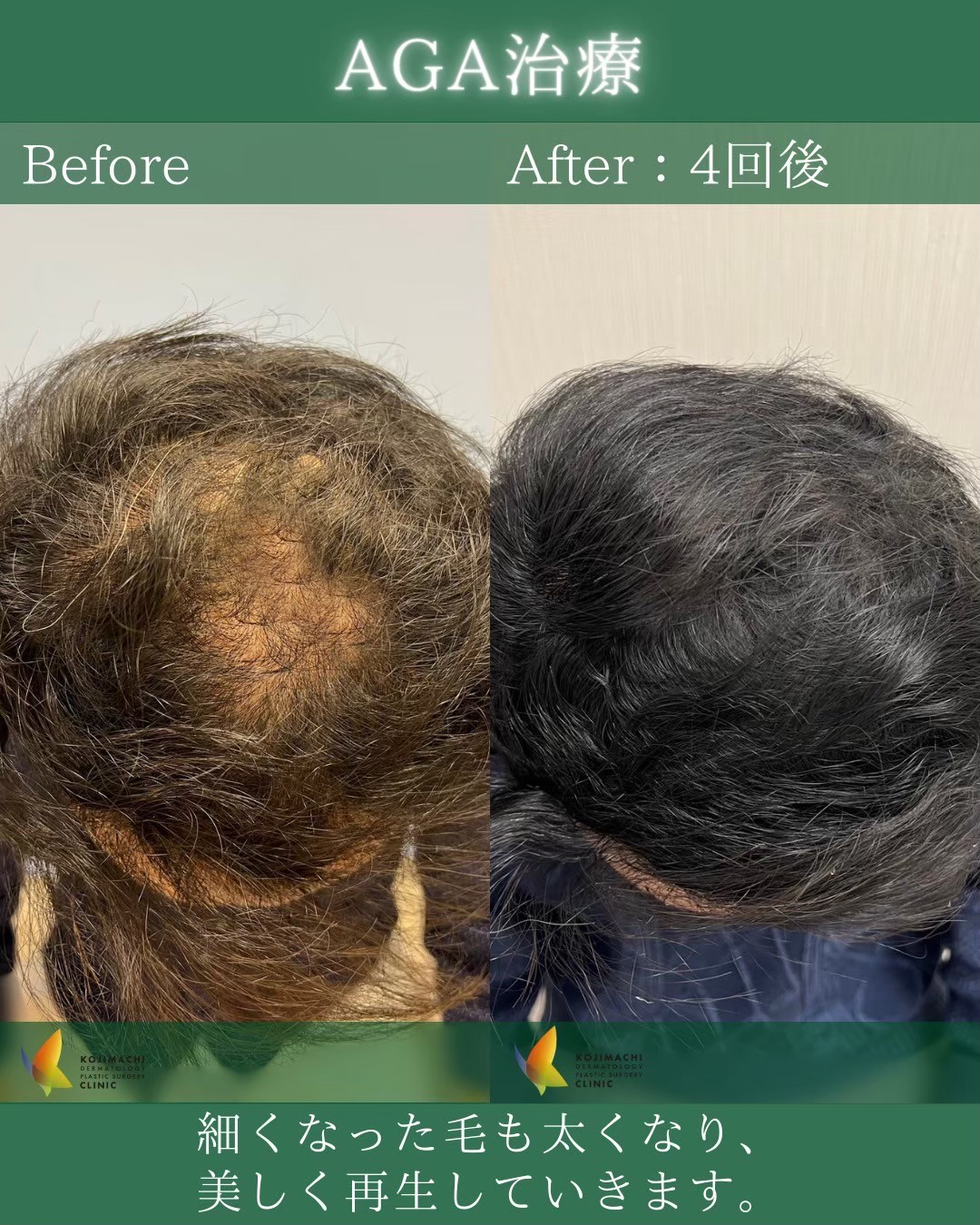
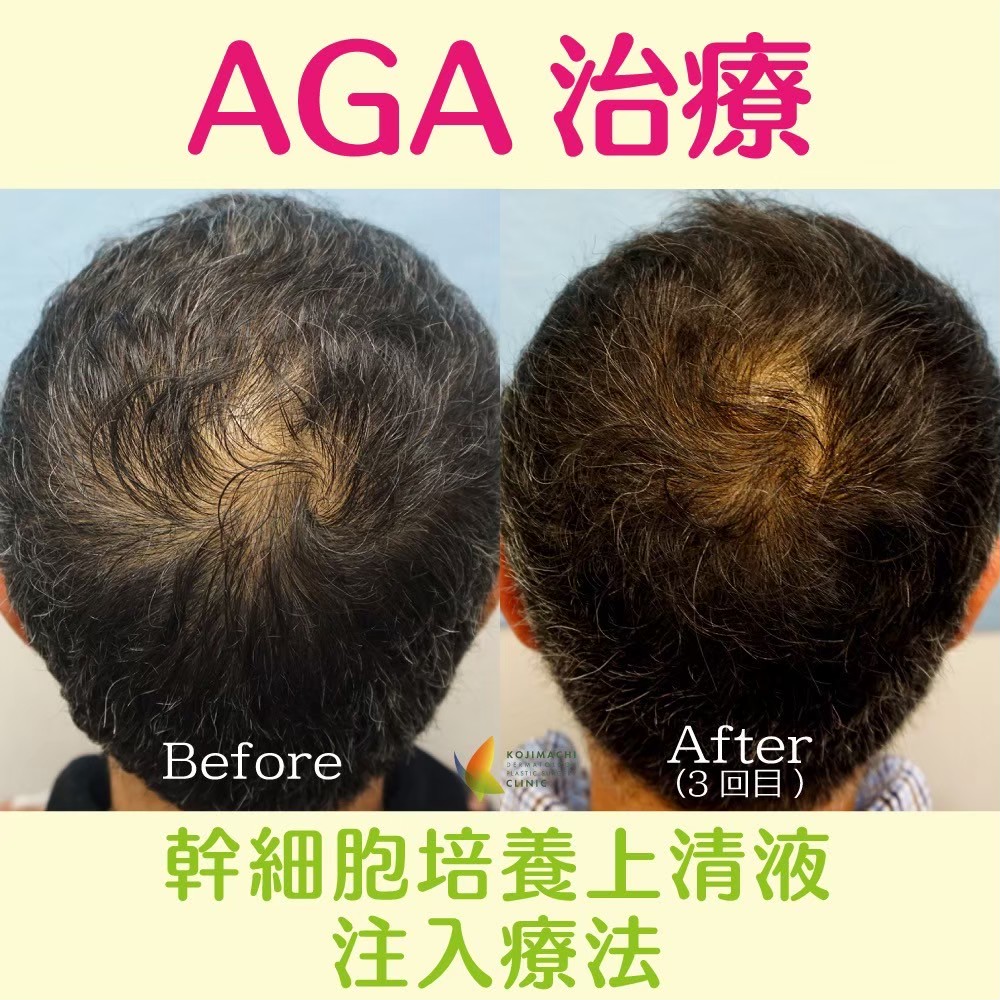
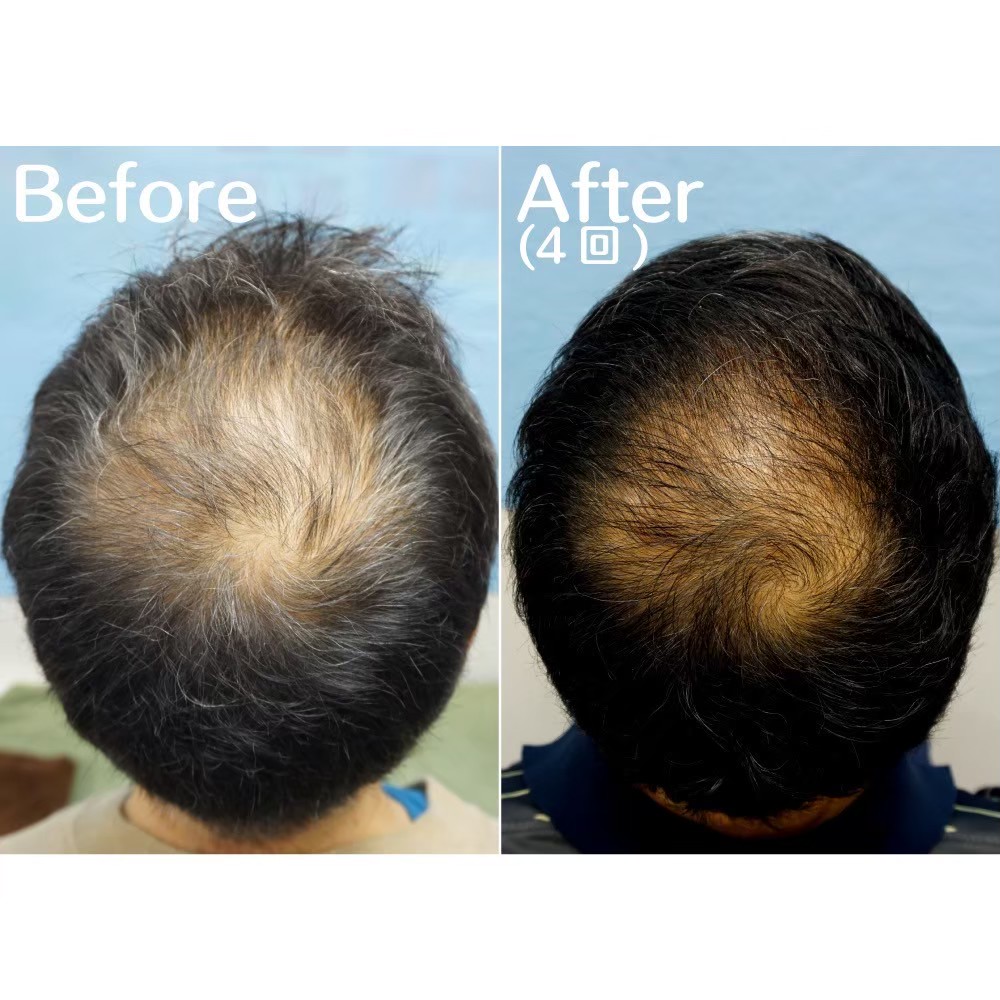
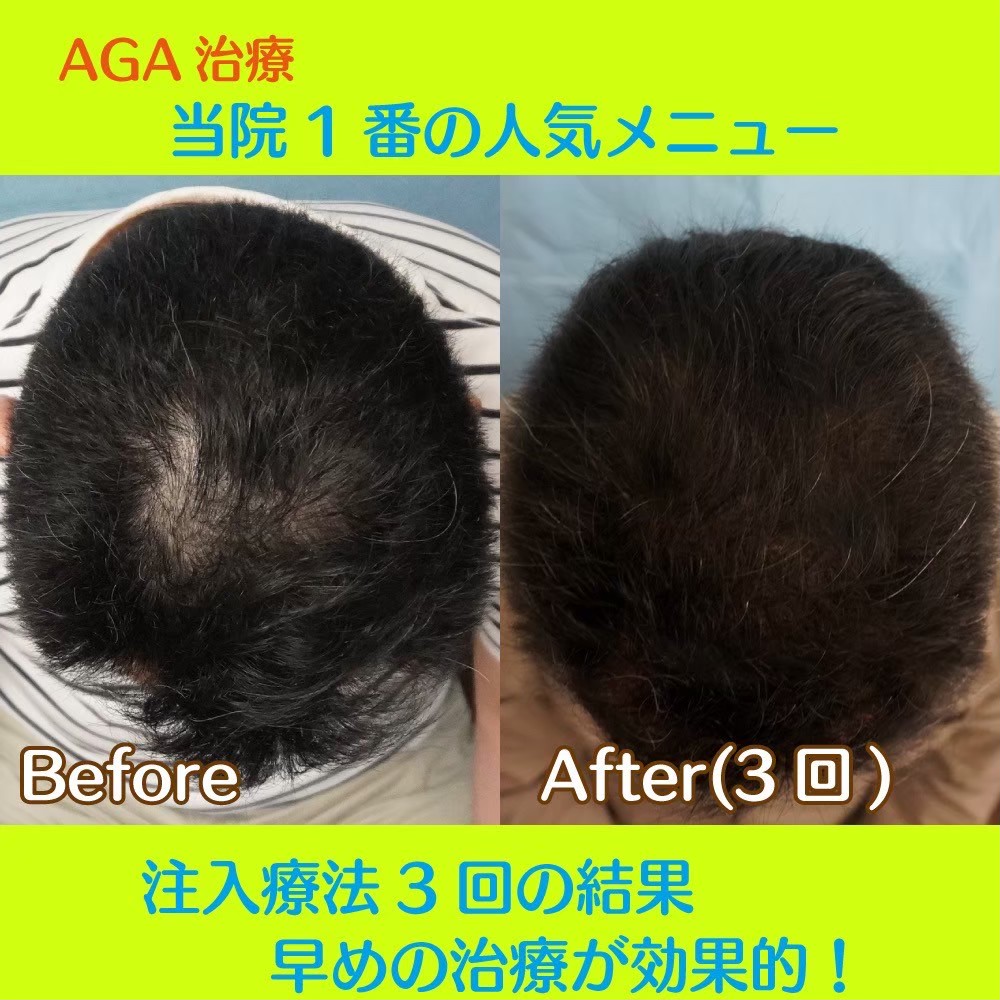
The following are actual AGA (androgenetic alopecia) treatment results from patients at Kojimachi Dermatology & Plastic Surgery Clinic and its sister clinic BIOTOPE CLINIC (Shirokanedai, Minato-ku, Tokyo), both directed by Dr. Jun Karibe. Photos are shared with patient permission. Individual results vary depending on age, hair loss stage, adherence to medication, and treatment plan. Tap each case to view the full treatment disclosure required by the Japanese Medical Advertising Guidelines.
Case 1 — Treatment disclosure
Individual results vary. The information below is provided per the Japanese Medical Advertising Guidelines.
- Treatment category
- AGA (androgenetic alopecia) treatment — oral 5-alpha-reductase inhibitors (finasteride, dutasteride), topical or oral minoxidil, and optional regenerative scalp injection therapy.
- How it works
- Finasteride / dutasteride block DHT, the hormone that drives follicular miniaturization. Minoxidil prolongs the growth (anagen) phase and increases scalp blood flow. Stem-cell culture supernatant injections stimulate follicular regeneration. Visible improvement is typically observed after 3–6 months of continuous use.
- Number of sessions / duration
- Oral medications: daily use, results assessed at 3, 6, and 12 months.
Injection courses: typically 5 sessions.
Continued use is generally required to maintain results. - Main side effects
-
Finasteride / dutasteride: sexual dysfunction (decreased libido, erectile dysfunction, ejaculatory disorder), liver dysfunction, mood changes; dutasteride may also cause gastrointestinal symptoms.
Minoxidil: scalp irritation, itching, unwanted body hair; oral minoxidil may cause palpitations, dizziness, and lower-limb edema. Initial shedding may occur in the first 1–2 months.
Injection therapy: in rare cases, swelling, warmth, pain, or allergic reactions may occur; these typically subside over time. - Precautions & contraindications
- Finasteride and dutasteride must not be used by women — especially those pregnant, potentially pregnant, or breastfeeding — even physical contact with crushed or broken tablets should be avoided. Not for use in children. Patients with hepatic dysfunction, active prostate cancer, or a history of hypersensitivity should not use these medications. Oral minoxidil requires cardiovascular assessment before starting.
- Fees (Kojimachi Clinic / BIOTOPE CLINIC, tax included)
-
Oral medications (per box):
• Finasteride, 28 tablets: ¥4,800
• Zagallo (dutasteride), 30 capsules: ¥9,000
• Minoxidil (in-clinic formulation), 28 tablets: ¥8,800
Regenerative injection therapy (stem-cell culture supernatant, whole scalp):
• Single session: ¥80,000
• 5-session course: ¥300,000
Overall fee range: ¥80,000–¥300,000 for injection therapy. Oral medications add ¥4,800–¥9,000 per box. The exact plan and fee for each patient are confirmed at consultation. - Insurance
- Not covered by Japanese public health insurance. AGA treatment is an elective self-pay treatment. Prices may change — please confirm at consultation.
Case 2 — Treatment disclosure
Individual results vary. The information below is provided per the Japanese Medical Advertising Guidelines.
- Treatment category
- AGA (androgenetic alopecia) treatment — oral 5-alpha-reductase inhibitors (finasteride, dutasteride), topical or oral minoxidil, and optional regenerative scalp injection therapy.
- How it works
- Finasteride / dutasteride block DHT, the hormone that drives follicular miniaturization. Minoxidil prolongs the growth (anagen) phase and increases scalp blood flow. Stem-cell culture supernatant injections stimulate follicular regeneration. Visible improvement is typically observed after 3–6 months of continuous use.
- Number of sessions / duration
- Oral medications: daily use, results assessed at 3, 6, and 12 months.
Injection courses: typically 5 sessions.
Continued use is generally required to maintain results. - Main side effects
-
Finasteride / dutasteride: sexual dysfunction (decreased libido, erectile dysfunction, ejaculatory disorder), liver dysfunction, mood changes; dutasteride may also cause gastrointestinal symptoms.
Minoxidil: scalp irritation, itching, unwanted body hair; oral minoxidil may cause palpitations, dizziness, and lower-limb edema. Initial shedding may occur in the first 1–2 months.
Injection therapy: in rare cases, swelling, warmth, pain, or allergic reactions may occur; these typically subside over time. - Precautions & contraindications
- Finasteride and dutasteride must not be used by women — especially those pregnant, potentially pregnant, or breastfeeding — even physical contact with crushed or broken tablets should be avoided. Not for use in children. Patients with hepatic dysfunction, active prostate cancer, or a history of hypersensitivity should not use these medications. Oral minoxidil requires cardiovascular assessment before starting.
- Fees (Kojimachi Clinic / BIOTOPE CLINIC, tax included)
-
Oral medications (per box):
• Finasteride, 28 tablets: ¥4,800
• Zagallo (dutasteride), 30 capsules: ¥9,000
• Minoxidil (in-clinic formulation), 28 tablets: ¥8,800
Regenerative injection therapy (stem-cell culture supernatant, whole scalp):
• Single session: ¥80,000
• 5-session course: ¥300,000
Overall fee range: ¥80,000–¥300,000 for injection therapy. Oral medications add ¥4,800–¥9,000 per box. The exact plan and fee for each patient are confirmed at consultation. - Insurance
- Not covered by Japanese public health insurance. AGA treatment is an elective self-pay treatment. Prices may change — please confirm at consultation.
Case 3 — Treatment disclosure
Individual results vary. The information below is provided per the Japanese Medical Advertising Guidelines.
- Treatment category
- AGA (androgenetic alopecia) treatment — oral 5-alpha-reductase inhibitors (finasteride, dutasteride), topical or oral minoxidil, and optional regenerative scalp injection therapy.
- How it works
- Finasteride / dutasteride block DHT, the hormone that drives follicular miniaturization. Minoxidil prolongs the growth (anagen) phase and increases scalp blood flow. Stem-cell culture supernatant injections stimulate follicular regeneration. Visible improvement is typically observed after 3–6 months of continuous use.
- Number of sessions / duration
- Oral medications: daily use, results assessed at 3, 6, and 12 months.
Injection courses: typically 5 sessions.
Continued use is generally required to maintain results. - Main side effects
-
Finasteride / dutasteride: sexual dysfunction (decreased libido, erectile dysfunction, ejaculatory disorder), liver dysfunction, mood changes; dutasteride may also cause gastrointestinal symptoms.
Minoxidil: scalp irritation, itching, unwanted body hair; oral minoxidil may cause palpitations, dizziness, and lower-limb edema. Initial shedding may occur in the first 1–2 months.
Injection therapy: in rare cases, swelling, warmth, pain, or allergic reactions may occur; these typically subside over time. - Precautions & contraindications
- Finasteride and dutasteride must not be used by women — especially those pregnant, potentially pregnant, or breastfeeding — even physical contact with crushed or broken tablets should be avoided. Not for use in children. Patients with hepatic dysfunction, active prostate cancer, or a history of hypersensitivity should not use these medications. Oral minoxidil requires cardiovascular assessment before starting.
- Fees (Kojimachi Clinic / BIOTOPE CLINIC, tax included)
-
Oral medications (per box):
• Finasteride, 28 tablets: ¥4,800
• Zagallo (dutasteride), 30 capsules: ¥9,000
• Minoxidil (in-clinic formulation), 28 tablets: ¥8,800
Regenerative injection therapy (stem-cell culture supernatant, whole scalp):
• Single session: ¥80,000
• 5-session course: ¥300,000
Overall fee range: ¥80,000–¥300,000 for injection therapy. Oral medications add ¥4,800–¥9,000 per box. The exact plan and fee for each patient are confirmed at consultation. - Insurance
- Not covered by Japanese public health insurance. AGA treatment is an elective self-pay treatment. Prices may change — please confirm at consultation.
Case 4 — Treatment disclosure
Individual results vary. The information below is provided per the Japanese Medical Advertising Guidelines.
- Treatment category
- AGA (androgenetic alopecia) treatment — oral 5-alpha-reductase inhibitors (finasteride, dutasteride), topical or oral minoxidil, and optional regenerative scalp injection therapy.
- How it works
- Finasteride / dutasteride block DHT, the hormone that drives follicular miniaturization. Minoxidil prolongs the growth (anagen) phase and increases scalp blood flow. Stem-cell culture supernatant injections stimulate follicular regeneration. Visible improvement is typically observed after 3–6 months of continuous use.
- Number of sessions / duration
- Oral medications: daily use, results assessed at 3, 6, and 12 months.
Injection courses: typically 5 sessions.
Continued use is generally required to maintain results. - Main side effects
-
Finasteride / dutasteride: sexual dysfunction (decreased libido, erectile dysfunction, ejaculatory disorder), liver dysfunction, mood changes; dutasteride may also cause gastrointestinal symptoms.
Minoxidil: scalp irritation, itching, unwanted body hair; oral minoxidil may cause palpitations, dizziness, and lower-limb edema. Initial shedding may occur in the first 1–2 months.
Injection therapy: in rare cases, swelling, warmth, pain, or allergic reactions may occur; these typically subside over time. - Precautions & contraindications
- Finasteride and dutasteride must not be used by women — especially those pregnant, potentially pregnant, or breastfeeding — even physical contact with crushed or broken tablets should be avoided. Not for use in children. Patients with hepatic dysfunction, active prostate cancer, or a history of hypersensitivity should not use these medications. Oral minoxidil requires cardiovascular assessment before starting.
- Fees (Kojimachi Clinic / BIOTOPE CLINIC, tax included)
-
Oral medications (per box):
• Finasteride, 28 tablets: ¥4,800
• Zagallo (dutasteride), 30 capsules: ¥9,000
• Minoxidil (in-clinic formulation), 28 tablets: ¥8,800
Regenerative injection therapy (stem-cell culture supernatant, whole scalp):
• Single session: ¥80,000
• 5-session course: ¥300,000
Overall fee range: ¥80,000–¥300,000 for injection therapy. Oral medications add ¥4,800–¥9,000 per box. The exact plan and fee for each patient are confirmed at consultation. - Insurance
- Not covered by Japanese public health insurance. AGA treatment is an elective self-pay treatment. Prices may change — please confirm at consultation.
Case 5 — Treatment disclosure
Individual results vary. The information below is provided per the Japanese Medical Advertising Guidelines.
- Treatment category
- AGA (androgenetic alopecia) treatment — oral 5-alpha-reductase inhibitors (finasteride, dutasteride), topical or oral minoxidil, and optional regenerative scalp injection therapy.
- How it works
- Finasteride / dutasteride block DHT, the hormone that drives follicular miniaturization. Minoxidil prolongs the growth (anagen) phase and increases scalp blood flow. Stem-cell culture supernatant injections stimulate follicular regeneration. Visible improvement is typically observed after 3–6 months of continuous use.
- Number of sessions / duration
- Oral medications: daily use, results assessed at 3, 6, and 12 months.
Injection courses: typically 5 sessions.
Continued use is generally required to maintain results. - Main side effects
-
Finasteride / dutasteride: sexual dysfunction (decreased libido, erectile dysfunction, ejaculatory disorder), liver dysfunction, mood changes; dutasteride may also cause gastrointestinal symptoms.
Minoxidil: scalp irritation, itching, unwanted body hair; oral minoxidil may cause palpitations, dizziness, and lower-limb edema. Initial shedding may occur in the first 1–2 months.
Injection therapy: in rare cases, swelling, warmth, pain, or allergic reactions may occur; these typically subside over time. - Precautions & contraindications
- Finasteride and dutasteride must not be used by women — especially those pregnant, potentially pregnant, or breastfeeding — even physical contact with crushed or broken tablets should be avoided. Not for use in children. Patients with hepatic dysfunction, active prostate cancer, or a history of hypersensitivity should not use these medications. Oral minoxidil requires cardiovascular assessment before starting.
- Fees (Kojimachi Clinic / BIOTOPE CLINIC, tax included)
-
Oral medications (per box):
• Finasteride, 28 tablets: ¥4,800
• Zagallo (dutasteride), 30 capsules: ¥9,000
• Minoxidil (in-clinic formulation), 28 tablets: ¥8,800
Regenerative injection therapy (stem-cell culture supernatant, whole scalp):
• Single session: ¥80,000
• 5-session course: ¥300,000
Overall fee range: ¥80,000–¥300,000 for injection therapy. Oral medications add ¥4,800–¥9,000 per box. The exact plan and fee for each patient are confirmed at consultation. - Insurance
- Not covered by Japanese public health insurance. AGA treatment is an elective self-pay treatment. Prices may change — please confirm at consultation.
Case 6 — Treatment disclosure
Individual results vary. The information below is provided per the Japanese Medical Advertising Guidelines.
- Treatment category
- AGA (androgenetic alopecia) treatment — oral 5-alpha-reductase inhibitors (finasteride, dutasteride), topical or oral minoxidil, and optional regenerative scalp injection therapy.
- How it works
- Finasteride / dutasteride block DHT, the hormone that drives follicular miniaturization. Minoxidil prolongs the growth (anagen) phase and increases scalp blood flow. Stem-cell culture supernatant injections stimulate follicular regeneration. Visible improvement is typically observed after 3–6 months of continuous use.
- Number of sessions / duration
- Oral medications: daily use, results assessed at 3, 6, and 12 months.
Injection courses: typically 5 sessions.
Continued use is generally required to maintain results. - Main side effects
-
Finasteride / dutasteride: sexual dysfunction (decreased libido, erectile dysfunction, ejaculatory disorder), liver dysfunction, mood changes; dutasteride may also cause gastrointestinal symptoms.
Minoxidil: scalp irritation, itching, unwanted body hair; oral minoxidil may cause palpitations, dizziness, and lower-limb edema. Initial shedding may occur in the first 1–2 months.
Injection therapy: in rare cases, swelling, warmth, pain, or allergic reactions may occur; these typically subside over time. - Precautions & contraindications
- Finasteride and dutasteride must not be used by women — especially those pregnant, potentially pregnant, or breastfeeding — even physical contact with crushed or broken tablets should be avoided. Not for use in children. Patients with hepatic dysfunction, active prostate cancer, or a history of hypersensitivity should not use these medications. Oral minoxidil requires cardiovascular assessment before starting.
- Fees (Kojimachi Clinic / BIOTOPE CLINIC, tax included)
-
Oral medications (per box):
• Finasteride, 28 tablets: ¥4,800
• Zagallo (dutasteride), 30 capsules: ¥9,000
• Minoxidil (in-clinic formulation), 28 tablets: ¥8,800
Regenerative injection therapy (stem-cell culture supernatant, whole scalp):
• Single session: ¥80,000
• 5-session course: ¥300,000
Overall fee range: ¥80,000–¥300,000 for injection therapy. Oral medications add ¥4,800–¥9,000 per box. The exact plan and fee for each patient are confirmed at consultation. - Insurance
- Not covered by Japanese public health insurance. AGA treatment is an elective self-pay treatment. Prices may change — please confirm at consultation.
Case 7 — Treatment disclosure
Individual results vary. The information below is provided per the Japanese Medical Advertising Guidelines.
- Treatment category
- AGA (androgenetic alopecia) treatment — oral 5-alpha-reductase inhibitors (finasteride, dutasteride), topical or oral minoxidil, and optional regenerative scalp injection therapy.
- How it works
- Finasteride / dutasteride block DHT, the hormone that drives follicular miniaturization. Minoxidil prolongs the growth (anagen) phase and increases scalp blood flow. Stem-cell culture supernatant injections stimulate follicular regeneration. Visible improvement is typically observed after 3–6 months of continuous use.
- Number of sessions / duration
- Oral medications: daily use, results assessed at 3, 6, and 12 months.
Injection courses: typically 5 sessions.
Continued use is generally required to maintain results. - Main side effects
-
Finasteride / dutasteride: sexual dysfunction (decreased libido, erectile dysfunction, ejaculatory disorder), liver dysfunction, mood changes; dutasteride may also cause gastrointestinal symptoms.
Minoxidil: scalp irritation, itching, unwanted body hair; oral minoxidil may cause palpitations, dizziness, and lower-limb edema. Initial shedding may occur in the first 1–2 months.
Injection therapy: in rare cases, swelling, warmth, pain, or allergic reactions may occur; these typically subside over time. - Precautions & contraindications
- Finasteride and dutasteride must not be used by women — especially those pregnant, potentially pregnant, or breastfeeding — even physical contact with crushed or broken tablets should be avoided. Not for use in children. Patients with hepatic dysfunction, active prostate cancer, or a history of hypersensitivity should not use these medications. Oral minoxidil requires cardiovascular assessment before starting.
- Fees (Kojimachi Clinic / BIOTOPE CLINIC, tax included)
-
Oral medications (per box):
• Finasteride, 28 tablets: ¥4,800
• Zagallo (dutasteride), 30 capsules: ¥9,000
• Minoxidil (in-clinic formulation), 28 tablets: ¥8,800
Regenerative injection therapy (stem-cell culture supernatant, whole scalp):
• Single session: ¥80,000
• 5-session course: ¥300,000
Overall fee range: ¥80,000–¥300,000 for injection therapy. Oral medications add ¥4,800–¥9,000 per box. The exact plan and fee for each patient are confirmed at consultation. - Insurance
- Not covered by Japanese public health insurance. AGA treatment is an elective self-pay treatment. Prices may change — please confirm at consultation.
Case 8 — Treatment disclosure
Individual results vary. The information below is provided per the Japanese Medical Advertising Guidelines.
- Treatment category
- AGA (androgenetic alopecia) treatment — oral 5-alpha-reductase inhibitors (finasteride, dutasteride), topical or oral minoxidil, and optional regenerative scalp injection therapy.
- How it works
- Finasteride / dutasteride block DHT, the hormone that drives follicular miniaturization. Minoxidil prolongs the growth (anagen) phase and increases scalp blood flow. Stem-cell culture supernatant injections stimulate follicular regeneration. Visible improvement is typically observed after 3–6 months of continuous use.
- Number of sessions / duration
- Oral medications: daily use, results assessed at 3, 6, and 12 months.
Injection courses: typically 5 sessions.
Continued use is generally required to maintain results. - Main side effects
-
Finasteride / dutasteride: sexual dysfunction (decreased libido, erectile dysfunction, ejaculatory disorder), liver dysfunction, mood changes; dutasteride may also cause gastrointestinal symptoms.
Minoxidil: scalp irritation, itching, unwanted body hair; oral minoxidil may cause palpitations, dizziness, and lower-limb edema. Initial shedding may occur in the first 1–2 months.
Injection therapy: in rare cases, swelling, warmth, pain, or allergic reactions may occur; these typically subside over time. - Precautions & contraindications
- Finasteride and dutasteride must not be used by women — especially those pregnant, potentially pregnant, or breastfeeding — even physical contact with crushed or broken tablets should be avoided. Not for use in children. Patients with hepatic dysfunction, active prostate cancer, or a history of hypersensitivity should not use these medications. Oral minoxidil requires cardiovascular assessment before starting.
- Fees (Kojimachi Clinic / BIOTOPE CLINIC, tax included)
-
Oral medications (per box):
• Finasteride, 28 tablets: ¥4,800
• Zagallo (dutasteride), 30 capsules: ¥9,000
• Minoxidil (in-clinic formulation), 28 tablets: ¥8,800
Regenerative injection therapy (stem-cell culture supernatant, whole scalp):
• Single session: ¥80,000
• 5-session course: ¥300,000
Overall fee range: ¥80,000–¥300,000 for injection therapy. Oral medications add ¥4,800–¥9,000 per box. The exact plan and fee for each patient are confirmed at consultation. - Insurance
- Not covered by Japanese public health insurance. AGA treatment is an elective self-pay treatment. Prices may change — please confirm at consultation.
Case 9 — Treatment disclosure
Individual results vary. The information below is provided per the Japanese Medical Advertising Guidelines.
- Treatment category
- AGA (androgenetic alopecia) treatment — oral 5-alpha-reductase inhibitors (finasteride, dutasteride), topical or oral minoxidil, and optional regenerative scalp injection therapy.
- How it works
- Finasteride / dutasteride block DHT, the hormone that drives follicular miniaturization. Minoxidil prolongs the growth (anagen) phase and increases scalp blood flow. Stem-cell culture supernatant injections stimulate follicular regeneration. Visible improvement is typically observed after 3–6 months of continuous use.
- Number of sessions / duration
- Oral medications: daily use, results assessed at 3, 6, and 12 months.
Injection courses: typically 5 sessions.
Continued use is generally required to maintain results. - Main side effects
-
Finasteride / dutasteride: sexual dysfunction (decreased libido, erectile dysfunction, ejaculatory disorder), liver dysfunction, mood changes; dutasteride may also cause gastrointestinal symptoms.
Minoxidil: scalp irritation, itching, unwanted body hair; oral minoxidil may cause palpitations, dizziness, and lower-limb edema. Initial shedding may occur in the first 1–2 months.
Injection therapy: in rare cases, swelling, warmth, pain, or allergic reactions may occur; these typically subside over time. - Precautions & contraindications
- Finasteride and dutasteride must not be used by women — especially those pregnant, potentially pregnant, or breastfeeding — even physical contact with crushed or broken tablets should be avoided. Not for use in children. Patients with hepatic dysfunction, active prostate cancer, or a history of hypersensitivity should not use these medications. Oral minoxidil requires cardiovascular assessment before starting.
- Fees (Kojimachi Clinic / BIOTOPE CLINIC, tax included)
-
Oral medications (per box):
• Finasteride, 28 tablets: ¥4,800
• Zagallo (dutasteride), 30 capsules: ¥9,000
• Minoxidil (in-clinic formulation), 28 tablets: ¥8,800
Regenerative injection therapy (stem-cell culture supernatant, whole scalp):
• Single session: ¥80,000
• 5-session course: ¥300,000
Overall fee range: ¥80,000–¥300,000 for injection therapy. Oral medications add ¥4,800–¥9,000 per box. The exact plan and fee for each patient are confirmed at consultation. - Insurance
- Not covered by Japanese public health insurance. AGA treatment is an elective self-pay treatment. Prices may change — please confirm at consultation.
Case 10 — Treatment disclosure
Individual results vary. The information below is provided per the Japanese Medical Advertising Guidelines.
- Treatment category
- AGA (androgenetic alopecia) treatment — oral 5-alpha-reductase inhibitors (finasteride, dutasteride), topical or oral minoxidil, and optional regenerative scalp injection therapy.
- How it works
- Finasteride / dutasteride block DHT, the hormone that drives follicular miniaturization. Minoxidil prolongs the growth (anagen) phase and increases scalp blood flow. Stem-cell culture supernatant injections stimulate follicular regeneration. Visible improvement is typically observed after 3–6 months of continuous use.
- Number of sessions / duration
- Oral medications: daily use, results assessed at 3, 6, and 12 months.
Injection courses: typically 5 sessions.
Continued use is generally required to maintain results. - Main side effects
-
Finasteride / dutasteride: sexual dysfunction (decreased libido, erectile dysfunction, ejaculatory disorder), liver dysfunction, mood changes; dutasteride may also cause gastrointestinal symptoms.
Minoxidil: scalp irritation, itching, unwanted body hair; oral minoxidil may cause palpitations, dizziness, and lower-limb edema. Initial shedding may occur in the first 1–2 months.
Injection therapy: in rare cases, swelling, warmth, pain, or allergic reactions may occur; these typically subside over time. - Precautions & contraindications
- Finasteride and dutasteride must not be used by women — especially those pregnant, potentially pregnant, or breastfeeding — even physical contact with crushed or broken tablets should be avoided. Not for use in children. Patients with hepatic dysfunction, active prostate cancer, or a history of hypersensitivity should not use these medications. Oral minoxidil requires cardiovascular assessment before starting.
- Fees (Kojimachi Clinic / BIOTOPE CLINIC, tax included)
-
Oral medications (per box):
• Finasteride, 28 tablets: ¥4,800
• Zagallo (dutasteride), 30 capsules: ¥9,000
• Minoxidil (in-clinic formulation), 28 tablets: ¥8,800
Regenerative injection therapy (stem-cell culture supernatant, whole scalp):
• Single session: ¥80,000
• 5-session course: ¥300,000
Overall fee range: ¥80,000–¥300,000 for injection therapy. Oral medications add ¥4,800–¥9,000 per box. The exact plan and fee for each patient are confirmed at consultation. - Insurance
- Not covered by Japanese public health insurance. AGA treatment is an elective self-pay treatment. Prices may change — please confirm at consultation.
Case 11 — Treatment disclosure
Individual results vary. The information below is provided per the Japanese Medical Advertising Guidelines.
- Treatment category
- AGA (androgenetic alopecia) treatment — oral 5-alpha-reductase inhibitors (finasteride, dutasteride), topical or oral minoxidil, and optional regenerative scalp injection therapy.
- How it works
- Finasteride / dutasteride block DHT, the hormone that drives follicular miniaturization. Minoxidil prolongs the growth (anagen) phase and increases scalp blood flow. Stem-cell culture supernatant injections stimulate follicular regeneration. Visible improvement is typically observed after 3–6 months of continuous use.
- Number of sessions / duration
- Oral medications: daily use, results assessed at 3, 6, and 12 months.
Injection courses: typically 5 sessions.
Continued use is generally required to maintain results. - Main side effects
-
Finasteride / dutasteride: sexual dysfunction (decreased libido, erectile dysfunction, ejaculatory disorder), liver dysfunction, mood changes; dutasteride may also cause gastrointestinal symptoms.
Minoxidil: scalp irritation, itching, unwanted body hair; oral minoxidil may cause palpitations, dizziness, and lower-limb edema. Initial shedding may occur in the first 1–2 months.
Injection therapy: in rare cases, swelling, warmth, pain, or allergic reactions may occur; these typically subside over time. - Precautions & contraindications
- Finasteride and dutasteride must not be used by women — especially those pregnant, potentially pregnant, or breastfeeding — even physical contact with crushed or broken tablets should be avoided. Not for use in children. Patients with hepatic dysfunction, active prostate cancer, or a history of hypersensitivity should not use these medications. Oral minoxidil requires cardiovascular assessment before starting.
- Fees (Kojimachi Clinic / BIOTOPE CLINIC, tax included)
-
Oral medications (per box):
• Finasteride, 28 tablets: ¥4,800
• Zagallo (dutasteride), 30 capsules: ¥9,000
• Minoxidil (in-clinic formulation), 28 tablets: ¥8,800
Regenerative injection therapy (stem-cell culture supernatant, whole scalp):
• Single session: ¥80,000
• 5-session course: ¥300,000
Overall fee range: ¥80,000–¥300,000 for injection therapy. Oral medications add ¥4,800–¥9,000 per box. The exact plan and fee for each patient are confirmed at consultation. - Insurance
- Not covered by Japanese public health insurance. AGA treatment is an elective self-pay treatment. Prices may change — please confirm at consultation.
Case 12 — Treatment disclosure
Individual results vary. The information below is provided per the Japanese Medical Advertising Guidelines.
- Treatment category
- AGA (androgenetic alopecia) treatment — oral 5-alpha-reductase inhibitors (finasteride, dutasteride), topical or oral minoxidil, and optional regenerative scalp injection therapy.
- How it works
- Finasteride / dutasteride block DHT, the hormone that drives follicular miniaturization. Minoxidil prolongs the growth (anagen) phase and increases scalp blood flow. Stem-cell culture supernatant injections stimulate follicular regeneration. Visible improvement is typically observed after 3–6 months of continuous use.
- Number of sessions / duration
- Oral medications: daily use, results assessed at 3, 6, and 12 months.
Injection courses: typically 5 sessions.
Continued use is generally required to maintain results. - Main side effects
-
Finasteride / dutasteride: sexual dysfunction (decreased libido, erectile dysfunction, ejaculatory disorder), liver dysfunction, mood changes; dutasteride may also cause gastrointestinal symptoms.
Minoxidil: scalp irritation, itching, unwanted body hair; oral minoxidil may cause palpitations, dizziness, and lower-limb edema. Initial shedding may occur in the first 1–2 months.
Injection therapy: in rare cases, swelling, warmth, pain, or allergic reactions may occur; these typically subside over time. - Precautions & contraindications
- Finasteride and dutasteride must not be used by women — especially those pregnant, potentially pregnant, or breastfeeding — even physical contact with crushed or broken tablets should be avoided. Not for use in children. Patients with hepatic dysfunction, active prostate cancer, or a history of hypersensitivity should not use these medications. Oral minoxidil requires cardiovascular assessment before starting.
- Fees (Kojimachi Clinic / BIOTOPE CLINIC, tax included)
-
Oral medications (per box):
• Finasteride, 28 tablets: ¥4,800
• Zagallo (dutasteride), 30 capsules: ¥9,000
• Minoxidil (in-clinic formulation), 28 tablets: ¥8,800
Regenerative injection therapy (stem-cell culture supernatant, whole scalp):
• Single session: ¥80,000
• 5-session course: ¥300,000
Overall fee range: ¥80,000–¥300,000 for injection therapy. Oral medications add ¥4,800–¥9,000 per box. The exact plan and fee for each patient are confirmed at consultation. - Insurance
- Not covered by Japanese public health insurance. AGA treatment is an elective self-pay treatment. Prices may change — please confirm at consultation.
Case 13 — Treatment disclosure
Individual results vary. The information below is provided per the Japanese Medical Advertising Guidelines.
- Treatment category
- AGA (androgenetic alopecia) treatment — oral 5-alpha-reductase inhibitors (finasteride, dutasteride), topical or oral minoxidil, and optional regenerative scalp injection therapy.
- How it works
- Finasteride / dutasteride block DHT, the hormone that drives follicular miniaturization. Minoxidil prolongs the growth (anagen) phase and increases scalp blood flow. Stem-cell culture supernatant injections stimulate follicular regeneration. Visible improvement is typically observed after 3–6 months of continuous use.
- Number of sessions / duration
- Oral medications: daily use, results assessed at 3, 6, and 12 months.
Injection courses: typically 5 sessions.
Continued use is generally required to maintain results. - Main side effects
-
Finasteride / dutasteride: sexual dysfunction (decreased libido, erectile dysfunction, ejaculatory disorder), liver dysfunction, mood changes; dutasteride may also cause gastrointestinal symptoms.
Minoxidil: scalp irritation, itching, unwanted body hair; oral minoxidil may cause palpitations, dizziness, and lower-limb edema. Initial shedding may occur in the first 1–2 months.
Injection therapy: in rare cases, swelling, warmth, pain, or allergic reactions may occur; these typically subside over time. - Precautions & contraindications
- Finasteride and dutasteride must not be used by women — especially those pregnant, potentially pregnant, or breastfeeding — even physical contact with crushed or broken tablets should be avoided. Not for use in children. Patients with hepatic dysfunction, active prostate cancer, or a history of hypersensitivity should not use these medications. Oral minoxidil requires cardiovascular assessment before starting.
- Fees (Kojimachi Clinic / BIOTOPE CLINIC, tax included)
-
Oral medications (per box):
• Finasteride, 28 tablets: ¥4,800
• Zagallo (dutasteride), 30 capsules: ¥9,000
• Minoxidil (in-clinic formulation), 28 tablets: ¥8,800
Regenerative injection therapy (stem-cell culture supernatant, whole scalp):
• Single session: ¥80,000
• 5-session course: ¥300,000
Overall fee range: ¥80,000–¥300,000 for injection therapy. Oral medications add ¥4,800–¥9,000 per box. The exact plan and fee for each patient are confirmed at consultation. - Insurance
- Not covered by Japanese public health insurance. AGA treatment is an elective self-pay treatment. Prices may change — please confirm at consultation.
Case 14 — Treatment disclosure
Individual results vary. The information below is provided per the Japanese Medical Advertising Guidelines.
- Treatment category
- AGA (androgenetic alopecia) treatment — oral 5-alpha-reductase inhibitors (finasteride, dutasteride), topical or oral minoxidil, and optional regenerative scalp injection therapy.
- How it works
- Finasteride / dutasteride block DHT, the hormone that drives follicular miniaturization. Minoxidil prolongs the growth (anagen) phase and increases scalp blood flow. Stem-cell culture supernatant injections stimulate follicular regeneration. Visible improvement is typically observed after 3–6 months of continuous use.
- Number of sessions / duration
- Oral medications: daily use, results assessed at 3, 6, and 12 months.
Injection courses: typically 5 sessions.
Continued use is generally required to maintain results. - Main side effects
-
Finasteride / dutasteride: sexual dysfunction (decreased libido, erectile dysfunction, ejaculatory disorder), liver dysfunction, mood changes; dutasteride may also cause gastrointestinal symptoms.
Minoxidil: scalp irritation, itching, unwanted body hair; oral minoxidil may cause palpitations, dizziness, and lower-limb edema. Initial shedding may occur in the first 1–2 months.
Injection therapy: in rare cases, swelling, warmth, pain, or allergic reactions may occur; these typically subside over time. - Precautions & contraindications
- Finasteride and dutasteride must not be used by women — especially those pregnant, potentially pregnant, or breastfeeding — even physical contact with crushed or broken tablets should be avoided. Not for use in children. Patients with hepatic dysfunction, active prostate cancer, or a history of hypersensitivity should not use these medications. Oral minoxidil requires cardiovascular assessment before starting.
- Fees (Kojimachi Clinic / BIOTOPE CLINIC, tax included)
-
Oral medications (per box):
• Finasteride, 28 tablets: ¥4,800
• Zagallo (dutasteride), 30 capsules: ¥9,000
• Minoxidil (in-clinic formulation), 28 tablets: ¥8,800
Regenerative injection therapy (stem-cell culture supernatant, whole scalp):
• Single session: ¥80,000
• 5-session course: ¥300,000
Overall fee range: ¥80,000–¥300,000 for injection therapy. Oral medications add ¥4,800–¥9,000 per box. The exact plan and fee for each patient are confirmed at consultation. - Insurance
- Not covered by Japanese public health insurance. AGA treatment is an elective self-pay treatment. Prices may change — please confirm at consultation.
Case 15 — Treatment disclosure
Individual results vary. The information below is provided per the Japanese Medical Advertising Guidelines.
- Treatment category
- AGA (androgenetic alopecia) treatment — oral 5-alpha-reductase inhibitors (finasteride, dutasteride), topical or oral minoxidil, and optional regenerative scalp injection therapy.
- How it works
- Finasteride / dutasteride block DHT, the hormone that drives follicular miniaturization. Minoxidil prolongs the growth (anagen) phase and increases scalp blood flow. Stem-cell culture supernatant injections stimulate follicular regeneration. Visible improvement is typically observed after 3–6 months of continuous use.
- Number of sessions / duration
- Oral medications: daily use, results assessed at 3, 6, and 12 months.
Injection courses: typically 5 sessions.
Continued use is generally required to maintain results. - Main side effects
-
Finasteride / dutasteride: sexual dysfunction (decreased libido, erectile dysfunction, ejaculatory disorder), liver dysfunction, mood changes; dutasteride may also cause gastrointestinal symptoms.
Minoxidil: scalp irritation, itching, unwanted body hair; oral minoxidil may cause palpitations, dizziness, and lower-limb edema. Initial shedding may occur in the first 1–2 months.
Injection therapy: in rare cases, swelling, warmth, pain, or allergic reactions may occur; these typically subside over time. - Precautions & contraindications
- Finasteride and dutasteride must not be used by women — especially those pregnant, potentially pregnant, or breastfeeding — even physical contact with crushed or broken tablets should be avoided. Not for use in children. Patients with hepatic dysfunction, active prostate cancer, or a history of hypersensitivity should not use these medications. Oral minoxidil requires cardiovascular assessment before starting.
- Fees (Kojimachi Clinic / BIOTOPE CLINIC, tax included)
-
Oral medications (per box):
• Finasteride, 28 tablets: ¥4,800
• Zagallo (dutasteride), 30 capsules: ¥9,000
• Minoxidil (in-clinic formulation), 28 tablets: ¥8,800
Regenerative injection therapy (stem-cell culture supernatant, whole scalp):
• Single session: ¥80,000
• 5-session course: ¥300,000
Overall fee range: ¥80,000–¥300,000 for injection therapy. Oral medications add ¥4,800–¥9,000 per box. The exact plan and fee for each patient are confirmed at consultation. - Insurance
- Not covered by Japanese public health insurance. AGA treatment is an elective self-pay treatment. Prices may change — please confirm at consultation.
Cost in Tokyo
Within our clinic group, the published price list for AGA care includes oral finasteride at ¥5,280 per 28-tablet pack, dutasteride at ¥7,700, the branded dutasteride product Zagallo at ¥11,000 per 30 tablets, and 5% topical minoxidil solution at ¥5,500.
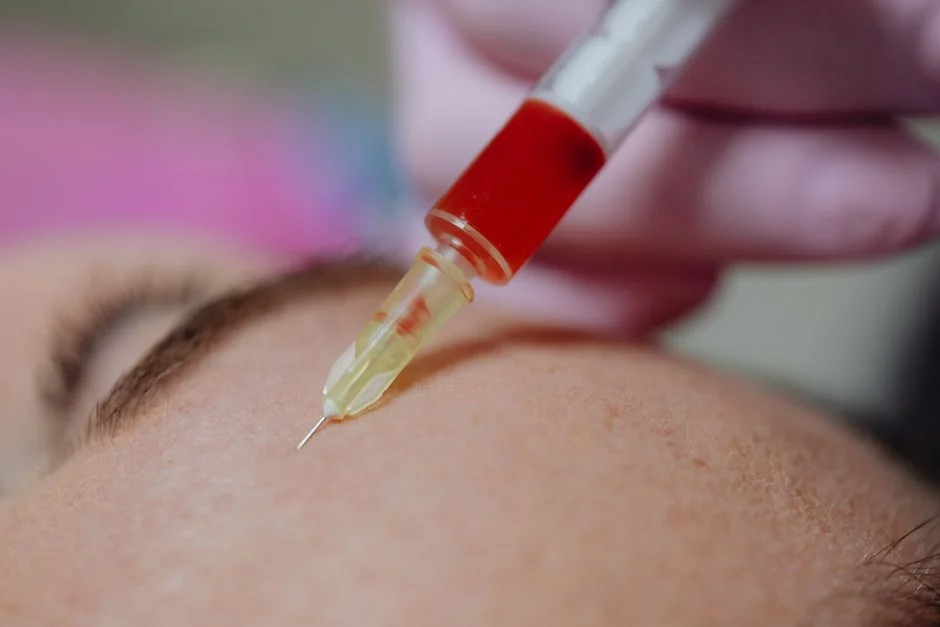
Stem cell culture supernatant scalp injection by manual technique, treating the full scalp, is listed at ¥88,000 per session or ¥396,000 for a course of five. Sessions are generally spaced about a month apart, with three to five sessions typically suggested before assessing response.
Prices for device-assisted delivery, and any package variations, are not listed on the public price page — please see the clinic's official price page or contact us for a current quote. All of the above is self-pay treatment, so Japanese national health insurance and most travel insurance policies will not contribute. For an accurate quote, please book a consultation.
Have a question about this treatment?
Message us on LINE or WhatsApp — our English-speaking team usually replies the same day.
What to Expect, and Who Is a Good Candidate
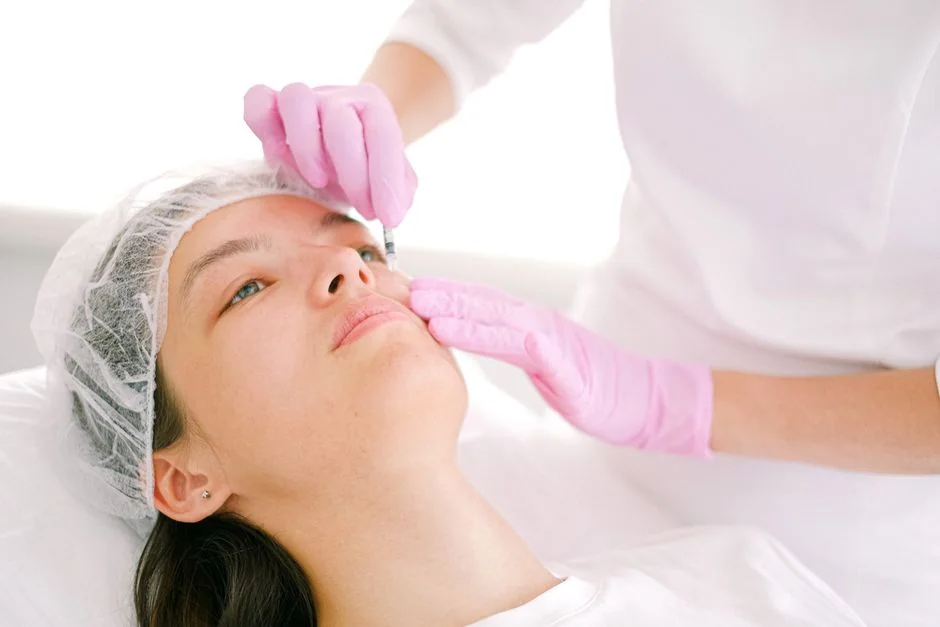
Sessions usually take 20 to 40 minutes depending on delivery method and area treated. Topical anaesthetic or cooling may be used for manual injection. Afterwards, redness can last from a few days up to about a week, and hair washing is generally permitted the following day.
Reasonable candidates are adults with early to moderate pattern thinning who still have miniaturised but living follicles, who are already established on — or willing to start — guideline-backed oral or topical therapy, and who want an additional option. Patients with visible scalp inflammation, active infection, bleeding disorders or anticoagulant use, or a history of reaction to the products used, should not proceed without a specific assessment.
Where the scalp is completely smooth and shiny, follicles are usually gone, and no injectable will bring them back; surgical hair transplantation is the relevant discussion instead. Finasteride and dutasteride are contraindicated in women who are or may become pregnant, and the 2017 guideline grades both as D for female-pattern hair loss.
At BIOTOPE CLINIC in Shirokanedai, we frequently see patients who arrive asking specifically for injections, having read about them online, and who have not yet tried the treatments with the strongest evidence base. That conversation — sequencing treatment sensibly rather than starting with the most expensive option — is usually the most valuable part of the first consultation.
What People Often Get Wrong
Misconception 1: "Injecting into the scalp keeps the drug local, so there are no systemic effects."
The randomised trial of dutasteride mesotherapy described above measured falls in serum dihydrotestosterone and in prostate-specific antigen after intradermal injection, and one participant withdrew after developing reduced libido and depressive symptoms. Injected does not mean confined to the scalp — the same counselling that applies to oral 5-alpha reductase inhibitors applies here.
Misconception 2: "If a Tokyo clinic offers it, it must be approved for hair growth in Japan."
Most scalp injection products are not. Japan's Ministry of Health, Labour and Welfare medical advertising Q&A (2018) requires clinics advertising treatment with unapproved products to state plainly that the product lacks approval under the Pharmaceuticals and Medical Devices Act, disclose how it was obtained, state whether a domestically approved equivalent exists, and provide safety information from overseas regulators — or state that major risks may not yet be known. Regenerative therapies using cultured cell products must also be provided under Japan's Act on the Safety of Regenerative Medicine. Asking a clinic to walk you through those four points is a fair and useful test.
Where to Get Hair Mesotherapy in Tokyo
Within our clinic group, both BIOTOPE CLINIC (Shirokanedai, Minato-ku) and Kojimachi Dermatology & Plastic Surgery Clinic (Ichigaya, Chiyoda-ku) offer English-language consultation with Dr. Jun Karibe's team. Hair mesotherapy and AGA treatment are handled at BIOTOPE CLINIC (Shirokanedai, Minato-ku), the group's cosmetic and men's health branch, where Dr. Karibe personally consults. Bookings and enquiries in English: LINE or WhatsApp.
The Kojimachi clinic is the group's main office for insurance-covered general dermatology — so if your hair loss turns out to be driven by scalp eczema, seborrhoeic dermatitis or another treatable skin condition rather than pattern baldness, that is where it would be managed.
Frequently Asked Questions
- Q. How many sessions before I can judge whether it is working?
- Most protocols space sessions about a month apart and suggest three to five before assessing. Hair cycles are slow, so photographic comparison at three to six months is more meaningful than week-to-week impressions.
- Q. Is the needle-free option less effective because it does not use a needle?
- There is no trial showing one delivery route grows more hair than another for AGA. Review data indicate needle-free jets are more comfortable, but also that delivery can be uneven or incomplete, so the choice is mainly about tolerance and treatment area.
- Q. Can I have this instead of taking daily tablets?
- It is generally offered as an addition, not a replacement. The Japanese Dermatological Association gives grade A to oral finasteride, oral dutasteride and topical minoxidil, and grade C2 to growth-factor introduction therapies, so discontinuing established treatment in favour of injections is not supported by current evidence.
- Q. Is any of this covered by insurance if I live in Japan?
- No. AGA treatment, including scalp injections, is self-pay. Insurance-covered dermatology applies only if an underlying skin disease is diagnosed and treated.
Have a question about this treatment?
Message us on LINE or WhatsApp — our English-speaking team usually replies the same day.
Summary
Hair mesotherapy delivers growth factors, drugs or nutrient solutions directly into the scalp, and Tokyo clinics offer it by manual injection, automated hydro-injector, or needle-free jet. The delivery method meaningfully changes comfort, session length and evenness of placement, but no study has shown one route outperforms another for hair regrowth.
The honest position is that the evidence for injected growth factors remains limited — Japan's national guideline currently advises against them — while injected dutasteride shows moderate benefit alongside a notable adverse-event rate and measurable systemic absorption. For most people, the sensible sequence is guideline-backed oral and topical therapy first, with injections considered as an adjunct after a proper diagnosis.
If you have questions about hair mesotherapy for AGA, both BIOTOPE CLINIC (Shirokanedai, Minato-ku) and Kojimachi Dermatology & Plastic Surgery Clinic (Ichigaya, Chiyoda-ku) offer English-language consultation with Dr. Karibe and his team. Hair mesotherapy and AGA treatment are primarily handled at BIOTOPE CLINIC in Shirokanedai. English enquiries: LINE or WhatsApp.
24/7 Consultation & Booking
Book a Consultation or Treatment
Our English-speaking team responds via LINE or WhatsApp — usually the same day.
References
- Guidelines Committee for Male-pattern and Female-pattern Hair Loss, Japanese Dermatological Association. Guidelines for the Diagnosis and Treatment of Male-pattern and Female-pattern Hair Loss, 2017 edition. Japanese Journal of Dermatology. 2017;127(13):2763–2777.
- Almeziny A, et al. Effectiveness and Safety of Intralesional Dutasteride in Patients With Androgenic Alopecia: A Systematic Review and Meta-Analysis. Journal of Cosmetic Dermatology. 2025;24(12):e70560.
- Sanabria B, Medeiros M, Miot HA, Ramos PM. Monthly versus quarterly dutasteride mesotherapy for male androgenetic alopecia: A randomized trial. Journal of the European Academy of Dermatology and Venereology. 2025.
- Vranis NM, Theodorou S. Needle-Free Jet Injectors and Their Potential Applications in Plastic Surgery: A Review. Aesthetic Surgery Journal Open Forum. 2025;7:ojaf019.
- Ministry of Health, Labour and Welfare, Japan. Q&A on the Medical Advertising Guidelines (Iryo Kokoku Guideline ni kansuru Q&A), August 2018.
Related Articles
You may also find these articles useful.
- Hair Mesotherapy Tokyo: Manual vs Hydro-Injector
- Hair Mesotherapy Tokyo: Manual Injection vs Hydro-Injector
- AGA vs Finasteride & Minoxidil: Tokyo Regenerative Care
- Hair Loss Treatment Tokyo: AGA Options for Expats
- English-Speaking Dermatologist Tokyo: Hair Loss & AGA
SUPERVISED BY
Dr. Jun Karibe
MD
Director
Education & Career
Certifications
Awards
MEDICAL REVIEW