What Is Androgenetic Alopecia (AGA)?
Hair loss can feel discouraging, particularly when it progresses despite consistent treatment. Androgenetic alopecia (AGA) — commonly called male or female pattern hair loss — affects an estimated 30 per cent of Japanese men and a significant proportion of women.
Standard medications such as finasteride and minoxidil remain the most widely used interventions, but a growing number of patients ask about regenerative alternatives: treatments that work through the body’s own repair signals rather than through daily pills or topical applications. This article explains how each approach works, what the evidence currently shows, and what a realistic treatment plan in Tokyo looks like.
What you’ll learn in this article:
- How finasteride, dutasteride, and minoxidil work — and why all AGA treatments are self-pay in Japan
- Why some patients explore regenerative alternatives such as PRP and exosome therapy
- The clinical evidence for regenerative treatments, including specific efficacy data from recent systematic reviews
- A side-by-side comparison of the main AGA treatment options available in Tokyo
- How to access English-language AGA consultations in Tokyo
Have a question about this treatment?
Message us on LINE or WhatsApp — our English-speaking team usually replies the same day.
What Is Androgenetic Alopecia (AGA)?
Androgenetic alopecia is a genetically influenced, progressive form of hair loss driven by the hormone dihydrotestosterone (DHT). DHT is converted from testosterone by an enzyme called 5-alpha reductase. In individuals with an inherited sensitivity to DHT, the hormone binds to receptors in scalp hair follicles and gradually miniaturises them — shortening the growth phase and producing progressively finer, shorter hairs until the follicle eventually stops producing visible hair altogether.
In men, AGA typically follows a predictable pattern of frontal recession and crown thinning, classified using the Hamilton–Norwood scale. In women, it more commonly presents as diffuse thinning over the crown with the frontal hairline largely preserved, assessed with the Ludwig scale. The condition is progressive; without intervention, most people experience continued worsening over the years. Early identification and treatment are therefore clinically significant.
The Standard Medications: Finasteride, Dutasteride, and Minoxidil
Finasteride and Dutasteride
Oral finasteride (1 mg daily) has been approved in Japan since 2005. It works by selectively inhibiting the type II form of 5-alpha reductase, reducing DHT levels in the scalp by approximately 60–70 per cent. A large Korean retrospective study cited in a 2025 review in the Annals of Dermatology by Shin and Huh found that 85.7 per cent of patients showed improvement compared to their pre-treatment baseline over five years of use.
Oral dutasteride (0.5 mg daily) was approved in Japan for AGA in 2016. Unlike finasteride, it inhibits both type I and type II 5-alpha reductase, producing more complete DHT suppression. The same 2025 review reported that 89.9 per cent of male AGA patients showed improvement at five years with dutasteride — broadly consistent with it being a modestly stronger agent than finasteride. Both medications are provided on a self-pay basis in Japan; the national health insurance system does not cover AGA treatment, as the condition is classified as cosmetic.
The primary limitation of both agents is that they are maintenance therapies, not cures. If treatment is discontinued, DHT levels return and hair loss typically resumes within twelve months. Sexual dysfunction is a documented side effect of finasteride — relative risk 1.66 versus placebo per Shin and Huh, 2025 — though it remains uncommon and resolves in most patients upon stopping the medication. Neither finasteride nor dutasteride is recommended for women who are pregnant or may become pregnant, due to the risk of feminising effects on a male foetus.
Minoxidil — Topical and Oral
Topical minoxidil has been approved in Japan since 1999 in 2 per cent and 5 per cent concentrations. It works primarily as a vasodilator, improving blood flow to the follicle and prolonging the anagen (active growth) phase of the hair cycle. Clinical data suggest that the 5 per cent foam applied once daily is non-inferior to the 2 per cent solution used twice daily (Shin and Huh, 2025), improving day-to-day convenience and adherence.
Low-dose oral minoxidil (typically 2.5 mg daily for men, 1.25 mg for women) has attracted considerable interest as an alternative for patients who find topical application impractical or poorly tolerated, and for women with AGA for whom 5-alpha reductase inhibitors are not appropriate. However, oral minoxidil has not yet received PMDA approval specifically for AGA in Japan; it is available at specialist clinics on a self-pay basis under physician supervision. Side effects at low doses include hypertrichosis — unwanted body hair growth — in approximately 10–20 per cent of patients, and occasional cardiovascular effects such as fluid retention in susceptible individuals.
Regenerative Alternatives: PRP, Exosome Therapy, and LLLT
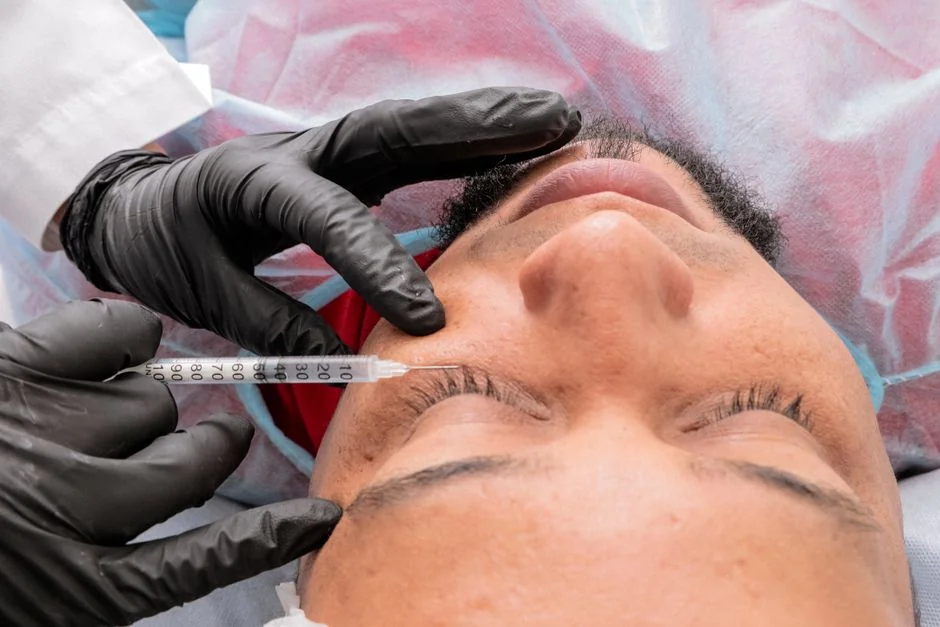
Regenerative treatments for AGA activate or support the follicle’s own repair mechanisms rather than modifying hormone levels. They are appropriate both as standalone approaches — especially for patients who cannot or prefer not to take daily medication — and as adjuncts to finasteride or minoxidil for enhanced outcomes.
Platelet-Rich Plasma (PRP)
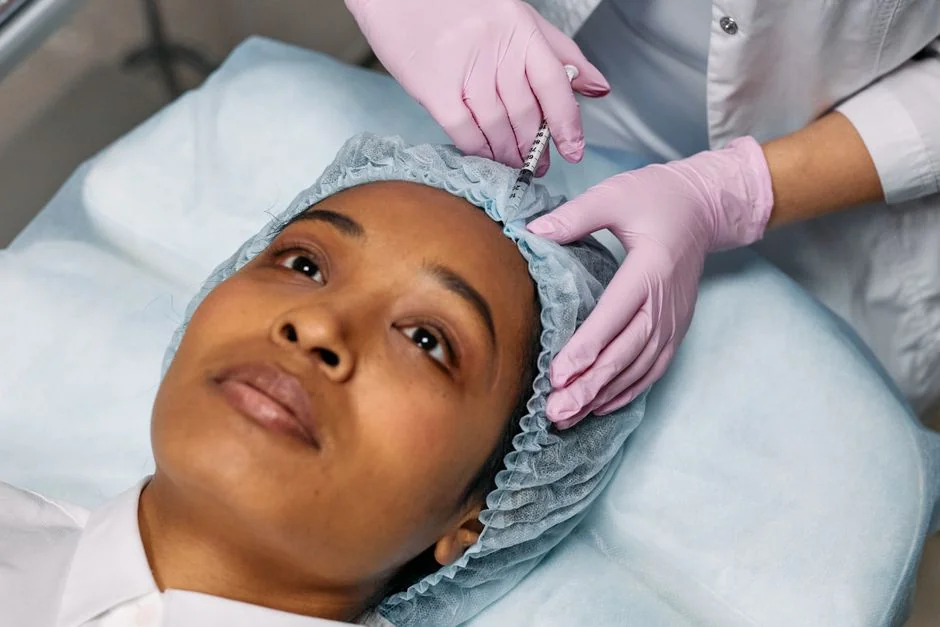
PRP is prepared by drawing a small volume of the patient’s own blood and centrifuging it to concentrate the platelets. Platelets are rich in growth factors — including platelet-derived growth factor (PDGF), vascular endothelial growth factor (VEGF), and insulin-like growth factor 1 (IGF-1) — that are released at the injection site to stimulate follicle activity and extend the growth phase. Because PRP uses the patient’s own blood, it carries minimal risk of allergic or immune reaction.
A 2025 comprehensive review by Gupta et al. in Medical Sciences (Basel), analysing 61 PRP studies, found hair density improvements of +23.1 to +49.4 hairs/cm² at six months — results consistently more pronounced at six months than at three months (+8.1 to +19 hairs/cm²). Most protocols involve three to four initial sessions spaced four to six weeks apart, followed by maintenance sessions every four to six months. Outcomes vary with PRP preparation method, platelet concentration, and injection technique, and not all patients respond equally.
Exosome Therapy
Exosomes are nanoscale vesicles secreted by cells — in hair loss treatment, typically derived from mesenchymal stem cells of adipose (fat) tissue or other sources. They carry messenger RNA, microRNA, and signalling proteins that regulate the hair follicle cycle. Because they do not contain living cells, they are distinct from stem cell therapy and carry a simpler handling and safety profile.
A 2025 systematic review by Al Ameer et al. in Clinical, Cosmetic and Investigational Dermatology, examining 11 clinical studies including two randomised controlled trials, documented hair density gains of 9.5–35 hairs/cm² across different exosome preparations. In a direct comparison reported by Gupta et al. (2025), adipose-derived stem cell (ADSC) exosomes produced a 35 hairs/cm² density improvement compared with 3 hairs/cm² for saline at twelve weeks. Across all reviewed studies, the Al Ameer team noted no serious adverse events and only mild, transient reactions such as temporary scalp redness or swelling. Larger, standardised randomised controlled trials are still needed before definitive regulatory conclusions can be drawn, but the safety profile is consistently reassuring.
Low-Level Light Therapy and Combination Approaches
Low-level light therapy (LLLT) uses specific wavelengths of red or near-infrared light to stimulate follicular activity. A Korean randomised study found that 24 weeks of LLLT significantly increased both hair density and hair diameter (Shin and Huh, 2025). Response rates are variable; one large real-world study noted that approximately 70 per cent of patients showed inadequate response to LLLT as a monotherapy, making it better suited as a supportive element of a broader treatment plan than as a primary intervention.
Many patients achieve stronger outcomes by combining standard medication with periodic PRP or exosome treatment — the medications address the underlying hormonal driver of miniaturisation, while regenerative treatments actively promote follicle repair and growth.
Comparing AGA Treatment Options at a Glance
| Treatment | Mechanism | Evidence Level | Japan Regulatory Status | Key Advantage | Key Limitation |
|---|---|---|---|---|---|
| Finasteride 1 mg (oral) | Reduces DHT via type II 5-alpha reductase inhibition | Strong — multiple RCTs, long-term data | Approved 2005; self-pay for AGA | 85.7% of patients show improvement at 5 years | Lifelong use required; sexual side effects; contraindicated in women of childbearing potential |
| Dutasteride 0.5 mg (oral) | Reduces DHT via type I and II inhibition | Strong — approved based on RCT data | Approved 2016; self-pay for AGA | 89.9% show improvement; modestly stronger than finasteride | Same cautions as finasteride; generally higher cost |
| Topical Minoxidil | Vasodilation; prolongs anagen phase | Strong — OTC; decades of evidence | Approved 1999; OTC available | Suitable for men and women; established safety record | Daily application; scalp irritation possible |
| Oral Minoxidil (low dose) | Systemic vasodilation | Moderate–Strong — growing published data | Not approved for AGA in Japan; self-pay under physician supervision | Convenient; effective for women; useful when topical is poorly tolerated | Hypertrichosis in 10–20%; cardiovascular monitoring required |
| PRP | Autologous growth factors stimulate follicles | Moderate — 61 studies including RCTs | Not approved for AGA specifically; used under physician oversight | Drug-free; autologous; +23–49 hairs/cm² at 6 months | Protocol variability; multiple sessions needed |
| Exosome Therapy | Paracrine signalling modulates hair cycle | Emerging — 11 clinical studies including 2 RCTs | Not approved for AGA specifically; available at specialist clinics | No live cells; 35 hairs/cm² improvement vs. 3 hairs/cm² for saline at 12 weeks | Larger standardised trials still needed; higher cost |
Common Misconceptions About AGA Treatment
Misconception 1: “Once finasteride restores my hair, I can stop taking it.”
Clinical data consistently show that hair loss resumes — typically within twelve months — when finasteride or dutasteride is discontinued. These medications suppress DHT while active in the body; they do not correct the underlying genetic sensitivity of the follicle. The 2025 Annals of Dermatology review by Shin and Huh reinforces that the improvements documented at five years are contingent on uninterrupted use. Patients who achieve stable coverage should understand from the outset that this stability depends on continuing treatment.
Misconception 2: “Regenerative treatments like PRP and exosomes are purely experimental with no real clinical data.”
This understates the current state of the evidence. A 2025 review by Gupta et al. examined 61 PRP studies for AGA and found consistent, measurable improvements in hair density across a wide range of patient populations and preparation protocols. A separate 2025 systematic review by Al Ameer et al. evaluated 11 exosome studies, including two RCTs, documenting density gains of 9.5–35 hairs/cm² with no serious adverse events. Neither PRP nor exosome therapy has been formally approved by the PMDA or FDA specifically for AGA, and larger standardised trials are ongoing. “Emerging, with a substantive and growing evidence base” is a more accurate characterisation than “purely experimental.”
Cost of AGA Treatment in Tokyo
All AGA treatments in Japan — including finasteride, dutasteride, topical and oral minoxidil, PRP, and exosome therapy — are provided on a self-pay basis. The national health insurance system does not cover hair loss treatment because AGA is classified as a cosmetic rather than medical condition.
Medication costs for finasteride and dutasteride vary depending on the clinic and whether branded or generic formulations are dispensed. Procedural treatments such as PRP and exosome therapy are priced per session; clinics frequently offer package pricing for patients committing to a full course. Costs differ between providers and are updated periodically. Please see the clinic’s official price page or contact us directly for a current quote. For an accurate quote matched to your individual assessment, please book a consultation.
Have a question about this treatment?
Message us on LINE or WhatsApp — our English-speaking team usually replies the same day.
Who Is a Good Candidate?
Standard oral medications — finasteride, dutasteride, and minoxidil — are generally appropriate for men and women experiencing active, progressive hair loss who are willing to commit to long-term daily treatment. Men in the early to moderate stages of AGA (Hamilton–Norwood I to V) typically respond most reliably to 5-alpha reductase inhibitors. Women with AGA who are not pregnant and not planning pregnancy may use topical or oral minoxidil; dutasteride and finasteride are not routinely prescribed to women of childbearing potential.
Regenerative treatments are particularly worth exploring for patients who cannot take or prefer to avoid daily oral medication; for those who want to augment an existing medication regimen; and for patients at an early stage of thinning who wish to adopt a proactive, drug-free preventive approach. Both PRP and exosome therapy require that some follicular activity is still present — these treatments support and stimulate existing follicles and are not a substitute for hair transplantation in areas of complete baldness.
At BIOTOPE CLINIC in Shirokanedai, the initial AGA consultation includes scalp photography and, where appropriate, trichoscopy to document the stage of follicle miniaturisation and to build a personalised treatment plan — whether that means medication, regenerative treatment, or a structured combination programme.
Frequently Asked Questions
- Q. Can women use finasteride or dutasteride for AGA in Japan?
- In standard clinical practice, neither oral finasteride nor dutasteride is recommended for women of childbearing age due to the teratogenic risk to a male foetus. Post-menopausal women may be considered for these medications on a case-by-case basis under physician supervision. Oral or topical minoxidil is generally the first-line medication option for women with AGA in Japan, and a consultation is needed to determine what is appropriate for each individual.
- ]
- Q. How many PRP sessions are required, and when will results appear?
- Most protocols involve three to four initial sessions spaced four to six weeks apart, followed by maintenance sessions every four to six months. Clinical data indicate that results are more pronounced at six months than at three months, so patients should allow adequate time before assessing the full response. Early-stage patients with active follicles tend to respond more visibly than those with advanced miniaturisation.
- Q. Is it safe to combine regenerative treatments with finasteride or minoxidil?
- Yes — combining standard medications with PRP or exosome therapy is a common and clinically reasonable approach. The medications address the underlying hormonal driver of follicle miniaturisation while regenerative treatments actively stimulate follicle repair and growth. Many patients find that combination treatment delivers stronger outcomes than either modality alone, though individual response varies.
- Q. Is exosome therapy safe, and how is it regulated in Japan?
- Across 11 clinical studies reviewed in 2025, no serious adverse events were reported with exosome therapy for hair loss — adverse effects were mild and transient, typically limited to brief scalp redness or swelling. In Japan, the regulatory framework for cell-derived products continues to evolve; exosome therapy is currently available at specialist clinics under physician oversight as an advanced aesthetic treatment rather than under an AGA-specific approved indication. A thorough consultation with a qualified physician is essential before beginning any regenerative programme.
Have a question about this treatment?
Message us on LINE or WhatsApp — our English-speaking team usually replies the same day.
Where to Get AGA Treatment in Tokyo
Within our clinic group, both BIOTOPE CLINIC (Shirokanedai, Minato-ku) and Kojimachi Dermatology & Plastic Surgery Clinic (Ichigaya, Chiyoda-ku) offer English-language consultation with Dr. Jun Karibe’s team. AGA treatment — including finasteride, dutasteride, topical and oral minoxidil, PRP, and exosome therapy — is handled at BIOTOPE CLINIC in Shirokanedai, which is the group’s dedicated centre for men’s health and cosmetic dermatology. Bookings and enquiries in English are available via LINE or WhatsApp.
Kojimachi Dermatology & Plastic Surgery Clinic in Ichigaya is the group’s main clinical office, focusing on insurance-covered general dermatology — eczema, acne, rashes, and related conditions — as well as general plastic and aesthetic surgery. Both sites are staffed by the same physician-led team and both conduct consultations in English, so patients can choose the location most convenient for them.
If you have questions about AGA treatment, both BIOTOPE CLINIC (Shirokanedai, Minato-ku) and Kojimachi Dermatology & Plastic Surgery Clinic (Ichigaya, Chiyoda-ku) offer English-language consultation with Dr. Karibe and his team. AGA and men’s health are primarily handled at BIOTOPE CLINIC in Shirokanedai. English enquiries: LINE or WhatsApp.
24/7 Consultation & Booking
Book a Consultation or Treatment
Our English-speaking team responds via LINE or WhatsApp — usually the same day.
References
- Shin JW, Huh CH. Updates in Treatment for Androgenetic Alopecia. Annals of Dermatology. 2025;37(6).
- Gupta AK, Wang T, Welter R, Unger R, Mejia R. Promises and Pitfalls of Regenerative Therapies for Androgenetic Alopecia: Platelet-Rich Plasma, Photobiomodulation, Stem Cells, and Exosomes. Medical Sciences (Basel). 2025.
- Al Ameer MA, Alnajim AT, Al Ameer A, et al. Exosomes and Hair Regeneration: A Systematic Review of Clinical Evidence Across Alopecia Types and Exosome Sources. Clinical, Cosmetic and Investigational Dermatology. 2025.
Related Articles
You may also find these articles useful.
- Exosome Hair Therapy in Tokyo vs PRP and Mesotherapy
- AGA Treatment After 6 Months: Realistic Results in Tokyo
- AGA Telemedicine in Japan for Expats: Options and Limits
- Bringing Finasteride to Japan: Customs Rules for Expats
- Dutasteride 0.5 mg in Japan: Dosage, Brands and Prescribing
SUPERVISED BY
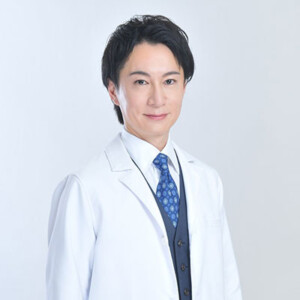
Dr. Jun Karibe
MD
Director
Education & Career
Certifications
Awards
MEDICAL REVIEW